Mobility Performance

Safety Technologies through In-depth Research of human
To further elevate the safety of mobility, Honda believes that integrated performance that complements or expands human capabilities is necessary. Such performance includes technologies that protect the human body, avoid collisions, and detect and share driver intentions among vehicles and others.
Honda, as a leader in safety technology with a Human-Centric Thinking, will continue to evolve its technological development to gain an even deeper understanding of people and to be more closely attuned to their wishes.
History
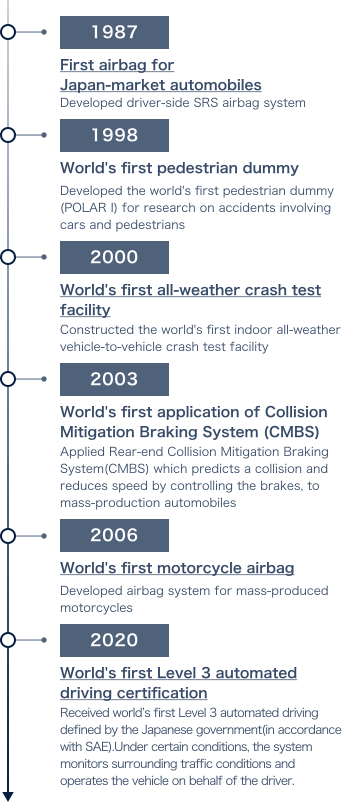
By developing safety technologies by understanding accidents in real-world conditions where various types of mobility such as motorcycles and automobiles coexist, and by analyzing the mechanisms in detail, Honda has developed the world’s first*1 life-size pedestrian dummy that reproduces the behavior of the human body in a collision with an automobile, constructed the world's first indoor omni-directional collision test facility that enables research on more realistic accident scenarios, and for automobiles, has developed the driver-side SRS airbag system, Crash Compatibility Body*2 and the world’s first Collision Mitigation Brake System (CMBS). For motorcycles, Honda has developed new technologies such as the world’s first mass-produced airbag system.
By 2014, Honda developed its safe driving support systems Honda SENSING and Acura Watch, which have since been applied across its automobile products, and technologies have been continuously evolved.
- Honda survey
- A collision-safety body frame that significantly improves self-protection performance while reducing aggression toward other vehicles by efficiently dispersing and absorbing collision energy in the engine compartment when colliding with another vehicle.

Main Technologies
To realize its 2030 milestone, Honda will particularly focus on enhancing collision safety performance and promoting the evolution and application of advanced driver assistance systems (ADAS) for automobiles.
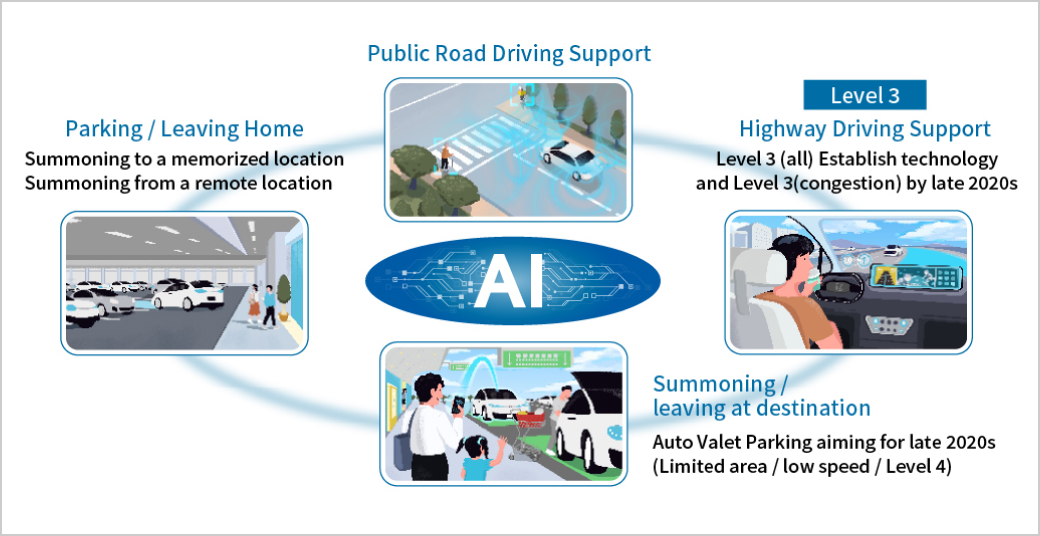
In addition to Honda SENSING, which has been available since 2014, Honda offers Honda SENSING 360, which expands the sensing range to cover the entire area around the vehicle. Honda is also developing a next-generation ADAS that supports driving operations along the entire route to the destination set in the navigation system, on both surface roads and expressways.
Honda SENSING< Supporting safe and comfortable driving and accident avoidance >
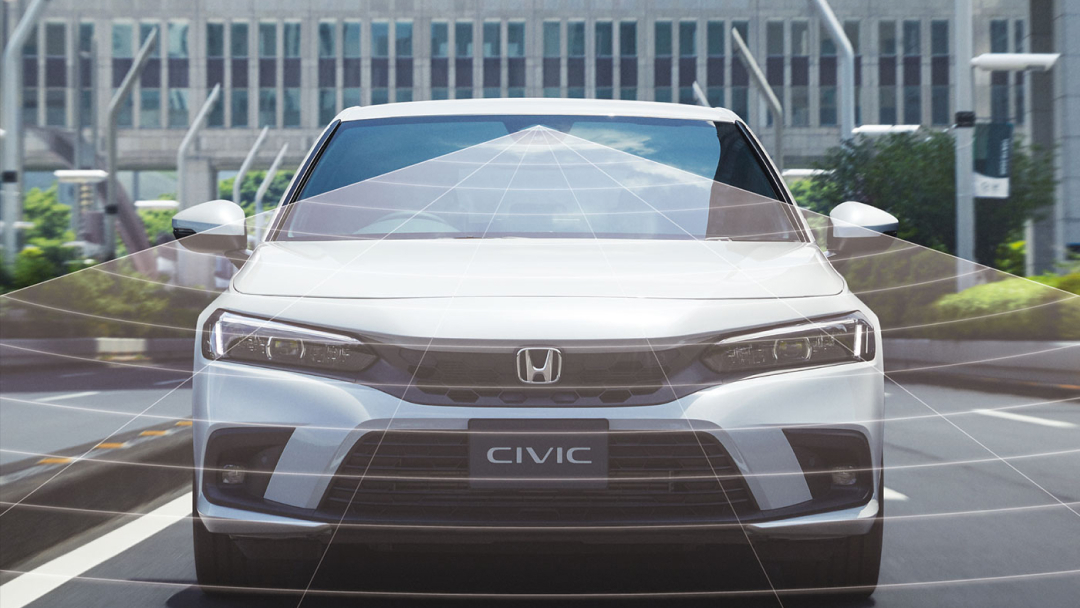

Honda SENSING is a system that primarily senses the front of the vehicle, detecting pedestrians and other objects to support safe and comfortable driving and collision avoidance. In Japan, the mini-vehicle “N-BOX” equipped with Honda SENSING has shown 82% reduction in rear-end collisions and 56% reduction in pedestrian collisions*3, confirming the effectiveness of the system.
To reduce the number of motorcycle traffic collision fatalities, Honda is gradually rolling out Honda SENSING with a motorcycle detection function, starting with 2021 models, and aims to expand this equipment to all automobile models worldwide by the fiscal year ending March 31, 2031.
- Difference in the survey results of the number of traffic collision fatalities and injuries per the number of registered vehicles between N-BOX models equipped with Honda SENSING and those without Autonomous Emergency Braking (AEB). Honda’s analysis based on data from the Institute for Traffic Accident Research and Data Analysis (ITARDA).

Honda SENSING 360 < Sensing all directions >
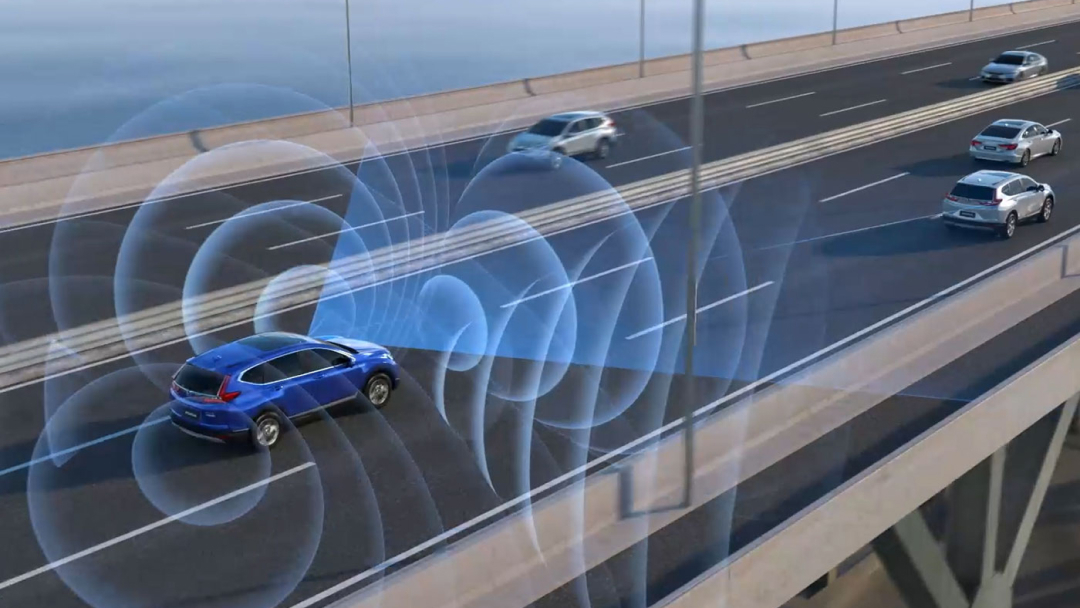

The “Honda SENSING 360” omnidirectional safety and driver-assistive system expands the sensing range to cover the entire area around the vehicle, in addition to the forward detection capabilities developed with previous Honda SENSING. This broader coverage helps address risks commonly encountered in everyday driving, such as cross traffic at intersections, pedestrians crossing during left or right turns, and approaching vehicles during lane changes.
Honda aims to expand this technology to all automobile models in developed countries by the fiscal year ending March 31, 2031.
For motorcycles, Honda will expand the application of advanced braking systems such as ABS and CBS, as well as lights with high visibility for both riders and other road users.
To track the progress of these initiatives, Honda has defined KPIs for advanced safety technology application rates, including Honda SENSING 360 for automobiles in developed countries*4, Honda SENSING for automobiles in emerging countries*5, and advanced braking systems (ABS/CBS) for motorcycles in emerging countries*6, so as to set targets to ensure steady progress.

- Japan, the United States, China, and Europe
- Representative measurement countries: India, Indonesia, Malaysia, Thailand, and Brazil
- Representative measurement countries: India, Indonesia, Vietnam, Thailand, and Brazil
Toward the Future
Honda SENSING Elite < Aiming to eliminate human driving errors >
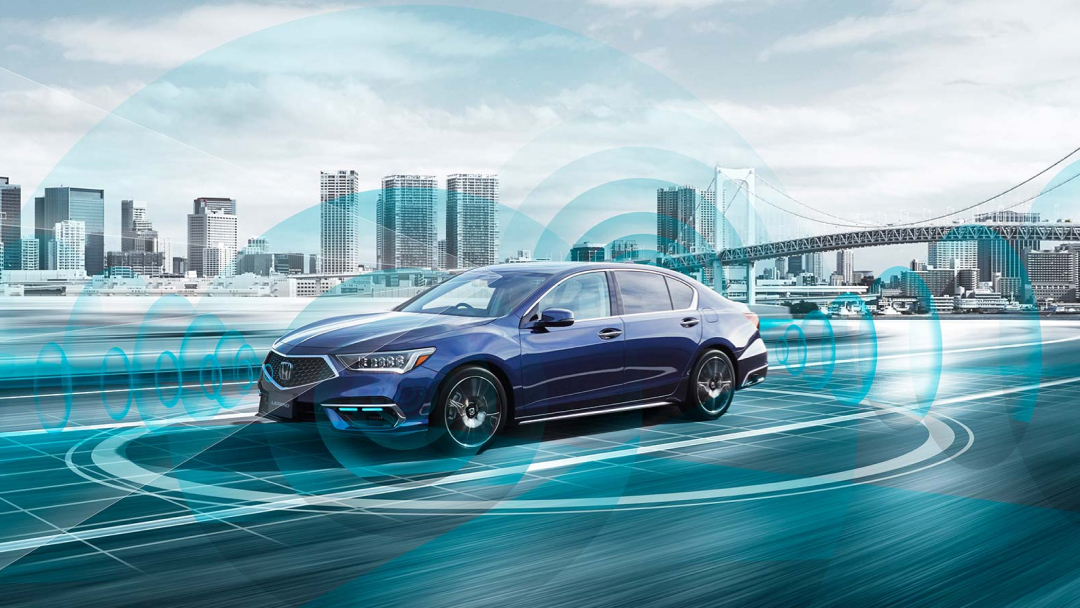

“Honda SENSING Elite” is a system that incorporates “Traffic Jam Pilot” function. Traffic Jam Pilot is qualified as Level 3 automated driving*7 (conditional automated driving in limited area). Honda has received type designation for Level 3 automated driving from the Japanese Ministry of Land, Infrastructure, Transport and Tourism for the first time in the world in 2020. Traffic Jam Pilot technology enables the automated driving system to drive the vehicle under certain conditions, instead of the driver, such as when the vehicle is in congested traffic on an expressway.
Further development of new technologies for the next evolution of “Honda SENSING Elite” is underway.
The application of AI, which “grows” while accumulating experiences much like humans, enables the system to increase its capability to recognize complex situations and handle more complex driving environments such as on non-expressways.
This will assist the driver on non-expressways including a hands-off function while driving through a traffic jam on arterial roads, and enable hands-off functions during merging onto and exiting from an expressway at a road junction.
This will assist the driver achieve a safe and seamless ride from home to their destination with complete peace of mind on any roads including non-expressways.
- One level of automated driving defined by the Japanese government (based on SAE definitions). At Level 3 of automation, the system monitors the driving environment surrounding the vehicle and takes over driving operations under certain conditions. When any of operable driving environment conditions become unsatisfactory, the system will issue a warning, and the driver must take over the driving immediately