Honda Technologies That Reduce the Burden of Snow Removal
When snow falls overnight, people need to clear the snow in front of their homes before leaving for work or school. Heavy, moisture-laden snow, compacted snow, narrow streets and sloping roads—the effort required for snow removal varies considerably depending on snow conditions and location.
Having entered the snow thrower market in 1980, Honda thoroughly investigated actual snow removal conditions, focusing on identifying and resolving the challenges associated with snow removal, considered the most physically demanding of all tasks performed using Honda power products.
- Efficient snow collection
- Snow discharge
- Optimization of snow thrower travel speed
- Removal of snow characteristic of Japan, which tends to become compacted or hardened
- Safety features to protect operators
To make the physically demanding task of daily snow removal even a little easier, Honda has introduced various new technologies into its snow throwers, developing products that reduce the burden on operators.
Efficient snow collection
More than 50% of Japan’s land area has been designated as heavy snowfall areas by the Ministry of Land, Infrastructure, Transport and Tourism. Many people live in these areas, where snow removal during winter is an essential part of daily life. In areas with relatively little snowfall, people clear snow manually using snow pushers and snow shovels. In heavy snowfall areas, however, where manual snow removal cannot keep up with snowfall, machines commonly known as snow throwers are used.
Honda entered the snow thrower market in 1980 by developing a rotary snow thrower powered by a general-purpose engine. A key function of rotary snow throwers is to efficiently collect snow at the center of the machine by rotating spiral blades known as augers.
Honda conducted its own research into auger shape, materials, safety and strength, among other factors, aiming to reduce the burden on operators when removing the heavy, moisture-laden and hardened snow characteristic of Japan. The resulting high snow removal performance and reliability, regardless of snow conditions, were highly regarded by many customers, enabling Honda to gradually establish its brand in the snow thrower market.
Easy adjustment of snow discharge direction and snow thrower speed
Two of the challenges in snow removal are adjusting travel speed according to the depth and hardness of the snow and determining the direction in which to discharge it. In residential areas where houses are close together, choosing where to discharge snow is particularly important, as discharging snow in the wrong place can lead to disputes.
The tube through which a snow thrower discharges snow is called a chute. Earlier models required operators to manually turn a handle to adjust the direction and angle of the chute. The drawback of this method was that operators had to leave their operating position to adjust the discharge direction.
In 1989, however, Honda equipped its mid-sized Snowla HS1190 snow thrower with an electrically controlled chute. By operating a lever within easy reach, operators could use an electric motor to adjust the direction and angle of the chute, making it easy to control the direction and distance of snow discharge.
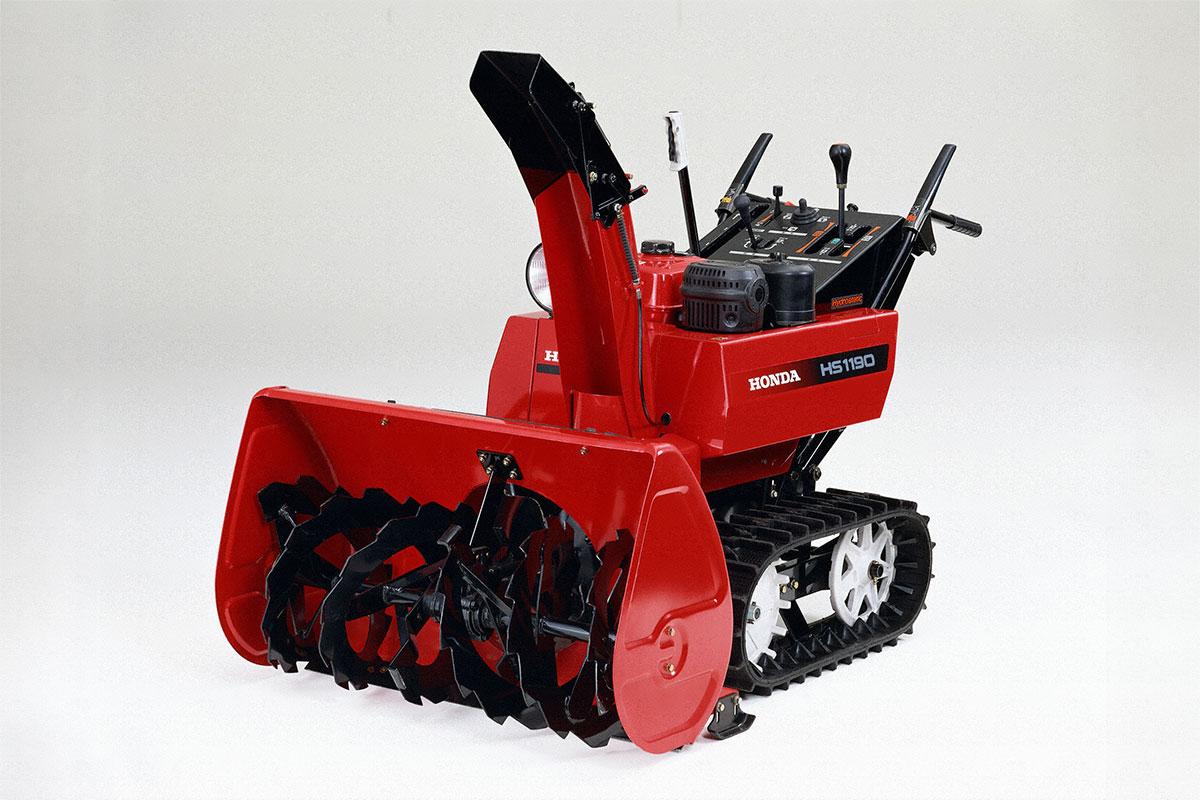
The ability to make fine adjustments to snow discharge enabled operators to respond quickly to changes in road width and sudden changes in wind and rain conditions during snow removal.
Snow removal is generally carried out early in the morning in extremely cold conditions. Naturally, operators wear thick protective gloves, such as mittens over regular gloves, when operating snow throwers. To prevent accidents caused by the inadvertent operation of levers and switches, Honda deliberately made lever grips and switches larger and more conspicuous, enhancing operator safety.
Honda also continued to address the challenges of snow thrower speed adjustment. Previously, Honda had used a friction disc transmission, which transmitted power through friction between discs and required the machine to be stopped when changing speed.
In 1989, Honda introduced a hydrostatic transmission (HST), a hydraulically operated continuously variable transmission, in its compact HS660S and HS870S snow throwers.
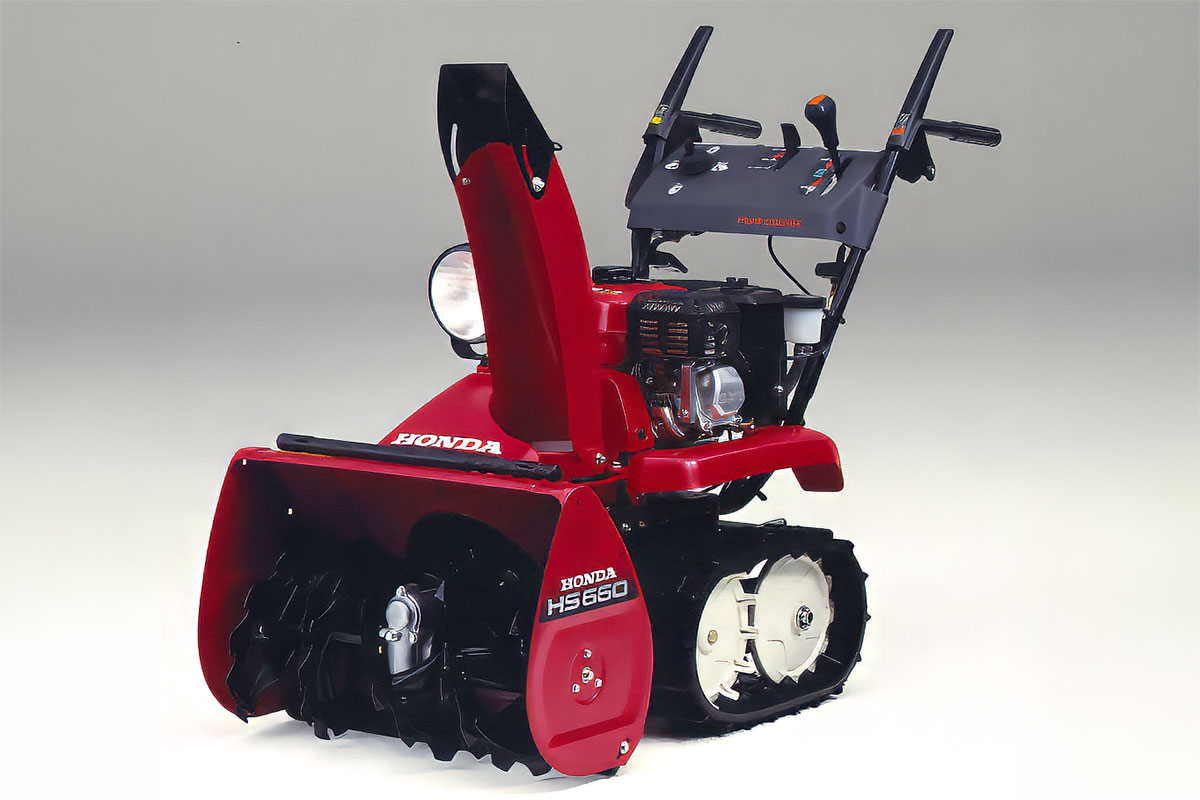
HST technology had already been used in large construction machinery and other equipment. In 1988, Honda installed a commercially available HST in its large HS2012Z snow thrower.
To adapt this technology for use in compact machines, Honda designed a new, smaller HST, precision-machined its components to prevent oil leakage, and jointly developed a dedicated oil capable of withstanding operation in cold climates, pursuing the performance required for compact snow throwers.
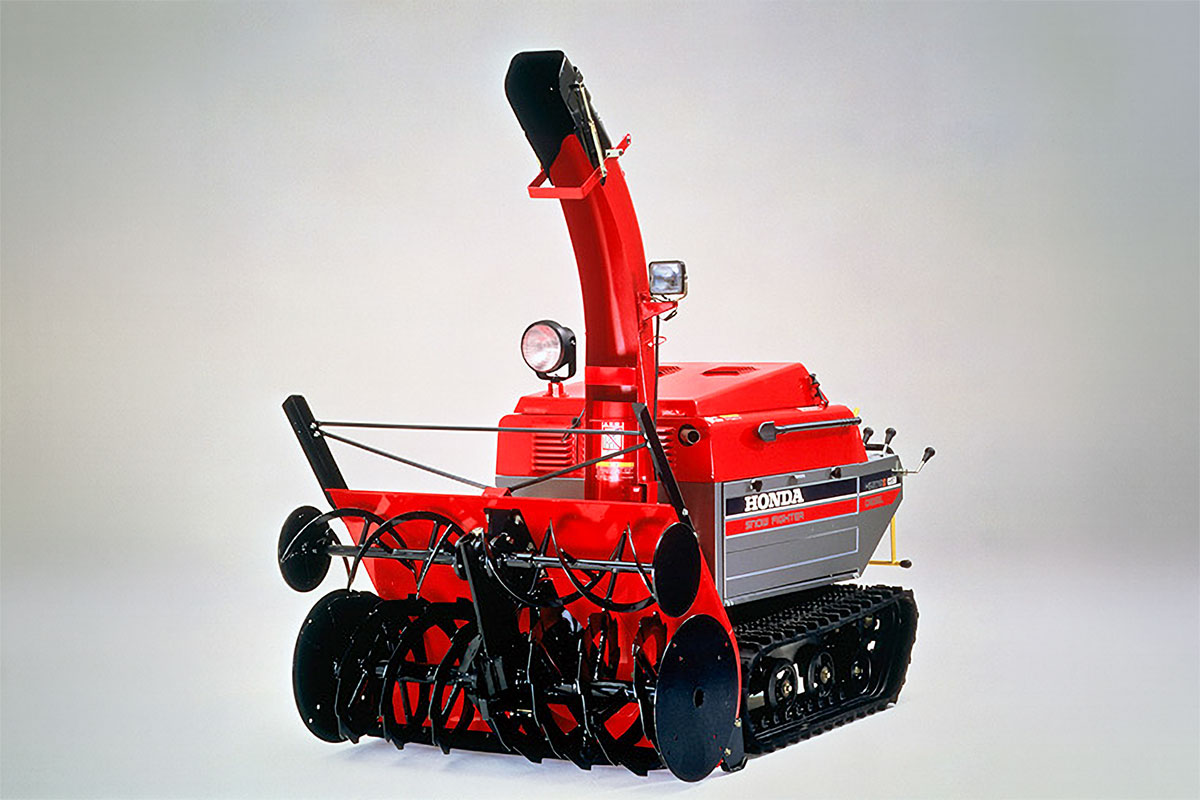
As a result, operators could smoothly adjust travel speed while the machine was moving simply by moving a lever forward or backward. This enabled operators to work according to snow conditions without having to manually change gears, reducing the burden of snow removal.
This compact, lightweight HST was subsequently incorporated into not only snow throwers but also walk-behind lawn mowers and compact tillers, making it less cumbersome for operators to adjust travel speed or change gears while walking behind the machine.
Reducing reliance on operator experience
When using a snow thrower, operator experience has a significant impact on snow removal performance. Experience was considered particularly important when clearing deep snow or sloping snow surfaces.
A technology that helped address this challenge was the electro-hydraulic auger control system introduced by Honda in 1995.
The rotating blades at the front of a snow thrower that scrape up and collect snow are called augers. Mechanisms for manually adjusting the height of the auger housing had existed for some time, but operating the lever required considerable physical effort.
With the electro-hydraulic auger control system, operating a lever activates an electro-hydraulic cylinder, allowing operators to easily adjust the height and lateral tilt of the auger housing.
This reduced the effort required to align the auger housing with sloping snow surfaces, making snow removal easier for less experienced operators.
The philosophy behind Honda power products is to use technology to benefit people and society. This philosophy of developing products that relieve operators of as much physical strain, effort and stress as possible in tasks such as snow removal is reflected in this technology.
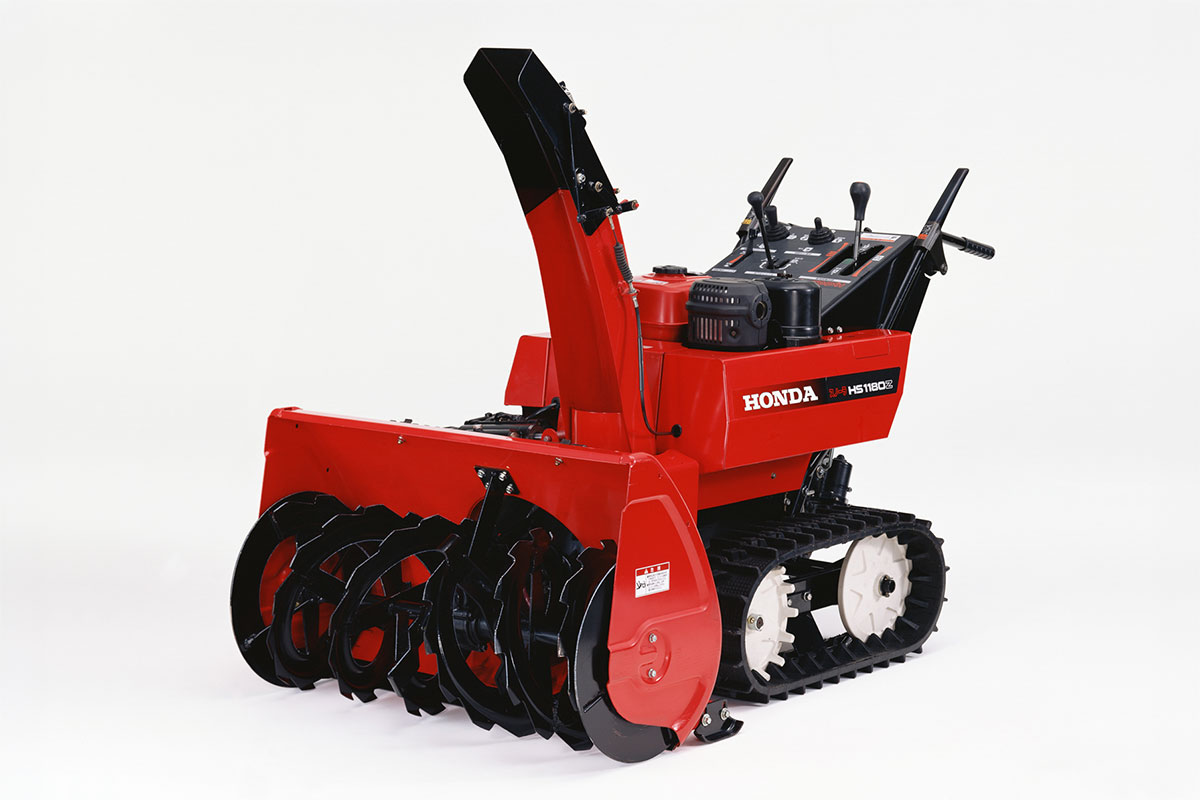
Conventionally, the engine of a snow thrower powered both the snow removal mechanism and the machine’s forward and reverse travel. When clearing deep snow, the increased load on the engine made forward and reverse travel speeds unstable. Consequently, experience was considered necessary to maneuver a snow thrower while clearing snow.
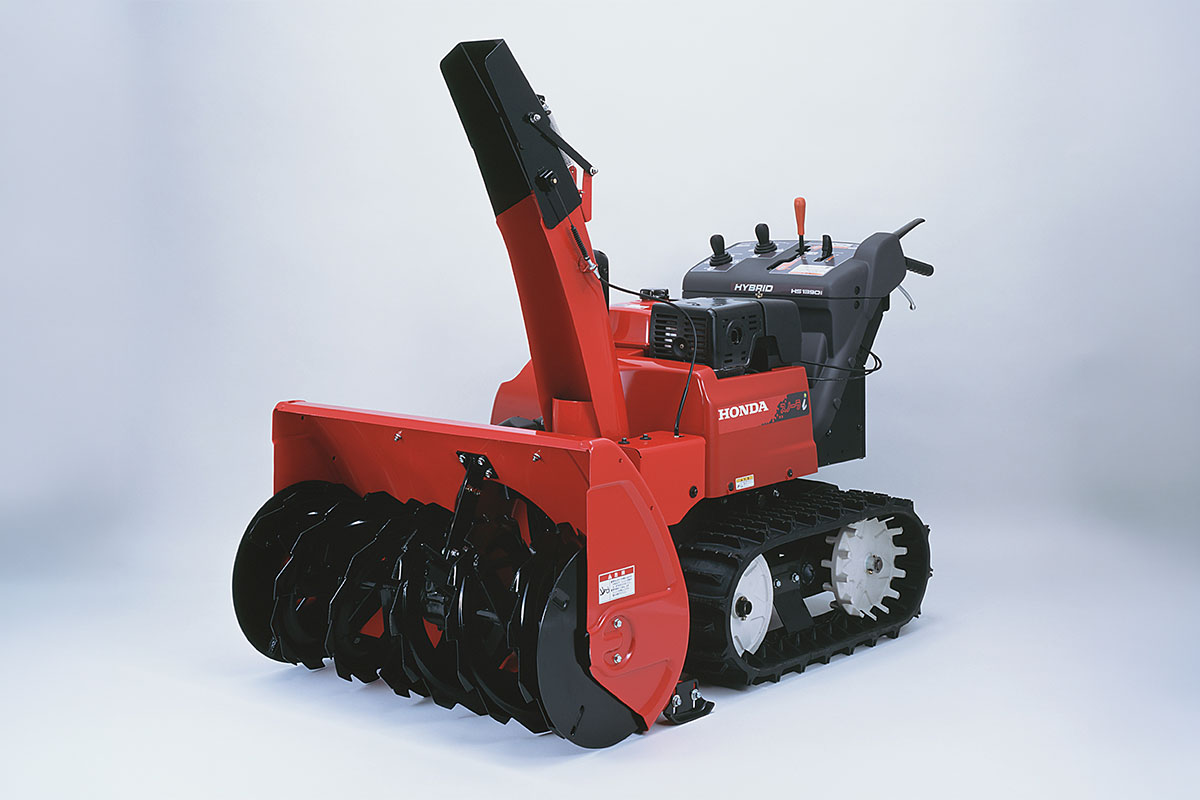
Honda addressed this challenge in 2001 with the Snowla i HS1390i hybrid snow thrower.
Unlike hybrid systems used in automobiles, the hybrid system in a snow thrower uses the engine to power the snow removal mechanism and electric motors to drive the machine. It also incorporates a function that automatically adjusts travel speed according to the snow removal load.
By allowing the snow thrower itself to adjust travel speed according to snow removal conditions, operators could concentrate on clearing snow, making snow removal possible even for those with little experience using a snow thrower.
¹ According to Honda research at the time.
Honda’s hybrid snow throwers also made turning easier by using separate electric motors to independently drive the left and right tracks.
Using technology to tackle compacted and hardened snow
As snow continues to accumulate, it becomes compacted or hardened. When the auger comes into contact with snow in this condition, it may struggle to clear it, and the reaction force may cause the snow thrower to lift off the ground.
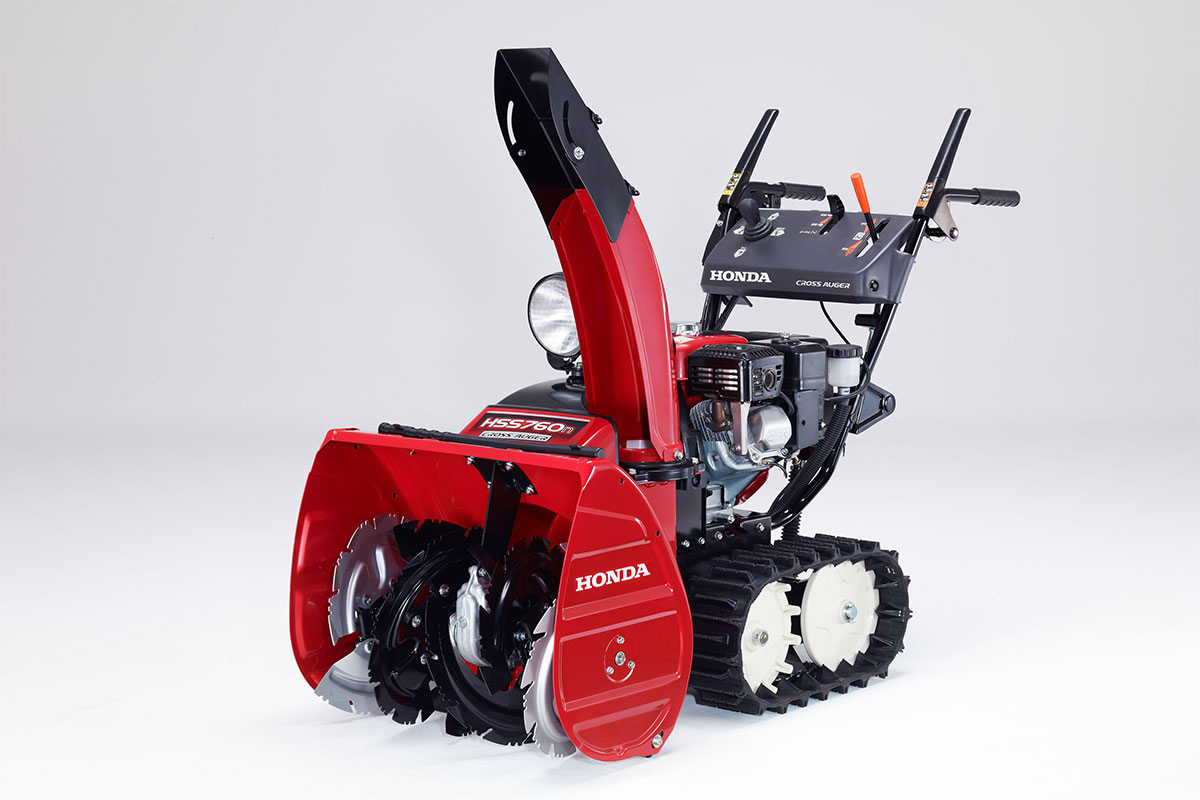
To address this issue, Honda introduced its Cross-Auger technology in compact snow throwers in 2013.
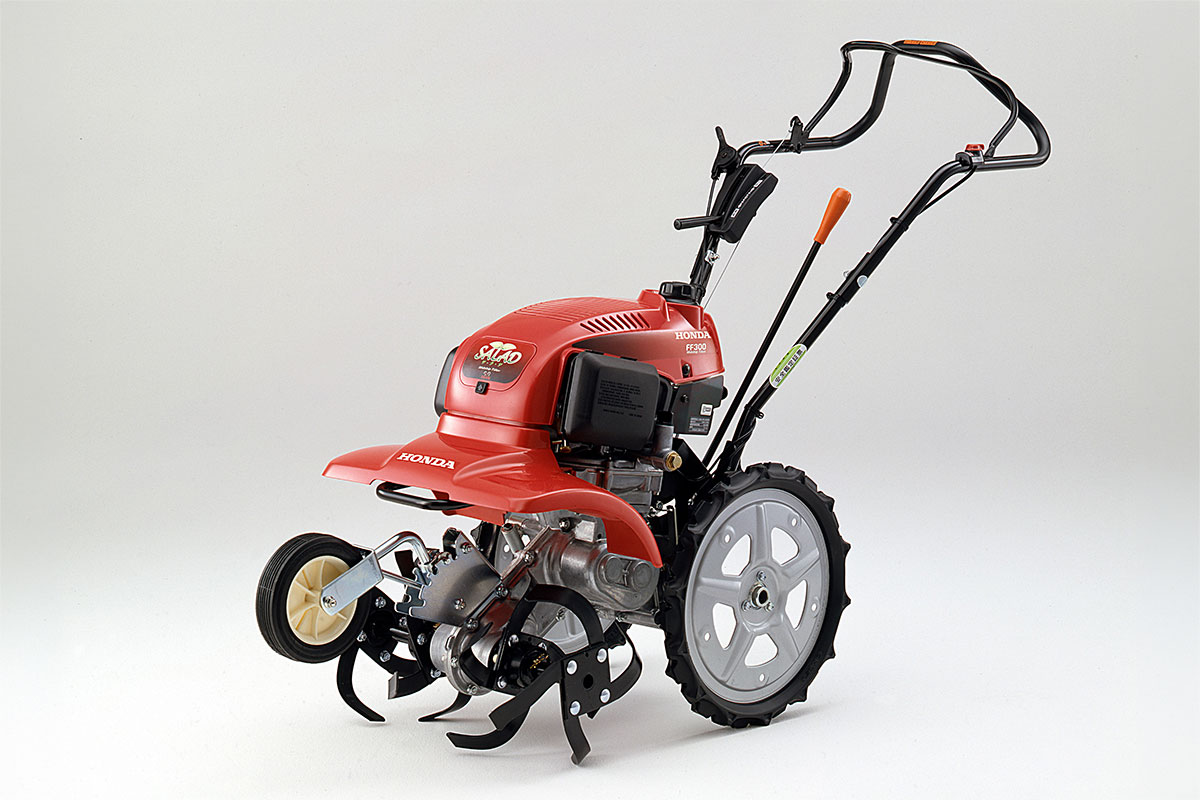
The Cross-Auger adapted technology previously used in Honda compact tillers, including the Salad FF300, launched in 2003, to make tilling hard soil easier.
The technology, which improves tilling efficiency by simultaneously rotating blades in opposite directions on the same axis, was adapted to make breaking up compacted and hardened snow easier.
² According to Honda research as of September 2013.
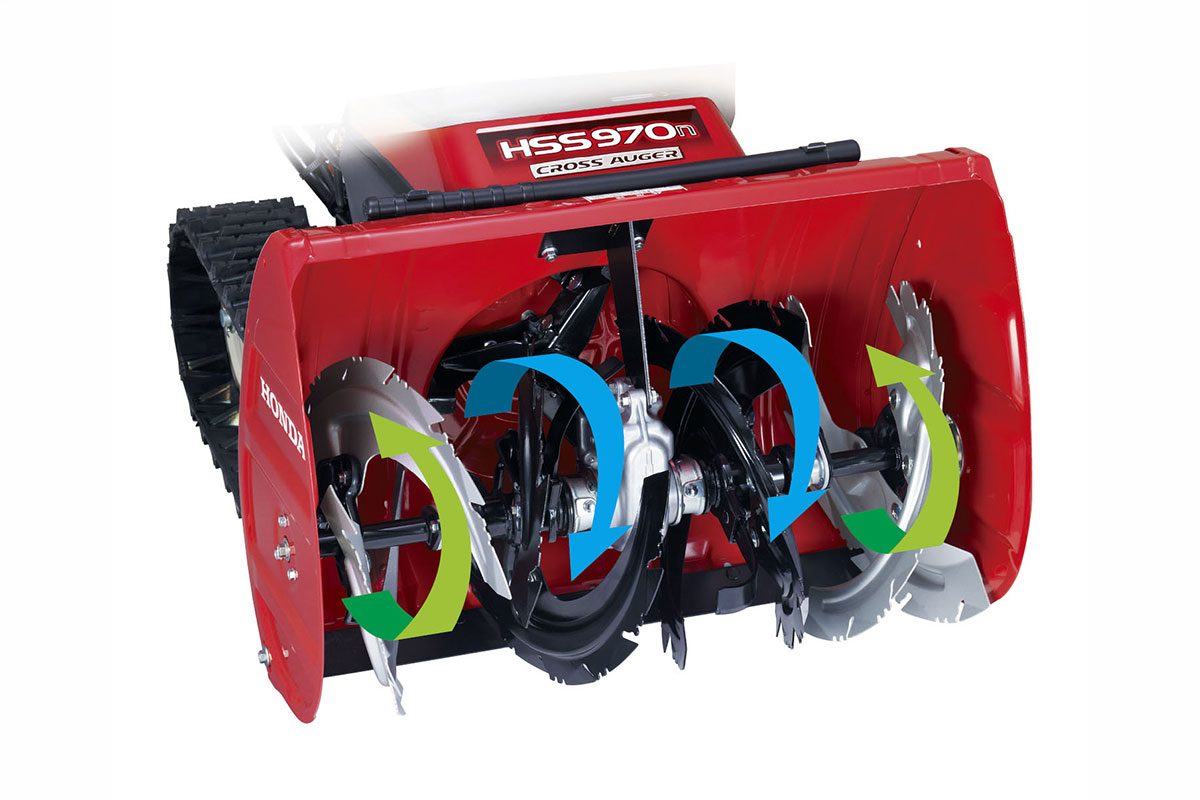
With the adoption of the Cross-Auger, Honda snow throwers gained powerful snow-breaking capabilities and earned high market recognition for their improved efficiency in removing compacted and hardened snow.
On mornings after snowfall, even getting a car out can be a struggle without first clearing the snow in front of the house. Honda has addressed these recurring tasks in everyday life by reducing the physical effort, time and trouble involved in operating snow throwers, as well as their reliance on operator experience.
The aim is to make snow throwers easy to operate regardless of snow conditions or who is using them. The philosophy and technologies behind Honda snow throwers, which support everyday life in areas with heavy snowfall, will continue to evolve.