Snow Blowers: Making Life Easier in Snowy Regions
Honda Power Products were created with the guiding principle of making people’s lives easier through technology.
In 1980, Honda began selling snow blowers in Hokkaido to help people cope with the challenges of living in regions with heavy snowfall.
Approximately 60% of Japan’s land area is designated as a snowy or cold region
Japan’s Ministry of Land, Infrastructure, Transport and Tourism (MLIT) designates areas that regularly experience snowfall during winter as snowy or cold regions. Snowy regions are defined as areas where the long-term average of the maximum snow depth in February is 50 cm or more, while cold regions are those where the long-term average temperature in January is 0°C or below. Hokkaido, Tohoku, Hokuriku, San’in, and the mountainous areas of Chubu are among the regions covered by these designations, which together account for approximately 60% of Japan’s land area.
Honda entered the snow blower market driven by the fundamental philosophy behind Honda Power Products: making people’s lives easier through technology.
Stretching from north to south, Japan is a country blessed with four distinct seasons and beautiful natural scenery. At the same time, it receives so much snowfall that it could justifiably be called a snow country. In some regions, snow makes everyday life difficult during winter, and exceptionally heavy snowfall severe enough to cause disasters is not uncommon.
Against this backdrop, Honda launched its first snow blower, the Snowla HS35, in 1980. It was powered by a 144 cc G150 general-purpose engine producing 3.5 horsepower.
At the time, local governments in regions with heavy snowfall were already clearing snow from major roads. However, snow removal services generally did not extend to residential streets and narrow lanes away from these main roads.
Municipal snowplows would push snow to the sides of roads without actually removing it. As a result, residents had to undertake the physically demanding task of manually clearing snow from in front of their homes and along the roads leading to main thoroughfares, using shovels and other tools.
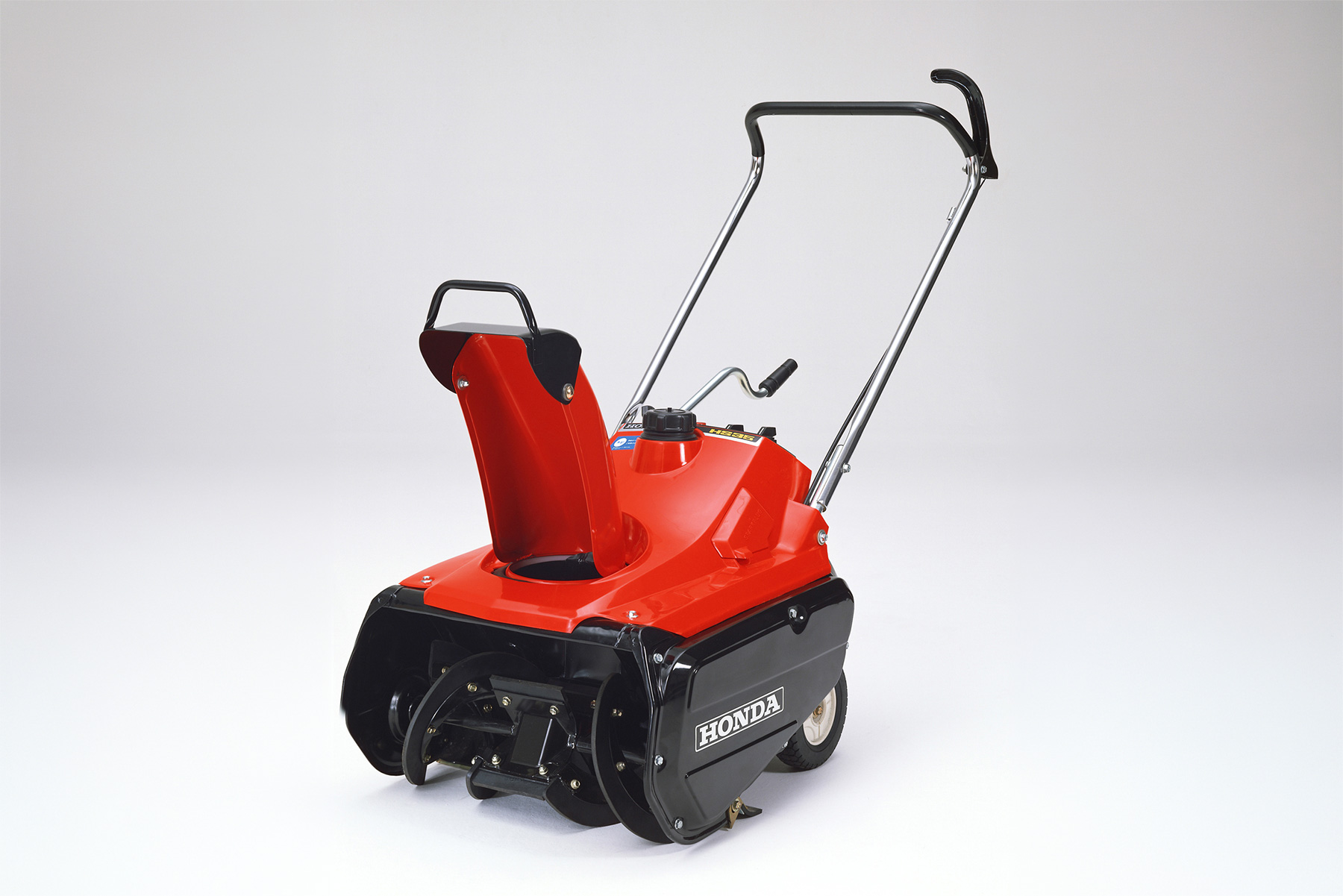
Until then, snow removal often involved manually shoveling snow into a machine known as a snow thrower, which would then discharge it. The concept of a snow blower designed specifically for home use had yet to become established. Recognizing this situation, Honda set out to develop a compact residential snow blower that would allow individuals to break up and discharge snow mechanically.
In regions with heavy snowfall, failing to clear snow in the morning could make it impossible to get to work or school. Honda therefore approached the development of its snow blower not simply as a piece of work equipment, but as an essential tool for protecting everyday life.
Development focused on the needs of the people who would use the machine, with particular emphasis on making it easy to handle and operate, even for elderly people and women.
For example, someone might spend around 30 minutes clearing snow from a parking area before leaving for work, while family members remaining at home would continue clearing snow from around the house during the day. Honda wanted to use the power of machinery to ease this physically demanding work.
In regions with heavy snowfall, roofs designed to allow snow to slide off naturally had also become widespread, reducing the need to remove snow from rooftops manually. However, the snow that fell from these roofs still had to be cleared, further increasing the need for residential snow blowers.
The Snowla HS35 was developed with these requirements in mind. Weighing just 45 kg, it was lightweight, fuel-efficient, and quiet. Its controls for clearing and discharging snow, moving forward, and stopping were all positioned within easy reach of the operator, making the machine easier to use for elderly people and women.
The HS35 also featured an engine capable of starting at temperatures as low as −25°C, along with large, easy-to-grip switches that could be operated while wearing gloves.
Although the Snowla HS35 was designed for relatively small-scale snow removal around private homes and parking areas, it could clear up to 30 tonnes of snow per hour, equivalent to 500 kg per minute. Recognizing that the machine would not be used outside the winter season, Honda also equipped it with a folding handle for compact storage.
The Snowla combined an auger, a spiral-shaped mechanism that breaks up and collects snow, with a blower that discharges the collected snow over a distance. Honda conducted repeated field tests in areas such as Niigata and Aomori, where snowfall tends to have a high moisture content, to improve both snow collection and discharge performance.
Snow blowers available at the time were expensive and offered in only a limited range of models. Although some farmers and operators of large parking areas used them, they had yet to become widespread among ordinary households.
Honda therefore introduced the Snowla HS35 at a price below 100,000 yen. However, its manually propelled, compact design limited the range of applications for which it was suitable. While its small size and ease of storage were well received, sales did not necessarily meet expectations because the machine was primarily intended for relatively light work, such as clearing a path from a parking area to the road.
Honda responded by beginning development of a new model that would be easier for anyone to use and suitable for a wider range of applications. This involved separating the snow collection and discharge mechanisms.
The result was the HS50, launched in 1982. Compared with the Snowla HS35’s 3.5 horsepower, the HS50 offered a more powerful 5-horsepower engine capable of handling heavy snow without clogging. It also featured separate mechanisms for collecting and discharging snow.
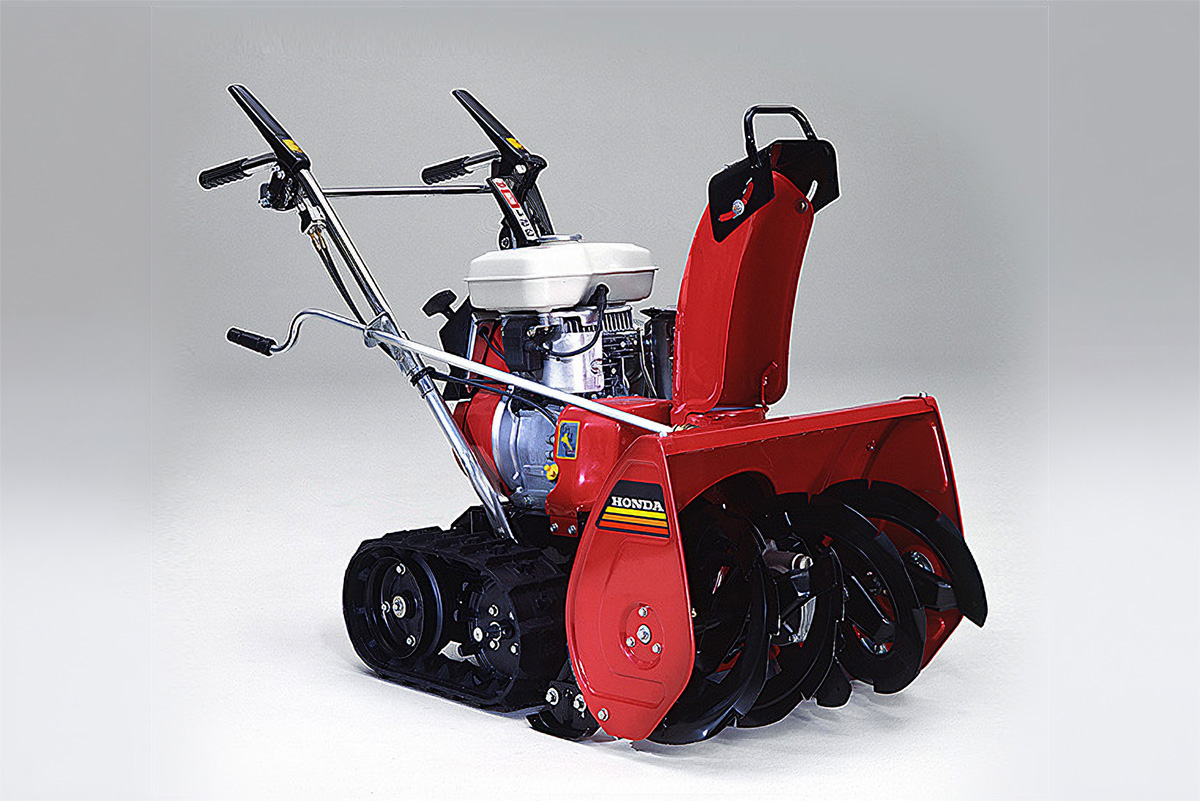
Two years later, in 1984, Honda launched the HS70, which delivered 7 horsepower and further improved snow removal performance.
By this time, Honda’s compact residential snow blowers had become widely recognized in regions with heavy snowfall, and snow blowers were increasingly finding their way into ordinary households.
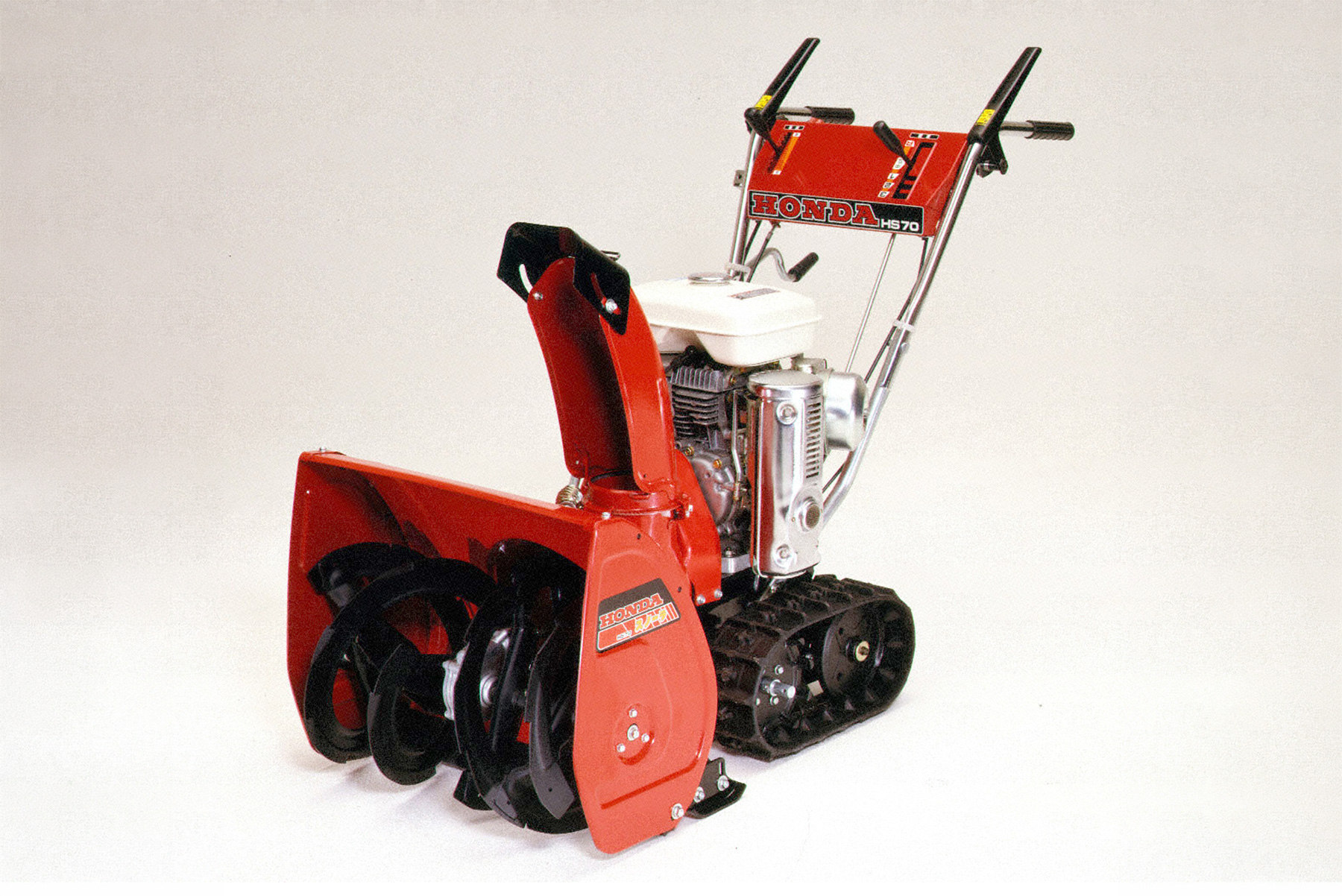
Born from the desire to make life easier through technology for people living in regions with heavy snowfall, Honda’s snow blowers continued to evolve through the introduction of various technologies, reducing the burden of physically demanding snow removal work for an ever-growing number of people.