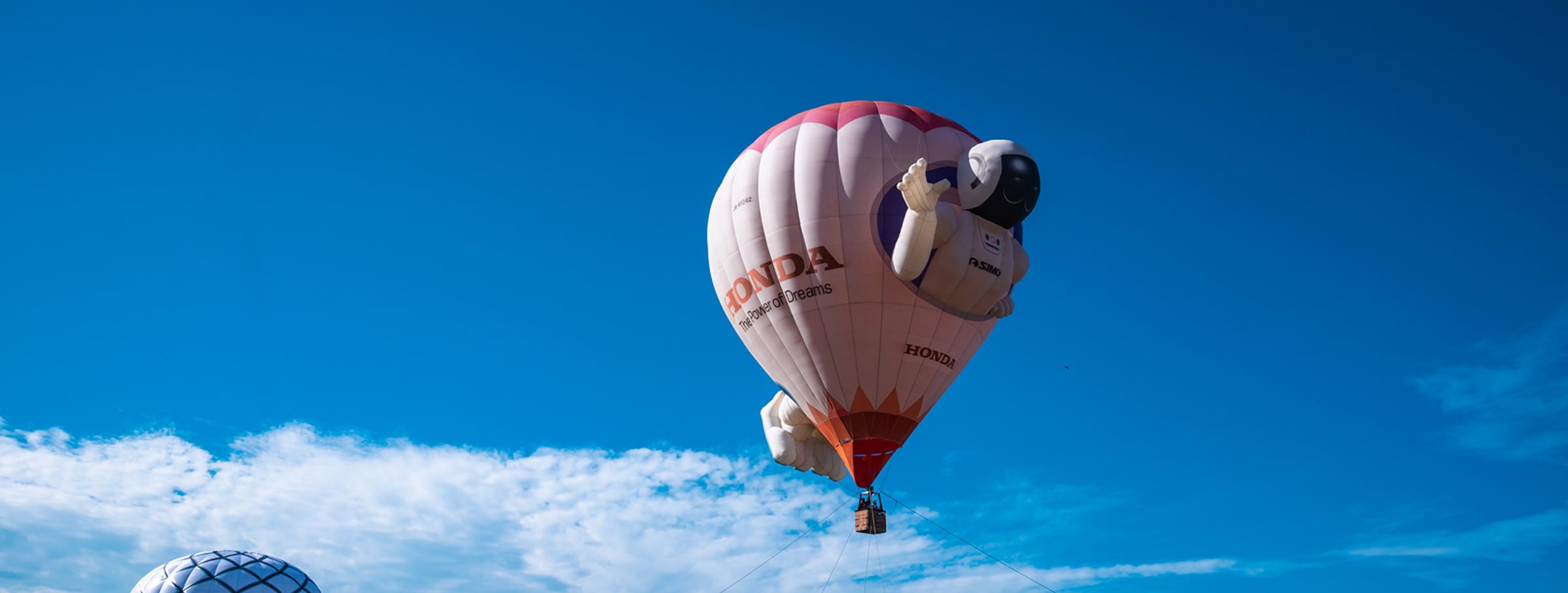
Honda Power Products Supporting the Saga International Balloon Fiesta
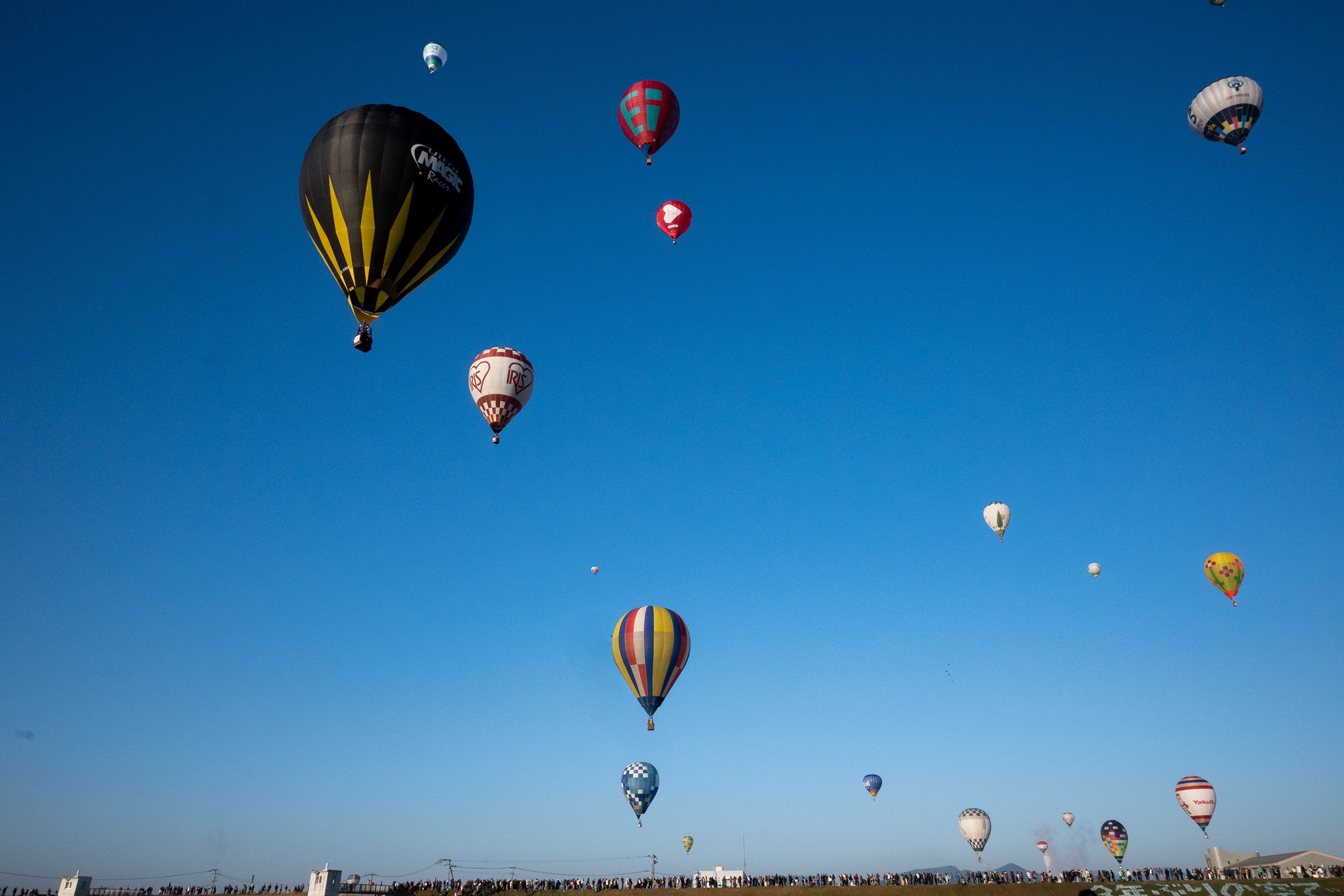
Flowing north to south through the Saga Plain in Saga Prefecture, the Kase River becomes the stage for one of Japan’s most spectacular autumn traditions. Once a year, more than a hundred hot-air balloons rise into the sky above its riverbanks at the Hot Air Balloon Honda Grand Prix – Saga International Balloon Fiesta, one of Kyushu’s largest events drawing more than 800,000 visitors over five days.
First held in 1980, this event has grown inseparable from Honda Power Products.
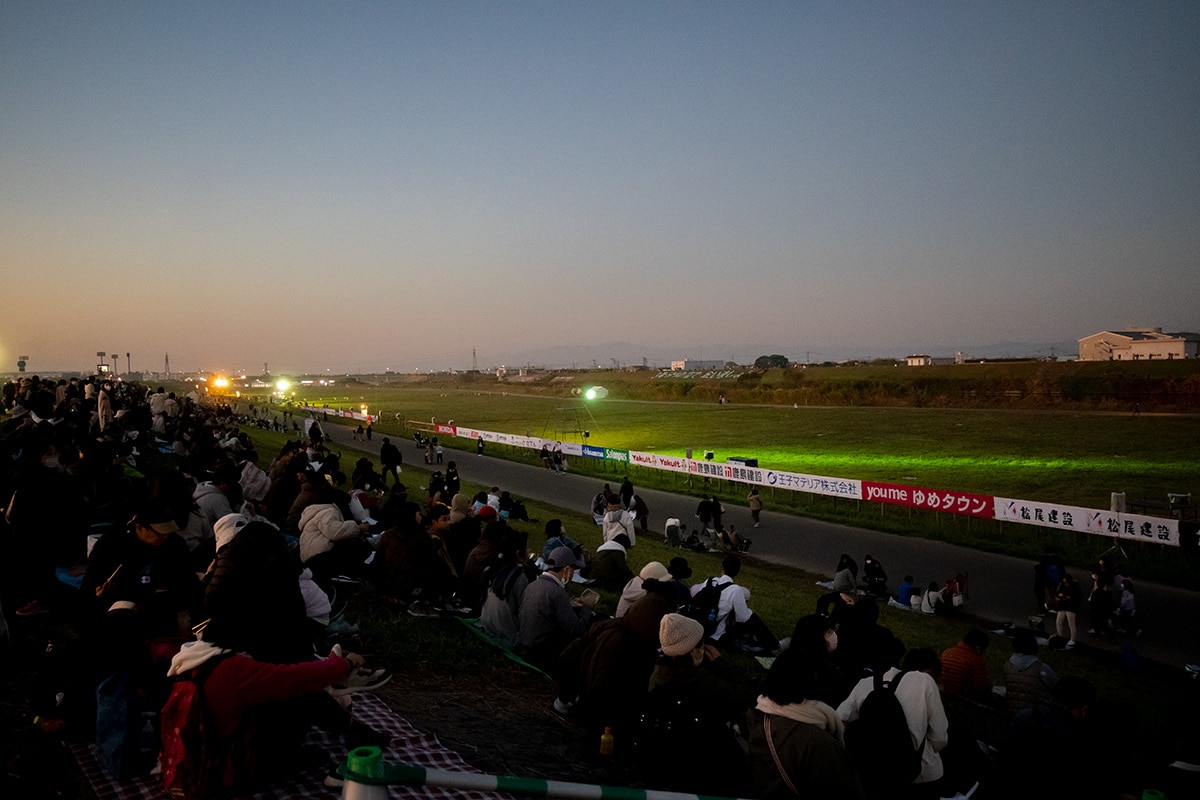
In early November, at 5:30 a.m., long before sunrise, crowds begin pouring out of Balloon Saga, JR Kyushu’s special-event station. Open only during the Fiesta, the station welcomes families, couples, office workers, and students in school uniforms who stop by the riverbank before work or class.
“We came as a group of five friends—my idea this year,” says a local high-school student who usually uses the station next door. For him and many others, the Saga International Balloon Fiesta is a familiar yearly ritual. Every autumn, they take the first train and head straight to the Kase River.
Balloons first graced the sky above the Kase River in 1980. The event began as “Balloon Fiesta in Kyushu,” launched in 1978 in Amagi, Fukuoka, before moving to the Saga Plain two years later. Since then, Saga has become known worldwide as a hot-air-balloon capital.
The Fiesta welcomed just 30,000 spectators in 1980. By 1983, it surpassed 100,000, and in 1989—when Saga hosted Asia’s first Hot-Air Balloon World Championship—the event drew over 1.16 million people. By 2025, cumulative attendance surpassed 30 million visitors.
Several factors make Saga ideal for the event to be held each year: calm, stable winds in early November; a wide, unobstructed flight area; and proximity—just an hour—from Fukuoka Airport. Strong support from Saga Prefecture and Saga City, large enough to cater to the participants’ lodging needs, has also been key to sustaining the event’s scale.
Honda joined the Fiesta in 1990 as a special sponsor. Hot-air-balloon competition—where pilots read the wind and race on air currents—has much in common with the challenges of motorcycle and automotive racing, making the partnership a natural fit.
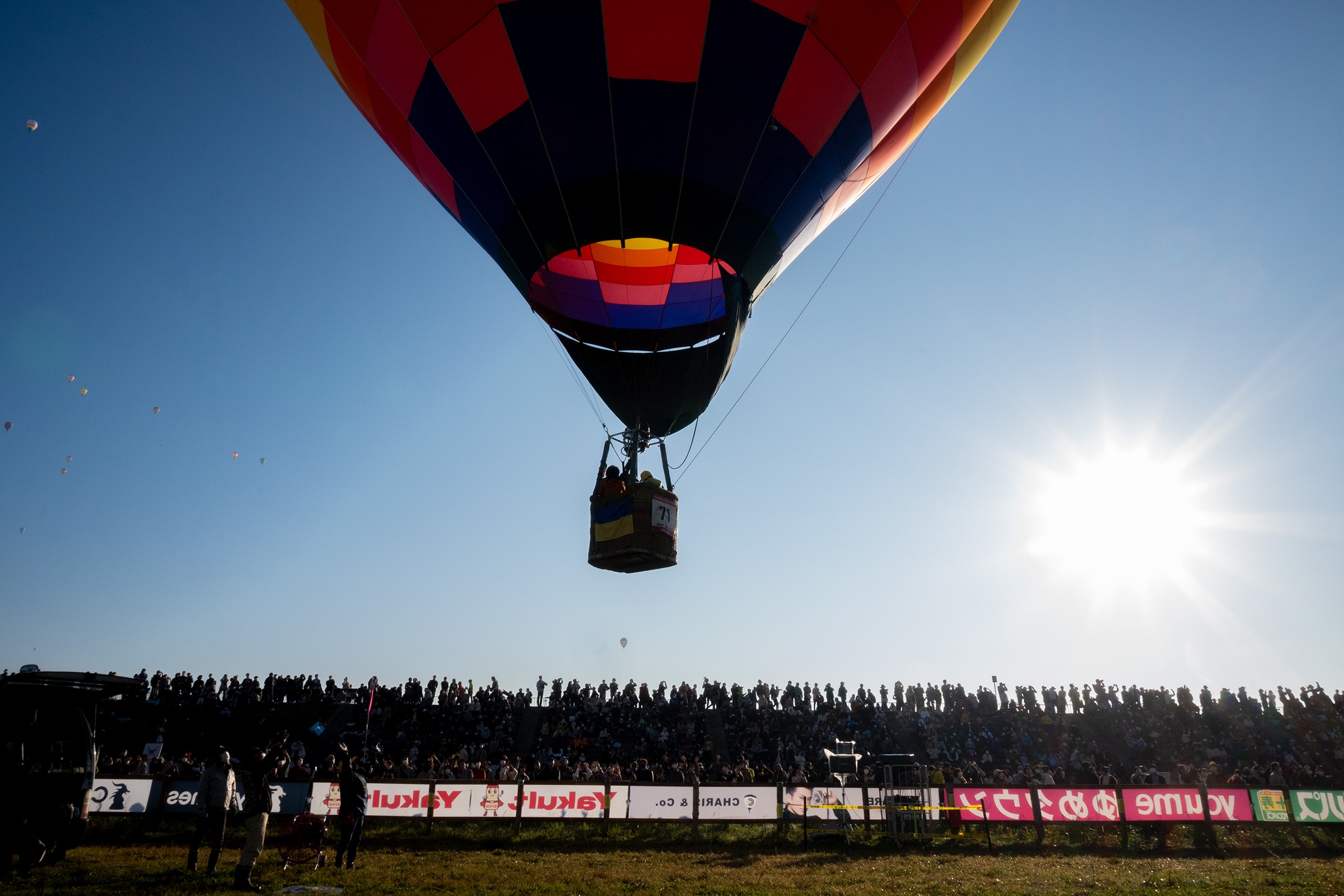
At the heart of the event are the competitive flights. Because balloon control depends on stable air, flights are held only twice a day: from sunrise to three hours later (starting 7:00 a.m.), and two hours before sunset (starting 3:00 p.m.). Rising thermals during midday make ballooning unsafe, so no competition is held then.
This is why spectators gather in the dark—so they can watch the first competitive launch at 7 a.m.
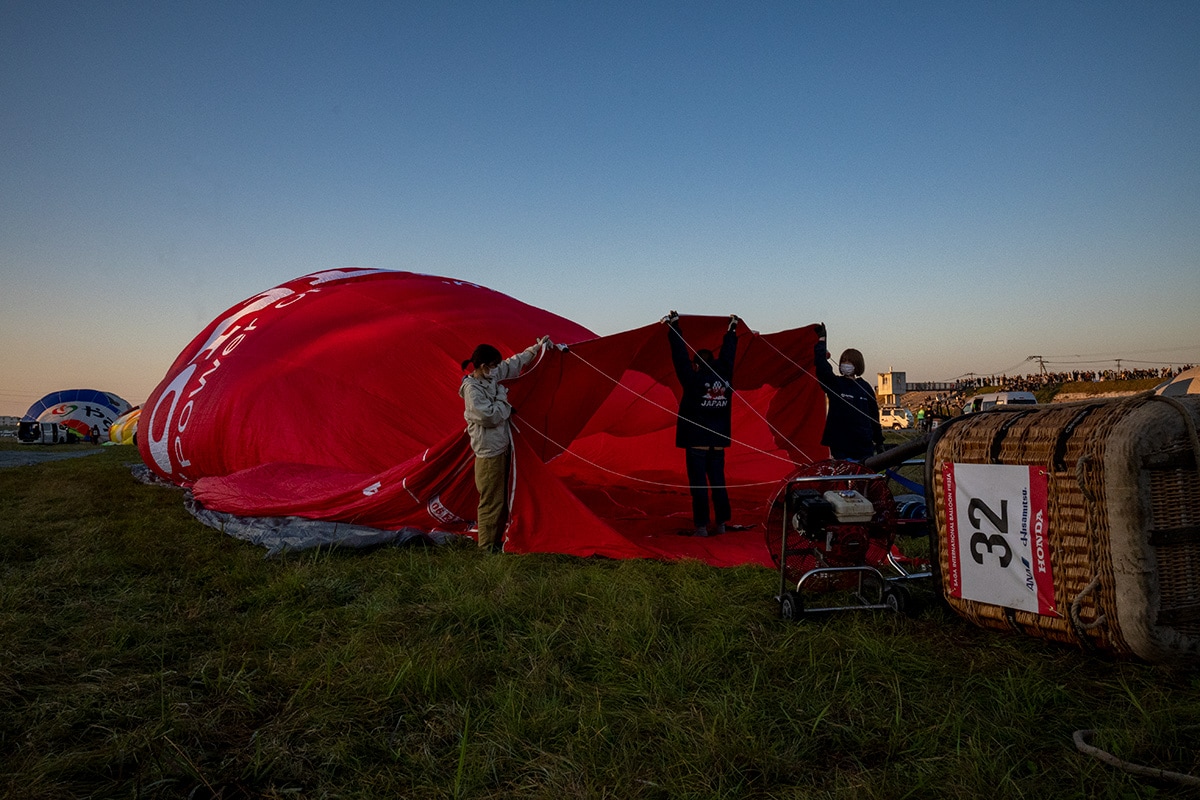
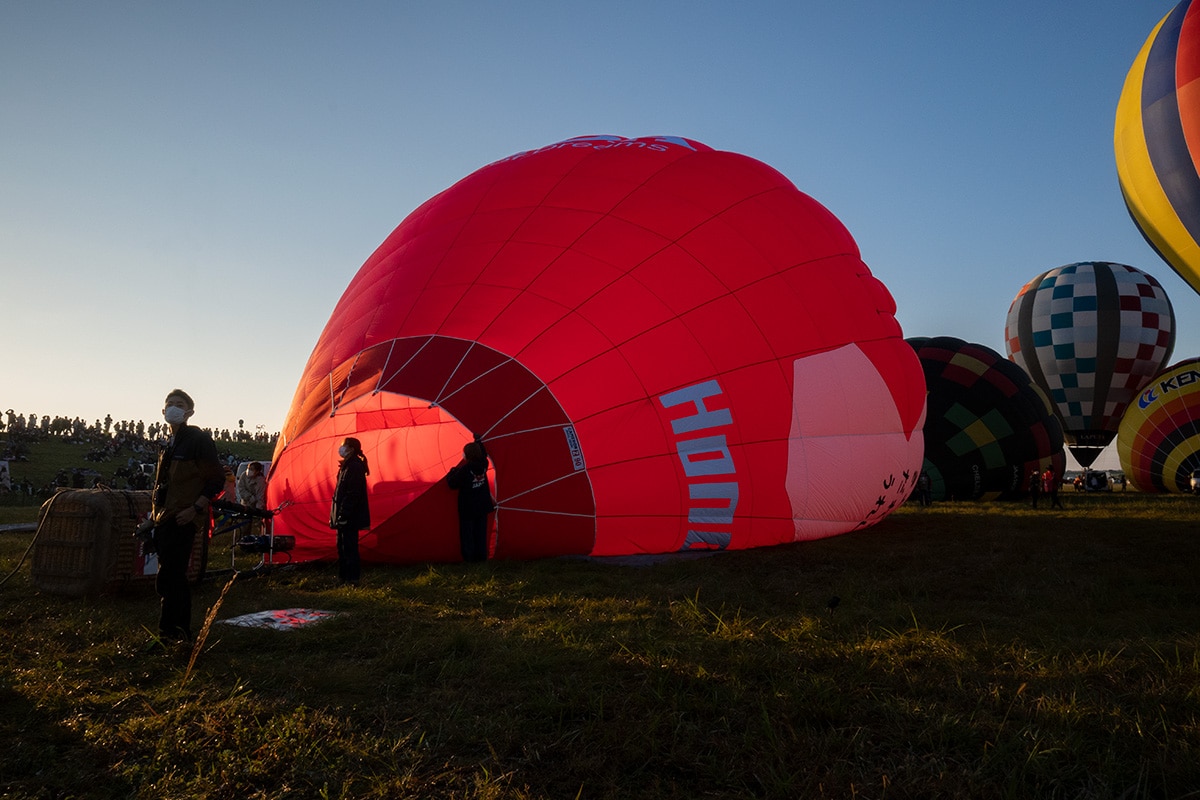
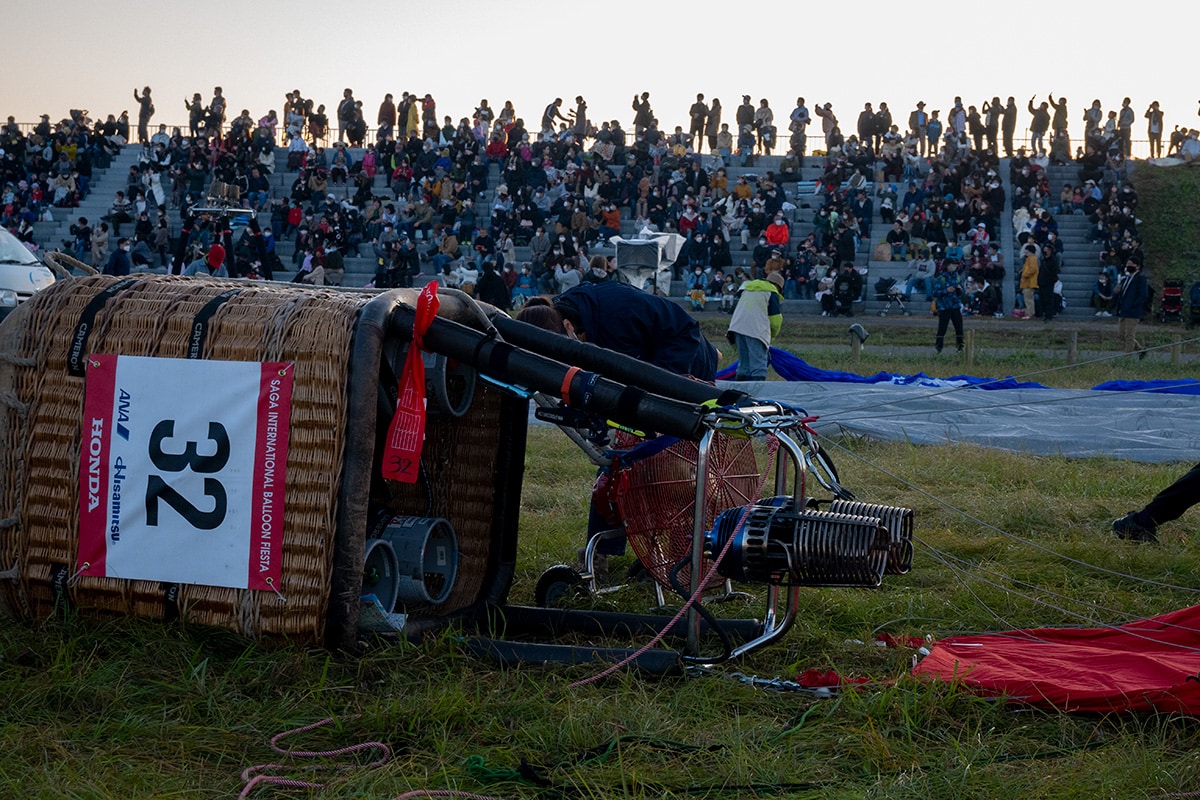
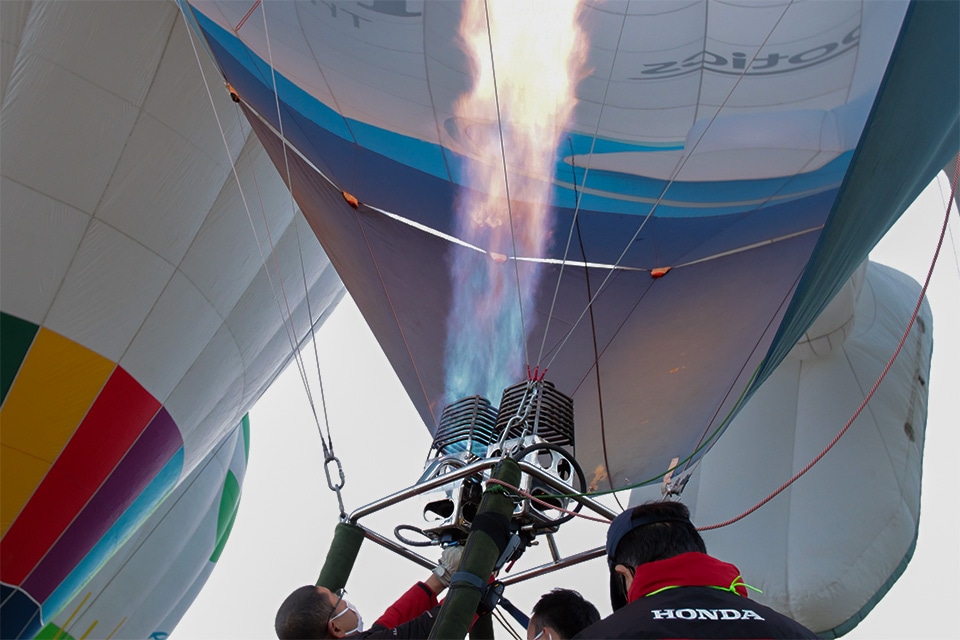
Pilots begin by laying out the envelope (the balloon fabric) and preparing the basket. The envelope and basket are connected before a large inflator fan blows ambient air into the envelope. Once it takes shape, the burner heats the air inside, giving the balloon lift and bringing it upright.
-
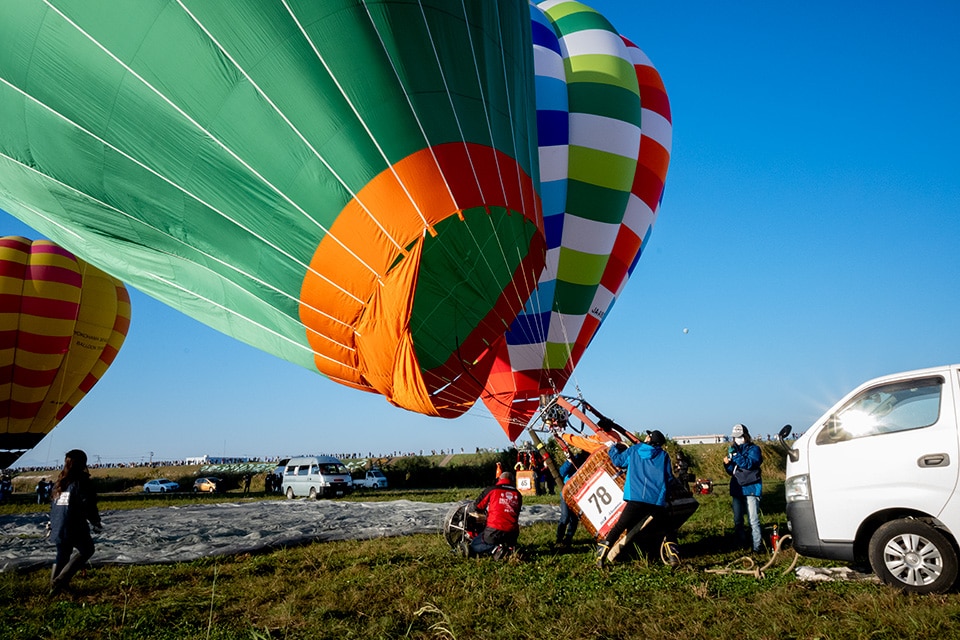
Once the inflator has blown air into the envelope, the burner heats the air inside, raising the balloon to a standing position. -
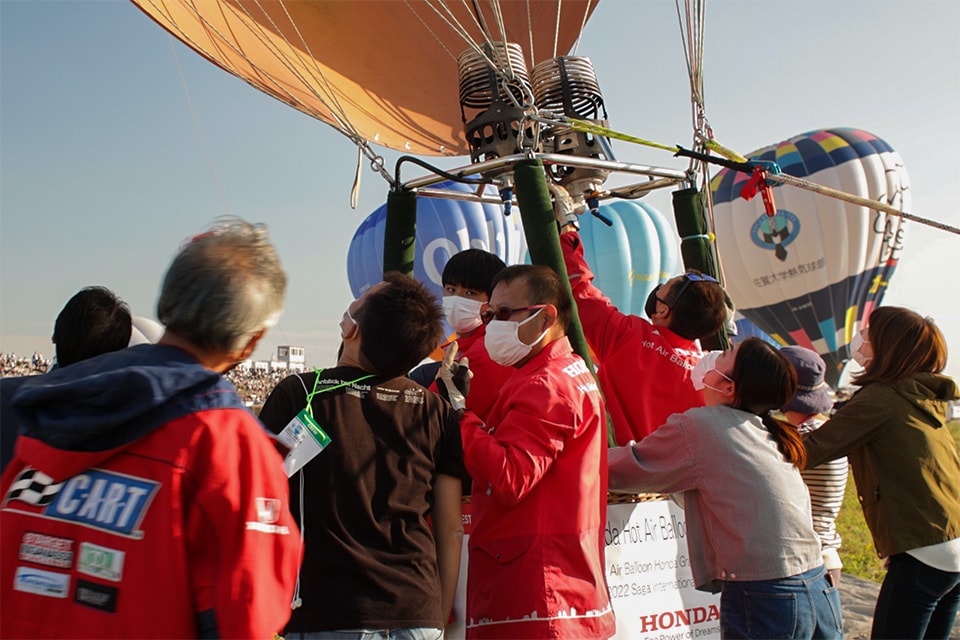
The inflator fans that send the first rush of air into the balloon envelopes are powered by Honda GX engines. Known for environmental performance that meets strict North American, European, and Australian emissions standards, as well as for durability and reliability, GX engines have become a staple among balloon teams globally. Fast inflation is a tactical advantage, and the GX’s strong starting performance is highly valued by balloon manufacturers worldwide.
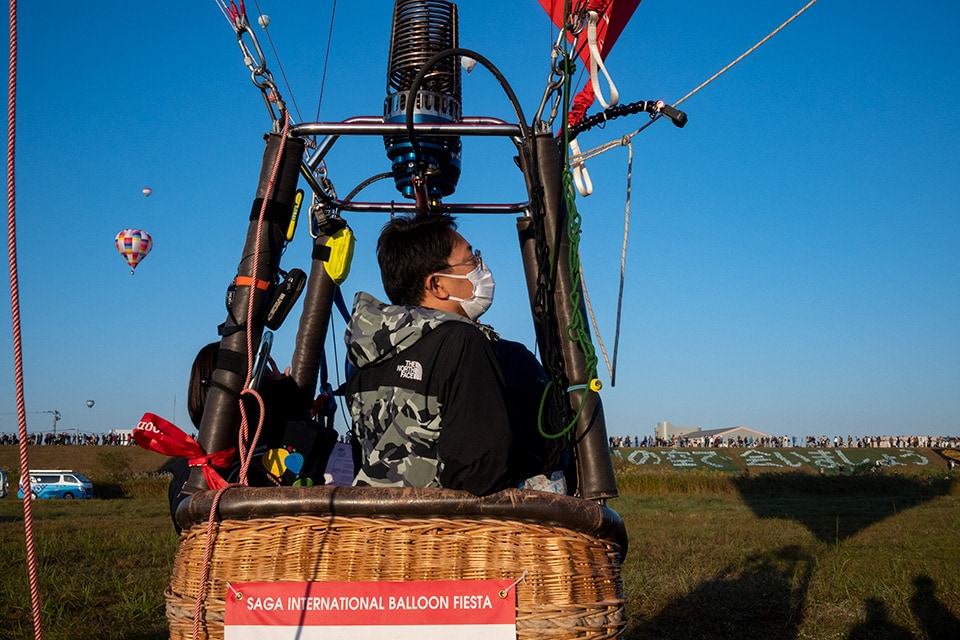
Honda Power Products and Japan Balloon Service, the organization overseeing balloon event operations, have begun trialing a switch from gasoline-powered GX engines to the eGX, Honda’s commercially available electric power unit. Because the eGX is designed as a direct structural replacement for the GX, swapping units on existing inflators requires no major modification.
Trials confirmed that the eGX delivers enough output to drive the inflator and that battery capacity meets operational needs.
“Hot-air balloons and carbon neutrality didn’t feel connected at first,” says Shogo Machida of Japan Balloon Service. “But we wanted to do what we could. Even with large balloons, the battery held up with no issues. And without gasoline, the equipment is safer, cleaner, and odor-free. Maintenance is easier too, which will be a real benefit for pilots in the future.”
A powerful example appeared in 2025, when Honda’s own competition team, the Honda Hot Air Balloon Racing Team, debuted a newly designed balloon based on the winning entry from 10-year-old Ryo Nakamura in the Honda Balloon Design Contest, an event sponsored by the Saga Shimbun newspaper. When unveiling the balloon at Nakamura’s school, strong winds prevented an outdoor inflation—so the team safely inflated it inside the gymnasium, something impossible with a gasoline engine but entirely feasible thanks to the eGX.
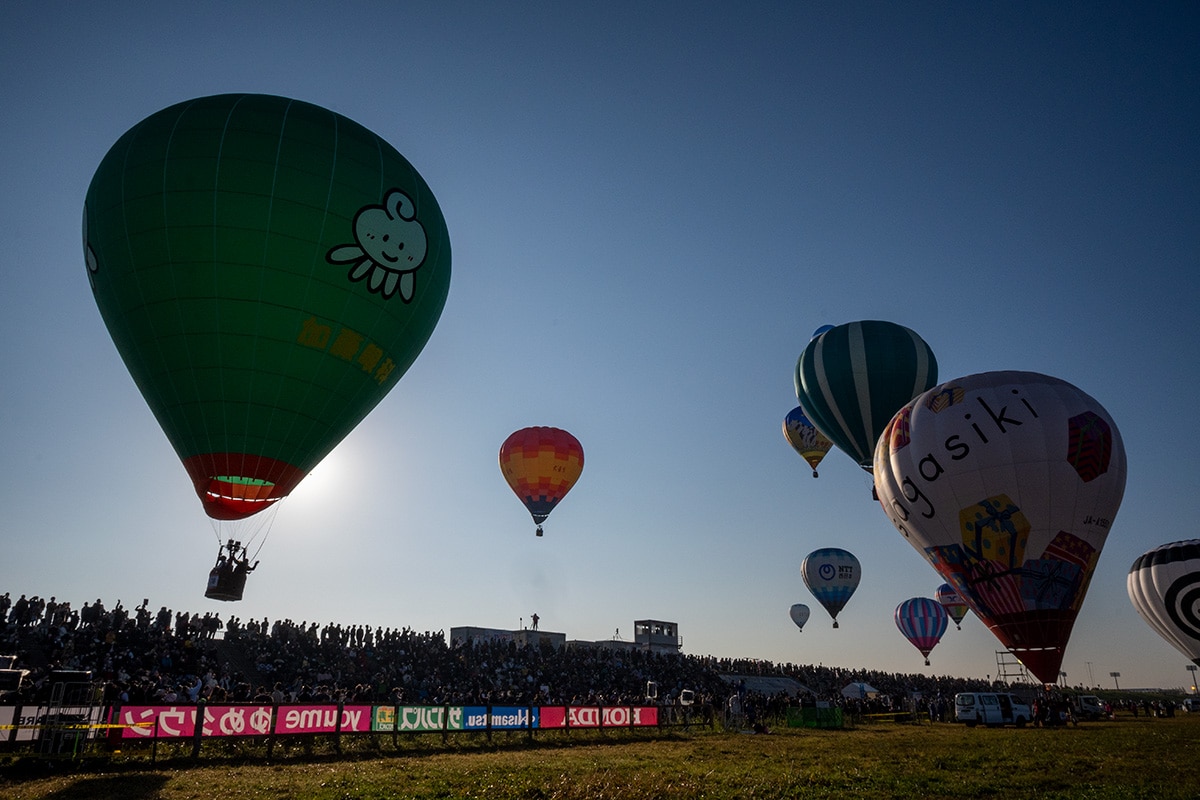
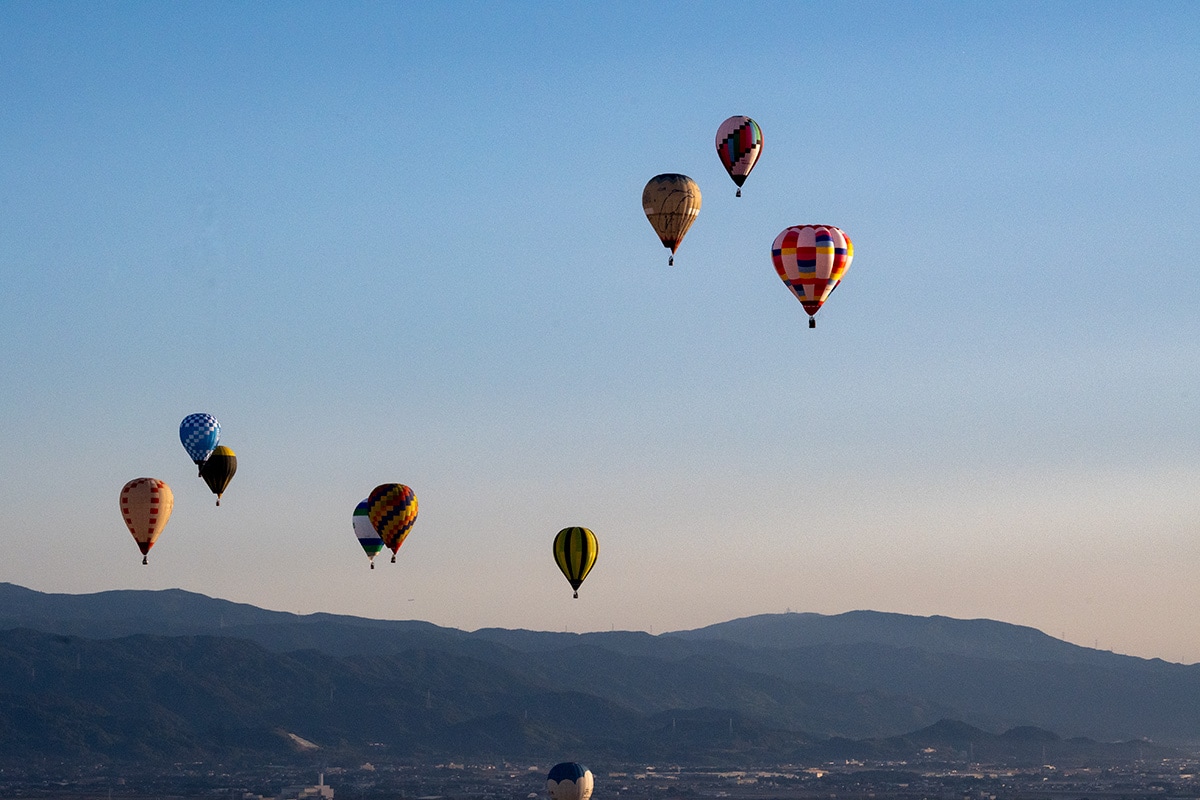
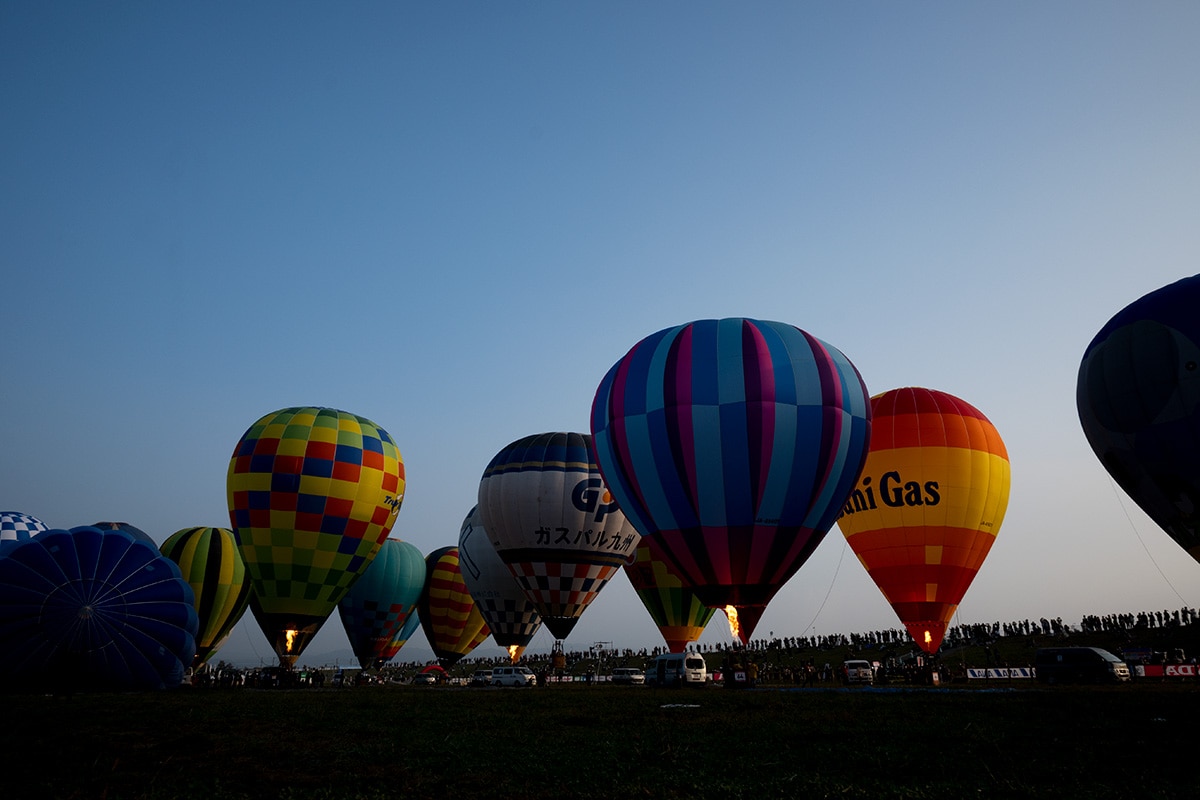
Another attraction of the Saga International Balloon Fiesta can be found along the riverbank, where more than 150 food stalls line up, joined by two massive tents where over 50 local-product vendors set up shop. The fiesta is a community-wide celebration supported by local governments and businesses. Many visitors come not only for the balloons but for the once-a-year festival atmosphere.
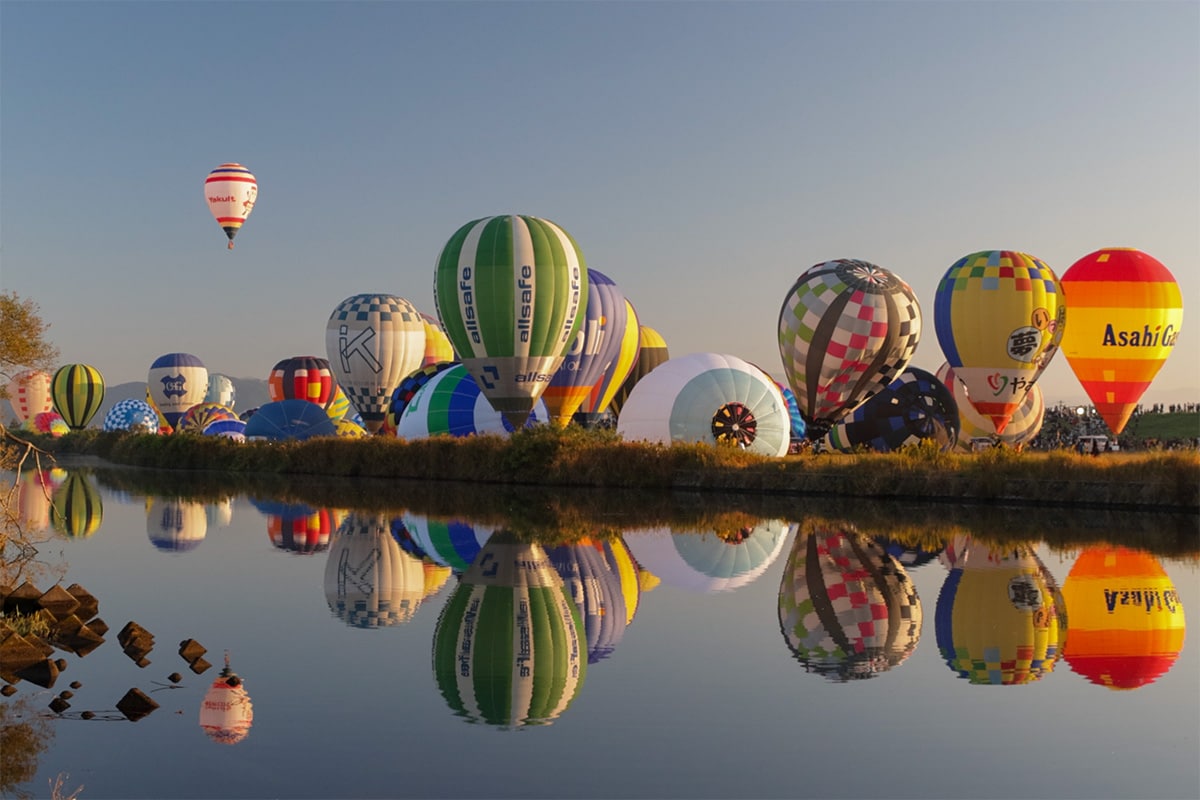
Pilots from around the world love Saga for the warmth of its people, and Saga’s residents love the breathtaking sight of hundreds of balloons filling the sky.
Honda continues to sponsor the event because it brings joy—to spectators and competitors alike.
The Hot Air Balloon Honda Grand Prix is held not only in Saga but also in Saku (Nagano), Ichinoseki (Iwate), and Watarase (Tochigi). The scale differs, but each venue shares the same spirit: communities, teams, and organizers coming together to create smiles.
Honda Power Products hopes to explore the potential of the eGX to help ensure that these smile-filled balloon events can continue for years to come.