Environmental Data
Climate Change
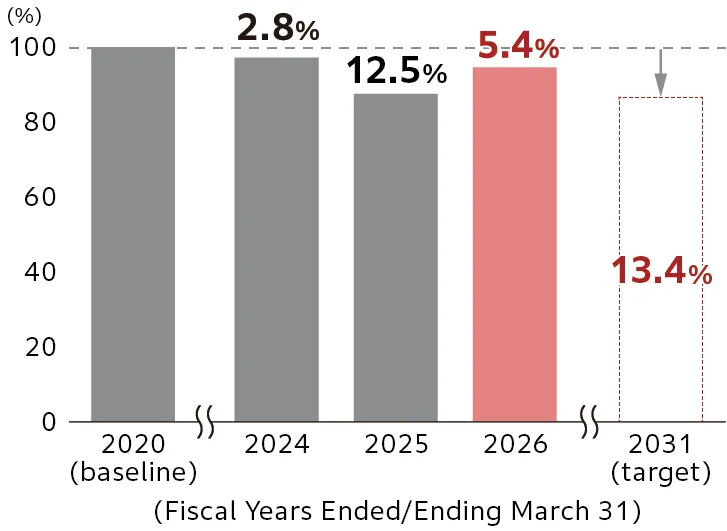
Reduction of CO₂ Emissions from Product Use

- This target covers CO₂ emissions included in Honda’s Scope 3 (Category 11). The target has been set with reference to the principles of the Paris Agreement and the Science Based Targets initiative (SBTi) Sectoral Decarbonization Approach.
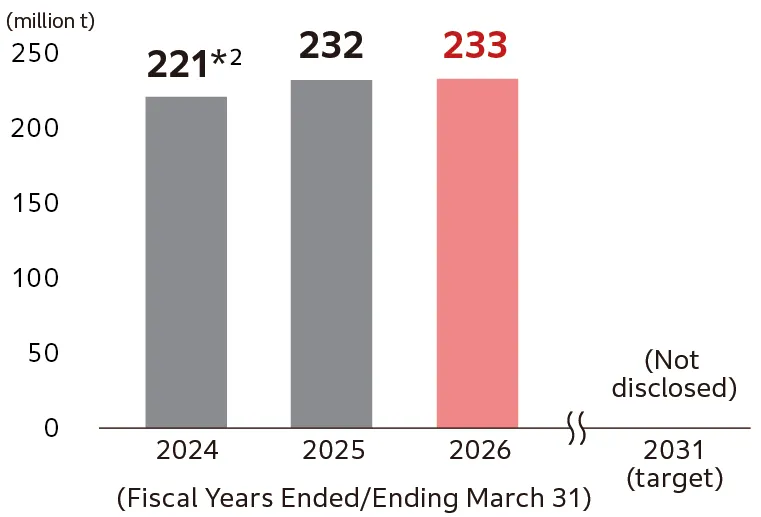
- Figures for prior years have been restated due to a revision in the calculation method.
-
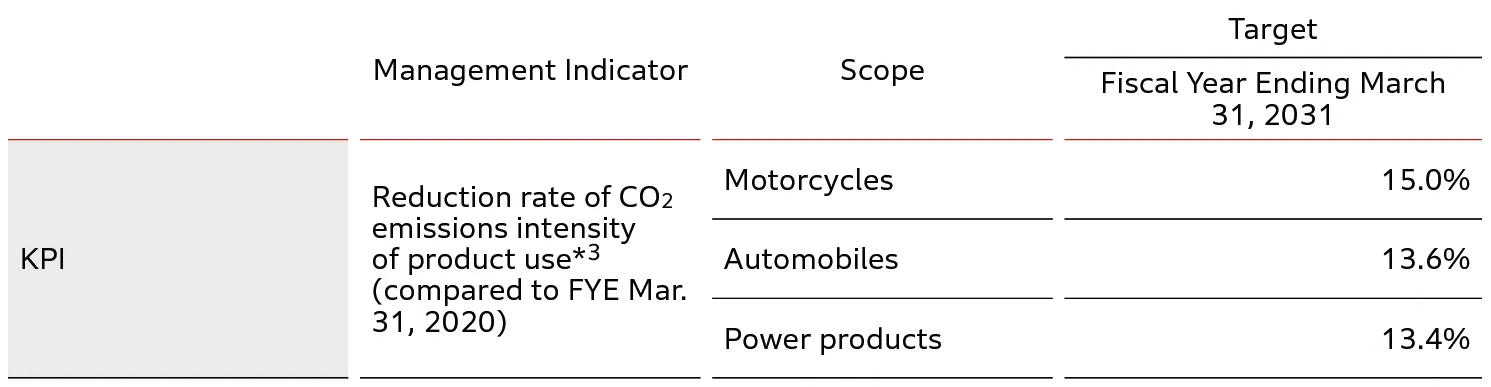
This target covers CO₂ emissions included in Honda’s Scope 3 (Category 11). The target has been set with reference to the principles of the Paris Agreement and the SBTi Sectoral Decarbonization Approach.
See Approach to Measuring GHG Emissions for the measurement method.
Honda ESG Report 2026|P33 Approach to GHG Emissions Measurement
-
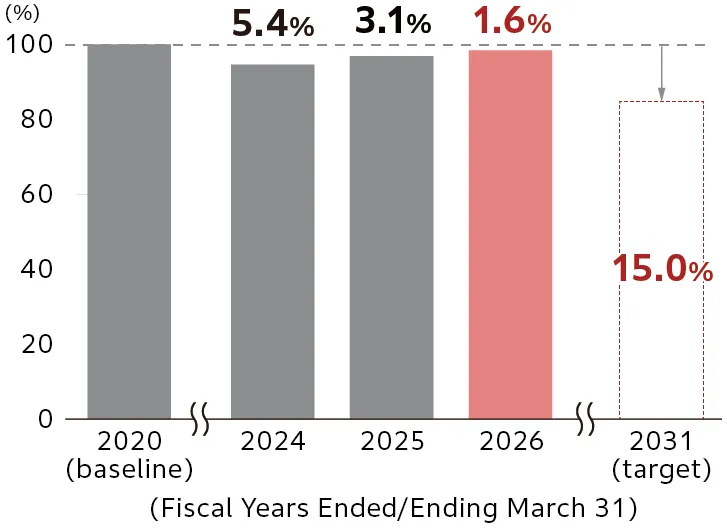
Motorcycles
-
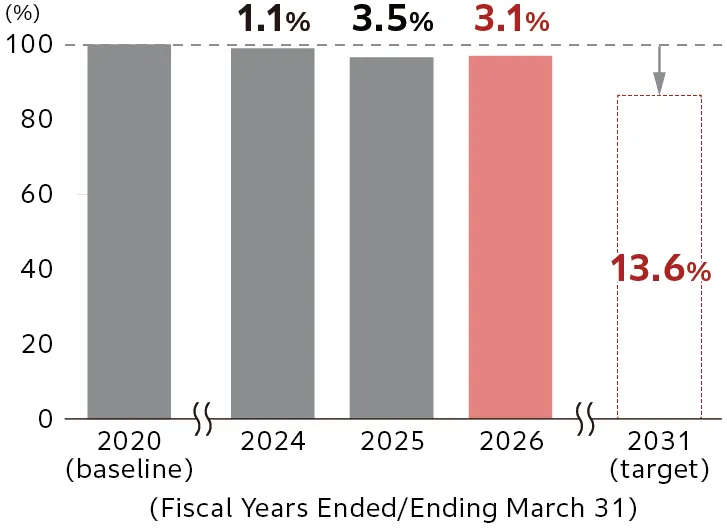
Automobiles
-
Power products
Reduction of CO₂ Emissions from Corporate Activities
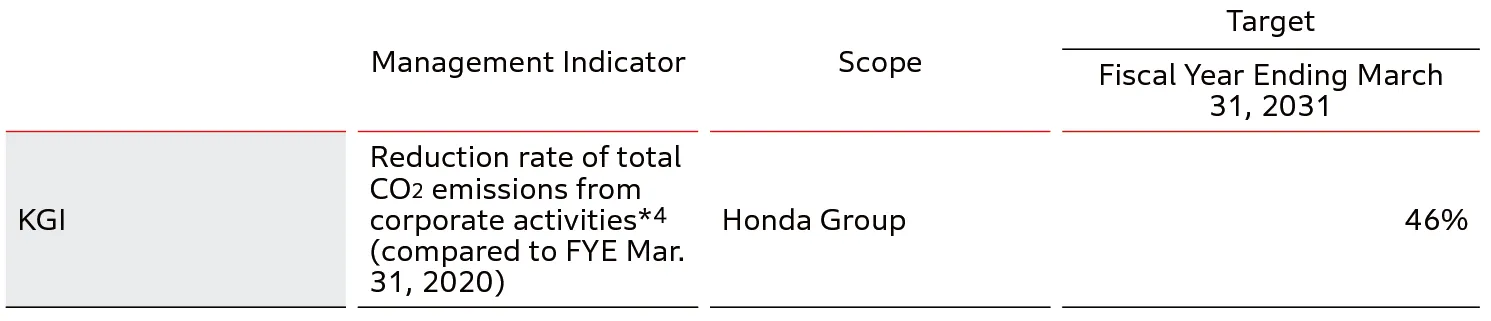
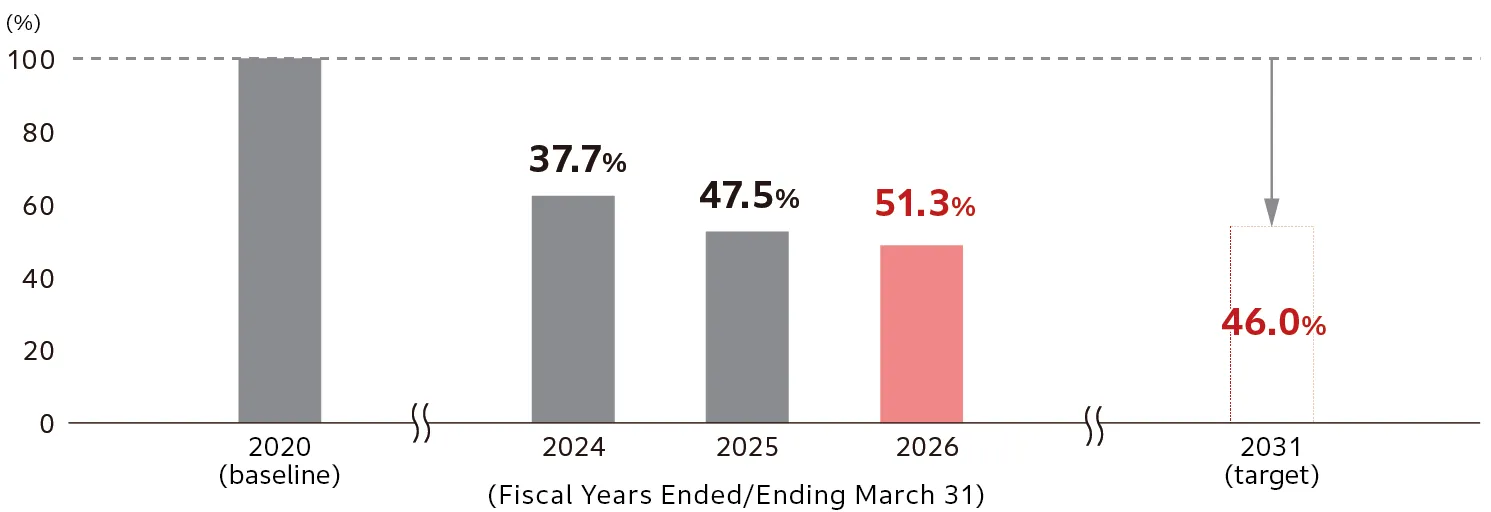
- This target is set as an absolute target based on the gross emission amount from Honda. In line with the Paris Agreement, this target aims to achieve 46% reduction in GHG emissions compared with the fiscal year ended March 31, 2020. The target applies to Honda’s Scope 1 GHG emissions—including CO₂, CH4, N2O, HFCs, PFCs, SF6, and NF3—and Scope 2 GHG emissions (market‑based).
In establishing this target, we did not apply the SBTi sectoral decarbonization approach; instead, the target was calculated using the SBTi cross‑sector absolute contraction approach.

GHG Emissions
As a responsible company operating in the mobility industry, Honda believes in the importance of calculating and disclosing GHG emissions in order to drive progress in initiatives to reduce global emissions.
As the first milestone in this endeavor, in August 2012, Honda disclosed estimates of GHG emissions for the fiscal year ended March 31, 2012 across its entire value chain based on the GHG Protocol, currently the world’s most widely used accounting standard. The Company became the world’s first mobility company to release estimates of emissions not only from its own corporate activities (Scopes 1 and 2) but also from all upstream and downstream activities (Scope 3), extending from the procurement of raw materials to the transportation and customer use of Honda products and ending with the treatment of end-of-life products.
Honda continues to calculate and report the emissions from its entire value chain and is making improvements to obtain more accurate emissions data. Specifically for Scope 3 (other indirect emissions), the Company is working to widen the boundaries of data collection for categories that account for the largest proportion of estimated emissions, and by improving the accuracy of the calculation methods.
For Scope3 Category 11, the scope of calculation has been extended from approximately 90% of global sales to volume to nearly 100%. The conditions used in calculating figures such as annual distance traveled and lifetime years of use have been changed and are now based on the IEA Mobility Model (MoMo) instead of the conventional IEA SMP Model.
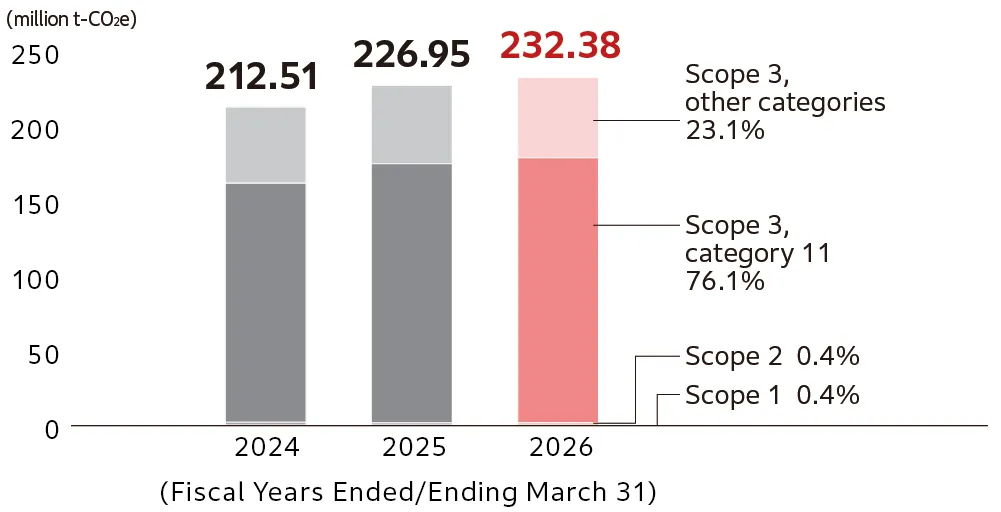
・Scope of aggregation: Honda Motor Co., Ltd. and its consolidated subsidiaries
・Rounded to two decimal places.
※7 For details on the measurement methods and calculation criteria for GHG emissions, please refer to Approach to Measuring GHG Emissions
Honda ESG Report 2026|P33 Approach to GHG Emissions Measurement
GHG emissions
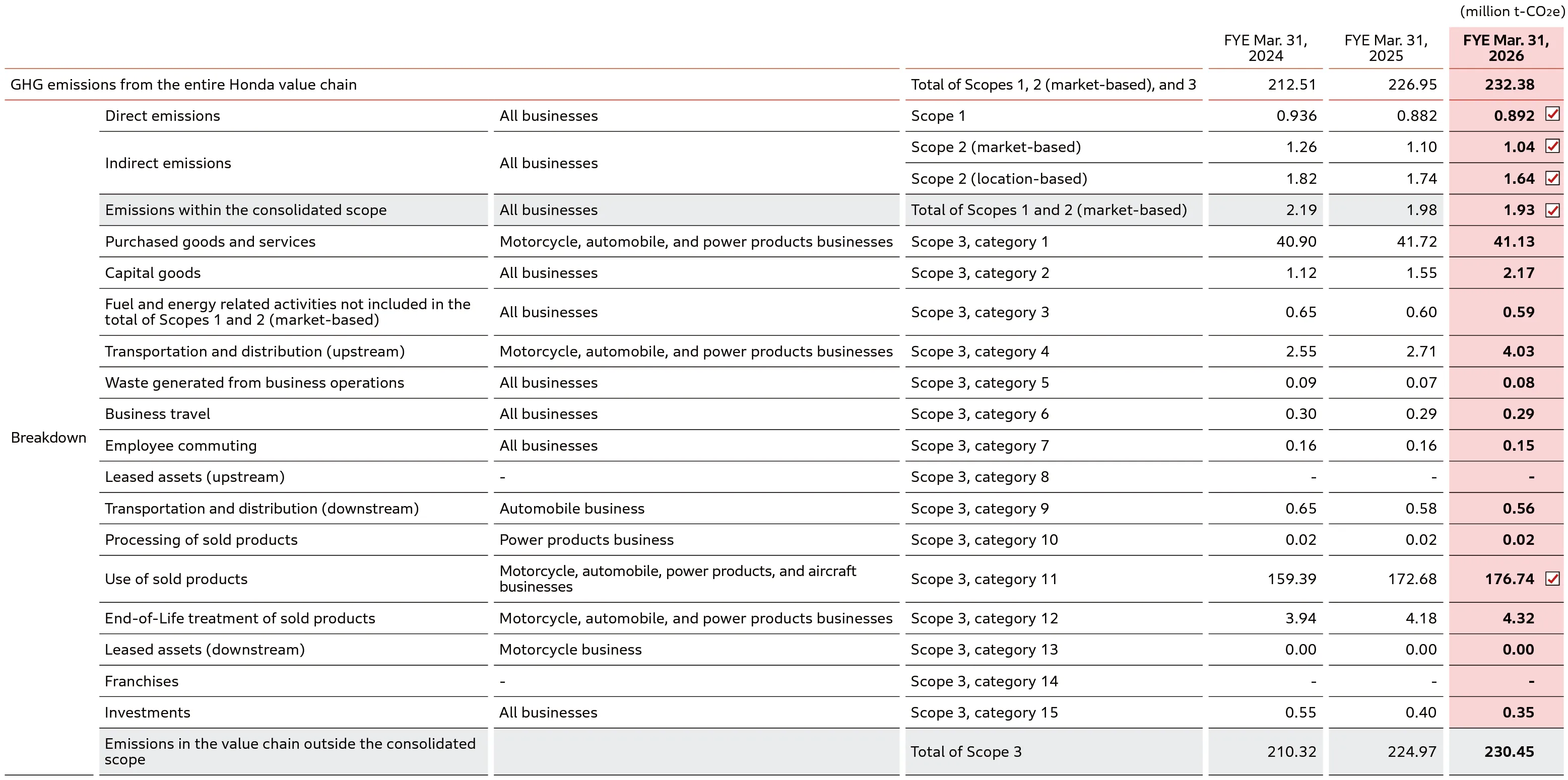
・Organizations covered: Honda Motor Co., Ltd. and its consolidated subsidiaries
・Scope 1 and 2 are expressed in three significant digits. Scope 3 and the total of Scopes 1, 2 (market-based), and 3 are rounded to two decimal places.
・See Approach to Measuring GHG Emissions
Honda ESG Report 2026|P33 Approach to GHG Emissions Measurement
GHG emissions (Scope 1 and 2)
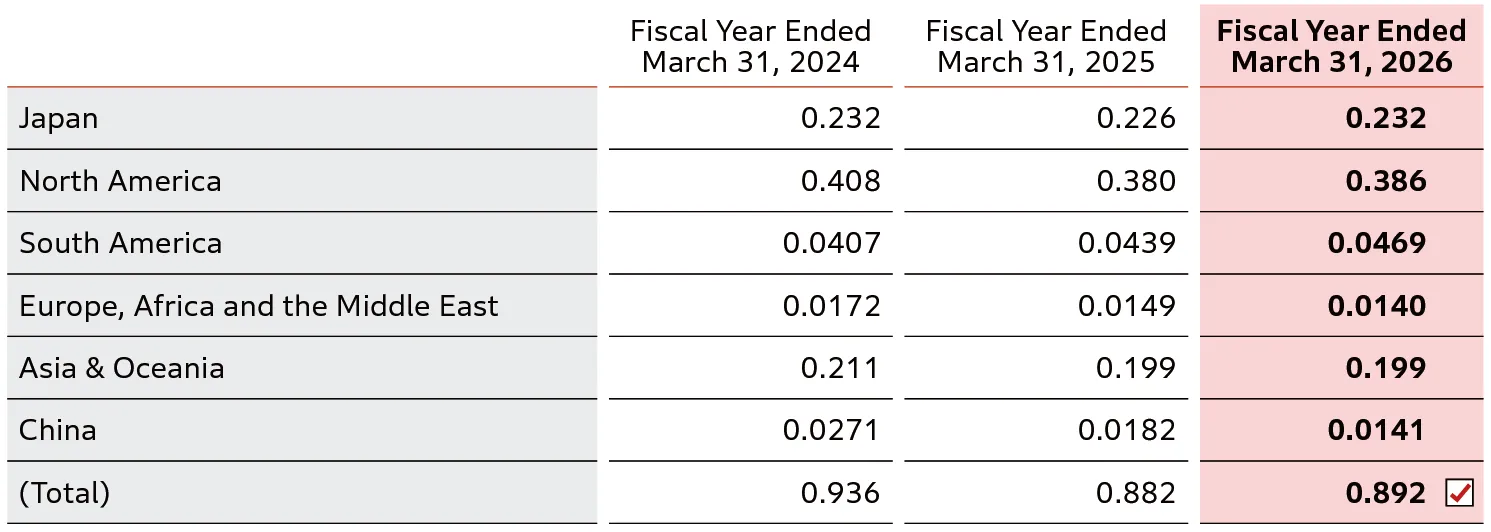
・Scope of aggregation: Honda Motor Co., Ltd. and its consolidated subsidiaries
・Expressed in three significant digits.
・See Approach to Measuring GHG Emissions (
Honda ESG Report 2026|P33 Approach to GHG Emissions Measurement
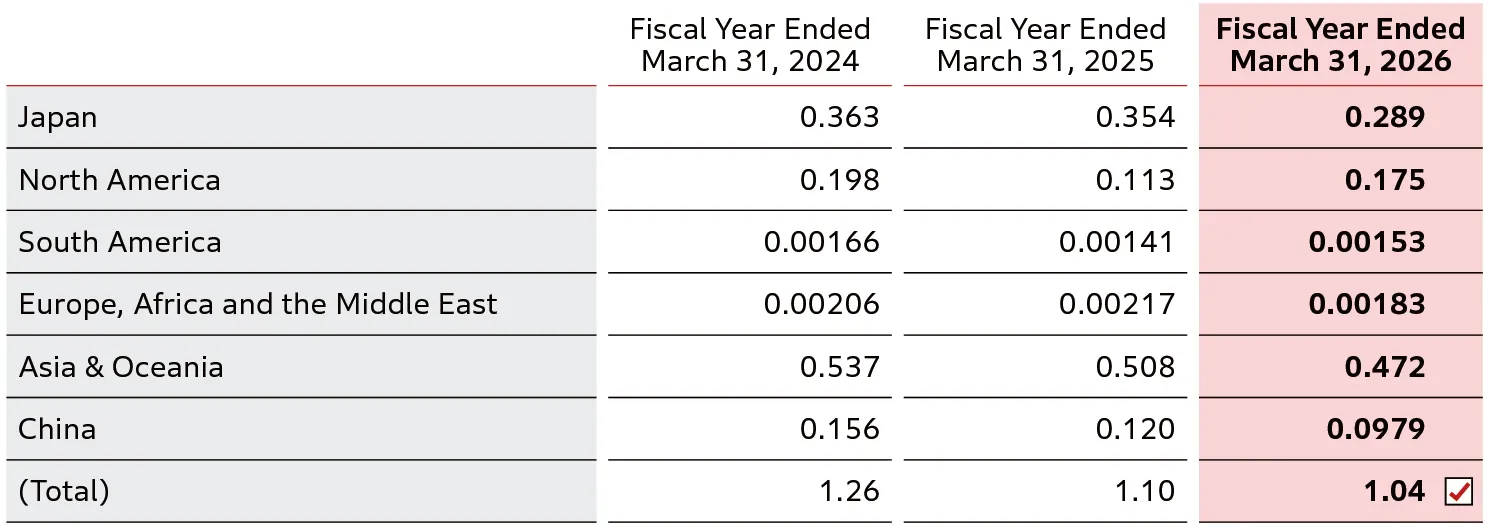
・Scope of aggregation: Honda Motor Co., Ltd. and its consolidated subsidiaries
・Expressed in three significant digits.
・See Approach to Measuring GHG Emissions
Honda ESG Report 2026|P33 Approach to GHG Emissions Measurement
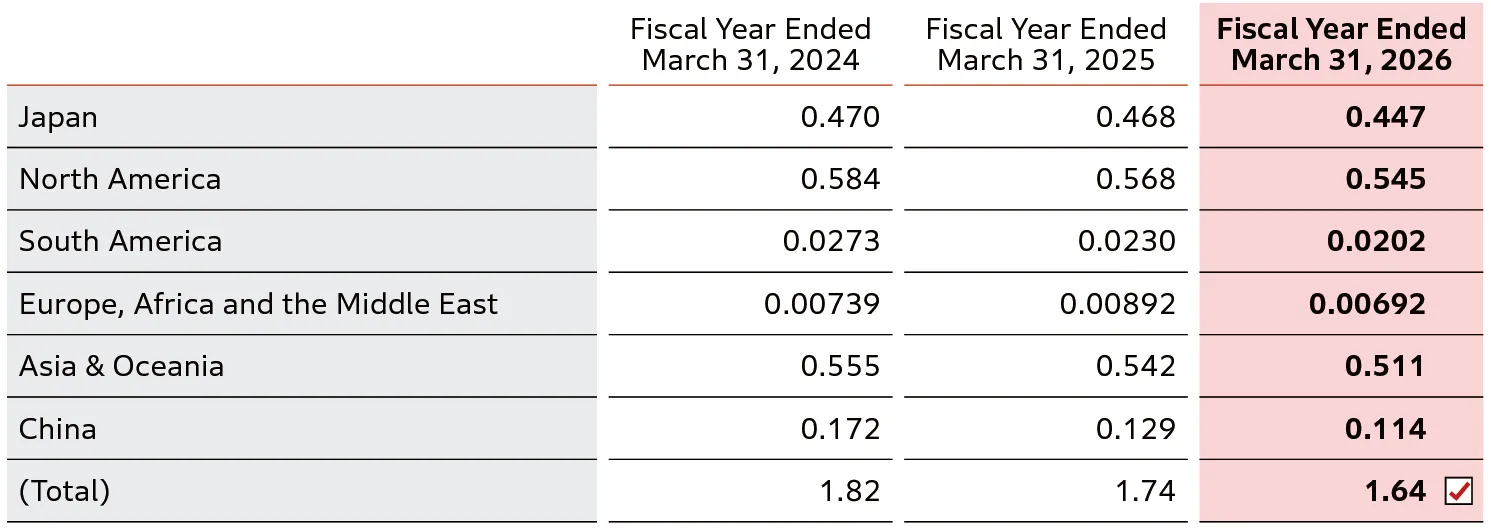
・Scope of aggregation: Honda Motor Co., Ltd. and its consolidated subsidiaries
・Expressed in three significant digits.
・See Approach to Measuring GHG Emissions
Honda ESG Report 2026|P33 Approach to GHG Emissions Measurement
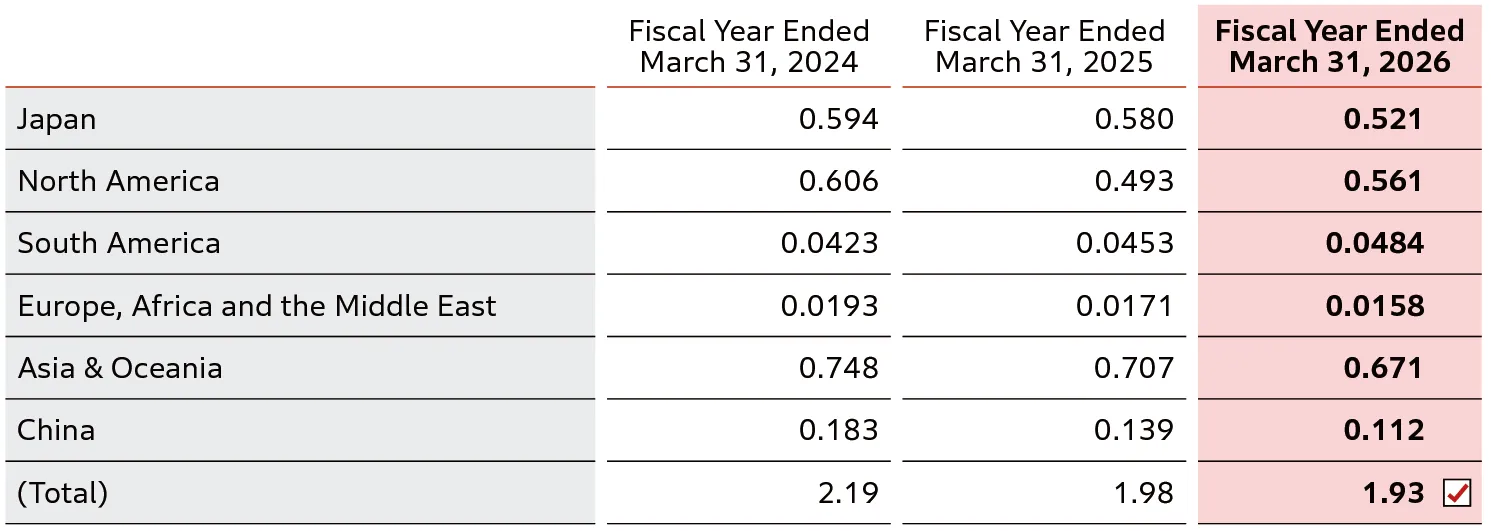
・Scope of aggregation: Honda Motor Co., Ltd. and its consolidated subsidiaries
・Expressed in three significant digits.

・Scope of aggregation: Honda Motor Co., Ltd. and its consolidated subsidiaries
・Calculation method: GHG emissions per unit of revenue = {Scope 1 + Scope 2 (market-based) emissions} ÷ Revenue.
・Expressed in three significant digits.
Energy Consumption
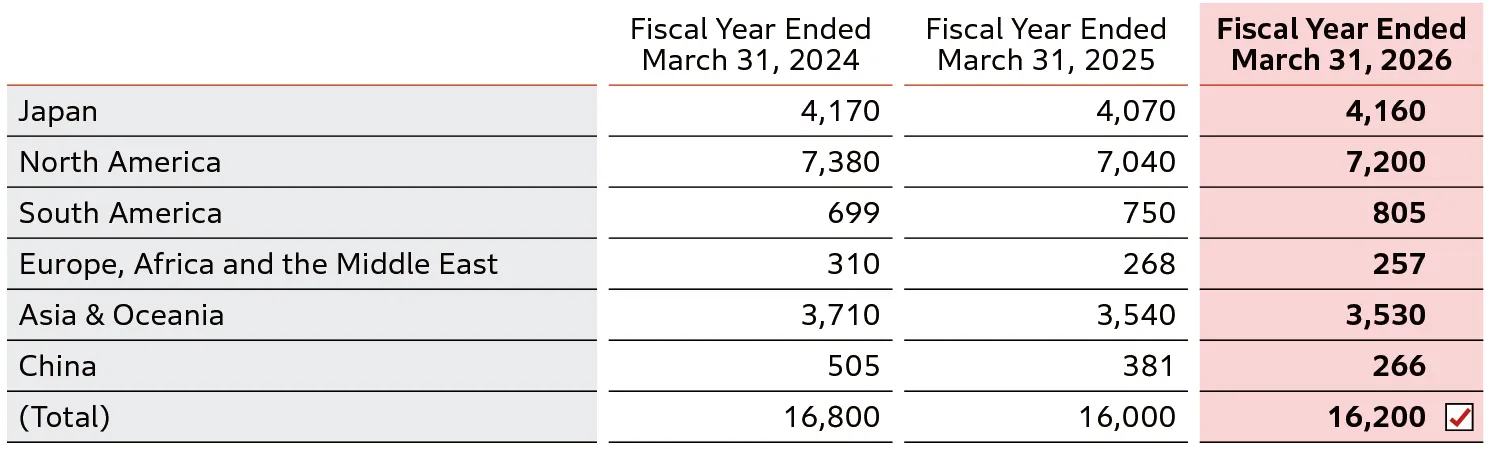
・Scope of aggregation: Honda Motor Co., Ltd. and its consolidated subsidiaries
・Calculation method: Consumption = Σ (Fuel consumption x Unit calorific value)
・Unit calorific value:
-Japan: Unit calorific value based on the GHG Emissions Calculation, Reporting, and Disclosure System under the Act on Promotion of Global Warming Countermeasures
-Regions outside of Japan: Based on the 2006 IPCC Guidelines for National GHG Inventories
・A terajoule (TJ) is a unit of energy, with ‘tera’ denoting 1012.
・Expressed in three significant digits
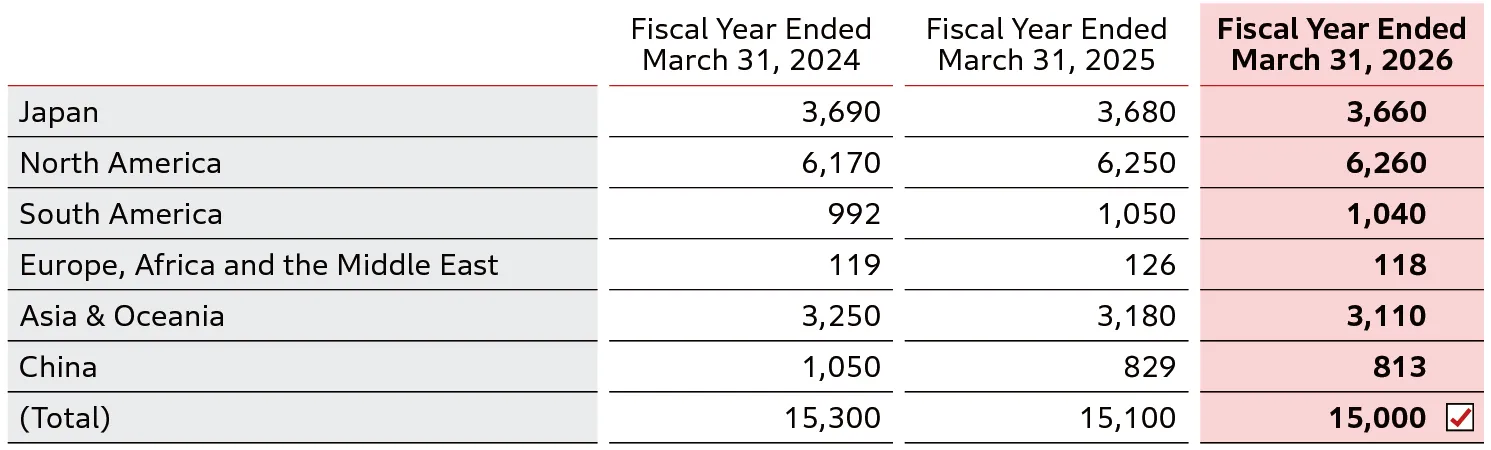
・Scope of aggregation: Honda Motor Co., Ltd. and its consolidated subsidiaries
・Calculation method: Consumption = Σ (Purchased electricity consumption etc.*5 x Unit calorific value)
Purchased electricity is converted to gigajoules (GJ) using the international standard 3.6 GJ/MWh.
- Including steam and hot water
・Unit calorific value:
-Japan: Unit calorific value based on the GHG Emissions Calculation, Reporting, and Disclosure System under the Act on Promotion of Global Warming Countermeasures
-Regions outside of Japan: 2006 IPCC Guidelines for National GHG Inventories
・Expressed in three significant digits
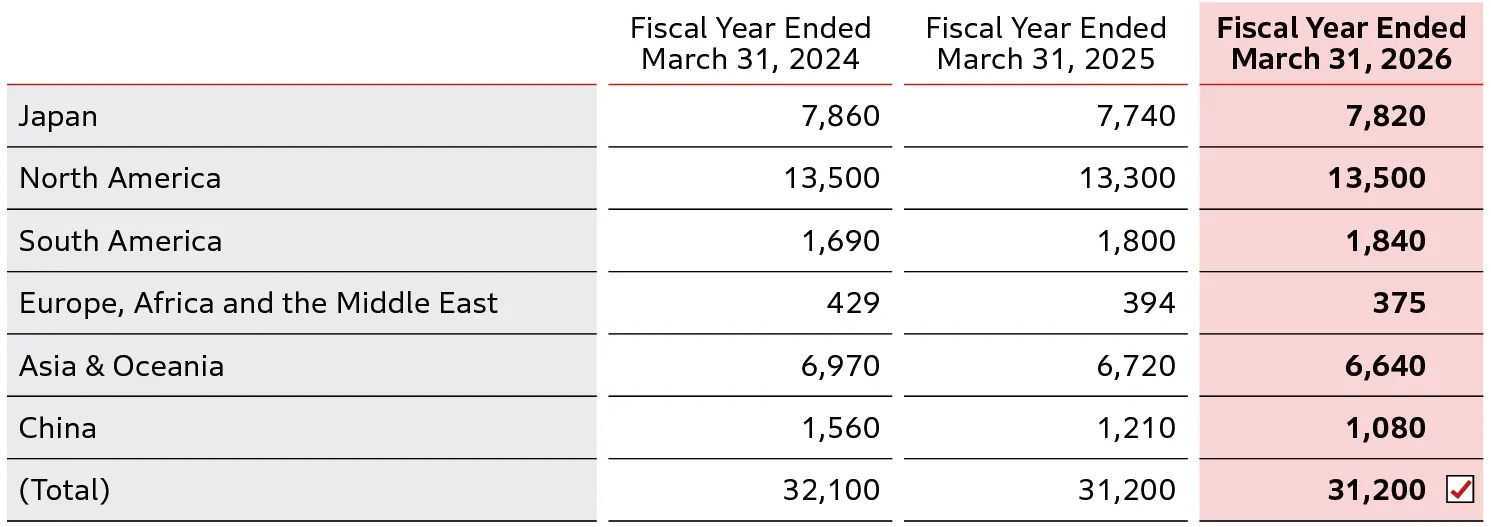
・Scope of aggregation: Honda Motor Co., Ltd. and its consolidated subsidiaries
・Calculation method: Total energy consumption = Direct energy consumption + Indirect energy consumption
・Expressed in three significant digits

・Scope of aggregation: Honda Motor Co., Ltd. and its consolidated subsidiaries
- Self-consumed amount: Amount of self-generated renewable electricity consumed in-house
Air Pollutant Emissions

*7 SOx emissions
・Scope of aggregation: Honda Motor Co., Ltd. and its consolidated subsidiaries
・Calculation method: SOx emissions = Σ (Fuel consumption x Density x Sulfur content x 64/32*)
・Calculations are based on fuel consumption.
・Expressed in three significant digits.
・Density: Based on the conversion factor list in Statistics Information by Japan Petroleum Energy Center (JPEC)
・Sulfur content: Specified by mandatory standards under the Act on the Quality Control of Gasoline and Other Fuels for gasoline, diesel, kerosene, and heavy oil, and by the LP gas standard (JIS K 2240) for LP gas.
*8 NOx emissions
・Scope of aggregation: Honda Motor Co., Ltd. and its consolidated subsidiaries
・Calculation method: NOx emissions = Σ (Fuel consumption x Emission factor for each fuel)
・Calculations are based on fuel consumption.
・Expressed in three significant digits.
・Emission factor for each fuel: Based on the NOx emissions calculation table for non-measured combustion facilities in the Eco-Action 21 program (Ministry of the Environment).
Water Pollution

Water Withdrawal
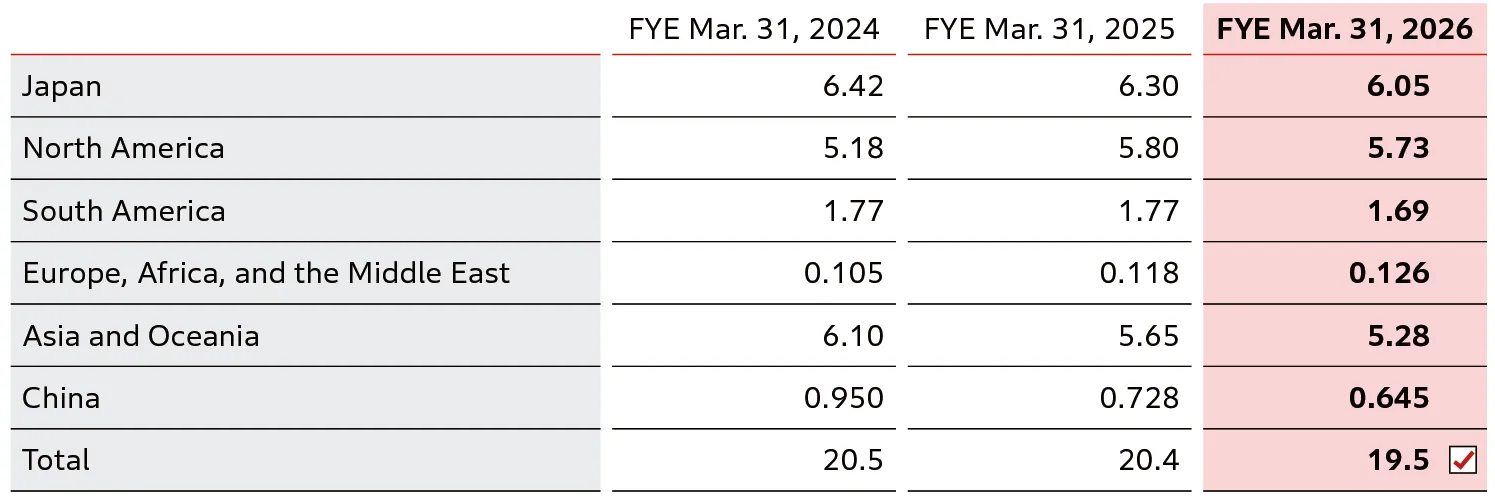
・Scope of aggregation: Honda Motor Co., Ltd. and its consolidated subsidiaries
・Calculation method: Water withdrawal = Σ (Purchased from water utilities + Groundwater withdrawal + Withdrawal of surface water such as from rivers, etc.)
・Expressed in three significant digits
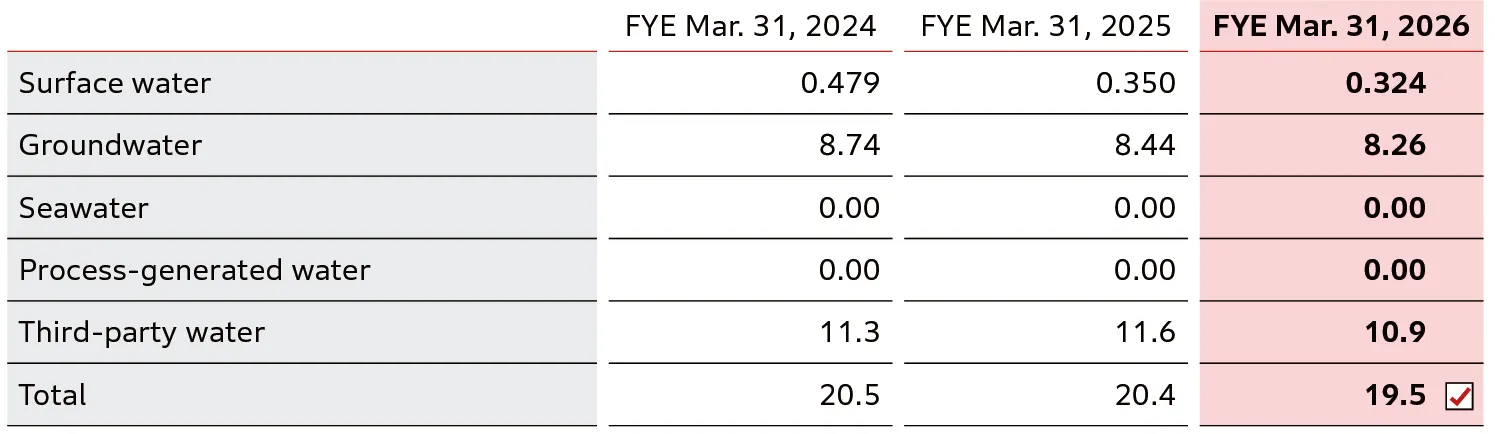
・Scope of aggregation: Honda Motor Co., Ltd. and its consolidated subsidiaries
・Expressed in three significant digits

・Scope of aggregation: Manufacturing sites of Honda Motor Co., Ltd. and its consolidated subsidiaries that are located in regions subject to water stress
・Expressed in three significant digits
※9 Regions under water stress: areas rated “very high” on the Operational risk: Water heat map. Water Risk Assessment
Honda’s Approach > Water > Water Risk Assessment

・Scope of aggregation: Honda Motor Co., Ltd. and its consolidated subsidiaries
・Calculation method: Revenue per unit of water withdrawal (overall water withdrawal efficiency) = Revenue ÷ Water withdrawal volume.
・Expressed in three significant digits
Water Discharge Water Consumption
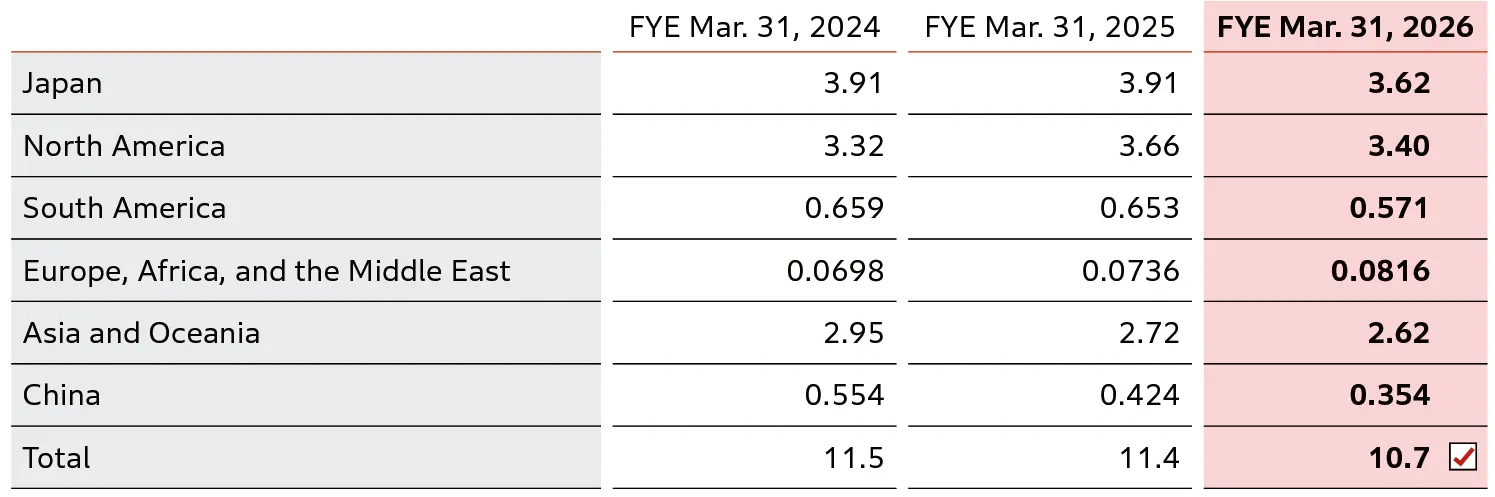
・Scope of aggregation: Honda Motor Co., Ltd. and its consolidated subsidiaries
・Calculation method: Water discharge = Σ (Wastewater processed through sewerage systems or other treatment facilities + Discharge directly into public waters)
・Expressed in three significant digits
・Figures include some estimated values.
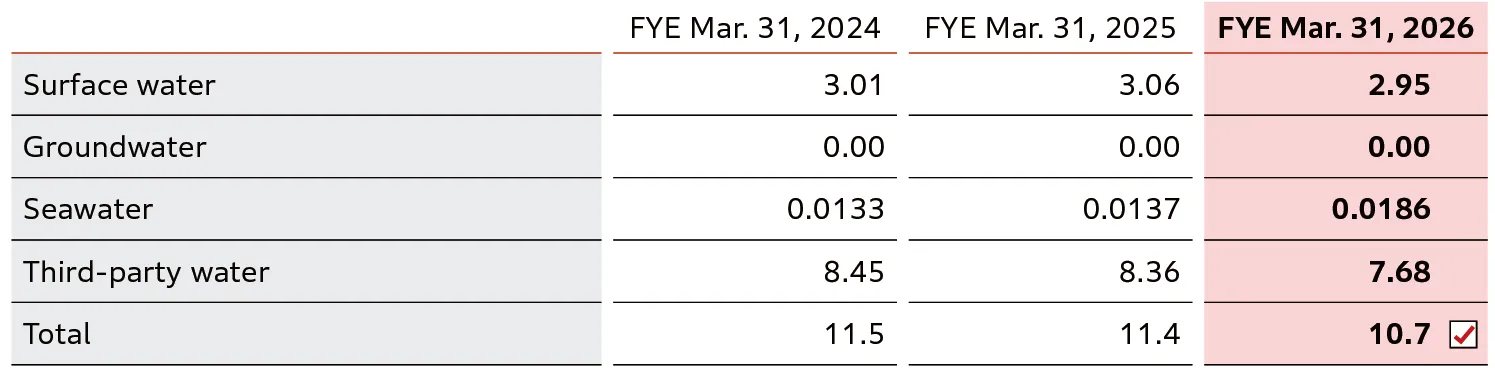
・Scope of aggregation: Honda Motor Co., Ltd. and its consolidated subsidiaries
・Expressed in three significant digits
Water Consumption

・Scope of aggregation: Honda Motor Co., Ltd. and its consolidated subsidiaries
・Calculation method: Water consumption = Water withdrawal volume − Wastewater discharge volume
・Expressed in three significant digits
Recycled Water Consumption

・Scope of aggregation: Manufacturing sites of Honda Motor Co., Ltd. and its consolidated subsidiaries
・Expressed in three significant digits
Resource Use and Circular Economy
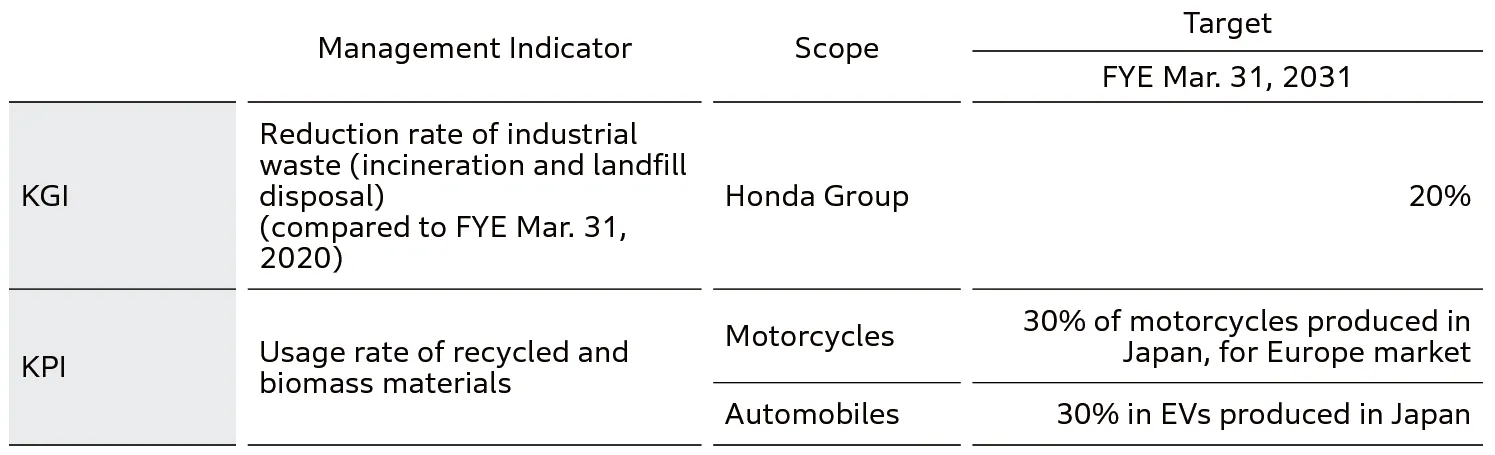
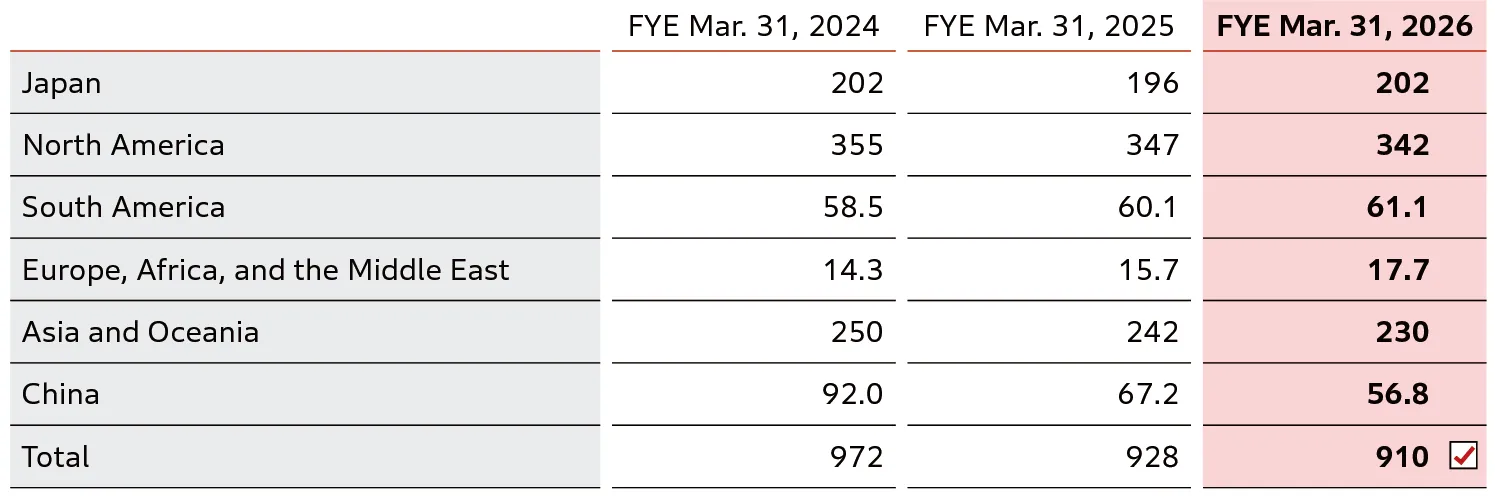
・Scope of aggregation: Honda Motor Co., Ltd. and its consolidated subsidiaries
・Calculation method: Amount generated = Σ (Industrial waste + General business waste + Valuable materials)
・Expressed in three significant digits