
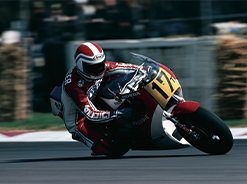
The "NR4": The Final Model That Never Raced
NR3 Claims Victory at the Rain-Soaked Suzuka 200KM Leveraging the Strengths of the Four-Stroke Engine
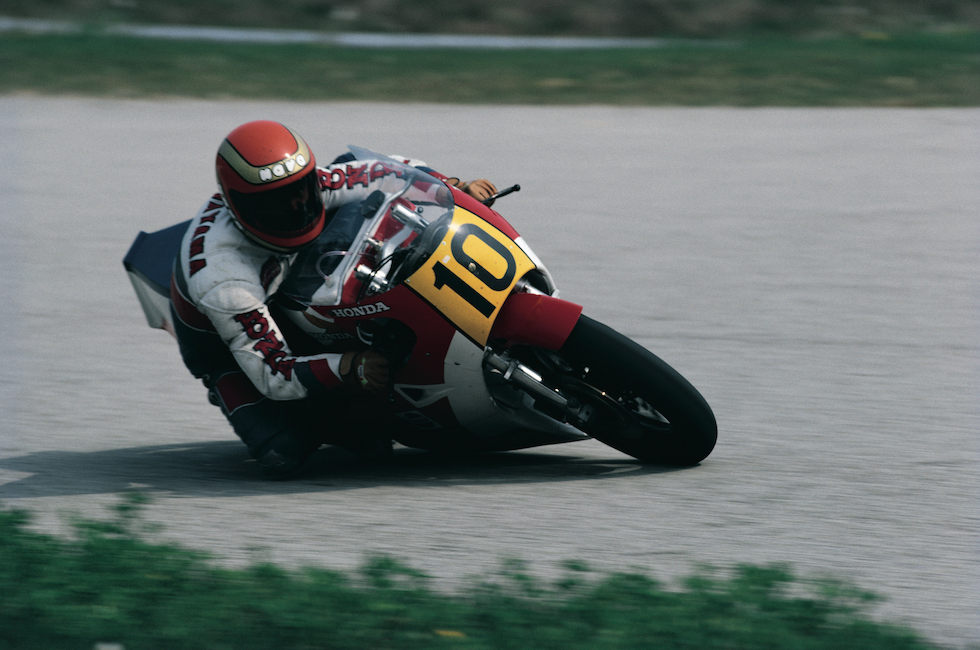
Takazumi Katayama and the NR3 in action at the 1981 Austrian GP. That year, the NR Project once again took on the World Grand Prix with a single-rider lineup. (Photo/Shigeo Kibiki)
The NR3, the third iteration of the NR500, debuted at the start of the 1981 season. It first competed in two rounds of the All Japan Road Race Championship held at Suzuka Circuit, a series Honda had entered as a factory team that year, securing a fourth-place finish in the second of these races, the Japanese GP (which was held as a part of the All Japan Championship at the time), with development rider Kengo Kiyama at the controls.
In Europe, Takazumi Katayama competed as Honda's sole factory rider that season. At the same time, the NR3 demonstrated improved performance but was plagued by a succession of mechanical issues, leading to repeated retirements. The final blow came at the French GP in May, where Katayama crashed and was injured after slipping on engine coolant leaking from his own bike. This forced him to withdraw from the subsequent Yugoslavian GP and the Suzuka 200km race scheduled to take place in Japan.
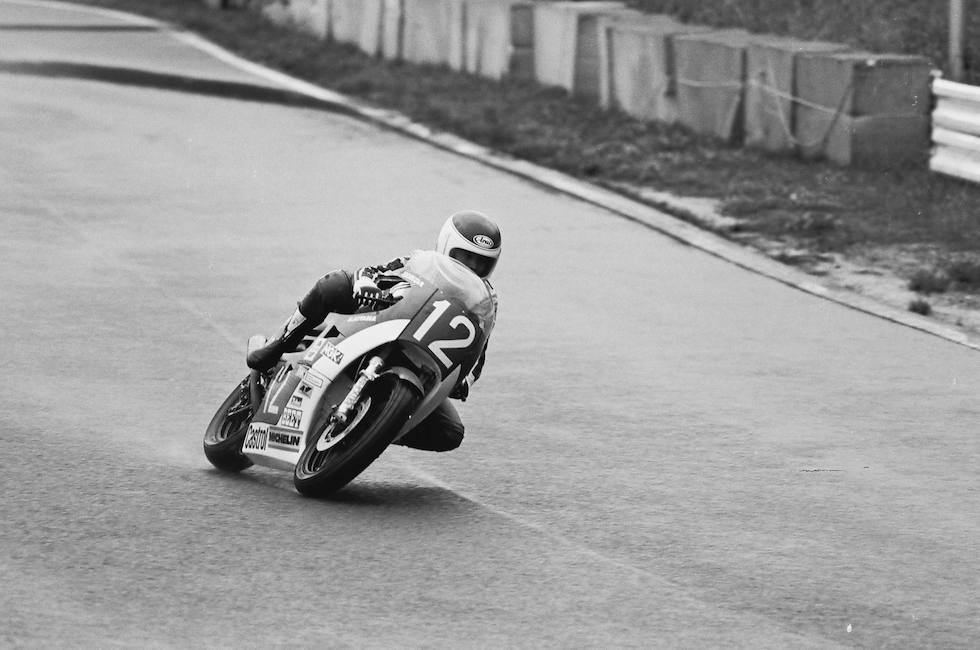
Kengo Kiyama and the NR3 competing in the 1981 Suzuka 200km. With both qualifying and the race held in wet conditions, the NR500's manageable power delivery and Kiyama's spirited performance combined to produce a spectacular result. (Photo/Honda)
At the 1981 Suzuka 200km event, the NR3 achieved the first and ultimately the last official race victory ever won by a motorcycle powered by an oval-piston engine.
True to its name, the race covered a distance of 200km (34 laps of the Suzuka Circuit). While the two-stroke machines required mid-race refueling, the four-stroke NR500 had superior fuel efficiency, allowing it to complete the race without a pit stop. Furthermore, as both qualifying and the race took place in the rain, the NR500's flexible power delivery, featuring a power band far wider than that of the two-strokes, proved to be a potent weapon on the wet track. Coupled with Kiyama's superb riding, the NR3 moved into the lead during the latter half of the race. He then increased his pace to pull away from his rivals, securing an unforgettable victory.
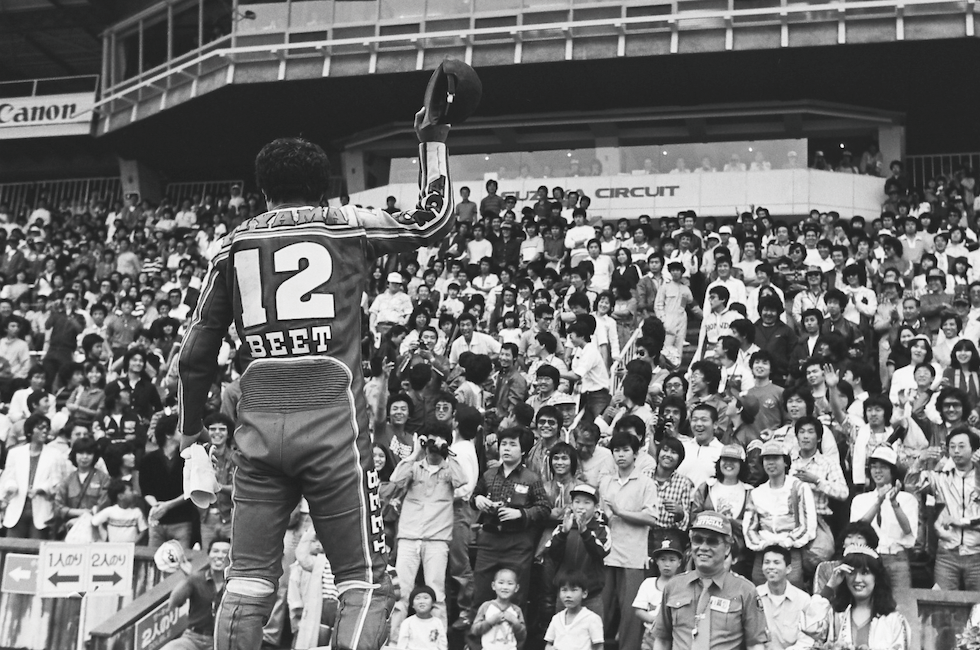
Kiyama, who secured the NR500's maiden victory. At the awards ceremony, he let his joy run wild, even tossing the helmet he had worn during the race into the grandstands. (Photo/Honda)
Following the excitement of the Suzuka 200km victory, the NR Project's next challenge was the Dutch TT in the final week of June. They brought the "2.5X specification" machine, featuring a full double-cradle NR3-2X frame with geometry optimized for Michelin's new 16-inch front tire and a 2X engine producing nearly 130 PS. Piloting the NR3-2.5X, Takazumi Katayama was running in 10th place during the closing stages of the race; a first-ever World Grand Prix points finish for the NR500 seemed within reach. However, the AC generator rotor failed on the final lap, forcing him to retire.
The NR Project opted to skip the subsequent Belgian and San Marino GPs and instead headed to North America with the NR3-2.5X to compete at Laguna Seca Raceway in California.


