
Side Radiator and Lip-Type Screen
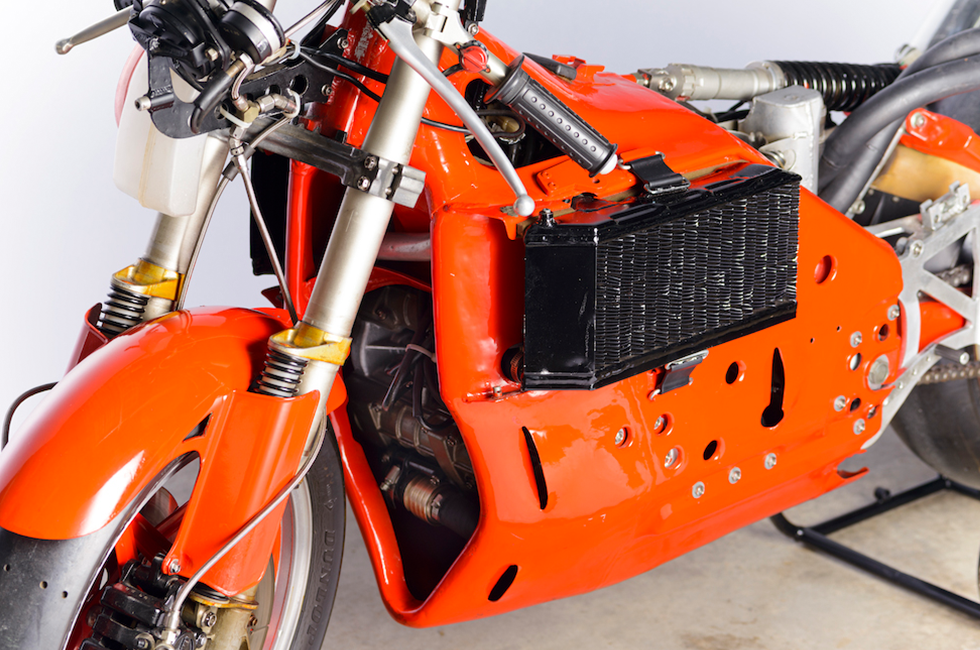
The side radiator layout is striking, and the radiators themselves are unique, with fins angled and stepped onto the core. (Photo/Shinobu Matsukawa)
One distinctive feature of the 1979 NR500 (NR1) model's chassis is its side-radiator layout. However, this was more of a "necessary" design choice.
The origin of this design lies in the goal of achieving a compact chassis comparable to that of 125cc-class vehicles, as a means of surpassing two-stroke engines. Therefore, the outer shell forming the monocoque frame was designed to fit snugly against the engine, resulting in an exceptionally small chassis for a 500cc-class motorcycle. Furthermore, the NR1 featured 16-inch rim-diameter tires front and rear. By using tires with a smaller outer diameter than the then-standard 18-inch rim diameter, the aim was to reduce air resistance by lowering the vehicle's height in an upright position.
However, this resulted in a very narrow gap between the rear of the front tire and the front of the monocoque. This made it difficult to position a radiator of sufficient capacity. Even if the radiator was placed in the standard position in front of the engine, the monocoque frame, which tightly encloses the engine, would likely obstruct smooth airflow through the radiator. Therefore, the unique layout of placing the radiators on both sides of the vehicle was devised.
Because the NR1's radiator was mounted on the sides of the vehicle, it had a unique shape. The V-type engine's two-cylinder banks required radiators on both sides, which complicated the layout. Mechanics faced the most difficulty: about ten couplers had to be disconnected every time the engine was removed and reconnected during reinstallation.
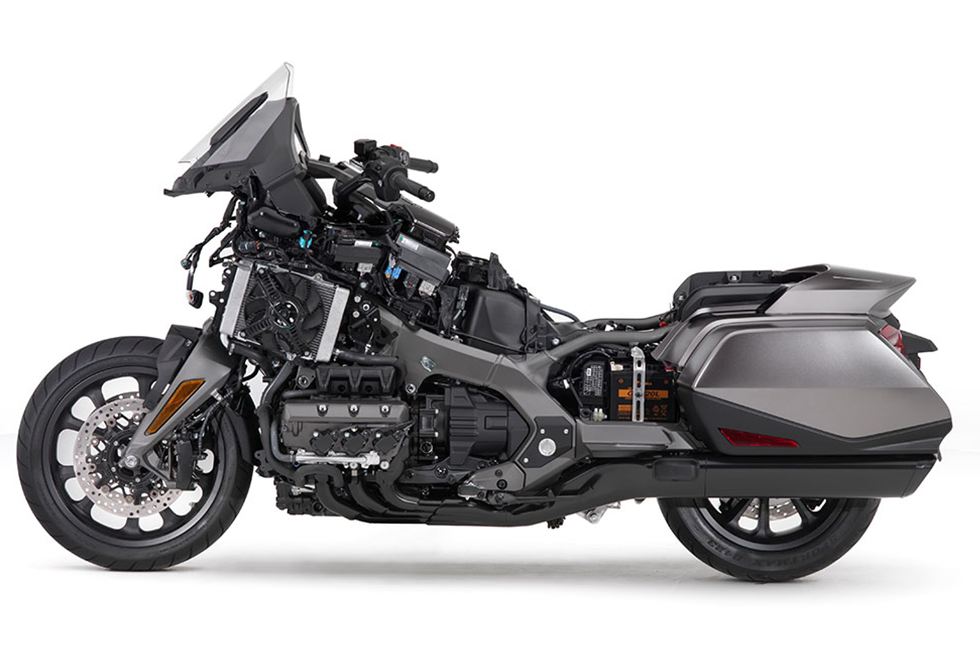
If sufficient airflow through the radiator core can be ensured, the side radiator layout can expand vehicle packaging options and enhance marketability. Honda's flagship model, the Gold Wing, also employs a side radiator layout. This model, with its double-wishbone front suspension, required the radiators to be mounted on both sides of the body, as on the NR500. (Photo/Honda)
However, its cooling capacity was not high. Because the NR1 had a monocoque body, the radiators had to be mounted along the flat sides, resulting in poor airflow through the cores. Various aerodynamic parts were created and tested to improve airflow, but the problem lay in the fundamental body shape and layout, causing the NR1 to constantly struggle with overheating.
Incidentally, when many people hear "NR500," the first thing that comes to mind is probably the "face" of the original NR1 model. The transparent screen section was limited to a 5 cm-high shield (called a "lip-type screen"), giving it a very distinctive look.
The air deflected by this lip-type screen flowed smoothly over the rider's tucked-in position. Based on this image, manufacturing was carried out, and after confirming that the aerodynamics were not bad in wind tunnel tests, it was adopted for the NR1 race bike.
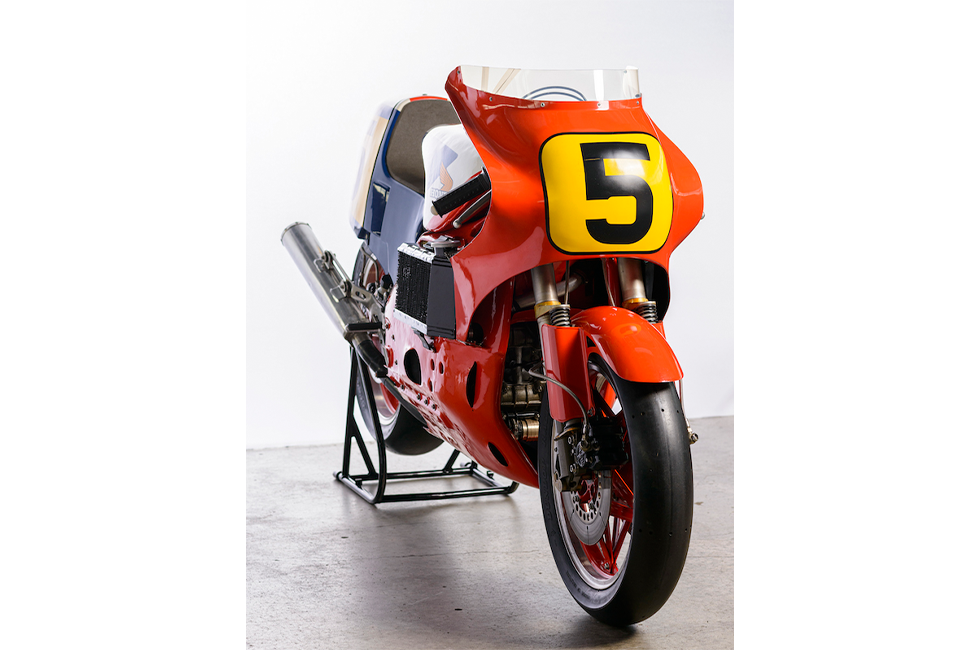
1979 Honda NR500 [NR1](Photo/Shinobu Matsukawa)
Incidentally, even after the NR1's racing ended, Honda continued to develop its aerodynamics. The main focus was improving the cooling efficiency of the side radiators, so a modern design enclosed the radiators and used negative pressure to draw air out of a rear opening. The idea that a bubble-type screen, fully covering the rider's tucked-over body, was better gained traction, and the lip-type screen was used only on the NR1.
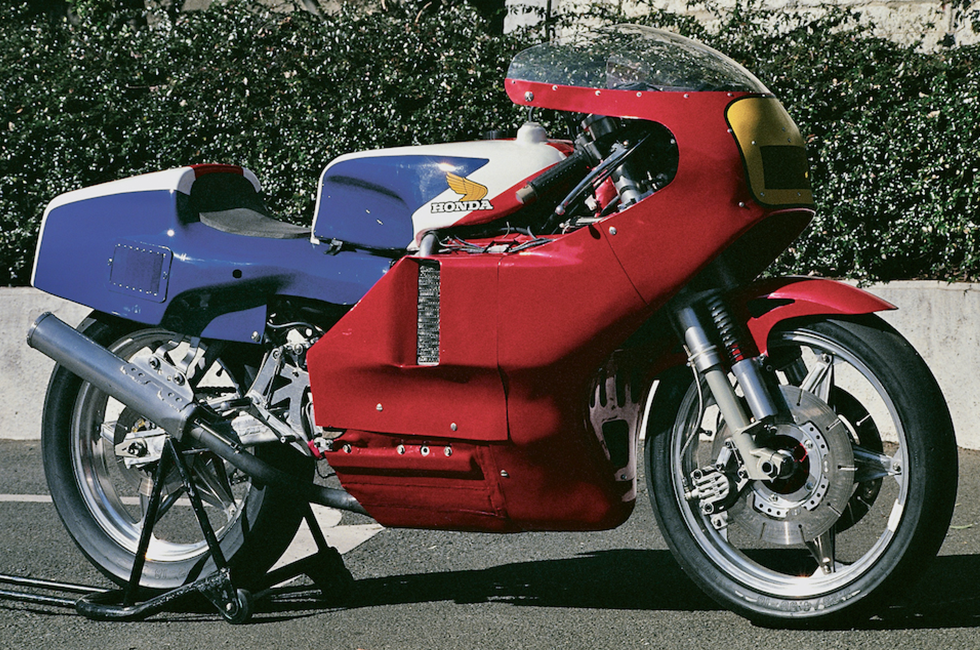
Honda continued development of the monocoque frame NR1 even after the end of the 1979 season. Then, at the motorcycle racing activity presentation held before the 1980 season, an improved NR1 was exhibited, featuring various changes from the 1979 race bike, including altered cowl and screen shapes and 18-inch-diameter tires front and rear. (Photo/Shigeo Kibiki)


