
Products
Developing the BF350, Honda’s First V8-Powered Outboard Motor: Carrying Forward the Belief That “Watercraft Should Not Pollute the Water”
POINTWhat you can learn from this article
- Since entering the marine market in 1964, Honda has remained committed to Soichiro Honda’s belief that “watercraft should not pollute the water.” From supporting livelihoods through professional applications to enriching people’s lives through leisure, Honda has developed outboard motors for a wide range of uses.
- To meet growing global demand for larger boats, Honda developed the BF350, its first outboard motor powered by a mass-produced V8 engine, by bringing together expertise from its motorcycle, automobile and marine businesses. Delivering outstanding power while pursuing low vibration, exceptional durability and environmental performance, the BF350 offers a refined cruising experience.
- Looking ahead, Honda aims to bring the joy of mobility on the water to even more people by advancing intelligent technologies, including docking assistance and other boat operation support systems, making marine leisure more accessible and enjoyable.
For more than 60 years, Honda has delivered the joy of mobility on the water through its marine business, developing outboard motors that power boats around the world. One of the latest milestones in that journey is the BF350, Honda’s first outboard motor powered by a mass-produced V8 engine. In this issue of Honda Stories, discover the vision behind the BF350—developed by bringing together expertise from across Honda—and Honda Marine’s vision for the future through interviews with the two engineers who led its development.

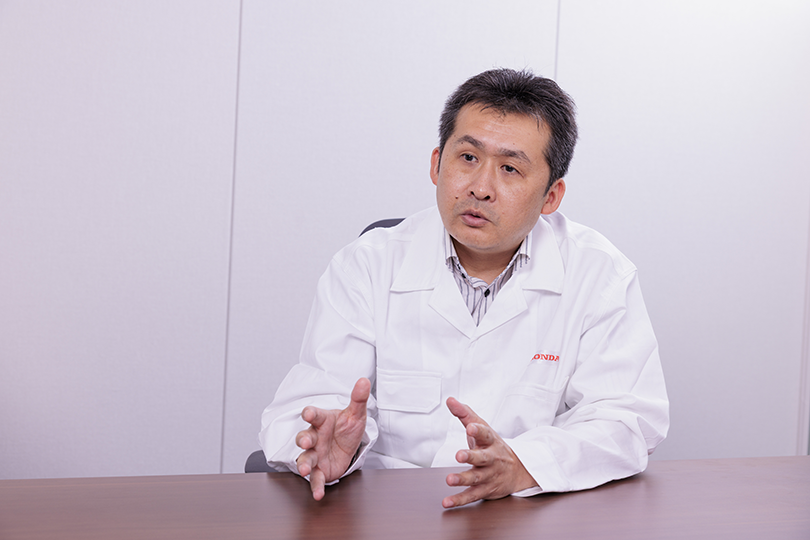
Chief Engineer / Manager
Marine Design Section, Marine Development Division
Power Products Business Division
Motorcycle and Power Products Operations
View More
Close
Masanori Tsubouchi
Read More

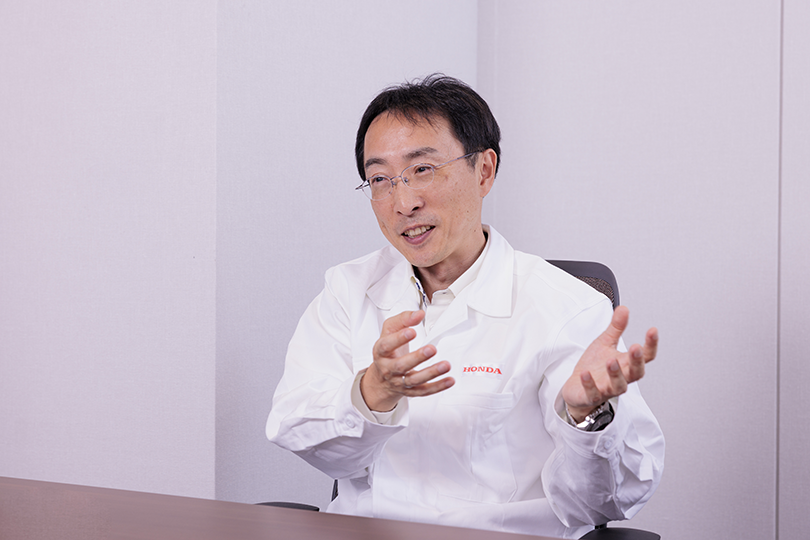
Assistant Chief Engineer
Product Planning Section, Marine Business Unit
Power Products Business Division
Motorcycle and Power Products Operations
View More
Close
Ryo Ogasawara
Read More
Supporting Mobility on the Water—Honda’s Marine Business from Leisure to Professional Use
Honda’s Power Products lineup extends well beyond motorcycles and automobiles. It also includes cultivators, lawn mowers, generators, snow blowers and outboard motors—products that help enrich people’s lives in countless ways.
Among them, Honda’s marine business, which develops and manufactures outboard motors, traces its origins to Soichiro Honda’s belief that “watercraft should not pollute the water.” In 1964, when lightweight, low-cost two-stroke outboard motors dominated the market, Honda entered the industry with the GB30, a four-stroke outboard motor that did not discharge engine oil into the water. In 1992, Honda introduced the BF8B, which complied with the stringent Lake Constance emissions regulations—then regarded as Europe’s toughest marine emissions standard. Six years later, Honda became one of the first manufacturers to introduce its proprietary PGM-FI (Programmed Fuel Injection) electronic fuel injection system to outboard motors. For more than six decades, Honda has continued to pursue cleaner outboard technology that protects the waters where people live, work and enjoy recreation.
Today, Honda offers 28 outboard motor models worldwide, with cumulative global production exceeding 2.25 million units.* They are used across a wide range of applications—from recreational fishing and cruising in North America and Europe to professional applications including commercial fishing, passenger transport and maritime security throughout Southeast Asia.
*FY2025 results
Durability requirements also vary significantly depending on where and how the outboard motor is used. In the United States, for example, many recreational users may take their boats out only a few times a year, with each trip lasting four or five hours. By contrast, taxi boats operating in Southeast Asia may be used 200 to 300 days a year, carrying passengers over long distances and making multiple round trips every day.
Our challenge is to deliver the level of durability each market requires, regardless of where in the world the outboard motor is operating.
Developing the BF350 through collaboration across Honda
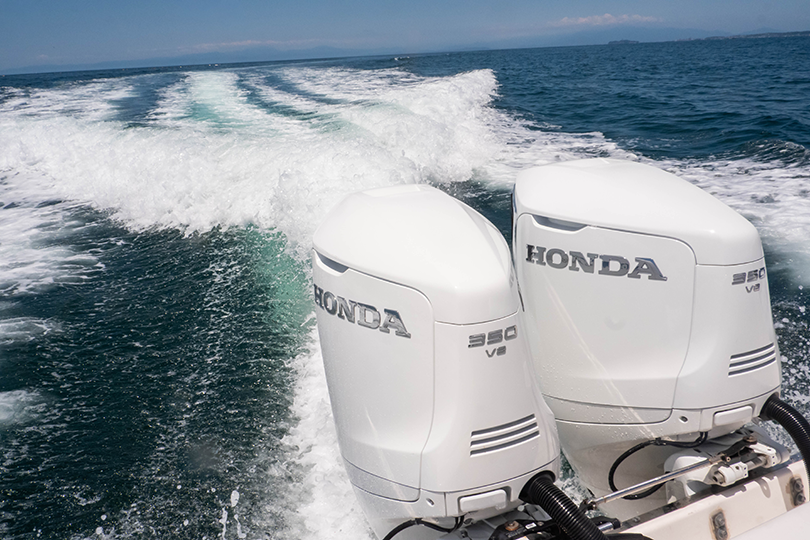
Marine engines generally fall into three categories depending on the size and intended use of the boat: inboard engines, sterndrive engines and outboard motors.
Because inboard and sterndrive engines are installed inside the hull, they place greater constraints on how the boat’s interior can be designed. Outboard motors, on the other hand, are mounted externally at the stern, allowing more usable space inside the boat. They also make maintenance much easier, since the engine can be serviced without dismantling the boat itself.
Advances in manufacturing technology have also made it possible to produce high-horsepower outboard motors in relatively compact packages, which is another reason they continue to gain popularity.
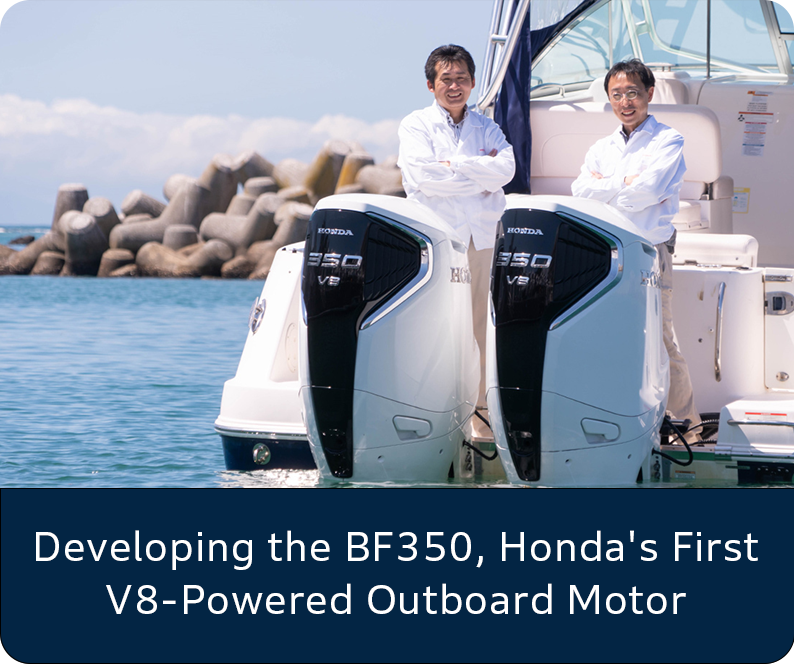
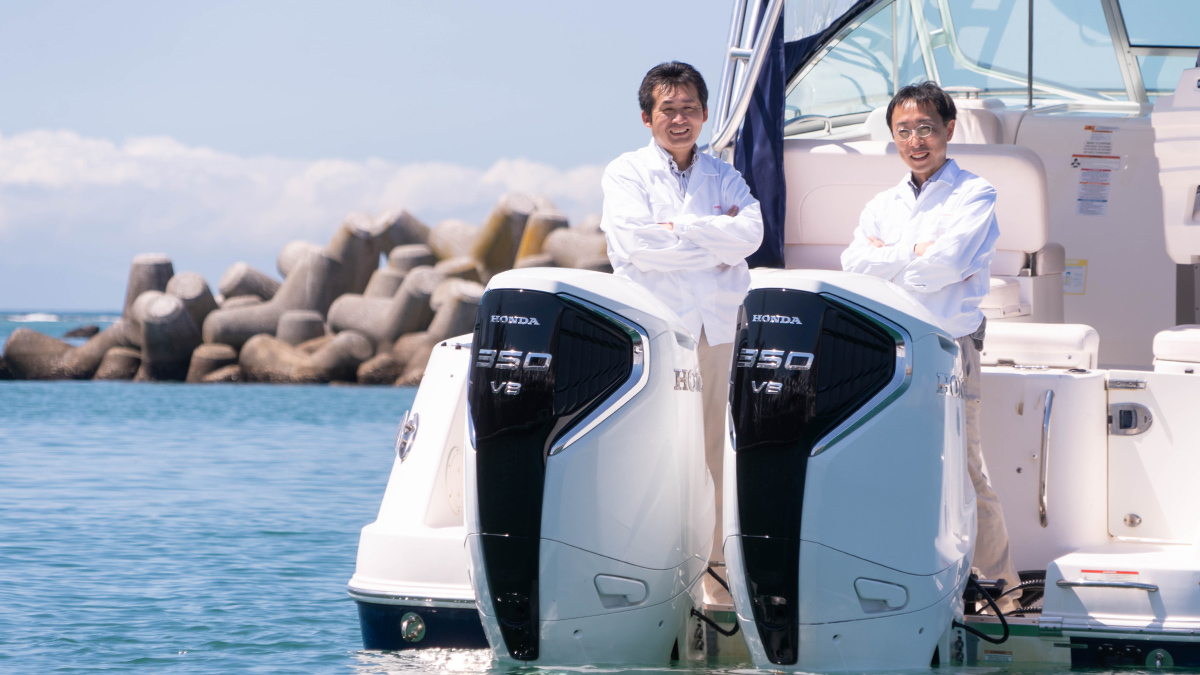
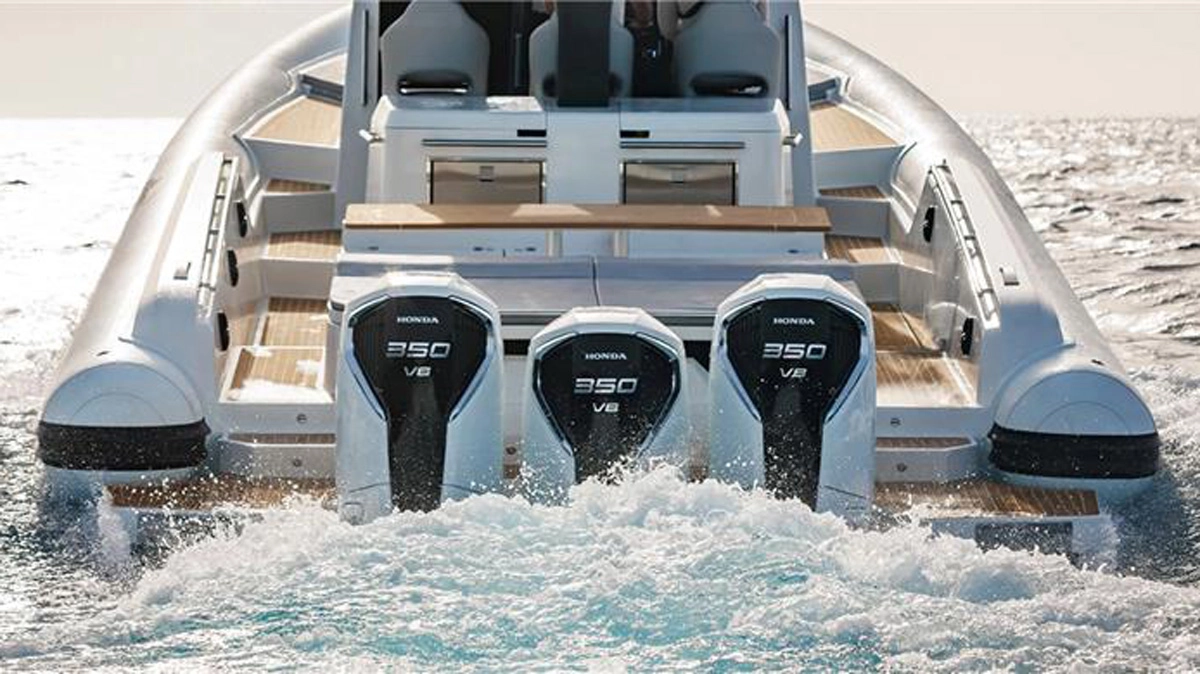
Against this market backdrop, Honda began development of the BF350, the most powerful outboard motor in the company’s history, delivering 350 horsepower.
Owners of large recreational boats are looking for more than just horsepower. They want the confidence that comes from precise, responsive handling, along with a refined and comfortable experience throughout their time on the water.
While remaining true to Honda’s long-standing commitment to protecting the marine environment, we set out to deliver an outboard motor that combines exceptional performance with environmental responsibility and a premium boating experience.
To express that vision, we created the concept of ‘Ecoluxe Experience’—a combination of ‘Eco,’ representing environmental performance, and ‘Luxe,’ representing a refined, premium experience. That became the guiding concept behind the BF350.
One of the greatest challenges in developing the BF350 was creating Honda’s first mass-produced V8 engine.
Although the development team believed that a V8 engine was essential to achieve the target output of 350 horsepower, mass-producing a V8 was a challenge Honda had never undertaken—not even for its automobiles.
To overcome that challenge, the development team expanded beyond the marine business, bringing together engineers from Honda’s motorcycle, automobile and marine divisions in a truly All Honda effort.
Large boats often mount multiple outboard motors side by side on the transom, so keeping the engine as compact as possible—particularly its overall width—is extremely important. Low vibration and quiet operation are equally critical because they have a direct impact on the quality of the onboard experience.
One of the key areas we focused on to achieve those objectives was Honda’s automotive engineering expertise. The crankshaft needed to combine exceptional strength with reduced weight. During development, one of the engineers who had worked on the NSX suggested using the material employed in the NSX crankshaft.
That idea proved invaluable. Beyond the material itself, we also incorporated Honda’s automotive expertise in engine evaluation and testing, helping us achieve the performance targets we had set.
The project also benefited from development methodologies established within Honda’s motorcycle business. Sharing technologies, experience and know-how across different businesses played a significant role in bringing the BF350 to life.
Of course, bringing together engineers from different backgrounds inevitably led to disagreements and differences in perspective. But whenever we stepped back and asked ourselves, ‘Who are we developing this product for?’ followed by ‘What’s the best solution for our customers?’ everyone naturally aligned around the same goal.
I think that’s something uniquely Honda.
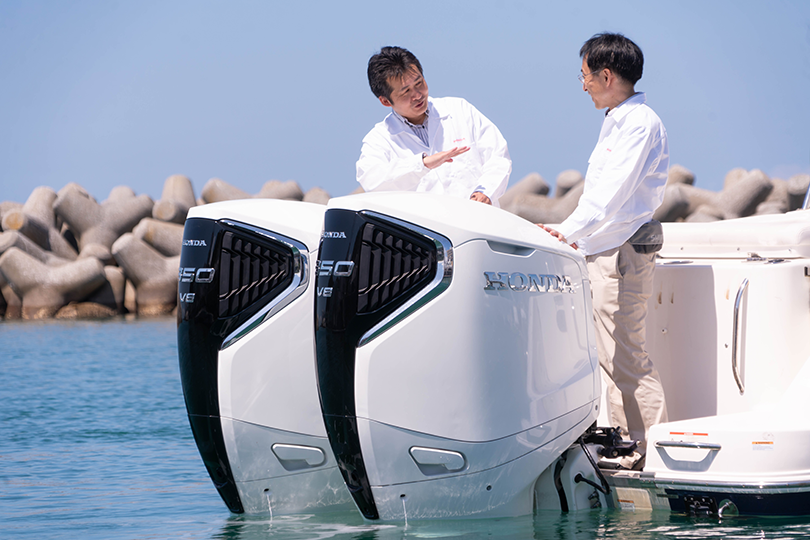
The result was the BF350, the flagship model of Honda’s marine business, which has received enthusiastic feedback from customers around the world.
One customer told us, ‘It’s so quiet that we can actually have conversations on board now.’
Out on the water, switching off the engine isn’t always an option because the boat will begin to drift. Many people keep the engine running while stationary or cruise slowly simply to enjoy their time on the water. For those customers, reducing vibration and engine noise makes a tremendous difference to overall comfort, and that’s something we’ve heard repeatedly.
Enriching time on the water—the future of Honda’s marine business
Looking ahead, Honda’s marine business is focused on creating a future in which more people can enjoy boating with greater confidence and peace of mind.
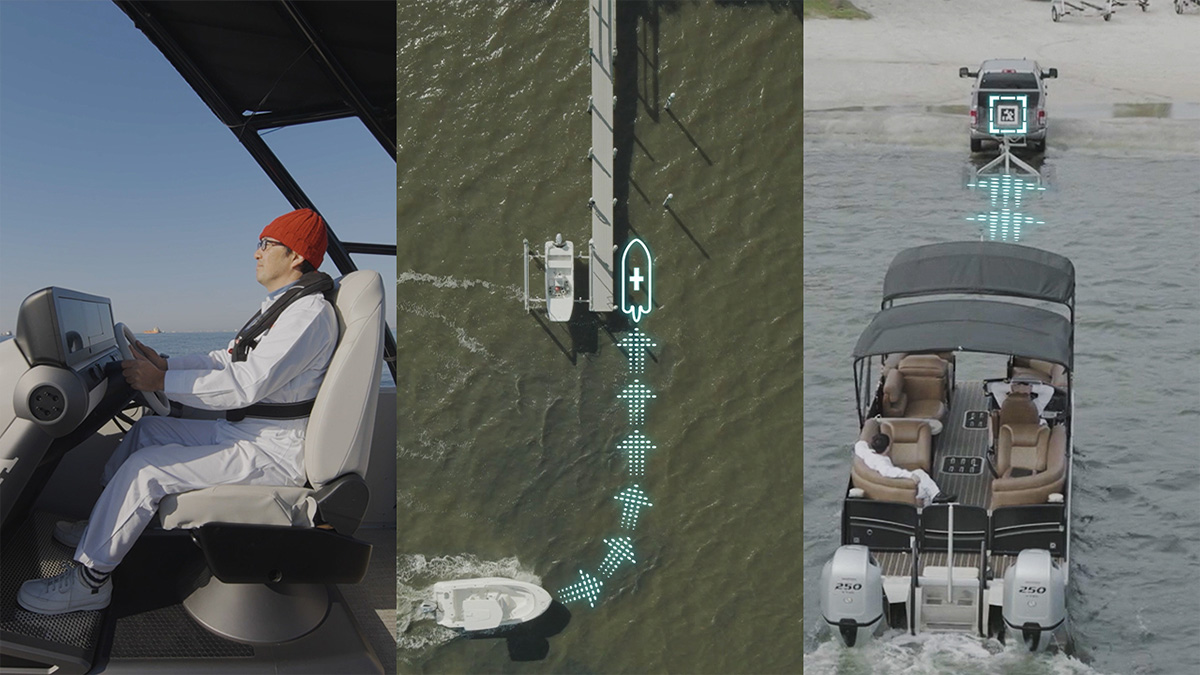
One of the biggest challenges many people face when operating a boat is docking—bringing the boat alongside a pier. It’s the equivalent of parking a car.
If we can automate that process, we believe we can remove one of the biggest barriers for people who feel uneasy about docking and make boating more approachable for a wider range of customers.
The wonderful thing about boating is the freedom it offers. Naturally, there are rules that must be followed, but unlike driving a car or riding a motorcycle, there are no traffic lanes or traffic lights on the water.
Being able to travel freely across the water while surrounded by nature is one of boating’s greatest attractions. We’d like more people to discover not only the enjoyment of boating itself, but also the appeal of the marine lifestyle, and we hope Honda can help inspire that first step.
Because boats offer such freedom, I believe there’s even greater potential to apply technologies developed for Honda’s automobiles and motorcycles, particularly in areas such as sensors and navigation.
By assisting with operations that even experienced boaters can find challenging, we hope to continue delivering products that make it easier for more people to enjoy the marine lifestyle.
Honda’s marine business will continue pursuing new challenges to make mobility on the water freer, more enjoyable and more rewarding for everyone.
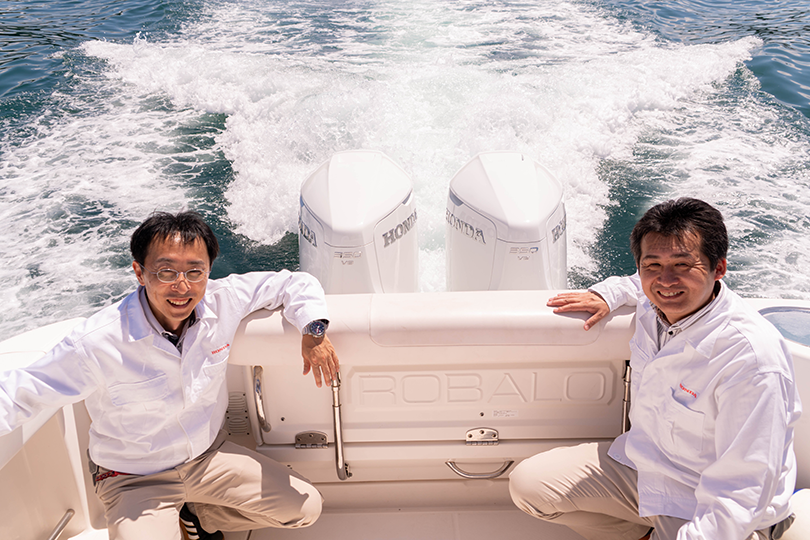





If an engine fails while you’re out on the water, the boat may stop—just like a motorcycle or automobile—but there are very few alternative ways to get back. That means an outboard motor has to be dependable above all else. Simply put, it must not stop unexpectedly.
Customers who rely on their boats for professional applications—whether it’s commercial fishing, water taxis or coastal security—frequently tell us that Honda’s durability is one of the key reasons they choose our outboard motors.