Products
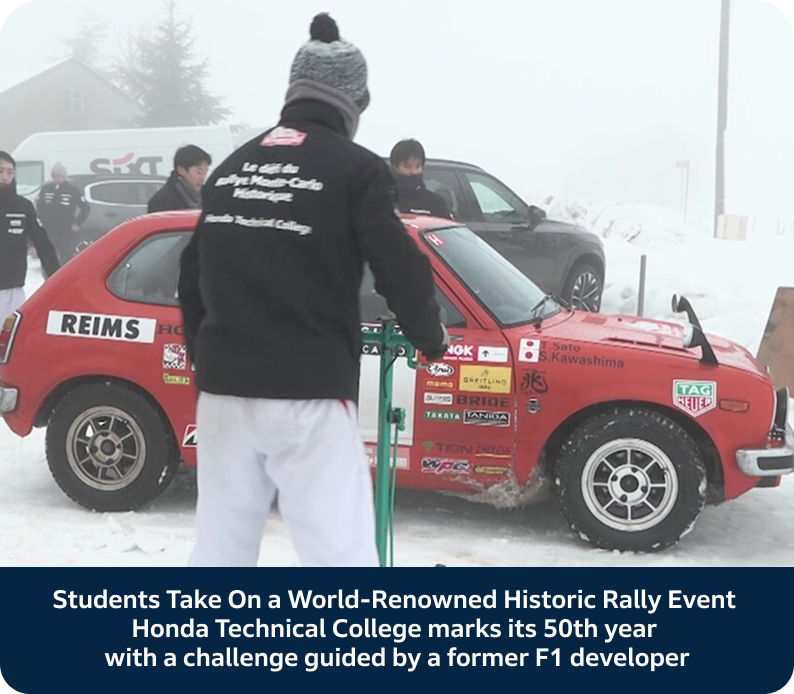
Students Take On a World-Renowned Historic Rally Event | Honda Technical College marks its 50th year with a challenge guided by a former F1 developer
POINTWhat you can learn from this article
- In its 50th anniversary year, Honda Technical College took on the global historic rally event Rallye Monte-Carlo Historique.
- Designed to create opportunities for students to grow on the world stage, this challenge gave them the experience of thinking, deciding, and taking action for themselves in a global field made possible by Honda’s strengths.
- By facing unexpected challenges along the way, the students developed an essential mindset: never compromise on safety and never give up on reaching the finish line.
Honda Technical College was established in 1976 by Honda founder Soichiro Honda, guided by the belief that education should nurture individuals welcomed by society. Emphasizing hands-on learning, the school has developed generations of engineers. In its 50th anniversary year, students took on the world-renowned historic rally event, the Rallye Monte-Carlo Historique. In this issue of Honda Stories, instructors and students look back on the journey and growth that came through this challenge.
Developing human capability beyond technical skills through learning that can only be gained in the real world
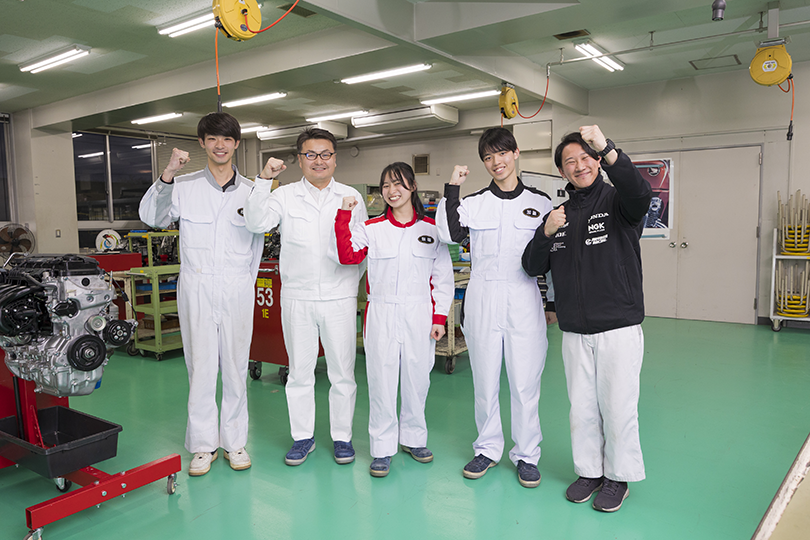
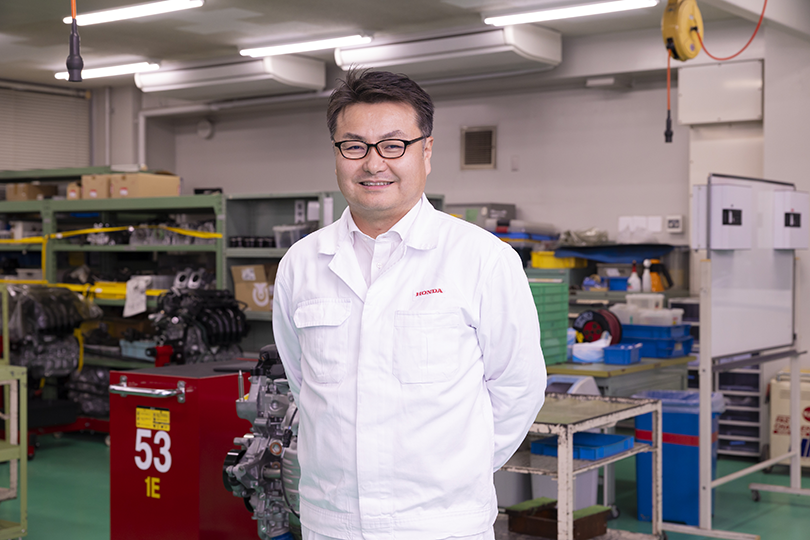 Nakano, Instructor at Honda Technical College
For Nakano, the project leader, this challenge was more than simply entering a competition. It also represented an important milestone for the college in its 50th anniversary year.
“As the college reached its 50th anniversary, we wanted to create an opportunity for students to grow on a global stage,” Nakano explains. “At the same time, it was also a way to demonstrate the kind of education Honda Technical College aims to provide.”
The decision to compete in Monte Carlo was closely connected to the school’s educational philosophy.
“Our guiding principle is learning through real practice. Rallying takes place on public roads and in natural environments, where unexpected situations occur one after another. It is a setting where real-world judgment is constantly required.”
Working with a vehicle built 50 years ago also carries a special meaning.
“Without relying on modern electronic control systems, students must understand the fundamentals of how a car runs, turns, and stops. The Rallye Monte-Carlo Historique can be seen as one of the ultimate environments for mechanical preparation. It tests the ability of a mechanic while offering a valuable opportunity for growth.”
The decision to step into a real-world environment was deliberate, so students could learn lessons that go beyond technical skills.
“We want students to develop not only technical skills but also the ability to understand others and grasp the essence of the situation. These are things that cannot be fully experienced in the classroom. They can only be learned in an environment that closely resembles the real world.”
With that philosophy, the challenge began. Yet what awaited the students beyond the classroom would prove far more demanding than they had imagined.
Taking a 50-year-old car to the world stage, students led a major project from vehicle restoration to rally operations
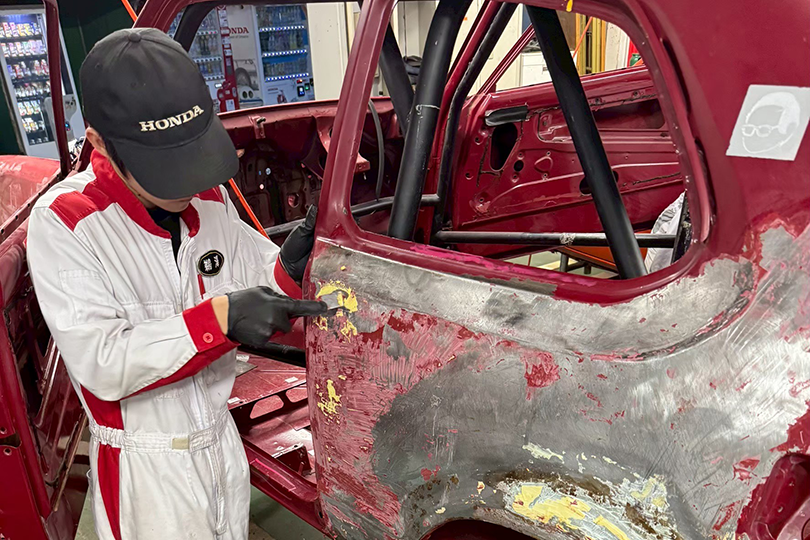
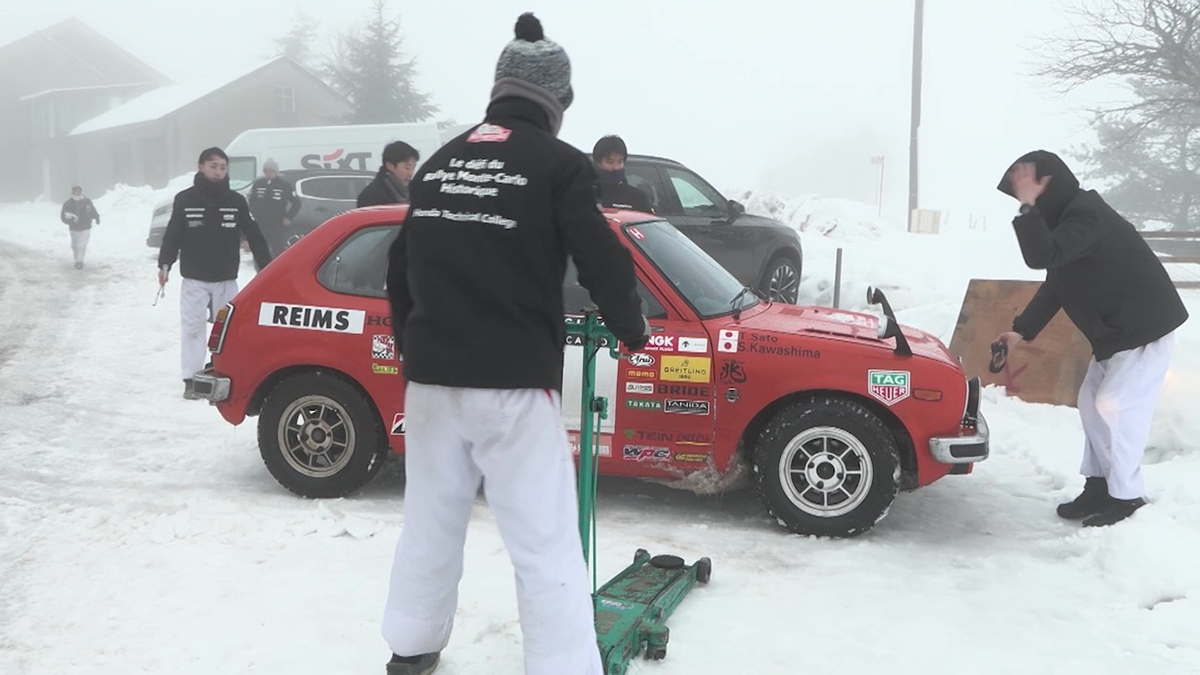
The Rallye Monte-Carlo Historique is a competition where teams must drive precisely according to a predetermined average speed. Success depends not only on speed but also on the overall preparation of the car and the strength of the team.
The competition vehicle was a 1975 first-generation Honda Civic RS. The project began with restoring a non-running vehicle.
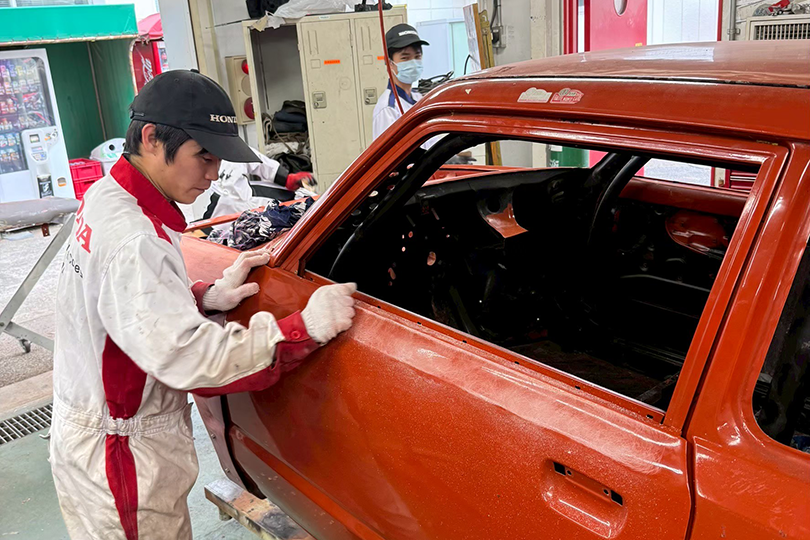
A team of 30 volunteer students led the restoration process. Disassembly, maintenance, repairs, and modifications were carried out alongside parts procurement, testing, and preparation for the overseas rally—largely driven by the students themselves.
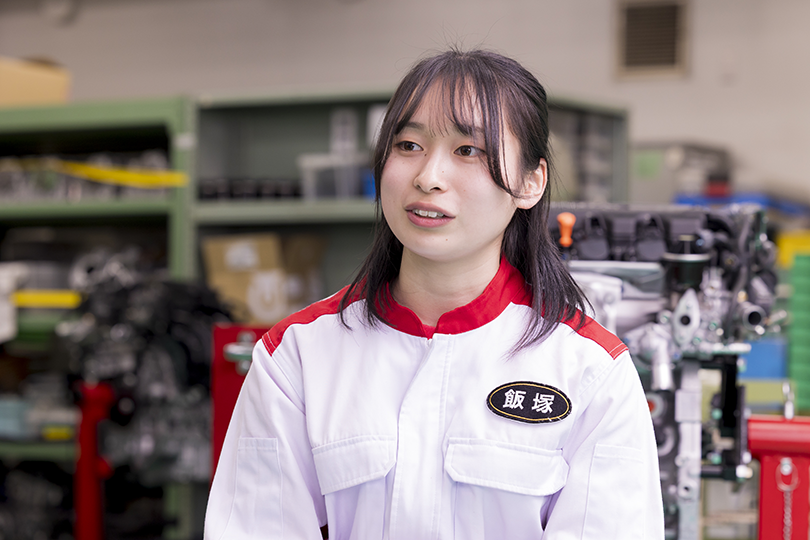 Iizuka, who served as project leader, recalls her initial reaction
“To be honest, my mind went blank. I thought it would be a project completed within the school, so when I heard we would actually go to Monte Carlo, I was shocked. But Monaco is also the stage of Formula One and a place I’ve always admired. I felt it was a once-in-a-lifetime opportunity, so there was no option but to take on the challenge.”
Taking on the role of leader for such a large project also brought some hesitation.
“I’ve always liked bringing a team together, so I wanted to take on a leadership role. But when I heard the destination was Monte Carlo, I wondered whether I was capable. In the end, I decided this experience would help me grow the most, so I just had to take on the challenge.”
The path to Monaco turned out to be far more difficult than expected.
“The most challenging part was sourcing parts. Because the car is 50 years old, many components simply no longer exist. Some parts had to be imported from overseas, others were adapted from different vehicles, and when nothing could be found, we created them from scratch based on technical drawings.”
“As project leader, I coordinated requests from each team, arranged parts procurement, worked with instructors, managed schedules, and handled key tasks such as preparing the carnet and customs procedures. The documentation was particularly challenging. While reviewing overseas rally paperwork, I realized that the vehicle registration certificate was required, and when we had to move the schedule forward, it was quite stressful.”
Beyond technical challenges, managing the team atmosphere was equally demanding.
“There were moments when progress slowed and the tension increased. That’s why during our morning meetings I tried to create an atmosphere that encouraged everyone to stay motivated.”
Through the project, the students experienced firsthand the process of problem-solving required in the real world—balancing coordination, decision-making, and responsibility under pressure.
Seeing the essence through fairness: an attitude tested most in difficult moments
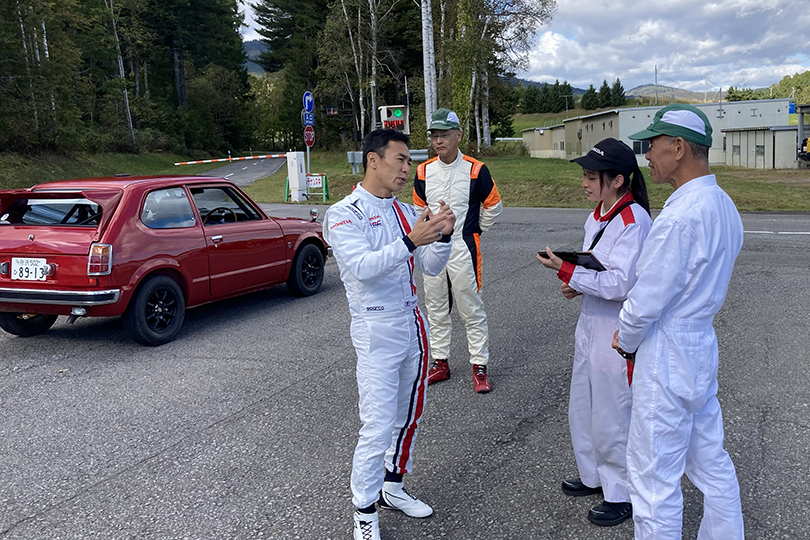 Testing with driver Takuma Sato in Takasu, Hokkaido
Supporting the students throughout the challenge was Nakano’s educational philosophy. Nakano once worked at the forefront of Formula One as a chief mechanic and is also a graduate of Honda Technical College. Yet he did not originally enter the school with the goal of working in F1.
“While I was a student, I saw a senior start up an F1 engine, and it made me think that perhaps I could pursue a dream as well. After joining Honda, that path eventually led me into the world of F1. For a long time, I thought F1 was a world far away from me, but looking back, I think it was the mindset I learned at the school—never being afraid to take the first step—that gave me the confidence to take on the challenge.”
In pursuing what he loved with dedication, Nakano eventually arrived at the job he had long admired. Working in the uncompromising world of F1, one of the most important lessons he learned was the value of being fair.
“To be recognized in F1, where engineers from around the world come together, it is essential to be fair—not only in the way you approach technology, but also in the way you treat people. To uphold fairness, you need to step back, look at the situation as a whole, think independently, and understand what truly matters. Maintaining that attitude can be difficult in challenging situations, but that is exactly why it is important to stay positive. I believe that mindset ultimately brings the entire team together toward a shared goal.
“With students as well, rather than simply telling them what is right, I try to share the underlying reason—why it matters. Helping them understand that essence is something I value.”
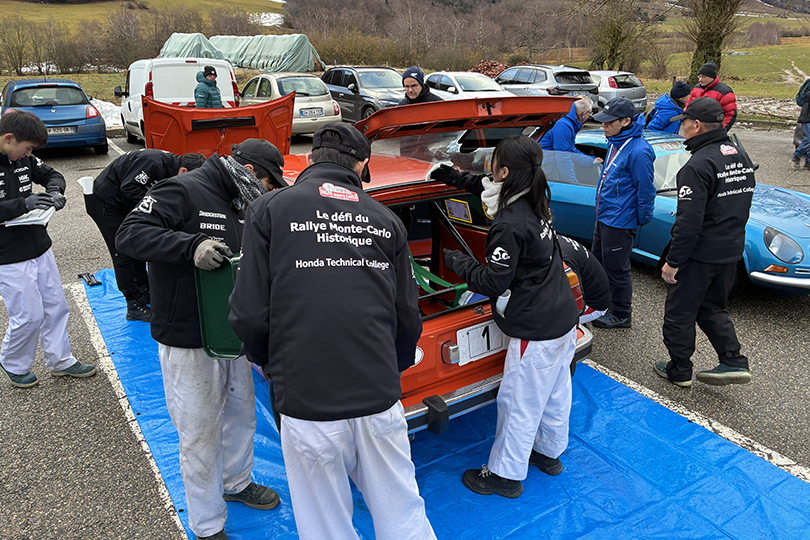
Nakano’s philosophy was clearly carried forward by the students who stood at the forefront of the challenge. Project leader Iizuka reflects on how the experience changed her.
“I’ve learned to approach things more positively. Even in difficult situations, instead of thinking ‘this won’t work,’ I now think, ‘what can we do next?’ When unexpected trouble arose during the rally, the only option was to carry on and fix it.
“What supported me were the words our instructors shared on site—that it’s important to think about whether your own judgment is right. Because of that advice, I was able to stay calm and move forward with confidence. It made me realize firsthand that moments of crisis can also be opportunities for growth.”
The experience also brought an important realization for Iizuka as she continues to pursue her dream.
“What I want most in life is to create, as a member of Honda, a car that will be passed down to future generations. Like the NSX, I hope to build something that becomes a symbol people admire, and leave it behind through our own work.
“To achieve that, I want to hold on to one lesson I learned strongly through this experience—I have a responsibility to protect safety before pursuing speed. During a test run, we were told the brakes needed improvement, and it made me realize that stopping is even more important than going fast. I want to carry forward the team spirit that helped us overcome difficulties, along with the mindset of always putting safety first.”
What was carried forward through this challenge was not only technical skill, but also the ability to make sound judgments and a mindset that places safety above all else. In that moment, the essence of Honda Technical College’s education became clearly visible.
Developing people the world needs - experiences that inspire growth only Honda can offer
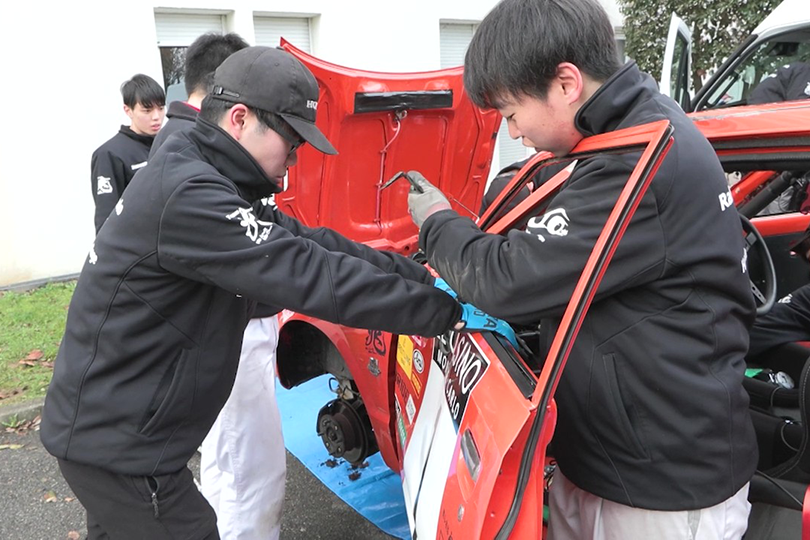
Nakano recalls that in the cold wind of Monaco, the expressions on the students’ faces as they confronted trouble were completely different from when they had first set out.
“To be honest, I was amazed at how much people can change,” Nakano says with a smile. “At first, they were unsure in the unfamiliar environment overseas. But as they gained experience in situations that demanded immediate action, they gradually became more confident. Instead of asking, ‘What should we do?’ they began saying, ‘This is what we’re going to do.’ That was a big change. Perhaps because they didn’t know their limits, they were able to push beyond them—but the way they stepped up far exceeded my expectations.”
Nakano also reflects that his own overseas training as a student later helped him take on the challenge of working in F1, and he looks forward to seeing the students build on this experience in the future.
“I hope they grow into people who think with a global perspective and can imagine themselves working on the world stage. Rather than asking whether something is possible, I want them to take the first step and try. I also hope they become engineers who can adapt to changing environments and take on challenges with initiative—flexible, resilient, and ready to act.”
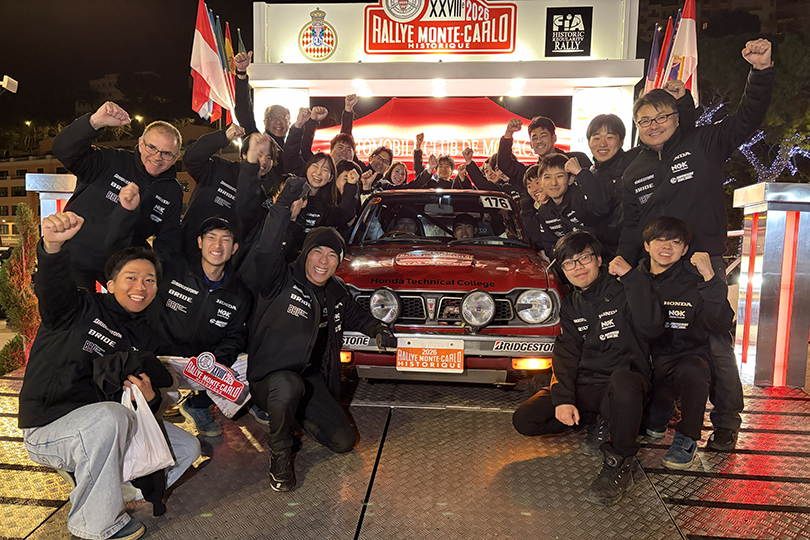
This challenge in Monte Carlo began with a simple idea: to give students a chance to experience the wider world. Made possible by Honda’s global perspective, the project was supported by Honda locations both in Japan and overseas. Nakano says the college hopes to continue pursuing strengthening the kind of hands-on initiatives that define Honda Technical College.
“Honda is a company that addresses society’s challenges through technology, and Honda Technical College has the mission of developing engineers who are trusted and valued by people. Our goal is not simply to train individuals who can perform maintenance, but to send out people who are truly needed by society. That is why we place such importance on learning through real practice.
“By leveraging the global field that only Honda can offer, we strive to provide experiences that significantly accelerate students’ growth. Continuing to explore what more can be done to create those opportunities is our mission.”
The experience of thinking, deciding, and acting for themselves in an unfamiliar environment became a lifelong asset—something that cannot be gained in the classroom alone. Honda Technical College will continue to focus on growth beyond technical skills, nurturing engineers who are welcomed by society. That journey will continue into the future.