
Products
Turning Bicycles Electric and Connected: What Is the Modern-Day “Batabata” SmaChari?
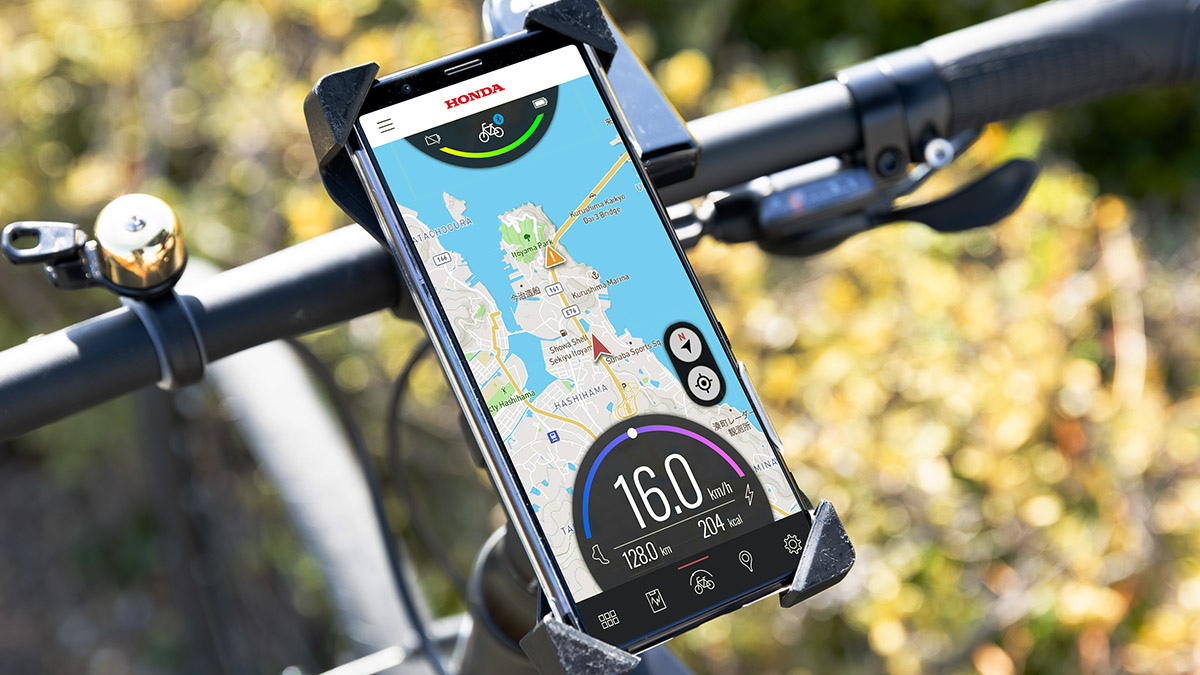
SmaChari is a service that links a smartphone app with an electric assist unit mounted on a bicycle, enabling various types of bicycles to be electrified and connected. In this issue of Honda Stories, the development leader behind SmaChari reflects on how the idea was born and what new possibilities emerge when bicycles become connected.
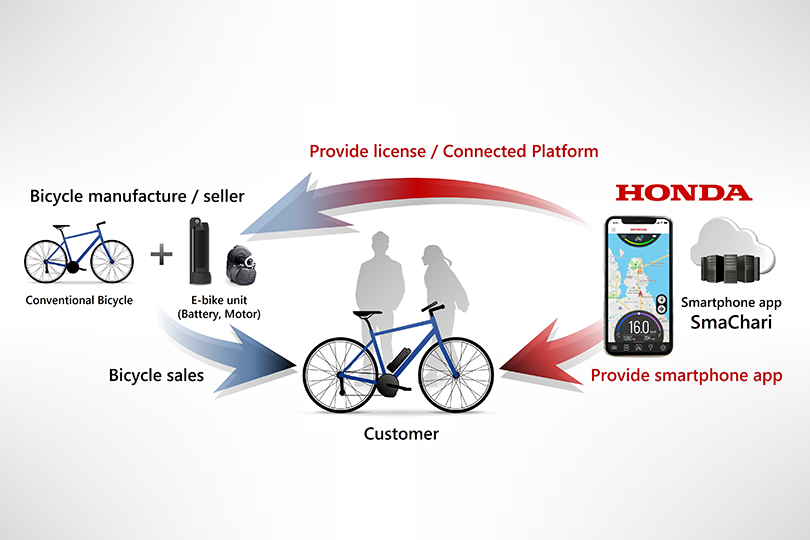 Honda provides partner companies that manufacture and sell SmaChari-equipped bicycles with various licenses and a Connected platform for a fee.

Staff Engineer
Product Planning Block, Strategic & Product Planning Office
Solution System Development Center
Honda R&D Co., Ltd.
View More
Close
Naoki Nomura
Read More
Challenges of bicycle commutes as a student: the origin of SmaChari
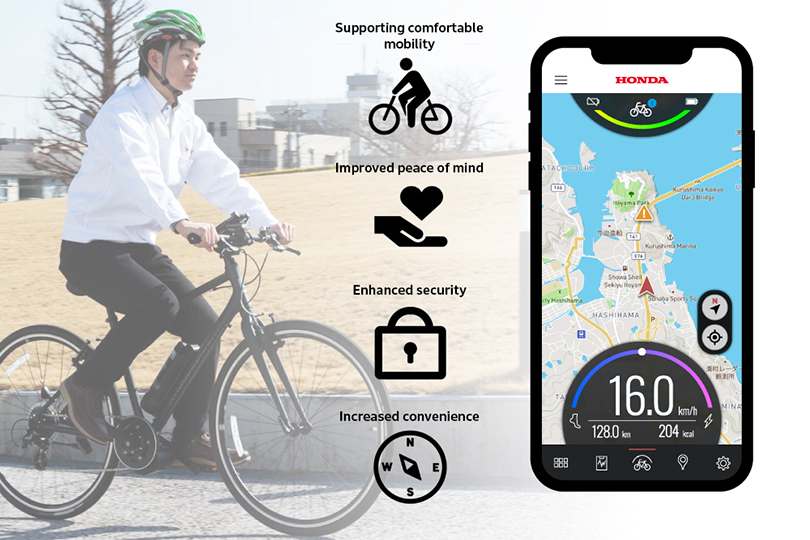 Through the app, users can access a variety of connected features—from managing riding data to sharing location information.
The project officially began in April 2019 and is currently being developed by a four-member team. The initiative began when I applied to Honda’s internal new business creation program IGNITION at the end of 2018.
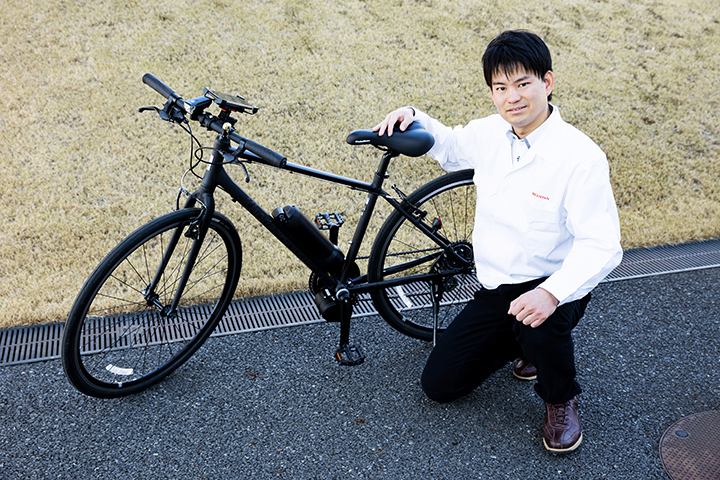 The first bicycle equipped with SmaChari is scheduled to be released by Y’s Road in September 2023.
I first came up with the concept when I was a student at a technical college. My commute was about 10 kilometers each way. I enjoyed going to school, but the commute itself was exhausting. I started thinking about creating something that could make bicycle commuting easier.
At the time, I wondered whether attaching a motor used in robotics competitions to a commuter bicycle might allow bicycles to be electrified through a retrofit approach.
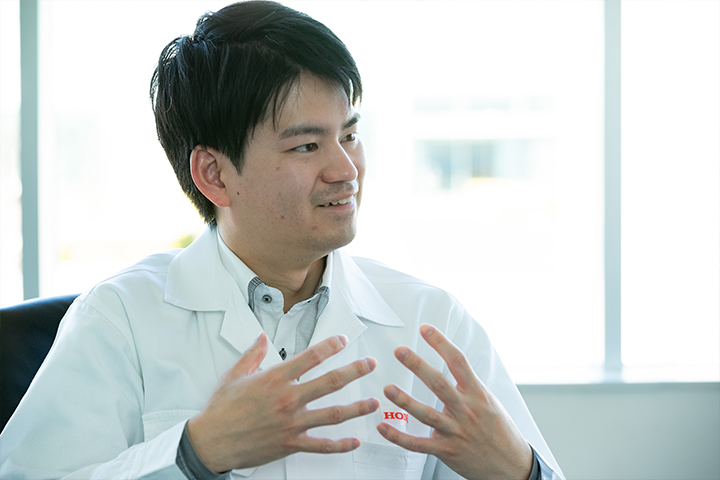 During technical college, Nomura dedicated himself to research and development through robotics competitions.
The turning point came in 2018, my fourth year at Honda. Until then, I had been involved in developing the N Series, including the N-BOX. When I saw the call for proposals for IGNITION, I decided to apply because I wanted to turn an idea I had been carrying for years into something real.
Cars and motorcycles are familiar forms of mobility, but they are ultimately products for people who hold a license. When I was a student, even if I wanted one, they were difficult to obtain. I saw it as a chance to create a form of mobility that felt closer to everyday life as a Honda product, so I decided to take on the challenge.
In that sense, the idea of attaching a power unit to an existing bicycle is actually quite similar to Honda’s origins—the “Batabata” Batabata was the auxiliary bicycle engine that Soichiro Honda first commercialized under the Honda name in 1947. There’s a well-known story that the idea came from seeing his wife struggling to pedal a bicycle long distances to go shopping, and wanting to make her journey easier.
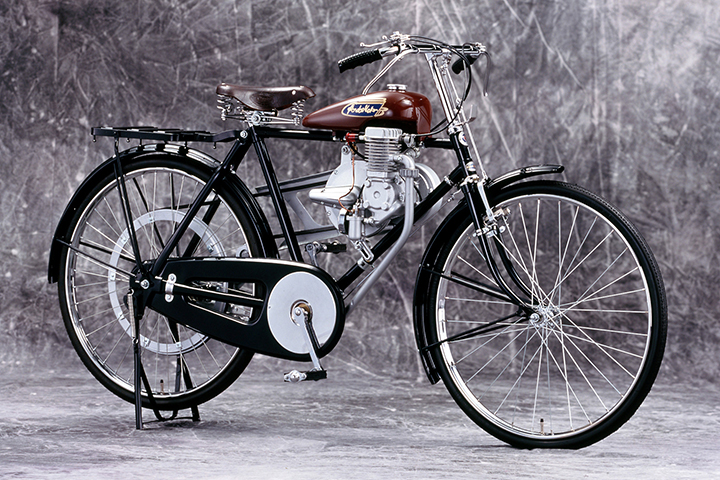 Honda’s first original product, the Honda A-Type auxiliary engine for bicycles. The engine’s distinctive sound earned it the nickname “Batabata”
Nomura recalls being told after submitting the IGNITION proposal:
“This is like a modern version of Batabata.”
The era may be different, but the motivation is the same—helping people around us and making mobility easier. In the end, SmaChari turned out to be very similar in spirit. Batabata also became the origin of modern mopeds, and reflects Honda’s philosophy of enriching everyday life with products that are accessible to people.
Solving the challenges of conventional bicycles through electric assist as a new option
Under the IGNITION program, teams can recruit up to four members. I reached out to Onuki, whom I had met through a project where young employees from Suzuka and Kumamoto worked together to create new appeal. Two more members were then recruited through an internal call, and Sunamoto and Hattori joined the team.
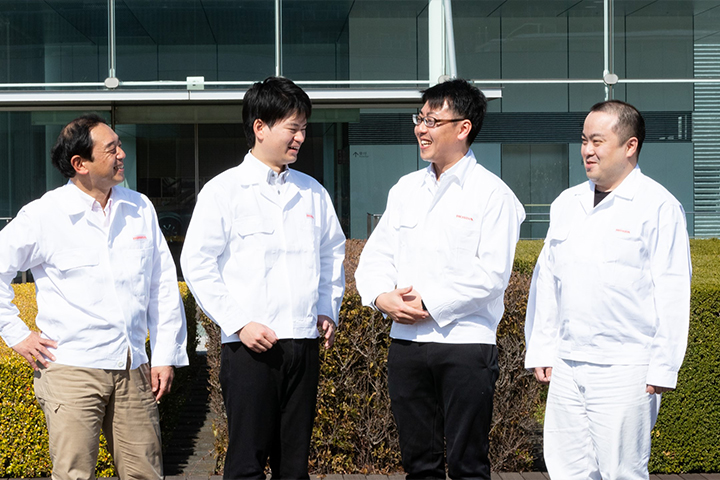 The four members of the development project (from left): Makoto Hattori, Naoki Nomura, Hirotaka Onuki, and Masayuki Sunamoto. Nomura recalls the internal selection process: “From among the applicants, I chose people with strong personalities who were truly passionate about SmaChari.”
Sunamoto works on motorcycle development and shares Nomura’s experience of challenging bicycle commutes during school. Hattori, meanwhile, is an avid cyclist who rides more than 10,000 kilometers per year. Nomura and Onuki focus on development frameworks and core system design, I lead the connected technology, and Hattori focuses on the electric assist system.
Before defining the direction of development, the team traveled across Japan conducting interviews with high school students about commuting conditions. They also visited bicycle retailers to understand challenges faced by the sellers. Through this research, Nomura became convinced of an important insight. Perhaps what customers truly needed was not simply electric-assist bicycles—but a way to electrify existing bicycles.
When I was a student, I also wanted an electric-assist bicycle. But most models were utility-style bicycles. I wished there were more stylish options. Electric-assist bicycles tend to have limited designs, so allowing riders to electrify their favorite bicycle could create stronger demand.
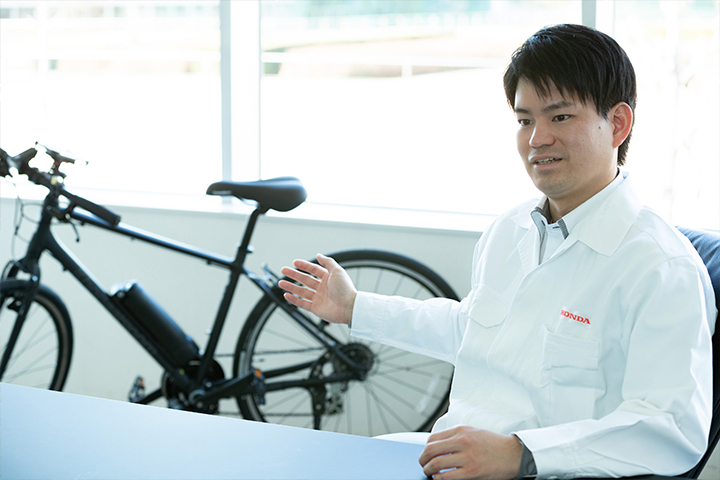 The goal was to create a product that could be attached to various bicycles, much like selecting optional accessories such as baskets or lights.
Driven by the desire to enable anyone to electrify the bicycle they love, the team began identifying the key challenges that would shape the direction of development. After a year of market research, several issues came into focus: from the customer side, high prices and safety concerns; from the retail side, the burden of managing inventory. The research revealed a range of challenges faced by each group involved.
Customers were looking for more than just electrification. They wanted protection against theft, reassurance for long commutes, and solutions for issues such as forgetting to charge the battery.
Through this research, Nomura reached an important conclusion: SmaChari should not simply be an electrification unit. It should be a service that provides safety and peace of mind.
Expanding the possibilities of bicycles through electric assist and connectivity
Originally, development focused on adding electric assist to bicycles through a retrofit approach. However, addressing the challenges of bicycle mobility required more than electrification alone.
While cars continue to evolve with advanced safety technologies such as driver-assist systems, the safety features of bicycles have remained largely unchanged for decades. That raised an important question: could technology help improve bicycle safety?
Connectivity emerged as the answer. From that point, the concept of SmaChari took shape—combining electric assist with connectivity.
What new possibilities emerge when bicycles become connected?
Location information can be shared through the app, allowing parents to check where their children are. When riding with friends, the app also helps share meeting points and confirm each other’s locations. Most importantly, the smartphone functions as the key. The electric assist unit will not activate unless a registered smartphone is connected, which also helps prevent theft. Connectivity also makes it possible to add new services through future updates, creating additional value over time. That is another advantage of making bicycles connected.
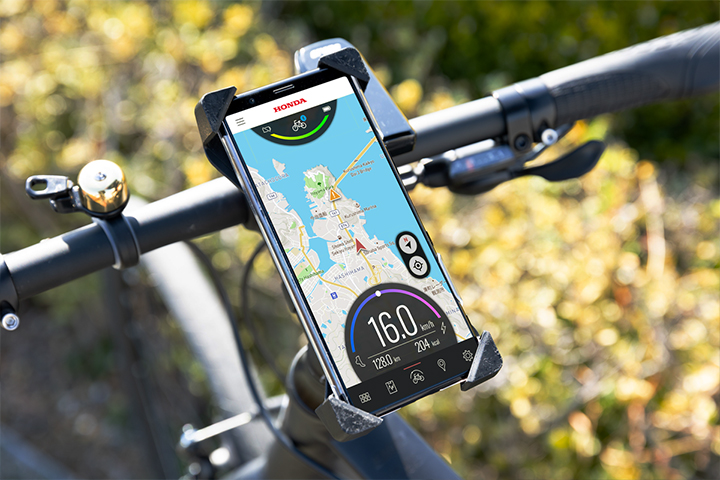 Future feature expansions can be delivered through the smartphone app.
Within the IGNITION program, participants can choose between launching a startup or developing the business internally within Honda. SmaChari became the first project from IGNITION to move forward as an internal business.
Whether to launch the project as an independent startup or develop it as an in-house business was a decision that divided opinions within the team. A venture outside the company might have allowed faster commercialization.
However, research showed that, from the customer’s perspective, bicycles require a high level of trust—particularly in areas such as quality and compliance with regulations. Considering those expectations for safety and reliability, we concluded that launching the service within Honda, leveraging the company’s track record and reputation for safety, would provide the best path for the service to reach and benefit more customers.
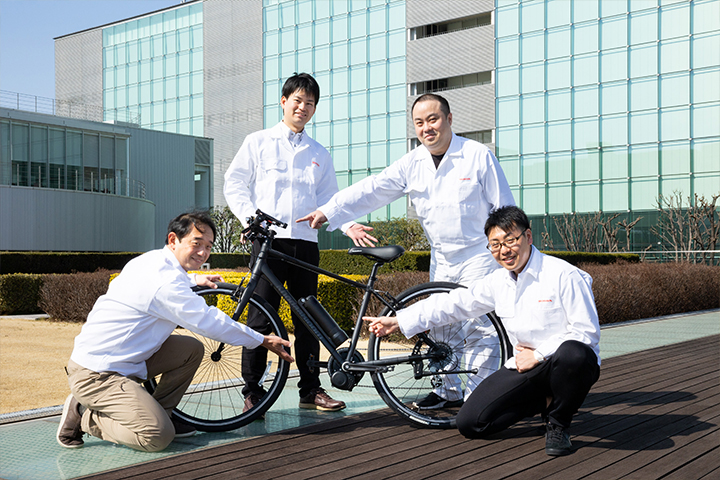 “Many things were possible precisely because this became an in-house business,” Nomura reflects.
Another major decision followed. The question became: what can Honda uniquely contribute? The answer lay in providing technologies that enable electrification and connectivity, allowing broader value to reach society.
Many manufacturers already specialize in power units for electric-assist bicycles. At the same time, bicycles themselves have been becoming more expensive, and developing the power unit in-house would have further increased costs.
We decided to source the electric assist unit from manufacturers with that expertise. The goal became creating a service positioned between existing electric-assist bicycles and bicycles that customers would like to electrify.
In 2020, the development team began full-scale development of the core technologies for the retrofit electric assist unit and Connected platform. After two years of development, the system received approval from the Japan Traffic Management Technology Association, confirming compliance with safety and regulatory standards for electric-assist bicycles.
From there, the project moved fully into the commercialization phase, and partnerships were established with companies that manufacture and sell bicycles. That process has led to where the project stands today.
In fact, once commercialization became clear, all team members transferred from Honda R&D to Honda Motor. As of April 1 this year, the team moved into the business division. The decision reflected a shared belief: rather than simply developing the technology and handing it off to another division, we wanted to deliver the product to customers ourselves.
SmaChari began with the simple desire: to make daily bicycle commutes easier for high school students. With a rollout planned for this September, the initiative will soon begin reaching high school students across Japan. The team is also considering expanding partnerships with additional companies and increasing the number of stores where SmaChari can be experienced. Nomura now looks ahead to the next challenge.
Honda has set a goal of zero traffic collision fatalities by 2050. The team also understands that customers place the highest value on safety and peace of mind, and hopes to contribute to the advancement of Cooperative safety.
Until now, safety systems have mainly relied on cars detecting bicycles and pedestrians through cameras. In the future, combining information from bicycles and pedestrians themselves could further improve safety.
To build that foundation, our immediate goal is to expand the SmaChari system across Japan and accumulate riding data from bicycles. Combining that information with vehicle data could significantly accelerate the development of a stronger safety infrastructure. The initiative represents a meaningful step toward the next stage of Cooperative safety.
What began as an effort to support high school students commuting by bicycle may one day contribute to advancing Cooperative safety. The day when SmaChari plays a role in enhancing safety and peace of mind for cyclists might not be far away.





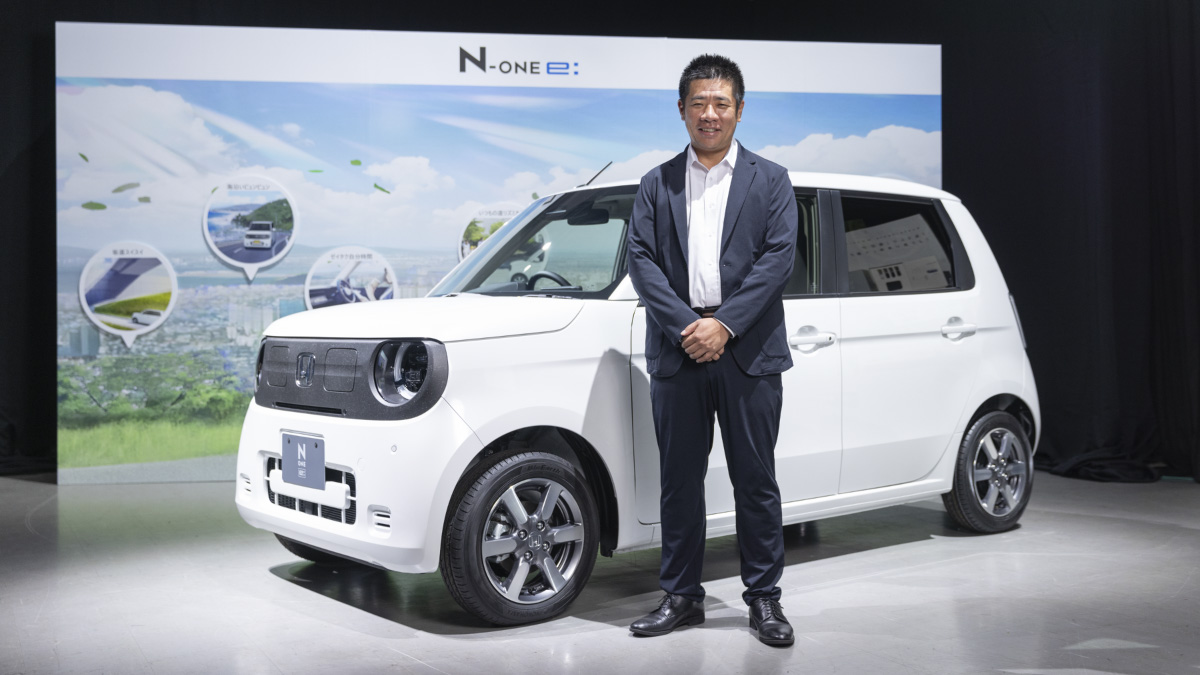

SmaChari does not refer to the bicycle itself. Rather, the name describes a service and app that connect bicycles. The concept resembles an operating system or CPU for computers or smartphones—technology that can be integrated into bicycles from many different manufacturers.