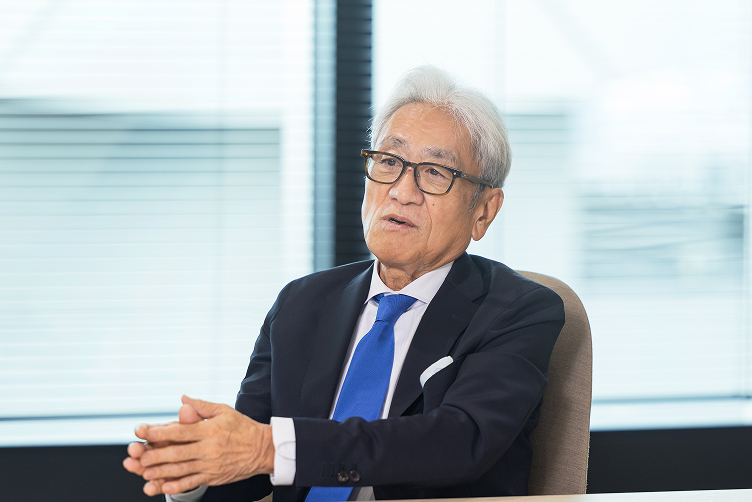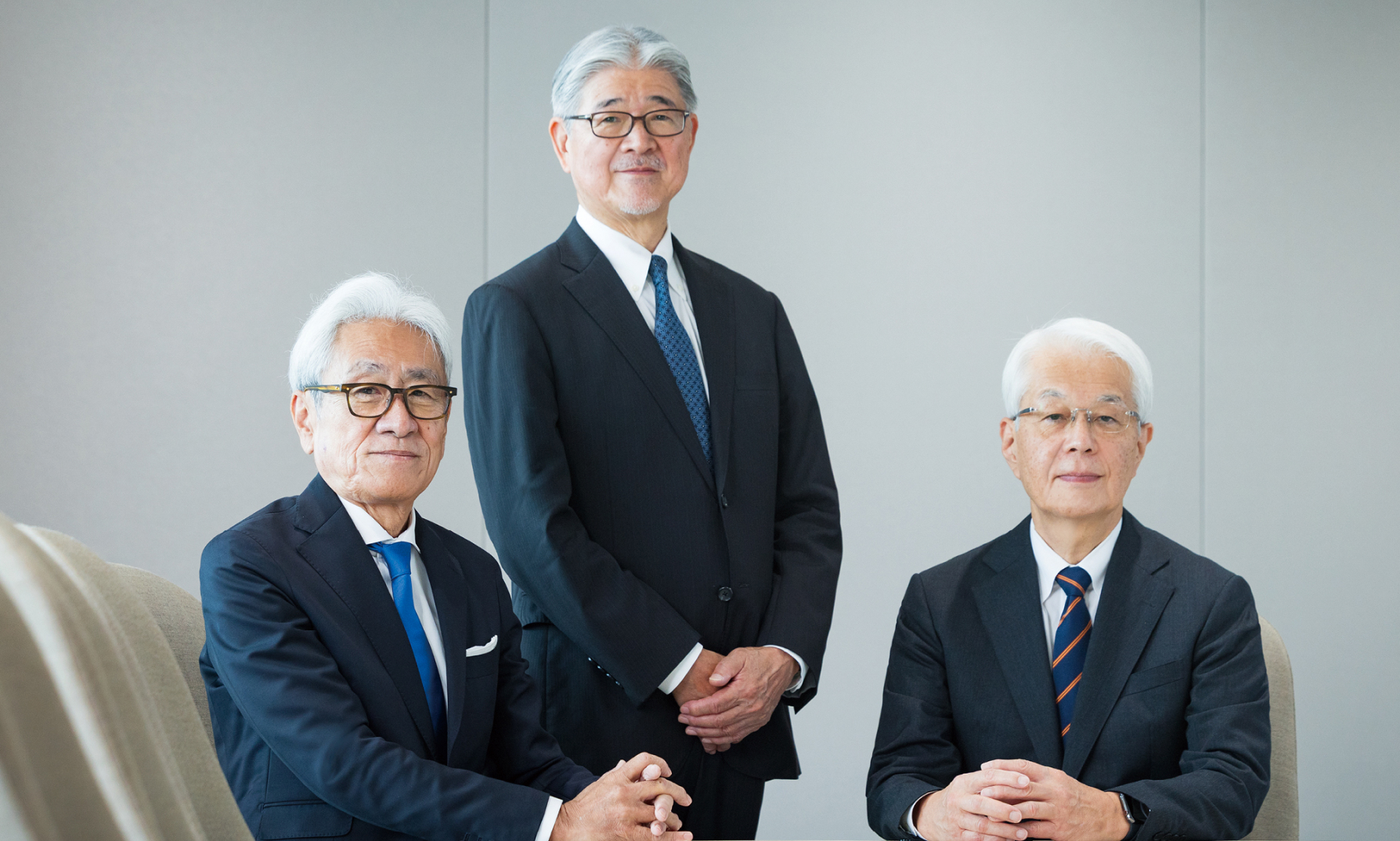
Connecting Honda’s Dreams to Corporate Value by Strengthening the Twin Pillars of Governance and Execution
-
Chairperson of the Board of Directors
Nominating Committee Member (Chairperson)
Outside Director Fumiya Kokubu -
Audit Committee Member (Chairperson)
Outside Director Yoichiro Ogawa -
Compensation Committee Member (Chairperson)
Outside Director Kazuhiro Higashi
Roundtable with the Three Outside Director Committee Chairpersons
Falling Short in Translating Technological Capabilities into Business Growth
Kokubu: Taking a bird’s-eye view of current conditions, I still see Honda winning with its technological capabilities yet losing in the business realm. Honda has strong technological capabilities and high levels of R&D investment, but I believe it has not fully translated these strengths into business results. Additionally, looking at Honda’s current valuation, I sense that investors are questioning the Company’s growth potential. The automobile business has seen little growth for more than 20 years. The issue isn’t only the large-scale impairment losses recorded due to the revised EV strategy, but also that similar issues have repeatedly occurred in the past on a smaller scale. I believe that the source of this issue is the product-out approach in which Honda believes that if it simply produces good products, they will be well received. In the current age in which consumer preferences are so highly diversified, Honda may not have sufficiently incorporated the market-in perspective. Additionally, despite holding such a wide range of assets, including motorcycles, automobiles, power products, and aircraft, Honda has mostly failed to realize synergies among these businesses. They all exist independently without a sufficient sense of overall unity. Going forward, it will come down to whether Honda can present a concrete and persuasive growth strategy.
Higashi: I agree. Providing an outlook for money combined with an outlook for technology leads to a better outlook for the business overall. This starts with explanations regarding market forecasts and growth forecasts that are based on simple calculations (multiplying unit prices by number of customers). I also believe that the balance within the Honda Philosophy of the “Three Joys”—“The Joy of Buying, The Joy of Selling, and The Joy of Creating”—is starting to collapse. Although Honda is pursuing “The Joy of Creating,” initiatives associated with “The Joy of Selling,” and especially “The Joy of Buying,” have weakened. Honda has two main groups of end users: core Honda fans and general customers. Honda isn’t wrong to focus on the core fan base that loves it. However, it should also take a broader view of its overall customer base. As technology, manufacturing, and regional organizations have become siloed, we must heighten our perspective to question whether the products Honda considers good are truly good for the customer. We need to use this opportunity to take a step back and have a hard look at our current reality.
Honda’s Resolve to Truly Change Will Determine Its Future
Ogawa:
Honda now faces a crucial moment in which it must regain trust. Investors, associates, and society overall may be losing trust in Honda. At the same time, properly recording and disclosing, rather than deferring, the current large-scale losses is representative of the honesty of Honda’s culture. We are now at a turning point that will determine Honda’s future in terms of whether we truly have the will to change, while still protecting what has always been important to us.
Honda’s strength lies in pursuing dreams. However, a company can’t survive if all its members pursue their dreams with no discipline. It’s important to make a distinction between domains in which to pursue dreams and domains in which to generate revenue and ensure stable business. We also must ask ourselves whether the dreams that we hope to realize truly align with our customers’ dreams. What really struck me this time was that we needed to evaluate the viability of our investment decision from a more realistic perspective. It's important to maintain a certain level of discipline when investing, to create rational assumptions in business strategy planning and investment decisions, and to constantly and properly monitor the initial assumptions and state of progress. If there is no structure in place to properly monitor progress amid daily changes in the business environment and to help adjust course as necessary, bold strategies can’t be undertaken. It is essential that we have the discipline to properly communicate frontline concerns to management and apply the brakes when things aren’t going well. Honda has always had a unique culture of open and frank discussions, Waigaya, in which the frontlines provide feedback to top management. However, at some point, this led to an organization in which whatever has been decided is often carried out unquestioningly. Management has become aware of this change and worked to reform Honda’s corporate culture, but we need to further accelerate these efforts.
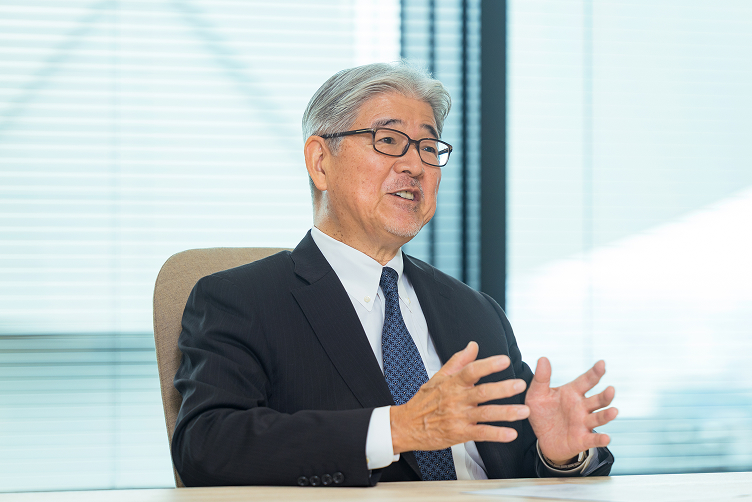
Higashi: It is wonderful that Honda has strong technology; however, we tend to focus too strongly on that element alone. Honda’s strength has always been its ability to attract customers through its novel technologies, but, in recent years, customer preferences and lifestyles are experiencing dramatic change. We will only be able to fulfill investors’ expectations if we can demonstrate the future of our technology, how that leads to cash flow, and how our dreams connect to business growth.
Ogawa:
In that sense, I believe it is important to reassess our products and businesses with customers as the starting point.
For example, in India, we are changing our development approach to one that first considers the balance of performance and price demanded by local customers as the starting point of our products and then combines that with value unique to Honda. In this transition, it is critical that we return to our Waigaya culture that ensures these voices from the front lines reach management. While maintaining our goal of achieving carbon neutrality by 2050, we also need to rebuild our roadmap based on a review of our EV strategy. I would like to hold discussions at the Board of Directors on the compatibility of our targets and execution plan and present a convincing roadmap to our investors.
Kokubu:
To make steady progress with these changes, we need to take an active role in the work of the Board of Directors.
I’m not of the belief that Honda’s governance hasn’t been functioning. Both the Board of Directors and the various committees have functioned with a certain level of effectiveness. However, I also think that when Honda transitioned to a “company with three committees” structure and delegated a wide range of authority, we began to rely too heavily on a monitoring-type Board of Directors. The reality is that large-scale investment decisions were made through resolutions by the Executive Council, and the Board of Directors received reports only after the fact. This means that it is difficult for the Board to properly assess what kind of discussions led to the investment. I was recently appointed as Chairperson of the Board of Directors. I plan to approach the decision-making process with a sense of responsibility and resolve, and in my role as chairperson, I plan to participate as needed in Executive Council meetings as an observer to share important information with Outside Directors. Each Director needs to change their current mindset. However, because we cannot necessarily eliminate the asymmetry of information between Inside Directors and Outside Directors, our reason for existing as Outside Directors is to use our knowledge and experience to point out what seems to be questionable and to constantly ask whether what is common sense to Honda is also common sense to the outside world. This will require a high level of commitment, and we cannot act to oversee such a period of transformation without this level of resolve.
Higashi: Some believe that if we strengthen oversight, we will lose speed in execution. This is incorrect. Internal discussions can sometimes proceed toward predetermined conclusions. The role of Outside Directors is not only to provide a check-and-balance function, but also to screen discussions (which tend to follow corporate internal logic) from a standpoint of common sense to prevent gaps in our evaluation. Asking why things are the way they are does not impede decision-making; rather, it helps move it forward. Important issues for the Board of Directors are accelerating the “explanation and discussion” loop and creating a framework for substantive discussions to take place.
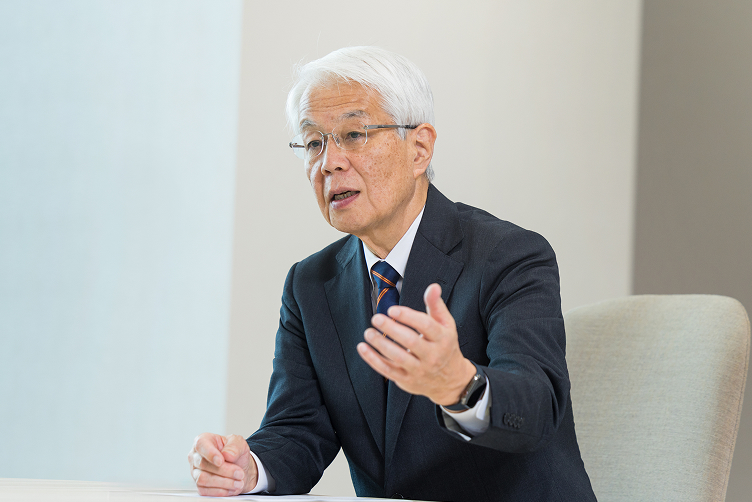
Ogawa: While we don’t need to micromanage every little thing, information does need to be shared with the Board of Directors in a timely manner based on the strategic importance of key themes at Honda, including our strategies for China and India, cooperation with partners, and the choice of software technologies that form the lifeline of our automobile business. In addition to this information sharing, we need to take time to engage in deeper communication and hold discussions on the suitability, rationality, and viability of both Honda’s management and business strategies. Then, once we take responsibility and commit to policies and strategies, we need to be deeply involved in their progress and establish KPIs to periodically track investment decisions, their progress, and results. The word “resolve” that Mr. Kokubu used really resonated with me. By having us Outside Directors take personal responsibility, I’m confident we can strengthen our relationships of trust with the execution team while improving the very nature of Honda’s management.
Connecting Diverse Businesses and Customer Touchpoints to Generate New Growth
Kokubu:
Strengthening governance is not just about reinforcing safeguards. It is also about translating Honda’s strengths into future growth.
First of all, the “uniqueness of Honda” isn’t necessarily clear, and that concept itself may be undergoing significant change amid an age of increasing diversity. Do our dreams really match the market? We must consider not only how we provide the “hardware” of automobiles, but also how we become a beloved presence that is integrated into the daily lives of our customers. I believe our fundamental management issue isn’t limited to our business and sales capabilities, but rather lies in how we paint an overall picture that’s centered on our customers. In other words, how our businesses connect organically and how we build a true Honda ecosystem.
To make this a reality, an important consideration is how we combine Honda’s diverse initiatives.
For example, HondaJet users do not necessarily own Honda vehicles, and we do not have a clear pathway to naturally convert Honda motorcycle users into automobile users. Even in Southeast Asia, our repeat purchase rate for automobiles has not reached satisfactory levels. The relationships of trust Honda has with our customers, as well as our global network and our business portfolio, are all assets with significant potential to realize continuous business growth. As such, rather than trying to achieve business growth through our individual business segments, the starting point of our growth strategy should be the big picture we paint with our customers at the center and our businesses connected organically.
Higashi: Honda is Honda precisely because it has so many different businesses. This diversity acts not only to diversify risk, but also to develop future businesses. For those future businesses to grow, each business cannot function independently. Instead, we need a framework to integrate them. At the same time, customer value itself is transforming as new technologies such as automated driving become viable. In an age in which mobility itself is becoming automated, we must consider what kind of added value Honda can provide beyond the “joy of mobility.” I believe that by integrating our businesses and combining their respective expertise, we will create new value that only Honda can provide.
Changing What Must Change to Turn “The Power of Dreams” into Future Growth
Higashi:
That is why I believe it is important to clearly identify what we should change and what we should preserve to drive future growth.
All companies have things that must not be changed and things that must be changed. The Honda Philosophy is a precious asset that is deeply rooted among both our associates and our shareholders. However, we should also have the courage to change our work processes and areas still bound by conventional wisdom. While this may be a painful process, I believe that now is the time to question conventional wisdom and seize the opportunity for transformation.
Ogawa: In my profession as a CPA, I have dealt with many different companies, and Honda is one of my favorites. While visiting the frontlines, I’ve seen each Honda associate approach their assigned role with passion and dedication. When I see the serious approach engineers take at Honda’s yearly research presentations, I can sense the underlying strength of the Company. Honda has a track record of rising to the challenges of transformation. This is why it’s important that we follow through on the three pillars and commitments laid out in our Business Briefing and provide a clear roadmap both externally and internally. As Outside Directors, we must approach management with an even greater sense of resolve than ever before and do our best to support both transformation and growth.
Kokubu: If I were to tell Honda one thing right now, it would be “Don’t let something like this make you shrink back.” The exciting image of Honda that I loved as a child still lives on in the hearts of many today. I want Honda to make the most of its value as a company that inspires dreams and to continue to be a company that fills people with wonder and inspiration. This is definitely not the end of “The Power of Dreams” for Honda.