Initiatives for Motorcycles
From the perspective of reducing environmental impact, we have undertaken efforts in motorcycles, including reducing material usage through lightweight design, adopting recycled materials, and designing structures with recyclability in mind.
In addition to using recycled materials such as iron and aluminum, which can reduce land alteration during raw material extraction and CO₂ emissions during material production, we are pursuing new initiatives by applying bio-based materials and recycled resins that contribute to reducing the extraction of fossil resources.
Application of Pre-Consumer Recycled Materials to Products (Circular Design)
As part of our efforts to expand the use of recycled resins, we began applying pre-consumer recycled polypropylene materials* in 2024 and expanded their application to the CB1000F and CB1000GT (European market model) sold in 2025.
Pre-consumer recycled materials, due to their known material properties, allow for physical property adjustments equivalent to virgin materials while mitigating the risk of regulated chemical substance contamination.
We will continue to apply pre-consumer recycled materials to other models in the future.
Pre-consumer recycled materials are derived from scraps generated during the manufacturing or molding processes of products such as automobiles and home appliances.
Application of Post-Consumer Recycled Materials to Products (Circular Design)
To further expand the use of recycled resins, Honda applied post-consumer recycled polypropylene materials* to exterior parts of the CB750 HORNET and XL750 TRANSALP sold in 2025.
Because post-consumer recycled materials utilize used plastic products collected from the market, they are more difficult to control than pre-consumer recycled materials. Accordingly, by implementing controls at the procurement stage of waste materials to prevent the mixing of regulated chemical substances, and by adjusting material formulations to ensure the required properties, Honda made it possible to apply these materials to its products.
Honda plans to continue expanding their application to other models.
Post-consumer recycled materials are derived from used waste plastic products from general consumers and product end users.
Application of Recycled Automobile Bumper Materials to Motorcycles (Circular Design, Circular Value Chain)
We have previously utilized recycled materials made from discarded bumpers of Honda vehicles collected from dealerships, applying them to undercovers and other parts of automobiles.
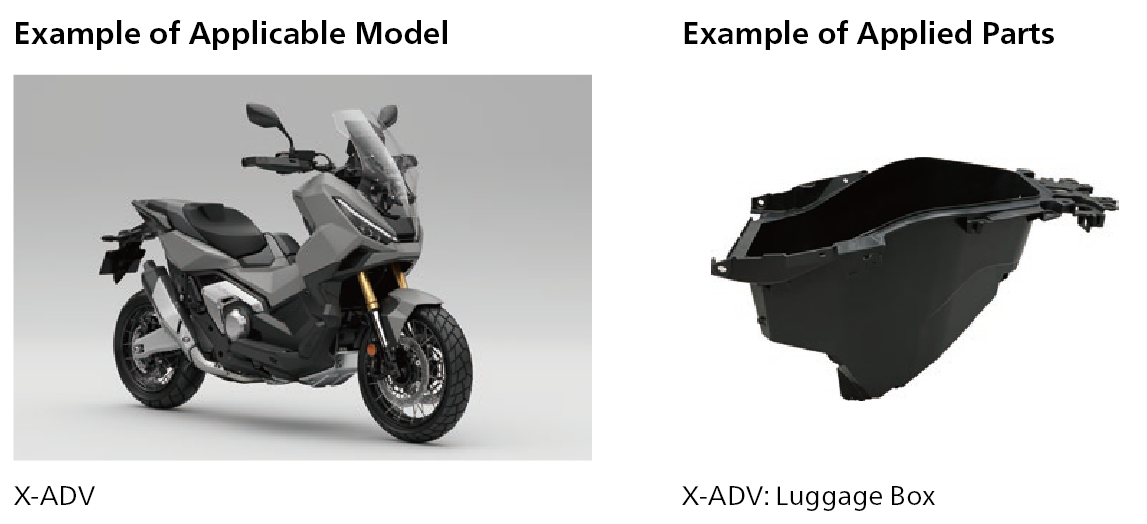
Through design optimization, we have successfully applied recycled bumper materials from automobiles—previously challenging to use in motorcycles—to components such as the luggage box of the NC series* sold in 2024.
This initiative leverages Honda’s distinctive strengths, including the diversity of our sales products and our established recovery scheme.
Applicable models: NC750X, FORZA 750, and X-ADV
Application of Bio-Engineering Plastics to Products (Circular Design)
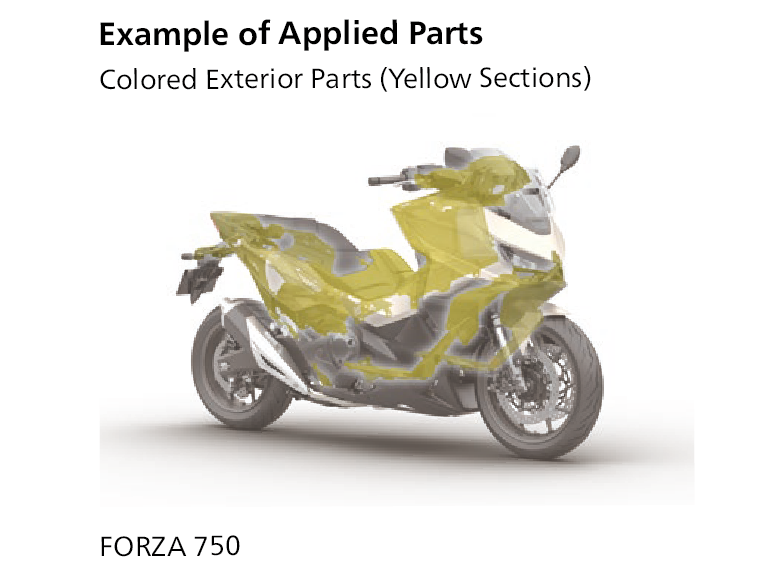
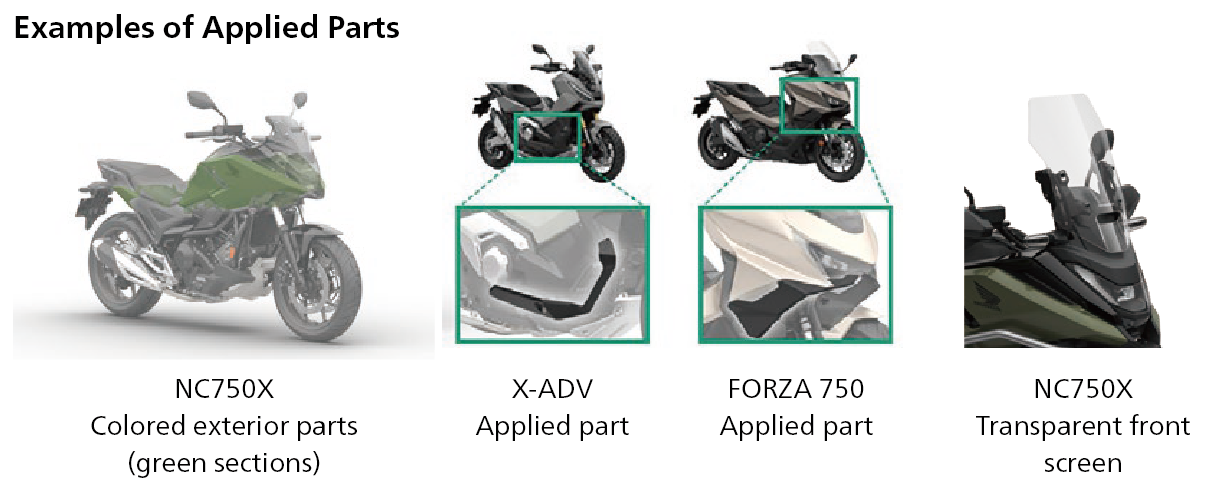
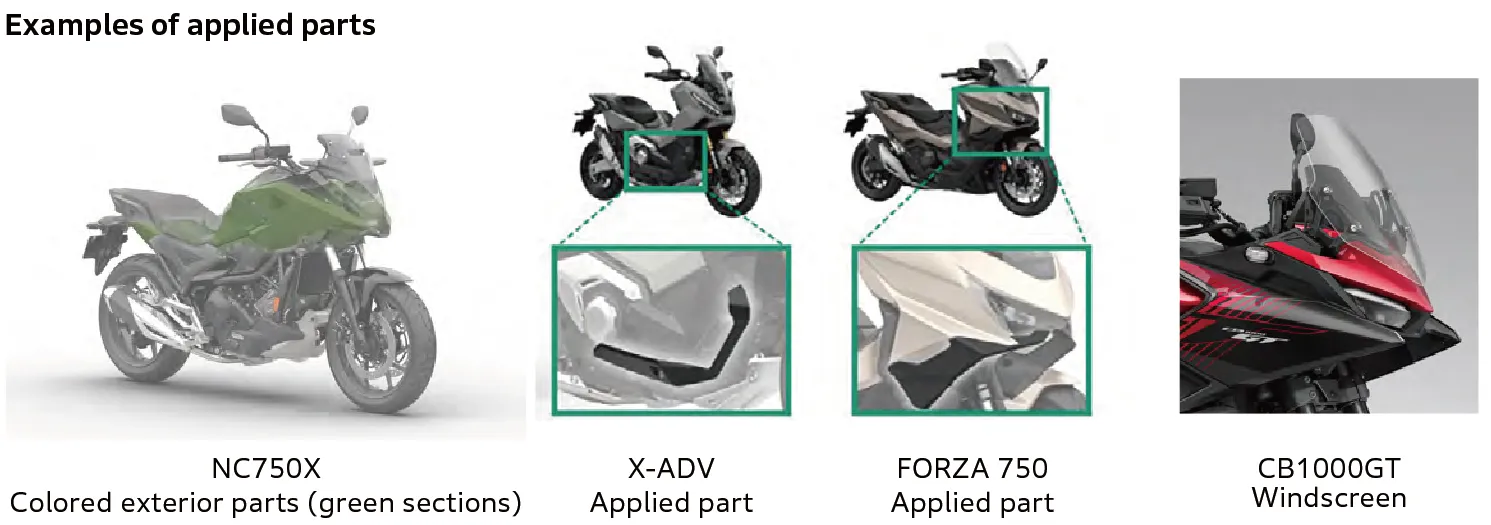
As part of our efforts to expand the use of the bio-engineering plastic “DURABIOTM”*2, we applied it to the colored exterior parts of the NC series sold in 2024, marking the first such application in motorcycles.
By using colored DURABIOTM with high aesthetic quality, painting becomes unnecessary, contributing to CO₂ reduction.
Additionally, Honda expanded the application of DURABIOTM, first adopted in the world*3 for the transparent front screen of the CRF1100L Africa Twin launched in March 2024, to the CB1000GT (European market model) released in 2025.
Honda plans to continue expanding the application to other models.
- DURABIOTM is a registered trademark of Mitsubishi Chemical Corporation.
- Based on Honda’s research (as of October 2023).
Application of Recycled Aluminum Materials (Circular Design)
We have been applying small-diameter wheels, which are made from market scrap using the High-Pressure Die Casting (HPDC) method to compact models, such as scooters and Cubs in Vietnam, Thailand, Brazil, and China.
Meanwhile, large-diameter wheels, which had previously been difficult to apply due to technical challenges, have also begun to be applied to large models produced in Japan and released from 2024 onward.
With this application to large models, wheels made from recycled materials are now used across our entire product line, from compact to large models.
We plan to expand the use of recycled aluminum wheels to global models in a phased manner.