To Formula 1
In the 1980s, Honda engines dominated the European F2 Championship series. Meanwhile, many up-and-coming foreign drivers who aspired to F1 also entered the domestic F2 championship series, competing fiercely in races against Japanese drivers such as Kazuyoshi Hoshino and Satoru Nakajima. Formula fever in Japan grew by the day.
The dreams of Honda Land Co., Ltd.*4 to “host the world’s top racing series, F1 at Suzuka” and the growing momentum among fans and others who wanted to see F1 at Suzuka came together. Honda Land began working toward the hosting of F1. While continuing to renovate the international racing track to meet world standards, the F2 championship was changed to the international standard F3000 championship, and efforts were made to strengthen race management capabilities. At the same time, after repeated negotiations with FOCA*5 (Formula One Constructor’s Association), which held the rights to host F1, it was decided that Bernie Ecclestone, then president of FOCA, would visit Suzuka on November 23, 1986. The day after his visit, a contract was signed to host the event. Finally, the dream took shape.
- Renamed from Techniland Co., Ltd. in April 1968. Later renamed to Honda Mobilityland Corporation.
- Association of F1 constructors
F1 Japanese Grand Prix Finally Realized
F1 was very special, as the world’s most prestigious racing series. Preparation for a F1 race involved an enormous amount of practical work, from setting up the venue, installing signage, training officials, and arranging entry visas for the teams, to accommodations. Everything was a first-time experience, and deadlines had to be strictly adhered to. All Suzuka Circuit Land*6 employees worked hard to prepare for the event.
In June 1987, just months before the November event, a public lottery was held for spectator tickets.
Although the lottery period was short, lasting only one month from May 1, about 400,000 applications were received for the 90,000 tickets sold to the general public. Only one in every 4.4 people could attend the event, demonstrating the high level of interest among motorsports fans in the world’s most prestigious racing series. In November, the long-awaited F1 World Championship Series Fuji Television Japanese Grand Prix was held. The 112,000 spectators filling the grandstands cheered enthusiastically to the roar of the racing cars driven by the world’s top 26 drivers. Honda supplied engines to four cars from two teams, and was expected to win the race in its home country, but it was Ferrari, driven by Gerhard Berger, who won. That year, when the first F1 race was held at Suzuka Circuit, was the fifth year of Honda’s second F1 phase. Nelson Piquet driving the Honda-powered Williams Honda won the drivers’ championship, and Honda took its second consecutive constructors’ title. Later, in 1988, McLaren-Honda won 15 out of 16 races, and the F1 boom was well underway.
- Renamed from Honda Land Co., Ltd. Later renamed to Honda Mobilityland Corporation.

“F1, the world’s most prestigious racing, at Suzuka.” In November 1987, the dream became reality.
The Mobility World Motegi Concept
In the mid-1980s, Honda's Motorcycle Sales division had one idea in mind. This was the Motor Slope Concept, a plan to create venues throughout Japan where people could enjoy riding and playing with motorcycles, in cooperation with dealers in various regions. This concept was similar to the Tech project of the 1960s. In order to promote the concept, Honda launched the Mobility World Motegi concept aiming to become “a global center of mobility culture through field sports that utilize the software surrounding mobility and facilities that allow people to experience nature in order to promote the world of motorsports and safe driving.” The Mobility World Motegi (tentative) Concept was announced in 1988. The town of Motegi in Haga, Tochigi Prefecture, was selected as the final candidate site because of its topography surrounded by mountains, which prevented sounds from leaking outside. In February 1991, Honda Mobility World Corporation was established as a joint venture with Suzuka Circuit Land to operate the facility.
Twin Ring Motegi Established
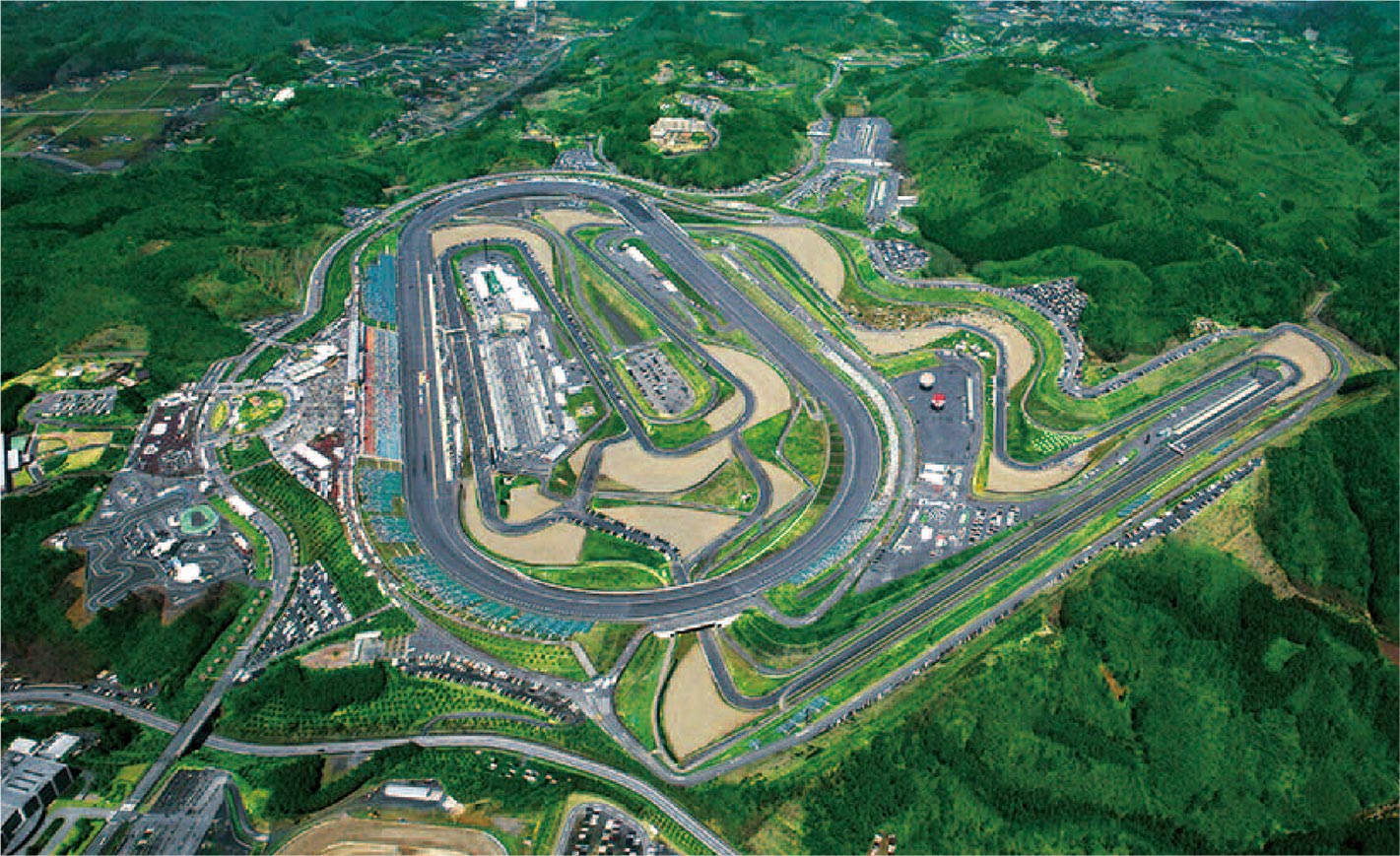
Twin Ring Motegi opened in 1997, aiming to be the source of mobility culture.
Mobility World Motegi’s project members sought a new form of motorsports for the 21st century and turned their attention to the United States, where motorsports had taken root as a form of entertainment. The project members watched a NASCAR (National Association for Stock Car Auto Racing, Inc.) race, and were overwhelmed by the enthusiasm of the spectators. Stock cars (cars with production car-like form) in brightly-colored sponsor livery raced on an oval track. Spectators were able to enjoy the cars and the entire race right in front of them without leaving the stands. Unlike European formula car races, this type of motorsport with spectator participation was an entertainment experience.
The members strongly felt that this was what lacked in Japan, and strongly promoted the introduction of Japan's first international-level oval racing track. They believed, “It is not enough to simply build the ninth road course in Japan. We need a facility that offers a wide variety of options for participatory motorsports, and that is what the 21st century demands.” Based on this thinking, the facility included a traffic education zone with courses and facilities for safe driving training and facilities for learning about traffic culture, a motorsports zone where novices and experts alike can enjoy sports driving on slope-like courses, such as road, trial, motocross, and trekking, a recreation zone with an artificial lake, including a multi-purpose sports ground, a sports zone for air sports, auto-camping facilities, a nature village, and event plaza, and ancillary facilities including accommodation, restaurants, halls, and parking. In addition, they decided to construct a unique auxiliary facility that Honda R&D could use as a test course, as needed.
The facility name was finalized as Twin Ring Motegi. The company name was likewise changed to Twin Ring Motegi Co., Ltd. The name “Twin Ring” was coined by combining the English word “twin” and the German word “ring,” representing the two racing courses. Twin also represented “fusion” between people and nature, and people with people.
The 1.5-mile (2.4 km) long super speedway, 4.8 km long road course, short course, dirt oval track, kart land, traffic education facilities, and 13 other facilities were completed and opened for business in August 1997. In July 2000, Hello Woods opened as a venue where people can experience and discover the abundance of life in the midst of a joyful relationship with nature. Twin Ring Motegi aimed to become a base for promoting mobility culture for the 21st century.
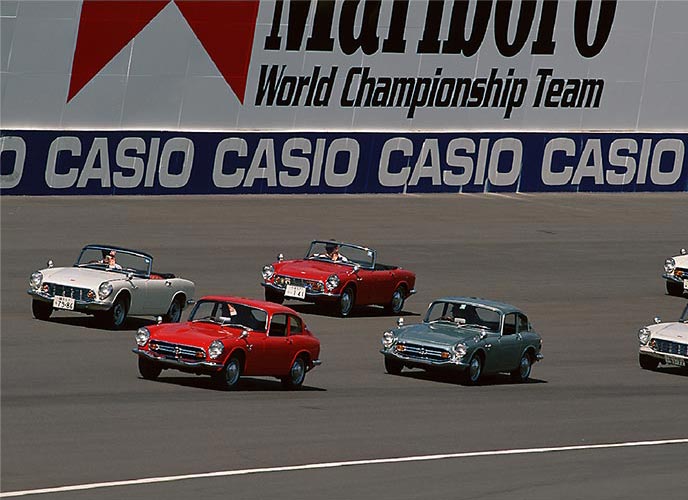
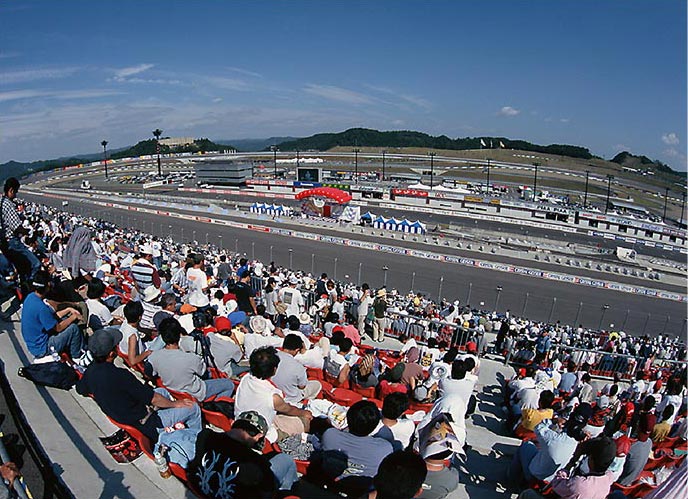
In October 1998, Honda’s 50th anniversary event “Thank You Festa in Motegi” was held at Twin Ring Motegi.
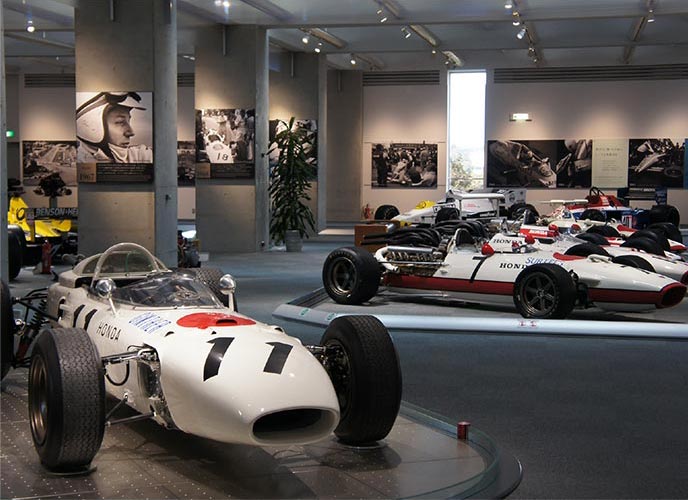
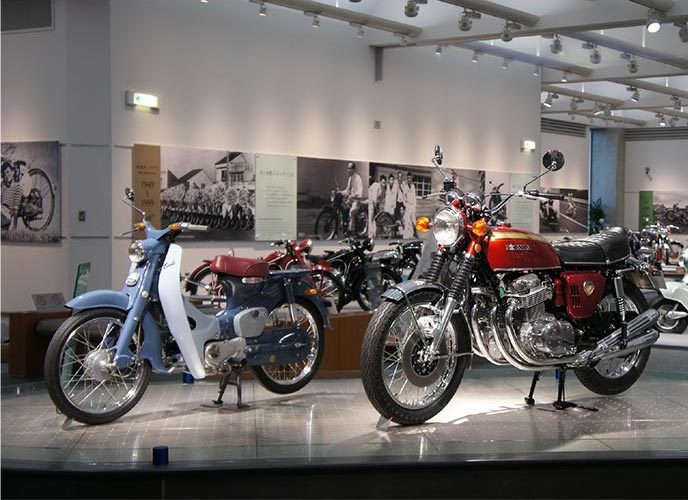
Honda Collection Hall exhibits Honda motorcycles, automobiles, power products, and racing machines.
Bringing American Motorsports to Japan
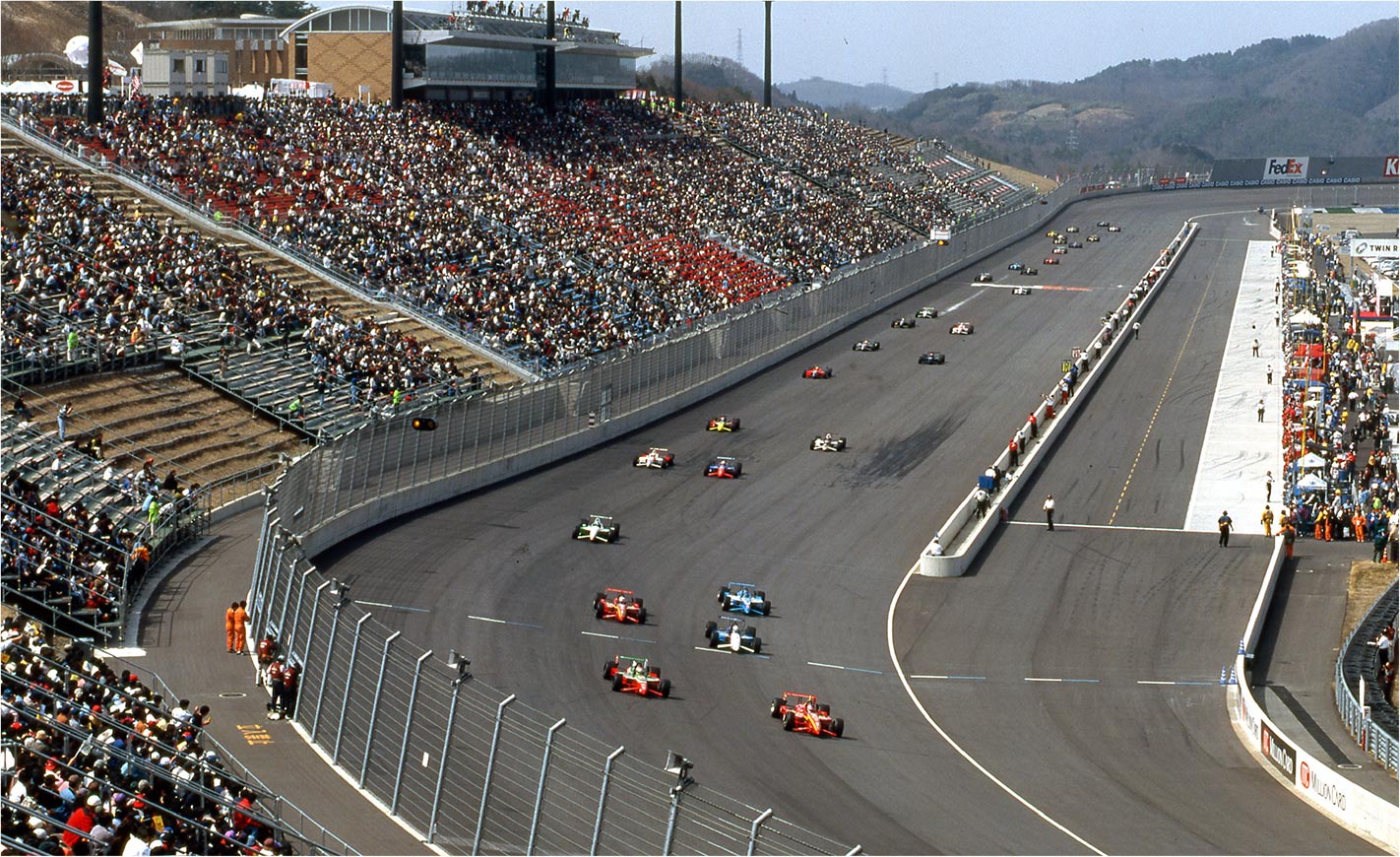
The American CART Championship was held at Twin Ring Motegi for the first time in Japan (1998)
The first major American race that Twin Ring Motegi offered to Japanese fans was the Championship Auto Racing Teams (CART) Championship Series*7 held in March 1998. The official race of the series featured all competing CART drivers, and 55,000 spectators enjoyed the first American race in Japan. Even more refreshing than the battle of the CART cars, which reached speeds of over 300 km/h, was the fan service provided by the drivers. When approached by fans in the paddock, drivers would stop to take pictures and sign autographs if asked. This was a scene rarely seen at Japanese racetracks until then. As the American motorsports event continued to take place, the idea that “the most important goal is for the fans to have fun” took root at Twin Ring Motegi and in the Japanese motorsports world.
Since the start of the CART Championship Series in 1998, Twin Ring Motegi has continued to host the IndyCar Series, bringing American motorsports to a wider audience and deepening its relationship with the community.
In 2006, Twin Ring Motegi Co., Ltd. and Suzuka Circuit Land Co., Ltd. merged to form Mobilityland Corporation.
In March 2011, Twin Ring Motegi was damaged by the Great East Japan Earthquake, which caused swells and cracks on part of the Super Speedway including the road and oval courses. The grandstand and other facilities were also damaged over a wide area, and all operations were suspended. While power and water outages continued to hamper operations, employees continued to work hard to restore facilities to resume business as soon as possible.
Refurbishing the Super Speedway was considered for the IndyCar race to be held that year, but due to the social impact of the extensive civil works following the disaster, and after discussions with the Indy Racing League (IRL), which oversees the IndyCar Series, the racetrack was changed to the road course and held as the INDY JAPAN FINAL. Commemorating the end of its 13-year history, the was the last IndyCar event that overcame the disaster and brought all employees together. More than 10 years have passed since then, and the oval course has completed its original role of promoting American motorsports. The spirit of American motorsports fostered by the IndyCar Series has been carried over to races and events held at Twin Ring Motegi and Suzuka Circuit.
- Open-wheel championship series
60th Anniversary of
Suzuka Circuit
25th Anniversary of
Twin Ring Motegi
The Suzuka Circuit, which was built when Japan had no expressways, and has continued to support Japan’s automobile industry and motorsports culture, celebrated its 60th anniversary in 2022, while Twin Ring Motegi, which was created in search of a new motorsports format for the 21st century, marked its 25th anniversary that year.
Even after all these years, the two circuits are still popular for the various events they host, and the adjacent parks are filled with smiling faces and cheering crowds. The Traffic Education Center is in high demand for training motorcycle police officers and company drivers, and the general public also enjoys automobile and motorcycle schools. The elderly are also learning safe driving and engaging in return-to-driving programs, and Mobilityland is taking up the challenge to help individuals enjoy their freedom of movement safely.
Mobilityland has been a venue for fostering mobility culture, promoting motorsports, and developing human resources, based on the founder's will of the “Joy of Driving” and “challenging to grow.” On its 60th anniversary, the company changed its name to Honda Mobilityland Corporation with the aim of strengthening the Honda Group’s brand and enhancing the company’s social trustworthiness. Reaffirming its origin, Honda Mobilityland aims to make a further leap forward by enhancing its unity with Honda.
Suzuka Circuit renewed its visual identity (VI) to further strengthen the presence “SUZUKA in the world.” Twin Ring Motegi has been renamed Mobility Resort Motegi to more strongly express the theme of the coexistence of mobility, people, and nature.
Honda will offer products and services with new value, in addition to fostering a culture of mobility, promoting motorsports, and the company’s efforts to become carbon neutral and eliminate fatalities from traffic accidents. Honda Mobilityland will continue to evolve into a mobility park that is expected to increase the number of next-generation fans and further develop its presence in Suzuka and Motegi.
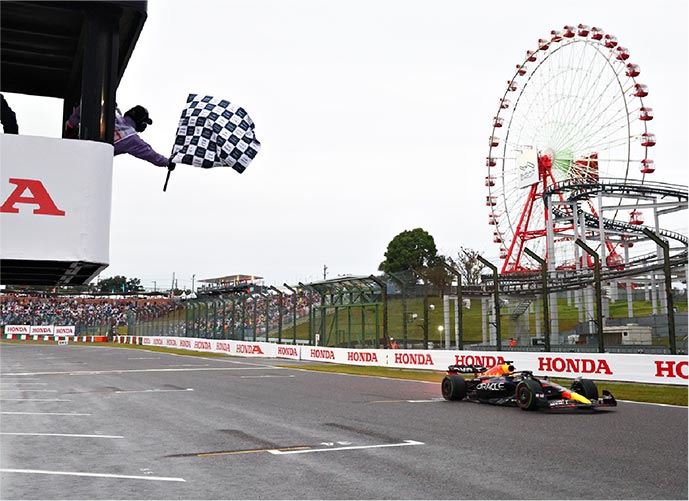
F1 Round 18 Japanese Grand Prix held at Suzuka Circuit (October 2022)
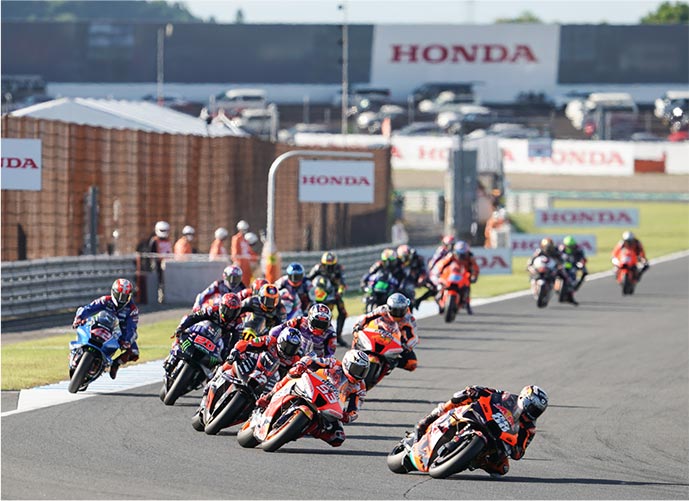
MotoGP Round 16 Japanese Motorcycle Grand Prix held at Mobility Resort Motegi (September 2022)