Sports Tourer Born from V4 Road Racing World Championship
Honda’s trend toward V4 models began with the 1979 NR500. Honda had returned to the World GP 500 cc class after a 12-year hiatus, with the NR500 which had a highly unique 4-stroke DOHC V4 engine with elliptical pistons with 8-valves and 2-plugs per cylinder. The logic behind this engine was that if a rival 2-stroke engine produced a maximum output of more than 100 PS at approximately 10,000 rpm, a 4-stroke engine could produce the same output by revving the engine twice as fast, at 20,000 rpm.
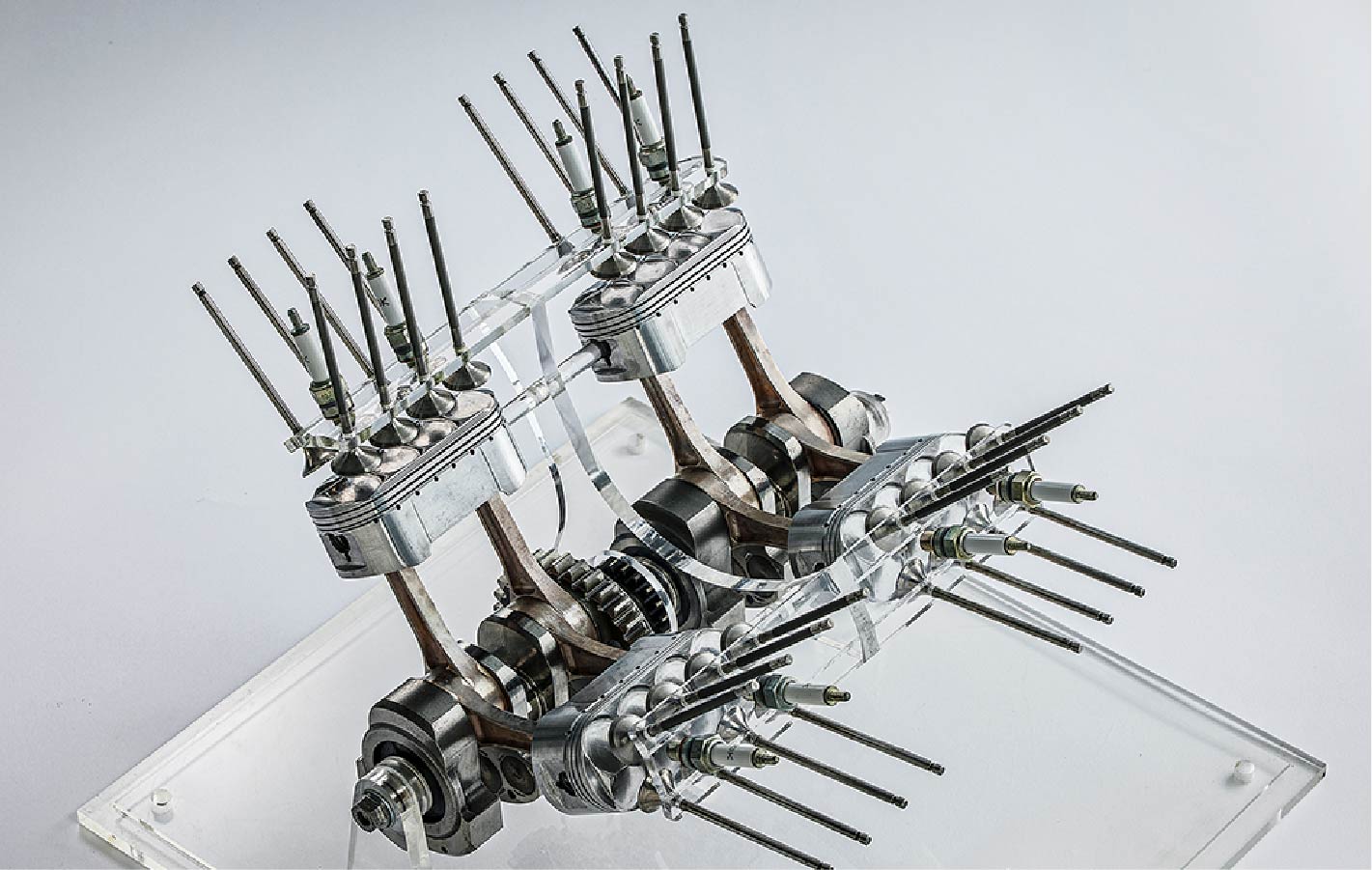
The first V4 model. It featured NR500’s oval pistons
After five years of developing the NR500, Honda determined that the V4 was superior to the inline 4-cylinder in terms of output, durability, and engine size, even in a production model. The company then decided to develop a V4 series that would surpass existing inline 4-cylinder engines in every respect, develop the epitome of the next generation of V4 engines, and become No. 1 with its original technology. The reasoning was that, although the CB750 FOUR had pioneered the big bike market, Honda’s dominance had waned due to the growth of its rival manufacturers over the years.
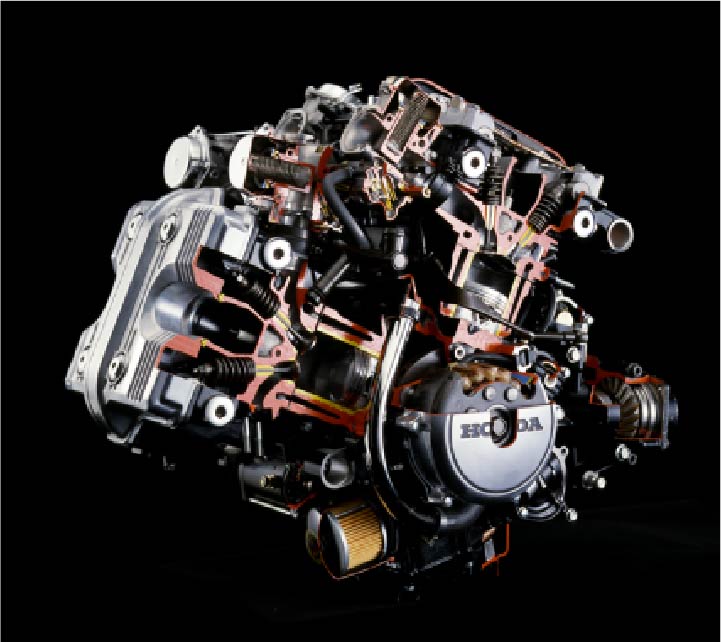 Liquid-cooled V4 engine mounted on VF750 Sabre
In April 1982, the VF750 Sabre Magna, the first mass-produced motorcycle in history with a liquid-cooled V4 engine, was launched. The Sabre, in particular, incorporated every conceivable new technology available at the time, from the engine to the chassis. In December of the same year, the VF750F was launched as a 750 cc super sport model based on the development concept of surpassing existing 750 models in every respect, achieving the world’s fastest speed, and becoming a base model for production racers. The VF750F featured a tubular steel square pipe frame and a 16-inch front wheel.

VF750 Sabre, the world’s first motorcycle equipped with a liquid-cooled V4 engine
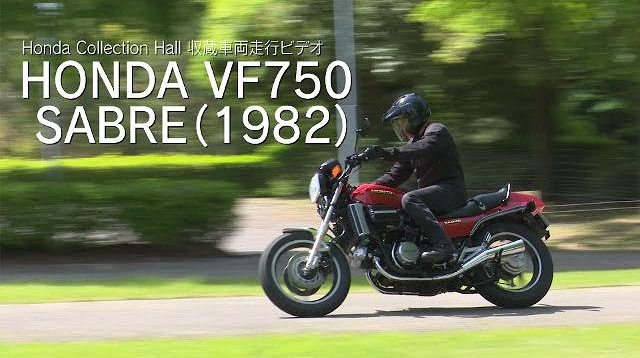
VF750 Sabre in Action
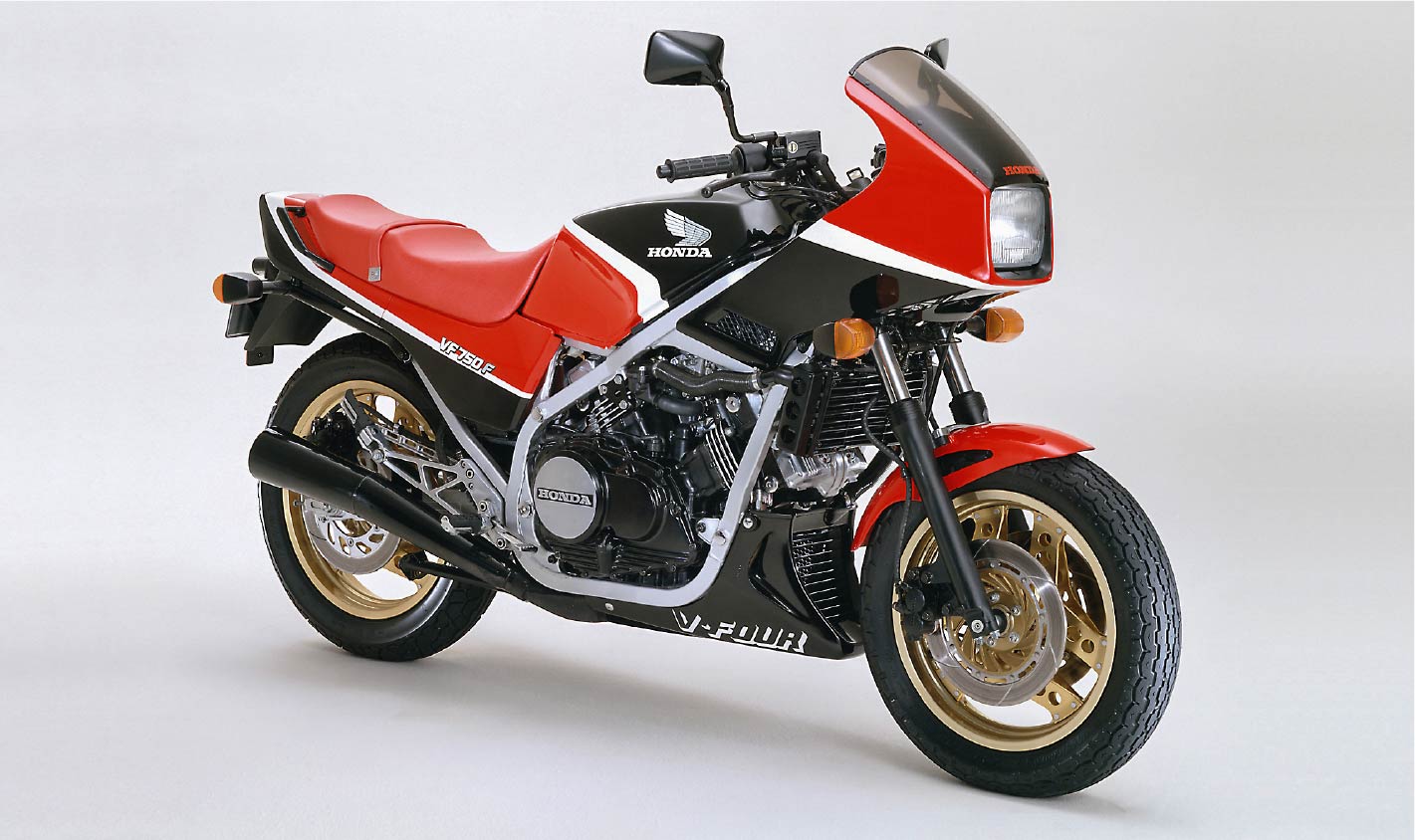
VF750F
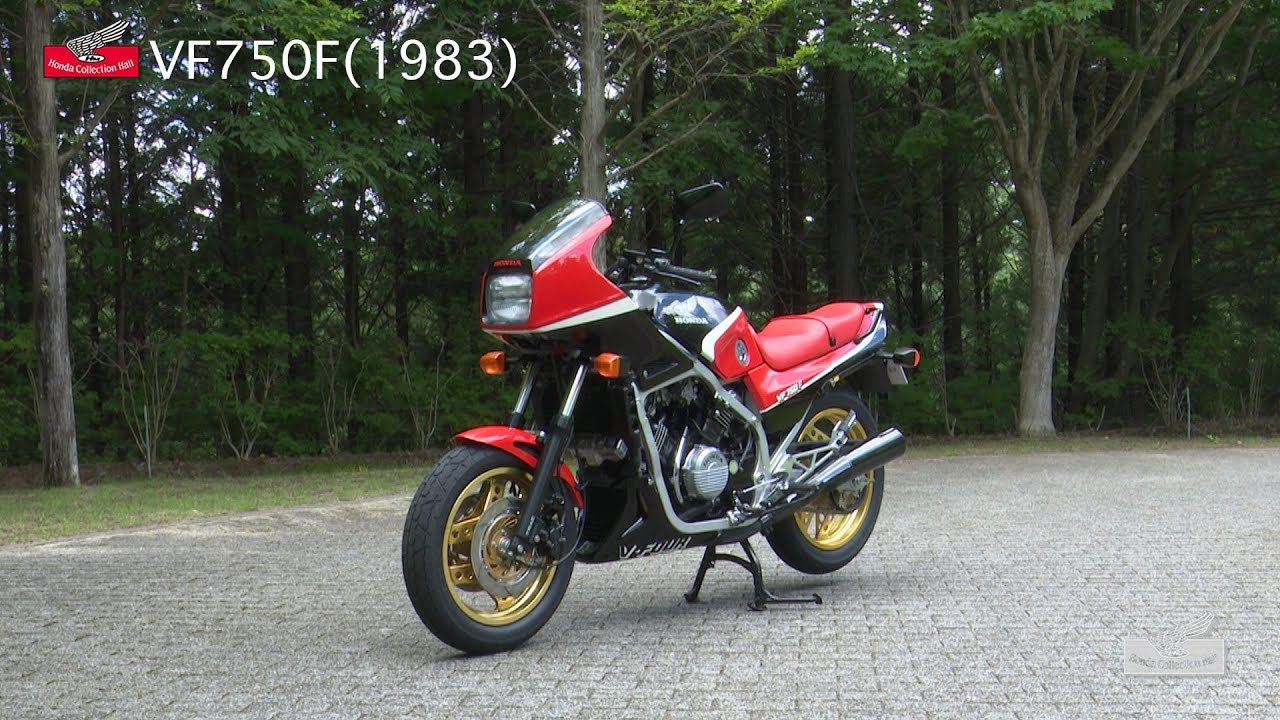
VF750F in Action
In 1986, the V4 evolved into its second generation with the VFR750F (RC24). Its concept was “a matured sports bike with a high-quality and refined ride.” The development team wanted to create a high-performance sports model with rounded, gentle lines like a Porsche. The engine featured the same technology as the factory TT-F1 racer RVF750, including a newly designed cylinder head with cam gear train, 180° crankshaft, and aluminum twin-tube frame. Despite the full fairing, its dry weight was kept down to 199 kg.
Basically, the V4 has a strong torque at mid-range speeds and a flat output characteristic that allows sharp acceleration at mid to high revs by operating the throttle, without having to shift gears. The exhaust sound of the V4’s even firing engine had a distinctive smooth low tone. These characteristics were favored by European users seeking a more relaxed lifestyle, and the VFR750F came to be known as a sophisticated sports bike.
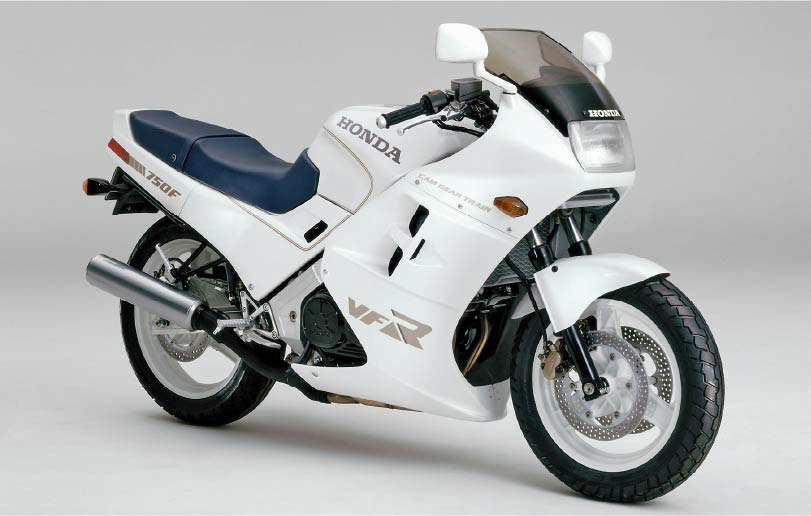
VFR750F
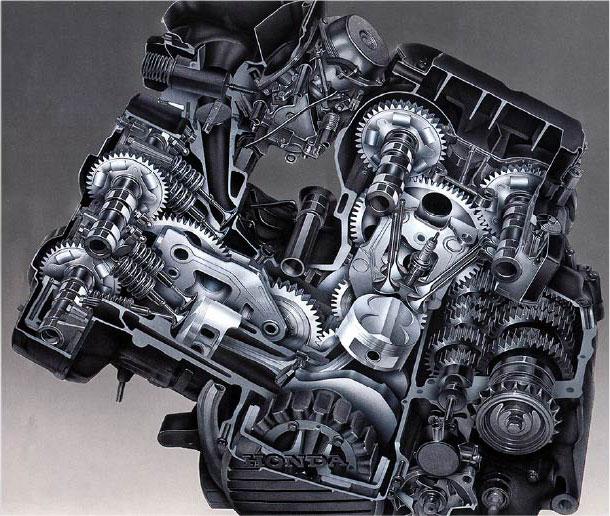
Newly designed V4 engine with cam gear train
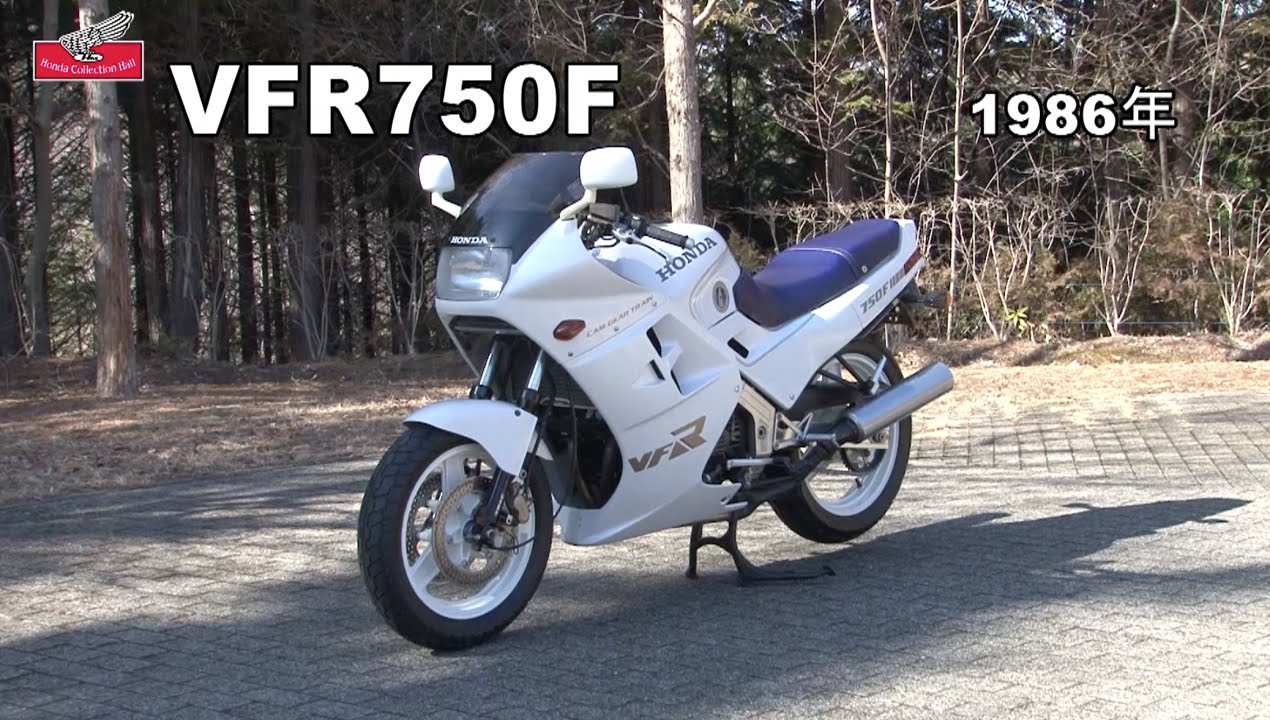
VFR750F in Action
In 1987, the VFR750R (RC30) was launched as a full replica of the RVF750. The RC30 was developed in response to the market’s demand for a machine that could compete in races without fuss. The RC30’s specifications matched the RVF750’s as much as possible, to enable privateers to battle with the factory riders.
The RC30 featured technology never before applied to Honda production models including a three-part camshaft consisting of titanium alloy connecting rods, a carburized chrome molybdenum steel camshaft and bearings, a cantilever Pro-Arm swingarm, full fairing made of fiber reinforced plastic (FRP), and parts made of magnesium and duralumin. The RC30 was sold in Japan as a limited edition of 1,000 units at 1.48 million yen, but were sold by lottery as more than 3,000 applications were received. A total of 4,885 units were sold worldwide.
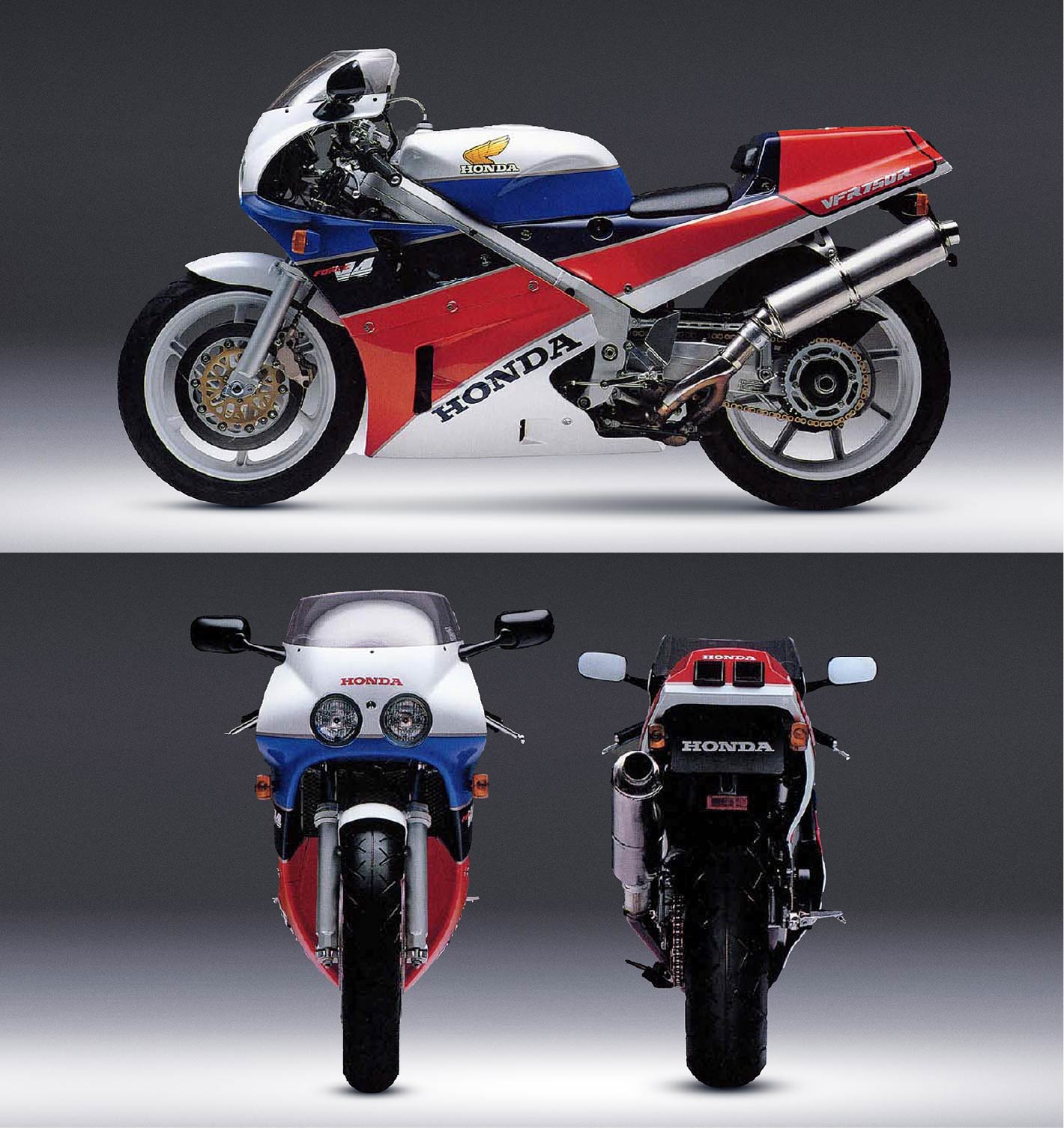
RC30 developed as a full RVF750 replica
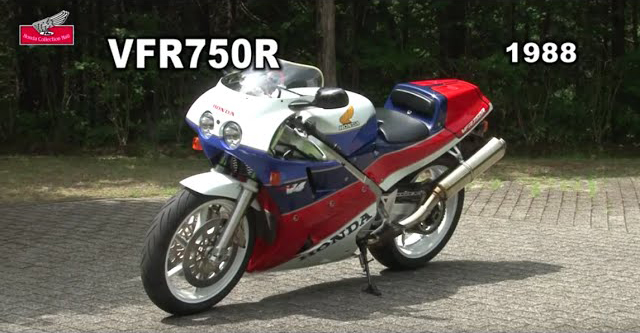
VFR750R in Action
In 1992, the NR, modeled after the NR750 used in the 1987 24 Hours of Le Mans, was launched. It was the world’s first production model with an engine with non-circular, regular elliptical envelope-shaped pistons, eight valves and two plugs per cylinder, and PGM-FI (eight barrels and eight injectors) electronically controlled fuel injection, wrapped in fairing made of carbon fiber reinforced plastic (CFRP) and priced at 5.2 million yen. It was the ultimate supersport. In 1993, the NR set four FIM (Federation Internationale de Motocyclisme) world speed records, including a rolling-start 1km segment and an average speed of 299.825 km/h for clockwise and anticlockwise laps. This was a groundbreaking record for a production 750 model at the time.
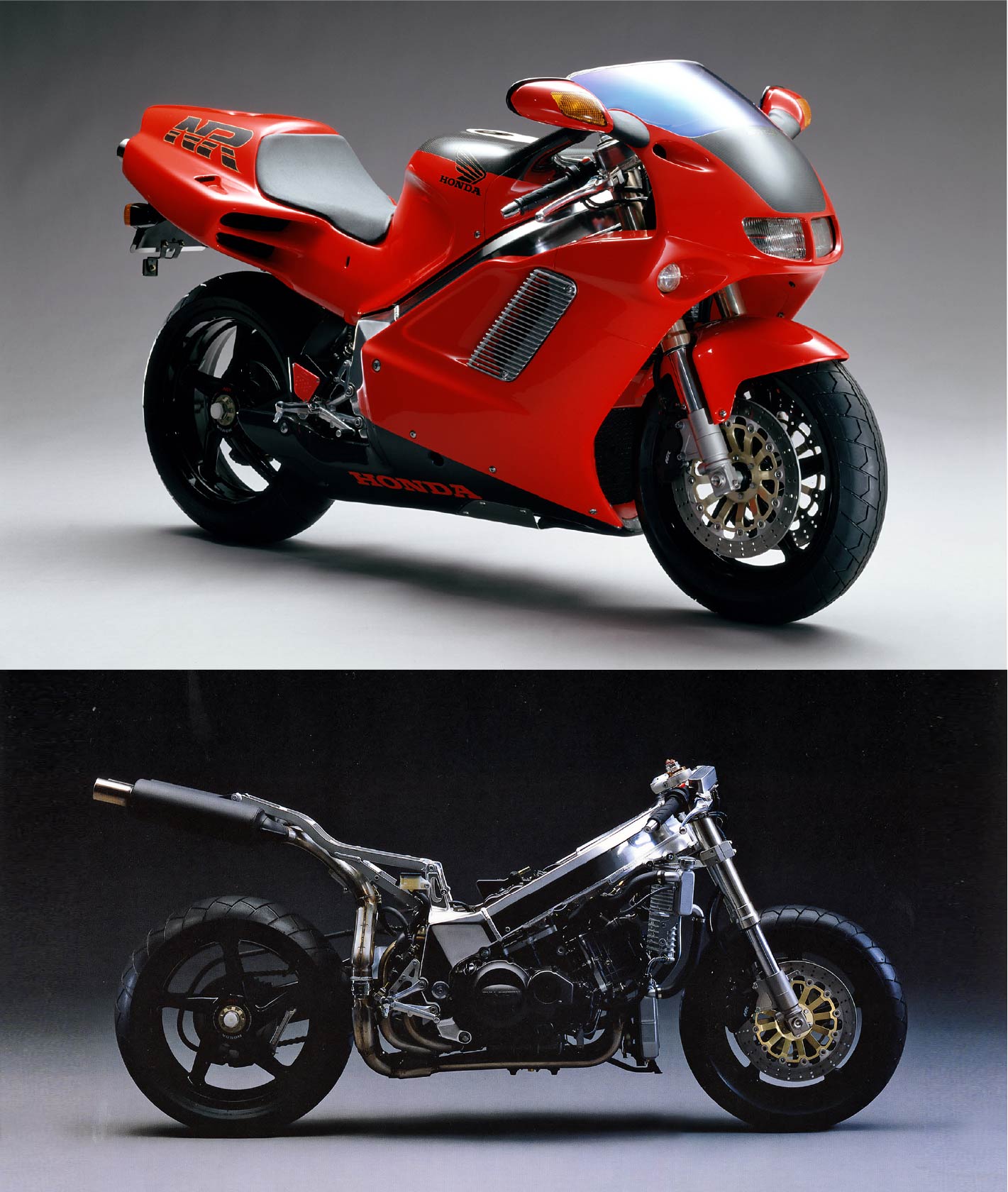
NR aimed for the “Ultimate Super Sports”
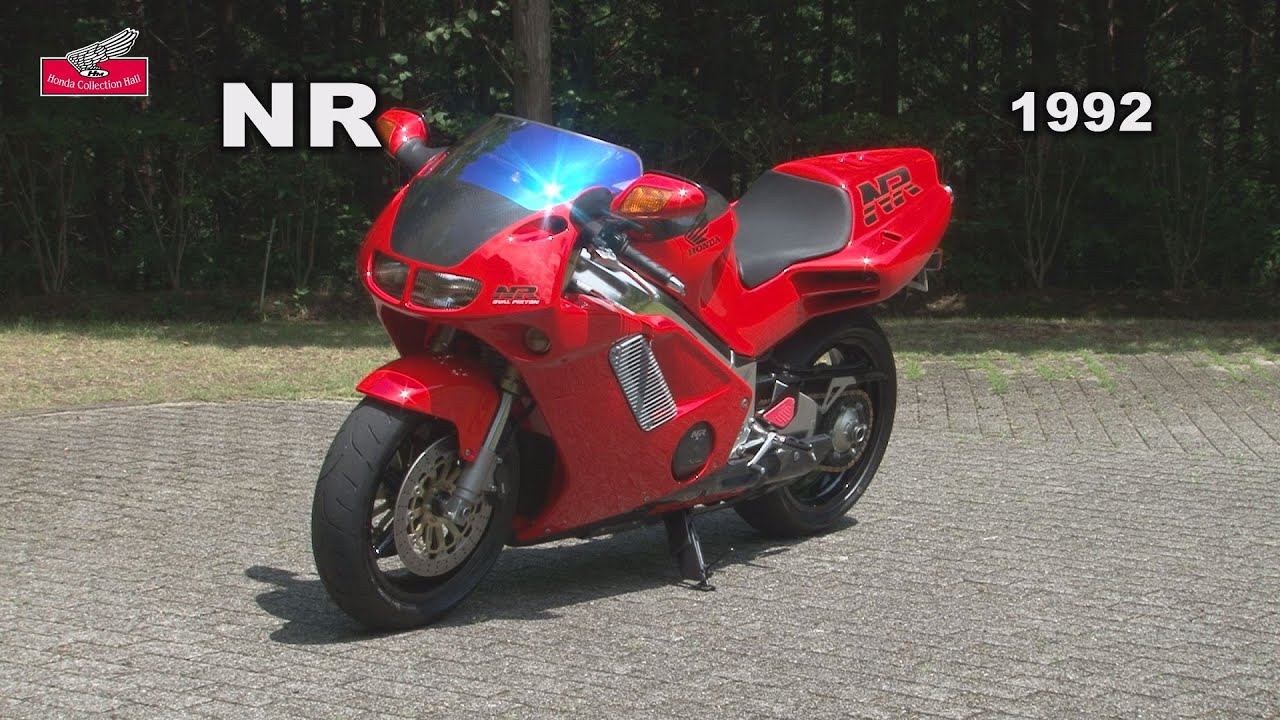
NR in Action
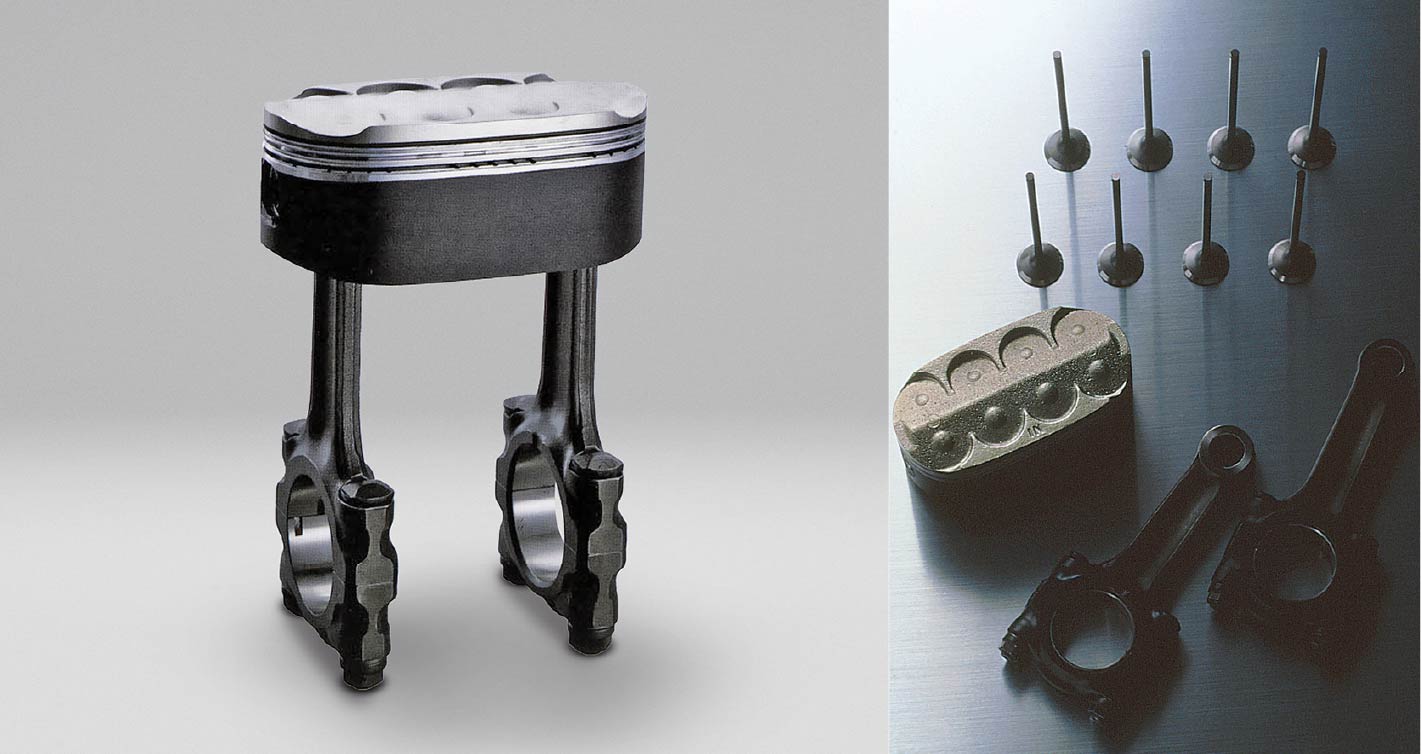
World’s first engine with regular elliptical envelope shaped pistons and valves used in the NR750
The NR was also the precursor to the third generation V4, the RVF (RC45), launched in 1994. The RC45, a homologation model for Superbike racing, incorporated many new technologies, such as the side cam gear train and PGM-FI that had been tested on the NR, as well as the know-how and lightweight materials developed for the RVF750 in pursuit of even higher racing potential. The essence of this model, which was designed to be switched to a factory racer, was reflected in the name “RVF,” despite it being a production model.
The engine’s bore stroke, which had remained unchanged since the VF750 in 1982, was altered for the first time to achieve a short stroke and a more compact engine, and the engine mounting position, which was an issue with the V4, was also optimized. Advanced technologies were applied to the engine, such as powder metal composite cylinder sleeves, lightweight titanium alloy connecting rods, and a large-diameter throttle unit equipped with a seven-sensor PGM-FI.
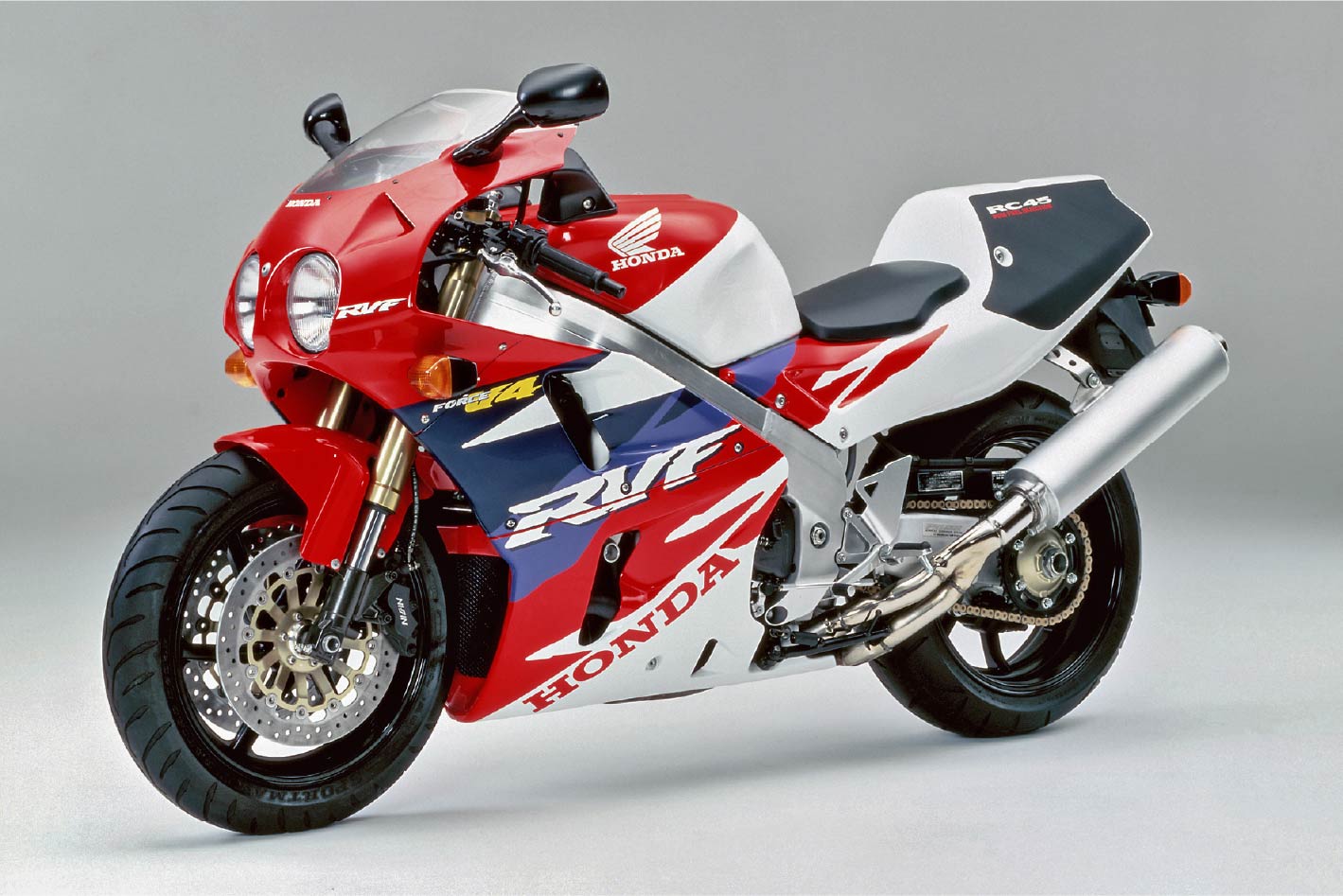
RC45 with know-how cultivated through RVF750 and NR technologies
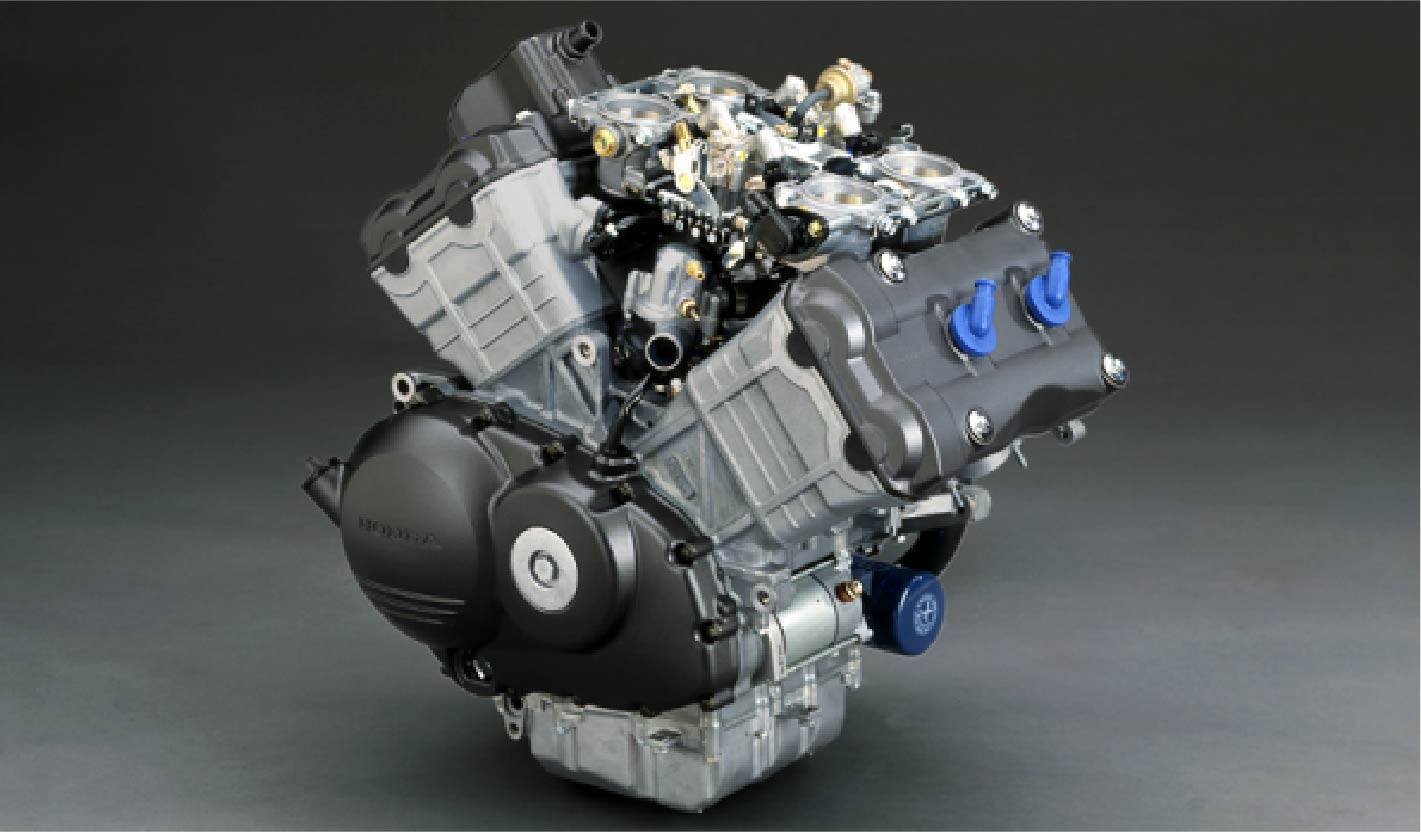
The RC45 engine was also difficult to develop due to the pursuit of innovative technology.
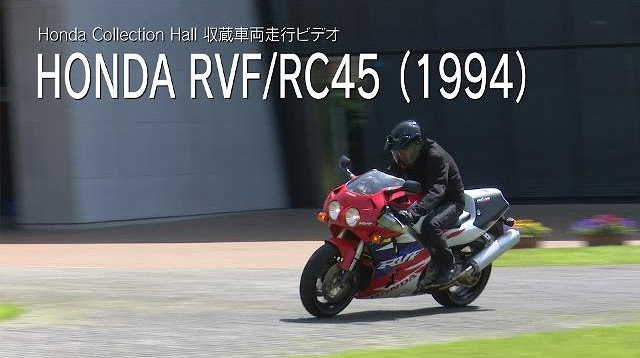
RVF/RC45 in Action
Development of the RC45 was extremely difficult, being halted twice due to issues in pursuing innovative technologies and severe cost constraints. Tatsu Horiike, then LPL, was determined not to let Honda’s racing efforts die, and continued to work hard to bring the RC45 to market. “The knowledge and know-how we gained here was reflected in the RC211V MotoGP machine, and at the same time contributed greatly to the launch of the 1998 VFR (RC46), a production V4 model that followed,” Horiike said. “It would have been a shame to only use the newly designed engine on a superbike, so we left 2 mm of extra stroke to accommodate future displacement expansion.”
From 2000 onward, in accordance with the demands of the racing environment, the engine used in superbikes shifted from the 1000 cc V-twin cylinder engine, which had the advantage in terms of overall weight, to the CBR1000RR, an in-line 4-cylinder that was more closely related to production models, and the V4 model that sought race performance shifted to the pursuit of universal motorcycle performance. This was to evolve the generously high performance of the 1986 VFR750F (RC24), which was based on the concept of a “sophisticated mature sports bike.”
The 1990 VFR750F (RC36), based on the VFR750R (RC30), featured a uniquely improved engine mounted on a special aluminum twin-tube frame with an odd-shaped pentagonal cross section and underloop, and a Pro-Arm single-sided rear swingarm. It achieved a deep balance between touring performance on highways, athletic performance on winding roads, and ride comfort required for daily riding, and gained popularity mainly in Europe. It became a long-selling model in Japan, where it was sold for eight years.
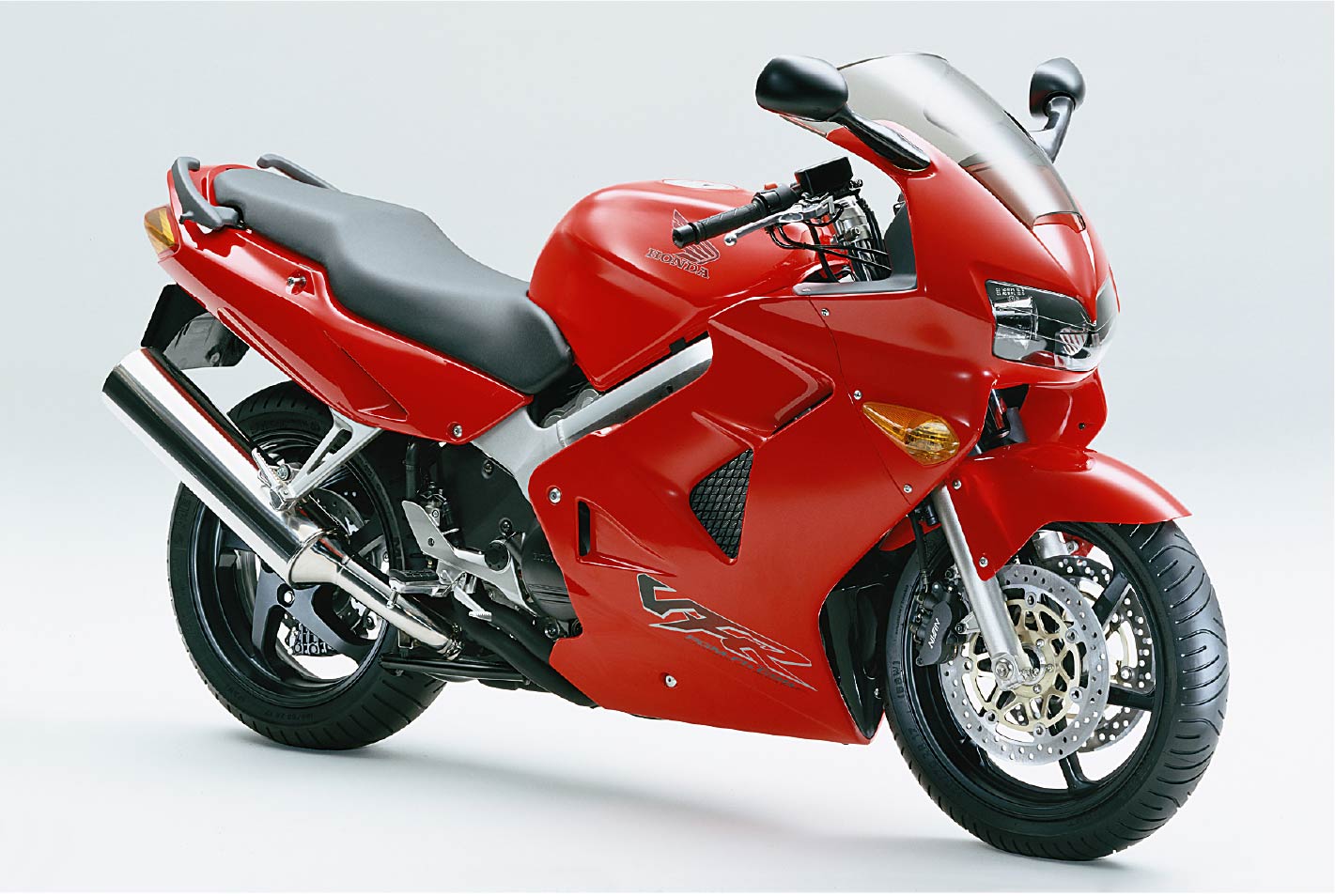
VFR (RC46) design based on “High-tech real sports machine”

VFR in Actiion
This V4 sports tourer category blossomed with the 1998 VFR (RC46). From the VFR750F (RC36), its package regarded as an “all-rounder” by seasoned riders around the world, the VFR (RC46) was further refined with the concept of a “high-tech real sports machine.”
The 781 cc engine, with a 2 mm longer stroke than the RVF (RC45), featured a 180˚ crank. The chassis combined a pivotless frame with a Pro-Arm swingarm, PGM-FI, and exhaust air injection (secondary air induction system). Another major feature of the VFR is that it was one of the first to comply with Japan domestic and international environmental standards while improving sportiness and controllability. In 2010, the VFR1200F was launched with the addition of the world’s first DCT (Dual Clutch Transmission) for motorcycles.
The VFR, Honda’s original brand, won high acclaim mainly in Europe and the U.S. and remained the standard sports tourer model for a long time. In 2014, the VFR (RC46) was fully revamped into the VFR800F (RC79), and the crossover model 800X was added in the same year, but since then, the basic concept of sports tourer remained unchanged until its production ended in 2022. Since the VF750 in 1982, the V4 had been in production for 40 years.
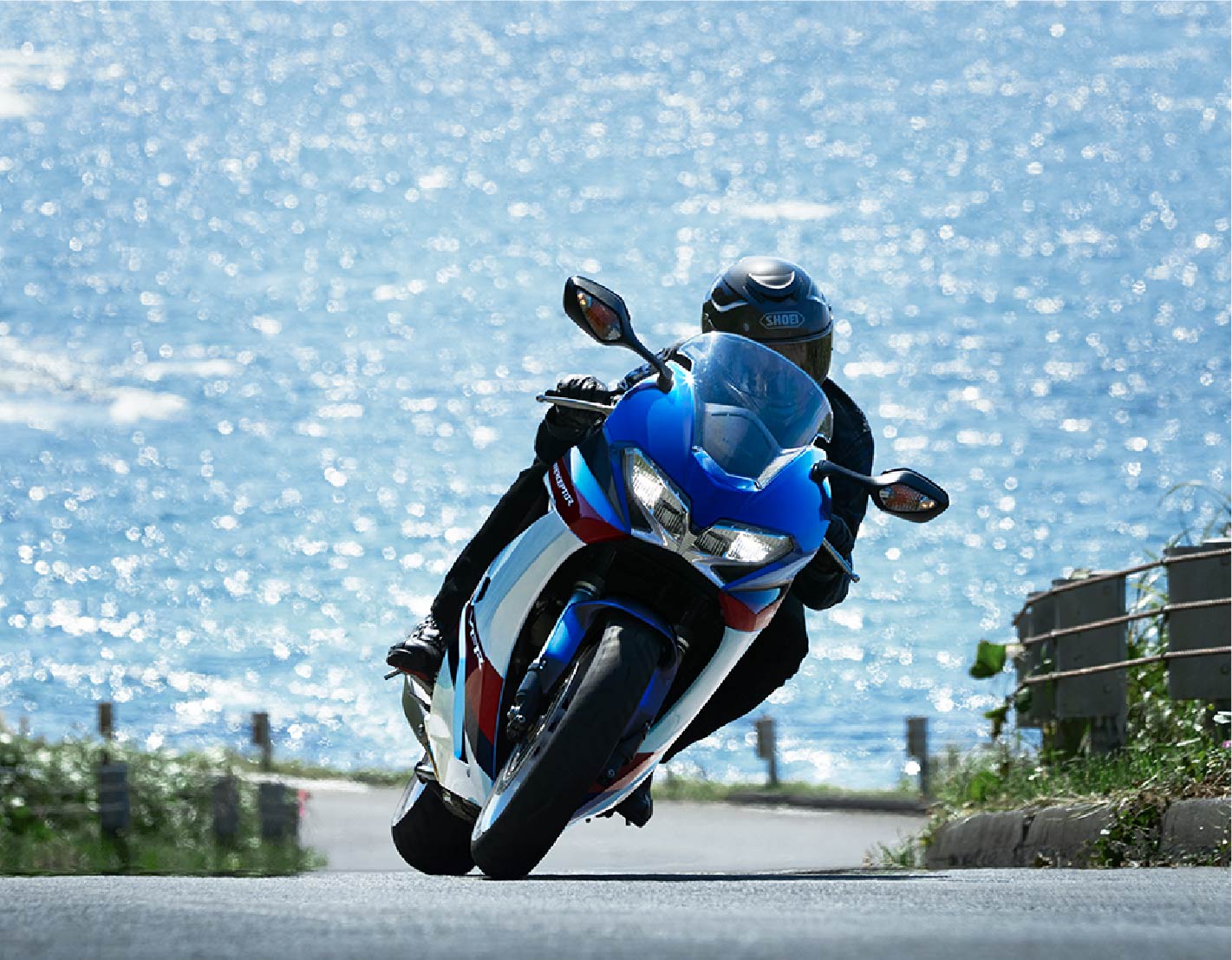
VFR800F