Developing the Brio Amaze as the First Locally Developed
All-New Model in Asia
Around the time the Ayutthaya Plant was damaged by the flooding, the first new model development was underway at Honda R&D Asia Pacific (HRAP) in Thailand to meet the growing demand for compact sedans in the Indian market.
Although Honda had established production and sales operations in each country based on its approach to “building products close to the customer,” the development of new models for the Asian market had always been carried out in Japan. In fact, Honda had a product planning division in each region to better understand local needs; yet, establishment of a regional Honda R&D subsidiary which would develop new models locally had not yet happened due to concerns about the decentralization of development operations and other potential disadvantages. However, Honda decided to take it a step further by incorporating HRAP as a local subsidiary, believing that establishing an operation to develop new products together with local associates in Asia would lead to future growth of Honda automobile business.
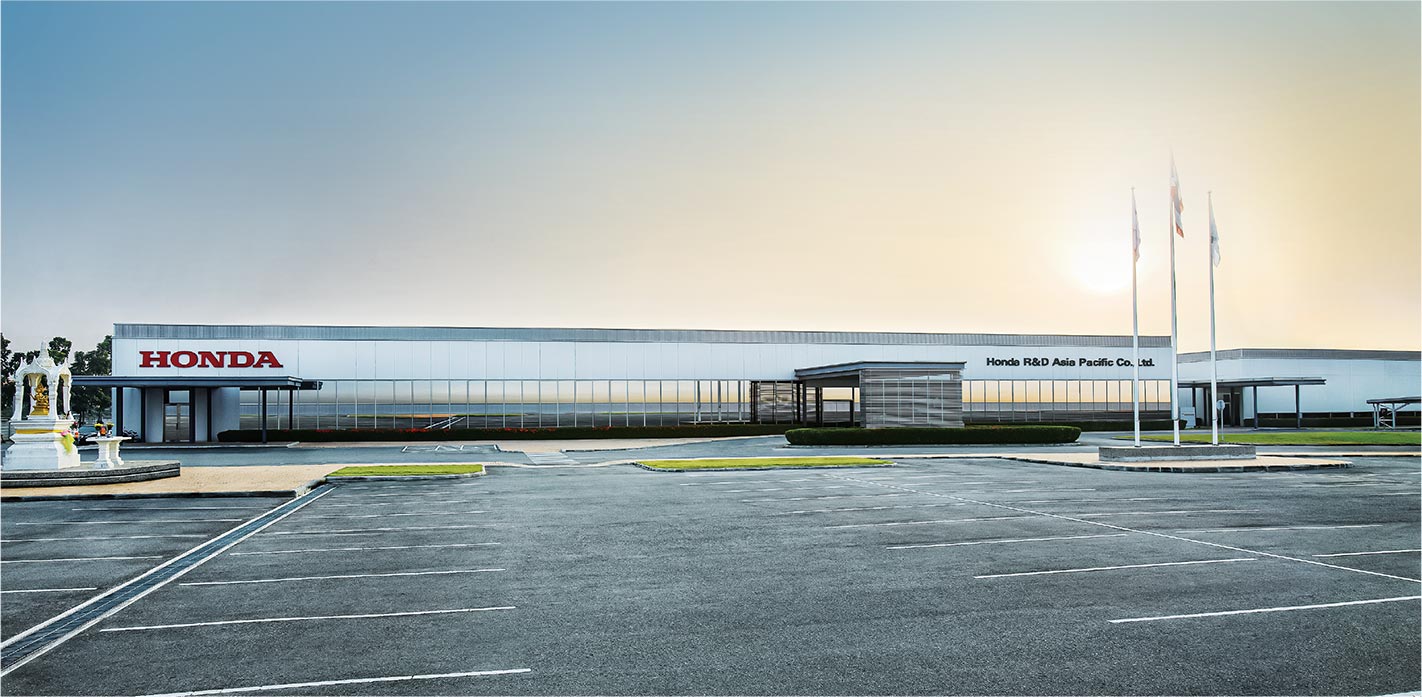
Honda R&D Asia Pacific (HRAP)
In line with this decision, HRAP hired new associates to work in the areas of research and development. Through training at the Honda R&D in Japan, and practical work of developing locally procured parts and components at HRAP, each member of the team enhanced their own skill sets. Finally, the time had come to develop a compact sedan for Asia starting in 2010.
When new model development began, everything was still uncharted territory for the local team. Even in terms of how to proceed with the project, HRAP associates had to endure a continuous process of trial and error, determining the basic rules for problem-solving. Against this backdrop, HRAP adopted and implemented “simplicity, concentration, speed and communication” as its action requirements. Since everyone was working at the same site, at the R&D center where planning, design, engineering, and testing could all be carried out seamlessly, an open environment existed where any problems could be immediately discussed among all parties involved. Such a work environment contributed to prompt decision making and execution of plans through speedy discussions and approval processes. This significantly shortened the development period while greatly reducing development cost.
After two years of development, the Brio Amaze was created. Based on the platform of the 5-door hatchback Brio, the Amaze sedan featured a compact body size of less than 4 m in total length that made it easy to handle in urban areas; a design with a strong presence; a spacious interior with further enhancements to the rear seat area; and a large rear trunk with a 400-liter capacity. The Brio Amaze also featured front and rear suspensions specifically tuned for this model to provide optimal occupant comfort and exhilarating handling. The price range was set to start at 454,000 baht to make it affordable even in the Thai market.
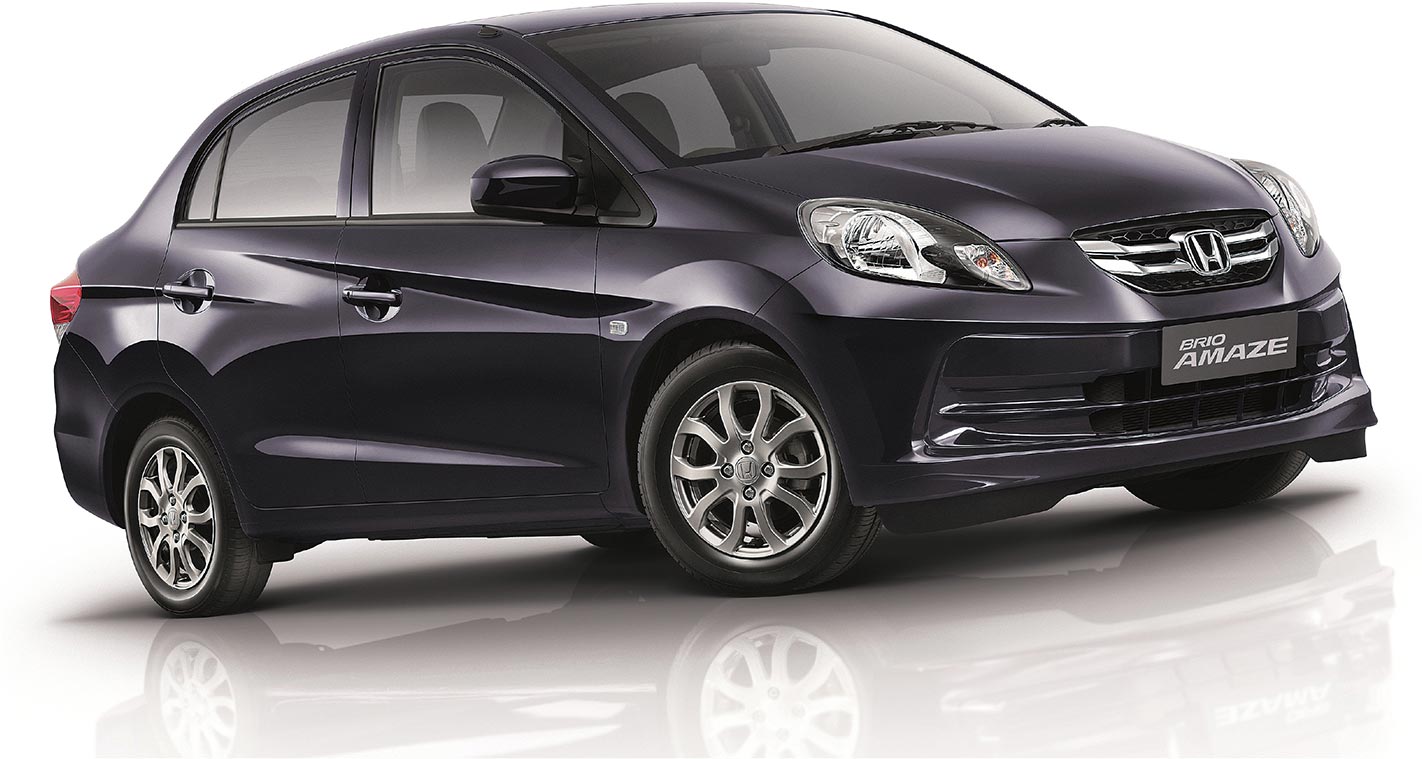
The development of Brio Amaze provided an invaluable experience of new model development for local associates of HRAP.
Unfortunately, the Brio Amaze did not become a major hit. However, the local development of a new model certainly became an invaluable experience for local R&D associates.
Atsushi Arisaka, who served as the development leader (LPL) for the Brio Amaze, recalled: “The shared goal of completing the development, the sense of responsibility all engineers had in their respective areas, and the joy of finally seeing the vehicle we develop being driven on the road, they generated a sense of unity and energy, which led this development to success. By passing on the spirit of each individual member of the development team and the culture we created, HRAP will continue to develop new models for the region as an R&D center that’s deeply rooted in its community.”
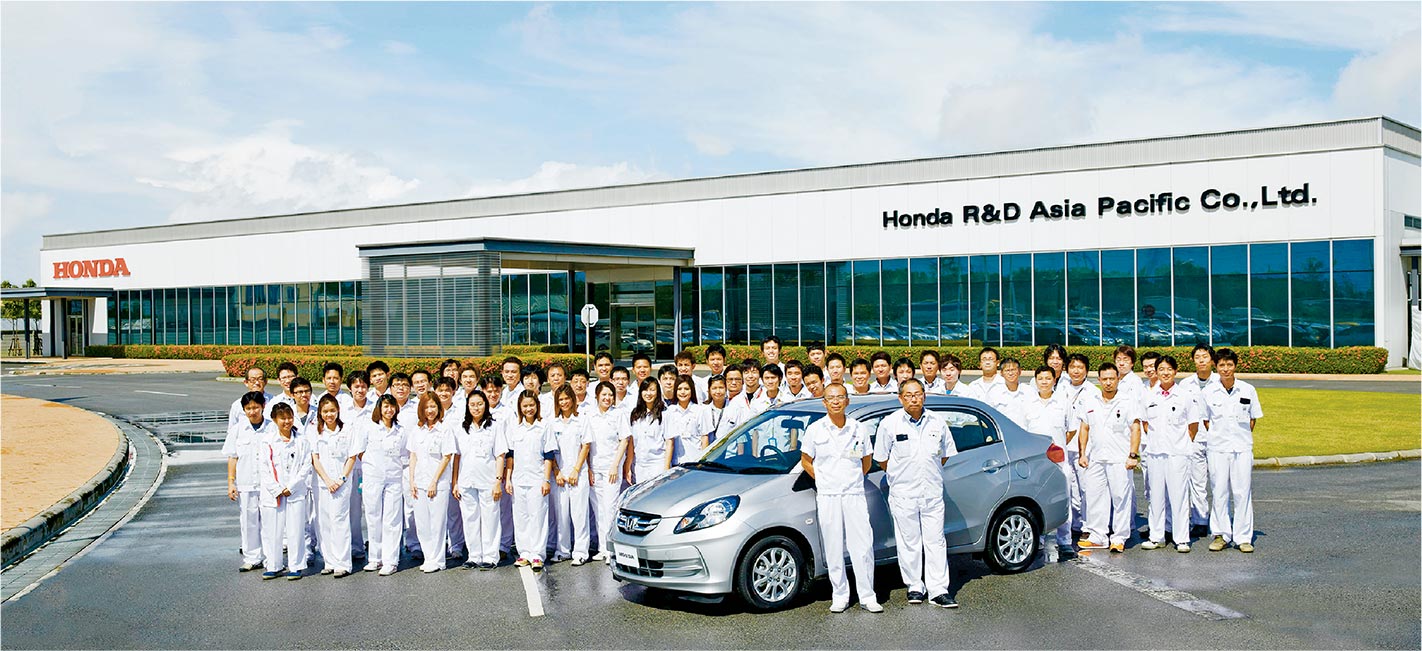
HRAP development team members (2012)
Introducing Brio Sataya as Response to the Indonesia
Environmental Policy
P.T. Honda Prospect Motor (HPM), the Honda automobile production and sales joint venture in Indonesia, has been producing cars in Karawang City since 2003. In 2014, HPM constructed and started production at its second plant to meet increasing demand for Honda vehicles in the country. With the addition of the second plant, HPM’s annual production capacity was increased to 200,000 units. The same year, HPM began production and sales of two new models, the Mobilio and the Brio Satya, which both met local market needs. Each model achieved local content of over 85%, and were produced locally, leveraging the newly enhanced production system and capability.
The Mobilio was the first model Honda introduced in the low-priced multipurpose vehicle market, which has been the largest segment in the Indonesian automobile market. After conducting a thorough round of field research in various areas, including road and weather conditions and desired usability, Mobilio was developed to fulfill specific needs of the market. It featured spacious three-row seating for seven occupants, but also a compact body size with a shorter vehicle length that allowed it to fit easily into typical parking spaces in the country. Furthermore, taking local road conditions into consideration, the Mobilio featured a ground clearance comparable to that of SUVs to achieve sporty driving performance.
The Brio Satya, on the other hand, was introduced as a model to meet the requirements of Indonesia’s Low Cost Green Car (LCGC) policy, which the government had been considering for some time, and officially enacted in July 2013. Under LCGC policy, low-cost, fuel-efficient light-duty vehicles that meet certain conditions are eligible for preferential treatment with a full exemption from the 10% luxury tax levied on the price of the vehicle. Developed based on the Brio, a strategic Asian model supplied from Thailand and sold in Indonesia, the Brio Satya was equipped with a 1.2L 4-cylinder engine boasting 65 kW power output, the highest output in this displacement class, while also achieving excellent fuel economy.
Because of stiff competition, ultimately the Mobilio was not able to produce the desired sales volume. However, the Brio Satya continues to be popular in the Indonesian market, and has become HPM’s best-selling model in Indonesia in 2022.
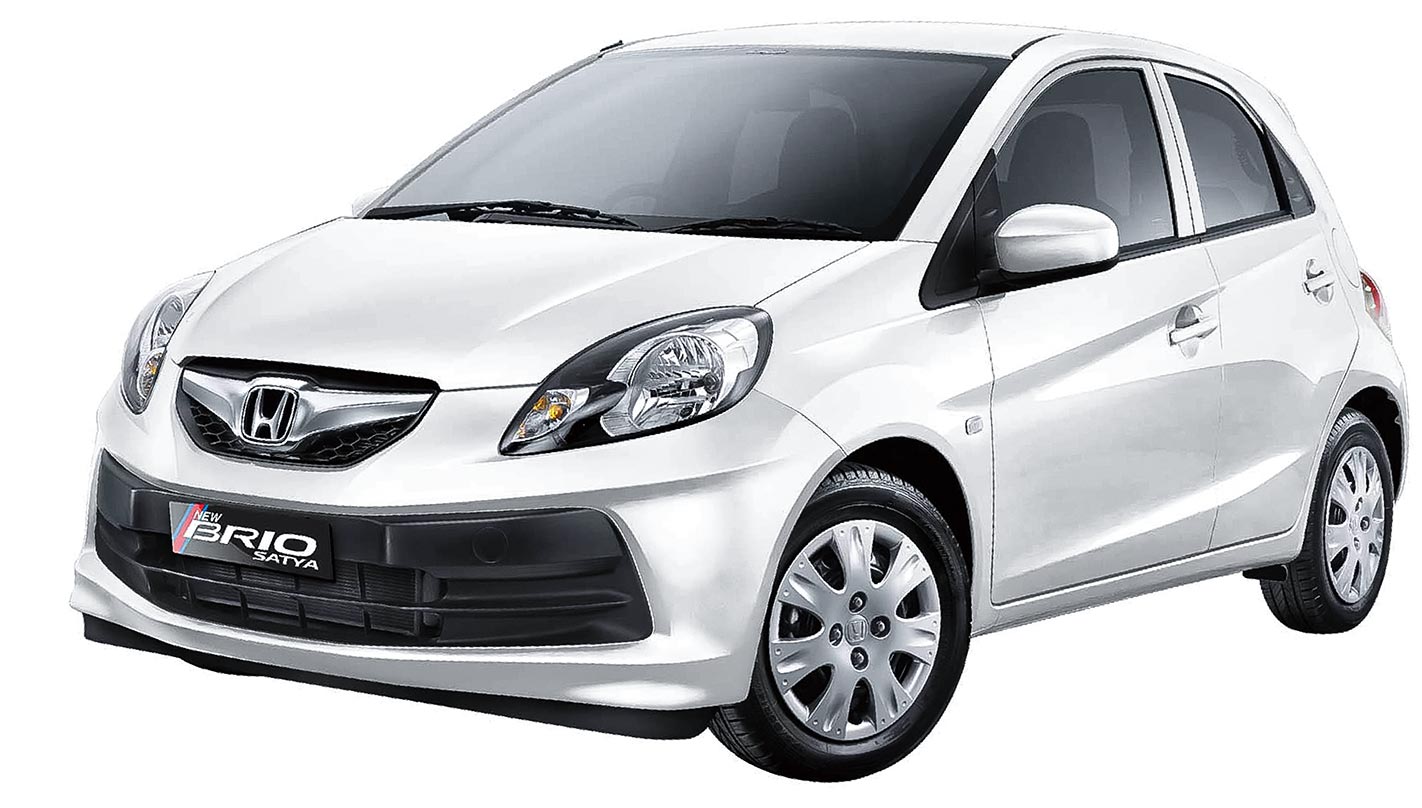
Brio Satya was developed based on the 1.3L 5-door hatchback Brio, a strategic model for Asia. This model has been produced entirely at the HPM plant in Indonesia.
Becoming the Top Foreign Automobile Brand in Malaysia
with a Strategy Focused on the Upgrade Demand
In 2011, Malaysia’s gross domestic product (DGP) per capita surpassed US$10,000 due to the country’s remarkable economic development. As income levels rose, the need for affordable cars that offered superb quality and performance also increased. At the time, models produced by Malaysia’s national car companies dominated the market, accounting for more than 50% of overall automobile sales in Malaysia. The Honda joint venture, Honda Malaysia*4 (HMSB), started local production in 2000, and had been actively developing Honda automobile business in the local market since then, albeit mainly directed toward the country’s middle- and upper-class segments. Even if local users wanted to replace their cars with something other than national brand vehicles, the reality was that they had very little choice but to buy another Malaysian-made car because of the price obstacles.
Therefore, while calculating the latent demand for vehicles other than those produced by the national car companies, HMSB formulated a strategy in 2011 that focused on demand for automobile upgrades. The strategy was to enter the upper compact segment with the introduction of new City and Jazz models, which were reasonably priced and offered excellent value for money, thus minimizing the price gap with the national brand models. The launch of these two Honda models was scheduled for 2014, and if successful, HMSB could double its sales volume and reach its ambitious salet target of 100,000 unit by 2016.
To minimize the price gap between Honda models and national band models, cost reduction was essential; however, it was not an easy task. While HMSB struggled to meet its cost targets, construction of a second production line began in order to double production capacity. Furthermore, in anticipation of a sales increase, a new round of dealer selections had also begun. HMSB desperately had to meet its cost target with no time to waste. As a breakthrough measure, it was decided to build a new subsidiary dedicated to engine production, and thereby increase local content. Honda took on a bold challenge with this huge investment.
Furthermore, when the Malaysian government announced a policy focused on strengthening the production of energy-efficient vehicles, HMSB approached the government and requested support. Since both the City and the Jazz had hybrid versions in their lineup, HMSB tried to obtain government subsidies for the local production of hybrid vehicles. Negotiations were difficult, but with persistent efforts, HMSB finally obtained approval for the subsidies.
As a result of these initiatives, HMSB was able to launch both the City and the Jazz at their targeted prices in 2014. Both models received high acclaim due to their outstanding value for money. In fact, sales volume far exceeded expectations, making these two models instant best sellers.
As a further development, HMSB added the HR-V to the lineup in 2015, offering another model with a competitive advantage in pricing under the strategy to focus on upgrade demand. With the success of the HR-V, and further increasing sales of the City and Jazz, HMSB’s 2015 sales reached approximately 95,000 units, with a 14.2% share of the Malaysian market, or more than double the level of market share in 2010, which made Honda the top brand among the non-national car brands in Malaysia.
- Honda Malaysia Sdn., Bhd.
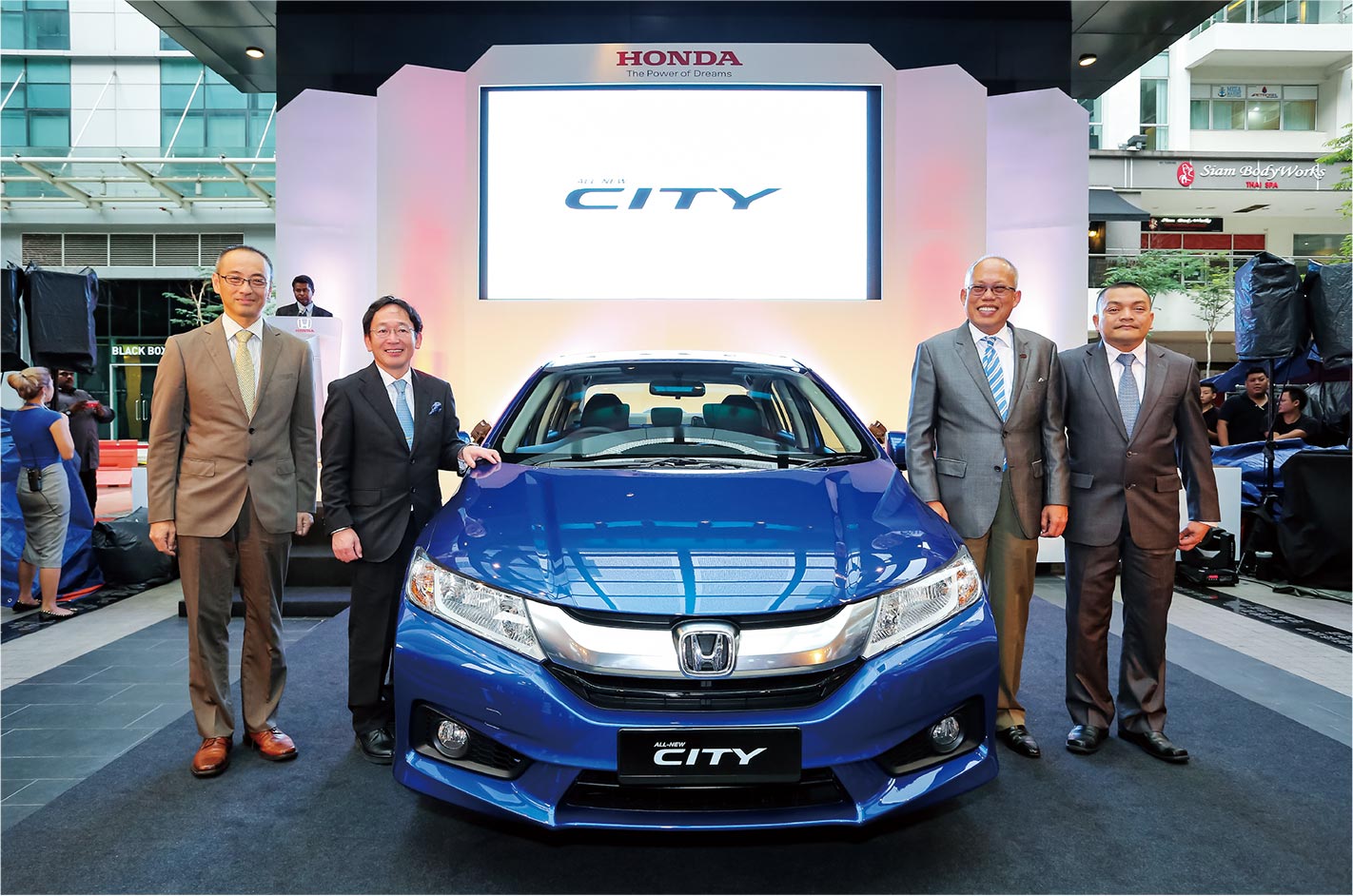
City launched under the strategy to focus on upgrade demand.
Doubling the Automobile Production Line in India to Prepare
for Market Expansion
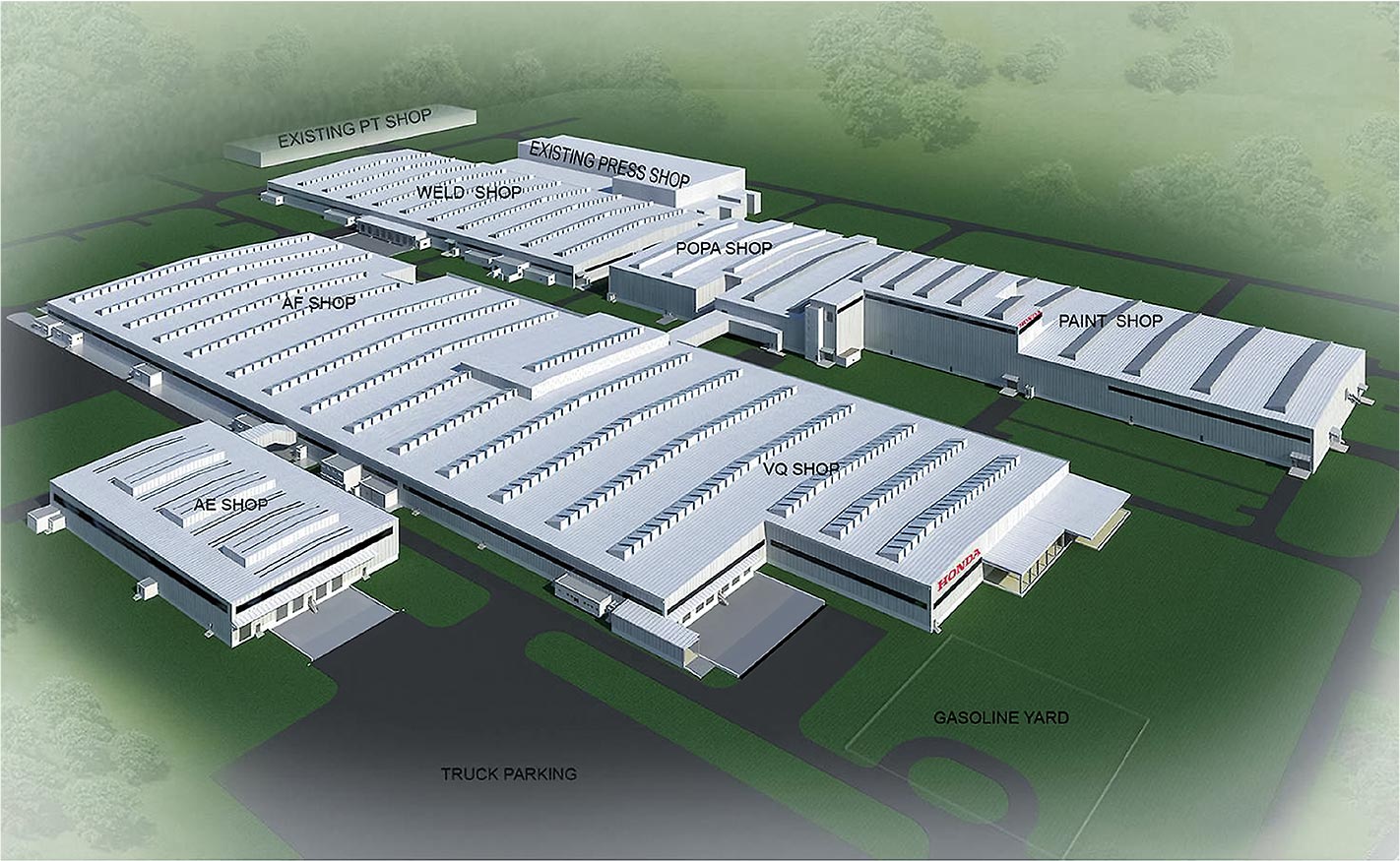
In 2014, HCIL began automobile production with annual production capacity of 240,000 units.
In 2013, Honda Cars India Limited (HCIL), the wholly-owned Honda automobile production and sales company in India, took the initiative to strengthen the foundation of its business in anticipation of future market expansion. In 2013, a production line for diesel engine parts was put into operation within the property of its Tapukara Plant (Plant No. 2) in Rajasthan, which had been producing engine parts and body panels since 2008. Then, in 2014, an automobile assembly line and a production line for forged steel parts were put into operation within Plant No. 2. With these initiatives, HCIL’s annual finished vehicle production capacity totaled 240,000 units, including the capacity of its Greater Noida Plant (Plant No. 1) located in Uttar Pradesh, a dramatic doubling from the previous capacity of 120,000 units.
At around this timing, HCIL launched a diesel-powered version of the Amaze, a regional model in Asia, into the Indian market. The engine for this model was produced on the engine production line newly built in its Plant No. 2. The diesel-powered Amaze was expected to be a highly competitive model, offering both outstanding power and fuel economy. In fact, it was well received in the market, and total unit sales in 2014 and 2015 reached 100,000 units.
Then, in 2016, HCIL launched the BR-V, an SUV model that was also developed with the Asian market in mind. In addition to its attractive styling design and excellent handling typical of an SUV, the BR-V featured a spacious seven-seat interior and a wide range of utility features. It also combined sporty driving performance with excellent fuel efficiency. However, contrary to expectations, BR-V sales struggled, and plans for significant growth in this sector had to be changed.
Shifting to Efficiency-oriented Operations
Based on the 2030 Vision
Based on the Honda 2020 Vision of creating products that maximize joy for customers with speed, affordability and low CO2 emissions, the company took a strategy to conduct its business speedily and more aggressively during the 2010s. However, Honda was forced to change its course to address major changes in the economy and market environment. In 2016, Honda formulated the 2030 Vision statement, “Serving people worldwide with the joy of expanding their life’s potential”, based on long-term forecasts and by backcasting from the perspective of the future goals.
In Asia, Honda took the “3+1 strategy” during the 2010s. However, due to the signs of slowing economic growth and a decline in the working-age population, Honda could no longer expect to see significant expansion of the automobile market in Asia, forcing Honda to review its business plan and make new moves. Therefore, Honda set a new strategic direction to pursue volume growth and business expansion in line with the growth of the market, and strived to establish a resilient business structure by optimizing the allocation of corporate resources by selecting the business Honda should concentrate on. Through this change in direction, Honda operations in Asia were expected to assume the role of a profit center. To this end, Honda decided to more quickly build the most appropriate products for Asian markets, including SUV models, through integrated planning of multiple models. Moreover, by pursuing a highly efficient development system and sharing more parts among multiple models, Honda strived to develop products which are less expensive, easier to produce, and easier for customers to purchase.
To increase efficiency of production in Asia, Honda reorganized its production operations.
In 2020, Honda Cars Philippines Inc. (HCPI) discontinued its automobile production in the Philippines. As the Philippine government lowered automobile import tariffs, it became possible to import automobiles from Thailand with no tariff. Against this backdrop, Honda made a decision to discontinue local production in the Philippines and allocate its resources more efficiently so that Honda can continue offering products that fulfill the needs of local customers at reasonable prices.
In Malaysia, Malaysia Honda Auto Parts Manufacturing (M-HAP) originally produced and exported automotive instrument panels and bumpers, then shifted to the production and export of repair parts. Due to the changes in taxation and an increase in parts production by Honda Assembly Malaysia (HASB), M-MAP downsized and eventually dissolved the operation in 2020.
In India, Honda also reorganized its local production operations at the end of 2020 to strengthen the foundations of its automobile business. HCIL discontinued automobile production at its Plant No. 1 and consolidated all automobile production to its Plant No. 2.
The purpose of these reorganization and consolidation measures was to improve production efficiency in order to solidify a foundation for sustainable business for the future.
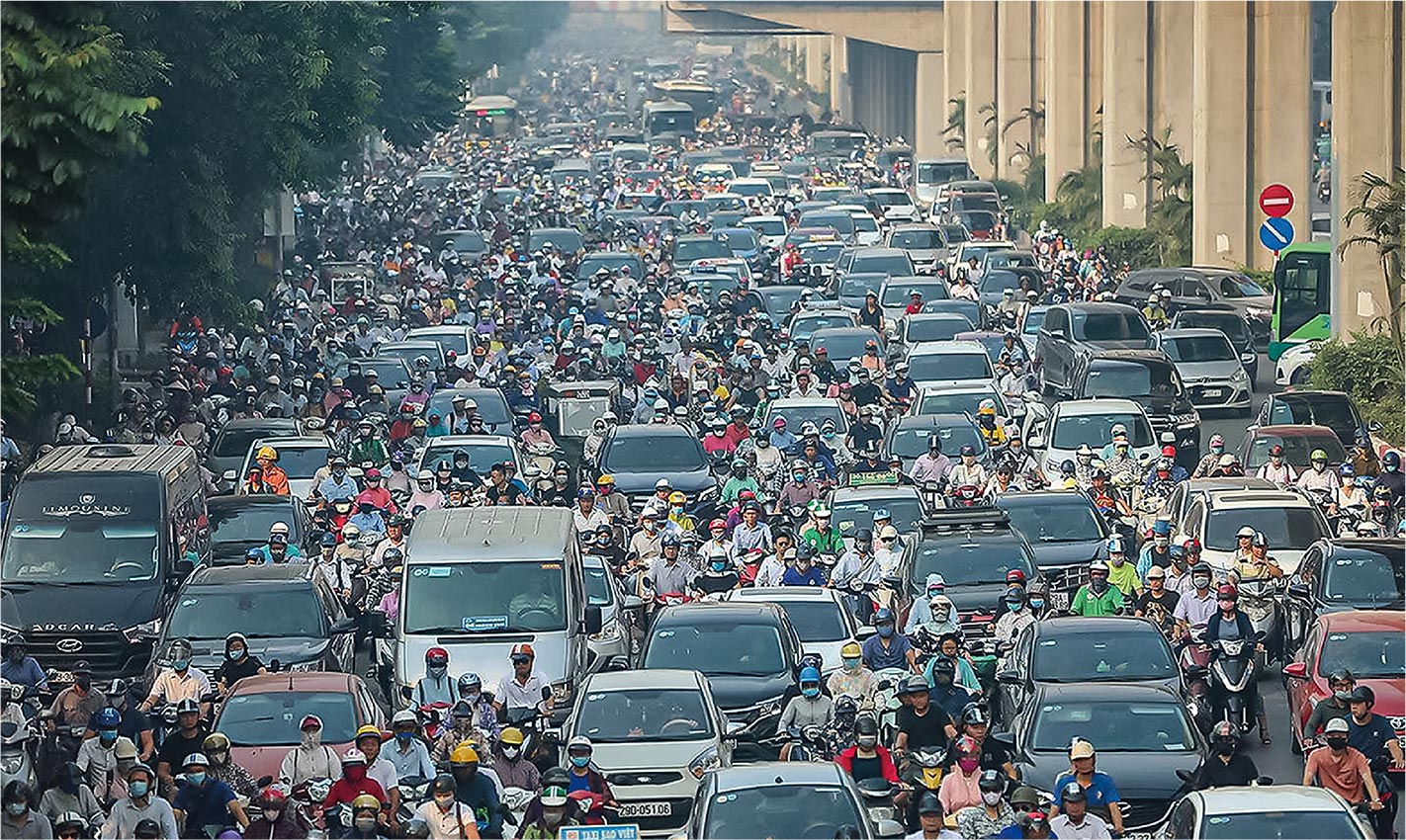
Commuting in Vietnam (2010s)
Markets May Change, But the Vitality and Optimistic Spirit
Unique to the People and Society of Asia Remains Unchanged
Asia & Oceania is a region of great diversity in every aspect: countries, races, religions, cultures, political systems, and economic scale. At the same time, there is a common image that many people have toward the Asia & Oceania region as a group of emerging and expanding markets.
It is true that Honda has achieved a significant growth in the Asia & Oceania region over the years, driven by the region’s growing population and economies. Growth of Honda operations in Asia & Oceania was a result of “localization” Honda pursued with its local partners in all aspects of operations: 1) localization of development and production of products that would satisfy the needs of customers and society, 2) localization of work performed at each Honda operation, 3) localization of wealth by re-investing profits as much as possible into the local operations to further expand their activities, and 4) localization of “people” including Japanese expats proactively blending into the local community and entrusting more work to local associates.
However, it is now time that Honda has to change its image of Asia as an ever-growing and expanding market. In Thailand and several other countries, the working-age population has already entered a period of gradual decline, making significant economic growth unlikely. Since the latter half of the 2010s, the gap has been expanding between Honda strategies formulated in the past based on the assumption that economic growth would be continuous and the reality. With a strong will to address this gap, Honda has implemented some severe business restructuring measures, including the closure of several production operations in the region. It must not be forgotten that behind the growth Honda has achieved to date, there have been many difficult decisions the company had to make.
In the future, it will be difficult for Honda to pursue business strategies based on the assumption of continuous economic growth in Asia & Oceania, as it has in the past. Moreover, the Asia & Oceania region has been one of the most difficult regions for Honda to keep pursuing the advancement of manufacturing and electrification that Honda desires, in part due to delays in the establishment of government policies and the weakness of the infrastructure necessary for the future mobility society.
However, Asia remains to be a region full of new challenges and the vitality of people who enjoy their lives with enthusiasm to believe in a better future. Such enthusiasm of Asian people will never change. As long as Honda continues to take on challenges together with its partners, without losing its perspective of making long-term contribution to the lives of people and society in Asia & Oceania, Honda should be able to survive any competition and achieve steady growth well into the future.