
Clad in an Outsourced Chassis
text=KIYOKAZU IMAI translation:SHINTARO URASHIMA
Background and Technical Specifications of the 1980 "NR2" Model
Monocoque Design Abandoned; Maxton Frame Adopted
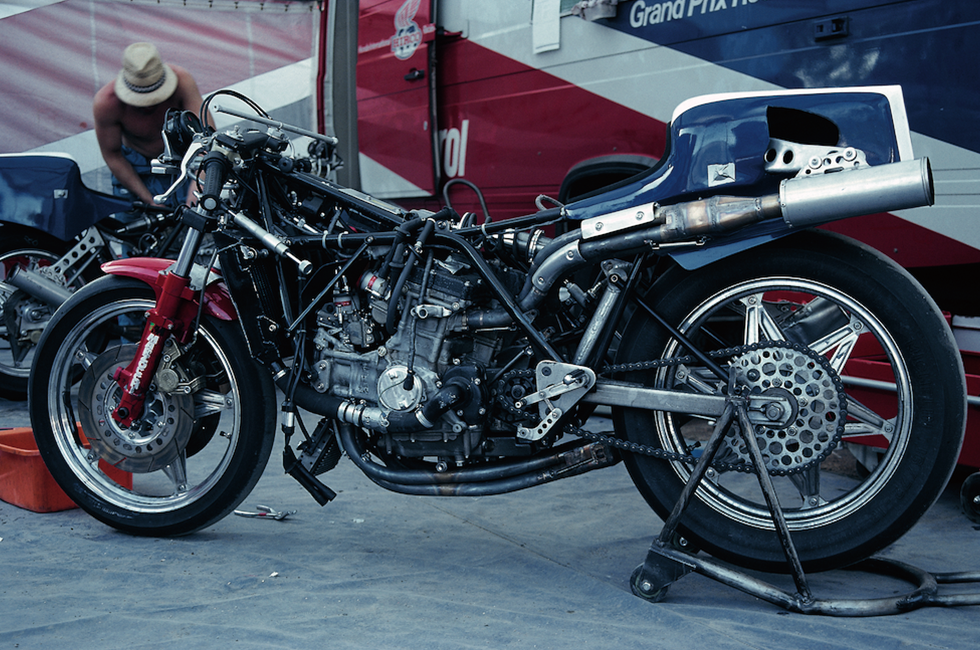
1980 NR500 [NR2](Photo/Shigeo Kibiki)
The engine was a 500cc, 4-stroke, V4 unit featuring combustion chambers, pistons, and cylinders with an elongated oval cross-section, and was equipped with eight intake and exhaust valves per cylinder. The chassis incorporated numerous unprecedented technologies, most notably a monocoque frame, as well as features such as a coaxial swingarm pivot and upside-down front forks. However, the original NR500 (development code "NR1") was a machine of highly unconventional design. Ultimately, competing in only two rounds of the 1979 World Grand Prix road racing season, Honda ambitiously continued development to improve the performance of the monocoque-framed machine even after the season ended.
However, in March 1980, Shoichiro Irimajiri, the overall head of the NR Project and Honda's motorcycle development leader at the time, announced a major shift in the project's direction. He decided to halt development of the NR1's monocoque frame and its associated chassis technologies, opting instead to adopt standard technical specifications for the chassis of future NR500 models.
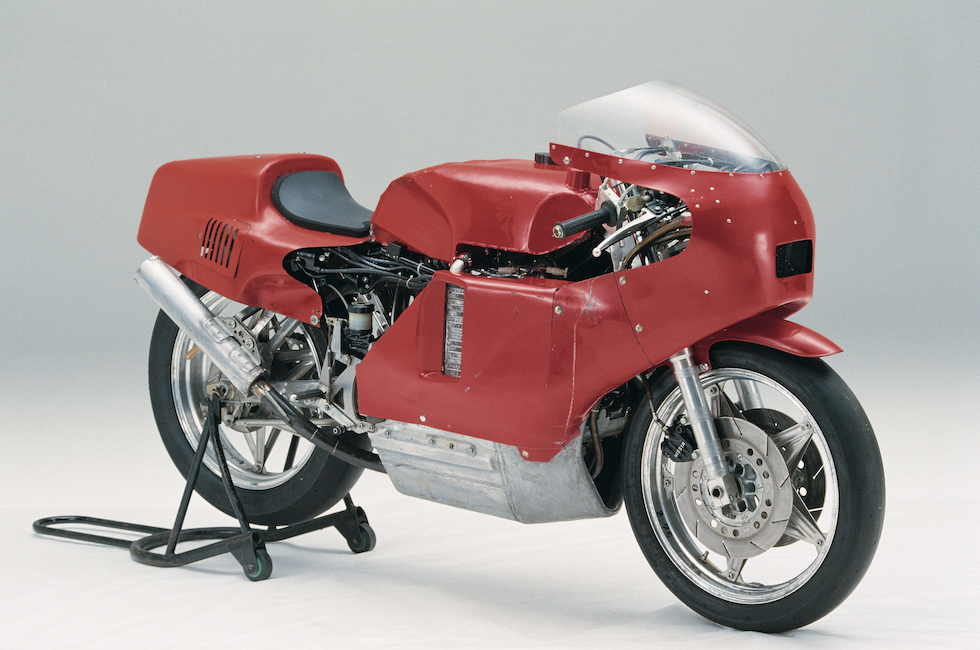
The final specification of the NR1. In addition to a cowling design that differed significantly from the original model, the bike featured 18-inch wheels front and rear and was tested with conventional upright front forks. (Photo/Honda)
The NR Project staff, who had strived to master a chassis based on innovative technology, were unanimous in their frustration. Addressing them, Irimajiri stated, "I am not dismissing the potential of the monocoque design," but pointed out that its poor serviceability had become a critical issue in racing. He declared, "We can no longer accept results that amount to nothing. The time for doing what we *want* to do is over; now is the time to do only what *must* be done."
While in-house chassis development would continue, the technical specifications would shift toward a more standard approach. Regarding the engine, the project would press ahead with the four-stroke path, retaining the oval-piston, eight-valve concept. Internally dubbed "UFO," that defined the NR Project. This became the new direction.
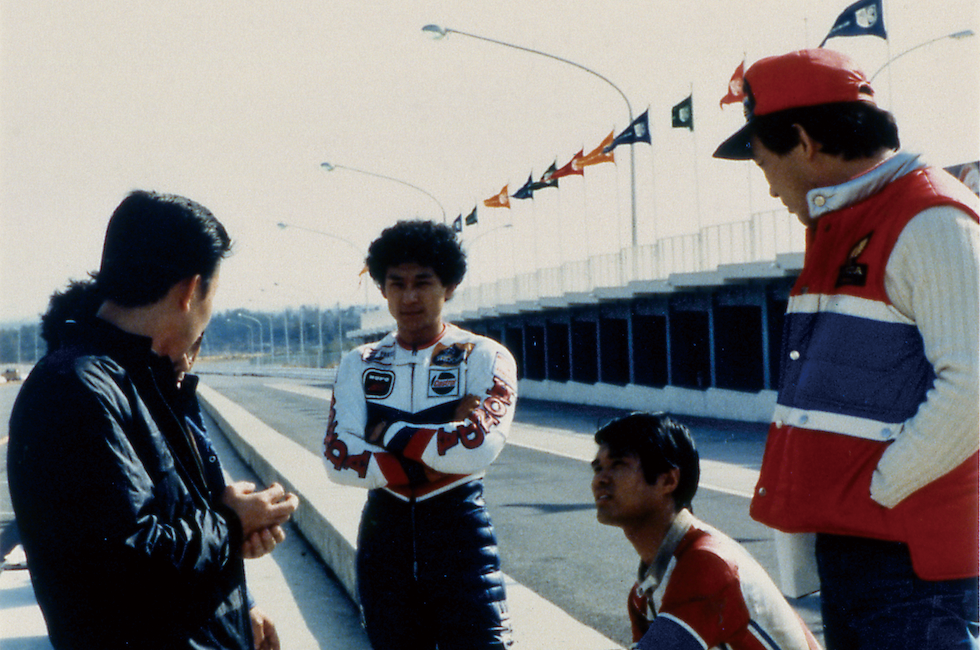
Key figures conversing during a break in the NR1 development test runs in March 1980. From right: Takeo Fukui (overall leader of the NR Project), Kengo Kiyama (NR500 development rider), and Takazumi Katayama (contracted NR500 race rider). (Photo/Honda)
However, at that stage, not even a blueprint for the NR2 chassis existed, the model intended for immediate use in 1980. Developing it from scratch in time for the season was impossible, given the constraints on both time and personnel. Consequently, Honda resorted to the desperate measure of outsourcing the NR2 chassis.
The chosen contractor was Maxton Engineering, a UK-based independent frame builder well-known in European motorcycle racing circles. The introduction came via Gerald Davison, manager of HIRCO (Honda International Racing Company Ltd.), a UK-based entity established by Honda as the European hub for its World Grand Prix operations.
It was decided that Maxton would handle the entire NR2 chassis project. Meanwhile, the NR Project's chassis team would focus on developing the NR3 chassis, aiming for its introduction in the 1981 season.


