
Achieving 130 PS and 20,000 RPM
text=KIYOKAZU IMAI translation:SHINTARO URASHIMA
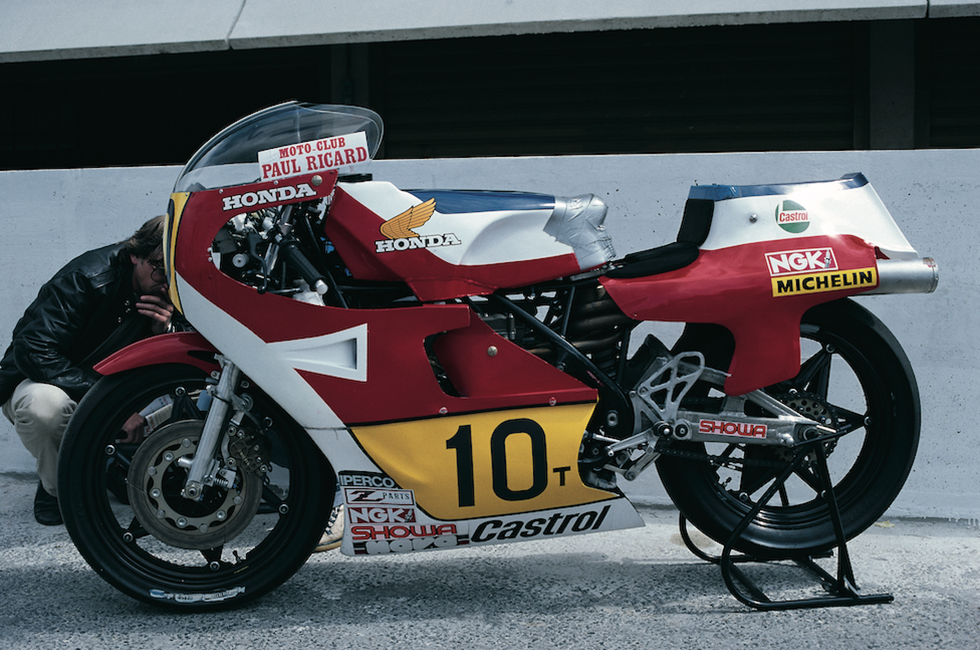
The 1981 French GP specification of the "NR3", the third-generation NR500. It featured a proprietary semi-double-cradle frame housing the 90-degree V4 "2X" engine. (Photo/Shigeo Kibiki)
Technical Specifications and Racing History of the 1981 "NR3"
A Unique Victory Claimed at the Rainy Suzuka 200KM
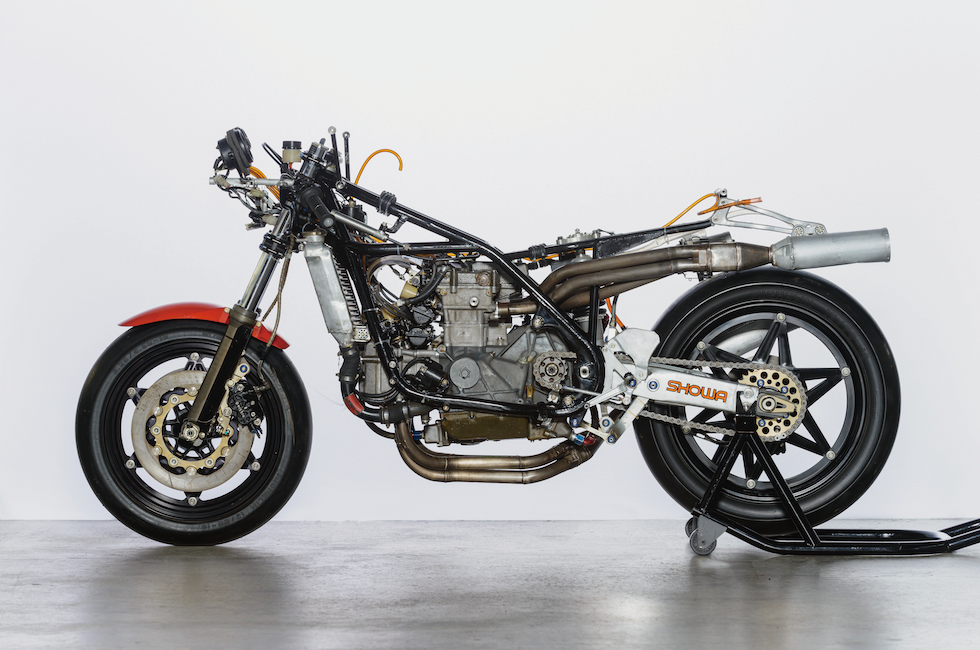
The NR3 is stored in the Honda Collection Hall's collection. It is the "2.5X" specification featuring a full double-cradle frame and 16-inch front tire. It utilizes a linkage-type rear suspension, specifically a bottom-link configuration. (Photo/Shinobu Matsukawa)
While the development of the NR2 chassis was entrusted to Maxton, the NR Project team was simultaneously developing a chassis in-house using technical specifications standard for road racers of that era.
First, a test frame was fabricated. Known among the staff as the "T-frame," it was like the Maxton version, a diamond-type frame constructed from round chrome-molybdenum steel tubing.
The T-frame NR2, fitted with the 1X engine, competed in the Mugello International Race on September 28, 1980, one month after the West German GP (August 24), which had been the final race for the Maxton-framed NR2. Takazumi Katayama rode the bike, but it failed to achieve a notable result. Development of the T-frame continued, and a major revision was carried out in November; structural rigidity was enhanced by adding an under-loop on the left side of the chassis to cradle the engine from below, along with a bracket on the right side extending to the bottom of the crankcase.
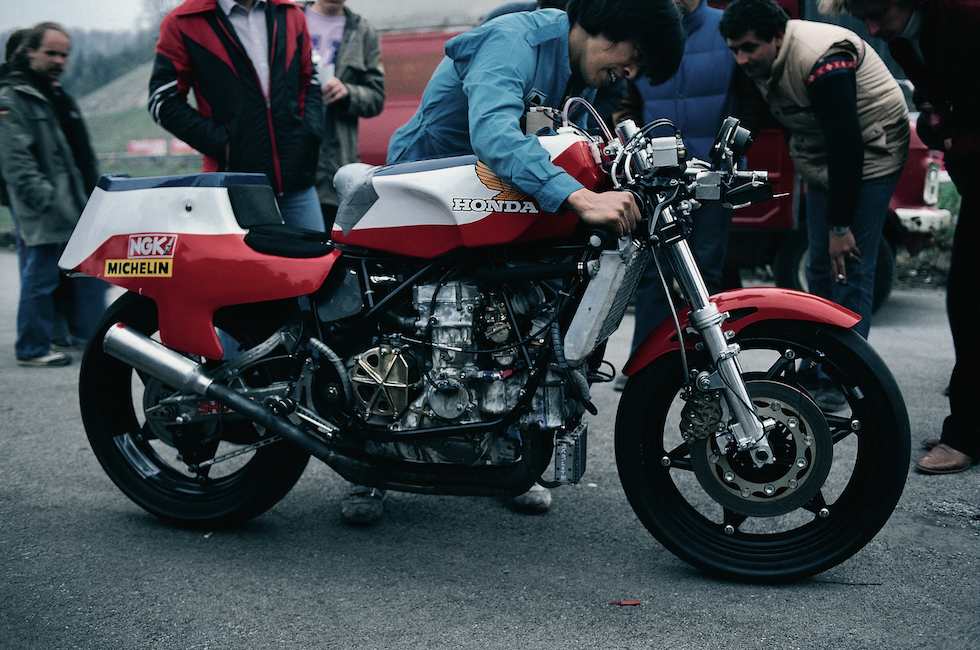
The NR3 was brought to the 1981 Austrian GP, the opening round of that season's World Grand Prix 500cc class. It featured a semi-double-cradle frame and ran on 18-inch tires at both the front and rear in "1X" specification. (Photo/Shigeo Kibiki)
Following the experimental "T-frame," the NR Project pushed ahead with frame development for the NR3, intended for the 1981 season. The "2X" engine installed in the bike was the third iteration of the NR500's V4 powerplant and featured a more compact design, particularly regarding the crankcase, compared to the earlier 0X and 1X versions. This compactness allowed the NR3 frame to adopt a double-cradle configuration with under-loops running along both sides of the chassis. Ultimately, the NR Project would produce three types of frames for the NR3.
The initial NR3-1X frame was based on the design of the aforementioned T-frame; consequently, it used a semi-double-cradle configuration with a single "backbone" top pipe extending rearward from the steering head. It was this NR3-1X frame that Takazumi Katayama rode in World Grand Prix races ranging from the Argentine GP in March 1981 to the French GP in May.
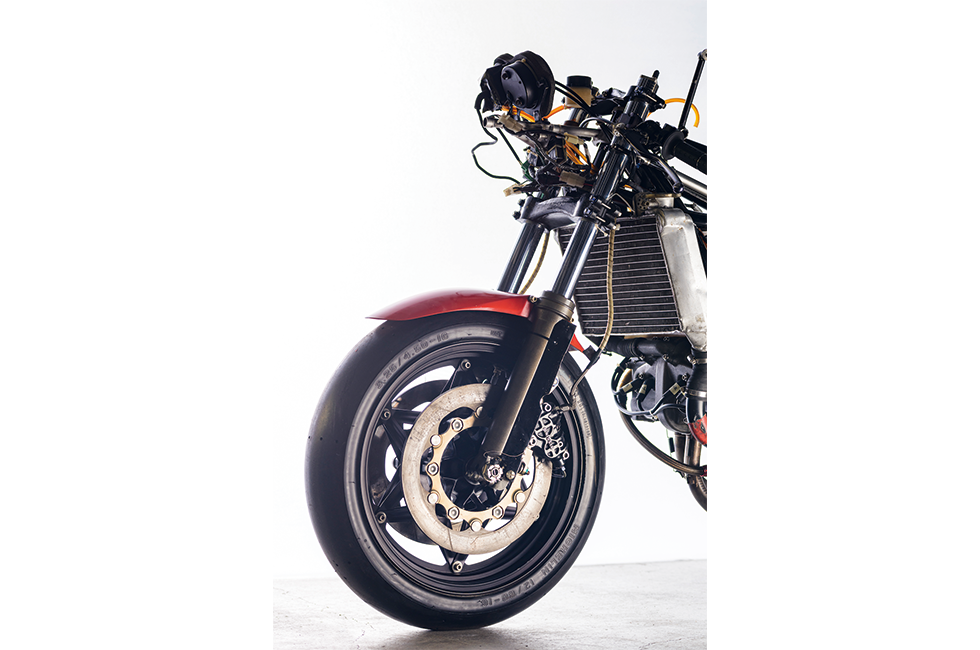
From NR3 onward, suspension systems were developed in collaboration with Showa Seisakusho (now Astemo). The front forks featured a new technology: the "TRAC" (Torque Reactive Anti-dive Control) anti-dive mechanism. (Photo/Shinobu Matsukawa)


