車両デザイン検討のための自然言語駆動型3Dデザイン生成技術の研究
動画引用元論文
車両デザイン検討のための自然言語駆動型3Dデザイン生成技術の研究
- 著 者
- 片桐 章彦、中川 善和、佐伯 晋、白石 淳、佐々木 真人、伊藤 修
- 収 録
- 自動車技術会論文集 Vol56,No.6,November 2025
- 発 行
- 2025/11
- 要 旨
- 歩行者保護性能を満足した車両の意匠形状を効率的に検討するための技術を開発した.サロゲートモデル・最適化技術・モーフィング技術の組み合わせで性能を満足した形状を高速に具現化し、LLM技術により自然言語駆動での形状作成を実現した.また作成した形状の評価手法技術を構築し、意匠形状の特徴を評価可能とした.
Speaker
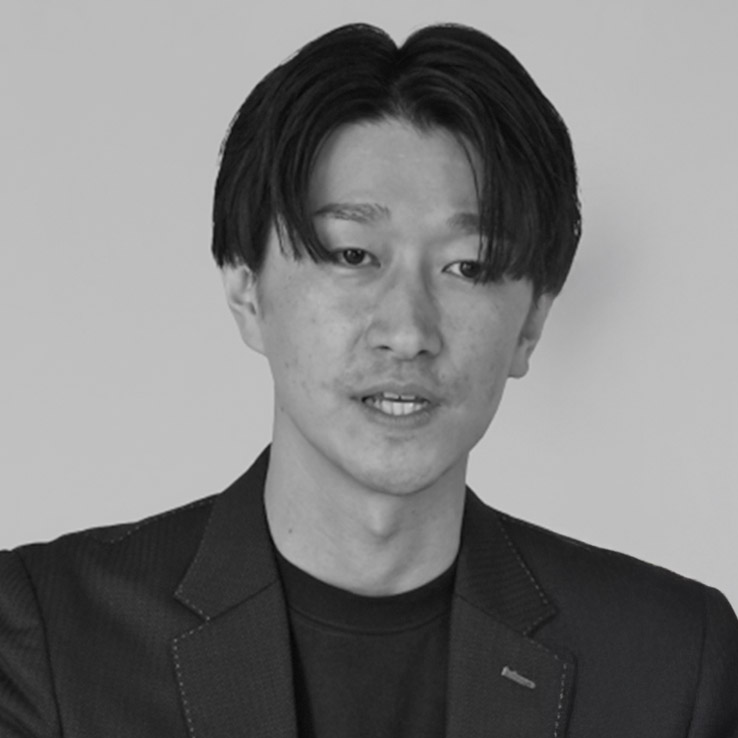
片桐 章彦 / Akihiko Katagiri
その他 執筆論文(共著含む)
Dynamic knowledge integration in multi-agent systems for content inference
- 著 者
- Atsushi Yamamoto, Takumi Iida, Taito Naruki, Akihiko Katagiri, Yudai Koike, Ryuta Shimogauchi, Kota Shimomura, Eri Onami, Koki Inoue, Osamu Ito
- 収 録
- ICLR 2025 Workshop Agentic AI
- 発 行
- 2025/3
- 要 旨
- Advancements in cutting-edge science and technology have resulted from the integration of multiple interdisciplinary domains beyond traditional academic boundaries. Achieving effective cross-domain knowledge-sharing and consensus-building is crucial. However, single-agent Large Language Models (LLMs) solutions often struggle to integrate the diverse and highly specialized knowledge required in these contexts. This study proposes a multi-agent system with dynamic knowledge integration, where multiple specialized LLM-based agents cooperatively infer content by referencing different domain-specific databases. Each agent selectively and dynamically updates references based on conversational context to achieve deeper insight and more robust solutions. We propose four system architectures---Decentralized, Centralized, Layered, and Shared Pool---for agent coordination. We then evaluate these approaches on a title-to-abstract inference task using a subset of the arXiv dataset, demonstrating that multi-agent systems significantly outperform single-agent models in both accuracy and stability. Notably, expert agents, restricted to domain-specific data, produce more precise and consistent outputs, and the Decentralized architecture fosters increased domain interaction. These findings suggest that the collaboration of specialized multi-agent systems can more effectively facilitate the consensus-building process in the advancement of complex interdisciplinary scientific domains.
Surrogate Assisted Pedestrian Protection Design via a Foundation Model Orchestrated Workflow
- 著 者
- Osamu Ito, Akihiko Katagiri, Yoshikazu Nakagawa, Shin Saeki, Jun Shiraishi, Masato Sasaki
- 収 録
- arXiv preprint arXiv:2606.17577
- 発 行
- 2026/6
- 要 旨
- AI-driven engineering workflows face particular challenges in crash safety design: unlike aerodynamics, crash events involve highly nonlinear contact dynamics, material nonlinearity, and discrete state transitions that are difficult to capture with data-driven surrogate models. To the best of our knowledge, we present the first foundation model--orchestrated workflow for crash safety design that enables surrogate-assisted exploration for pedestrian protection, reducing evaluation time from hours per CAE simulation to seconds. The workflow integrates four components: (1) a surrogate trained on CAE crash simulations to predict pedestrian leg injury metrics from design parameters, achieving an average and providing distribution-free conformal prediction intervals; (2) multiobjective evolutionary search (NSGA-II) to discover diverse feasible parameter sets under user-specified constraints; (3) a morphing-based geometry generator that maps parameters to topology-preserving 3D shapes; and (4) a natural-language interface in which an LLM orchestrates the workflow and a vision--language model supports semantic comparison of generated designs. In an automotive front-bumper case study, the workflow produces 35 distinct safety-compliant alternatives from a single exploration, a process that would require weeks with conventional CAE iteration. These results suggest that foundation models can serve as integration layers between ML surrogates and physics-based simulation, helping bring AI capabilities to safety-critical engineering domains.
自動車部品設計を対象とした CAE を自律的に実行する構造検討 AI エージェントの提案
- 著 者
- 片桐章彦, 中川善和, 伊藤修
- 収 録
- 人工知能学会全国大会論文集 第40回 (2026)
- 発 行
- 2026/7
- 要 旨
- 自動車部品の設計では, 複数の性能目標に加え, コスト, 重量, および製造制約を同時に考慮する必要がある. そのため, 一度の検討で最適解を得ることは難しく, 性能要求を満たすまでに形状修正を繰り返す設計プロセスが一般的である. これらを効率化する手段として, 従来より CAE を活用したデジタル開発が広く用いられてきた. しかし, 衝突, 耐久, 振動性能などの各分野にはそれぞれ固有のモデリングおよび解析手法が存在し, その評価には高度な専門知識が求められる. その結果, 各分野に精通した専門家が個別に関与し, 性能ごとに要求される構造を持ち寄って調整・統合 (擦り合わせ) を行う必要があった. そこで本研究では, 各性能の CAE 検討と性能を両立する構造検討プロセスに主眼を置き, AI が各種解析ツールを自律的に実行しながら構造検討を行う構造検討 AI エージェントのフレームワークを提案する. 時系列動解析である衝突解析および定常動解析である振動解析を対象とし, 簡易的なビーム形状部品を用いて提案手法の有効性を示す.
コンポーネントモード解析を用いた開発初期における低周波NV事象に対する車両上屋構造構築手法
- 著 者
- 梶 真一, 片桐 章彦, 望月 隆史, 成國 星哉
- 収 録
- 自動車技術会 学術講演会予稿集(春)1-6
- 発 行
- 2026/5
- 要 旨
- 開発初期における低周波NV事象に対する車両上屋構造の構築手法を提案する.コンポーネントモード解析を用い,システム目標に基づき幅を持たせたサブシステム目標を設定.開発初期に得られる情報を元に作成したCAEモデルで初期図面出図前に構造検討し,結果を反映することで初期図面の質を向上させる.
動的な専門知識連携を意識したマルチエージェントシステム
- 著 者
- 山本篤, 成木太音, 片桐章彦, 小池湧大, 飯田啄巳, 下垣内隆太, 下村晃太, 大南英理, 井上顧基, 伊藤修
- 収 録
- 人工知能学会全国大会論文集 第39回 (2025)
- 発 行
- 2026/7
- 要 旨
- 本研究は, 自動車産業などの複雑な製品開発現場における多層的なコミュニケーション課題に着目し, 動的に知識を統合・更新するマルチエージェントシステムを提案する. 従来, 単一のエージェントでは限界があった専門分野横断的な知識統合を, 複数の専門エージェントが協調することで実現する. 各エージェントは異なるデータベースを参照し, 会話の文脈に応じて最適な文献を動的に選択・更新することで, 新たな視点や深い洞察を導く. 提案するシステムは, Decentralized 型, Centralized 型, Layered 型, Shared-Pool 型の 4 種類の結合方式を採用し, それぞれの特性を比較検討した. arXiv データセットを用いた実験では, シングルエージェントに比べてマルチエージェントの方が高い精度と安定性を示し, 特に専門分野に特化したエキスパートエージェントの活用によって, 関連知識の正確な推論が可能であることが確認された. Decentralized 型は密な対話を通じて多様な専門知識の交換を促進し, より高精度な結果をもたらすことが示唆された.
IdeaGraph: Evidence-Bearing Synergy Junctions for Cross-Field Scientific Ideation
- 著 者
- Takumi Iida, Atsushi Yamamoto, Akihiko Katagiri, Osamu Ito
- 収 録
- NeurIPS 2026 Workshop on AI for Meta‑Science
- 発 行
- 2026/10
- 要 旨
- Large language models can propose research ideas that experts judge novel, but a recent execution study reports that this advantage fades once the ideas are carried out: the bottleneck of machine-generated proposals is not novelty but feasibility. As end-to-end AI scientists scale up idea production, this gap between ideation and execution becomes a meta-scientific measurement problem: research-idea quality must be assessed before execution resources are committed. We argue that scientific ideation systems should therefore be evaluated not only by the novelty of their proposals but also by whether each proposed transfer carries inspectable evidence from both contributing research lineages. IdeaGraph introduces evidence-bearing synergy junctions: graph junctions that connect research lineages from different fields, are supported by both source corpora, and retain their surrounding typed-citation paths as inspectable generation context. The three junction types are shared research entities, induced upper topics supported by both corpora, and papers cited from both. In pairwise comparisons over 30 target papers, IdeaGraph improves judged Feasibility over target-only prompting on 27 of 30 while staying on par in Overall quality, and surpasses Chain-of-Ideas on all five criteria; a blinded ranking by ten researchers reproduces the criterion-level profile. On the seven targets with qualifying follow-up work, the proposals also align best with where each target's citation lineage later went. These results indicate that evidence-bearing synergy junctions and their bilateral literature provenance support pre-execution quality control of machine-generated research directions.