
A PAINTED WING MARK.
LIGHTER THAN EVER.
A PAINTED WING MARK.
LIGHTER THAN EVER.
In 1959, Honda competed
in the Isle of Man TT race,
taking on the challenge
of competing on the global stage.
Because it was designed
to showcase Honda to the world,
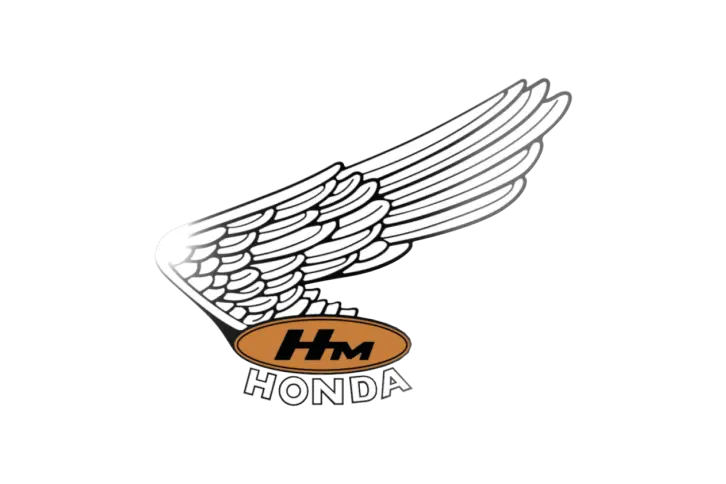
a special Wing mark,
different to the ones
on other commercial vehicles
was used for the machine.
As a race vehicle,
reducing the weight — even by 1g —
would make a difference.
To improve race performance,
they didn't use a traditional badge.
Instead, they painted the logo
straight onto the tank.


SOICHIRO WAS RIGHT TO BE CONFIDENT
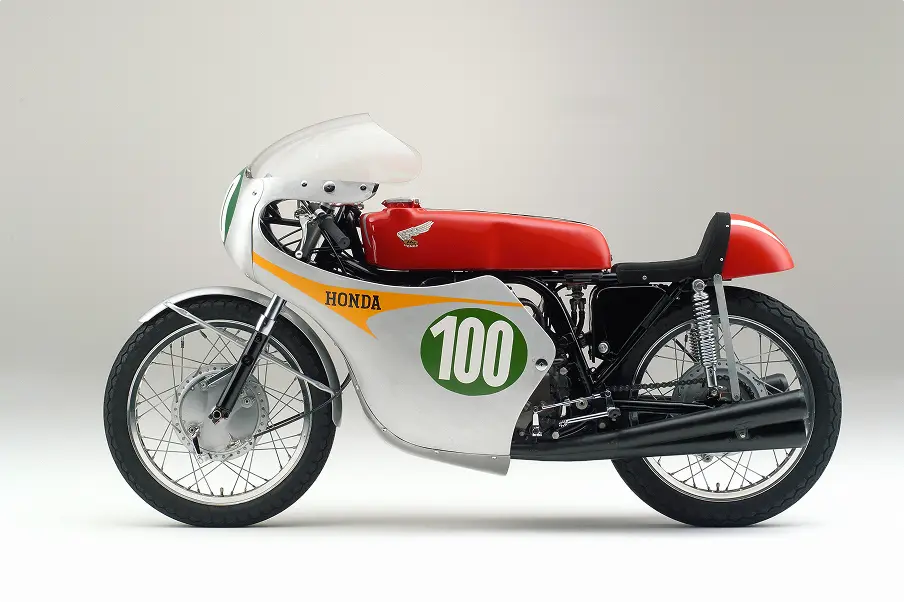
In March 1954, a little under seven years since Honda had started producing its auxiliary bicycle engine, Soichiro Honda announced that the company would attempt to compete in the world's most prestigious motorcycle race: Isle of Man TT. In 1959, they entered the race for the first time, with 125cc's RC142. Just two years later, Mike Hailwood won, in an RC143 bearing this particular Wing mark. And not only that — Honda was world GP champion in both the 125cc and the 250cc classes.
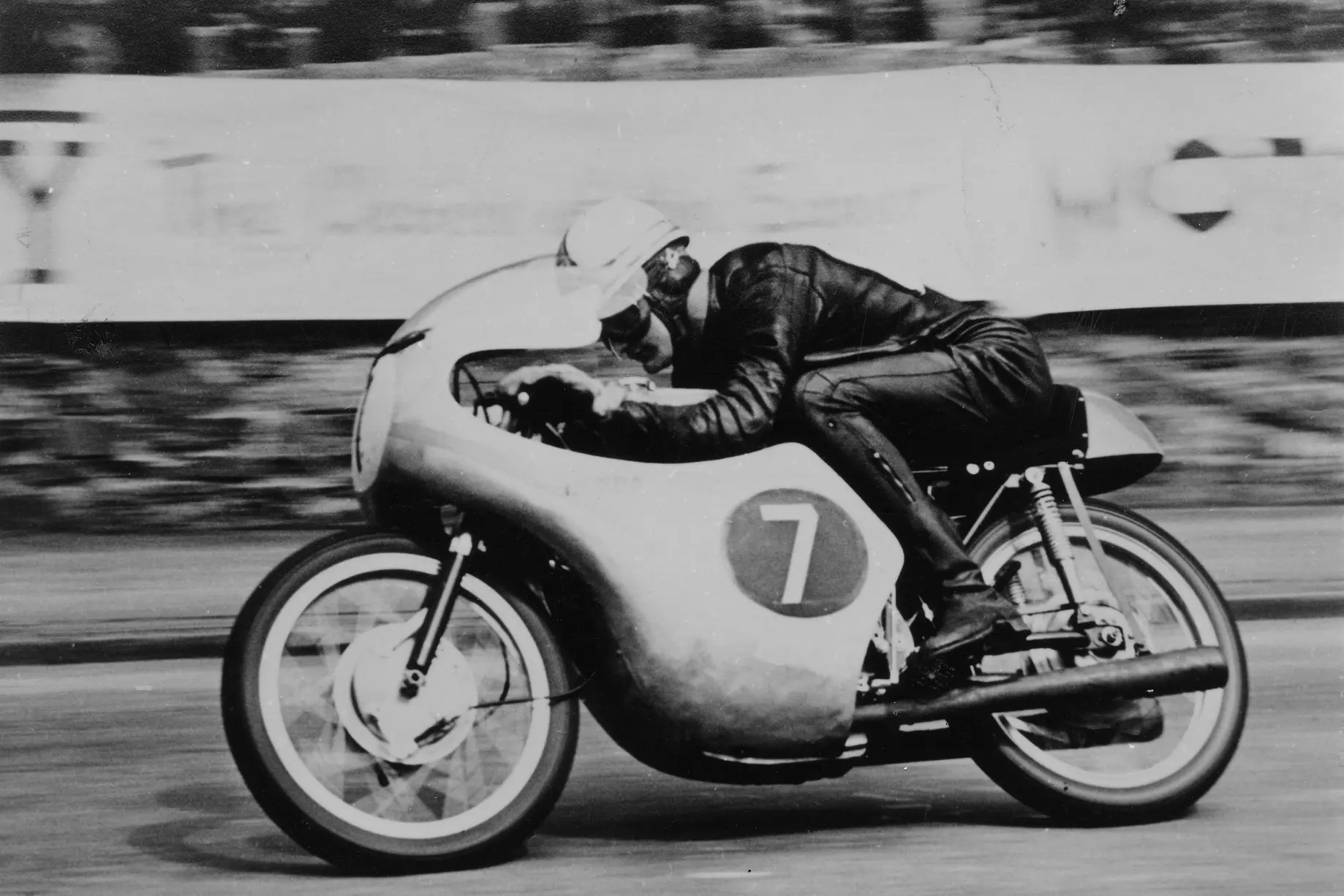
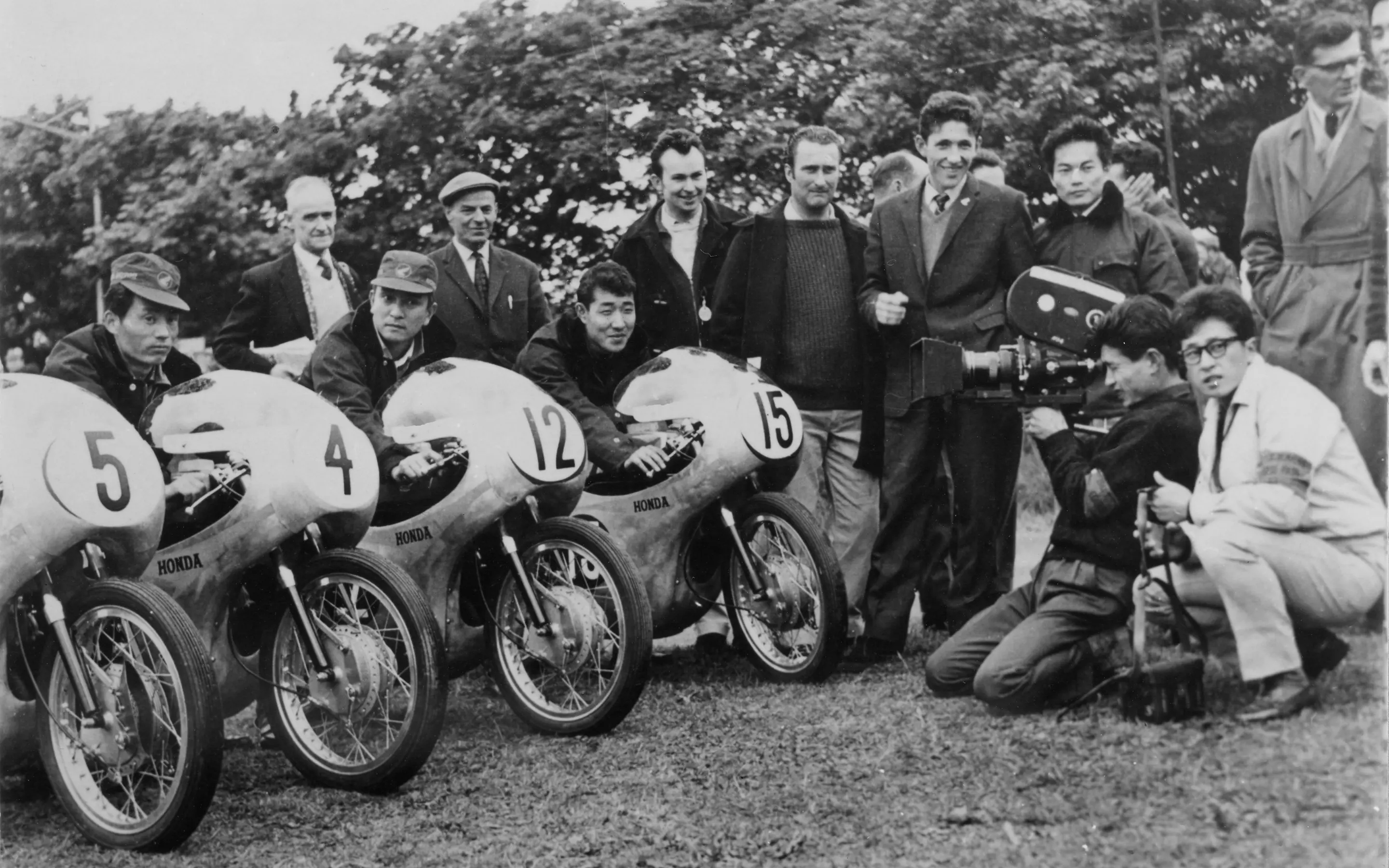
RC143 1960
The 125cc RC141 and RC142 were in continuous development, aiming for the Isle of Man TT. In order to reduce the instability that had become a problem during high-speed cornering, the DOHC 4-stroke engine was made, reaching 23PS/14,000rpm, which addressed chassis rigidity. The caster and trail were also altered for the TT's mountain course.
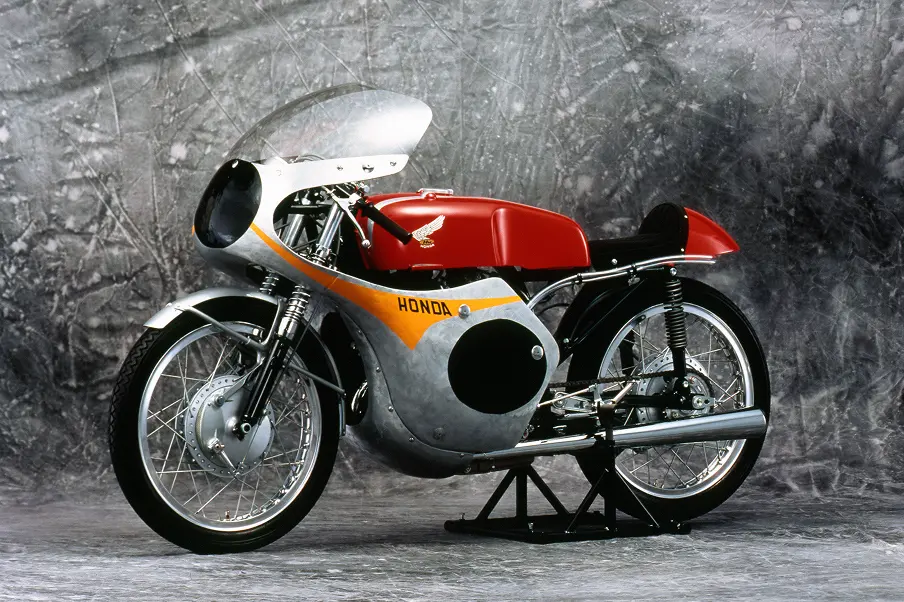
RC162 1961
The 250cc factory bike was introduced in time for the third season of the Road Racing World Championship in 1961. It had a double-backbone frame and was the first time that a Japanese racer (Kunimitsu Takahashi) had won the title on a Japanese bike.