
CSR
Harnessing Malaysia’s Sunshine: A Solar Power Generation Challenge That Began with Waigaya
POINTWhat you can learn from this article
- A solar power project that makes use of one of Malaysia’s abundant local resources—sunshine—grew out of Waigaya discussions among associates at the plant.
- After overcoming a series of changes to government regulations, the team installed solar panels and introduced a Battery Energy Storage System (BESS), reducing both CO2 emissions and electricity costs.
- Alongside these initiatives within the plant, including waste reduction, Honda Malaysia is working with local residents on environmental activities, putting into practice an approach to sustainability that grows together with the community.
Malaysia is blessed with abundant sunshine throughout the year. Honda Malaysia, which has been producing automobiles in the country for more than two decades, is now operating a large-scale solar power generation system together with a Battery Energy Storage System (BESS), a pioneering initiative for Malaysia’s manufacturing sector.
It all began with Waigaya discussions among local associates. This issue of Honda Stories goes behind the scenes of Honda Malaysia’s efforts to achieve carbon neutrality in a way that is firmly rooted in the local community.
More than 25 years in Malaysia—Honda Malaysia is growing together with the local community
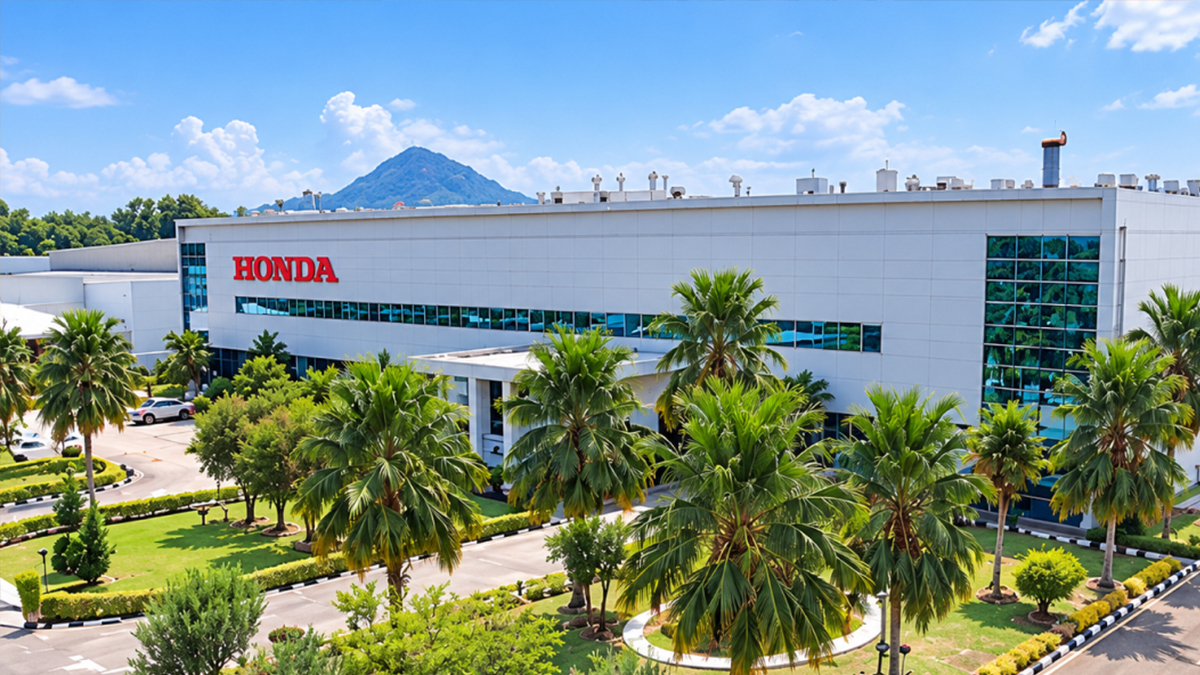
Melaka is located in southwestern Malaysia, approximately 100km from the capital, Kuala Lumpur. Surrounded by greenery, it is home to the automobile production plant of Honda Malaysia Sdn. Bhd. (Honda Malaysia).

The plant began production in 2002 and currently produces 6 models for customers in Malaysia. By manufacturing locally and fulfilling the needs of Malaysian customers, Honda Malaysia reached cumulative production of one million automobiles in 2022. Since 2014, it has also ranked No. 1 in Non-National Passenger Vehicle segment sales for 12 consecutive years.
Shima, who provides overall support for the project, explains Honda’s presence in Malaysia.
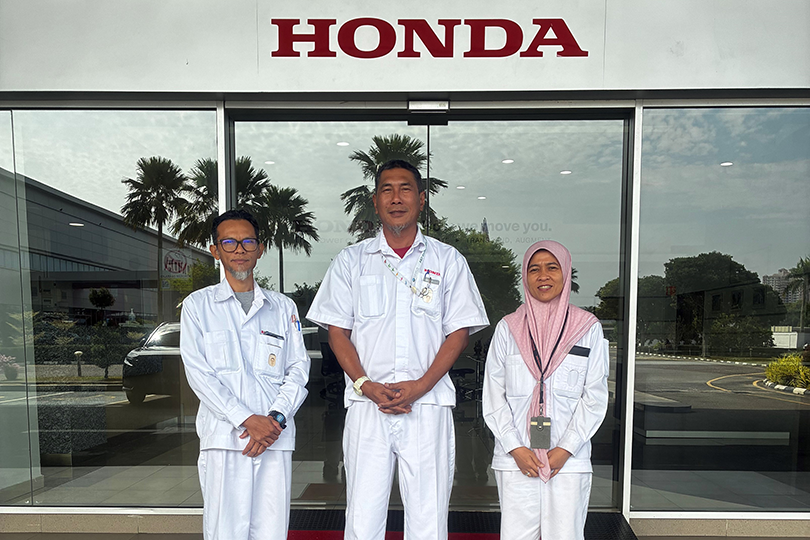 Shamsul Hassan, Mohd Firdauzaman Hamzah, and Maizathul Shima Othman, who are the team members of Solor panel project
As a manufacturer with deep roots in the region, Honda Malaysia contributes to local employment and industrial development. At the same time, its responsibility to address the environmental impact of its day-to-day business activities continues to grow.
Under its National Energy Transition Roadmap (NETR), the Malaysian government aims to increase the share of renewable energy in installed power capacity to 70% by 2050 and achieve net-zero emissions.
Honda Malaysia has already implemented various energy-saving initiatives at its plant, including upgrades to its compressed air systems and the installation of LED lighting. However, taking its environmental sustainability efforts to the next level required innovative solutions that went beyond simply improving the efficiency of existing equipment.
The starting point was a question raised by associates at the plant: “Is there an environmental initiative that makes sense precisely because we are in this region?”
Solar power project born from Waigaya—the challenges behind its implementation
Honda has a culture known as “Waigaya*,” in which people freely exchange opinions across organizational and departmental boundaries. Honda Malaysia’s solar power project also began to take shape through these Waigaya discussions.
Assistant Project Leader Shamsul recalls the early stages of the project.
* A unique Honda corporate culture of finding original ideas and solutions through open and lively discussion.
When we first began considering the introduction of renewable energy, solar power wasn’t the only option. We also discussed possibilities such as wind power. But when we considered Malaysia’s climate and geographical advantages, we concluded that solar power, which could make use of the country’s abundant sunlight throughout the year, was the option best suited to the characteristics of the region. That was when we began studying the installation of solar panels.
To deepen their knowledge, members of the team visited factories operated by other companies that had already introduced solar power, studying their equipment and operational know-how firsthand. Rather than simply applying conventional examples of renewable energy installations, the team sought the solution that would genuinely work best for the Honda Malaysia plant.
Which building roofs would receive sunlight most efficiently? Were the roofs strong enough, and would installation interfere with future plans for the buildings? How could the effects of shadows from chimneys, exhaust equipment and other structures be minimized?
Members from engineering, finance, purchasing, legal and other functions repeatedly discussed and examined these questions in detail, based on the actual conditions at the plant.
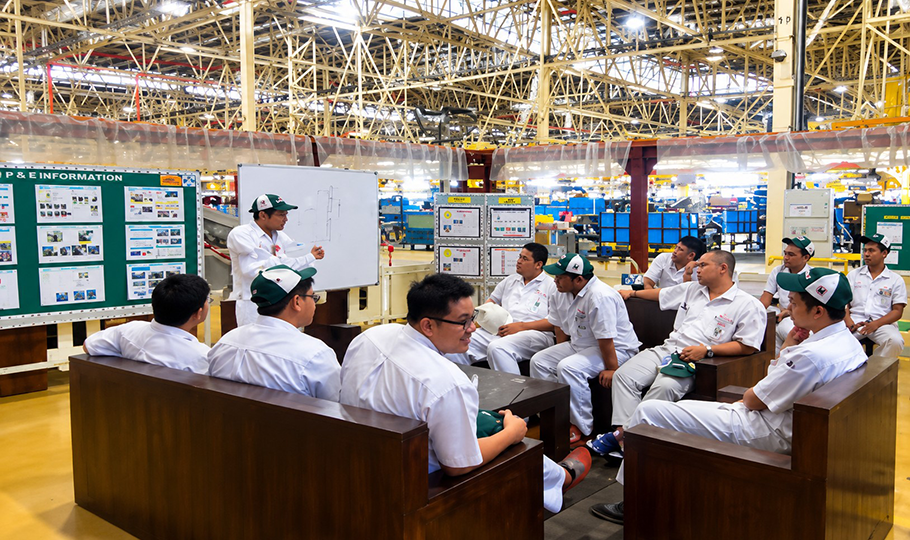 Waigaya discussion at Solar panel installation project members.
One of the greatest challenges in planning the solar power installation was determining the optimum generating capacity. Under Malaysia’s Self-Consumption (SELCO) solar power scheme, surplus electricity generated on site cannot be sold back to the power utility.
To avoid wasting the electricity we generated, we calculated even the plant’s minimum electricity consumption on non-operating days in detail. From that, we carefully determined the maximum system capacity that would allow all the electricity generated to be consumed within the plant.
A conventional capital investment can often proceed primarily through internal technical studies and investment decisions. This project, however, also had to respond to changes in external conditions, including government regulations, requirements imposed by the power utility, and fire and safety guidelines.
The requirements for Malaysia’s Green Investment Tax Allowance (GITA), a tax incentive for environmental investment, were revised to include the installation of a Battery Energy Storage System (BESS). At the same time, guidelines issued by the government authority responsible for fire safety were also revised.
Project Leader Firdauzaman recalls the difficulties the team faced.
Every time the rules changed, we had to review the specifications, recalculate the costs and schedule, and obtain approval again. It was a demanding process for the team. But we saw that the introduction of BESS as an opportunity to make the plant’s new energy management system more effective and efficient.
Malaysia has a maximum-demand charge based on peak electricity consumption. At the Honda Malaysia plant, this applies between 2:00 p.m. and 10:00 p.m. If electricity generated during the day could be stored and used during operations later in the evening, the value of the solar power system could be increased further. Reducing peaks in electricity consumption could also lower electricity costs. Honda Malaysia therefore took on the challenge of combining solar power generation with battery energy storage.
Solar power alone cannot accommodate peak electricity demand after sunset. To address this, we implemented a Battery Energy Storage System (BESS) that stores excess solar energy generated during the day and deploys it during the second shift, from evening until 10:00 p.m. This allows for more efficient utilization of renewable energy and reduces energy wastage, resulting in an approximately 20% to 30% reduction in demand charges.
After approximately six months of construction, the project was completed with a total solar generating capacity of 5.6MW from approximately 8,960 solar panels, together with a 5.8MWh Battery Energy Storage System.
The system began operating in April 2026. In August, it generated 592MWh of electricity for the month and reduced CO2 emissions by the equivalent of 364 metric tons. On an annual basis, this represents approximately 4,584 metric tons, equivalent to around 10% of the plant’s total CO2 emissions—results in line with the figures the team had arrived at through repeated study and refinement.
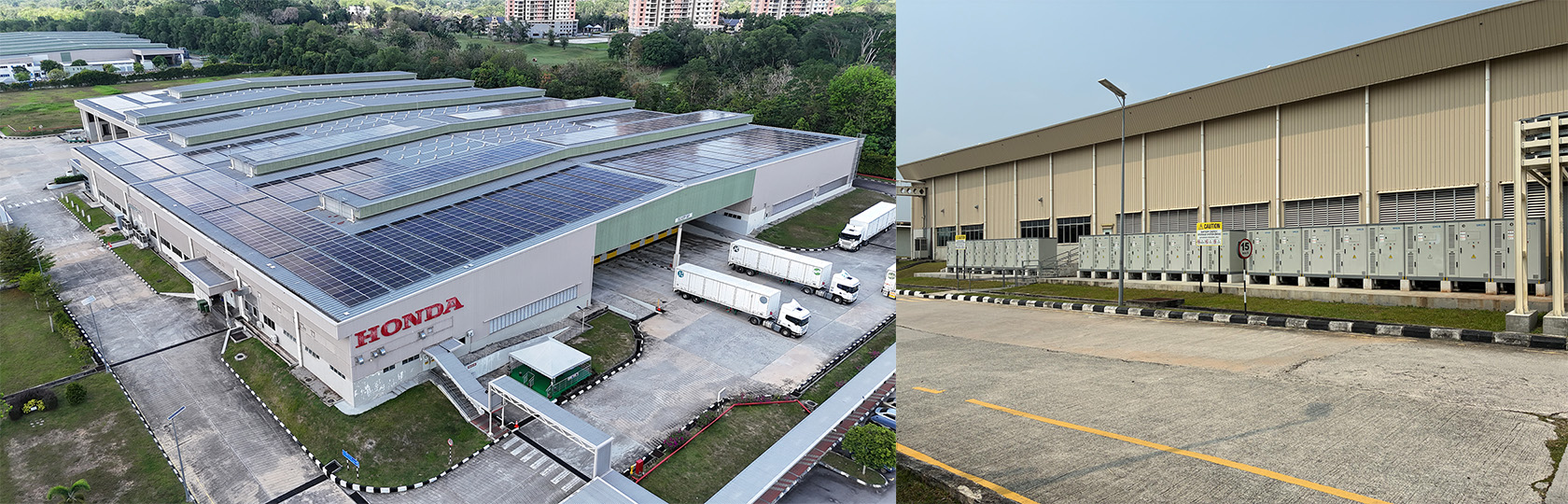 Solar Panels and BESS Installed at the Plant
Beyond the factory—creating a sustainable future together with the local community
The introduction of solar power and battery energy storage systems did more than change how the factory uses energy. It also transformed the way associates think about sustainability. Environmental responsibility was no longer seen as a separate initiative, but became an integral part of the decisions they make in their everyday work.
Now, as part of our daily work, we naturally find ourselves asking, ‘How can this decision contribute to sustainability?’
As one of the pioneers in this initiative within Malaysia’s industrial sector, the project has also attracted interest from government and local communities, including a visit by representatives of the Melaka state government. This has helped further strengthen public-private partnerships.
Building on this commitment, Honda Malaysia will further expand its solar power initiative to the Parts Supply Warehouse in Shah Alam, Selangor in 2027, reinforcing our long-term efforts to drive sustainable operations.
Honda Malaysia’s environmental initiatives are now expanding beyond energy into efforts to help create a circular society.
At the plant, Honda Malaysia has begun recycling “sludge containing metal hydroxides,” which is classified as scheduled waste. It has also introduced a “Trash to Cash” program, encouraging associates to bring recyclable resources from home, such as used cooking oil and electronic equipment, to the plant for recycling.
Working together with surrounding communities and suppliers, the program is expanding into a broader regional initiative.
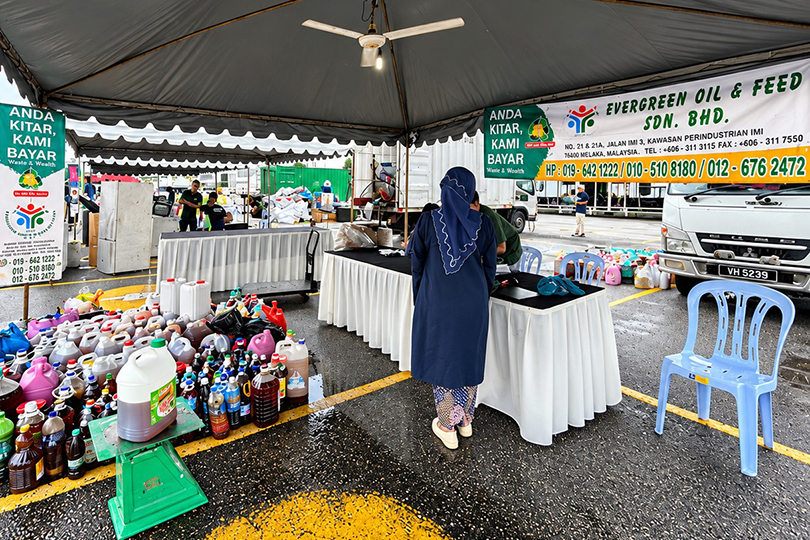 Trash To Cash Program
Going forward, we want to further increase the effectiveness of our solar power generation and BESS operations while thoroughly pursuing reductions in waste and water consumption. By working hand in hand with the government, suppliers, neighboring factories and people in the local community, we hope to create a sustainable future together as a community.
“How can we turn sunlight into a source of power for us?”
The question born from Waigaya discussions among associates at the plant led to the introduction of solar power and battery energy storage systems. Today, the initiative has expanded beyond the factory into broader environmental activities. By making the most of the region’s unique characteristics, considering what they can do, and turning their ideas into action, the associates are taking steps, one by one, that are driving Honda Malaysia’s next challenges.
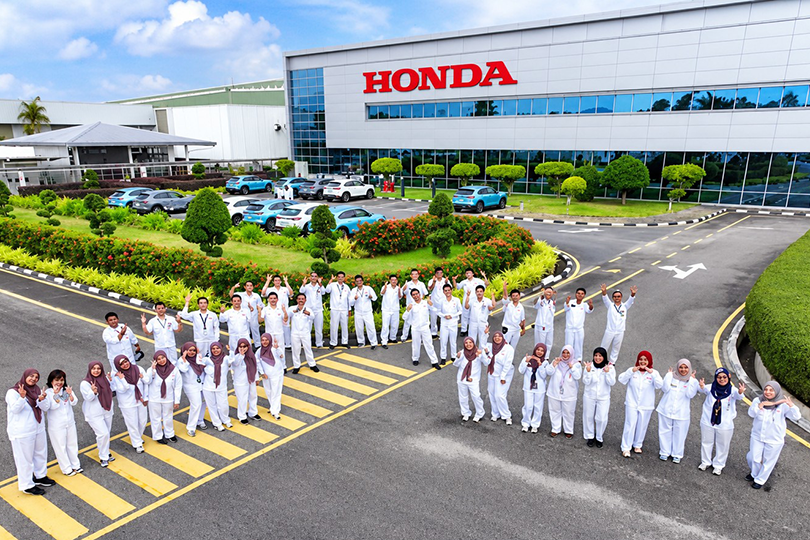
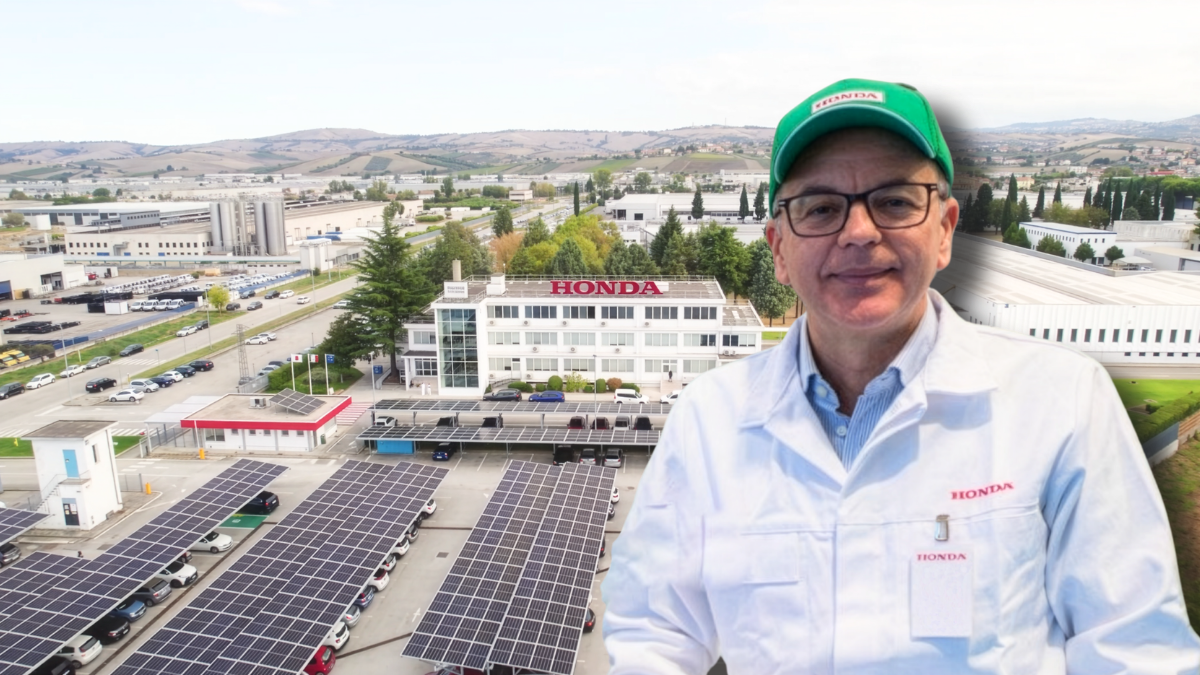




Honda Malaysia has grown together with the local community for approximately 25 years. For Malaysian customers, Honda is a brand they see as reliable, aspirational and approachable.