
Management
“Every Moment Leads to Joy”: How the All-New CB400 SUPER FOUR E-Clutch Sets a New Standard for a New Era
POINTWhat you can learn from this article
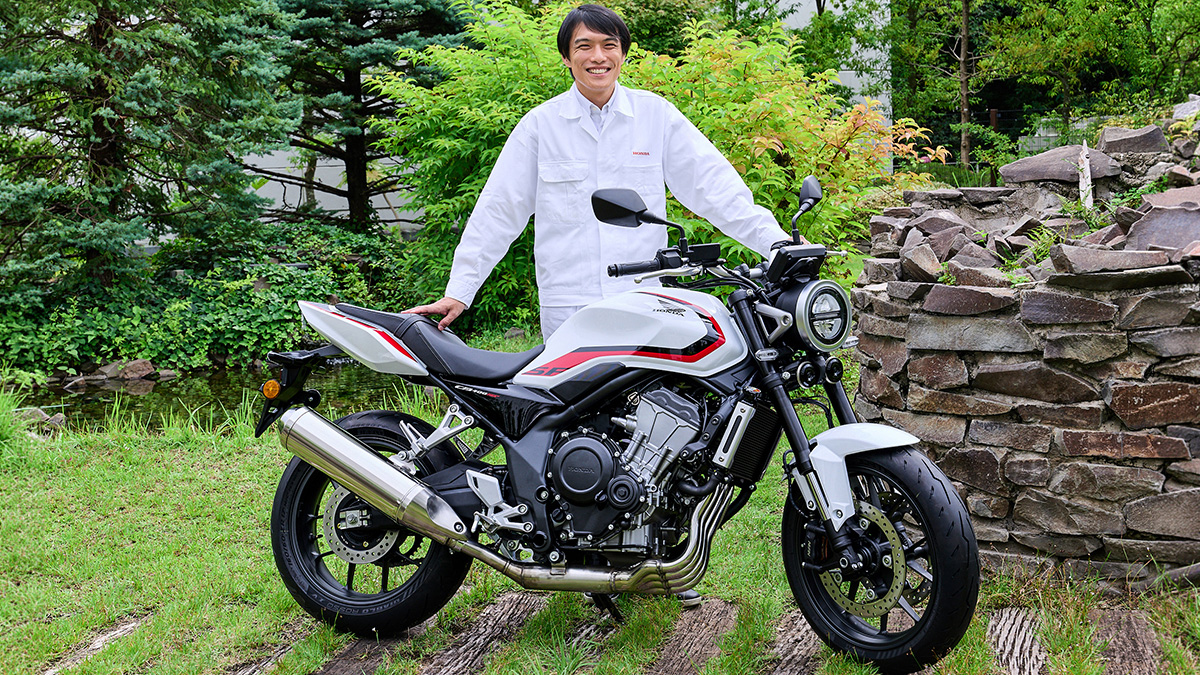
- The CB400 SUPER FOUR E-Clutch was developed from the ground up as a new standard for inline four-cylinder motorcycles, rather than as a recreation of any previous generation or specific model.
- Every aspect of the motorcycle—from its design and lightness to its performance, sound, and controls—was thoroughly refined so that every moment of the riding experience would contribute to the rider’s enjoyment.
- A reassuring and accessible standard provides the foundation from which a wide variety of distinctive motorcycles can emerge. Embodying that philosophy, the model will be introduced primarily in Japan and other Asian markets.
Since its introduction in 1992, the CB400 SUPER FOUR has been embraced by generations of riders as a standard naked sport motorcycle originating in Japan. Although the CB400 SUPER FOUR E-Clutch carries forward the name, it was never developed as a revival or direct successor.
Instead, the development team set out to establish a new benchmark for inline four-cylinder motorcycles—one that would carry forward the model’s heritage while meeting the needs of today’s riders. This issue of Honda Stories speaks with the development leader about the thinking behind the all-new model.
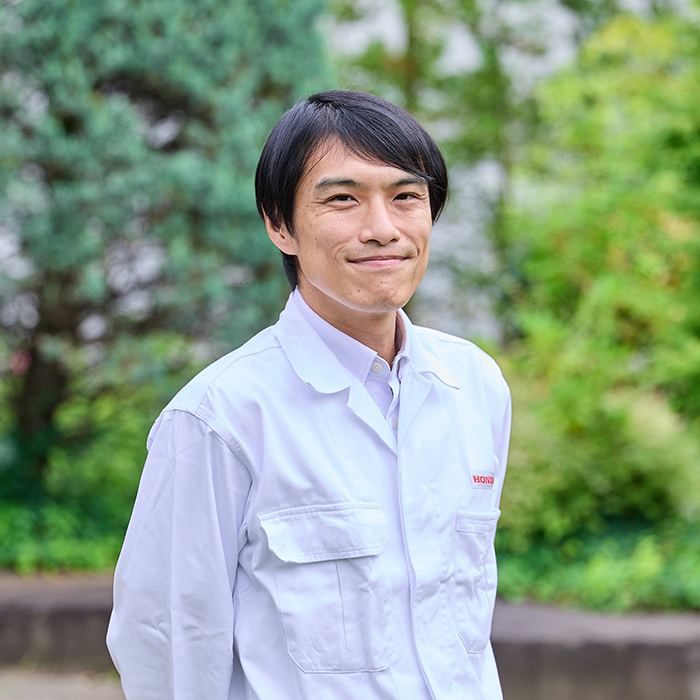
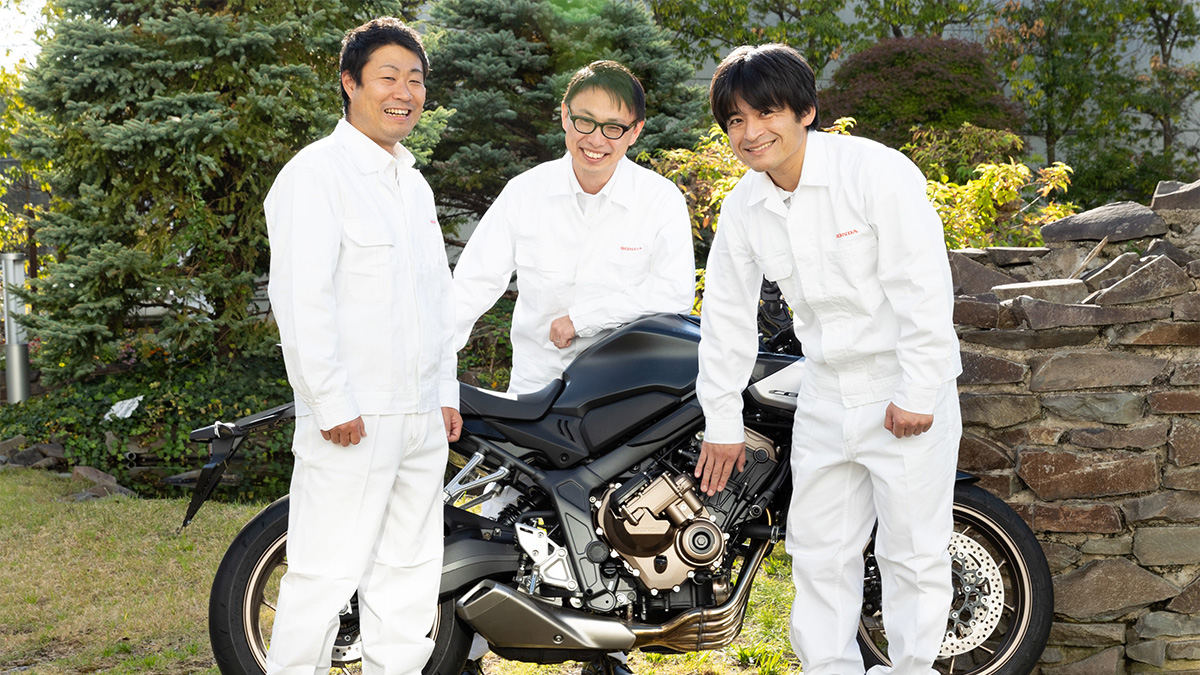
Assistant Chief Engineer, Product Planning Section, Product Development Department 1, Motorcycle and Power Products Development and Production Operations
Development Leader, CB400 SUPER FOUR E-Clutch
View More
Close
Takuro Nakamura
Read More
Embodying the modern standard naked motorcycle
Production of the long-running CB400 SUPER FOUR ended in 2022. Around that time, a project was already underway within Honda to develop a model powered by a new middleweight inline four-cylinder engine in the 400–500cc class.
However, the project was not initially conceived as a “new CB400 SUPER FOUR.” The development team’s objective was to create the standard naked motorcycle required for the coming era entirely from scratch.
New manufacturers are emerging in markets around the world every day. If established manufacturers cannot respond to changing customer needs, they risk losing their presence to these new competitors.
With that sense of urgency in the background, the development team confronted a fundamental question: What value could only Honda provide? The answer it reached was a thoroughly refined modern standard naked motorcycle distinguished by its overall balance.
Throughout development, the team constantly considered what today’s customers expect from a middleweight standard naked motorcycle. As the completed model began to take shape, both visually and dynamically, a shared view emerged: “This is unmistakably a modern SUPER FOUR.” That ultimately led to the decision to carry forward the CB400 SUPER FOUR name.
The development team’s confidence was reinforced when the motorcycle made its world premiere as a 500cc concept model at the Chongqing Motorcycle Show in China. Nakamura recalls that the venue erupted in applause as the cover was removed.
Local staff told us that while applause sometimes breaks out when a price is announced in China, it is extremely rare for a crowd to react so enthusiastically simply to the unveiling of a concept model. We were delighted by the response, and it also gave us a strong sense that the concept had resonated.
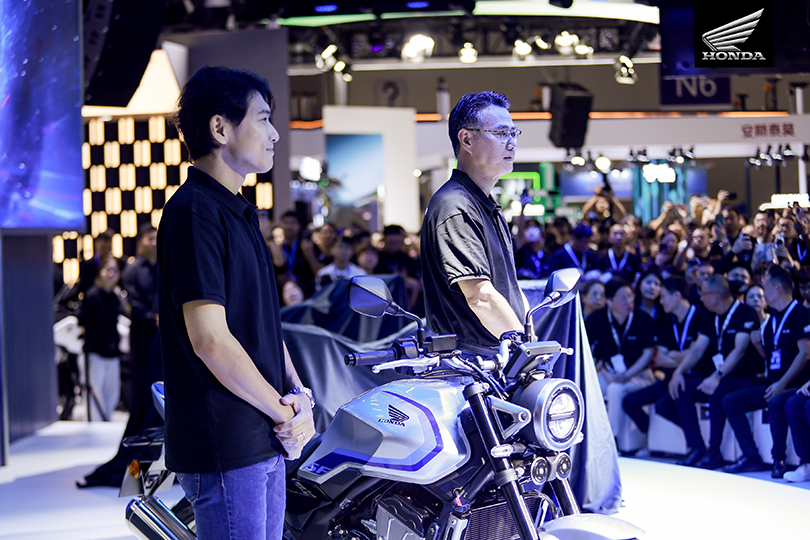 Unveiled for the first time worldwide as the CB500 SUPER FOUR at the Chongqing Motorcycle Show in September 2025.
What does “Every Moment Leads to Joy” mean?
The development team adopted the theme “Every Moment Leads to Joy.” Behind those words was Nakamura’s simple and unwavering desire to create a truly enjoyable motorcycle.
First, it should make riders think, “That looks great,” the moment they see it. The instant they sit on it, they should feel how light it is. Then, once they start riding, it should deliver a sense of exhilaration that brings an involuntary smile to their face. We wanted riders to experience enjoyment in every moment of life with the motorcycle.
Rather than pursuing individual performance figures in isolation, the development team thoroughly refined the balance of the complete motorcycle.
An extensive review of everything from the frame to the suspension reduced weight by approximately 14kg compared with the previous model. This contributes significantly to improved dynamic performance, including easier maneuverability and more agile handling.
Naturally, we devoted considerable effort to developing the new engine. What we created is a classic inline four-cylinder engine. At the same time, it incorporates current trends toward lighter and more compact designs. Riders should feel strong performance in the low- and midrange, followed by the exhilarating surge toward peak power that is characteristic of an inline four.
The four-pipe exhaust is visually very beautiful, but it is a difficult configuration when complying with the latest emissions regulations. Each of the four pipes has a different length, which also makes control more complex. While overcoming those challenges, we also achieved the beauty of four pipes aligned side by side. The final form reflects the team’s determination not to give up and its willingness to continue developing new ideas.
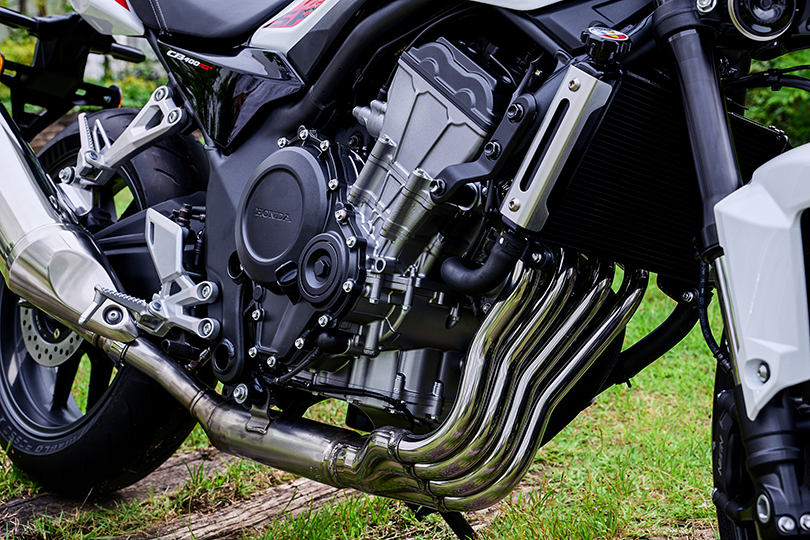
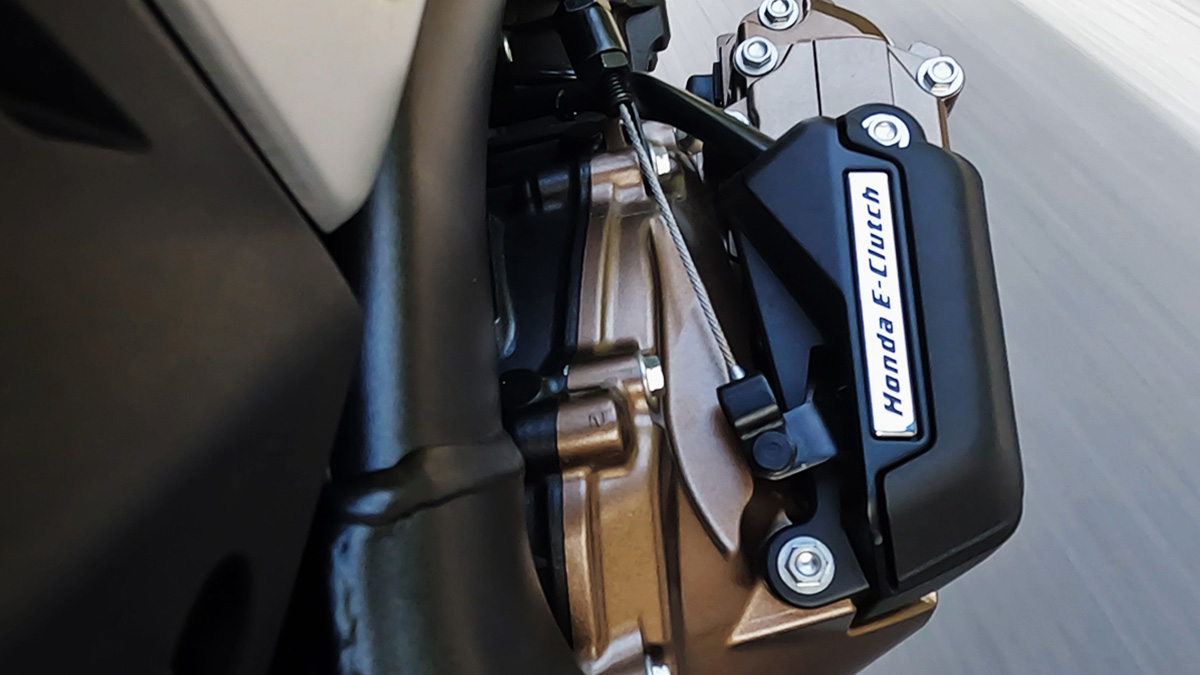
Another important element of the new standard naked motorcycle was the combination of throttle-by-wire (TBW), which converts the rider’s throttle input into electrical signals to control the throttle valves, with Honda E-Clutch, which electronically controls clutch operation.
Because riders do not need to operate the clutch themselves, the risk of stalling is substantially reduced, allowing them to concentrate more fully on riding, including through corners.
At the same time, simply pulling the clutch lever instantly switches the system to manual clutch operation. Combined with the refined shift feel, this provides reassurance for riders who are less familiar with motorcycle controls, while offering experienced riders a new experience in which they can choose their preferred operating style according to the situation.
The pursuit of enjoyment also extended to sound.
While riding a motorcycle, the rider hears not only the exhaust note but also the intake sound. For this model, we adopted a downdraft intake layout and carefully tuned the sound produced by the funnels beneath the fuel tank so that it heightens the rider’s emotions and creates a sense of excitement.
A light and manageable chassis, a smooth and powerful inline four-cylinder engine, controls that provide reassurance, and sound that resonates emotionally with the rider—by bringing all these qualities together, the development team created a model in which “Every Moment Leads to Joy.”
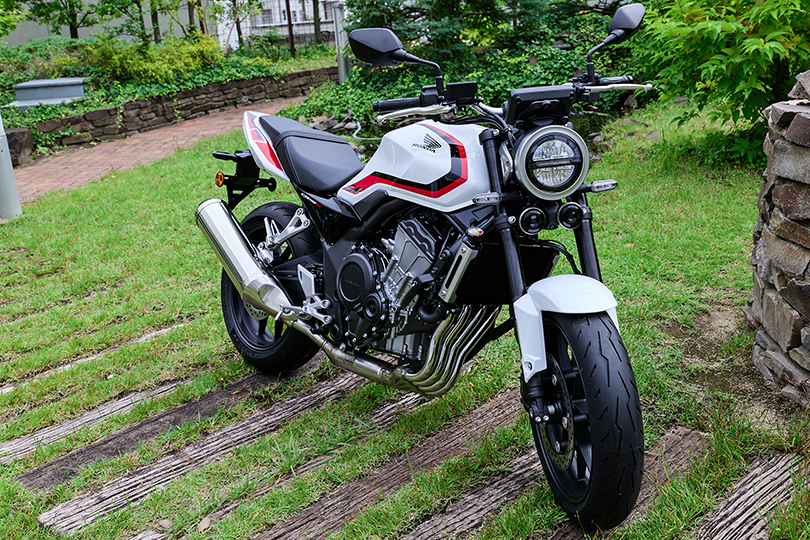
A new benchmark set by an “accomplished all-rounder”
Previous generations of the CB400 SUPER FOUR were known for their well-balanced character. In Japan, the model was also widely adopted by riding schools and was often described as an “accomplished all-rounder.”
Because motorcycles are products in which individuality and personal preference play such an important role, being an “all-rounder” can sometimes be interpreted as lacking character. Nakamura, however, believes that this quality is precisely what gives the model its reason for being.
Even if a motorcycle has tremendous power, customers actually use only part of it in everyday riding. What matters is how satisfying and enjoyable that usable range feels.
Throughout this development, we carefully considered how each item of test data would translate into experiential value for the rider, or how it might manifest as an inconvenience. We repeatedly converted the data into specific riding situations and examined each one with persistence and attention to detail.
By establishing a contemporary standard that anyone can ride with confidence, we also create a foundation from which riders can explore more specialized and distinctive motorcycles.
At the same time, I would be delighted if the CB400 SUPER FOUR became the kind of motorcycle that makes people think, “I have ridden many different motorcycles, but I want to come back to the CB400 SUPER FOUR.”
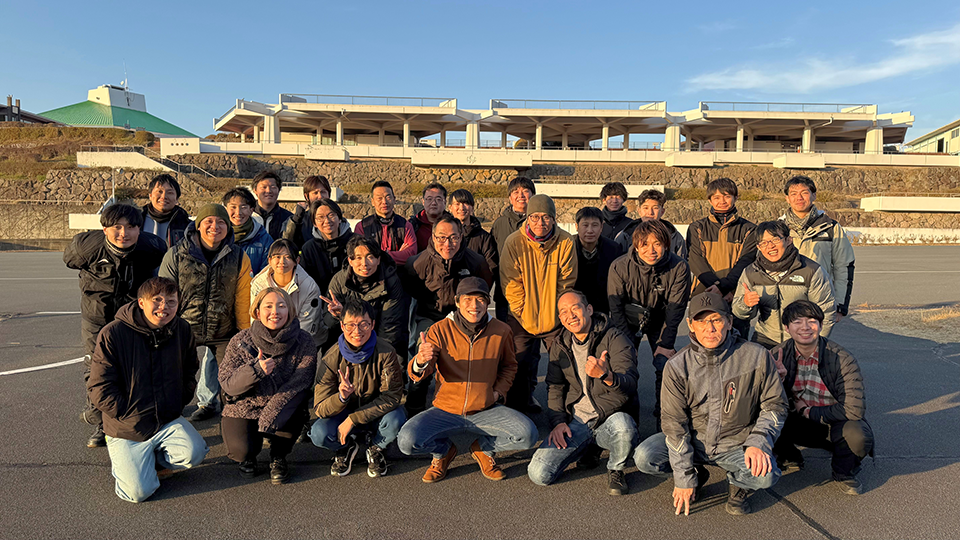 A test ride conducted by the development team. Following Honda’s Three Realities Principle, the team repeatedly verified how test data translated into the actual rider experience.
Looking ahead, the new CB400 series will be introduced globally alongside a CBR model powered by the same engine. It will serve different roles in different markets: as a premium model in China and Southeast Asia, and as an entry-level inline four-cylinder model in Europe.
Although its role will vary by region, the value the development team aims to deliver remains unchanged.
The roots of Nakamura's passion for that sense of enjoyment can be traced back to a formative experience from his university days, when he traveled the length of Japan on a motorcycle.
To me, motorcycles expand the possibilities in my life. When I was at university, I traveled by motorcycle from one end of Hokkaido to the far end of Kyushu. That experience broadened my world, and I want people today to have experiences like that as well.
No matter how much society changes, I do not think the fundamental value of motorcycles changes very much. They are enjoyable to ride, and riding them expands the rider’s world. That was true in the past, and it remains true today.
At the same time, the technologies used to deliver environmental performance, reassurance, and safety must continue to evolve with the times. By incorporating those advances, Honda aims to continue delivering the enduring enjoyment of motorcycles to riders around the world.
A CB that serves as a benchmark provides the foundation from which a wide range of distinctive motorcycles can emerge. At the same time, that benchmark must continue to evolve with each new era.
The objective was not simply to carry something forward, but to create a new standard.
The concept that “Every Moment Leads to Joy” expresses Honda’s determination to continue taking on new challenges into the future.
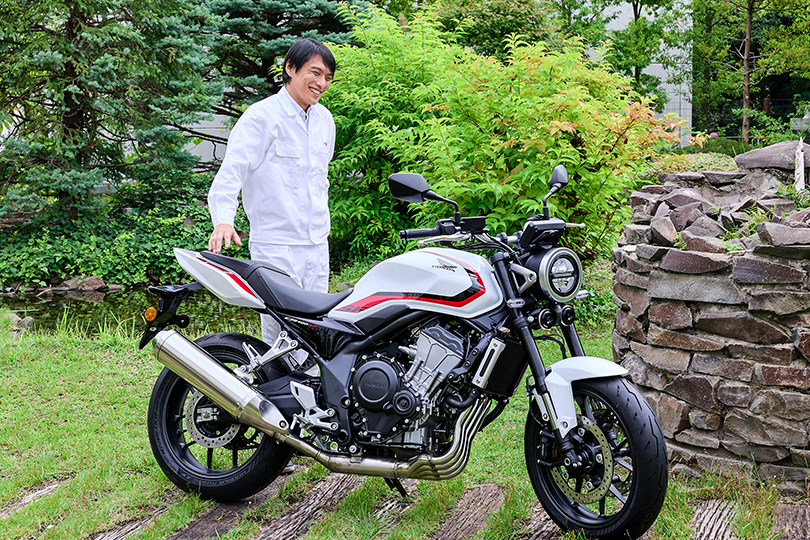







China, which provided the initial impetus for considering the CB400 SUPER FOUR, is seeing rapid growth in sport motorcycle culture itself, accompanied by rising demand for middleweight multicylinder models. At the same time, particularly among Generation Z, a different way of enjoying motorcycles is spreading rapidly. Riders are interested not only in riding, but also in how they present themselves and their motorcycles on social media.