
Products
Desert Sand Becomes Road to the Future: The Challenge of PathAhead, a Startup from Honda
POINTWhat you can learn from this article
- PathAhead, a startup that leverages desert sand to address road infrastructure challenges, was established after its founder, a Honda associate, participated in IGNITION, Honda’s new business creation program.
- When the founder encountered challenges in his research, he moved forward after gaining inspiration on site in Africa, guided by Honda’s Three Realities principle.
- Taking action even when uncertain leads to “paving the way toward a future that solves global infrastructure challenges.”
In Africa, some countries have a road paving rate of less than 20%*1, and even when roads are paved, the harsh reality is that they can deteriorate within just a few years. The quality of roads affects the movement of people and goods and is directly tied to the very potential for economic growth. At the same time, there is a global shortage of sand for construction, including materials used for road paving, making it particularly difficult in developing countries to build high-quality roads.
Taking on this challenge is PathAhead, a Honda-born startup. With its technology to transform desert sand into “Rising Sand,” an artificial aggregate that can serve as an alternative to construction sand, the company aims to address the increasingly serious global issue of construction sand shortages. Why did the Honda engineer who founded the project focus on sand? In this issue of Honda Stories, company founder Masayuki Iga talks about the background behind the project’s creation and the future that PathAhead envisions.
*1 PathAhead estimate based on “The World Factbook” published by the U.S. Central Intelligence Agency (CIA)
“A path for Africa using desert sand” — the idea born from Waigaya
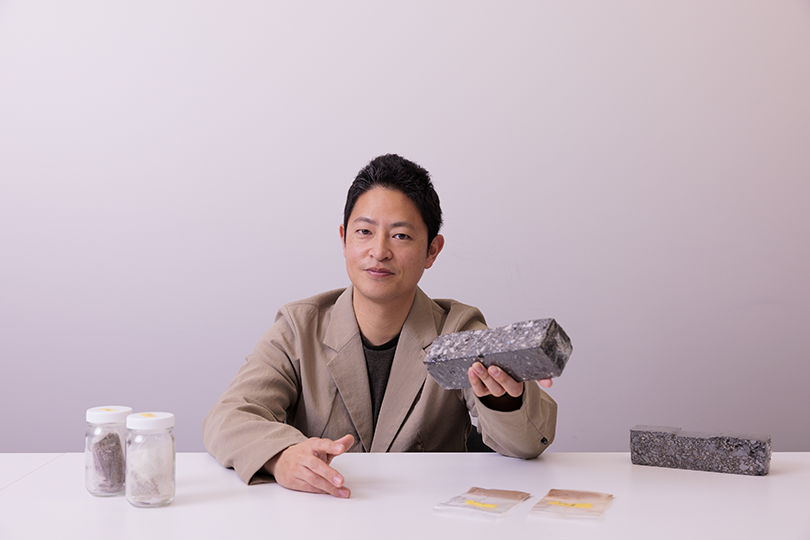 Masayuki Iga, PathAhead founder
“You can work on anything. It doesn’t have to be automobiles or mobility.”
Iga recalls being puzzled by these words from his manager, who gathered engineers assigned to the department in a meeting room shortly before the establishment of the Materials Research Center in 2023. Around 60 engineers, mainly younger and mid-career associates, were gathered. Forming teams of five, they began exploring new research themes through Waigaya*2 discussions.
*2 Waigaya: Honda’s communication culture where individuals go beyond their roles, exchange opinions openly, and create results
Discussions kept on returning to square one, hypotheses collapsed, and they started over from scratch. In the midst of this cycle, Iga suddenly suggested, “What if we solidified desert sand to build roads in Africa?”
Although the scattered ideas came together into one concept, the team had almost no knowledge of Africa’s market environment or existing technologies for solidifying sand. They went beyond literature research, reaching out to Honda’s Africa and Middle East divisions, local expatriates, JICA students, and JETRO staff through introductions, gathering insights step by step to understand the reality on the ground.
The issue of paved roads deteriorating within just a few years was the same even on the road in front of Honda’s factory in Africa. Trucks had to drive around potholes to enter and exit, and when it rained, the road turned muddy, making it impossible to transport parts. The more we listened, the more we realized that Africa’s road infrastructure challenges were far more severe than we had imagined.
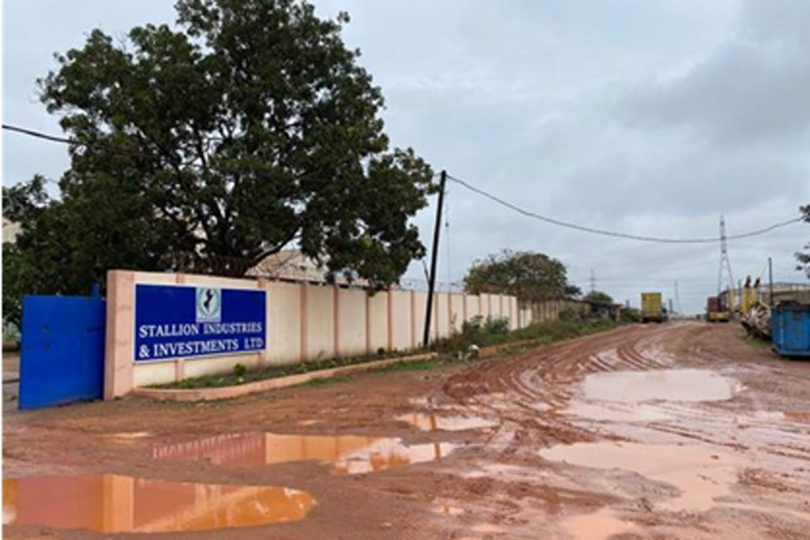 Entrance to Honda’s Ghana plant
PathAhead’s direction revealed through the Three Realities Principle
Through their research, the team identified multiple causes behind the deterioration of roads in Africa, including variations in the quality and particle size of aggregates*3 used in asphalt, contamination by impurities, and issues with the materials themselves.
*3 Granular materials such as sand, gravel, and crushed stone used as components in construction mixtures
Initially, we planned to solidify desert sand into optimally sized blocks and lay them directly. However, we struggled to find a breakthrough that would allow stable mass production of large structures from sand grains, and this challenge persisted for some time. Then, I had the opportunity to visit Kenya for the first time on a departmental business trip. Wanting to see the site with my own eyes, I arranged to visit a paving site. The moment I saw a stockpile of gravel used in asphalt, I thought, “This is it!” Compared to large structures like concrete blocks, gravel is smaller, making it easier to mass-produce and transport. This realization overturned our assumptions and led to a major shift in approach.
This shift in thinking stemmed from Honda’s Three Realities principle*4, which emphasizes the actual place, the actual thing, and the actual situation.
*4 The Three Realities principle: A core Honda principle that emphasizes making decisions based on firsthand understanding of the actual place, the actual thing, and the actual situation
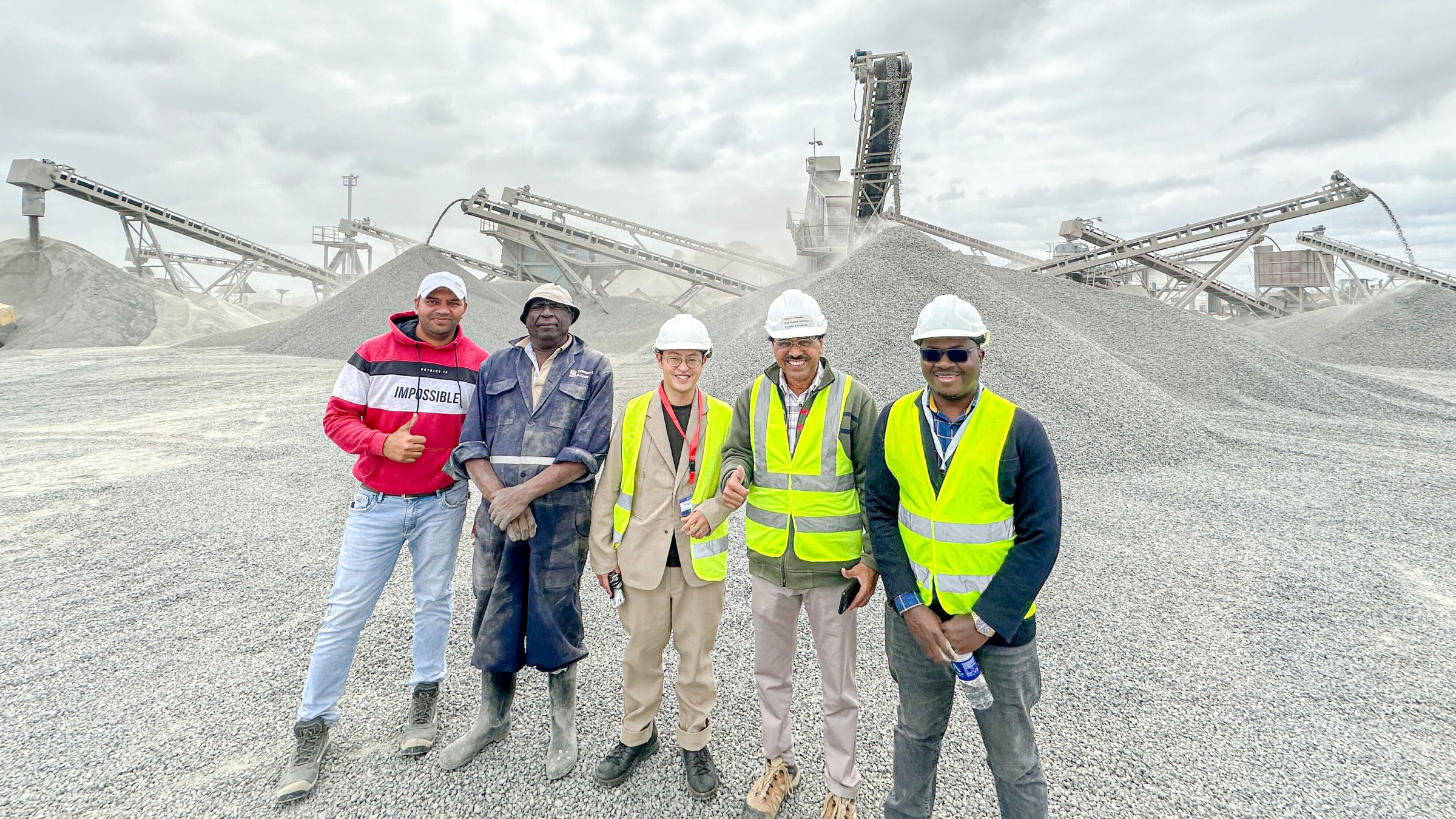
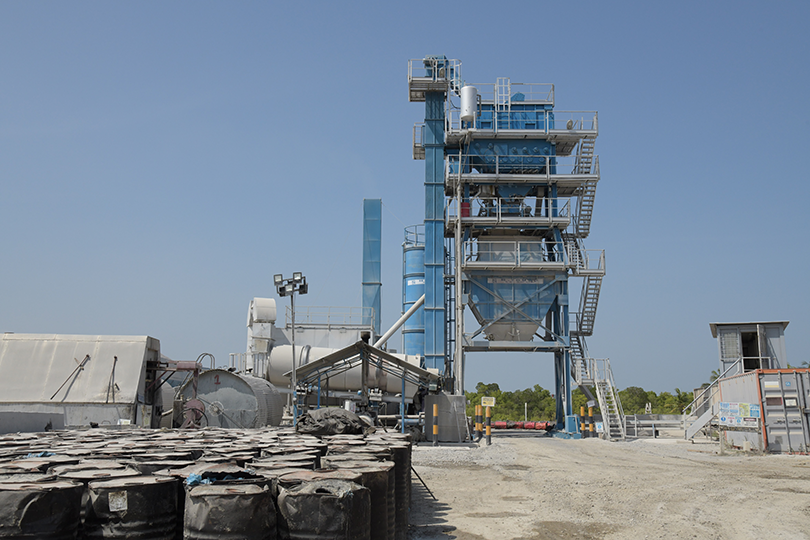 Site visited during the paving survey in Kenya
Although the technical value had become clearer, Iga joined the IGNITION Studio training program to explore how to turn the idea into a business. Encouraged by an internal mentor, he then decided to take on the challenge of IGNITION*5, Honda’s new business creation program.
*5 Honda’s new business creation program designed to discover original technologies, ideas, and designs and apply them to solving social issues and creating new value
At first, I had no intention of starting a business. However, I had heard that IGNITION provides strong feedback to help develop ideas into businesses. Feeling the need to gain business knowledge, I decided to join in the hope that it would be valuable for the future.
To commercialize the idea, it would not be enough to refine the technology as an engineer. Iga needed to take responsibility from manufacturing to sales and implementation on site. As he deepened this knowledge through IGNITION, Iga decided to establish the business.
The typical mindset of a manufacturer’s engineer is, “We made this product, so please use it.” But in the world of new business, it’s the exact opposite. You say, “With this, this kind of future becomes possible,” and move forward by bringing in people and funding. At first, I struggled to switch between these completely different approaches.
Rising Sand, inspired by the motif of the sunrise and embodying the idea of bringing new Japanese technology to the world, is characterized by its durability—approximately 2.5 times that of conventional natural materials used in road paving in Japan*6. This is expected to extend the lifespan of paved roads from 10 years to over 20 years and reduce lifecycle costs by approximately 60%*6.
*6 Based on PathAhead research
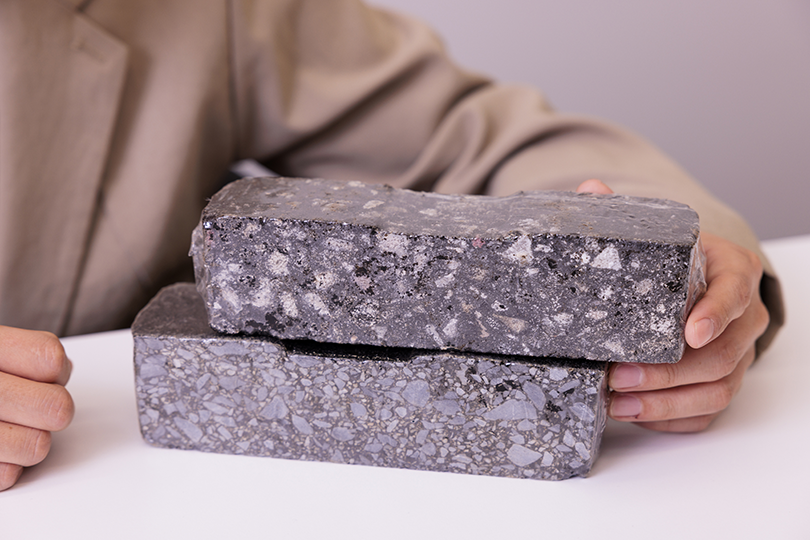 Concrete blocks using Rising Sand (top) offer greater durability than conventional natural materials
When testing confirmed higher durability than conventional natural materials, I became convinced that this technology could be implemented in society. At the same time, I felt strongly that this was something we had to do, and I quickly became fully committed.
Yoshifumi Nagata, now serving as technical advisor to PathAhead—a former director in the road infrastructure field at Tokyo’s Metropolitan Expressway—and Minoru Moriya, a business advisor who has launched numerous new businesses and startups, both agreed to join soon after meeting. This strengthened my conviction even further, and I also received a great deal of support from Honda colleagues.
Through IGNITION, I learned that you have to go out and talk to people. Support can come from places you would never expect, from people you’ve never met before.
Changing Africa’s infrastructure—and beyond
As the global shortage of construction sand becomes more serious, PathAhead decided to first establish its business foundation in Kenya, Africa.
When I first visited Nairobi, I felt something reminiscent of Japan’s period of rapid economic growth—something I had never personally experienced. There was a sense that tomorrow would be better than today, and that atmosphere seemed to fill the entire city.
Business begins with engaging with the local culture. Meetings that start with sudden calls from clients, and the strong sense of community among local Japanese residents—through these encounters, Rising Sand by PathAhead led to an offer for demonstration testing from the Kenya Urban Roads Authority, culminating in the signing of a Memorandum of Understanding (MoU).
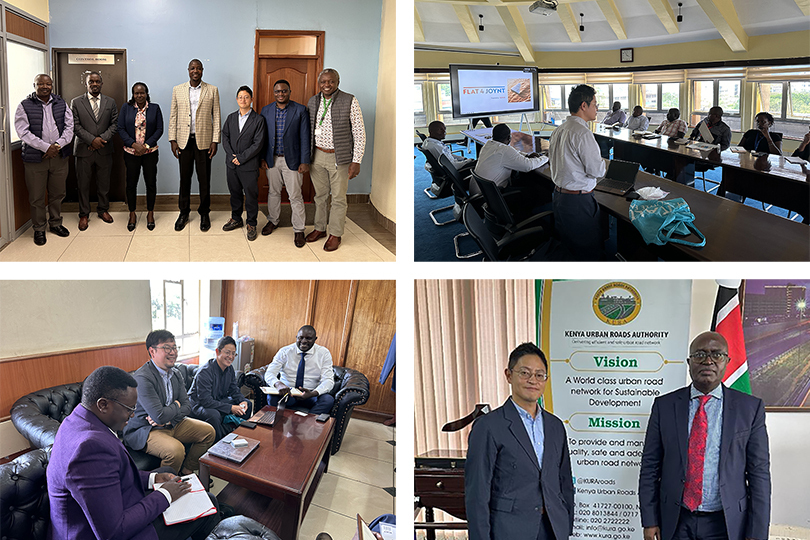 Visiting the site and working to build partnerships
Our current challenges are establishing mass-production technology and conducting demonstration testing on actual paved roads. If these proceed successfully, we plan to build a production plant locally.
Iga’s vision is to increase the road paving rate in Africa. While Kenya’s paving rate is approximately 9%*7, the initial target is to reach 50%, a level comparable to that of next-generation emerging economies.
*7 PathAhead estimate based on “The World Factbook” published by the U.S. Central Intelligence Agency (CIA)
Having well-developed roads encourages governments and companies to invest in and expand into Africa, further stimulating economic activity. By building roads, I hope to improve the lives of people in the region.
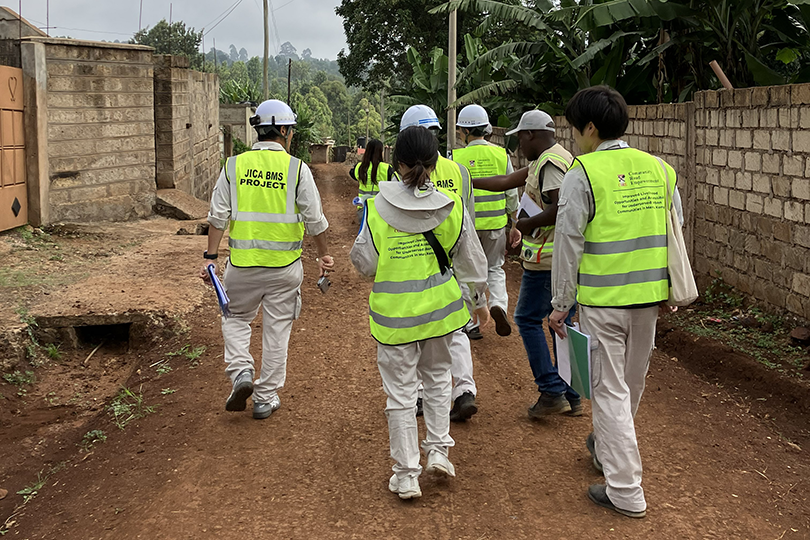 Working together with local staff to advance the business
Taking action first, rather than overthinking—that is something I have come to deeply appreciate through the process of building PathAhead into a business. I started this company without knowing if it would be successful. But by focusing on the actual place, the actual thing, and the actual situation, and deepening our understanding, I believe we can reach our goals.
If there is someone you want to meet, you should go meet them. If you are hesitating, I hope you’ll take that first step.
With its name embodying the spirit of “paving the way” and “breaking through challenges,” what kind of path will PathAhead create, and what possibilities will it bring to people and society?
 The Swahili origin of PathAhead’s philosophy, “Paving the Way to the Future”








One member would say, “Africa is where the future lies,” while another would talk about the global shortage of sand or technologies to solidify sand. Ideas kept coming one after another, but they never quite converged into a single direction.