Products
Honda Italia Industriale - A Sustainable Future
From the beginning, Honda has always believed that it should make a positive impact on both environment and society, both globally and locally. This philosophy began with founder Soichiro Honda and continues to live on today in the belief that ‘Honda strives to be a company society wants to exist’.
Today, the most obvious indication of this philosophy is Honda’s ambitious Triple Action to ZERO policy, which targets zero environmental impact for all its activities by 2050. This approach is underpinned by the three key initiatives: 100% carbon neutrality, 100% clean energy and 100% resource circulation.
This bold target means that sustainability needs to be at the core of not just its products; it also needs to underpin manufacturing, logistics, and the supply chain. Moreover, Honda realises that these bold goals cannot be achieved without the hard work, passion, and diligence of its associates - the people that work for, or closely with, the brand.
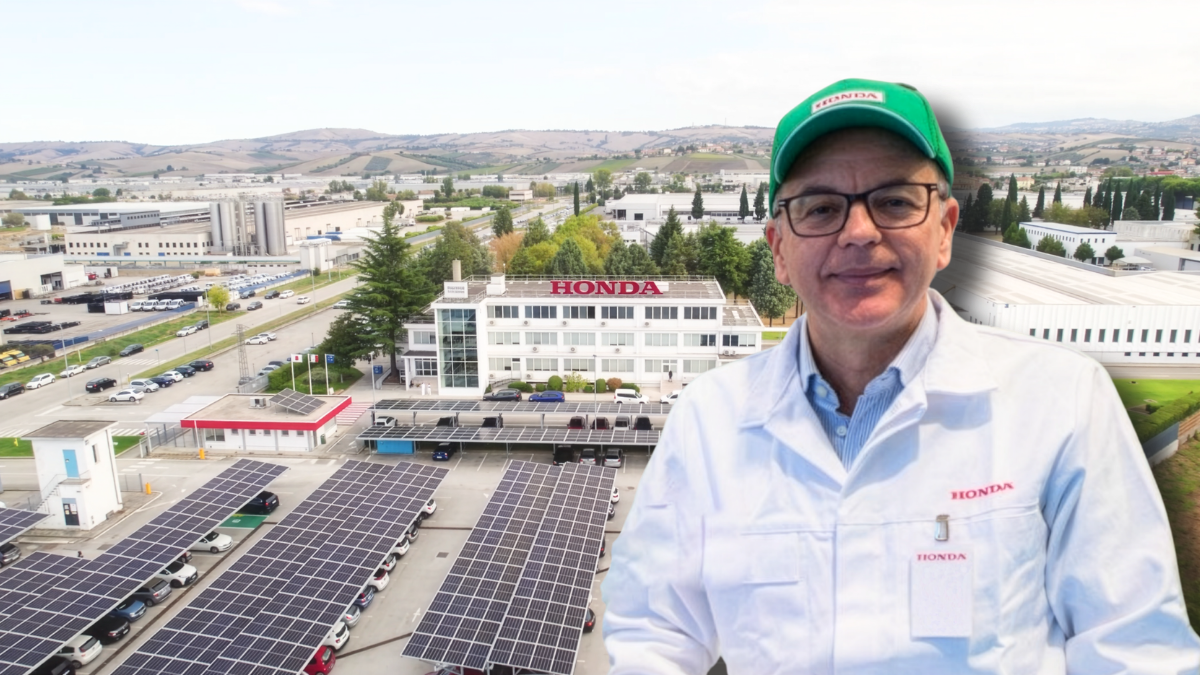
In this edition of Honda Stories, we take a closer look at how Honda will achieve its dream of sustainability through the lens of one of its European manufacturing plants, Honda Italia Industriale (HII). We also talk to HII Managing Director, Marcello Vinciguerra, who is leading the organisation’s drive towards a sustainable future.
Honda Italia Industriale
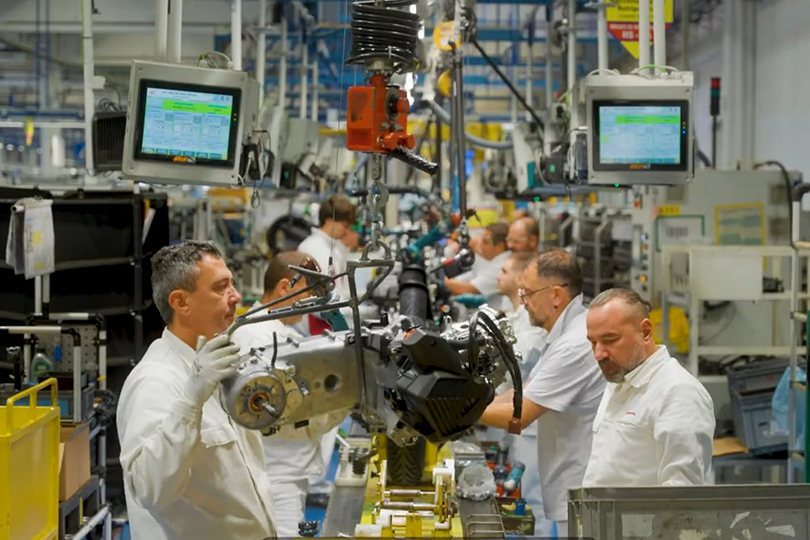
Founded in 1971 in the Italian town of Atessa, HII is a manufacturing hub for some of Honda’s most popular motorcycles and scooters. Based in a large 140,000 sq/m facility, it produces 150,000 units a year and employs over than 1,000 Associates. Like all Honda sites across Europe, it’s making big strides towards the Triple Action to ZERO target.
As a first step, it is committed to reducing CO₂ emissions by 46% by 2030 (compared to 2019), plus it has created a clear roadmap to reach carbon neutrality in Scope 1 (direct emissions from HII’s own activities) and Scope 2 (indirect emissions from purchased energy) output by 2034. As you’d expect, there has been a strong focus on sourcing renewable energy, including an ambitious commitment to solar power.
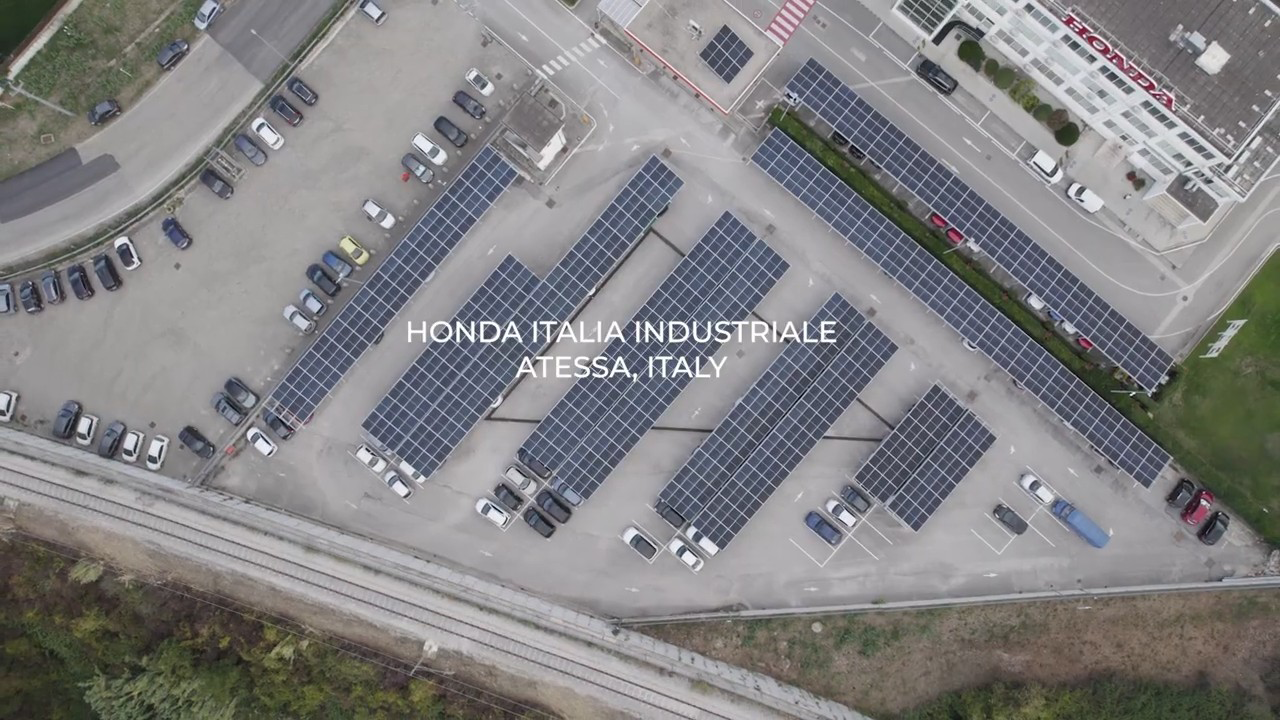 Solar plants on the facility rooftops, and in the parking area.
“At HII, we installed our first solar plant in October 2017 on the facility rooftops, followed by a second installation in September 2022 in the parking area,” explains Marcello, who has worked at Honda for nearly 30 years. “Today, the combined system covers more than 9,575 m². Last year, the solar plants supplied 14% of the company’s total energy consumption, while we can reach 21% during summer time.”
For electricity that cannot be provided by the solar panels, HII uses sources that are certified as 100% sustainable from renewable sources. Even so, the team here can see more opportunities to harness the energy generated by solar and are currently investigating ways to store excess production (such as that produced during the weekend when there is lower demand) for use at peak times.
However, while electricity use is already hitting carbon neutrality targets, around 60% of HII’s energy consumption still comes from natural gas. Yet already there are measures in place to reduce this figure, with the aim of eliminating the use of natural gas by 2034. For example, the HII team is already investigating opportunities to use biogas in production.
Yet as Marcello points out, even now they are reducing their reliance on natural gas through refining existing processes. “Since September 2024, we have developed low temperature paint material,” he says. “This was so we could reduce oven operating temperatures in the metal painting shop by approximately 50 degrees (from 120°C to 70°C)”.
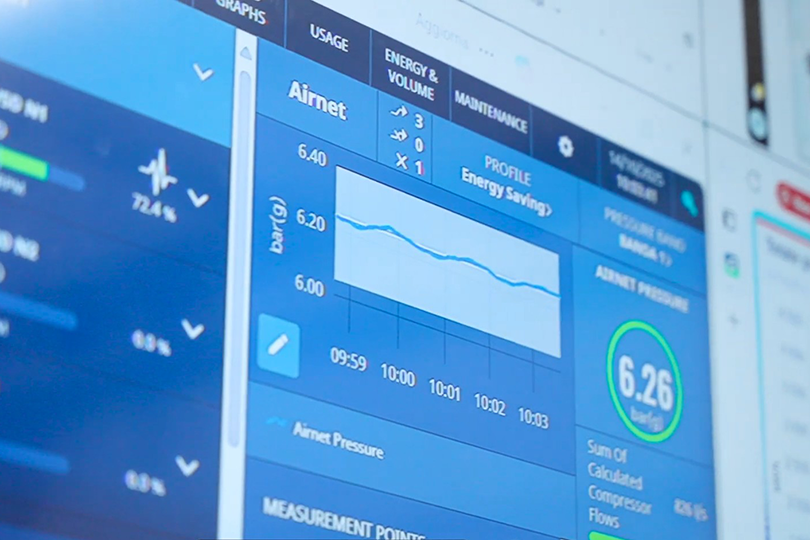 Factory reduction figures are clearly visualised.
Other initiatives have included the “re-lamping” project, which involved fitting energy saving LED lights across the plant, plus the adoption of more energy efficient air compressor technology and the installation of an inverter system to eliminate power peaks. HII has also pioneered a car sharing scheme for Associates, to start attacking CO₂ emissions from commuting.
“Sustainability is a natural approach for Honda,” remarks Marcello. “It matches our value of ‘Respect for Individuals’. For such a reason, we make a big commitment which drives resources and communications towards innovations and projects we planned in our (carbon neutrality) road map. When we find challenges, we aim to transform them into opportunities.”
Power to the people
Perhaps one of the most novel initiatives has been the introduction of the SH125i Vetro scooter. Translated from Italian, the bike’s name is ‘glass’, and it refers to its unique coloured translucent body panels that require a painting step less, thus reducing gas use and lowering carbon emissions. Moreover, the idea behind it came from within HII.
“The concept was born from the intuition of one of our senior associates,” continues Marcello. “He imagined the possibility of creating a semi‑transparent fairing, with the purpose of showing how perfect the product is under the covers. The result is a product that not only reduces environmental footprint but also elevates aesthetic quality.”
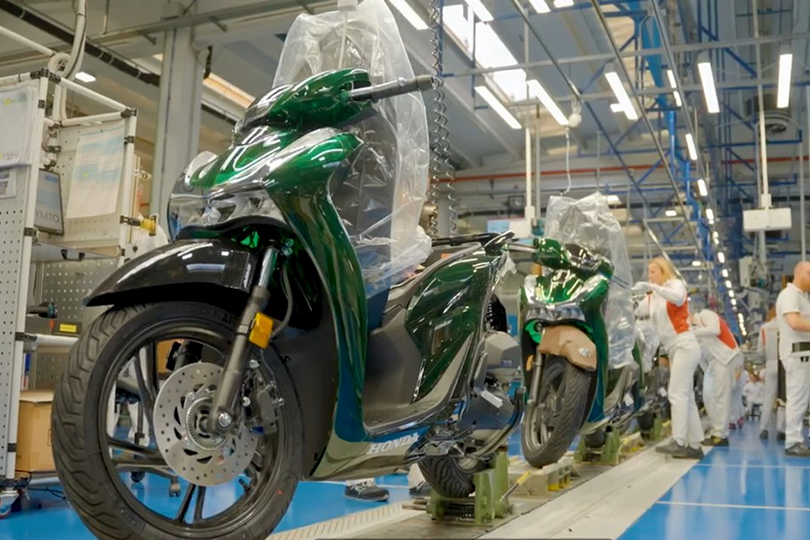 The SH125i Vetro, featuring translucent body panels.
The Vetro highlights how HII, and Honda more widely, believes people are at the heart of its sustainability mission. By creating a nurturing environment and empowering its associates to freely contribute to any discussions about its future, HII has created an atmosphere that encourages progress and rewards innovation.
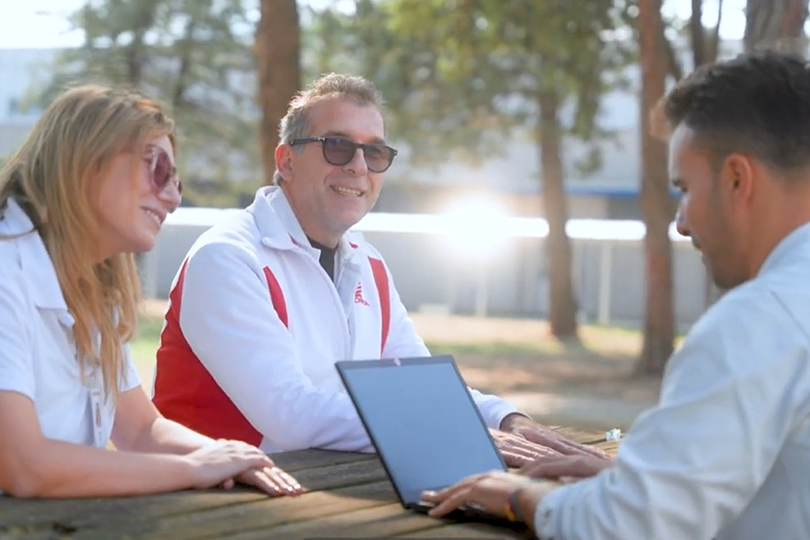
“One of our most significant achievements is the strength of our bottom‑up approach, embodied in the Honda Improvement System,” enthuses Marcello. “People feel comfortable raising their hands, sharing ideas, and openly pointing out issues that we can solve together. This culture of participation is what truly drives continuous improvement. In 2024 we collected 1,150 ideas from around 600 participants, a clear sign of growing engagement across the organisation.”
This programme has been fully embraced by all associates, with monthly awards dedicated to sustainability and safety proposals, further encouraging proactive contributions. Trust between employees is also fostered by HII’s ‘Safety Hakken’ processes, that allow them to confidently raise any potential risks in working practices. What’s more, HII is helping its suppliers meet sustainability goals by allowing them access to its own experts who can advise and guide smaller companies to improve their processes.
Summing up, Marcello says: “Putting people first - placing them at the centre and making them true protagonists in both their work and company life - is what sets us apart from other organisations. It’s a distinctive element of our culture and a defining strength of who we are. We really feel we are in our Honda Family.”