
Management
Manufacturing Automobiles Exclusively with Renewable Energy — Honda’s Wind Farm Initiative in Brazil
POINTWhat you can learn from this article
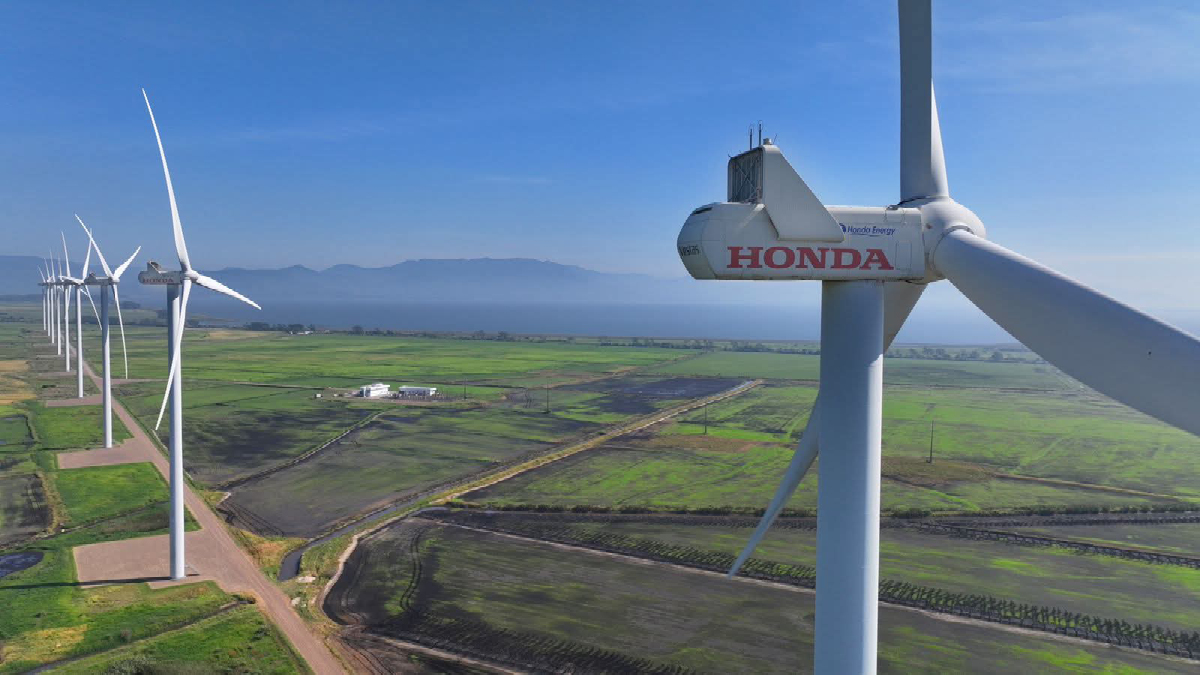
- Honda established a wind farm in Brazil which began operation in 2014, as part of Honda’s global goal of reducing CO₂.
- Honda is the only automobile manufacturer in Brazil that manufactures vehicles solely using electricity from renewable energy produced at its own facilities.
- Promoting harmony with nature and fostering deeper environmental awareness throughout Brazil.
To realize the “Zero Environmental Impact Society” by 2050, Honda envisions CO₂ emissions neutrality, 100% utilization of carbon-free energy, and 100% use of sustainable materials*. As part of this activity, Honda has built the wind farm in Brazil and achieved automobile manufacturing using only the electricity generated by this facility. In this article, we introduce Honda’s initiatives in Brazil.
* Sustainable materials: Materials designed with consideration for the environment and society throughout their entire life cycle, from raw material procurement to disposal.
The choice of wind farm
Honda aims to realize a circular society with zero environmental impact by 2050 across its entire life cycle, including corporate operations. As a concrete action toward this vision, the company introduced the “Triple Action to ZERO” which prioritizes 3 themes, defined in 2021: achieving carbon neutrality by realizing zero CO₂ emissions, utilizing 100% renewable energy, and using 100% sustainable materials. As a milestone toward the realization of this goal, Honda has set a target of reducing total CO₂ emissions from its corporate activities by 46% by the fiscal year ending March 2031, compared to the level in the fiscal year ended March 2020.
Based on this policy, Honda group companies around the world are promoting electrification of mobility and reducing CO₂ emissions from development or manufacturing processes, while working toward coexistence with nature, including the conservation of biodiversity, which is becoming an increasingly important global issue.
In November 2014, Honda Energy do Brasil (hereafter “Honda Energy”), a company engaged in wind power generation in Brazil, was inaugurated. Honda Energy is a subsidiary of Honda Automóveis do Brasil (hereafter “Honda Brazil”), which independently built and operates a wind farm with the aim of reducing CO₂ emissions from its operations.
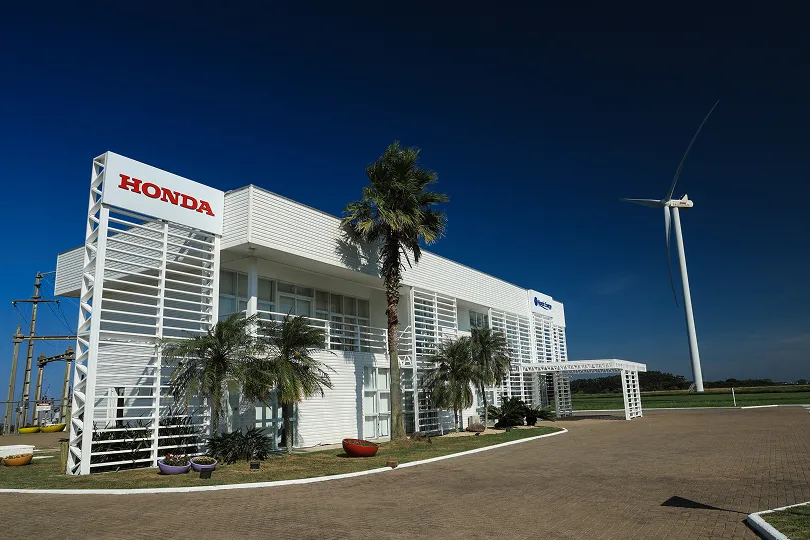 Honda Energy Administrative Headquarters
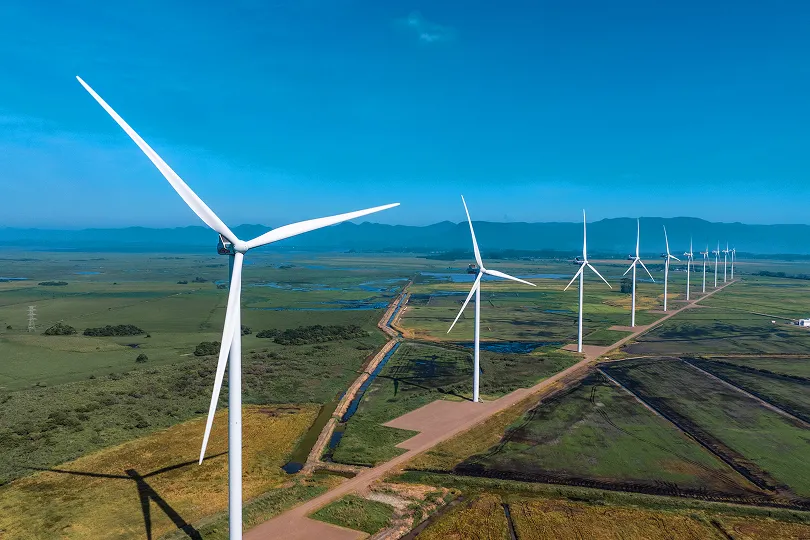
The wind farm has 10 wind turbines and an installed capacity of 31.7 MW, capable of generating more than 94 thousand MWh per year. This is equivalent to the electricity needed to power more than 35,000 homes. Since its inauguration in 2014, 851 thousand MWh have already been generated, avoiding the emission of 51 thousand tons of CO₂ and allowing the production of more than 1.1 million vehicles with wind-generated electricity. Currently, Honda Brazil covers all the electricity required for automobile manufacturing using electricity generated by Honda Energy.
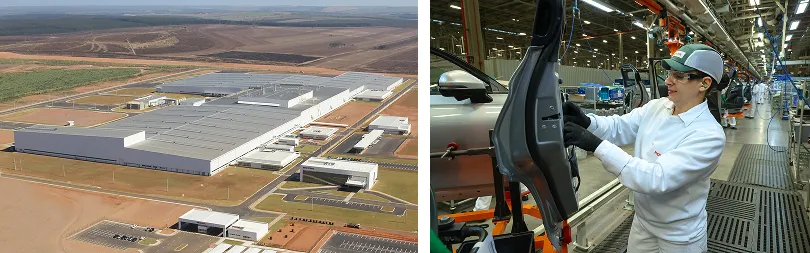 Honda Brazil manufacturing automobiles using wind-generated electricity
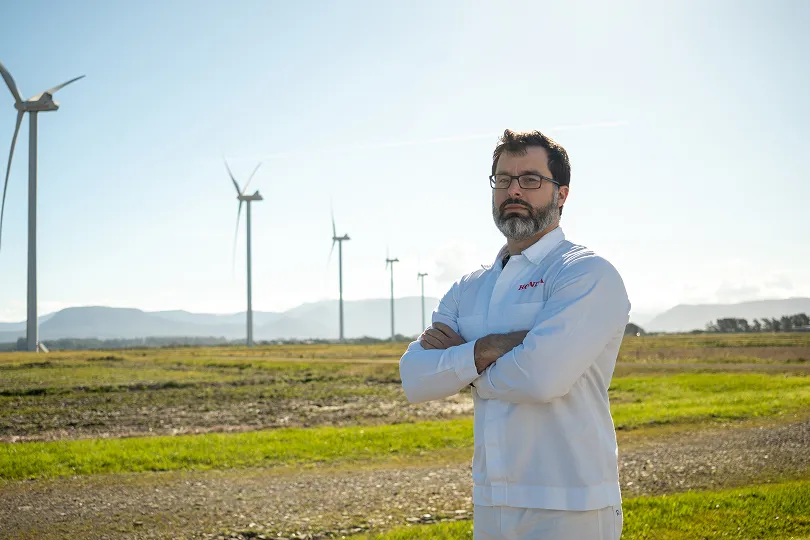 Ricardo Dalbosco, Wind Farm Operation Supervisor of Honda Energy
"I have been involved with the project since the construction phase, when I worked for the contractor hired in the implementation phase. In this initial phase, I had contact with the Honda team, which transmitted the company's work philosophy and left me very admired. In 2016, I was invited to work in the operation of the wind farm and I was able to witness, in practice, the Power of Dreams, a value so present in Honda's philosophy. Since then, I have continued to work in Xangri-lá and practice philosophy. Throughout this trajectory in Honda Energy, I was able to deepen my experience in the area of electricity, especially in renewable energies."
The wind farm operated in only 38 months
The journey of Honda Brazil—from deciding to introduce renewable energy to achieving self-sufficiency in electricity—was also a period filled with challenges and creativity, during which Honda demonstrated its environmental responsibility through concrete actions. Globally, since the 1960s, the company has sought to minimize its environmental impact. In 2011, Honda set a goal to reduce CO₂ emissions from its global products by 30 % by the end of 2020 compared with the level in 2000, and strengthened its efforts to reduce CO₂ emissions through all of its corporate activities, including production and supply chains. This prompted Honda Brazil to fundamentally review its energy matrix.
Honda's unique culture of open and frank discussions “Waigaya” sessions were held with the team responsible for the environmental field. These sessions are an opportunity to create new values and concepts by thoroughly exchanging opinions in a serious and honest manner. Many of Honda's innovations, such as industry firsts and world firsts, have been born from deepening substantive discussions through Waigaya. Then, various ideas arose to change the energy source used for the production of Honda Brazil vehicles.
Wind Farm as an option
At the time the project was conceived, some options for sustainable energy generation were evaluated, in addition to wind energy. However, it was observed that solar and hydroelectric energy options would require large areas and cause more environmental impacts than wind.
To not only reduce environmental impact but also to protect the agricultural activities that support the local economy and culture, wind farm—an energy source that is more feasible, sustainable, and less impactful on nature—was chosen.
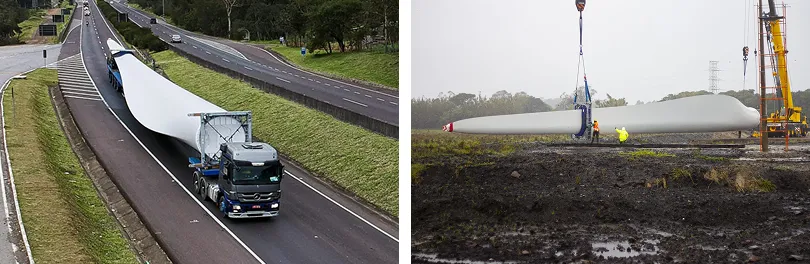 The turbines used in the wind farm weigh 15 tons and are 55 meters long, which made the transportation process quite challenging.
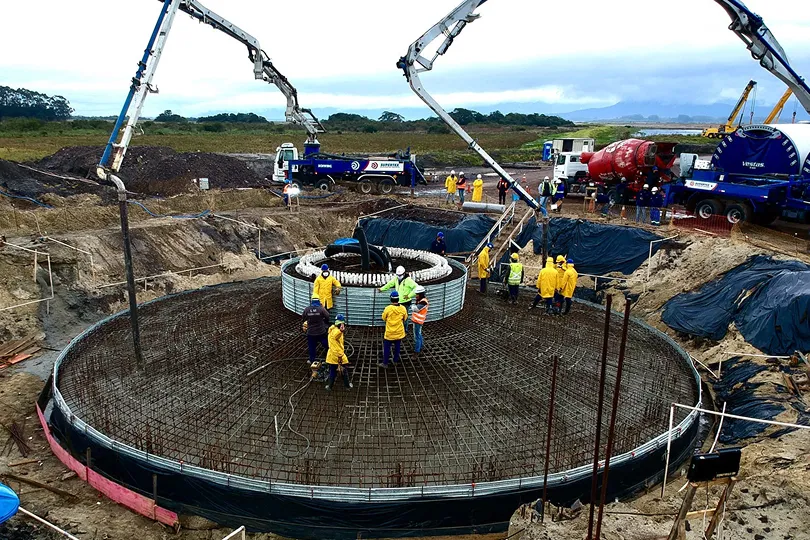 Installation of the wind turbine base with a structure that has piles up to 22 meters deep
In addition to defining the type of energy, another challenge was the choice of the location for the installation. Several logistical factors were taken into account, such as proximity to ports and highways with a structure for transporting the equipment, in addition to the quality of the winds and the short distance to the National Interconnected System.
Thus, the city chosen was Xangri-lá, located in the state of Rio Grande do Sul. The wind farm is located approximately 1.2 km from the power grid, a strategic distance between the generation point and the connection to the power grid that favors the project's operation.
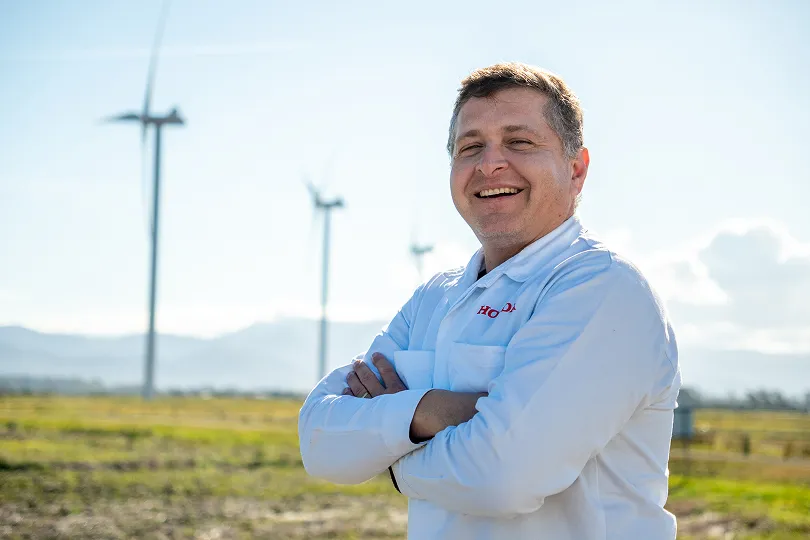 Edmilson Luís de Sant'Anna, Vice President of Honda Energy
"I have had a very close relationship since the beginning of the project, where I participated from the definition of the equipment necessary for the execution of the project to the choice of the location. I had the privilege of following the conception of the project and today I work in the management of the operation. I have a lot of affection for this project."
Team spirit as a motivating aspect for overcoming challenges
From the implementation of the project to the inauguration of the wind farm, the operation faced several challenges, such as the need to train associates involved in an area of activity other than the automotive industry and the regulatory complexity of the electricity sector. The solution came with the formation of an internal multidisciplinary team, which studied and developed the project from scratch.
The entire implementation of the project and preparation of the work team was based on Honda’s fundamental principles, such as the spirit of challenges and the Three Realities Principle (going to real place, seeing actual things, seeing actual situation), which were essential to motivate the team to move forward.
Today, professionals with knowledge in the electrical, security, administrative, and legal areas, among others, are involved in the operation of the wind farm. This fusion of diverse expertise serves as a powerful driving force supporting the stable operation and sustainable growth of Honda Energy.
Establishment of company and its inauguration
After receiving approval from the board, Honda Brazil established Honda Energy, a subsidiary dedicated to wind power generation, in 2011. After two years of studies, in 2013 the work on the wind farm began. It was only 38 months from the initial planning to the establishment of the company and the inauguration of the wind farm. Since its inauguration in November 2014, the wind farm has been responsible for supplying clean, renewable electricity to the automobile manufacturing plants and administrative office, located in the state of São Paulo, solidifying Honda's commitment to sustainability and carbon neutrality.
The electricity generated by the wind farm is equivalent to that needed to power more than 35,000 homes, contributing to an average reduction of 5,000 tons of CO₂ emissions per year. With the implementation of Honda Energy, Honda Brazil became the only automobile manufacturer in Brazil that manufactures vehicles using only renewable electricity generated by self-invested facilities.
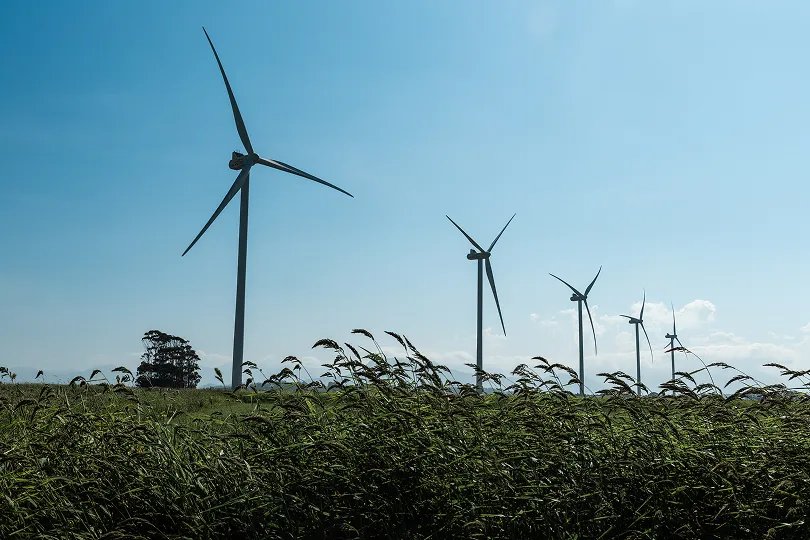 Rice plantation in the area of the wind farm
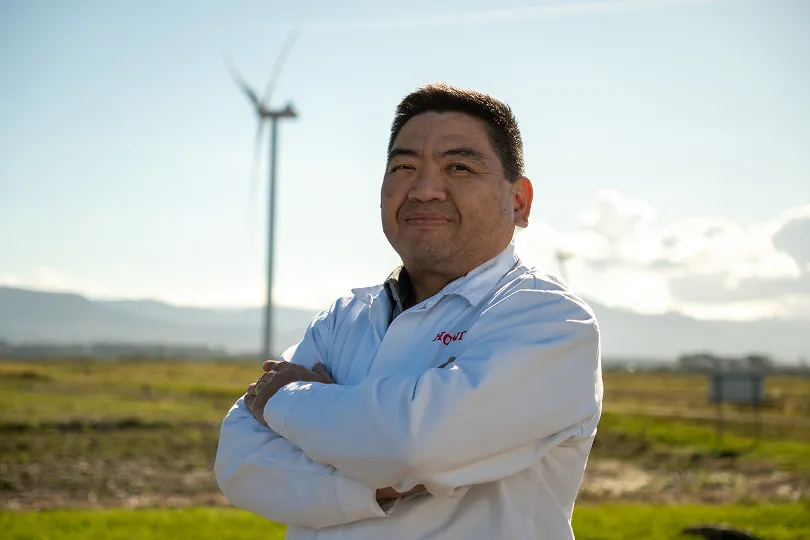 Maurício Imoto, President of Honda Energy
"I feel very happy to be part of this project and to have a very competent and dedicated team to keep up to date in the processes and make us the only automotive company in Brazil self-sufficient in clean electricity."
Honda Philosophy shared with the local community
Considerations for Safety and Maintenance
To keep operations running smoothly, periodic maintenance processes are performed on both the wind turbines and the surrounding electrical installations. More intense weather conditions, such as strong winds and rain, can pose specific challenges to operations, causing access difficulties and the need for unscheduled maintenance. Even so, these events are efficiently managed by technical team, ensuring the continuity and safety of operations.
More than excellence in the maintenance processes themselves, it is the associates involved that make the difference. The legacy left by Soichiro Honda, that "Without safety there is no production", governs Honda's decisions are made prioritizing people. This philosophy supports the safe and sustainable operation of the wind farm and automobile production.
Initiatives for Living in Harmony with Nature
Despite its low environmental impact, the wind farm follows strict legal requirements, with waste management programs and monitoring of fauna and flora. The operation has already registered rare animal species in the region, becoming a reference for other enterprises in Rio Grande do Sul.
The relationship with the local community is positive. The wind farm is seen as a symbol of technological advancement, a tourist spot and an example of socio-environmental responsibility, with programs that involve and educate the population. The wind farm has become a place where people and nature live in harmony, connected to the local community.
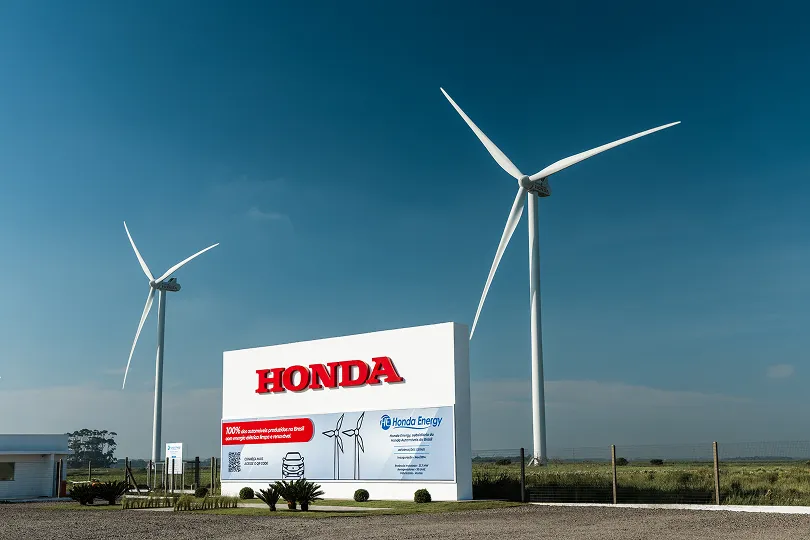 The entrance to Honda Energy has become a tourist attraction in the city of Xangri-lá, attracting residents and schools from the region.
Raising environmental awareness through wind farm tours
To strengthen its connection with the local community, Honda Energy promotes visits to the wind farm with municipal schools in the region with the aim of providing a moment of learning for children and collaborating to build a more environmentally conscious society. Honda Energy will continue its efforts toward realizing a zero environmental impact society by providing safe and reliable clean energy and strengthening its connection with the local community.
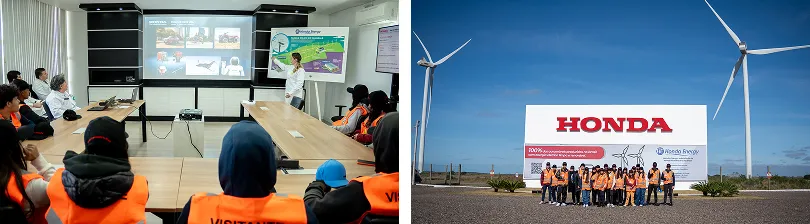 During a visit, students from a local municipal school learned how the wind farm works, the animals found there, and the importance of sustainable solutions for the current and future generations.