Management
Creating Precedent: Korea's First Safety Training Facility for Motorcycle Users Opens
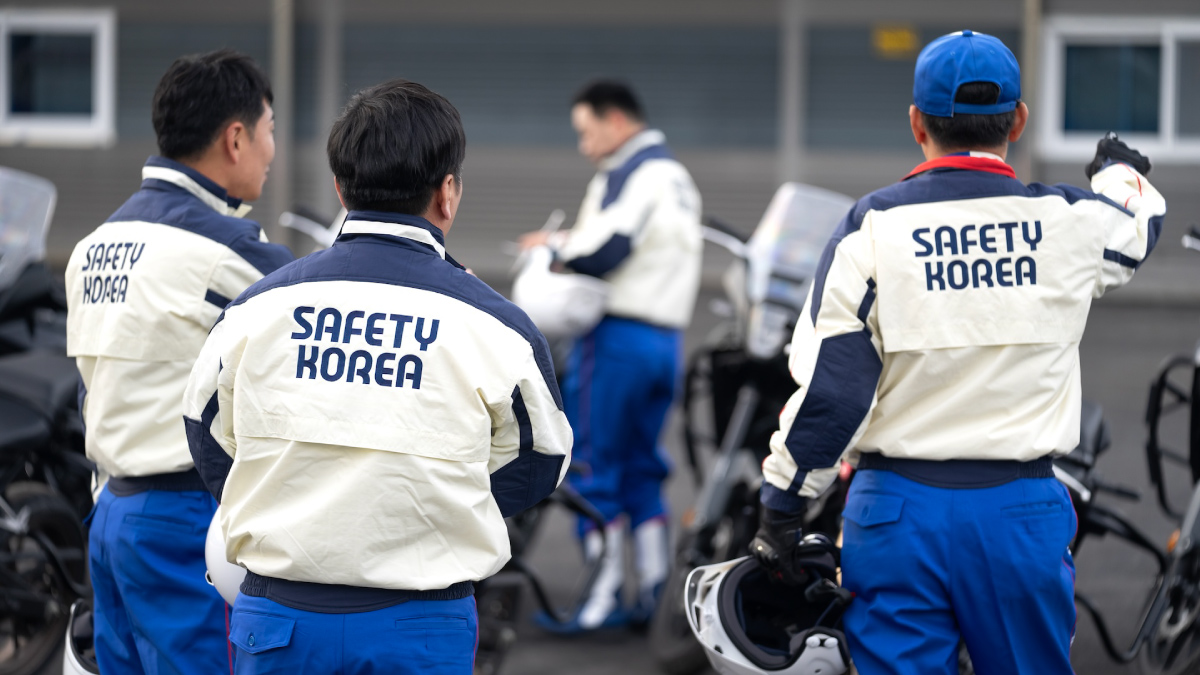
In March 2025, Honda Korea established the "Honda Education Center," a safety training facility for motorcycle users. Since its founding, Honda has focused on developing safety technologies and providing safety training based on the principles of "respect for human life" and "proactive safety." Honda aims to achieve zero traffic fatalities involving Honda motorcycles and automobiles worldwide by 2050. This issue of Honda Stories interviews the planning and promotion manager about how they achieved the opening of this facility in South Korea, where there was previously no government-approved safe riding education facility specifically for motorcycle users.
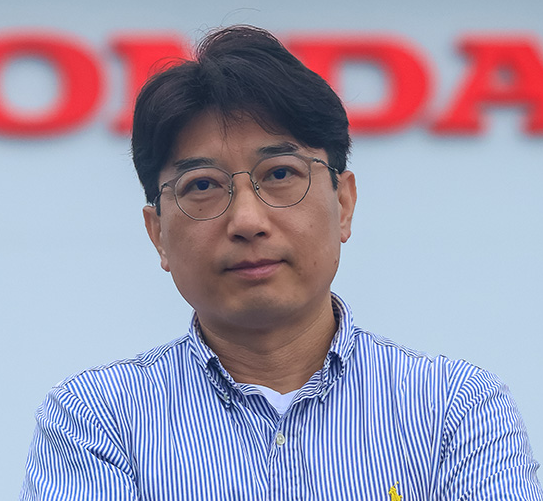
Planning and Promotion Manager
Honda Education Center
Honda Korea Co., Ltd.
View More
Close
JungWoo Lee
Read More
Why South Korea needs a motorcycle safety education facility
Honda established its Safe Driving Promotion Headquarters in 1970, responding to the serious social issue of traffic accidents that accompanied the progress of motorization during the 1960s and 1970s. This stemmed from the recognition that, in addition to delivering safe products to customers, providing the correct knowledge about the products and safe riding methods was also part of the Honda's social responsibility.
Honda has consistently pursued two pillars of activity: Face-to-face safety, where safety awareness is promoted directly to customers at motorcycle and automobile dealerships, and participatory hands-on education, where customers safely experience potential dangers at dedicated facilities. Furthermore, Honda has developed educational tools such as the Riding Simulator to enhance riders' hazard prediction skills. In safety devices, Honda has contributed to mitigating damage and injury in accidents by developing and installing in its products advanced technologies such as motorcycle airbags and ABS (Anti-lock Braking System).
Furthermore, Honda actively conducts training courses and instructor development at traffic education centers in 43 countries and regions worldwide. In developed nations, Honda aims to reduce accidents through safety technology, by increasing the adoption rate of safe driving support systems such as Honda SENSING. In emerging markets, Honda is strengthening activities promoting safe riding practices, tailored to regional characteristics.
One initiative toward achieving zero traffic fatalities while expanding the joy of free mobility is the Honda Education Center, a safe riding education facility established in South Korea.
In Japan, motorcycle licenses are categorized by engine displacement, requiring a specific license to ride medium or large bikes. In Korea, there are only two types of motorcycle licenses: a supplementary license for car holders or a dedicated motorcycle license. The supplementary license allows riding bikes up to 125cc (with no power restrictions), while the dedicated motorcycle license permits riding all bikes exceeding 125cc. A significant disparity often arises between the displacement of the motorcycle used during training at the riding school and the displacement of the motorcycle the rider can choose after obtaining the license. As a result, riders taking to the road without sufficient skills, leading to accidents, is not uncommon. Therefore, there was a need for facilities where users could acquire appropriate riding skills corresponding to the displacement of the motorcycle they would actually ride after obtaining their license.
Honda motorcycles hold a large market share in Korea, and as a manufacturer, we believe we have a mission to lead the development of Korea's motorcycle culture. We have constantly worked together with our dealers to provide safe riding education to our customers. While temporarily using a large parking lot as a venue for safety training would be ideal, laws prohibiting parking lot use for non-parking purposes presented a barrier.
Furthermore, South Korea lacked a legal definition for facilities conducting practical safe riding training, so meeting such a definition alone would not guarantee the ability to establish such a facility. After internal discussions on how to provide safety training to more people, we decided to aim for establishing a government-approved safe riding education facility.
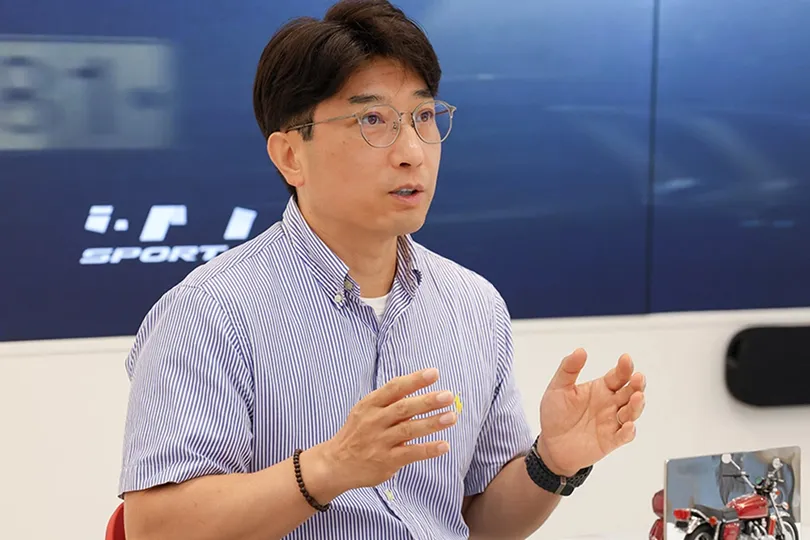
Creating a path where none existed: An unprecedented effort to gain government agency approval
Establishing a government-approved traffic education center involved three steps: site selection, construction, and business registration.
For site selection, we took around three months to choose a former logistics warehouse site. This location was ideal because it minimized noise concerns for nearby residents and offered excellent accessibility from the metropolitan area.
For construction, we remodeled the site, which was originally a single-story warehouse and a parking lot equivalent to 4,000 square meters, into an educational research facility capable of providing safe riding instruction, requiring official approval from the government.
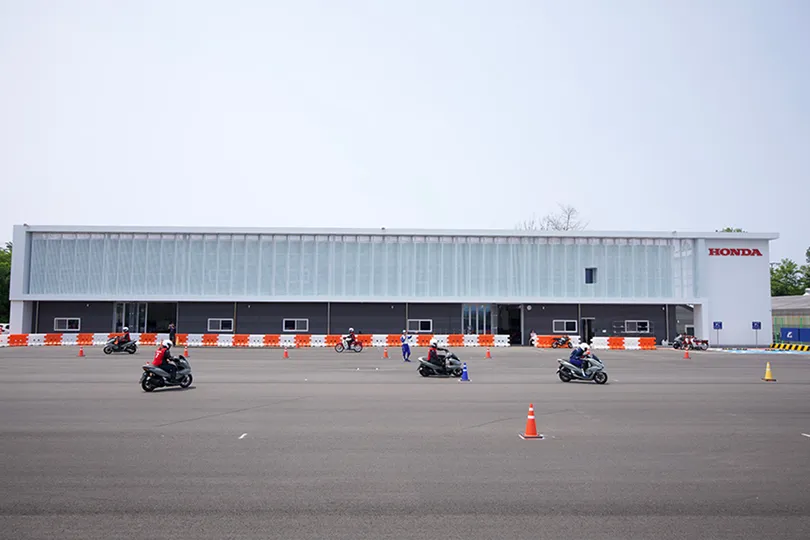 Spacious riding area designed with safety in mind
In Korea, the Private Institution Act regulates the establishment and operation of private educational institutions such as tutoring and prep schools, music academies, and language schools. Under this law, being certified as a private teaching school allows operation as an administratively recognized educational institution. However, there was no precedent for a safety education facility for motorcycle users, or Traffic Education Center, and no clear guidelines existed on how to proceed with the application.
First, to understand what was required for academy registration, we consulted legal experts. We learned that, under the Private Institute Act, for the Traffic Education Center to gain official government recognition as an educational institution, it must meet physical requirements like facility size, safety standards, and fire fighting equipment. We then held discussions with legal experts and the city hall's construction department to decide on structural reinforcements for the building, electrical and fire safety equipment compliant with fire laws, staffing requirements, and other details, preparing for the registration application.
The most challenging of the three steps was registering the business, which proceeded simultaneously with the construction work.
The final step, registration as an educational institution, was handled by the Regional Education Support Agency. However, since this was also the first time for the agency, we were informed that confirmation was needed from higher-level educational authorities regarding whether registration as an educational institution was even possible. Subsequently, the representative from the higher authority also gave us a disappointing response, stating there was no precedent and therefore no expectation of approval. Consequently, we had to escalate the matter to the Ministry of Education, the highest authority, to seek their understanding that Honda's envisioned Traffic Education Center qualified as an educational institution.
After two months of deliberation, we were finally able to register as an educational institution. Had we failed to obtain official recognition, we might have had to suspend the project itself, as it would have undermined the premise of being an administratively recognized safe riding education facility.
Pioneering promotion of safe riding to motorcycle users
The strength of the Honda Education Center, established after overcoming numerous challenges, lies in its curriculum incorporating Honda's 55 years of expertise in promoting safe riding. Furthermore, we have four instructors who completed Honda's instructor training program in Japan. This enables the provision of education tailored to South Korea's traffic conditions, based on Honda's proven track record in traffic safety education in Japan.
In preparing to open the Traffic Education Center, the project team visited Japan's safe riding education facilities, the Suzuka Circuit Traffic Education Center and Honda Rainbow Motor School, and gained extensive insights into facility design and operational systems, which were incorporated into the Traffic Education Center. For example, to ensure customer safety, measures were implemented to minimize physical harm. These include installing barriers to prepare for potential collisions and fitting training vehicles with safety bumpers in case of falls during lessons. The design also facilitates sustained concentration, such as providing rest areas near the course for breaks between training sessions.
Furthermore, the ease of our online reservations and payments has been well-received. Post-course surveys show a 99% intention to revisit and recommend to others, reflecting their high satisfaction.
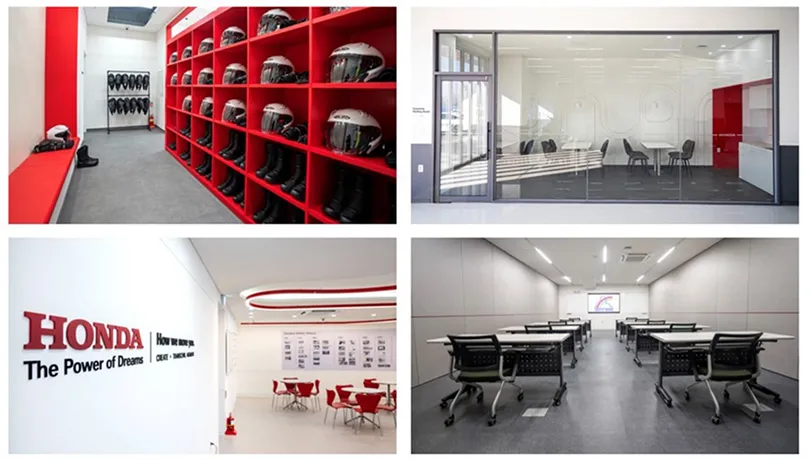 Traffic Education Center has comprehensive facilities including rest areas, lecture rooms, and protective gear to ensure comfortable use by participants
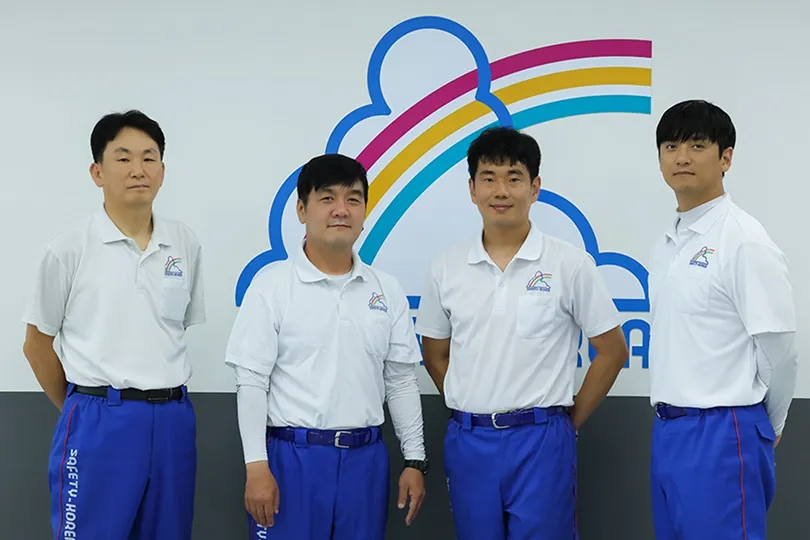 Instructors who have completed Honda's instructor training program
For our customers, attending safe riding education in a legally recognized, safe environment is fundamental. Seeing the happy expressions and reactions of the riders participating makes me happy too.
Continuing safe riding education activities is of vital importance. By having more people participate, we aim to contribute to achieving Honda's global goals of halving traffic fatalities involving Honda motorcycles and automobiles by 2030, and achieving zero traffic fatalities by 2050.
Honda will advance its safety initiatives one step at a time, aiming for a future without accidents.





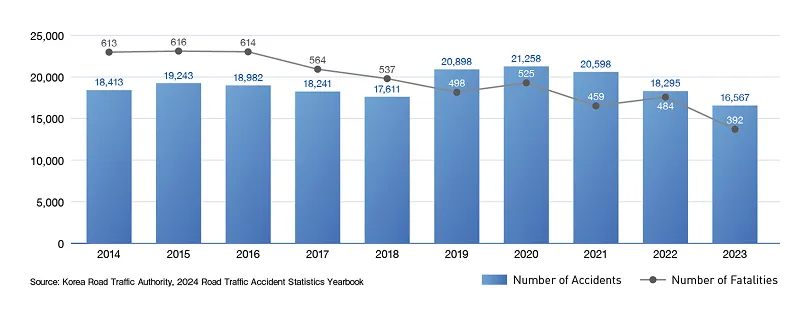
In Korea's motorcycle market, delivery bikes account for about 70% of the total number of bikes. Due to the high number of traffic violations by delivery riders, such as running red lights and speeding, motorcycles have gained a negative social image. While the number of motorcycle accident fatalities is decreasing due to various measures by the Korean government, including traffic accident prevention crackdowns, the overall number of accidents has not significantly decreased.