
Management
Toward a Safe and Secure Mobility Society: Honda Conducts Safe Riding Training for Delivery Riders in Dubai
POINTWhat you can learn from this article
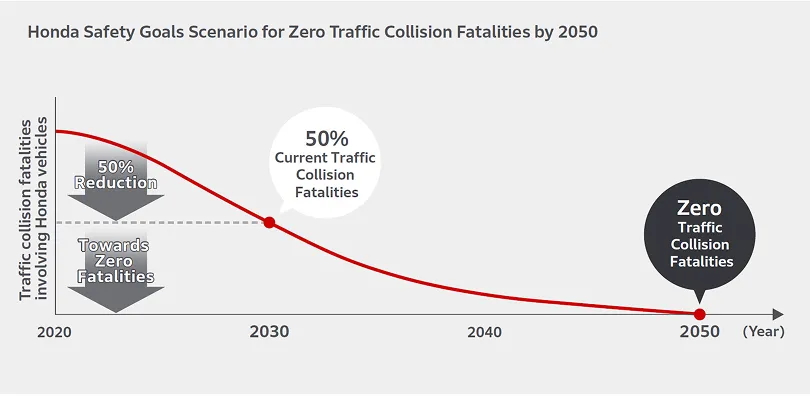
- Honda aims to achieve zero traffic fatalities involving Honda motorcycles and automobiles worldwide by 2050
- In response to the rapid increase in delivery service demand in Dubai, Honda conducted its first safe riding training program specifically for delivery riders in the Middle East
- Honda will expand these Dubai initiatives to neighboring Middle Eastern countries and strive to promote safe riding practices
Global traffic fatalities reach 1.19 million annually: Traffic safety initiatives urgently needed
The number of traffic collisions resulting in fatalities worldwide continues to rise each year. According to a World Health Organization (WHO) survey, approximately 1.19 million people* lose their lives in traffic accidents annually. This equates to about 3,200 people per day, or one person every 23 seconds. Furthermore, approximately 30% of these fatalities involve motorcycle users.
Honda is striving to realize zero traffic collision fatalities involving Honda motorcycles and automobiles worldwide by 2050. As part of its long-standing global traffic safety initiatives, Honda promotes activities by advancing and integrating three key elements: “Human Ability (awareness-building activities),” “Mobility Performance (technological development),” and “Traffic Ecosystem (collaboration, development of systems/services).”
* Source: WHO Global status report on road safety 2023 (Honda Report 2025)
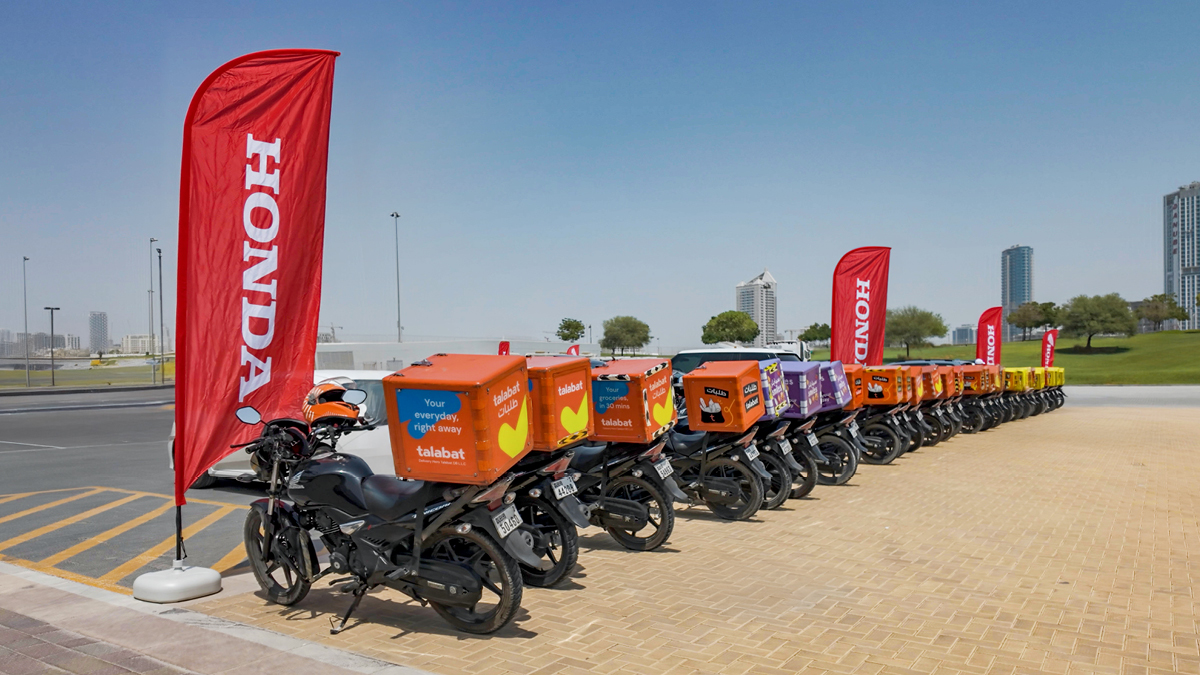
In the United Arab Emirates (UAE), the rapid increase in demand for delivery services has led to a rise in motorcycle accidents, particularly in urban areas such as Dubai and Abu Dhabi, creating a significant social issue. Many riders have varying skill levels, and some engage in speeding or dangerous riding. A major factor behind the rise in accidents is that most riders are foreign workers, making language and cultural barriers a challenge for safety awareness efforts. Additionally, extreme conditions unique to the Middle East, such as intense heat and sandstorms, often lead to driver fatigue, dehydration, and reduced alertness, which in turn become major triggers for accidents.
In response to this situation, Honda Africa and the Middle East Representative Office (HAMER), Honda’s regional headquarters overseeing Africa and the Middle East, is focusing on safe riding training for delivery riders and developing local instructors as part of its efforts to reduce traffic accidents.
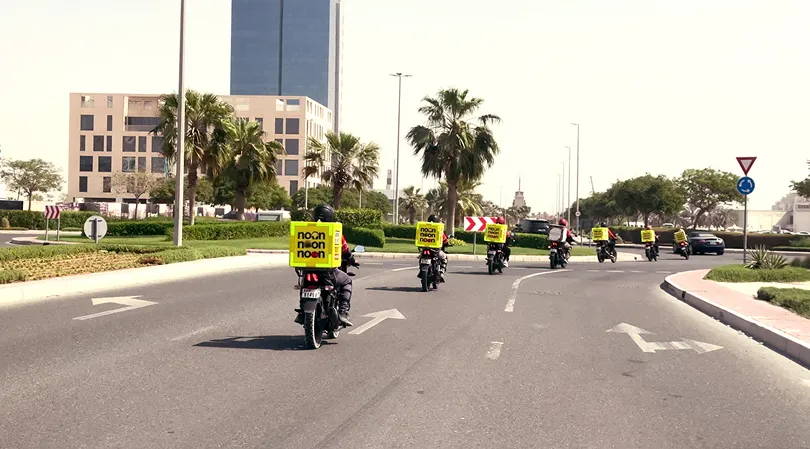 Delivery riders in Dubai
Honda conducts safe riding training for delivery riders in Dubai
One of HAMER’s initiatives to reduce traffic accidents is the launch of the first-ever safe riding training program for delivery riders, in collaboration with Honda’s UAE distributor, the Al-Futtaim Group, and the local Roads and Transport Authority (RTA).
In its inaugural year, 2025, the program was held over two days in September at the Dubai Autodrome, a motor racing circuit in Dubai. Thirty participants gathered for safe riding training targeting riders from major delivery services such as Talabat (a leading food delivery service), Noon (an e-commerce site operator), and Smiles (a food delivery service operator). HAMER also invited instructors from the Honda Traffic Safety Education Center, Rainbow Hamanako, to conduct training based on Honda’s safety philosophy and to support the development of local instructors.
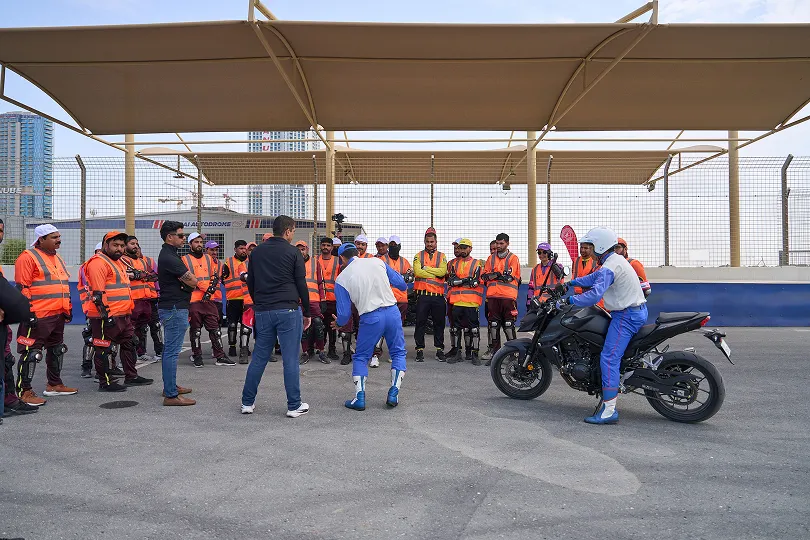 Delivery riders receive training
The training consisted of classroom and practical sessions. In the classroom session, trainees learned safety knowledge such as the difference in braking during rain and sandstorms. In the practical session, they learned riding techniques using real motorcycles. In Dubai, air humidity can also affect riding conditions. For example, failing to notice oil or grease on the road and applying the front brake while turning can lead to slipping and falling. The training therefore explained these risks and the techniques to avoid them in an easy-to-understand manner, urging caution throughout.
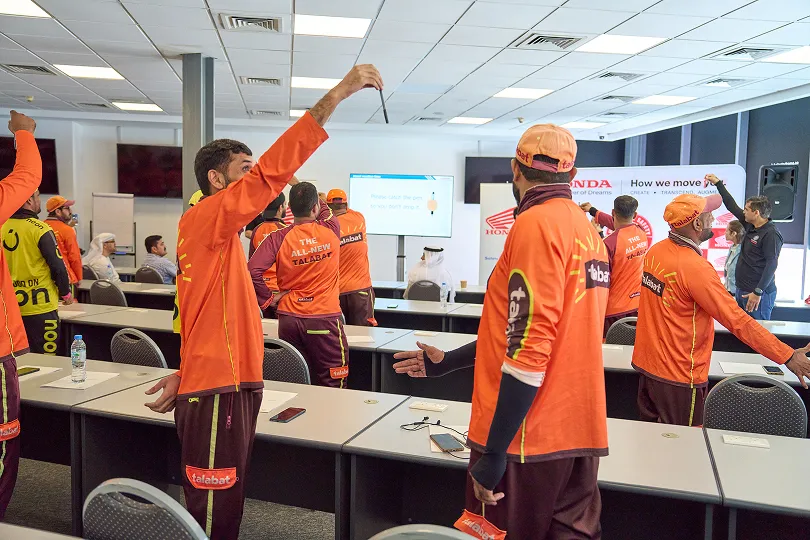 Classroom sessions
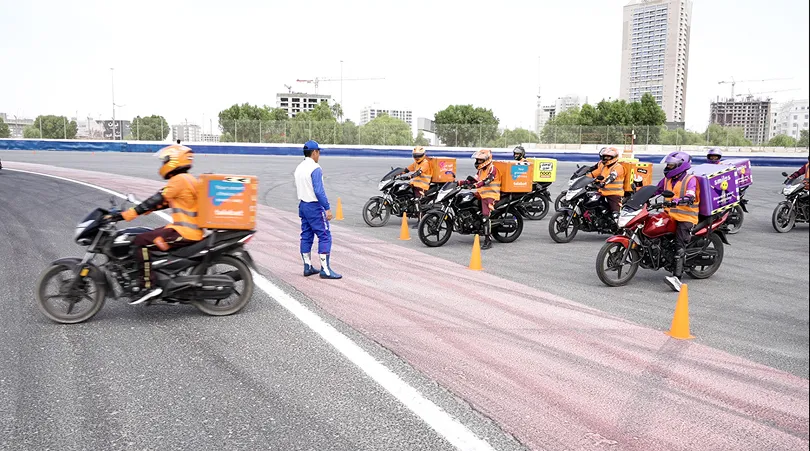 Practical sessions
Short videos downloadable via QR code were shared with the delivery riders. These videos make it possible to review important topics at any time, allowing them to relearn safe riding and defensive riding techniques, advanced riding skills for different types of cargo, tips for maintaining alertness, traffic laws, and more.
Participating delivery riders expressed gratitude for the opportunity, also hoping the program would be expanded to other riders. Rainbow Hamanako’s instructors involved in the program also shared their hopes, noting that “HAMER trainers are being trained through the Rainbow trainer development program, creating a sustainable framework that ensures the program is not limited to a single session but continues to expand to other countries.”
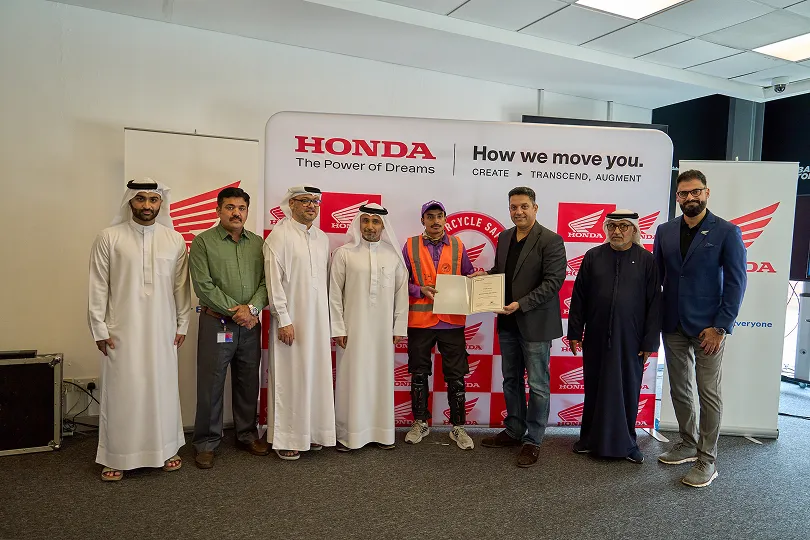 Certificate awarding ceremony
Honda plans to leverage the success in the UAE to expand similar training programs to neighboring countries. Driven by a strong sense of mission to realize a safe and secure mobility society where all road users can coexist, Honda associates continue their daily activities here in the Africa and Middle East region.