
Management
Transforming Global Traffic Safety: Honda’s Earnest Commitment to the Path Toward an Accident-free Society
POINTWhat you can learn from this article
- Aiming to halve traffic fatalities involving motorcycles and automobiles by 2030, Honda advances road safety initiatives from the three perspectives of people, mobility, and transportation ecosystem.
- Honda has become the first automaker / motorcycle manufacturer to collaborate with the UN Road Safety Fund (UNRSF), participating in global policy support
- Development and societal implementation of “Safe and Sound Network Technology” are also progressing toward 2050.
Honda has pursued road safety for over 60 years, aiming to realize a society free from accidents. In February 2025, it became the first automaker to establish a partnership with the UN Road Safety Fund (UNRSF). To make transportation safer in emerging nations, Honda is embarking on new challenges. Hideaki Takaishi, General Manager of Honda’s Safety Planning Department, discusses the background and objectives of Honda’s activities, its approach to safety, and future prospects.

General Manager, Safety Planning Department, Corporate Planning Supervisory Unit,
Secretary-General, Safe Driving Promotion Headquarters,
Executive Chief Engineer
View More
Close
Hideaki Takaishi
Read More
The key is “Everyone,” not “All,” to realize a society free from accidents
In April 2021, Honda announced its goal of “zero fatalities in traffic accidents*1 involving Honda motorcycles and automobiles worldwide by 2050.” As a milestone, it aims to halve*2 the number of fatalities in traffic accidents involving its motorcycles and automobiles worldwide by 2030.
*1 Accidents occurring while riding / driving a Honda motorcycle or automobile, involving pedestrians, bicycles, or other parties (excluding traffic participants who intentionally commit malicious rule violations or are intentionally in a state of diminished responsibility due to alcohol, drugs, or other substances).
*2 Aim is to halve the number of traffic accident fatalities per 10,000 Honda motorcycles and automobiles involved in accidents worldwide by 2030 compared to 2020.
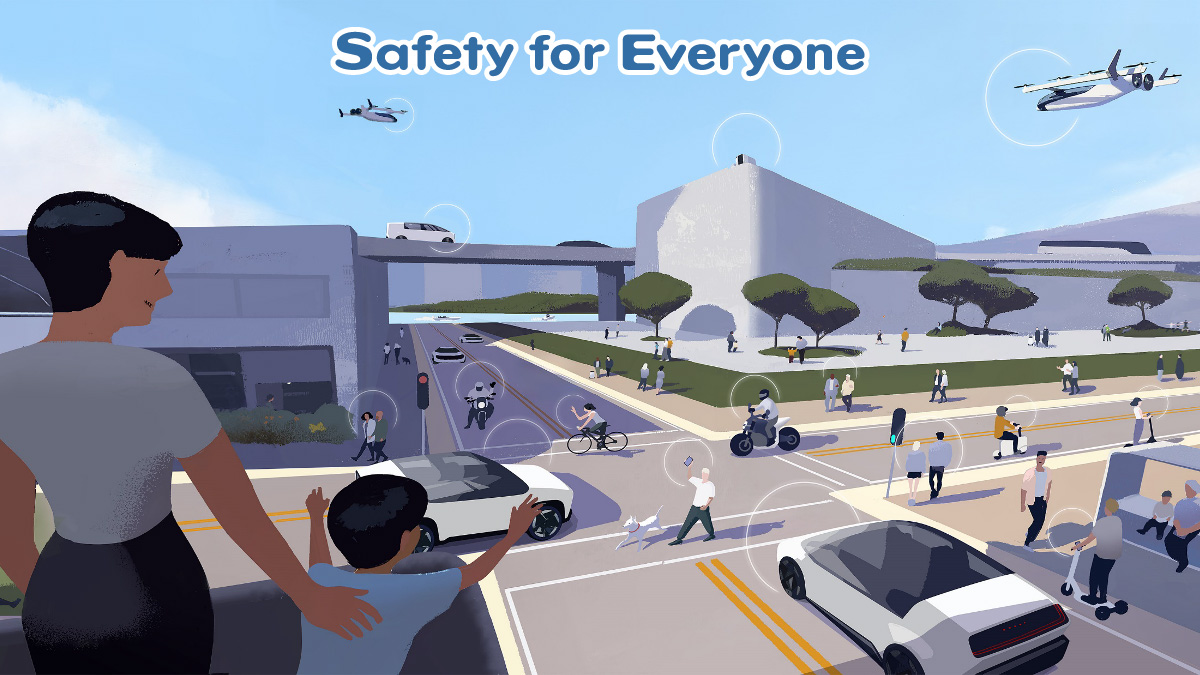
Takaishi states that this goal stems from Honda’s strong commitment to safety, symbolized by its global safety slogan, “Safety for Everyone.”
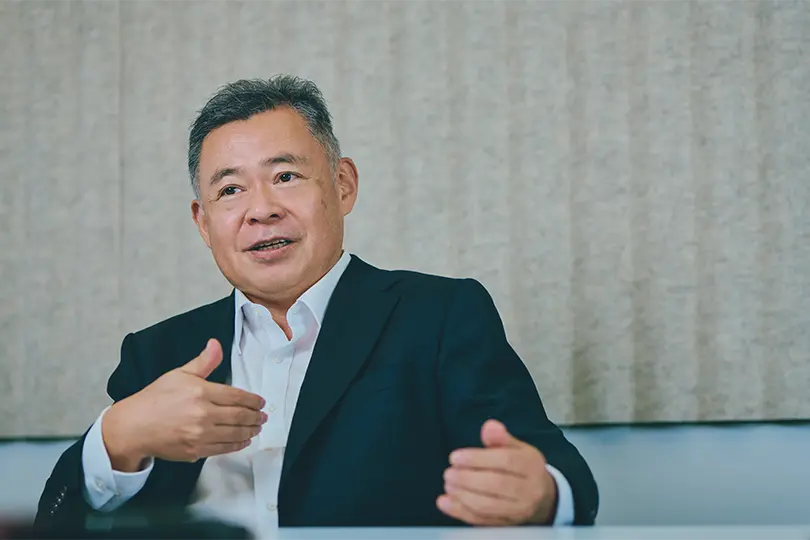 Hideaki Takaishi, General Manager, Safety Planning Department / Secretary-General, Safe Driving Promotion Headquarters
That is why Honda’s 2050 goal and the 2030 milestone target for “traffic accidents involving Honda motorcycles and automobiles worldwide” are not limited to occupants of new vehicles Honda will produce, but includes occupants of vehicles already delivered to customers, occupants of other vehicles involved in accidents, and even pedestrians.
I recognize this is a highly ambitious goal. However, even if it proves difficult to achieve, this target demonstrates our resolve and our earnestness in our traffic safety initiatives. It is a commitment to never compromise on protecting lives.
An industry first: Achieving the highest rank in the FIA Road Safety Index, a key road safety evaluation metric
Honda’s approach to safety involves evolving and combining Honda’s “Three Elements of Safety”: Human capability (education), mobility performance (technology development), and traffic ecosystem (collaboration, system/service development) to address accidents caused by various factors.
While an accident-free society could be achieved by restricting human mobility, Honda aims to also include the joy of freedom of mobility. The key lies in spreading Honda’s Three Elements of Safety while striving for the highest possible level of harmony among the elements.

Honda has long pursued comprehensive traffic safety initiatives based on its Three Elements of Safety. As a result, our efforts in Japan were recognized, and in February 2025, we became the first automaker to achieve the highest rating of 3 Stars in the FIA Road Safety Index established by the FIA (Fédération Internationale de l'Automobile). We are delighted that Honda’s initiatives have received such high international acclaim.
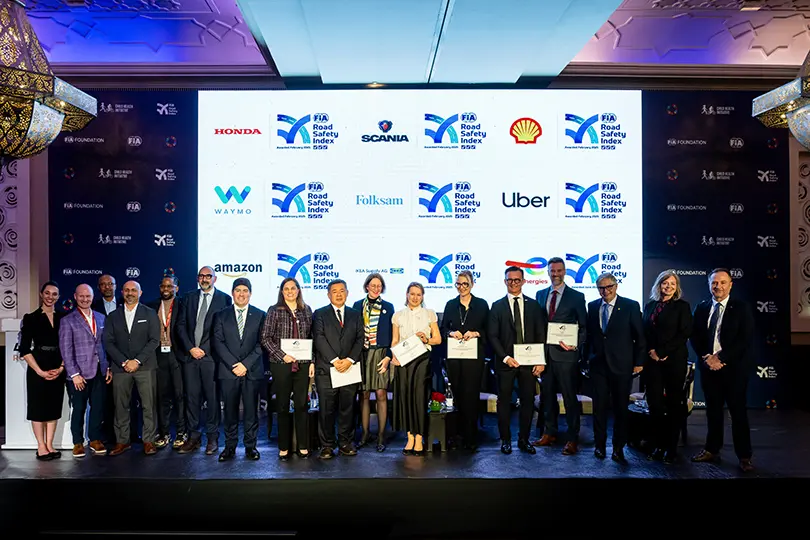 Ten companies from various industries, including Honda, awarded the 3 Stars certification at a ceremony in Morocco
Forming a partnership with the UN, to tackle traffic challenges in emerging nations in earnest
According to World Health Organization (WHO) data, while traffic accidents are decreasing in Japan and Western countries, on a global scale approximately 1.19 million people lose their lives in traffic accidents annually. Furthermore, about 90% of these occur in emerging economies (low- and middle-income countries), where accidents involving motorcycles and pedestrians are particularly serious problems.
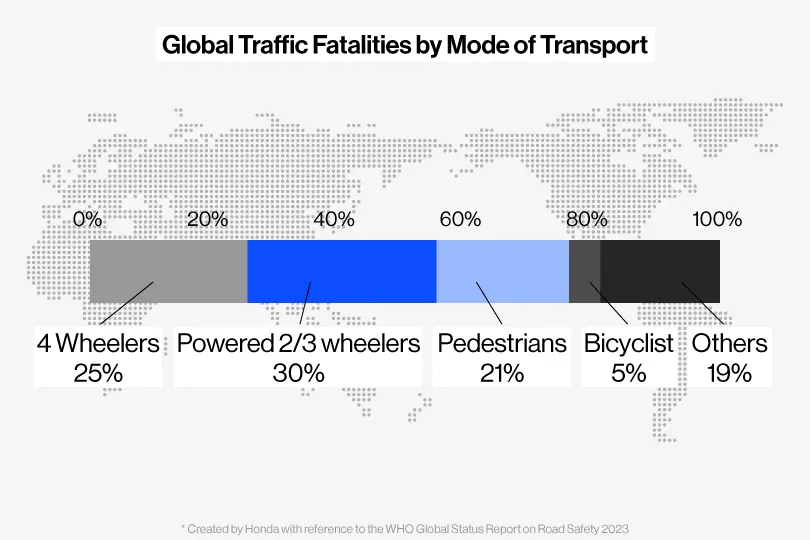 Global Traffic Fatalities by Mode of Transport of the 1.19 million global traffic fatalities, accidents involving motorcycles and pedestrians are especially severe
Compared to Japan, the traffic environment in emerging economies is underdeveloped in terms of systems, infrastructure, and traffic education.
High-risk driving behaviors, such as changing lanes without signaling, reckless lane splitting, not wearing helmets, and drunk driving, are commonplace. Thus, simply applying advanced country measures is not realistic for Honda’s efforts to achieve its 2030 milestone. Flexible and effective measures tailored to the social and cultural contexts of emerging economies are essential.
In developed countries, it is crucial to evolve and expand technologies like the Honda SENSING safety support system. In emerging markets, however, the core challenge lies in enhancing public safety awareness. This requires not only strengthening awareness campaigns but also policy support for institutional reforms, such as improving licensing systems and traffic laws.
Honda has long conducted safety awareness campaigns, but institutional reform involves national government policies, limiting what a single company can achieve. However, we refuse to give up. That is why we pursued a partnership with the United Nations.
In February 2025, Honda became the first automobile manufacturer, and motorcycle manufacturer, to enter into a partnership with the UN Road Safety Fund (UNRSF).
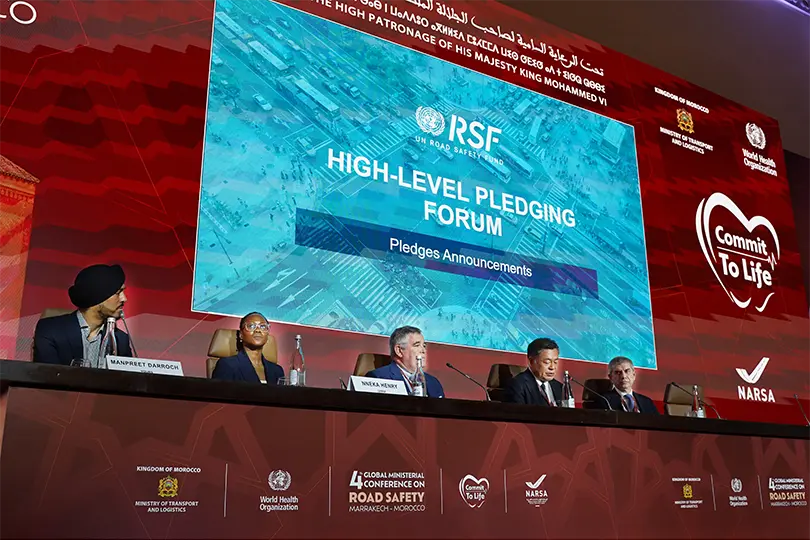 UNRSF partnership signing at World Conference in Marrakech, Morocco Announcement of the partnership at the 4th Global Ministerial Conference on Road Safety in Marrakech, Morocco, February 2025
Through this partnership with UNRSF, Honda will contribute approximately 450 million yen (3 million USD) over five years. By combining Honda’s expertise and insights, cultivated over years of developing safety technologies and promoting safe driving practices, with UNRSF’s extensive global network, the partnership will support traffic accident analysis and road safety policy development in many countries.
Takaishi is enthusiastic, saying that for emerging countries lacking detailed traffic accident data like Japan, identifying problems has been difficult, so improving the accuracy of accident analysis should significantly contribute to improving traffic conditions.
Policy support is what we particularly emphasize in collaboration with UNRSF. By identifying accident causes through analysis, we can develop policy recommendations for infrastructure improvements (repairing road potholes, installing nighttime lighting), institutional reforms (enhancing licensing systems, strengthening enforcement against drunk driving and speeding), and promoting awareness campaigns.
These kinds of results are difficult to achieve through the activities of a single company alone, and I feel this is the true value of collaborating with an international organization. Our work with UNRSF has only just begun, but through our discussions, I sense the potential for real results from these recommendations.
The importance of “being considerate” in avoiding accidents, and pursuing the essence of “the joy of freedom of mobility”
While the collaboration with UNRSF is part of Honda’s efforts toward 2030, it has already begun developing and implementing “Safe and Sound Network Technologies” in preparation to meet its 2050 goal.
Safe and Sound Network Technology refers to technology that prompts drivers and pedestrians to take evasive action before accidents occur. Diverse data collected from traffic monitoring cameras installed on roads, onboard cameras, smartphones, and other sources is aggregated in the cloud to recreate the traffic environment in a virtual space. Based on the status and characteristics of each road user, it predicts and simulates the occurrence of dangerous actions, deriving optimal evasion support information. This information is communicated in real time through interfaces like voice AI.
In pursuing safety, I believe what ultimately matters most is the consideration road users show for each other.
Most traffic accidents involve collisions with others. If everyone could respect others and coordinate through communication like eye contact, accidents should not occur. This concept is also incorporated into our Safe and Sound Network Technology.
Relationships built on consideration actually lead to a world where we can more fully and genuinely savor the joy of freedom of mobility that lies beyond safety. At Honda, we will continue to challenge ourselves not just to dream of the future, but to make it a reality.






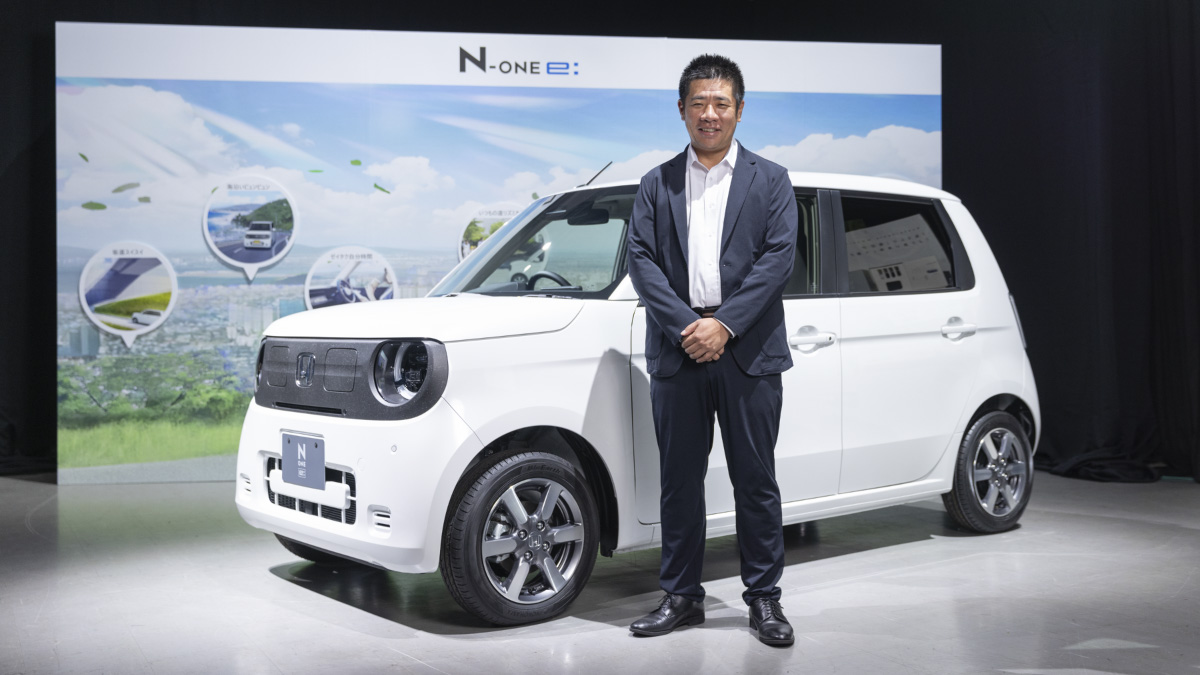
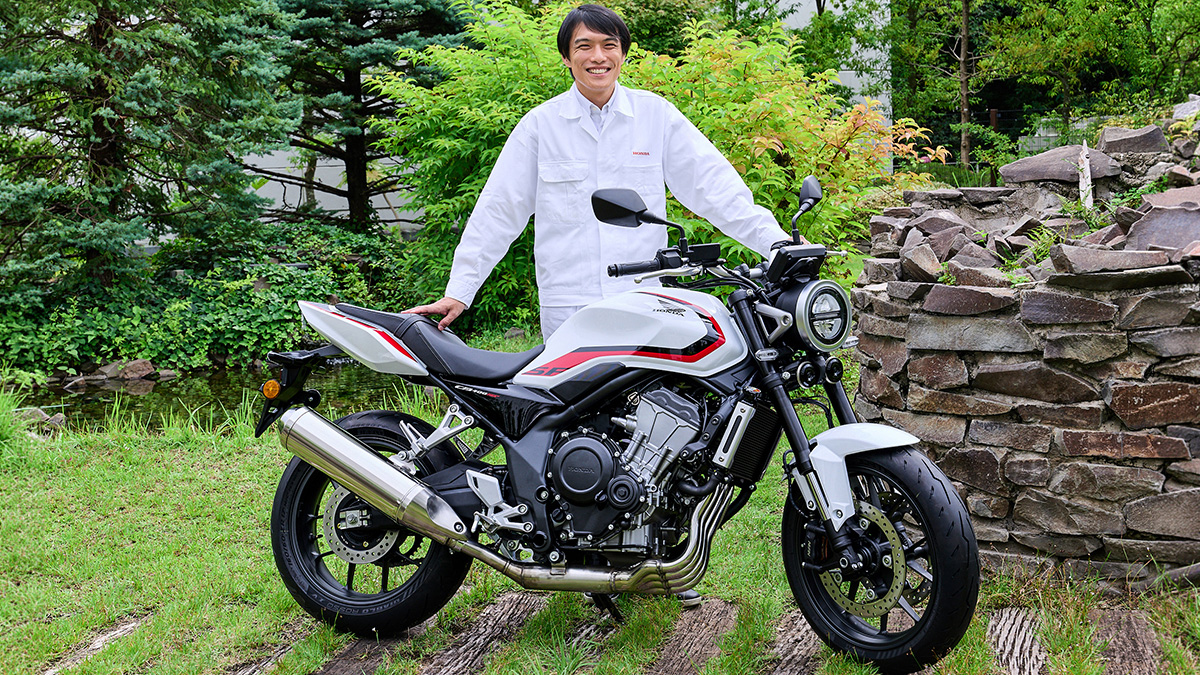

The slogan “Safety for Everyone” embodies our strong desire to create a society free from accidents, where not only drivers and riders, but all road users can safely and securely enjoy the freedom of mobility. The key here is the use of “Everyone” rather than “All.” It reflects our intention to ensure the safety of society as a collective, while respecting the free will and sensibilities of each individual.