
Motorsports・Sports
Why Honda Takes Endurance Racing Seriously: A New Chapter with the CIVIC e:HEV and the Keys to the Future
Have you heard of JOY TAI, the endurance race organized by Mobility Resort Motegi? First held in 2001, this JAF(Japan Automobile Federation)-sanctioned race is open to anyone holding a JAF National A racing license or higher. Over the years, it has evolved to accommodate changing automotive trends, including the introduction of a class open to hybrid vehicles in 2009.
Honda has been using its participation in JOY TAI to develop knowledge and expertise that can be applied to production cars. This issue of Honda Stories speaks with the team’s project leader about the lessons learned on the racetrack and how they are shaping future vehicle development.
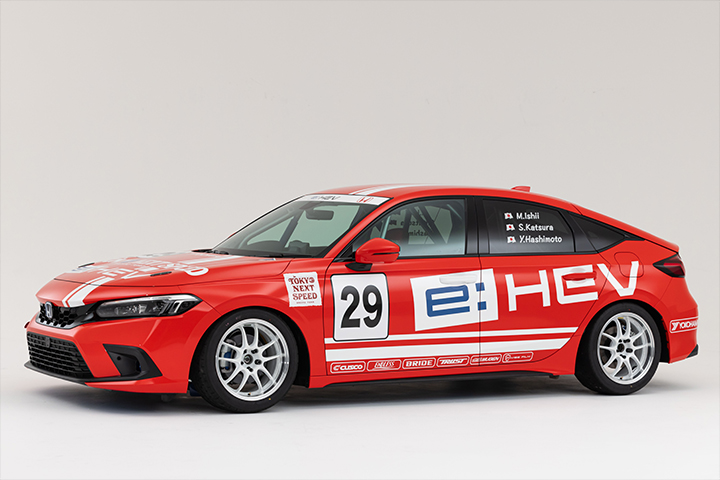 JOY TAI CIVIC e:HEV
The connection between Honda DNA and the JOY TAI CIVIC e:HEV
The CIVIC, which celebrated its 50th anniversary in 2022, is one of Honda’s most iconic models.
While Honda motorsports may bring the TYPE R to mind for many people, the CIVIC entered in JOY TAI and displayed at Tokyo Auto Salon 2024 was a Sport e:HEV model.
The TYPE R is designed with circuit racing in mind, whereas e:HEV is a powertrain developed for production vehicles with the aim of achieving world-class efficiency.
Honda founder Soichiro Honda once said, “Cars won’t get better unless they race.” This belief—that experience gained through motorsports should feed back into production vehicle development—has been part of Honda’s corporate culture since its founding.
The JOY TAI CIVIC e:HEV project embodies that philosophy. By competing in endurance racing, Honda aims to further refine the Sport e:HEV technology used in its production vehicles. It is an initiative that reflects Honda’s distinctive approach to automobile development.
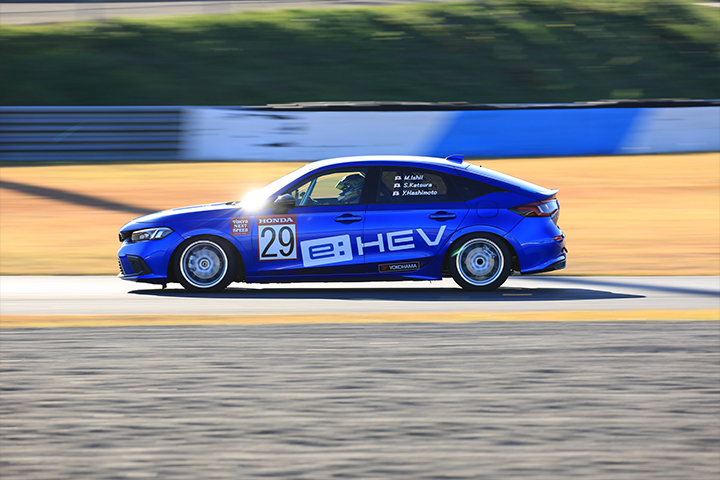 CIVIC e:HEV competing in the Mini JOY TAI race in November 2023
Why Honda takes endurance racing seriously: The challenge and its results
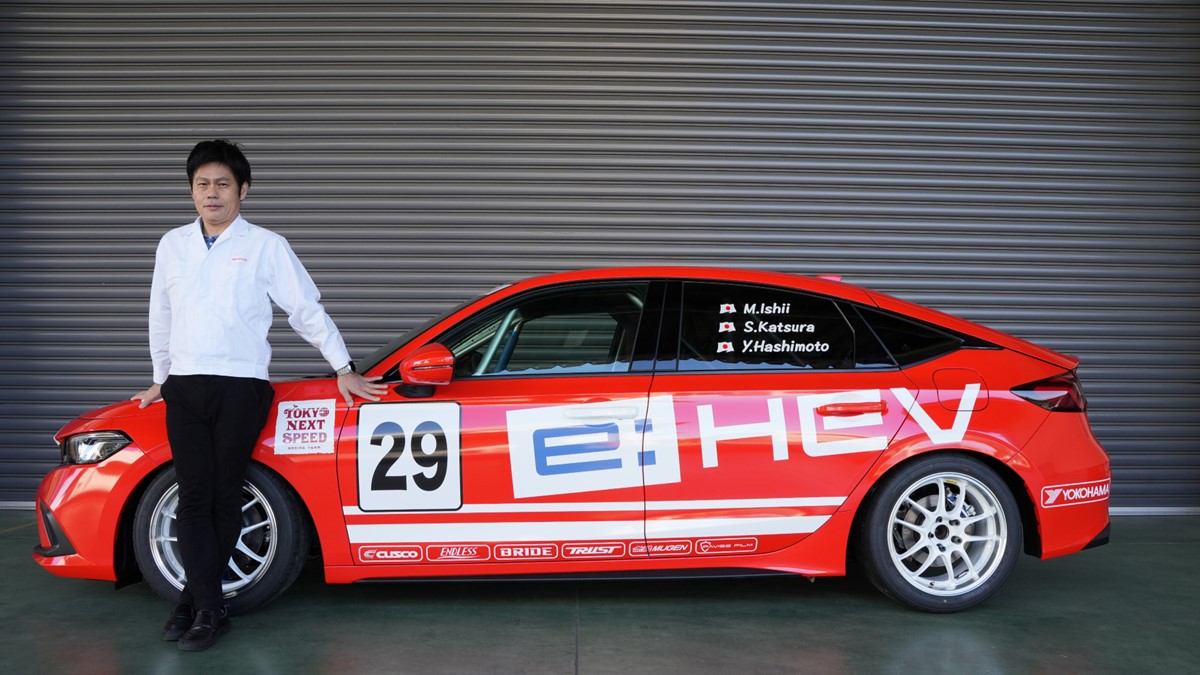
Takaya Okuyama led Honda’s three-year JOY TAI project with the Fit e:HEV, which began in 2020, and continues to lead the team as it enters a new phase with the CIVIC e:HEV.
Honda Stories spoke with Okuyama about the origins of the project, its achievements and what lies ahead.
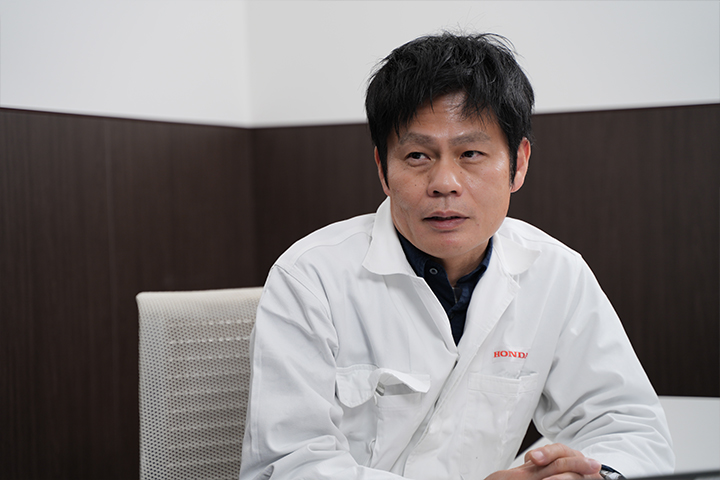 Takaya Okuyama, JOY TAI Project Leader
— What prompted Honda to enter the race?
— Unlike professional racing series such as SUPER GT, JOY TAI is primarily an amateur event. Why did you choose it?
JOY TAI is relatively accessible, but it’s also a fully sanctioned JAF race with a strong following.
It was an ideal place to take on our first racing challenge with e:HEV.
More importantly, because the project was intended to generate knowledge that could be applied to production vehicles, JOY TAI’s regulations, which allow production-based cars to compete, were well suited to our objectives.
— Did things go smoothly when you first started racing?
JOY TAI has a qualifying requirement that cars must be capable of completing a lap in under 2 min 50s.
Our initial lap time was 2 min 46s, so we managed to meet that requirement, but we were still near the back of the field.
Considering that we’d started with a car almost identical to the production model, that was understandable. But more than anything, I felt frustrated.
Nobody said anything at the circuit, but you could see the determination in everyone’s eyes. I’m sure the entire team felt the same way.
Looking back, it was a valuable experience. That frustration ignited our determination to make the car faster, even if only by one second, and brought everyone together around a common goal.
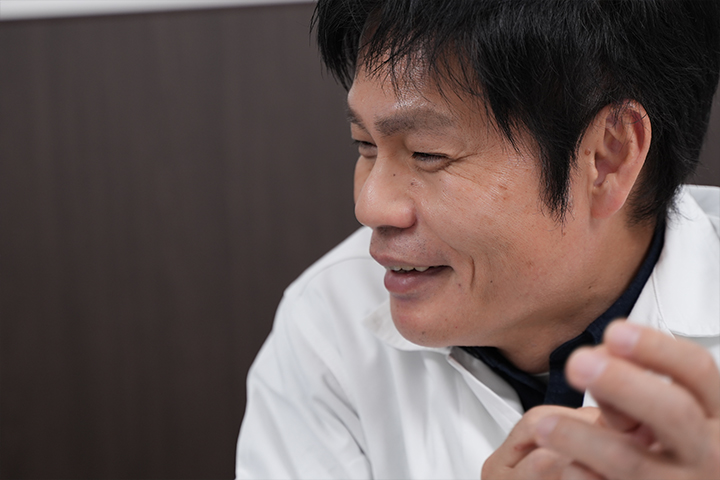
— How much did the car ultimately improve?
Our final best lap was 2 min 24s.
Although the project ran for three years, there were only two races each year, so opportunities to improve were limited. Reducing our lap time by more than 20 seconds was a major achievement.
The most significant improvement to e:HEV involved how we used the battery.
On the circuit, the challenge was to convert the electrical energy stored in the battery into speed as efficiently as possible.
Initially, we tried using more electricity to make the car faster, but that approach eventually reached its limit.
One of the strengths of electric motor drive is its acceleration response at low speeds. So we changed the control strategy to use battery power when accelerating out of corners, then reduce its use once the car had gained speed.
At higher speeds, we relied solely on electricity generated by the engine.
That change allowed us to use the battery much more efficiently. I don’t think we could have gained that insight through production vehicle development alone.
— Looking back on the three years of racing with the Fit e:HEV, what would you consider the project’s greatest achievement?
JOY TAI regulations specify both the maximum amount of fuel that can be added during a pit stop and the time a car must remain in the pits. That makes fuel efficiency just as important as performance.
As I mentioned, we worked on control strategies that made better use of the strengths of electric motor drive.
One of our biggest achievements was being able to apply the knowledge gained through JOY TAI to the control software of the Fit e:HEV RS* when the model was updated three years after its launch.
I believe drivers can now experience even stronger acceleration out of corners on winding roads, along with a greater sense of driving enjoyment and a more exhilarating driving experience.
* The Fit RS is a specially equipped and tuned version of the Fit, designed to deliver an enjoyable, responsive driving experience in everything from everyday driving to longer journeys.
— How did the project members approach the activity, and what changes did you see in them over the course of the project?
We didn’t limit recruitment to people who had worked on developing the Fit. Instead, we invited employees, particularly younger engineers, who wanted to try racing with e:HEV.
The people who volunteered weren’t simply interested in racing. They had a strong desire to explore the potential and possibilities of e:HEV technology.
At first, some seemed rather reserved and hesitant to take the initiative. But that changed dramatically as the project progressed.
I think they realized that speaking up and taking action could directly improve results.
Their presentation skills also improved enormously.
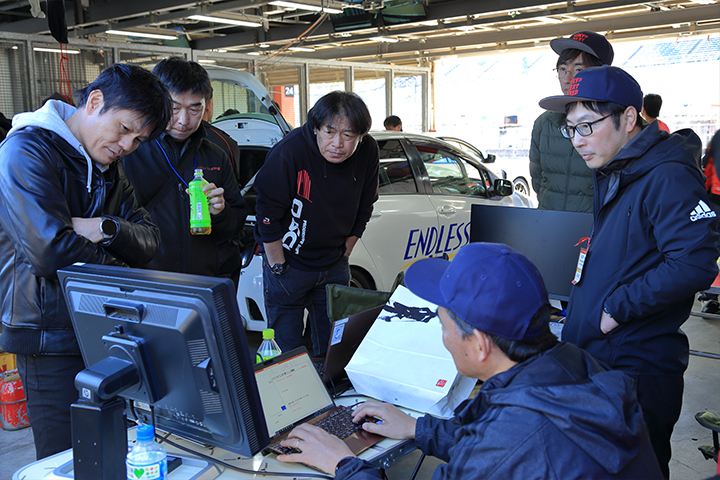
— Honda places great importance on motorsports and sports model development partly because they help develop employees. Would you say this project demonstrated that value?
Absolutely.
Developing a car isn’t something even the most talented engineer can accomplish alone. It’s a team effort, so communication is essential, and the ability to present ideas effectively is equally important.
There’s also a limit to how much progress can be made by concentrating exclusively on your own area of expertise. Engineers need to look beyond their specialties and understand other fields.
Through racing, I watched the team members acquire these essential skills for automobile development in a remarkably short time.
I think they’ve also become faster at identifying problems and implementing improvements in production vehicle development.
Even my own approach to communicating with development team members and explaining ideas has changed.
— With the team switching to the CIVIC e:HEV, what will happen to the members? And what are your expectations for the new car?
Every member of the team has changed except me.
The Fit e:HEV has a 1.5-liter engine, whereas the CIVIC e:HEV uses a 2.0-liter engine. The CIVIC also incorporates more advanced hardware and software technologies, so there’s much more to work on, and we’ll need different ideas.
Even so, at the Mini JOY TAI race in November 2023, the CIVIC immediately recorded a faster lap time than the Fit e:HEV. That gives me high expectations for the future.
The new team also showed an impressive sense of unity, despite it being their first race together.
Because it was their debut, members from the Fit project came to help. Being able to observe the experienced members at work and learn from them at the circuit was extremely valuable.
Going forward, we’ll continue overcoming challenges and making improvements, with the aim of ensuring that the project generates meaningful benefits that can be applied to production cars.
The team also chose the body color, Scarlet Red, to express its passion for this new challenge.*
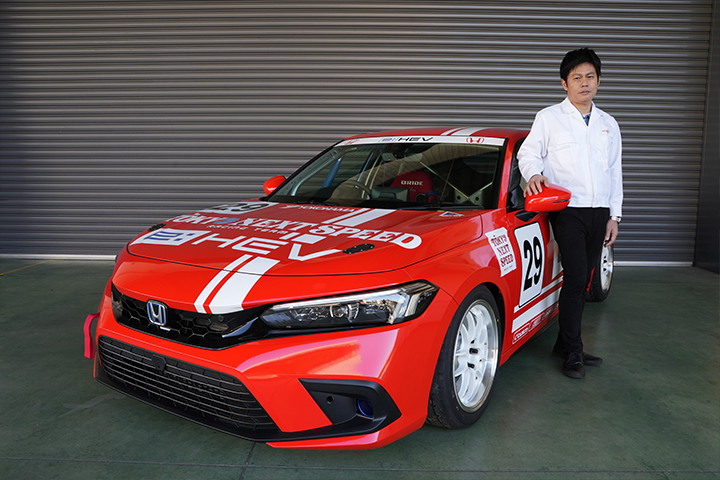
Carrying Honda’s joy of driving into the future
The improvements made to the Fit e:HEV RS through the JOY TAI project represent a significant achievement for Honda.
They demonstrate how the passion of the team members and their willingness to take on challenges repeatedly can translate into tangible improvements in production vehicle performance.
At the Japan Mobility Show 2023, held in October, exhibitors represented not only the automotive industry but also a wide range of other mobility sectors.
Honda showcased mobility technologies and products across several fields, including HondaJet, eVTOL aircraft and the UNI-ONE personal mobility device.
Honda also announced the Prelude Concept, a future specialty sports model intended to carry forward the joy of driving, a fundamental part of Honda DNA, into the coming era of electrification.
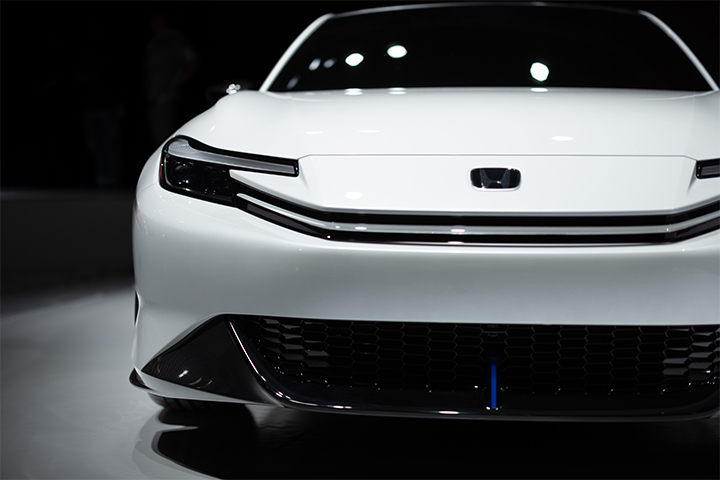 Prelude Concept
Honda believes that motorsports activities can provide valuable insights into how to achieve carbon neutrality while preserving the joy of driving.
With that conviction, Honda will continue to take on the challenge of motorsports.





It started with a comment from an automotive journalist at a media test-drive event for the revamped Fit in 2020. The journalist suggested, “Why not try racing the new Fit e:HEV?”
I had been responsible for vehicle dynamics during the Fit’s development and subsequently became the development leader for the entire model after its launch.
I thought preparing the car for circuit driving and entering it in a race would provide a valuable learning opportunity.