Tiller (Chapter 2)
Honda’s goal was to replace the hoe.
Honda’s vision for agricultural machinery—improving people’s lives through technology—aimed to develop equipment anyone could easily operate. This was in response to a shrinking agricultural workforce and increasing workloads for those remaining.
To further reduce the burden of farm work, Honda pursued lighter and more compact agricultural machinery.
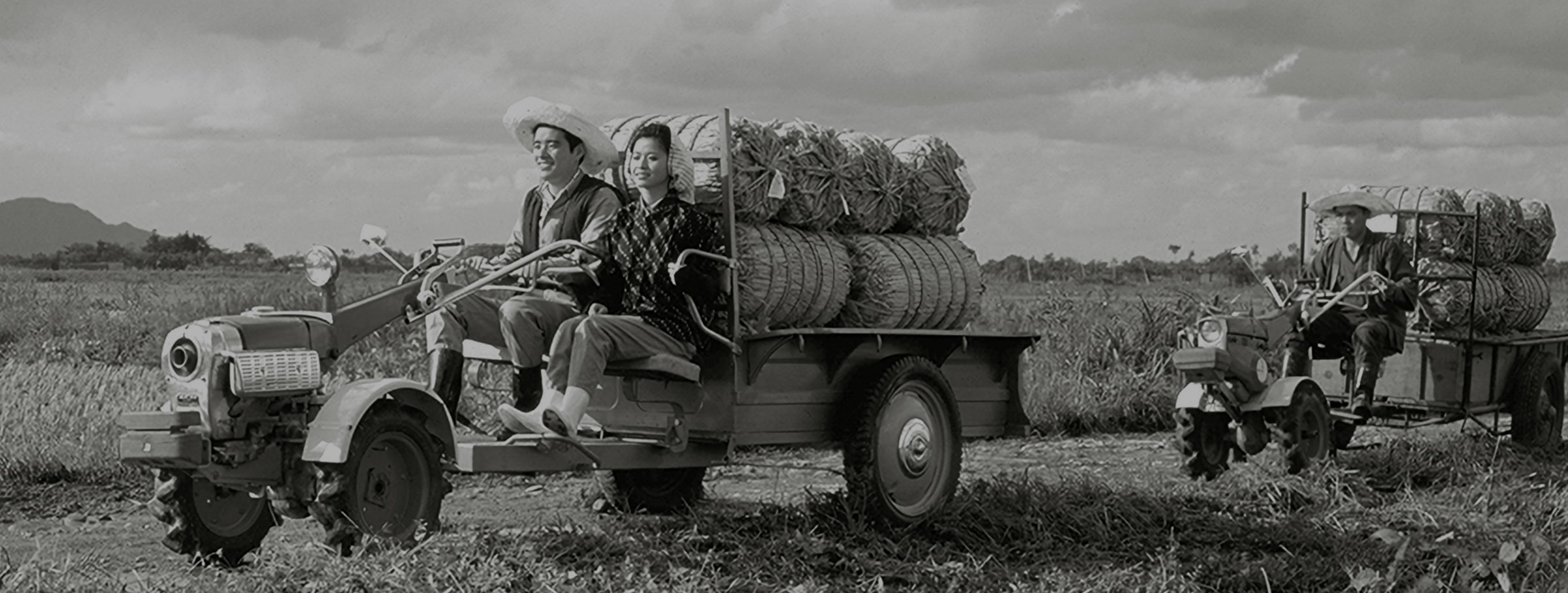
The F150 tiller, launched in 1959, mechanized farm work previously done by manual labor, transforming it into tasks accessible to women and the elderly. Honda’s concept of lightweight, compact agricultural machinery anyone can use, drove the F150’s expansion.
Once the F190, positioned as an improved version of the F150, gained traction, Honda significantly accelerated development of smaller and lighter tillers.
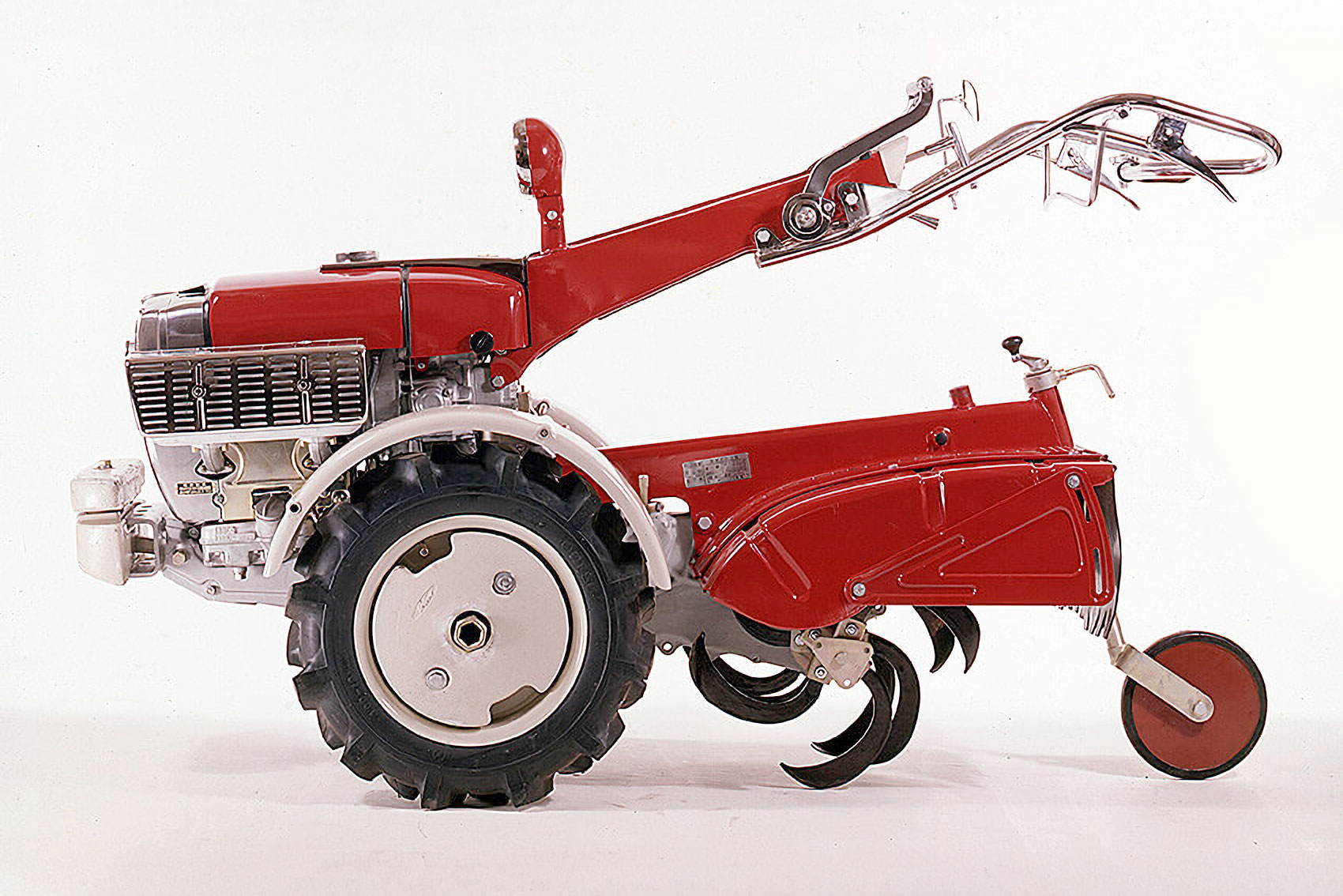
In 1961, Honda launched the F60, lighter than the F190. The F60 had a reduced number number of parts, achieving both a lower retail price and reduced weight. Furthermore, it adopted cast iron engine components, considered more durable than aluminum, creating a stronger and easier-to-handle tiller.
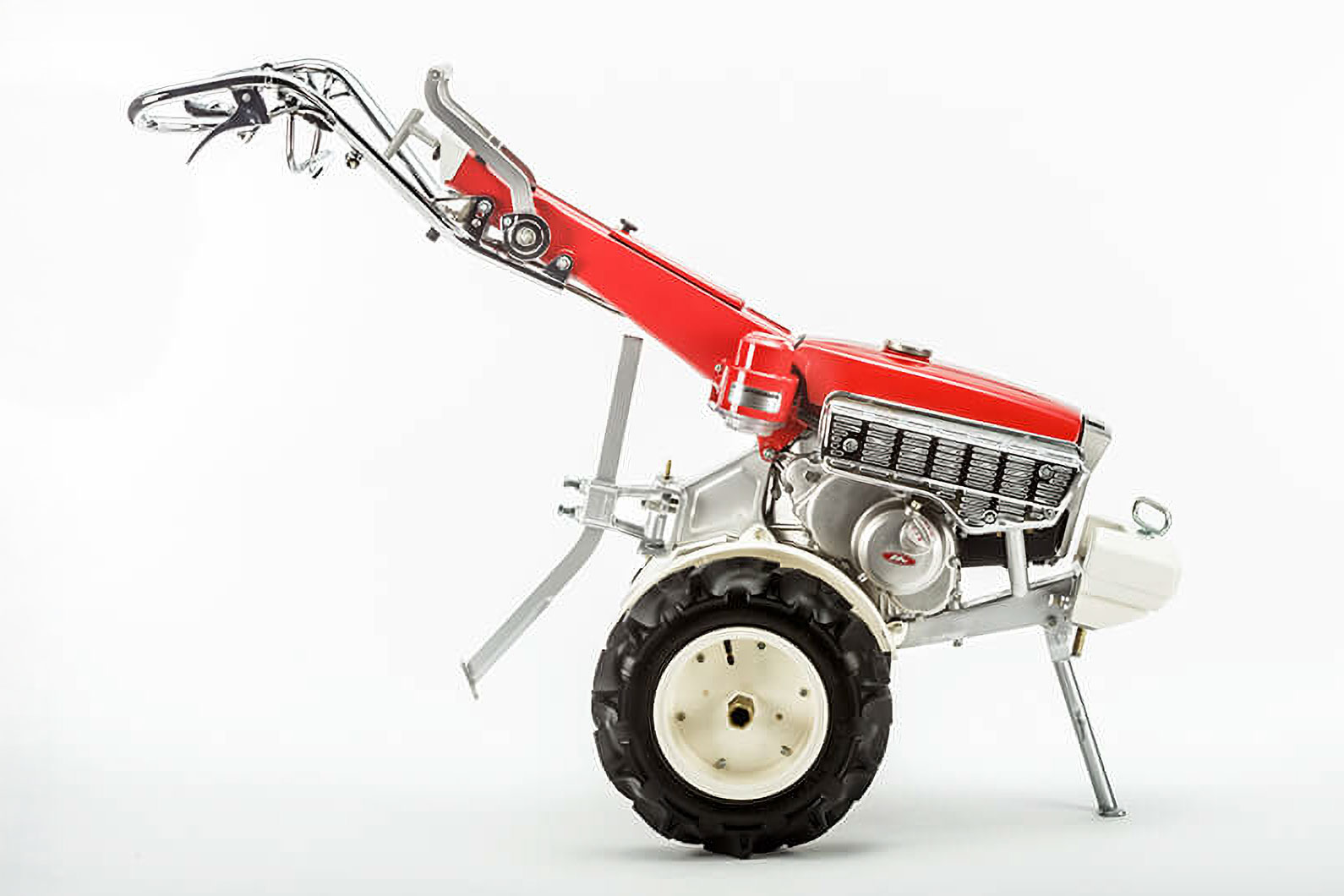
Honda continued this trend, launching the F30 in 1964. Powered by the G30 general-purpose engine launched the previous year, the F30 weighed 80kg and delivered 4 horsepower. Honda went on to launch products weighing between 80 and 90 kg, including the 1965 F50, which delivered 5 horsepower despite its light 93 kg chassis.
Honda’s tillers, beginning with the F150, continued to evolve, aiming for further weight reduction and compact design.
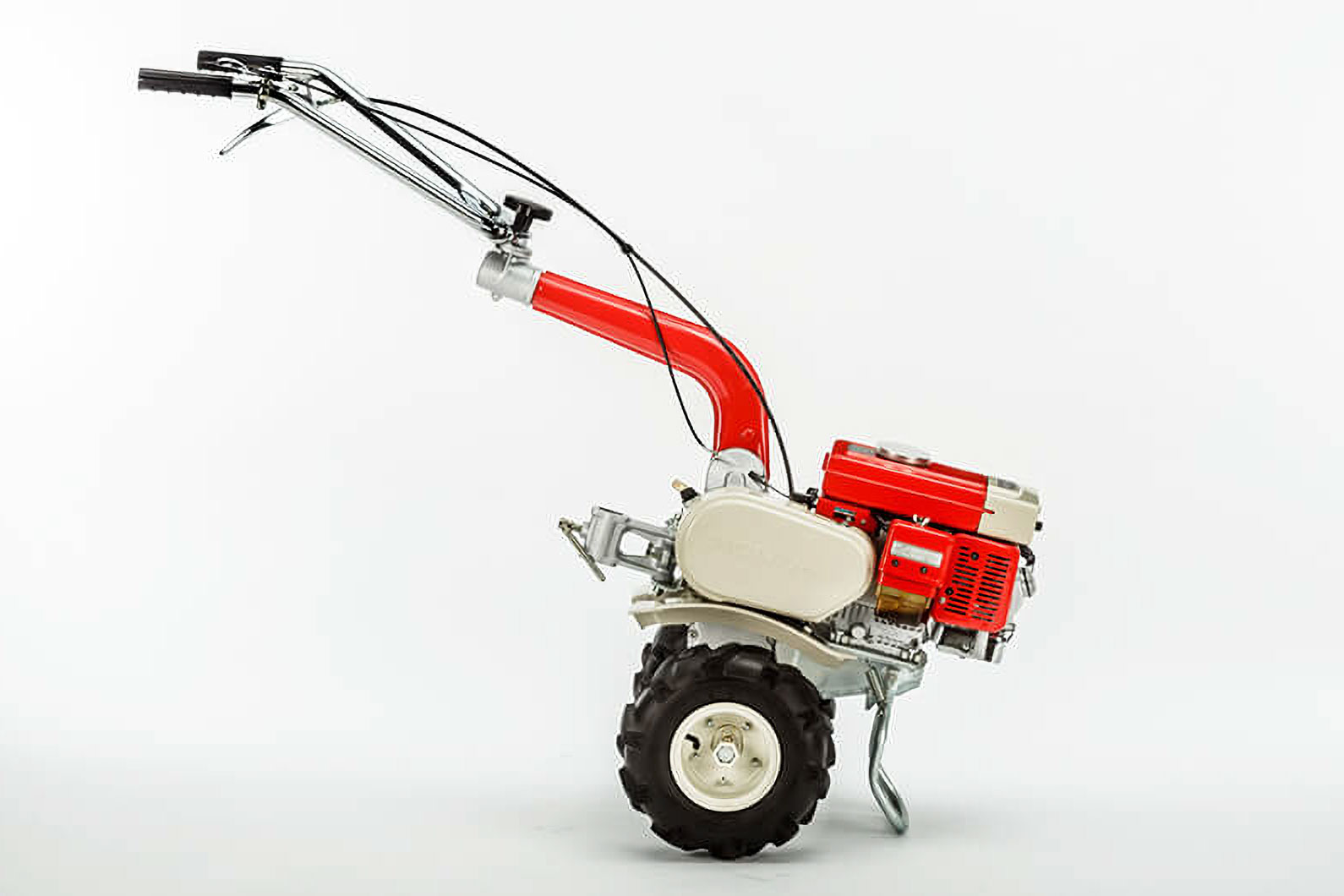
Among these, the F25 launched in 1966 was the lightest in the tiller series at the time, weighing just 37 kg. It could be folded to fit in a passenger car’s trunk and the detachable engine could power weed cutters, pumps, and sprayers.
Honda also began exporting its tillers to Europe and the United States, aiming to ease the burden of agricultural labor. In 1963, the F190 and F60 were exhibited at the Paris International Agricultural Machinery Show (SIMA) in France, a major agricultural nation. Even in France, where field sizes differ greatly from those in Japan, these compact machines drew considerable attention and were highly praised as ideal tillers for home gardens and small horticultural plots.
Honda’s goal was to replace the hoe. By mechanizing farm work previously done by hand, significant labor savings were achieved, and agricultural work was transformed into a new environment.
In the 1970s, demand grew stronger from farmers who had previously been reluctant to adopt new machinery. These were farmers working on narrow plots, unstable terrain, sloped fields, terraced fields, and paddy terraces.
In response, Honda began developing a tiller suitable for transport to work sites and capable of operating in narrow paddies and fields.
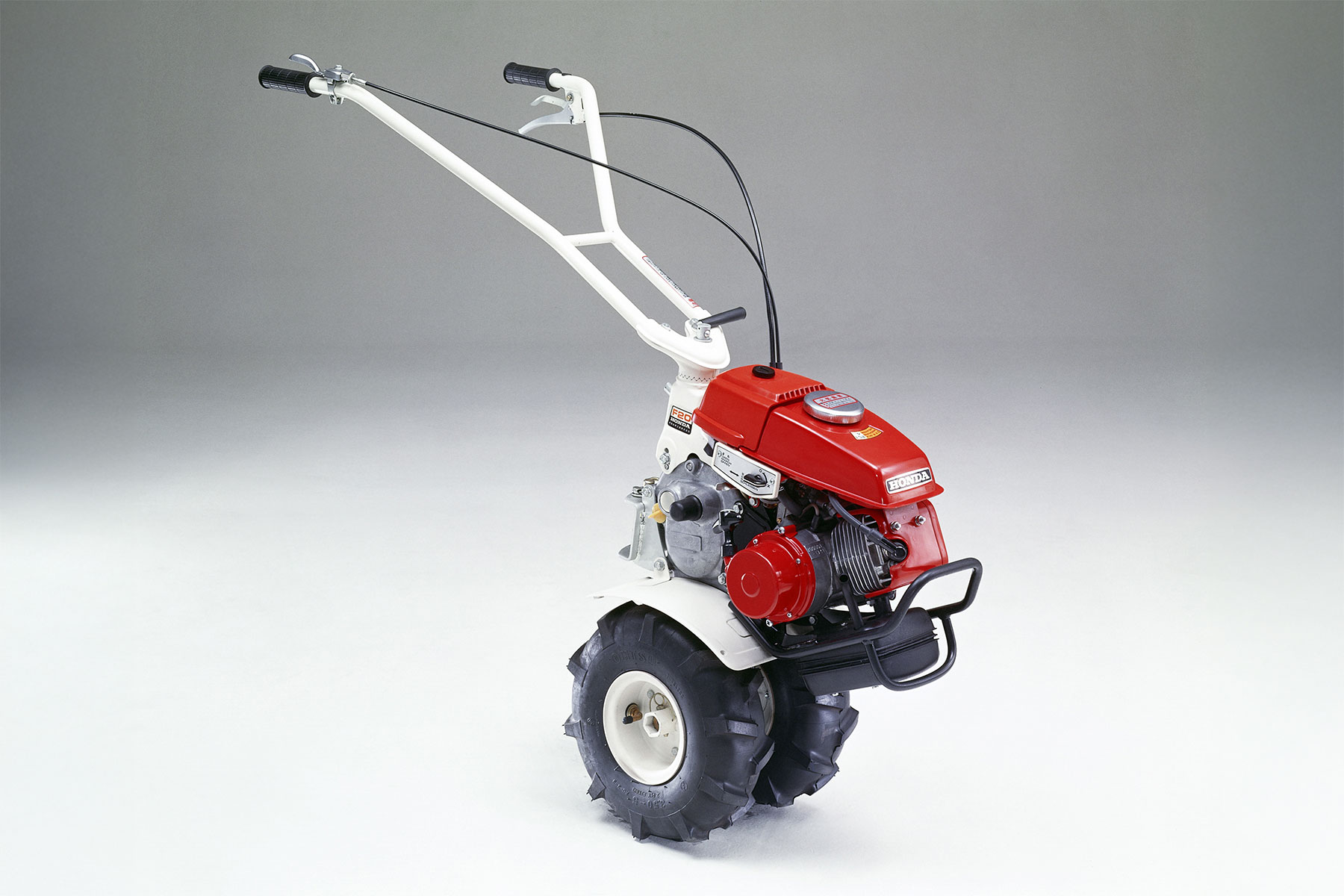
In 1975, Honda launched the “Kowamari Tiller F20.” The Komawari (meaning tight-turning or nimble) was a compact tiller marketed as a tiller designed specifically for women, weighing just 26 kg. It featured a 2-cycle 50cc engine, a dual-layer air cleaner, and a large muffler with built-in sound-absorbing material. Designed to be small, light, and quiet, it aimed to be easy to handle without overpowering the operator, making it suitable for use on slopes and in narrow fields.
In 1980, sales began for the Komame (F200), powered by a 4-stroke engine that reduced concerns for operators about exhaust fumes and noise.
The Komame featured a upright structure with the transmission and shaft positioned under the engine. By arranging the moving parts in a compact layout, the F200 achieved a weight of 25.5kg. Positioned as ultra-compact compared to conventional tillers, it limited its function to digging up soil, enabling versatile use for home gardens, horticulture, and land maintenance, targeting not only agricultural workers but also home users.
Furthermore, the Komame featured a resin engine cover instead of steel plating and adopted the signature white and red livery characteristic of Honda’s agricultural machinery series. This design created a cute image unlike any previous agricultural machine.
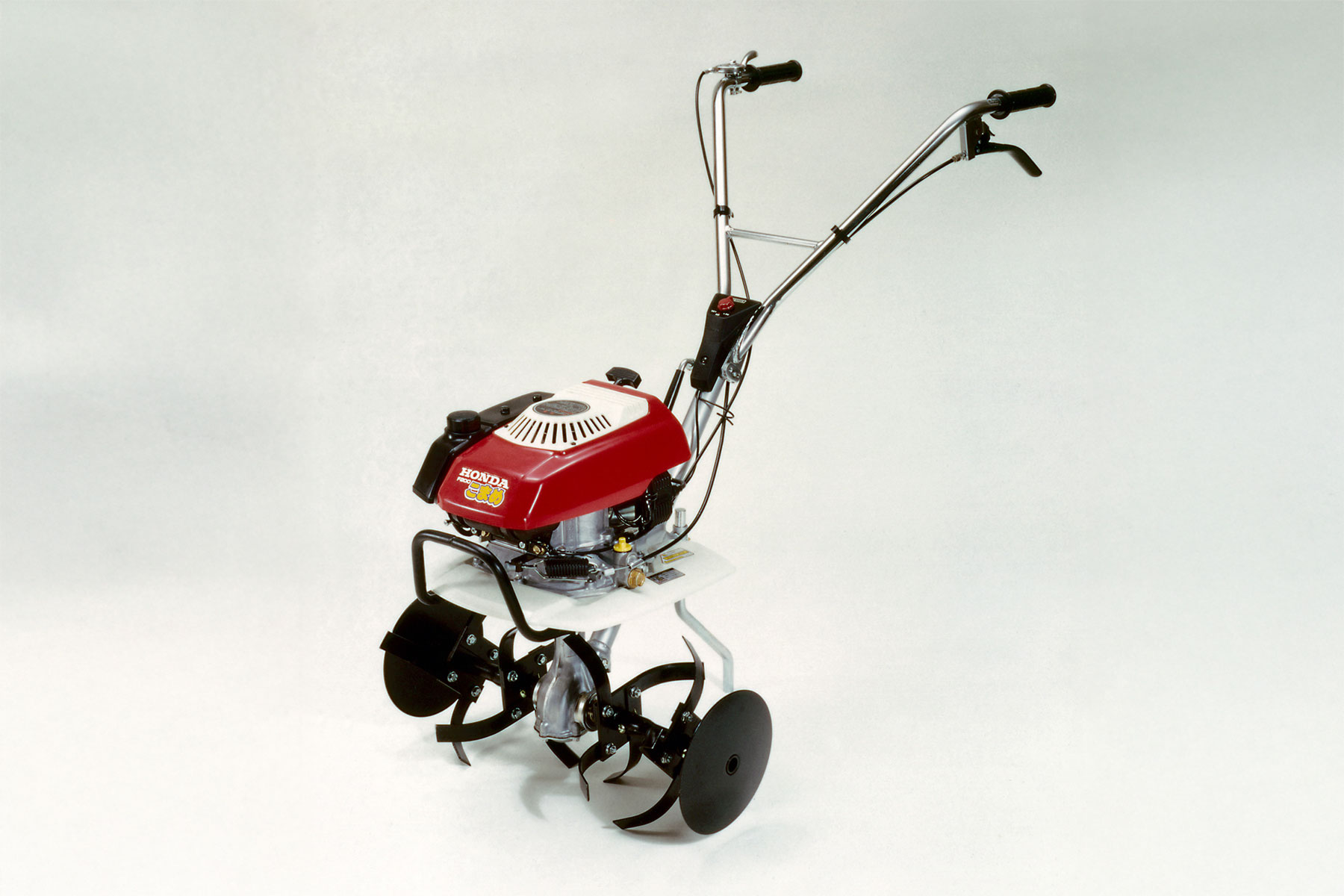
The Komame was a big hit. With an annual sales target of 4,500 units, it sold 38,600 units in its first year alone. This figure includes exports to countries such as France, but at its peak, Japan-domestic sales alone reached 50,000 units. It truly became the successor to the F150.
The Komame was embraced for its ease of use, allowing it to be transported and used in areas where moving agricultural machinery was difficult, or for field work, even using light trucks. It also aligned perfectly with the gradually growing trend of home vegetable gardens at the time. By its second year on the market, TV commercials were aired, and brochures featured photos of women using the Komame, with the slogan: “Replacing the hoe, with an easy-to-handle weight of just 25.5kg. Significantly reduces the time and effort of manual labor.”
The Komame F200 became synonymous with compact tillers, achieving such massive success that people referred to subsequent mini-tillers from other manufacturers were as “Komame.”
By providing a replacement for the hoe to those who had previously relied on manual labor for farming, Honda contributed to improving people’s lives.