Power Products History
Introducing the history of Honda’s power products by category

Easing the labor of rural communities

Driven by the conviction that technology should make people’s lives easier, Honda began developing and selling tillers following its general-purpose engines. Amid the harsh post-World War II agricultural environment, Honda’s tillers played a major role in revitalizing postwar agriculture in Japan.

In the early 1940s, Japan was an agriculture-centered nation where roughly 40% of its population of about 72 million people were involved in farming in some capacity.

However, after the war ended, the number of agricultural workers gradually declined, leading to a severe labor shortage in farming.

During the economic growth period of the 1950s, the population exodus to cities accelerated, primarily among younger people. As a result, women and the elderly became the main workforce in agriculture, causing a critical labor shortage. Mechanization became an urgent necessity to reduce the burden of farm work and address the labor shortage.

Amidst this situation, Honda developed the versatile H-Type engine and began supplying it to agricultural machinery manufacturers. Honda contributed to the modernization of Japanese agriculture with versatile engines such as the T-Type and VN-Type agricultural engines.

Furthermore, following the enactment of the Agricultural Mechanization Promotion Act in 1956, Honda established a new Agricultural Machinery Development Division in 1958. At that time, with approximately 6 million farming households, the adoption rate of tillers—the agricultural machinery used for the most labor-intensive task of tilling soil in fields and rice paddies—was a mere 5%.

To alleviate this situation, Honda began developing a tiller accessible to more farmers. The Agricultural Machinery Development Division took on the challenge: “By introducing one Honda engine-powered product per household, we will reduce the burden of labor, increase productivity, and build a prosperous nation.”

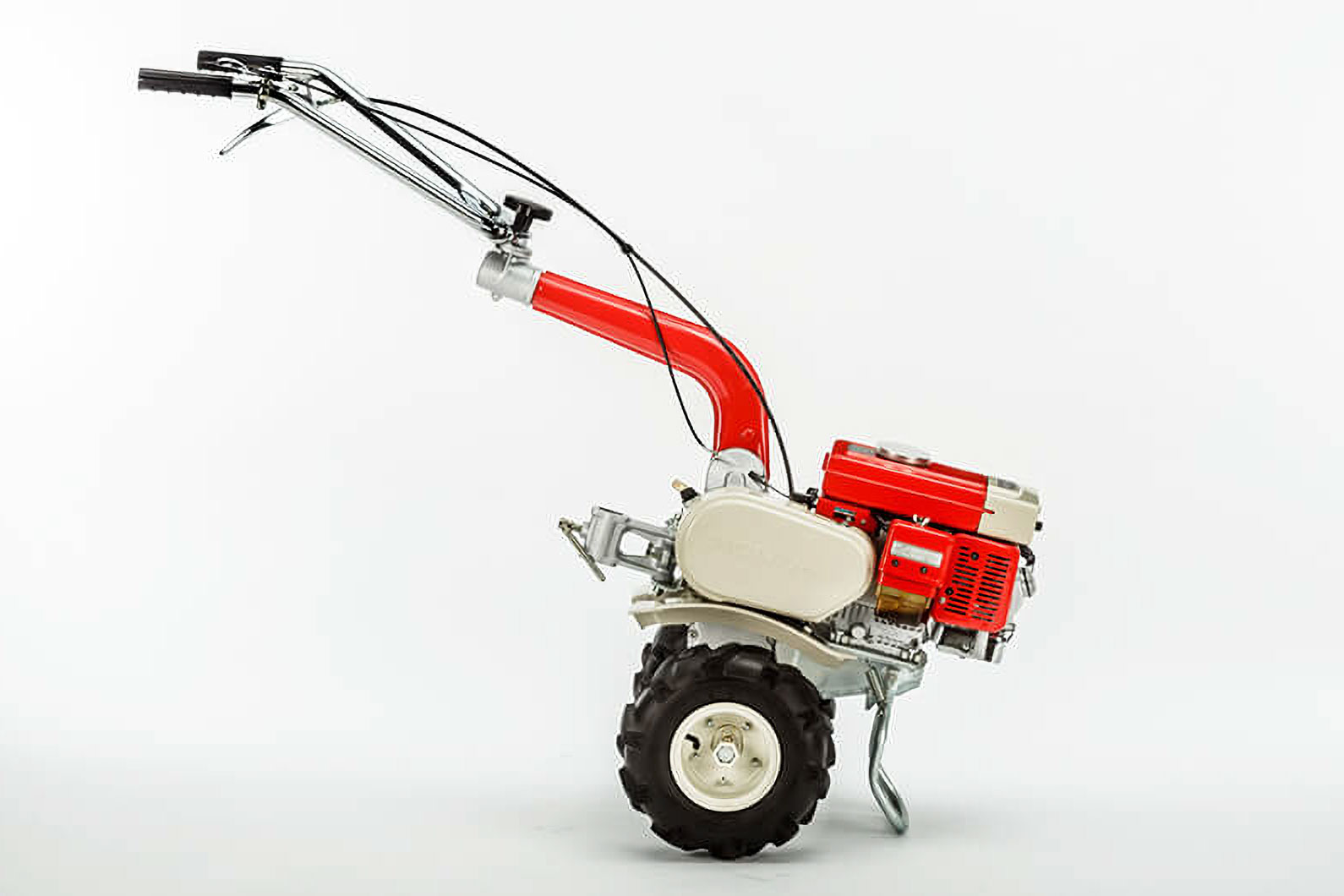
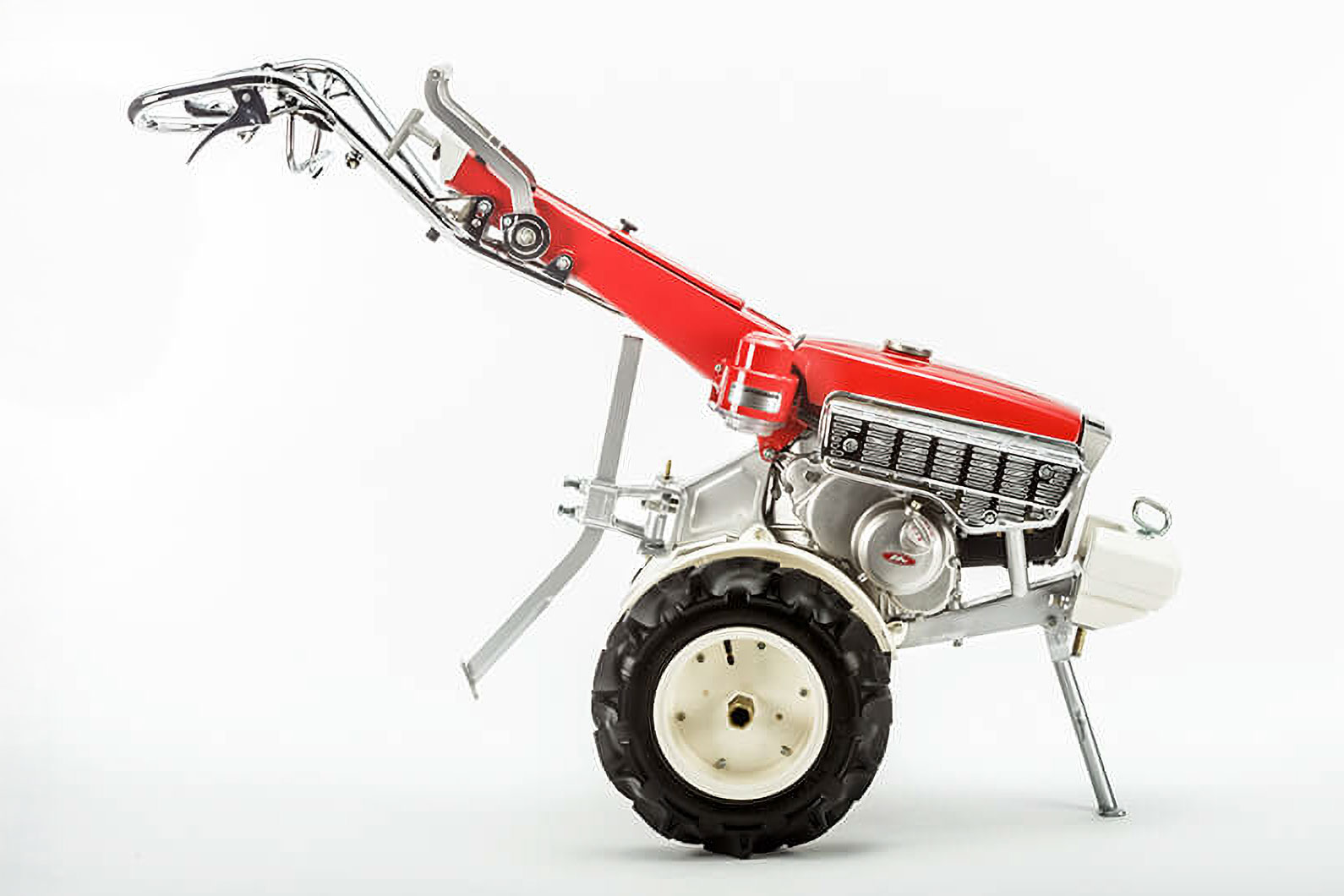
1959: Honda launches its first tiller, the F150

Honda set out to develop a tiller capable of performing all essential farming tasks—tilling, ridging, and leveling—across both dry fields and rice paddies. The development team focused on making it easy to operate, even for women and older farmers, who made up much of the agricultural workforce at the time.

This was because most agricultural machinery at the time was designed for physically strong males, resulting in large, heavy, and complex machines.

Honda began development with the concept of creating a lightweight, compact, durable, and economical tiller that anyone could easily operate. And in 1959, Honda launched its first tiller, the F150.
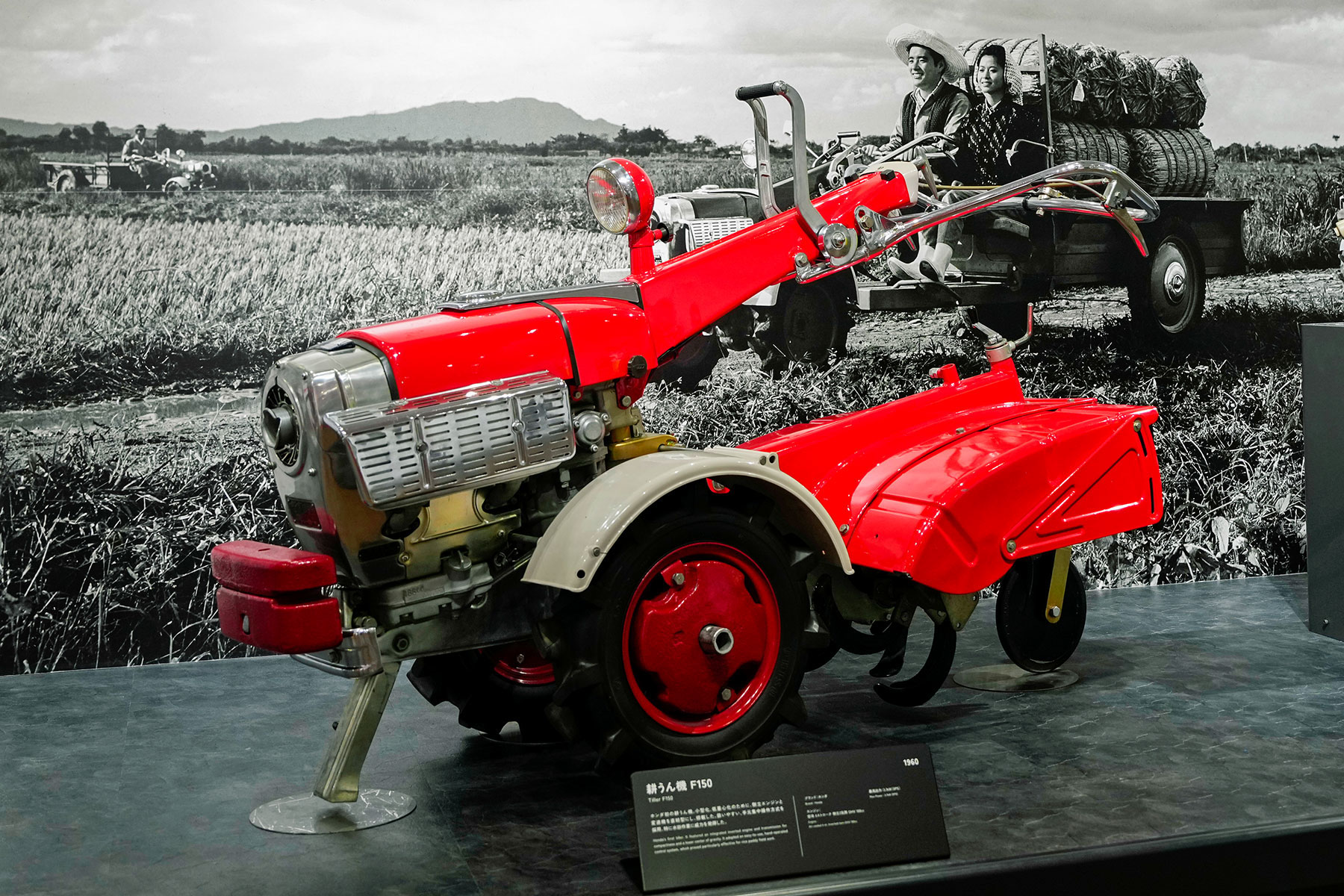
1959 F150 tiller

The F150 achieved a low center of gravity by mounting its 154cc air-cooled two-cylinder engine in an inverted position. This design considered the engine’s top-heavy structure, placing the heavier components lower to improve handling. Furthermore, the inverted layout positioned the air intake at the top, making it effective for rice paddy work where the machine’s lower sections could be submerged.
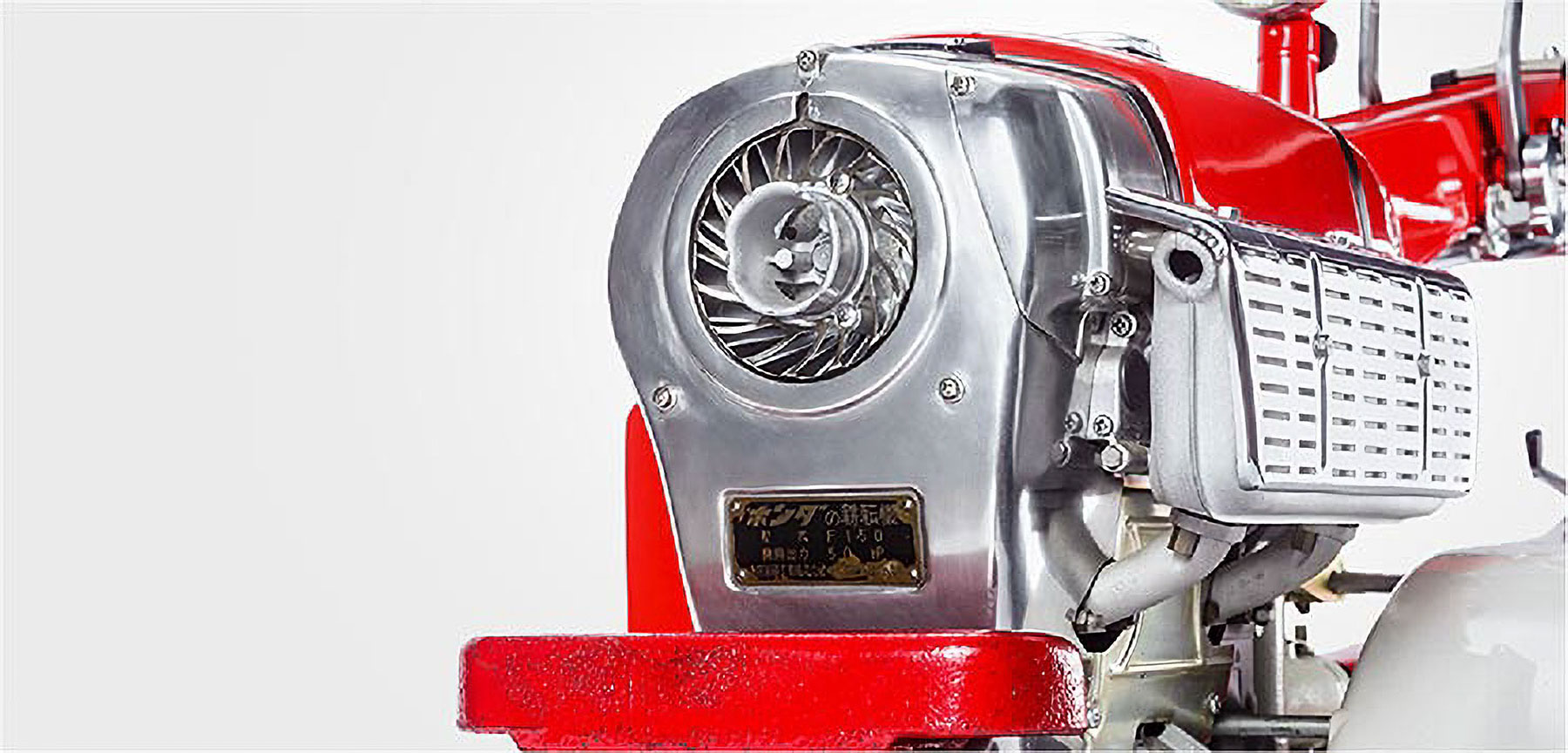
Air intake port positioned on the upper part of the chassis also contributed to its strength in paddy field work.

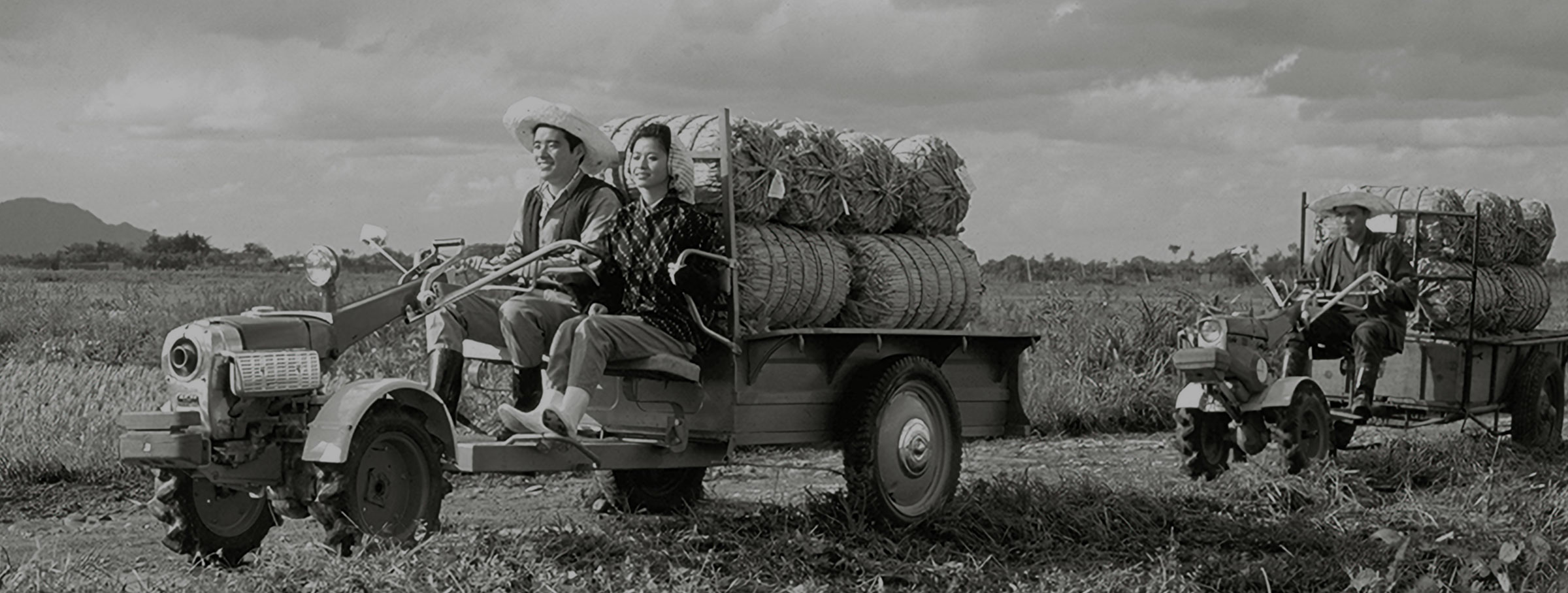
The engine adopted the world’s first OHV (Overhead Valve) configuration for a tiller. It replaced the then-common belt-driven direct drive with a system featuring an automatic centrifugal clutch, a 3-speed forward / 1-speed reverse transmission with an auxiliary gearbox. This 6-speed forward / 2-speed reverse configuration eliminated power loss due to slippage inherent in belt systems, achieving high driving performance. The automatic centrifugal clutch, also featured on the Super Cub C100, required no lever operation to change gears. Consequently, in this era of low automobile penetration, the F150 was frequently seen being used as a tow vehicle.

Furthermore, the F150 replaced the conventional recoil starter—previously the standard for starting the engine by pulling a rope—with a convenient push-button starter on the handlebar. All major controls, including forward/reverse shifting and throttle operation, were centralized around the handlebar, allowing the operator to manage nearly all functions by hand.
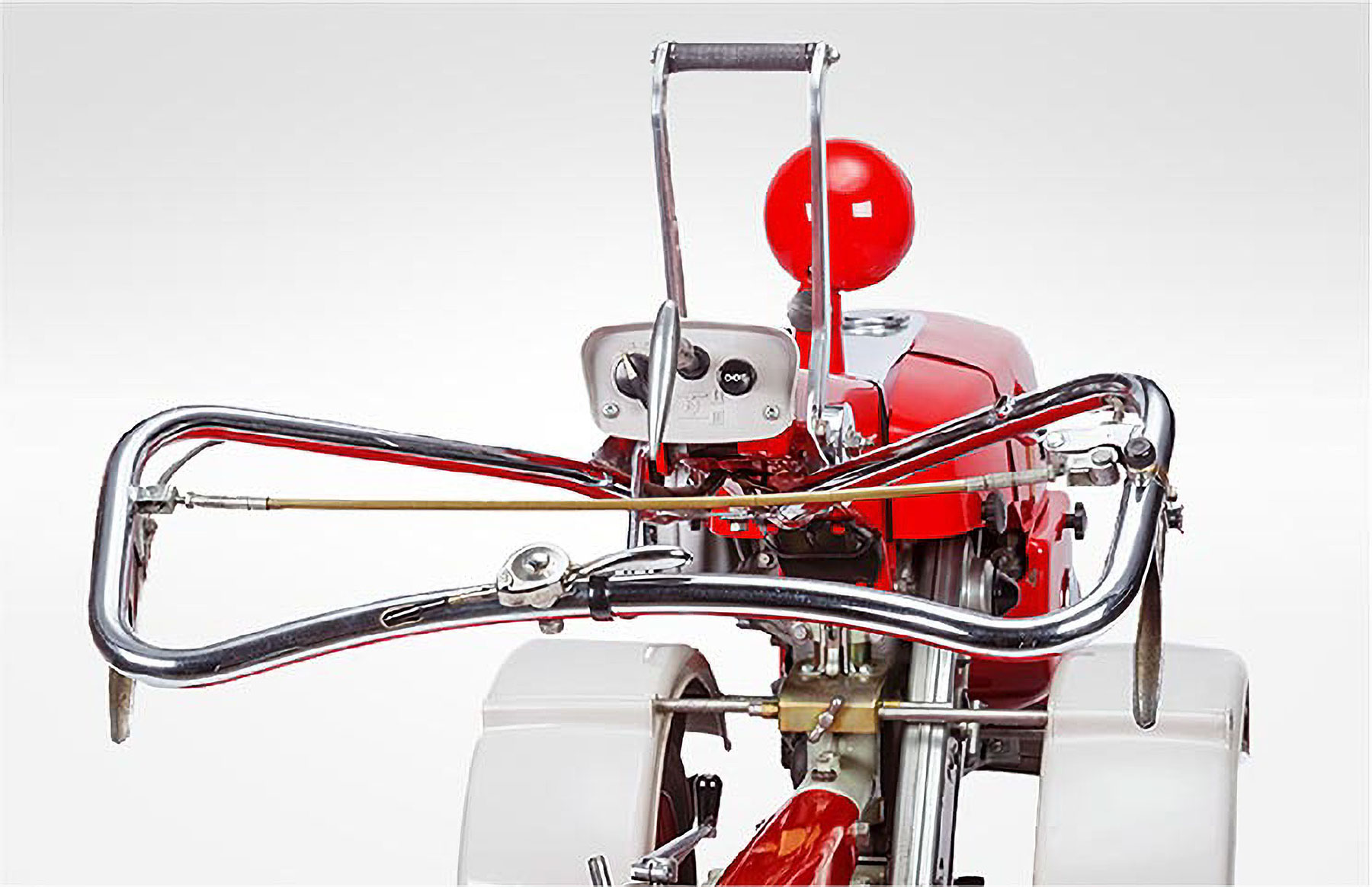
Control buttons and levers were centralized around the handlebar.

Additionally, the handlebar was mounted on dampers. This minimized engine vibration transmitted to the operator’s hands, reducing fatigue during long work sessions. Moreover, while many tillers exposed their engines and moving parts, the F150 covered both with a protective shielding. This enhanced safety while also refreshing the image of tillers, which were often dark colors such as black, with its bright red, stylish body color. It was hailed as the “Honda whirlwind turning fields bright red” and changed the world of agricultural machinery.

Honda then priced this F150 for 120,000 yen. This price was 50 to 100 thousand yen cheaper, far cheaper than competitors selling for 170,000 to 220,000 yen. Riding the wave of Honda’s heightened national recognition, boosted by the Super Cub launched the previous year, the F150 recorded massive sales upon release. In an era where the tiller market was only a few thousand units, it achieved annual sales of 20,000 units. Its popularity was so overwhelming that some dealers would drive trucks directly to the Hamamatsu Plant to pick up freshly completed F150 units. These machines then began operating nationwide, gradually creating the familiar sight of red tillers working the fields.

Six years after developing its first general-purpose engine in 1953, Honda entered the agricultural machinery field in 1959 with the F150 tiller, its second finished machine following motorcycles. It all began with Honda’s conviction, rooted in the social context of the time, to use technology to make people’s lives easier.
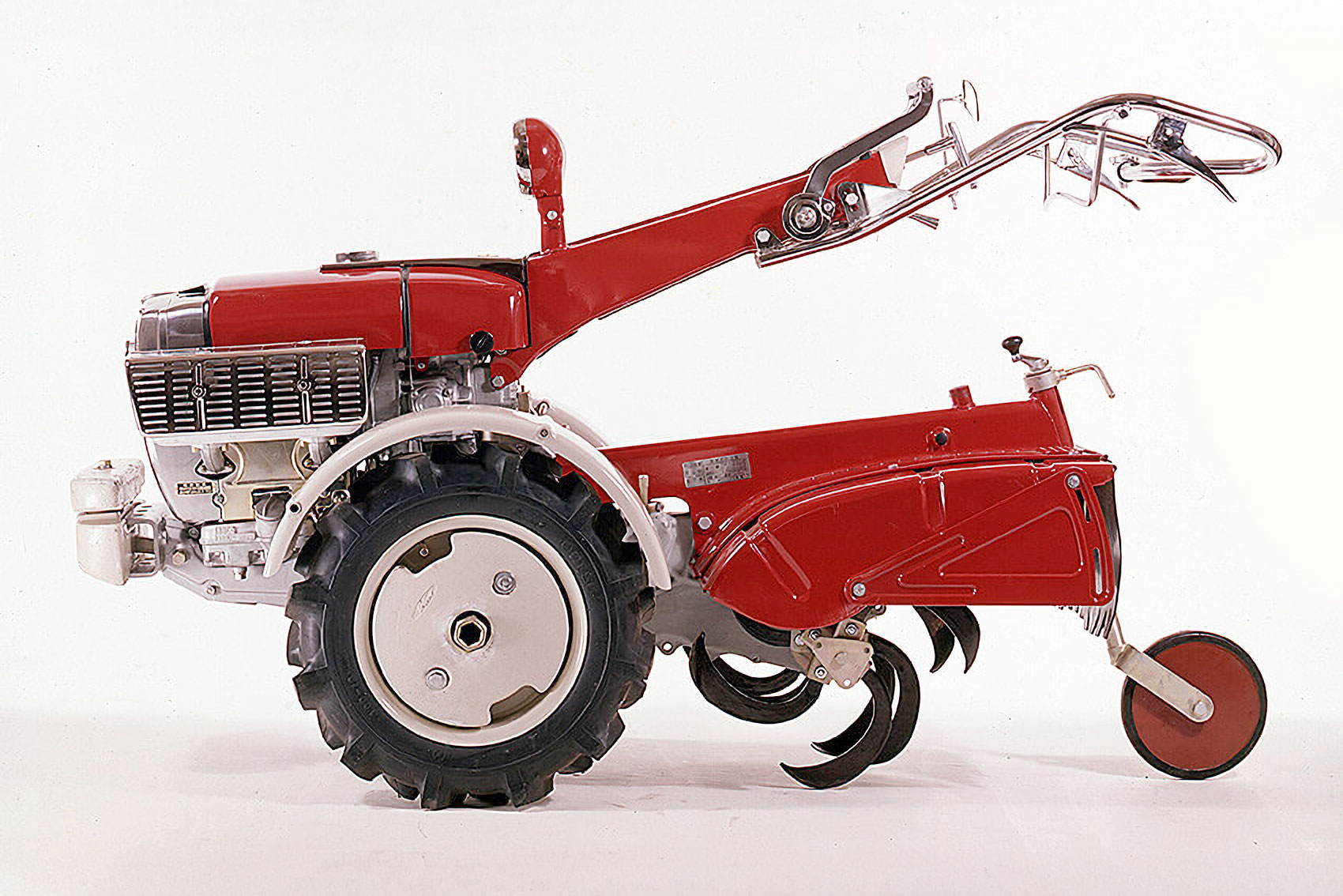
Honda’s goal was to replace the hoe.

Honda’s vision for agricultural machinery—improving people’s lives through technology—aimed to develop equipment anyone could easily operate. This was in response to a shrinking agricultural workforce and increasing workloads for those remaining.
To further reduce the burden of farm work, Honda pursued lighter and more compact agricultural machinery.

The F150 tiller, launched in 1959, mechanized farm work previously done by manual labor, transforming it into tasks accessible to women and the elderly. Honda’s concept of lightweight, compact agricultural machinery anyone can use, drove the F150’s expansion.

Once the F190, positioned as an improved version of the F150, gained traction, Honda significantly accelerated development of smaller and lighter tillers.

The F190, the enhanced successor to the F150

In 1961, Honda launched the F60, lighter than the F190. The F60 had a reduced number number of parts, achieving both a lower retail price and reduced weight. Furthermore, it adopted cast iron engine components, considered more durable than aluminum, creating a stronger and easier-to-handle tiller.

The F60, smaller and lighter than the F190

Honda continued this trend, launching the F30 in 1964. Powered by the G30 general-purpose engine launched the previous year, the F30 weighed 80kg and delivered 4 horsepower. Honda went on to launch products weighing between 80 and 90 kg, including the 1965 F50, which delivered 5 horsepower despite its light 93 kg chassis.

Honda’s tillers, beginning with the F150, continued to evolve, aiming for further weight reduction and compact design.

Among these, the F25 launched in 1966 was the lightest in the tiller series at the time, weighing just 37 kg. It could be folded to fit in a passenger car’s trunk and the detachable engine could power weed cutters, pumps, and sprayers.

F25 with foldable handles and detachable engine

Honda also began exporting its tillers to Europe and the United States, aiming to ease the burden of agricultural labor. In 1963, the F190 and F60 were exhibited at the Paris International Agricultural Machinery Show (SIMA) in France, a major agricultural nation. Even in France, where field sizes differ greatly from those in Japan, these compact machines drew considerable attention and were highly praised as ideal tillers for home gardens and small horticultural plots.

Honda’s goal was to replace the hoe. By mechanizing farm work previously done by hand, significant labor savings were achieved, and agricultural work was transformed into a new environment.

In the 1970s, demand grew stronger from farmers who had previously been reluctant to adopt new machinery. These were farmers working on narrow plots, unstable terrain, sloped fields, terraced fields, and paddy terraces.

In response, Honda began developing a tiller suitable for transport to work sites and capable of operating in narrow paddies and fields.

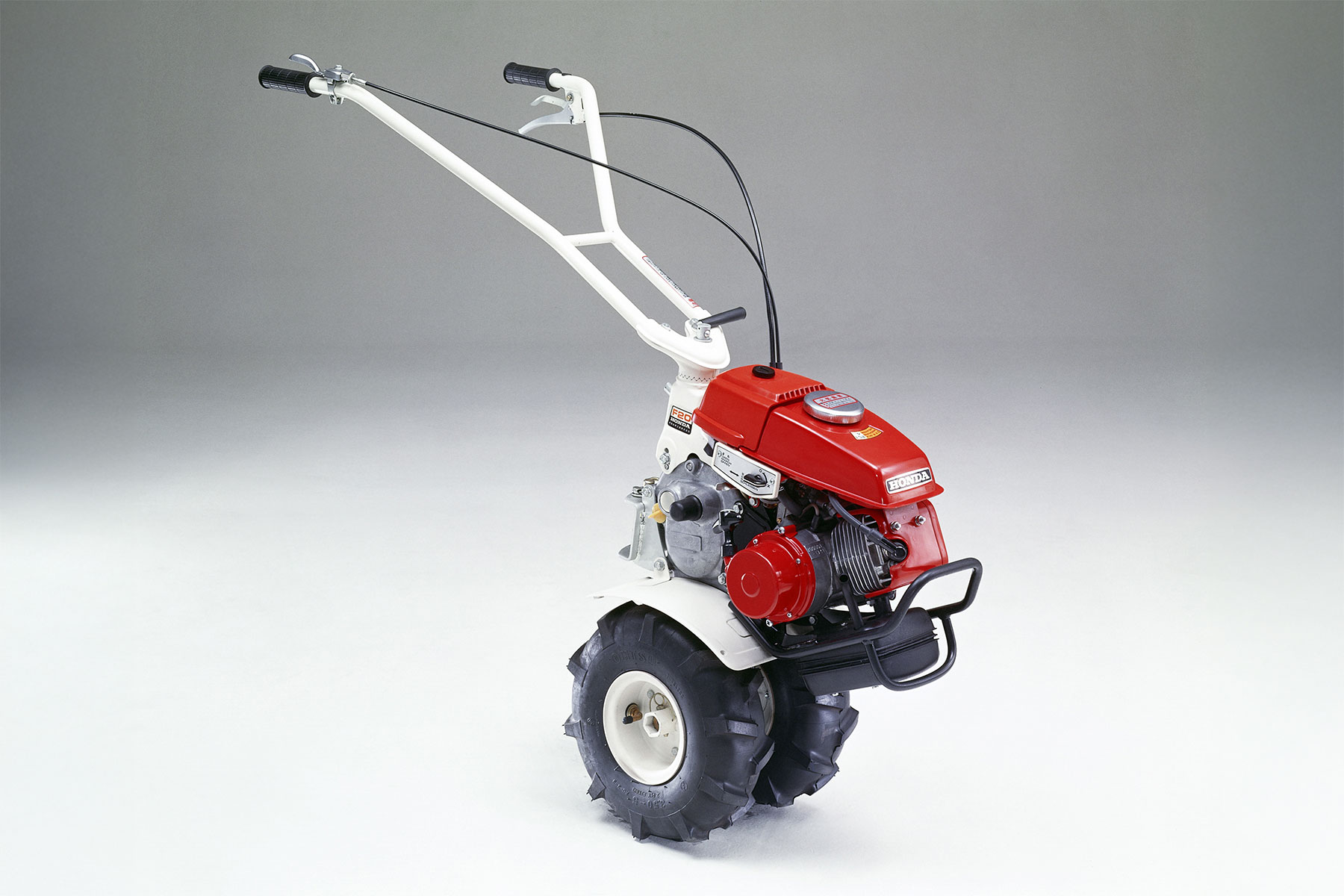
In 1975, Honda launched the “Kowamari Tiller F20.” The Komawari (meaning tight-turning or nimble) was a compact tiller marketed as a tiller designed specifically for women, weighing just 26 kg. It featured a 2-cycle 50cc engine, a dual-layer air cleaner, and a large muffler with built-in sound-absorbing material. Designed to be small, light, and quiet, it aimed to be easy to handle without overpowering the operator, making it suitable for use on slopes and in narrow fields.

The Komawari Tiller F20 was developed as a tiller for women, who were becoming the primary workforce in agriculture at the time.

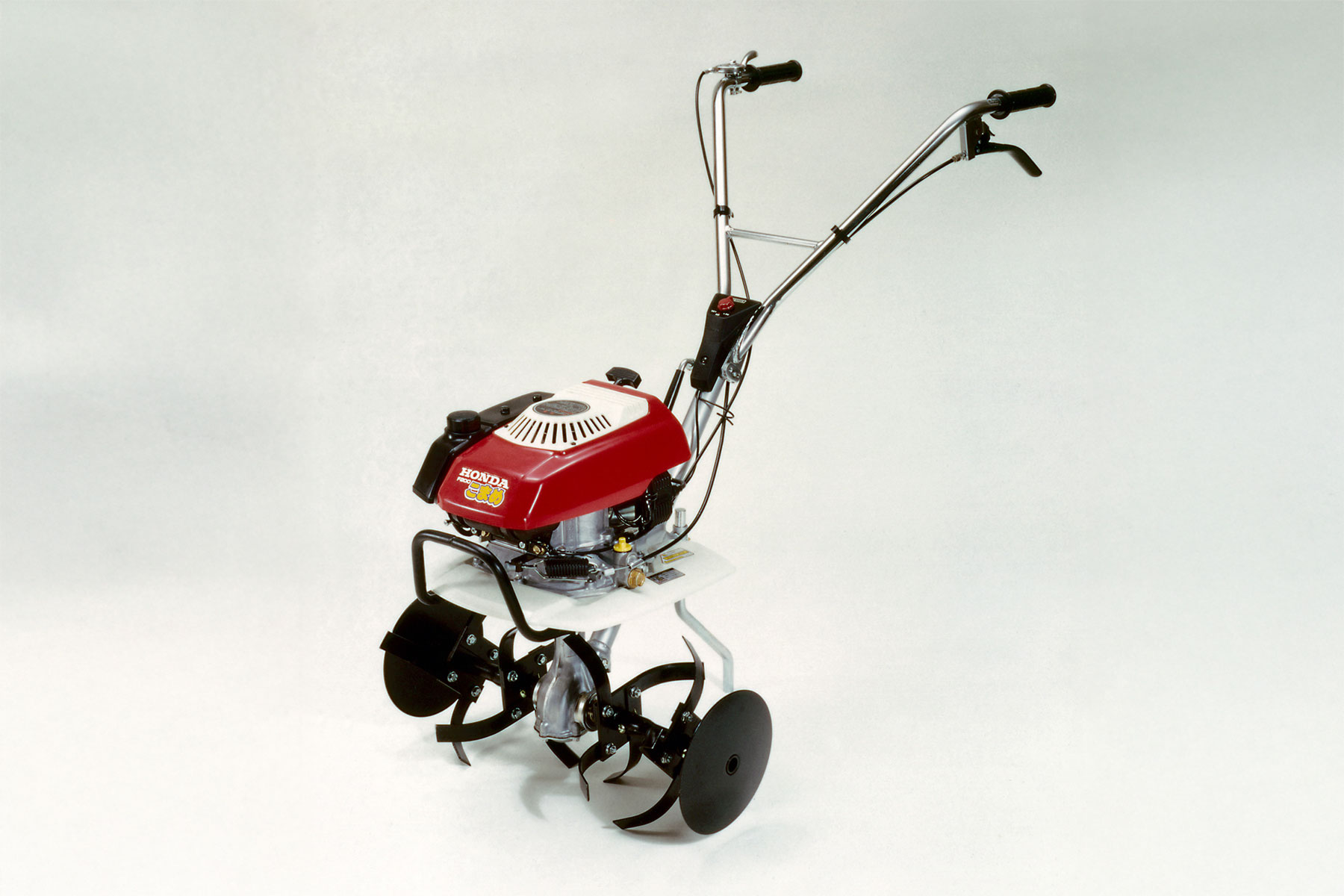
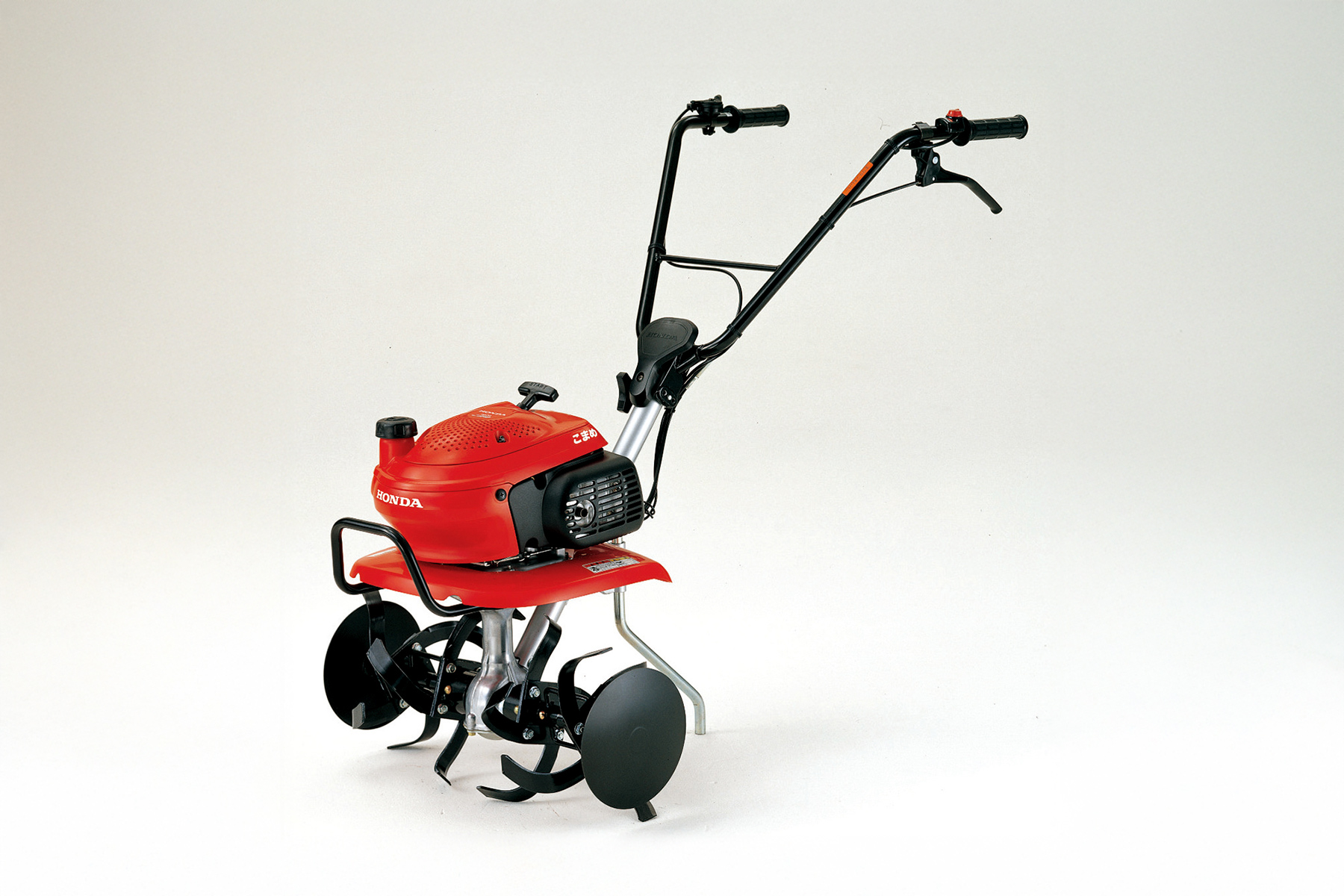
In 1980, sales began for the Komame (F200), powered by a 4-stroke engine that reduced concerns for operators about exhaust fumes and noise.

The Komame featured a upright structure with the transmission and shaft positioned under the engine. By arranging the moving parts in a compact layout, the F200 achieved a weight of 25.5kg. Positioned as ultra-compact compared to conventional tillers, it limited its function to digging up soil, enabling versatile use for home gardens, horticulture, and land maintenance, targeting not only agricultural workers but also home users.

Furthermore, the Komame featured a resin engine cover instead of steel plating and adopted the signature white and red livery characteristic of Honda’s agricultural machinery series. This design created a cute image unlike any previous agricultural machine.

Komame F200

The Komame was a big hit. With an annual sales target of 4,500 units, it sold 38,600 units in its first year alone. This figure includes exports to countries such as France, but at its peak, Japan-domestic sales alone reached 50,000 units. It truly became the successor to the F150.

The Komame was embraced for its ease of use, allowing it to be transported and used in areas where moving agricultural machinery was difficult, or for field work, even using light trucks. It also aligned perfectly with the gradually growing trend of home vegetable gardens at the time. By its second year on the market, TV commercials were aired, and brochures featured photos of women using the Komame, with the slogan: “Replacing the hoe, with an easy-to-handle weight of just 25.5kg. Significantly reduces the time and effort of manual labor.”

The Komame F200 became synonymous with compact tillers, achieving such massive success that people referred to subsequent mini-tillers from other manufacturers were as “Komame.”

By providing a replacement for the hoe to those who had previously relied on manual labor for farming, Honda contributed to improving people’s lives.

Even Lighter, More Compact Honda Tillers

Honda has created a new market for compact agricultural machinery as a “replacement for the hoe,” making manual farmwork easier and improving people’s lives.

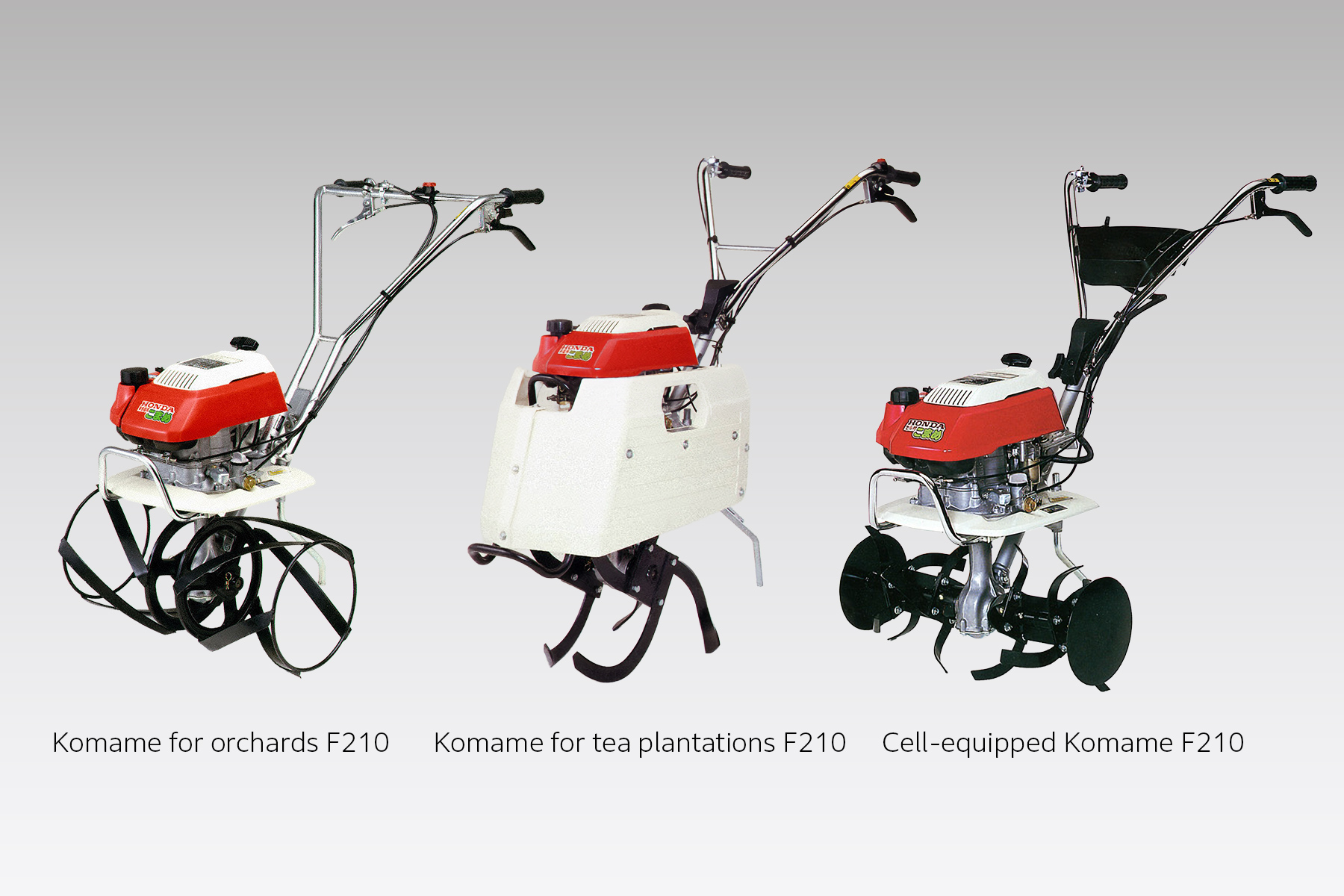
While the widely popular “Komame F200” continues strong sales, Honda added the “Komame F210” to the lineup. This new model featured an adjustable tilling width and comes in specialized variations powered by a new engine for orchards, tea plantations, greenhouses, and other applications. The Komame F210 featured adjustable handle height and included a cell-equipped variation, making it an easy-to-use axle rotor tiller suitable for various scenarios.

Komame series launched in various application-specific models

Since then, the Komame series evolved from the F200, powered by the side-valve G100 engine, to the second-generation Komame F210 in 1984, featuring a new engine. This brought new evolution, including enhanced durability, stable and persistent output, and improved quietness through the adoption of a newly designed muffler.

Then, in 2001, the third-generation Komame arrived with the F220 powered by a dedicated 4-stroke OHV engine, delivering stable power despite reducing displacement from the previous 100cc to 57cc. It also offered a low center of gravity and excellent machine balance. Furthermore, the F220 met the stringent emissions regulations of the U.S. Environmental Protection Agency (EPA), considered the world’s toughest, and achieved a 30% improvement in fuel efficiency over previous models. It also achieved class-leading low noise levels, enhancing environmental performance alongside improved equipment and usability.

The Komame F220 significantly improved environmental performance while achieving enhanced handling through further downsizing and weight reduction.

In 2016, the Komame’s design underwent partial revisions, and in 2020, the 40th anniversary of Komame’s launch, cumulative Japan-domestic sales alone had reached 500,000 units.

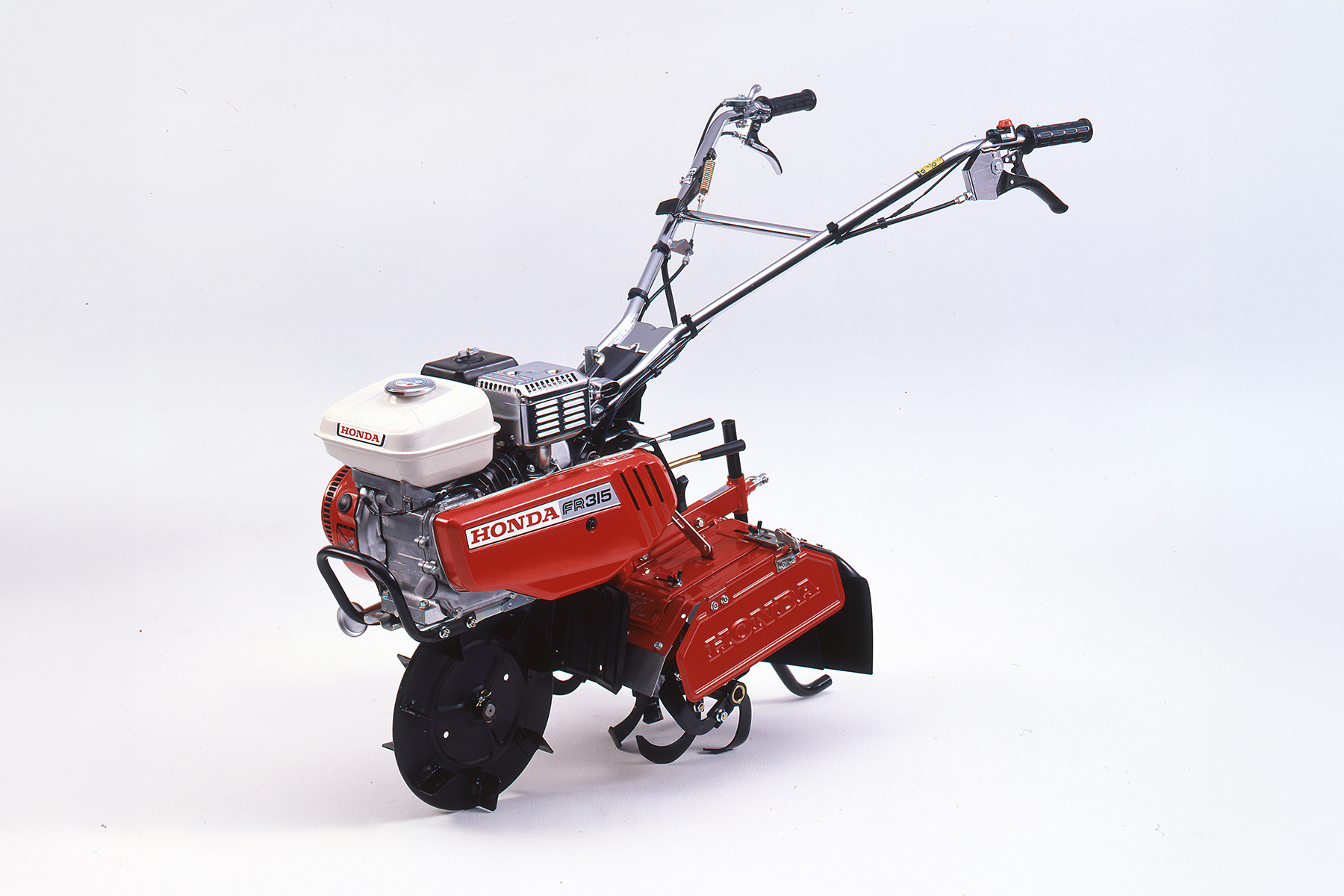
In 1986, Honda launched the FR315, the first agricultural machine suitable for working in narrow rows, continuing its evolution toward lighter and more compact designs. The FR215 benefited from Honda's well-balanced design expertise cultivated in motorcycles, enabling smooth operation of this single-wheel cultivator, which can otherwise become unbalanced and difficult to handle.

The FR315 single-wheel cultivator: Lightweight, low center of gravity design for excellent maneuverability

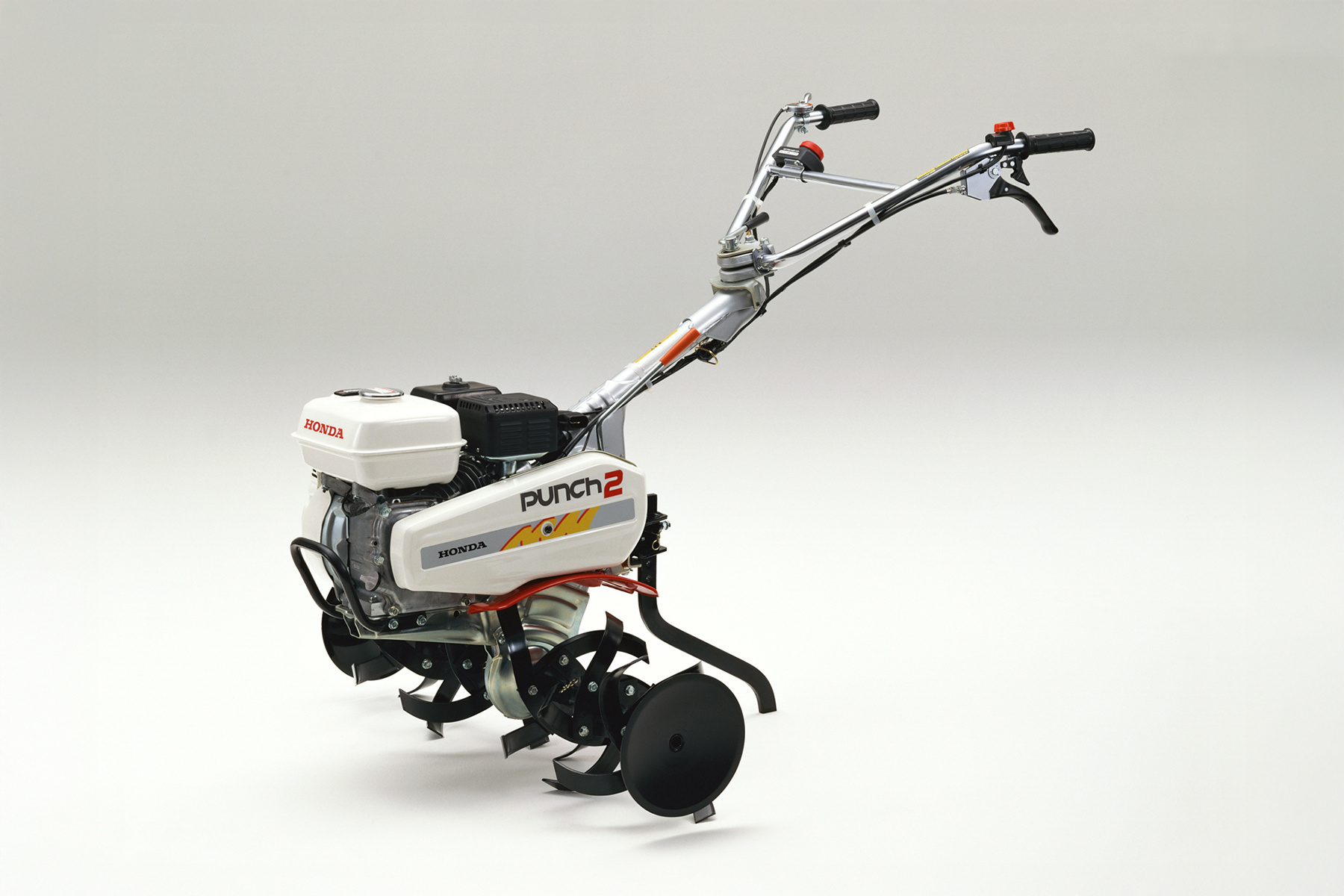
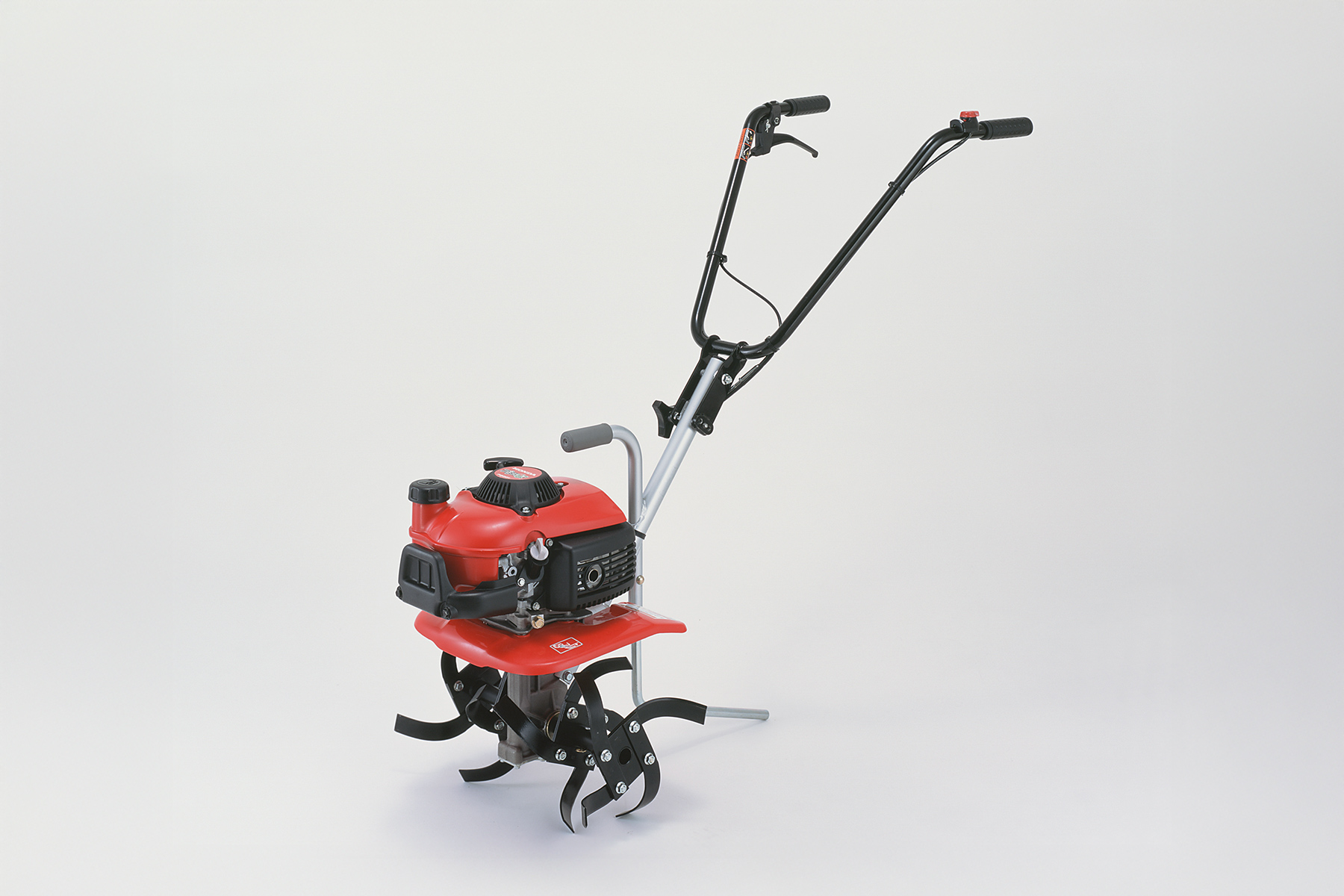
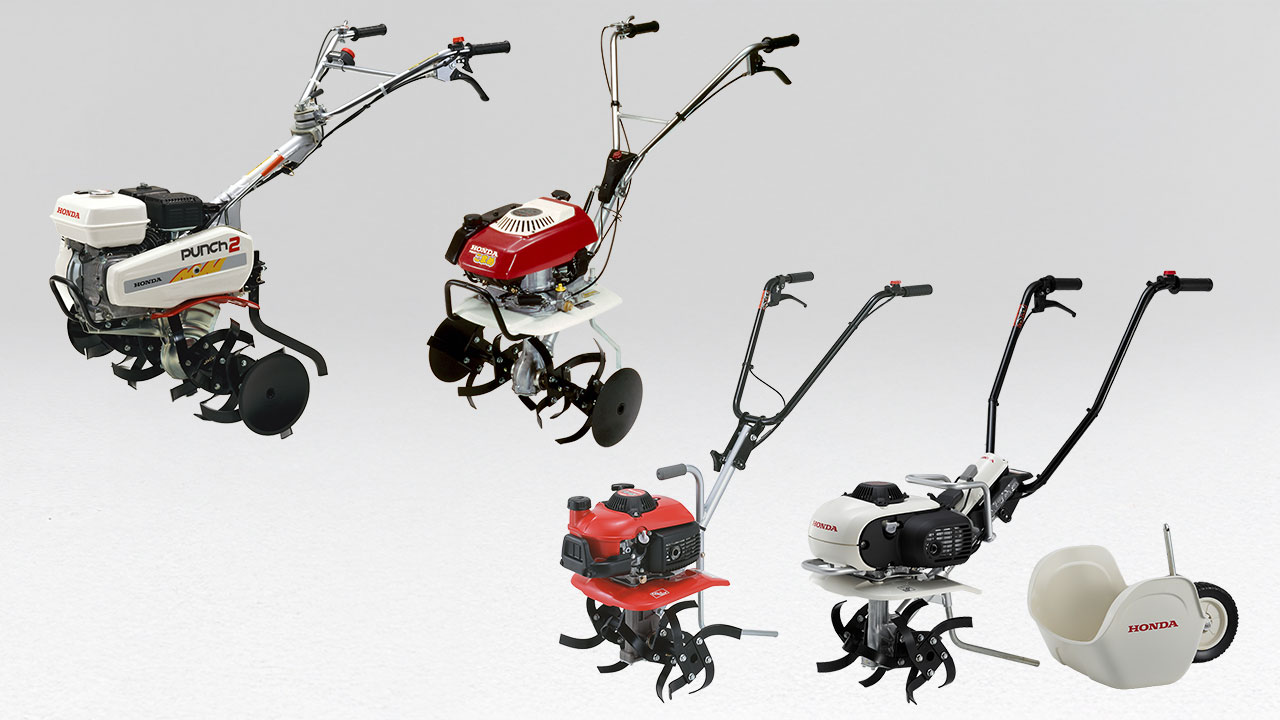
Beyond the Komame, Honda expanded applications in 1991 with the Punch 2 F501 cultivator, featuring a 163cc engine capable of both tilling and ridge-forming operations. Furthermore, in 2002, Honda launched the Putina FG201 mini tiller, smaller and lighter than the Komame, powered by a 49cc OHV engine. This completed a lineup of three axle-rotor tillers: the Putina, Komame, and Punch, enabling use across a wide range of applications. Honda’s products have continued to be sold as lightweight, compact agricultural machinery that anyone can easily operate.

The Punch 2 F501, with a low center of gravity and compact design, is ideal for high-efficiency tasks requiring high output, such as ridge formation, weeding, and soil covering.
Putina FG201 mini tiller

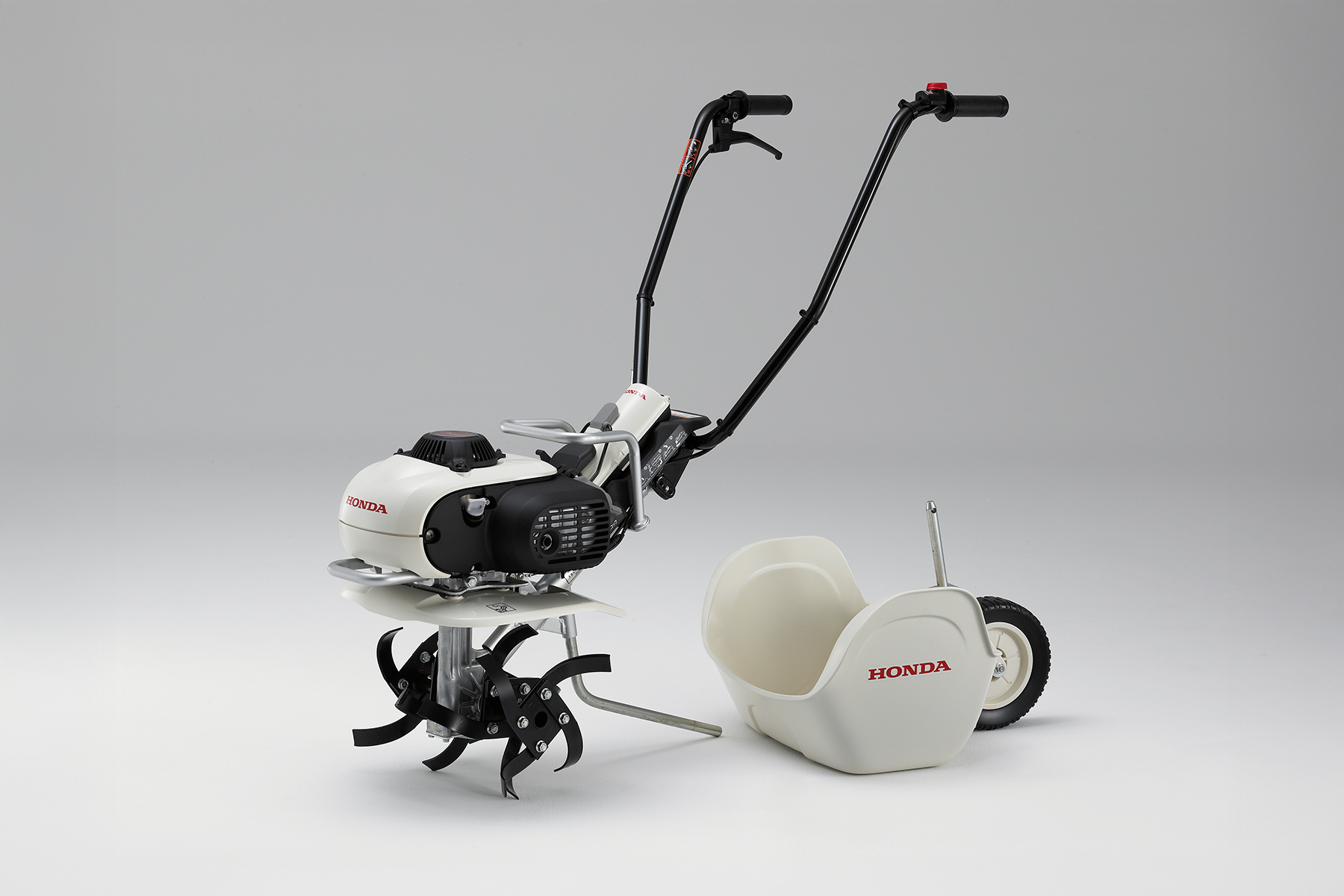
Honda tillers also took on the challenge of energy usage. While previous tillers used gasoline, Honda launched the Pianta FV200 in 2009, utilizing household canister gas fuel, which is easy to purchase and store. This product boasted superior environmental performance, reducing CO2 emissions per hour of operation by 10%* compared to gasoline engines of equivalent displacement. The Pianta FV200, while easy to operate, also featured a dedicated carry box that keeps storage areas clean, making it easy to move and transport. The Pianta firmly inherits the concept of Honda agricultural machinery.
* Honda research

Gas-powered Pianta FV200 tiller uses household canister gas fuel

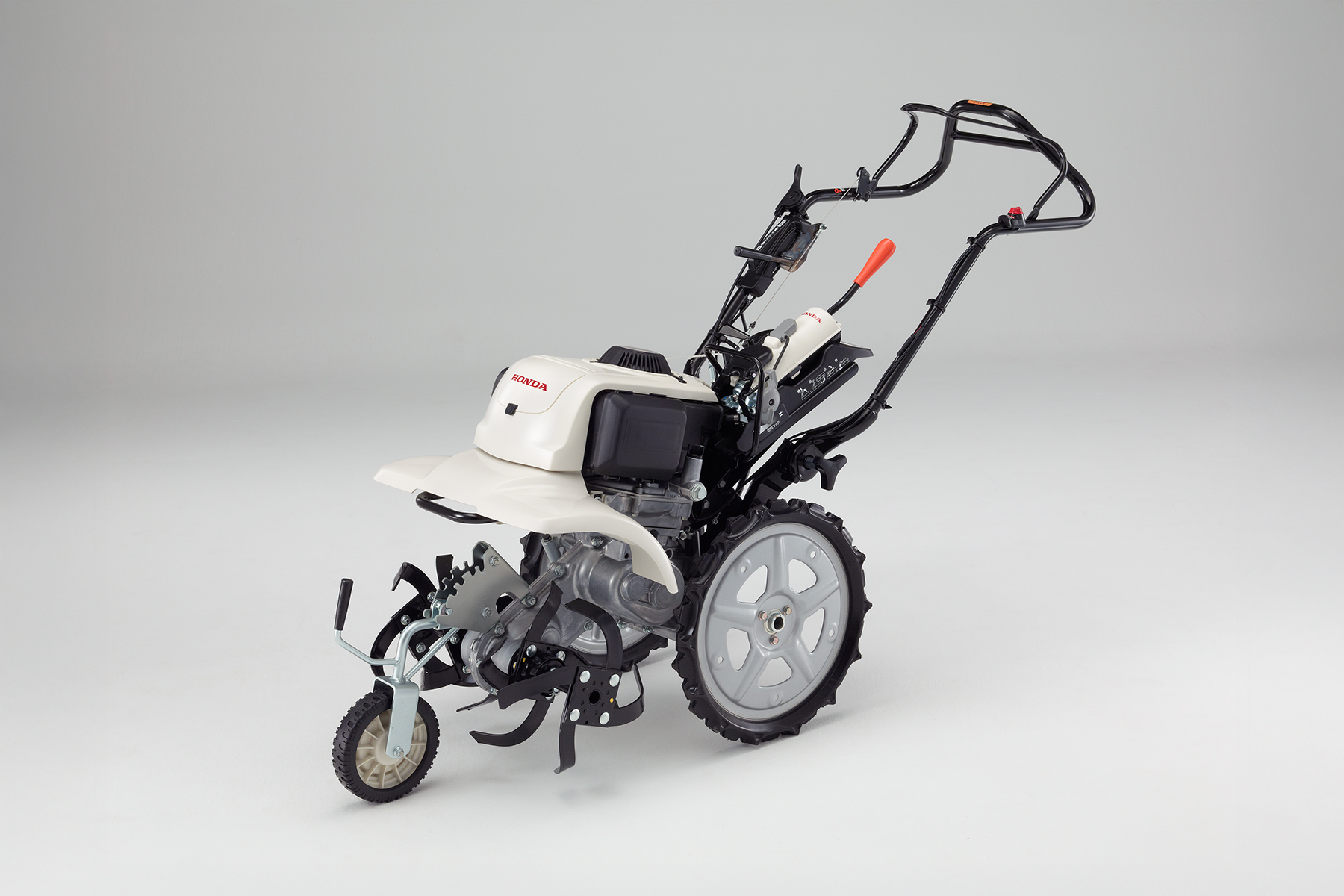
Then in 2013, the Salad CG FFV300, fueled by gas canisters, was added to the already-sold Salad FF300 series. This model, also a tiller usable without gasoline, continues to be well-received today as a product capable of tilling larger areas.

Salad CG FFV300 gas-powered tiller - easy to use with household gas canisters

Honda’s current tiller lineup includes compact axle-rotor tillers like the Komame and three other models (Pianta, Putina, Komame, Punch); the mid-sized front rotary tiller Salad; and three large rear rotary tillers (Lucky Boy, Lucky Multi, Lucky). These models are designed for diverse agricultural tasks.

Each of these models prioritizes being lightweight, compact, and easy to use, representing agricultural machinery Honda pioneered and created for the market.

Seeing hard, compacted soil transformed into soft, workable earth by using the Komame—hearing customers say how simple tiller operation, not manual hoeing, makes farming easier, and seeing them use it—is the greatest joy for Honda Power Products.

Power Products History