Generator (Chapter 2)
A Revolution in Power Generation
Honda’s Inverter Generators
In 1965, Honda Power Products entered the portable generator market, focusing on mobility and ease of use.
At the time, however, the market was dominated by low-cost generators powered by two-stroke engines, and the advantages of Honda generators powered by four-stroke engines were slow to gain widespread recognition.
That changed in 1998 with the launch of the GENE21 series, which opened a new chapter for the future of Honda portable generators.
As Honda began selling portable generators, awareness of generators as products grew steadily. By the 1970s, generators were being widely adopted not only for professional and disaster-response use, but also for leisure applications.
However, in the compact portable generator segment below 1 kVA, Honda faced challenges compared with competitors in terms of price and weight. The reason lay in the engine.
Honda continued to use four-stroke engines, known for excellent fuel efficiency, low noise, and clean emissions. In contrast, many competitors adopted simpler, lower-cost two-stroke engines with fewer components. As a result, Honda generators struggled in terms of weight and pricing. Even so, Honda remained committed to generators powered by four-stroke engines.
In the market for generators with outputs of 1 kVA and above, Honda products earned strong recognition.
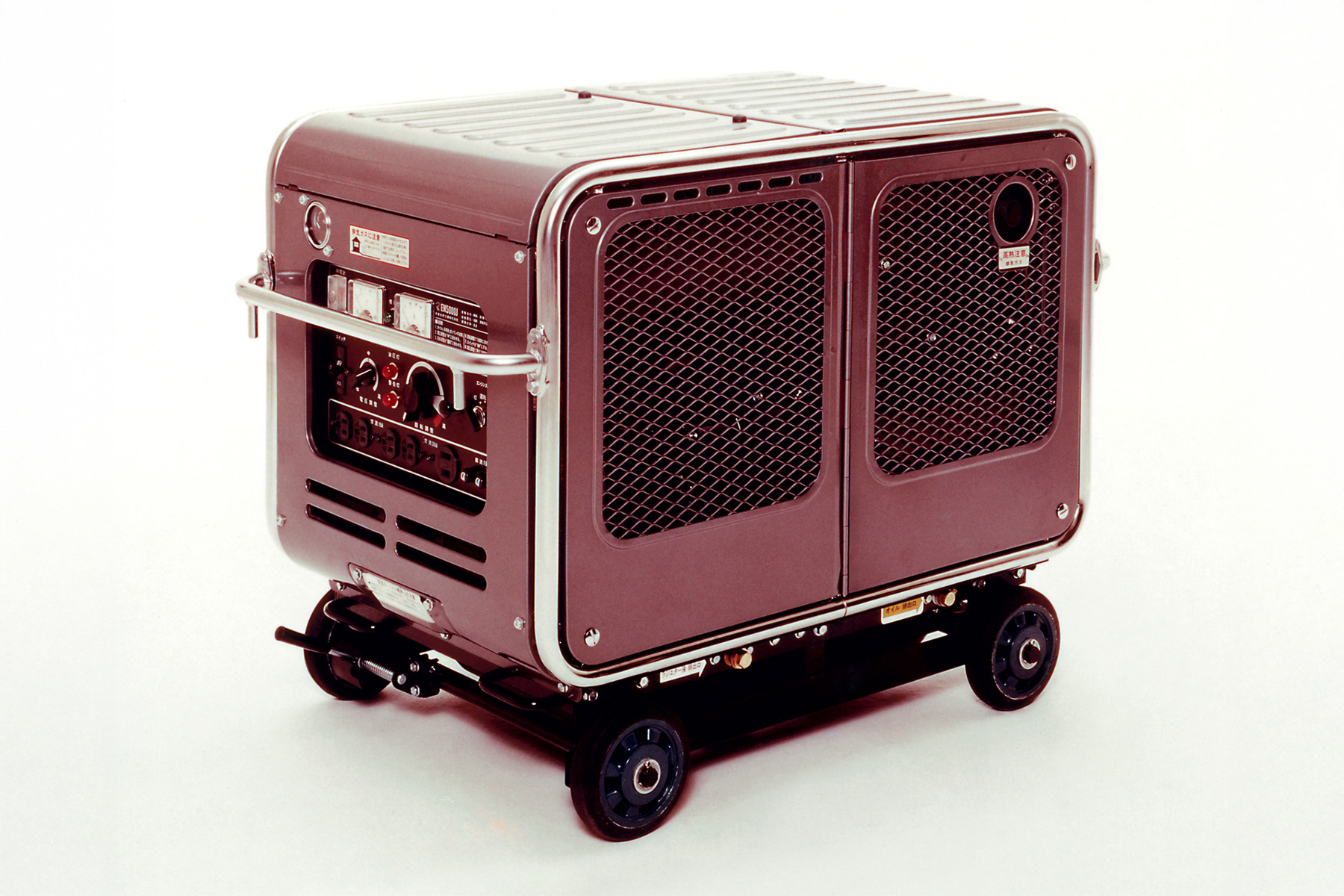
In 1973, Honda launched the EM5000 (5 kVA) and the ET5000 (three-phase 5 kVA) as “sound-insulated portable generators,” powered by a water-cooled four-stroke engine derived from the Honda Life light automobile.
To ensure the generators could be used for nighttime construction work, the development leader conducted late-night test runs in front of his own home during the final stages of development. The noise level was so low that it went unnoticed by neighbors. This quiet performance led to widespread use not only at construction sites, but also at film and television production locations.
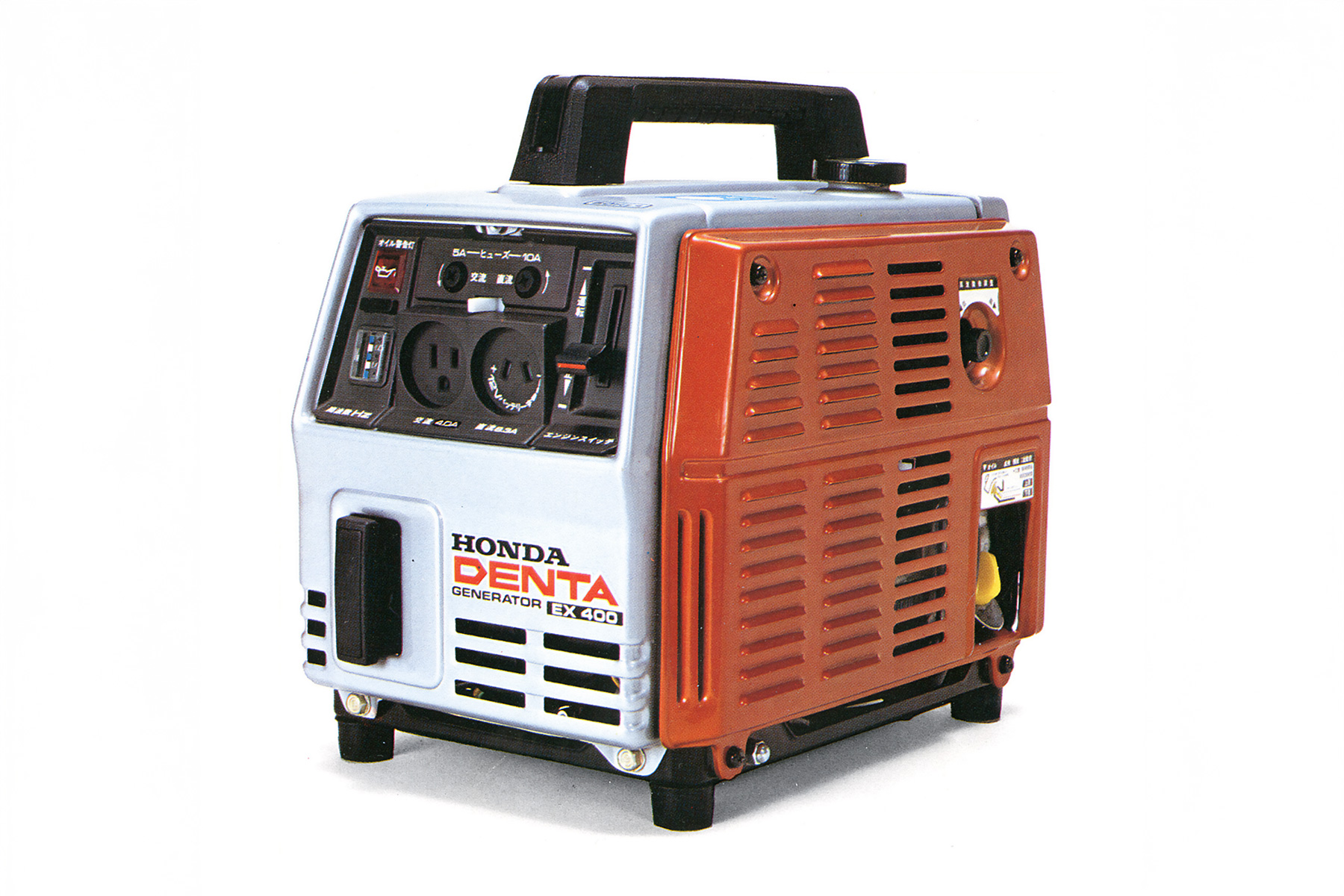
In 1979, Honda introduced a new lineup of compact portable generators—the EX400, EM400, and ED300—nicknamed “Denta.”
Developed with a strong focus on the original E300 concept of “compact and lightweight,” “high quietness,” and “ease of use,” the EX400 became a major success, selling more than 100,000 units annually worldwide.
In 1987, Honda further pursued compactness and lightweight design with the EX300, developed under the concept of a “pochette generator” that anyone could easily carry. At a time when most generators in its output class weighed around 20 kg, the EX300 achieved a remarkable weight of just 8.5 kg.
The EX300 marked the first time Honda adopted a two-stroke engine in a compact portable generator. Despite this, Honda focused on quiet operation, achieving a low noise level of 50 dB (at 150 VA, A-weighted, measured at 7 m)—comparable to everyday household background noise.
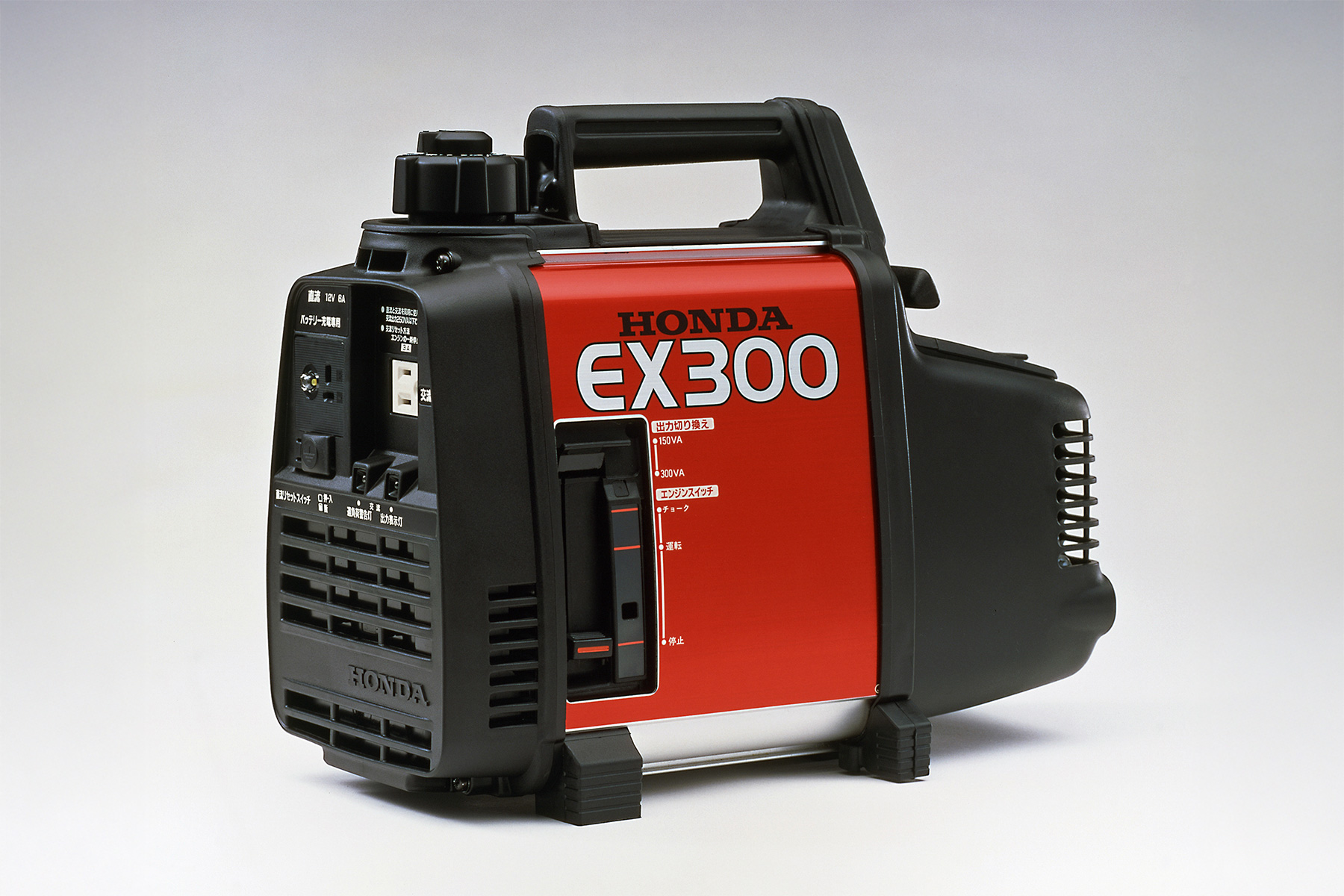
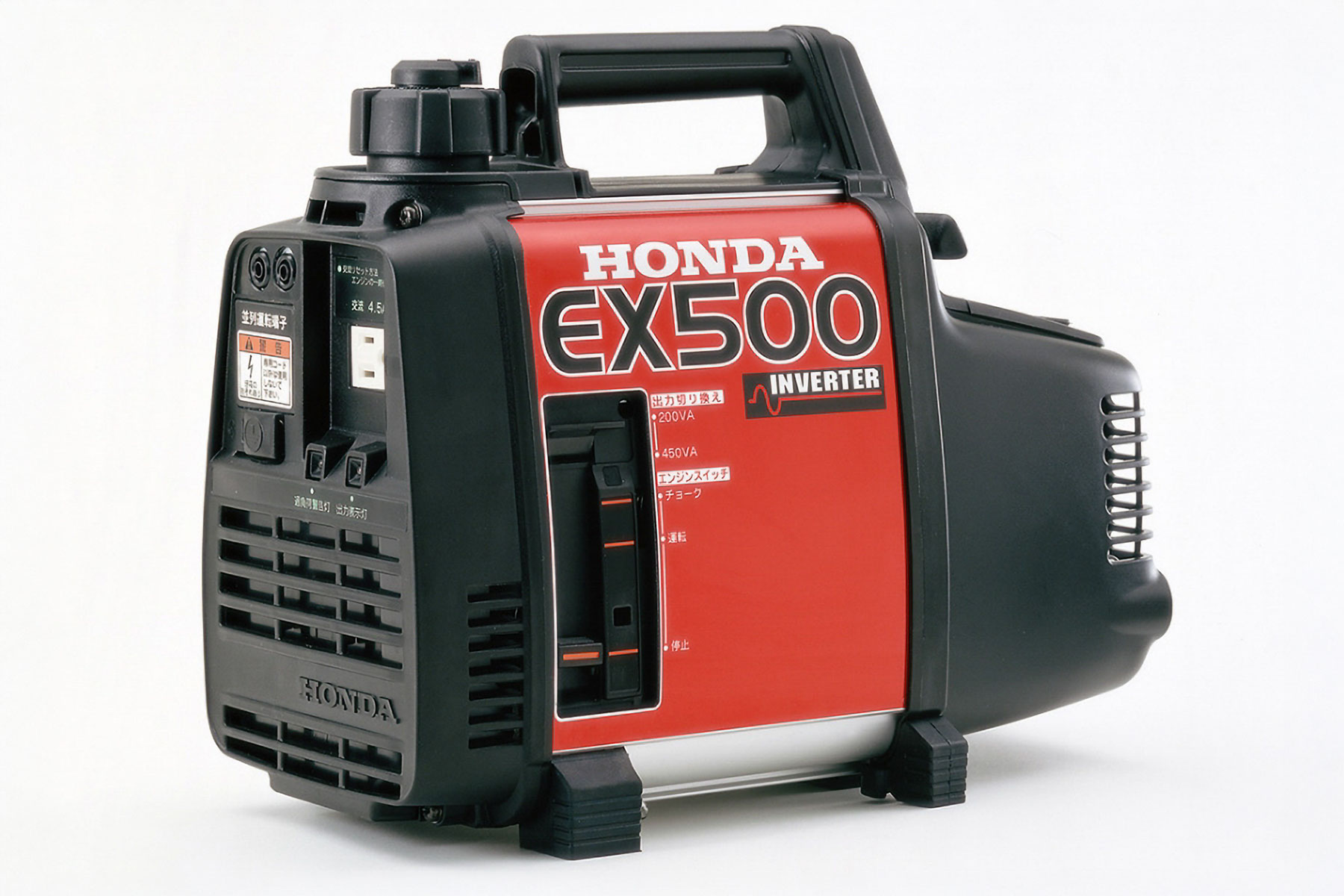
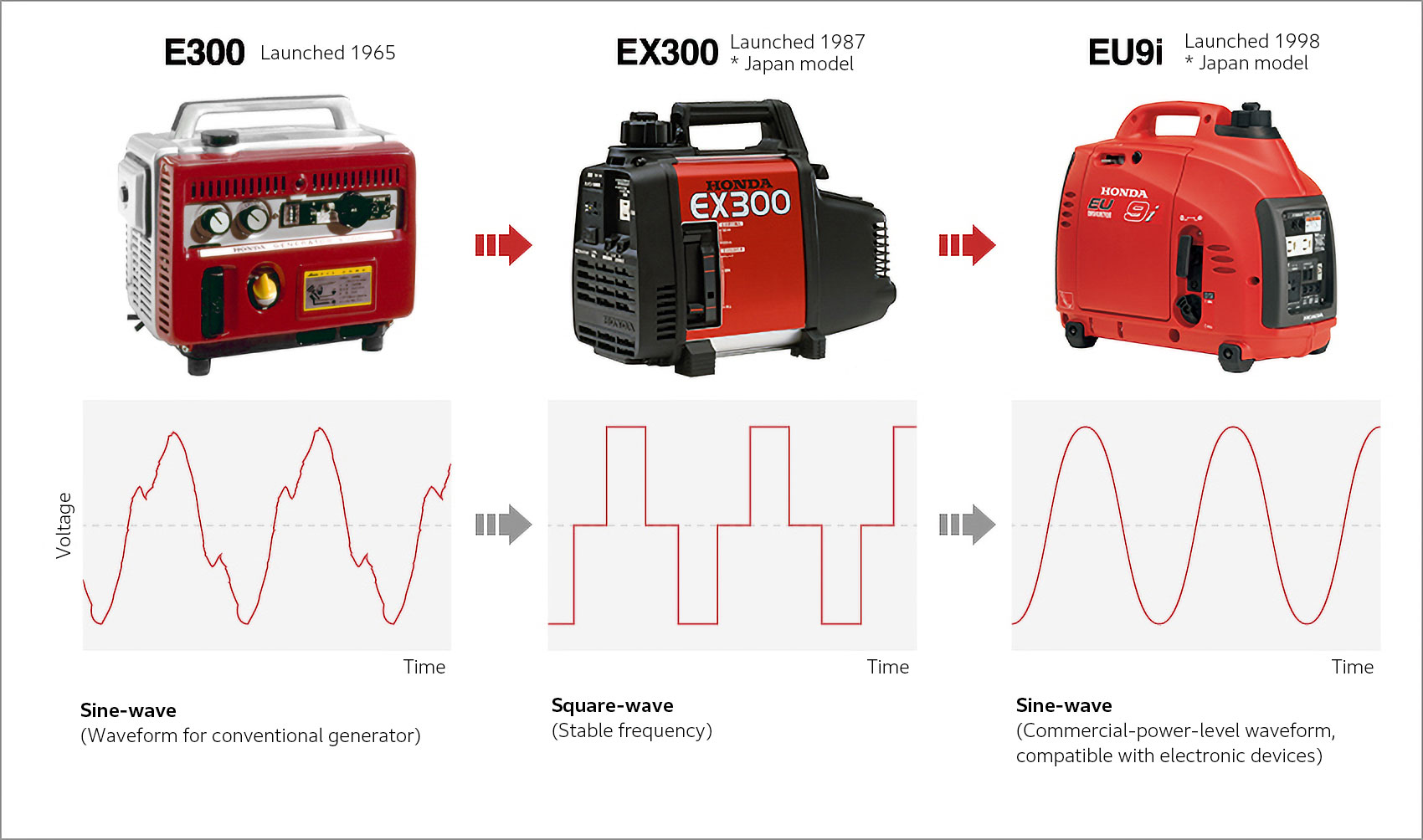
The EX300 also introduced a key technology for Honda: the inverter. By using an inverter circuit, the generator was able to produce electricity with a stable frequency, improving efficiency and usability. However, limitations remained, as certain devices were incompatible due to waveform characteristics.
This challenge was addressed in 1996 with the launch of the EX500. By incorporating a custom IC (integrated circuit), Honda developed a sine-wave inverter generation system that resolved these issues.
Honda’s early adoption of inverter technology for portable generators proved to be a groundbreaking innovation—one that would later become an essential feature across the generator market.
In the mid-1990s, the rapid spread of precision electronic devices such as personal computers created demand for higher-quality electrical output from portable generators.
Against this backdrop, Honda began developing its next-generation portable generator, GENE21. The development goal was clear: to generate electricity as clean as household wall outlets.
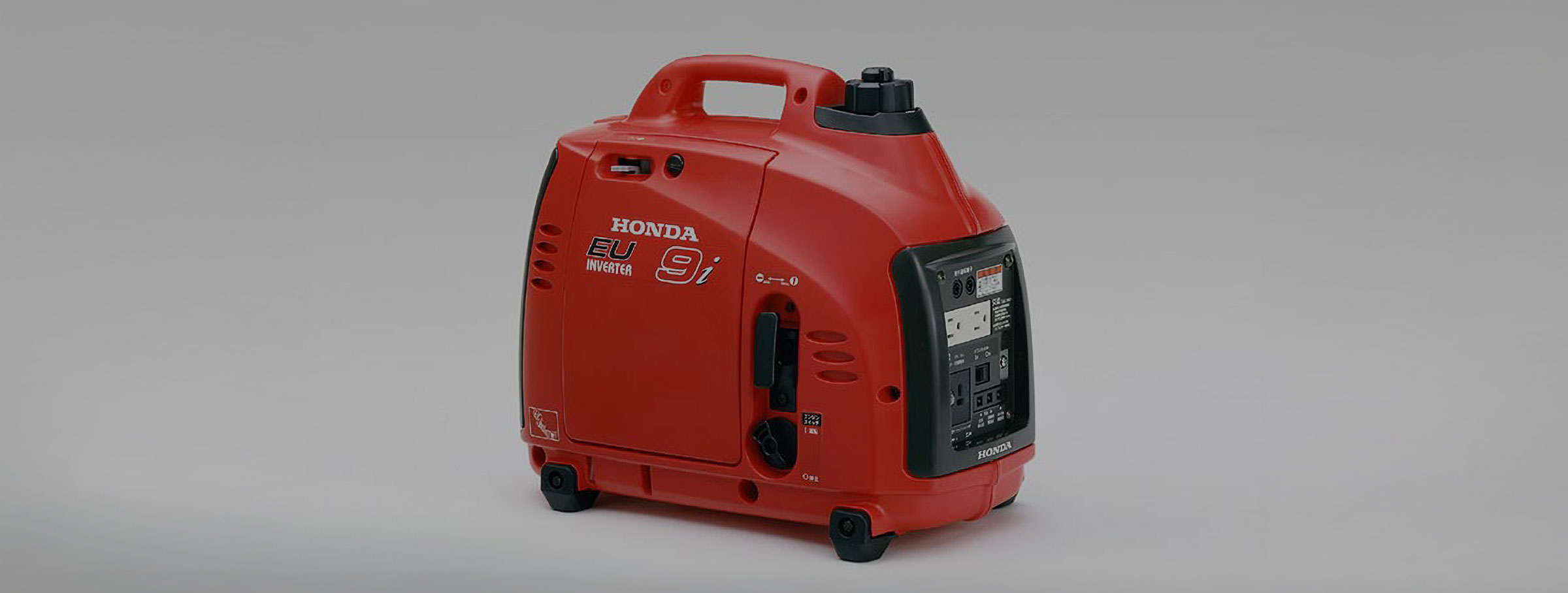
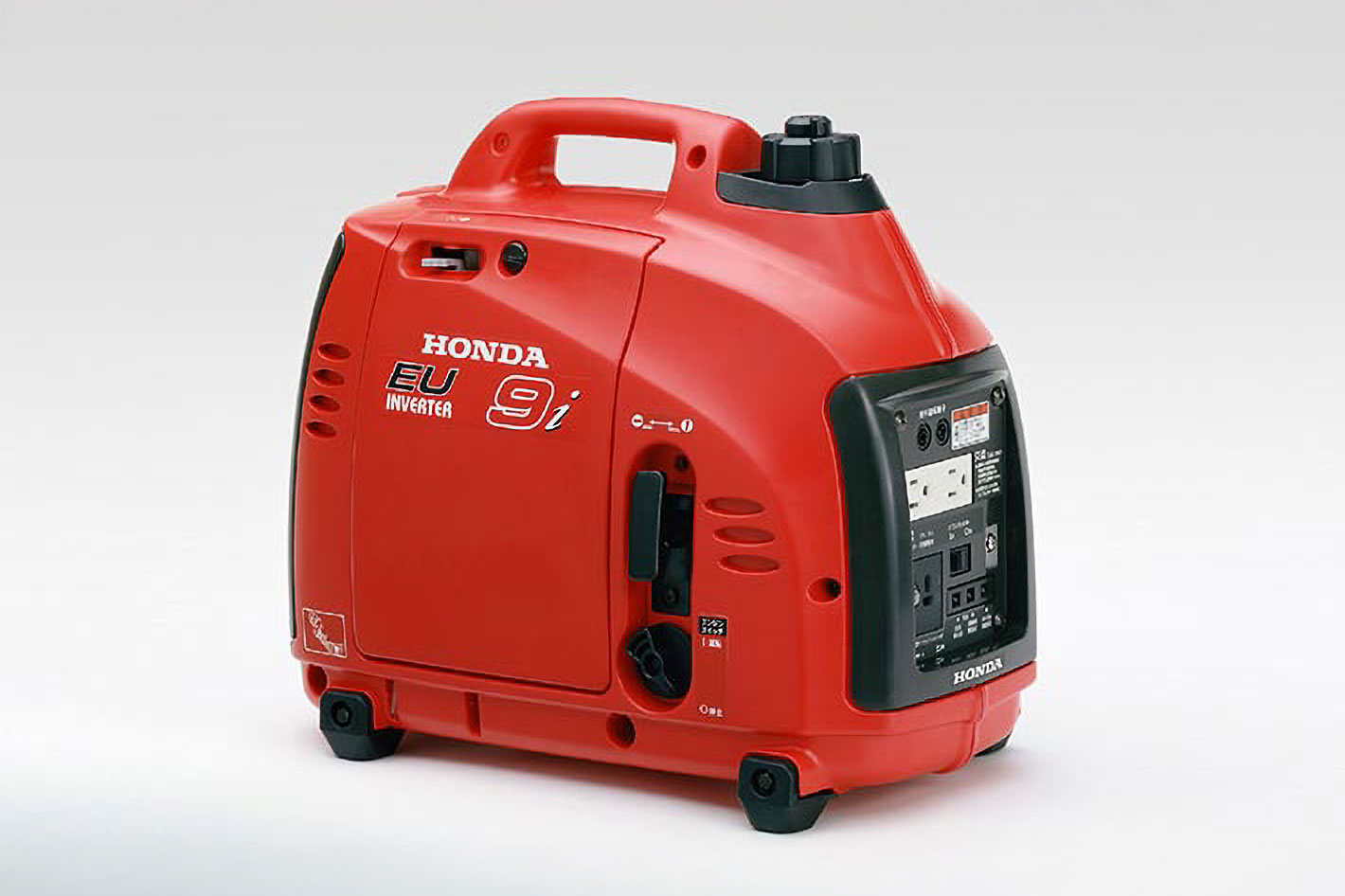
Based on this concept, the GENE21 series was launched in 1998 with the EU9i, EU24i, and EU28is. Equipped with microcomputer-controlled sine-wave inverters, these models delivered high-quality electricity suitable even for precision electronic equipment, presenting a new value proposition in the portable generator market.
Beyond improving power quality, the GENE21 series also redefined generator structure itself.
As shown in the illustration, Honda eliminated the conventional externally mounted general-purpose alternator and introduced a newly developed high-speed, multi-pole alternator. This resulted in significant reductions in size and weight.
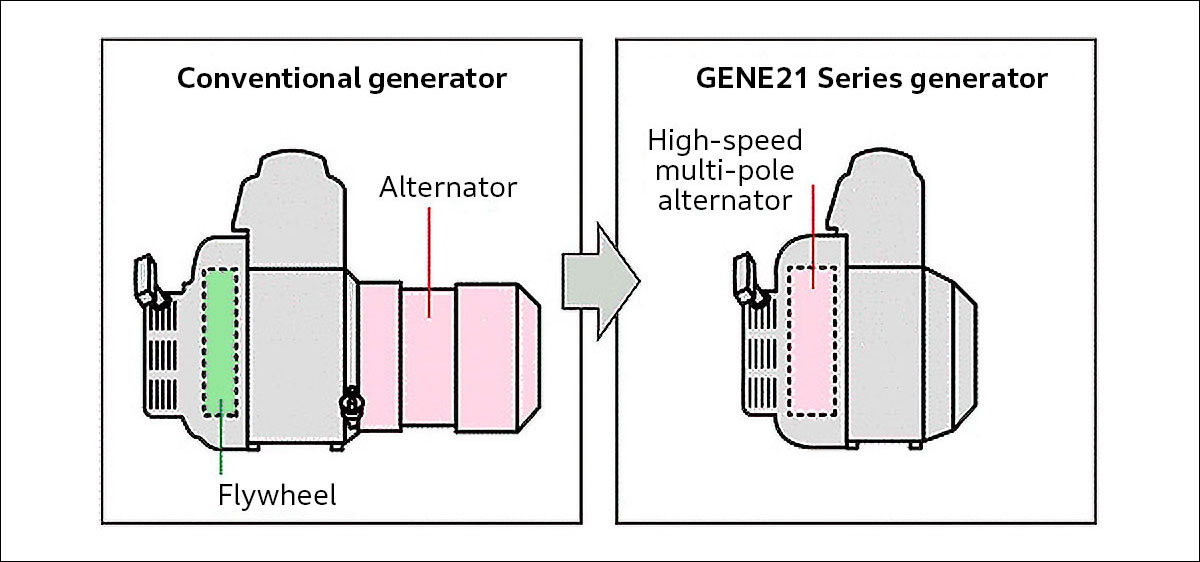
As a result, while the 3 kVA EM3000 released in 1985 weighed 84 kg, the 2.8 kVA EU28is weighs 59 kg. Likewise, whereas the 900 VA EG900 released in 1994 weighed 30.5 kg, the EU9i weighs just 13 kg—achieving a significant reduction in weight at comparable output levels.
The EU series, with its fully enclosed resin body, also earned high praise for its exceptionally quiet operation.
In addition to durability, low noise, fuel efficiency, and compactness—qualities already valued in the 1 kVA-plus generator market—Honda’s ability to deliver clean, high-quality electricity with ease further elevated the reputation of its portable generators.
As a result, Honda portable generators came to be widely recognized for their excellence. The red-bodied Honda generator established itself as a high-quality global brand, achieving broad adoption across markets worldwide.