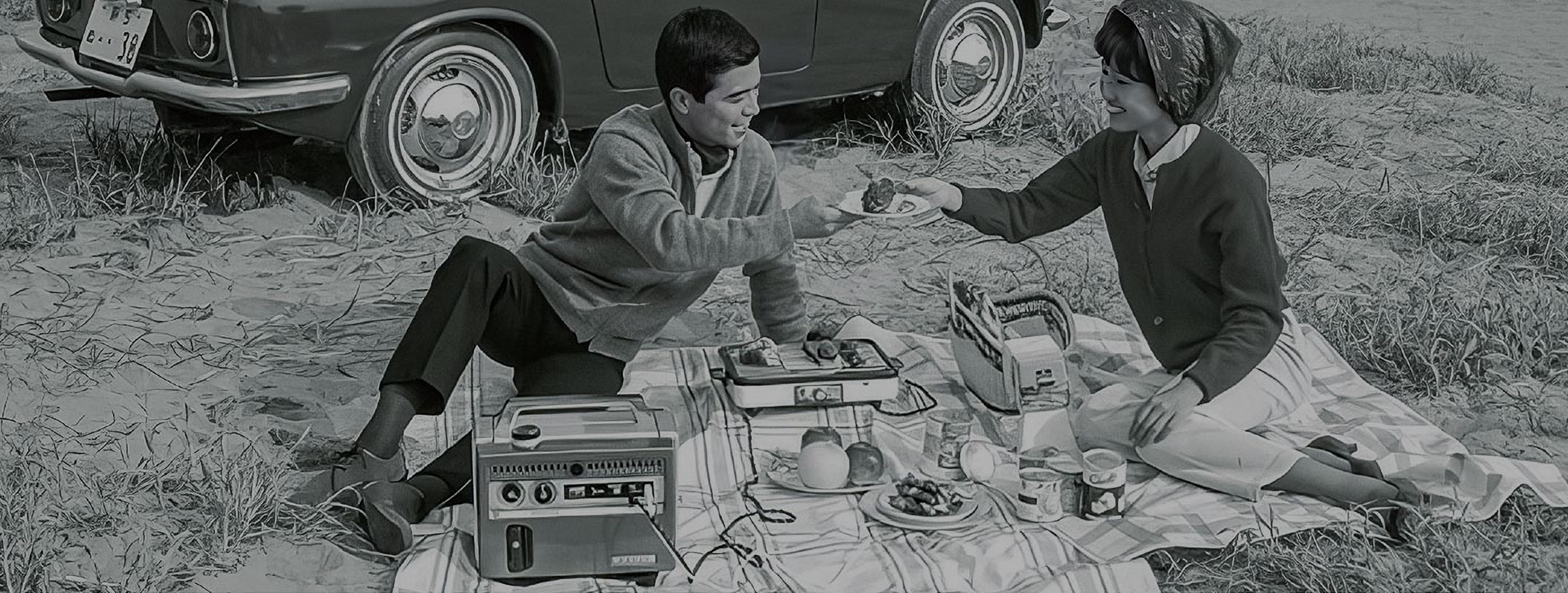
Generator (Chapter 1)
The Spark Came from Sony’s President
Honda’s Portable Generator Project Begin
Honda Power Products’ desire to make everyday life easier took a new direction in the 1960s—toward developing products that would make it possible to use electrical appliances even where power outlets were not readily available.
Honda’s Power Products business began in 1959 with the launch of its first tillers. As the 1960s approached, Honda turned its attention to the development of portable generators.
The catalyst was Masaru Ibuka, one of the founders of Sony Corporation and its president at the time. In 1959, Sony had introduced a groundbreaking product: the world’s first truly portable television, known as the Micro TV.
Despite being portable, the television had one major limitation—it could not be used outdoors or in locations without access to an electrical outlet.
This challenge prompted Ibuka, who had a close personal relationship with Soichiro Honda, to turn to Honda, already renowned for its compact general-purpose engines, with a request to develop a compact generator.
“It was the world’s first 5-inch television, but at the time, batteries simply weren’t good enough, so it couldn’t be used where there were no outlets. Even though we called it ‘portable,’ you couldn’t really take it anywhere.
“Around then, Mr. Honda was already working on compact generators driven by small engines. If a small generator could be carried together with the television, the power issue would be solved. That’s why I asked him to supply small generators.”
— From “My Friend, Soichiro Honda” by Masaru Ibuka
The 1960s marked the beginning of Japan’s period of rapid economic growth. Household electrical appliances became increasingly common, with refrigerators, washing machines, and vacuum cleaners known as the “Three Sacred Treasures.” Later, color televisions, air conditioners, and automobiles came to be called the “New Three Sacred Treasures,” or “3C.”
Anticipating both the spread of electrical appliances and the arrival of a leisure-oriented society, Honda had already begun developing compact generators independently. Ibuka’s request accelerated these efforts, and Honda officially began development of a small generator for Sony,
Sony, however, adopted a power system for the Micro TV that combined AC power, dry-cell batteries, and rechargeable batteries. As a result, the plan to supply generators to Sony was discontinued.
The generator Honda had developed in anticipation of this collaboration was the E40—a remarkably compact portable generator with an output of 40 watts. Its 14.8 cc engine required the development of an ultra-compact carburetor and ignition system, created specifically for this application. Despite its small size, the E40 featured a sound-insulated package and incorporated numerous technical challenges. Completed as Honda’s first portable generator, the E40 was sold in North America. However, the market at the time was not yet ready, and the model did not achieve widespread adoption.
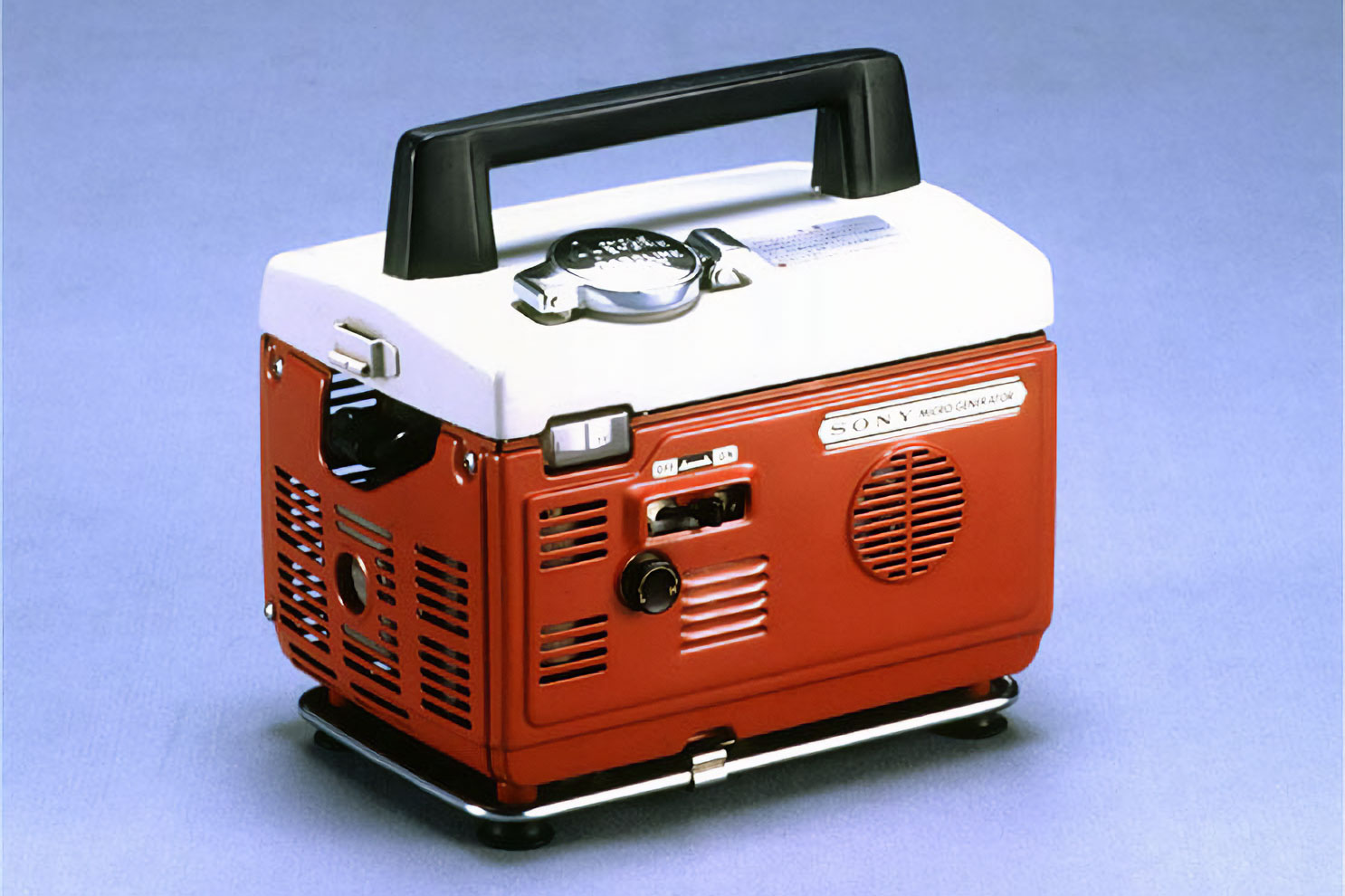
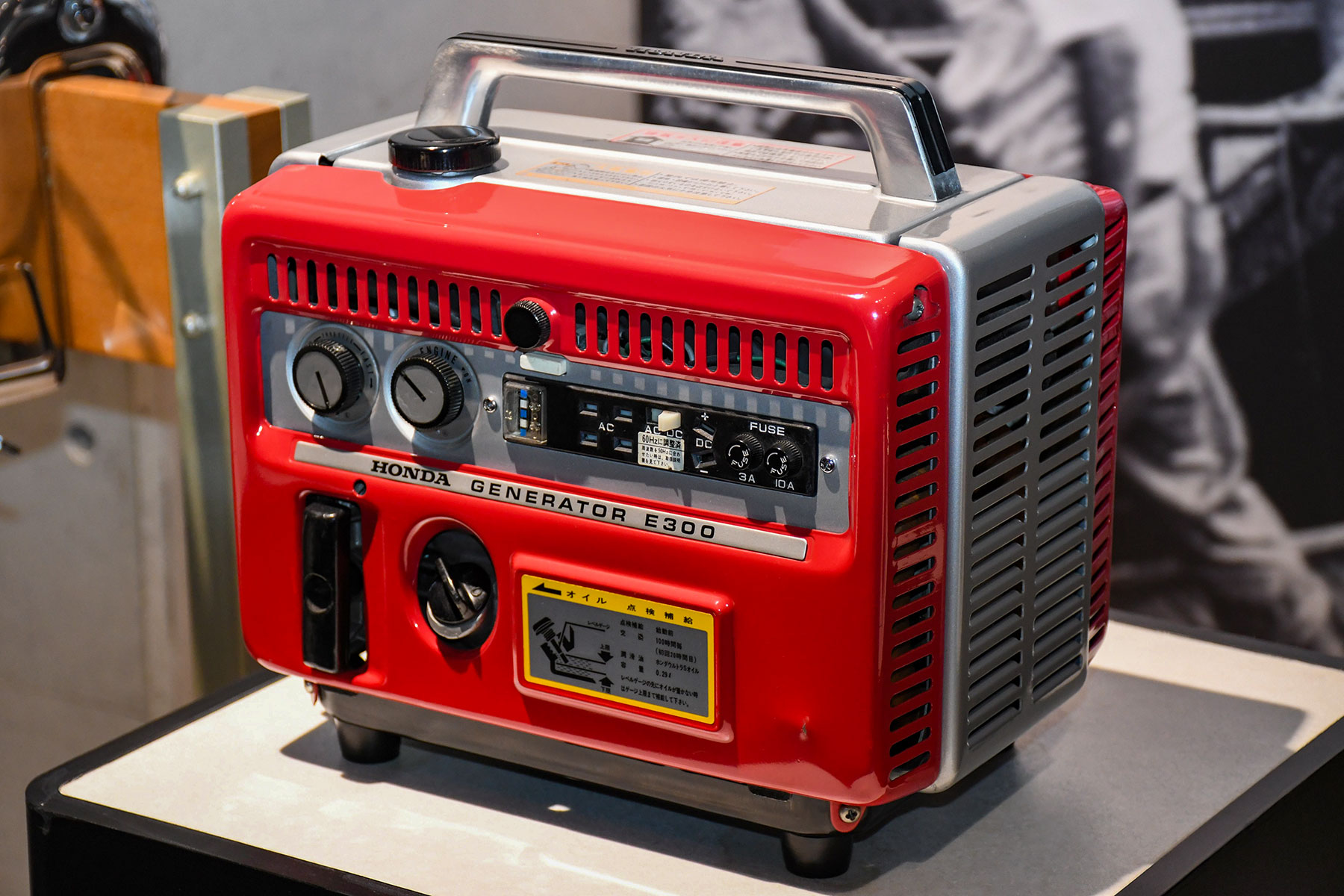
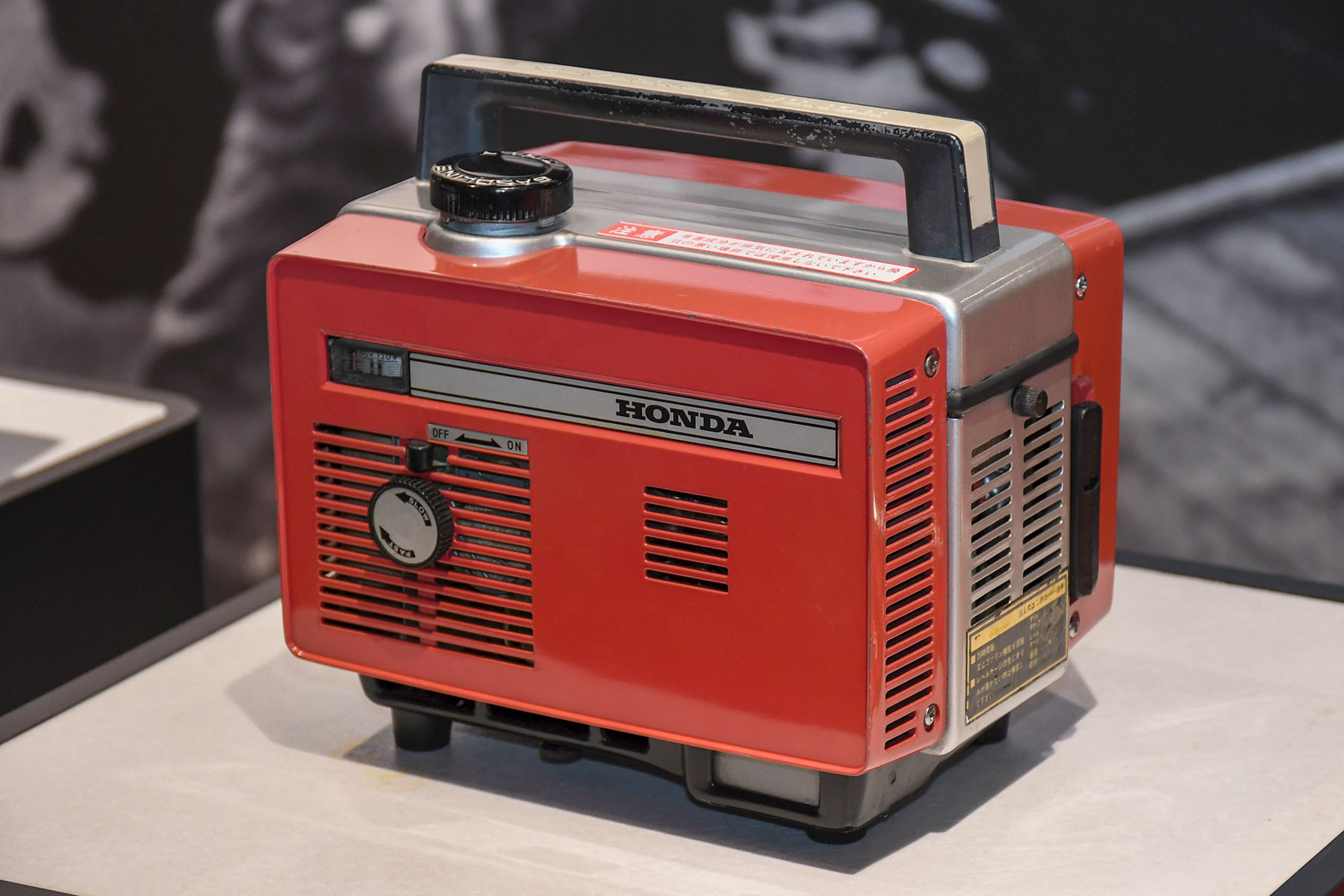
In 1965, Honda completed development of its first portable generator intended for full-scale commercial sales: the E300. With an output of 300 watts, the E300 was conceived as a lightweight, compact, and exceptionally quiet generator that anyone could use with ease. To achieve this compact packaging, Honda adopted a side-valve engine with a displacement of 50 cc. As portability was a key consideration, the generator featured a fully enclosed, cubic design inspired by an attaché case.
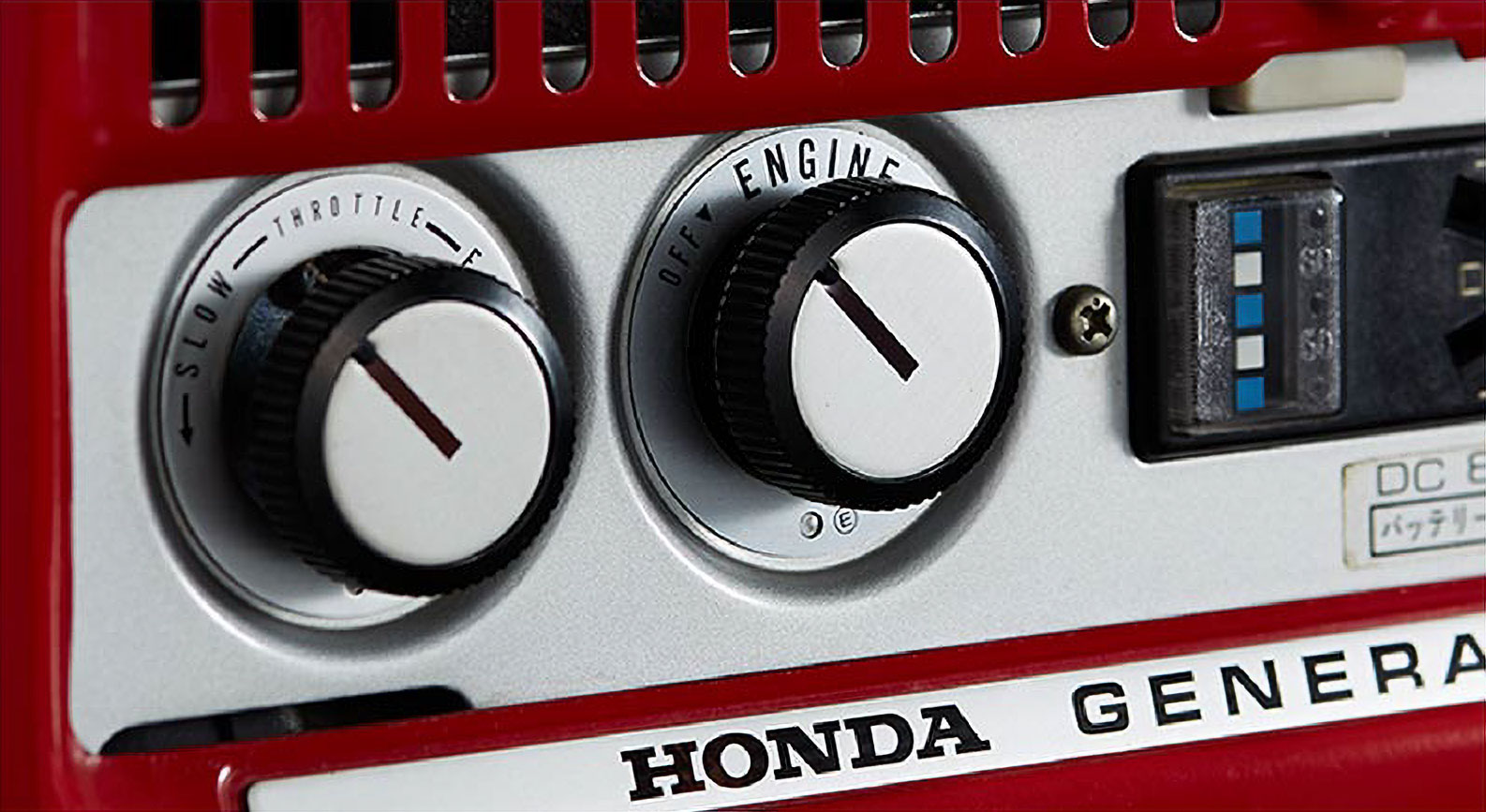
To convey its friendliness and ease of use, switches were rounded. These controls were inspired by radio volume knobs, intentionally avoiding a mechanical appearance while providing users with a sense of familiarity and reassurance.
Soichiro Honda frequently visited the E300 development site and offered detailed feedback to the engineering team:
“Pay attention even to the underside—design it properly.”
“Create a feeling of reassurance that anyone can trust, something that doesn’t feel mechanical.”
“Keep the noise low and minimize vibration.”
These demands reflected Soichiro’s unwavering commitment to creating products that had never existed before—and to delivering them with care and purpose.*1
During development, the engine displacement was increased to 55 cc. The E300 supported both DC and AC output up to 300 watts, weighed 17 kg, and was launched as a truly portable generator. It could power outdoor lighting, electric kettles, televisions, and radios, and sales exceeded expectations. The E300 proved especially popular at festivals and street stalls, where it was widely used as a power source for lighting, and demand quickly spread nationwide.
Beyond Japan, the E300 was exported to Europe, Southeast Asia, and Africa, surpassing cumulative sales of 500,000 units by 1980. Its core philosophy—lightweight, compact, and easy to operate—common with Honda’s general-purpose engines and tillers, continues today in the Honda EU series of generators.
In 1966, Honda introduced the E80, which weighed less than half of the E300, at just 8 kg.
With a 21 cc engine and 80-watt AC output, the E80 was embraced as a portable power source for leisure activities.
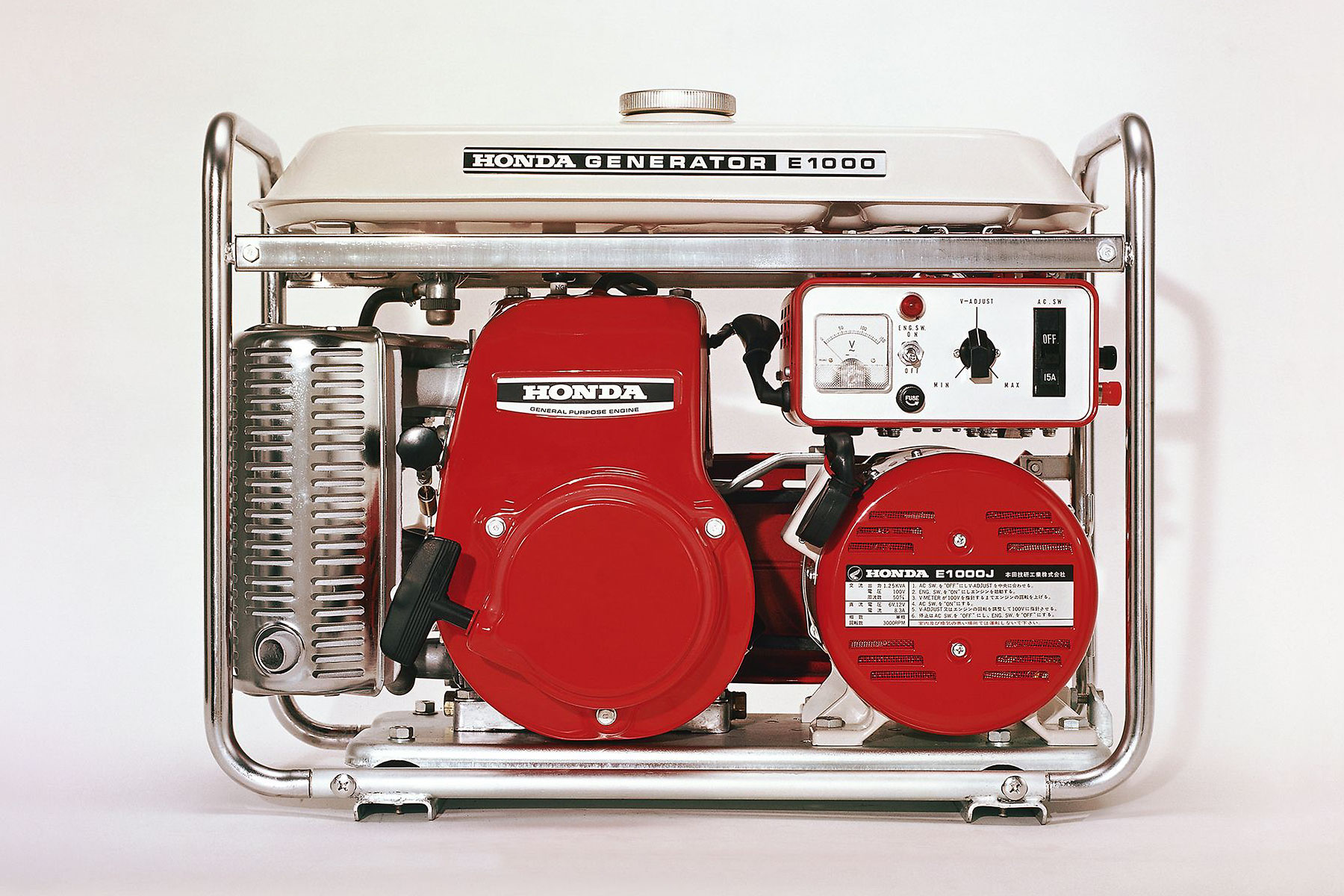
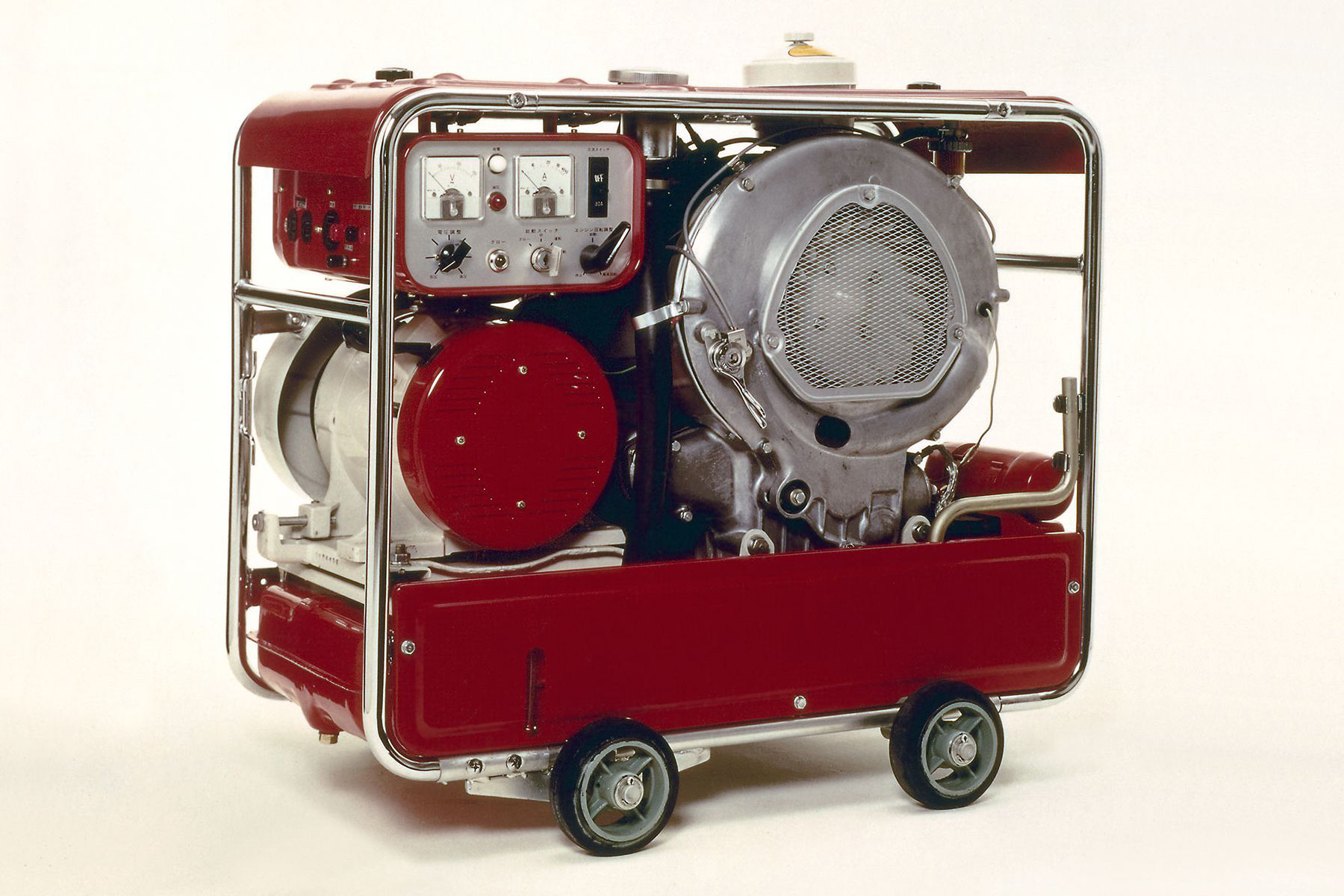
Honda also expanded its lineup with the E1000 in 1965 and the E3000 in 1966. These models were not portable units—the E1000 delivered 1 kW, while the E3000 produced 3 kW—serving as power sources for construction equipment, hospitals, and emergency backup systems for home use.
By enabling the use of electrical appliances even where a power source was not available, Honda generators embodied the company’s enduring belief in using technology to make people’s lives easier.
*1 Source: “Stories to Be Passed On: 50 Years of Challenges,” 50 Years of Honda History