Pocket Bike Racing: The Daijiro Cup
Honda power products support the next generations of motorcycle racing
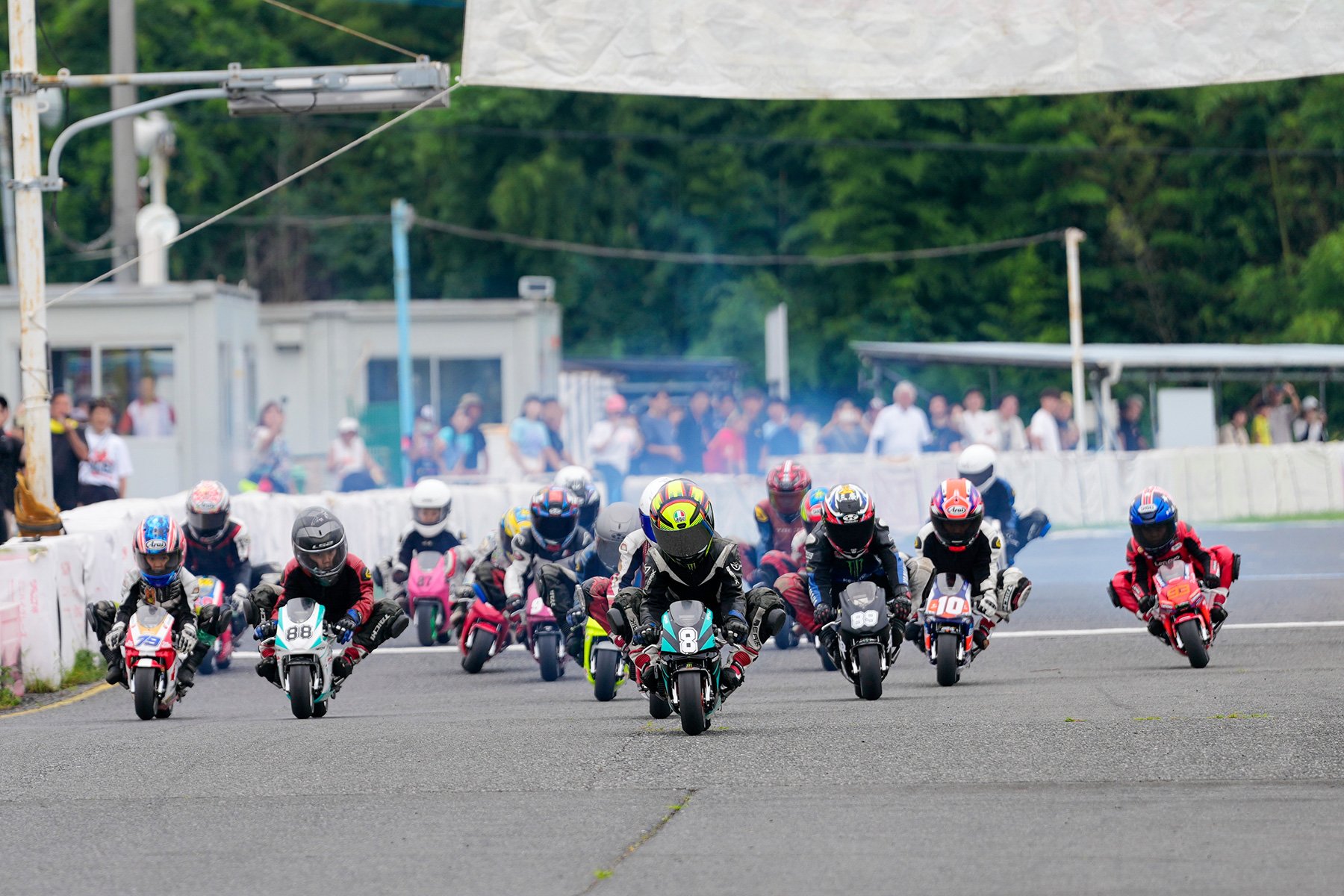
Circuit Akigase: A circuit that has produced world-class riders
Adjacent to Akigase Park in Saitama City, Saitama Prefecture, Circuit Akigase is a 608-meter circuit dedicated to minibikes and karts. It was opened in 1981 by the parents of Satoshi Motoyama, initially for their son and other children. Motoyama went on to become a four-time series champion in Formula Nippon (now the Japanese Super Formula Championship) and a three-time series champion across the All Japan GT Championship and SUPER GT.
Circuit Akigase has a distinguished history of producing world-class motorcycle racers, including Daijiro Kato and Norifumi Abe, both of whom competed in the FIM Road Racing World Championship MotoGP™ (MotoGP). Current MotoGP rider Ai Ogura also began his motorcycle racing career at a young age, riding pocket bikes at Circuit Akigase.
74Daijiro was developed as a gateway for aspiring world-class riders
For many Japanese riders who have gone on to compete on the world stage, their motorcycle racing careers began on pocket bikes,.
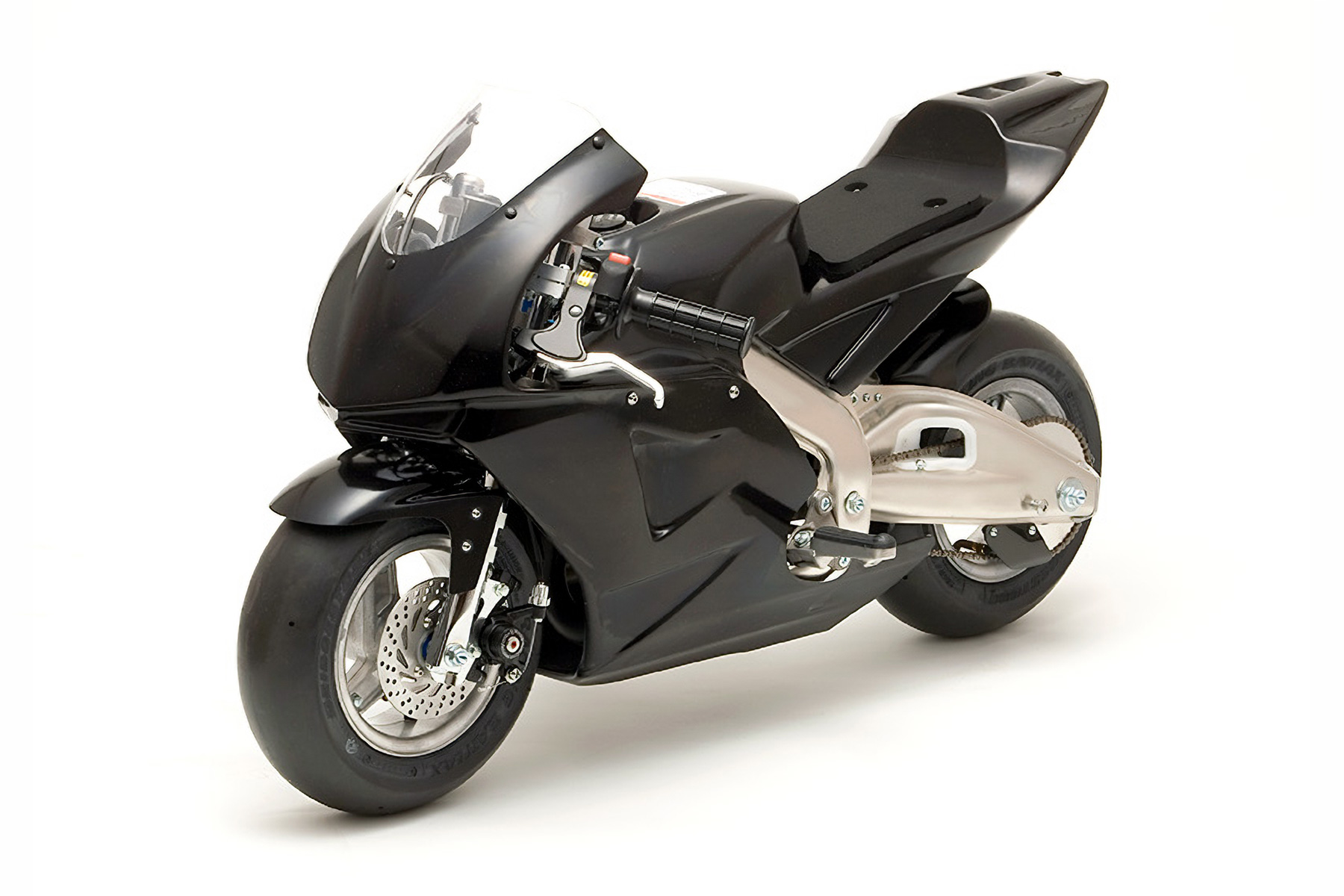
Today, one of the machines most widely used in pocket bike racing is the 74Daijiro. Introduced in 2004 as a dedicated racing motorcycle, it is powered by either a 40cc or 50cc two-stroke engine, depending on the rider’s weight. Measuring 93cm in length and 54cm in height, the machine can primarily be ridden by children from around 120cm tall.
The 74Daijiro was developed primarily by Daijiro Kato’s father to carry on the wishes of Kato, who died following a racing accident in 2003, and to give children aspiring to compete on the world stage a machine on which to pursue their ambitions. Its name combines Kato’s racing number, 74, with his first name, Daijiro.
Today, around 25 races for the 74Daijiro are held each year at venues including the Daijiro Cup at Circuit Akigase, Chiba-Kita Pocket Bike Course and Mobara Twin Circuit in Chiba Prefecture, Sportsland Ikoma in Osaka, and Kinki Sportsland in Kyoto. Pocket bike races open to the 74Daijiro are also held at circuits throughout Japan.
A number of Japanese riders currently competing in MotoGP™ began their careers on the 74Daijiro. They include Ai Ogura, who in 2026 became the first Japanese rider in 22 years to win in the premier MotoGP class; Taiyo Furusato and Ayumu Sasaki, who compete in the Moto2 class; and Zen Mitani, who competes in the Moto3 class.
Riders competing on the 74Daijiro take to the track in leather racing suits, often wearing replica helmets of their favorite riders, along with gloves, boots and other protective equipment. With their small machines and full racing gear, these young riders look every bit like MotoGP competitors.
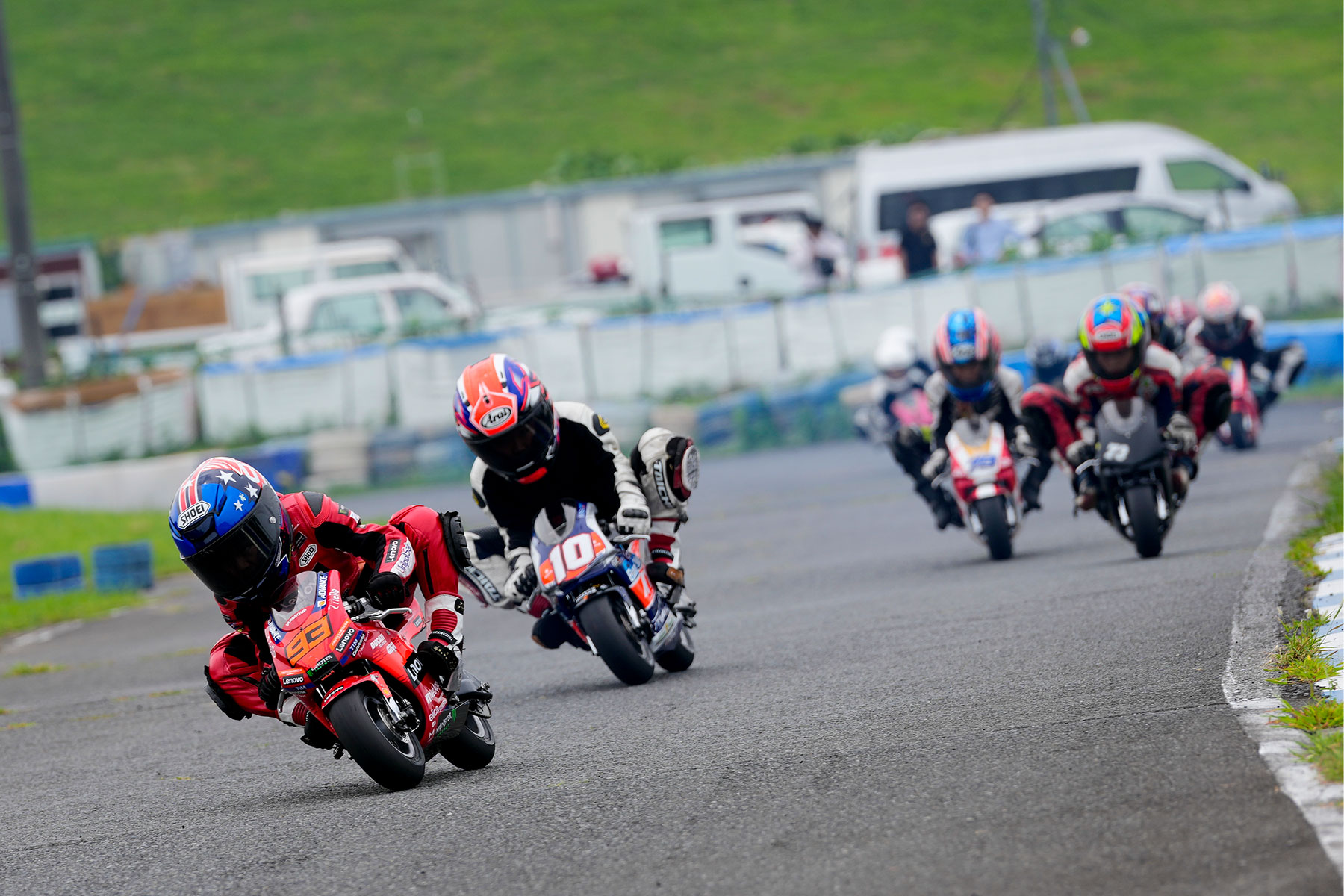
The Daijiro Cup was founded by MotoGP rider Daijiro Kato
The Daijiro Cup, held at Circuit Akigase using the 74Daijiro, was established by MotoGP rider Kato in 2003. His aim was to broaden participation in motorcycle road racing through pocket bikes, where his own racing career had begun.
The children who compete in the Daijiro Cup have many different reasons for getting involved.
Sixth grader Aoto Nagashima first became interested in motorcycles after riding “Moto Racer,” a motorcycle attraction for children at Mobility Resort Motegi, when he went to watch the MotoGP Japanese Grand Prix.
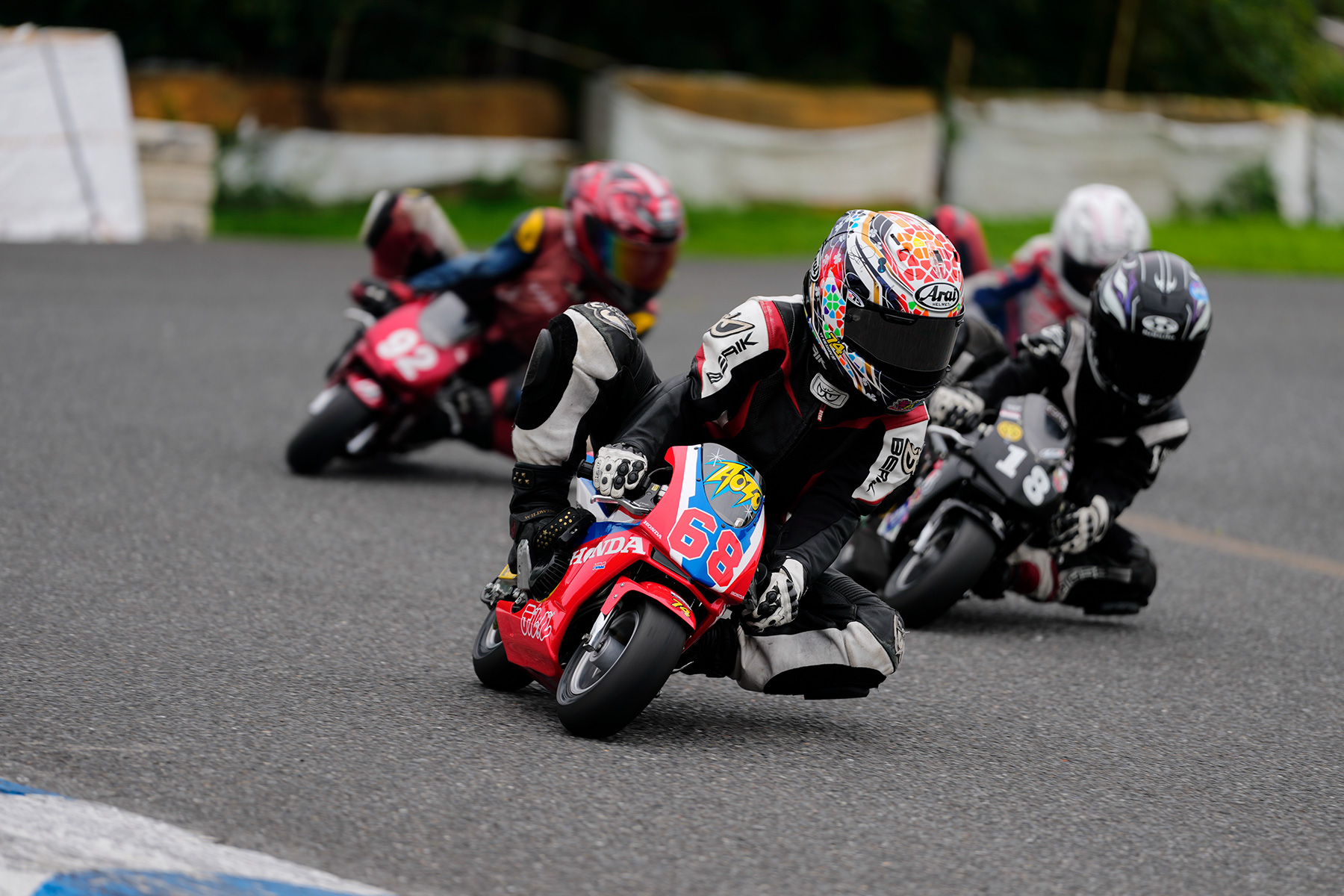
“He’s not normally the kind of child who says he wants to do something on his own initiative,” says his father, Shotaro. “After he rode Moto Racer, we took him to a 74Daijiro trial event just to see how he liked it. He told us, ‘I really want to do this,’ and that’s what brought us here today.”
His parents are fully committed to supporting their son in something he genuinely wants to pursue.
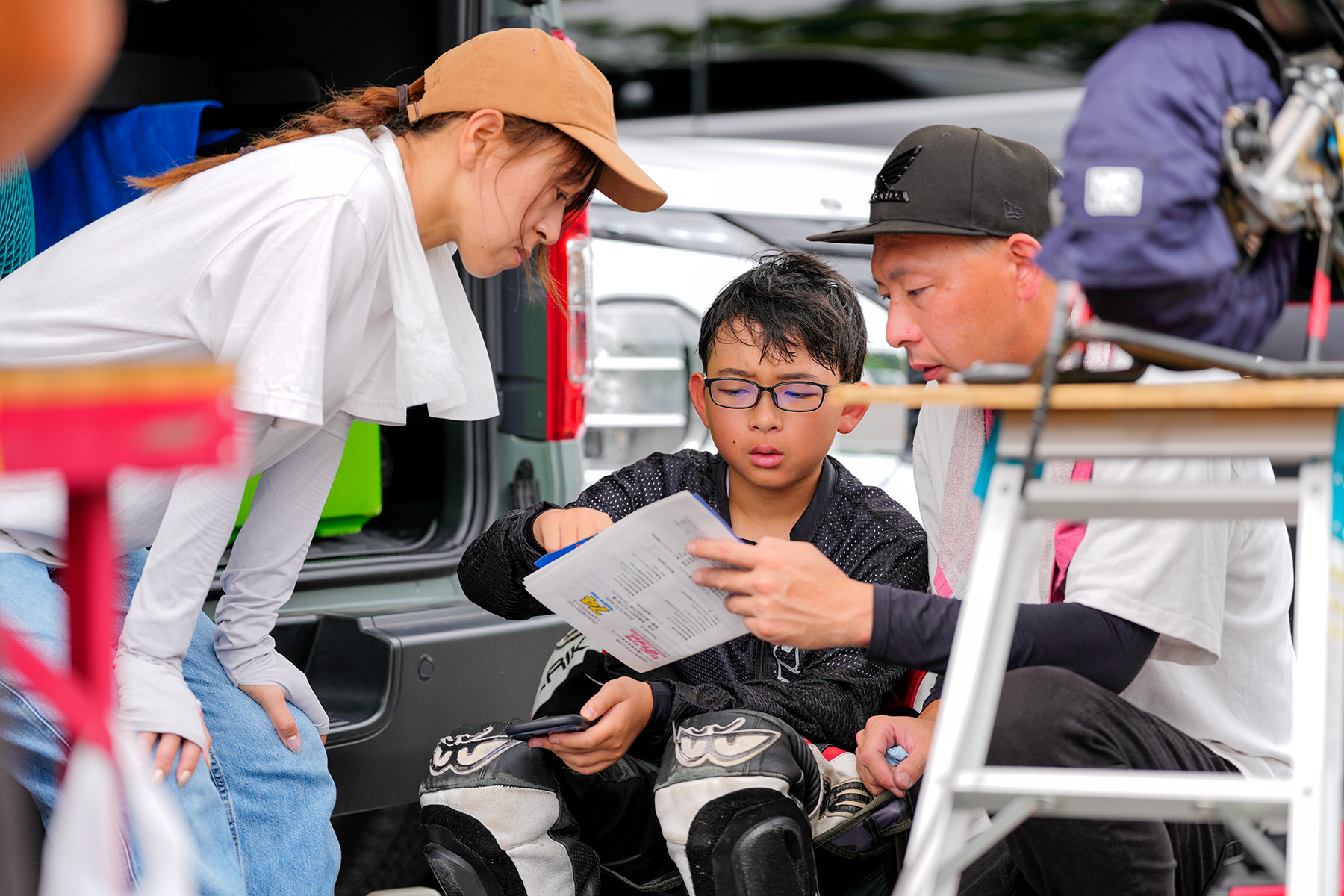
Third grader Toranosuke Kaku often went touring as a passenger on his father Mikihisa’s motorcycle. When he was four, he told his father that he wanted to ride one himself.
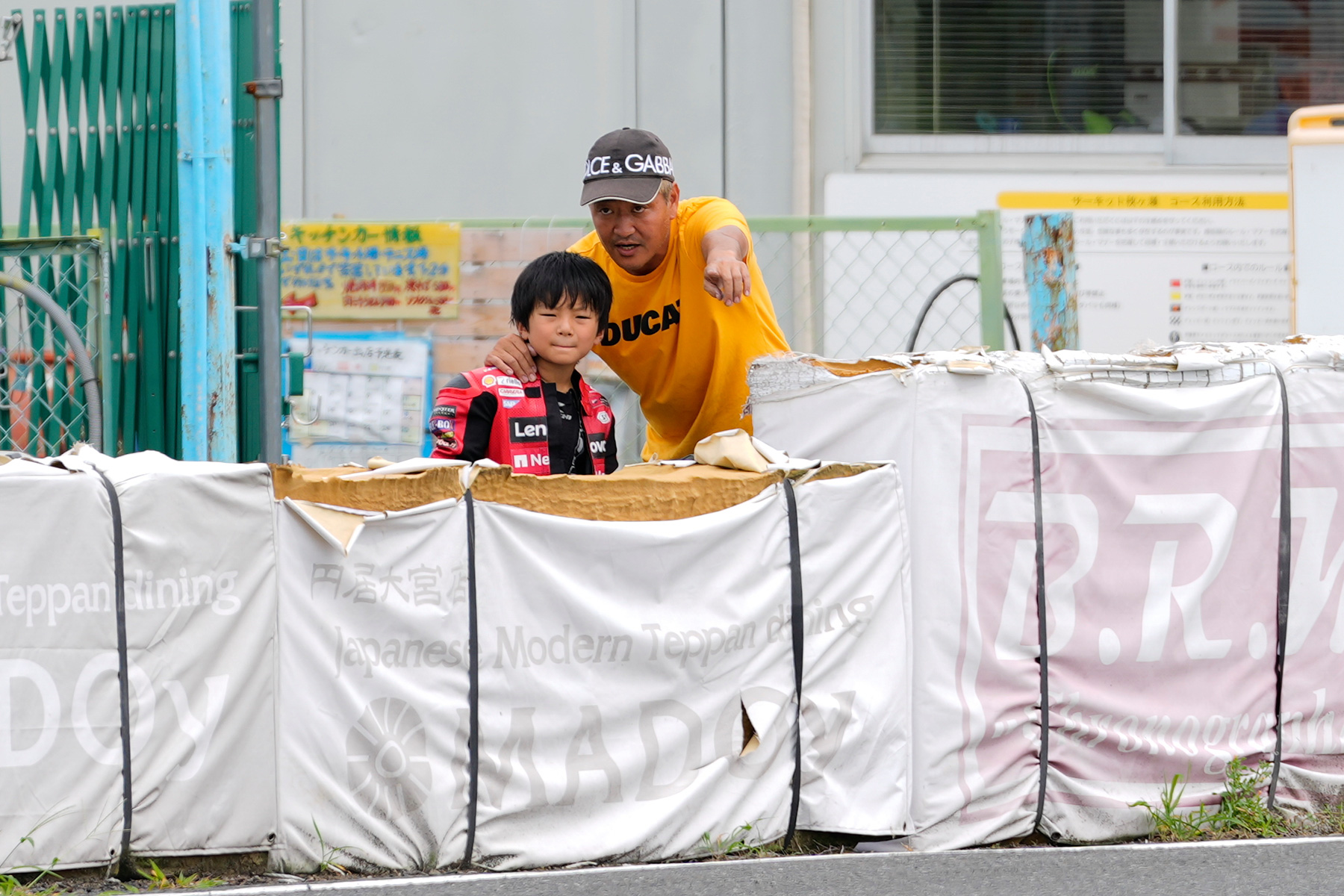
“He told me he didn’t just want to ride behind me; he wanted to ride a motorcycle himself. So I took him to a 74Daijiro trial event being held at a circuit in Kanagawa, and that’s how it started. Since he began racing, he has never once said he wants to quit. When he comes to pocket bike races, he also has lots of friends to play with who are different from his friends at school. I think that’s another reason he enjoys it so much.”
Fourth grader Kazuki Ogawa came to pocket bike racing by a somewhat different route. His father, Yoshihiro, is a motorcycle enthusiast, while both of Kazuki’s older brothers are active riders competing in the All Japan Road Race Championship. For Kazuki, taking up pocket bike racing therefore came naturally.
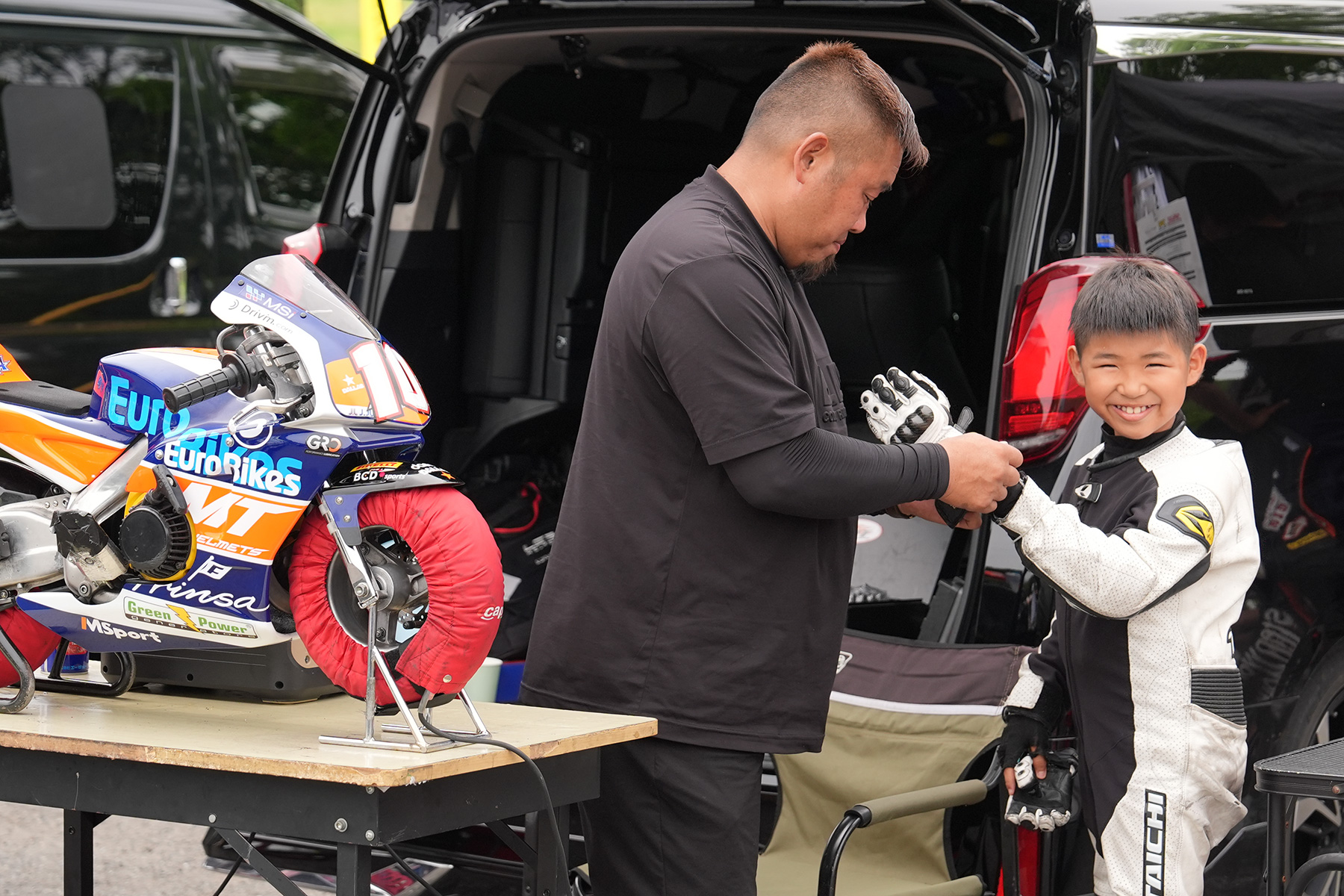
“Motorcycles have always been part of Kazuki’s life—he was hearing the sound of them even before he was born,” says his mother, Kanako. “So he was interested in them almost from the moment he was born, and he first rode a 74Daijiro when he was three. His two older brothers rode motorcycles, so it was only natural that Kazuki would, too.”
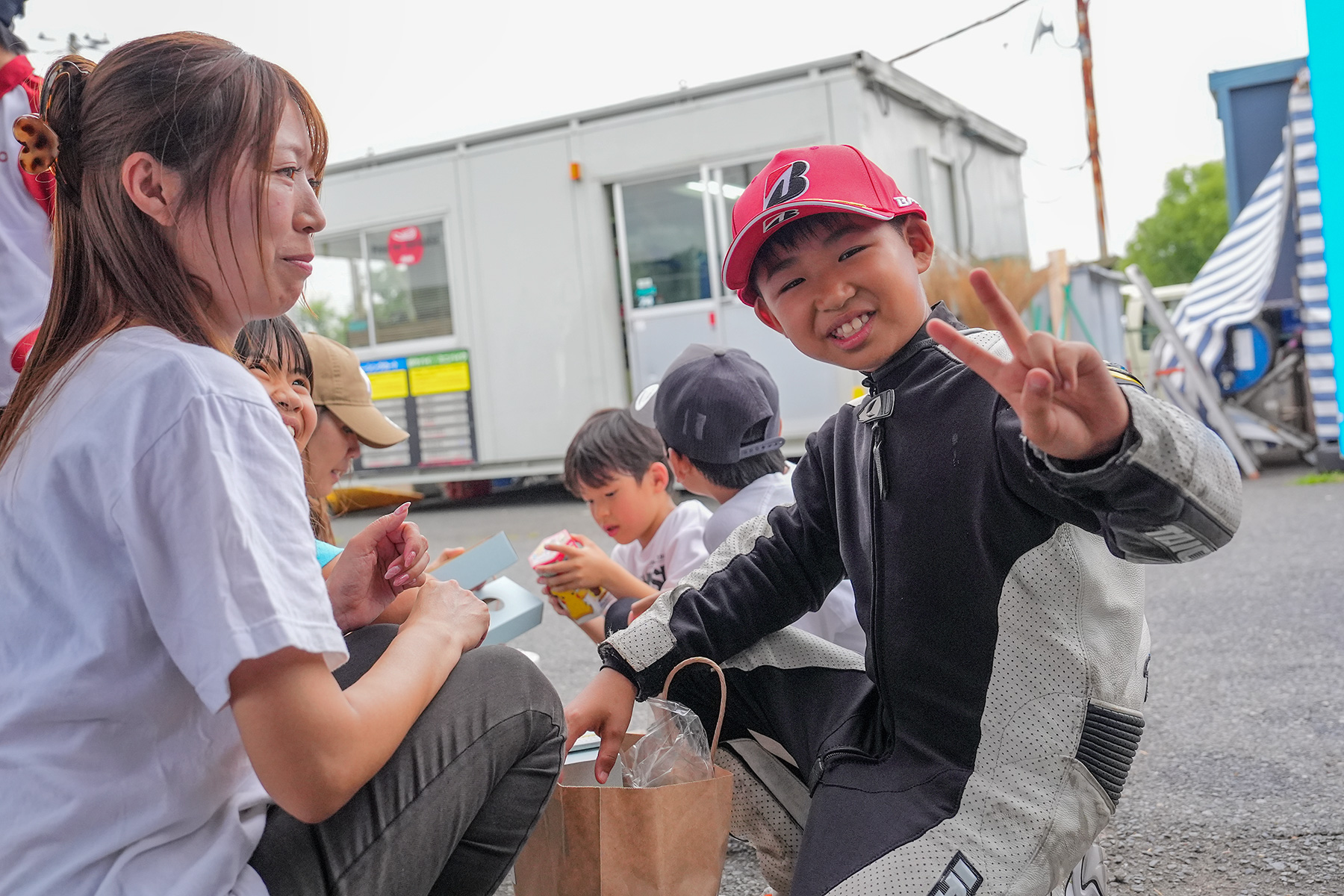
Children take up pocket bike racing for many different reasons and with different goals. But once a race begins, every rider gives everything to reach the finish. Like children who devote themselves to soccer or baseball, their passion creates exciting moments not only for the young competitors themselves, but also for the parents who serve as their mechanics and provide support.
The next step for 74Daijiro graduates is minibike racing
Fifth grader Shizuna Sugawara competes in the minibike class on Honda’s NSF100 100cc racing machine. After winning series championships on the 74Daijiro at Circuit Akigase and Sportsland Ikoma in Osaka, she moved up to the minibike class.
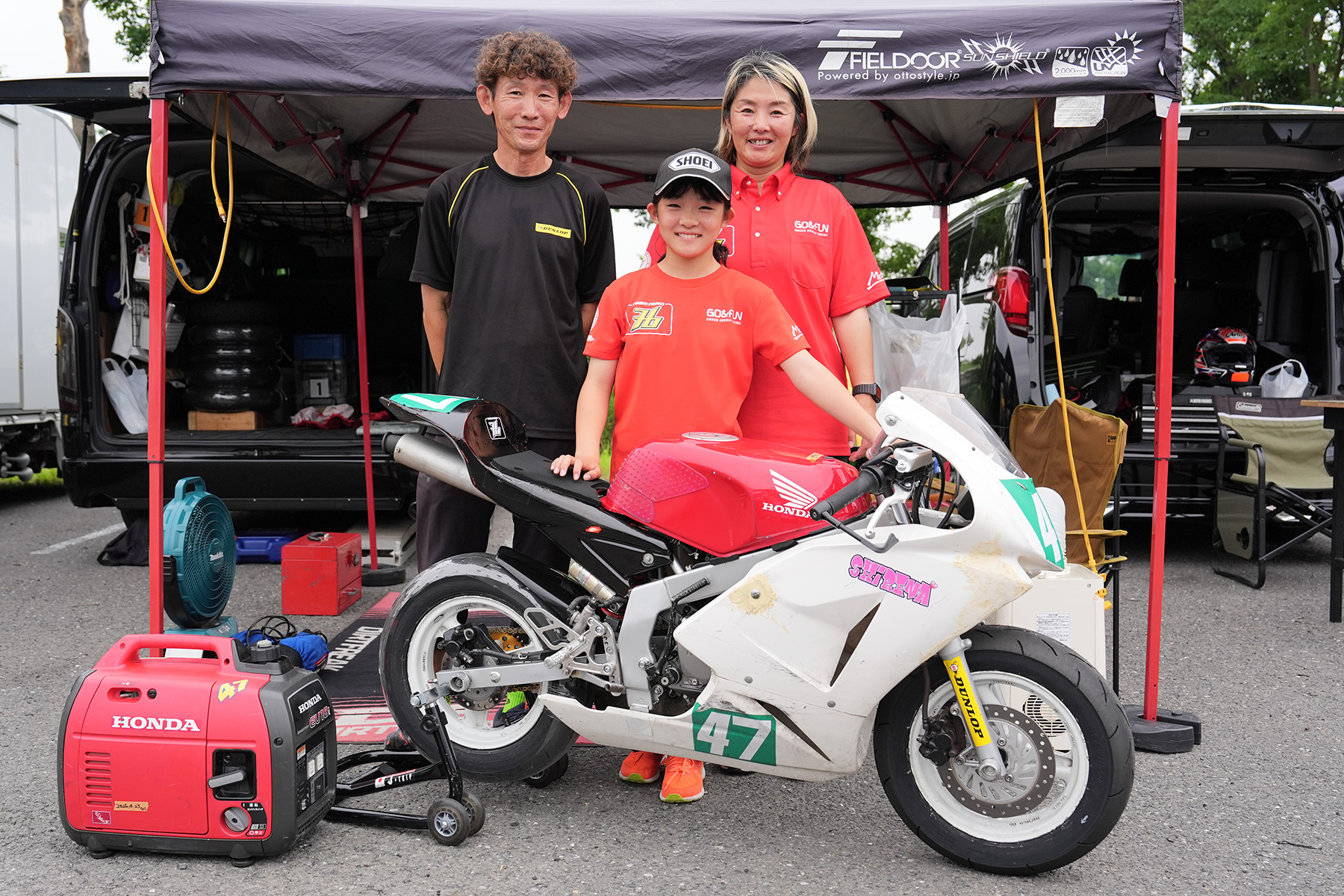
“Shizuna has been riding the 74Daijiro since she was four, when she was in her second year of kindergarten, but she’s having a little difficulty with the NSF100 she started riding this year,” says her mother, Sayaka. “But if the NSF100 is bigger and heavier, then she just needs to practice. Not going easy on her is what’s best for Shizuna.”
Riders can begin racing on the 74Daijiro, graduate to minibike classes on machines such as the NSF100, and then progress to 250cc and 600cc road racing motorcycles as they aim for the All Japan championships and eventually the world stage. It is a path followed by many riders before her, and one Shizuna is now aiming to follow herself.
A community of parents fully committed to supporting the children
Bike maintenance is a crucial part of racing. However, few parents know how to maintain a racing machine when their children first begin competing. This makes the community of parents who share the same goals particularly important.
After each track session, parents begin preparing the machines for the next one. In the work areas beside transporters parked alongside one another, experienced parents can often be seen helping newcomers by lending tools and offering advice on machine maintenance.
This mutual support is a distinctive feature of the parent community surrounding pocket bike and minibike racing. The community creates an environment in which parents support not only their own children, but all the children and families taking part, almost as if they were one large family. That support is an important factor in enabling families to continue racing.
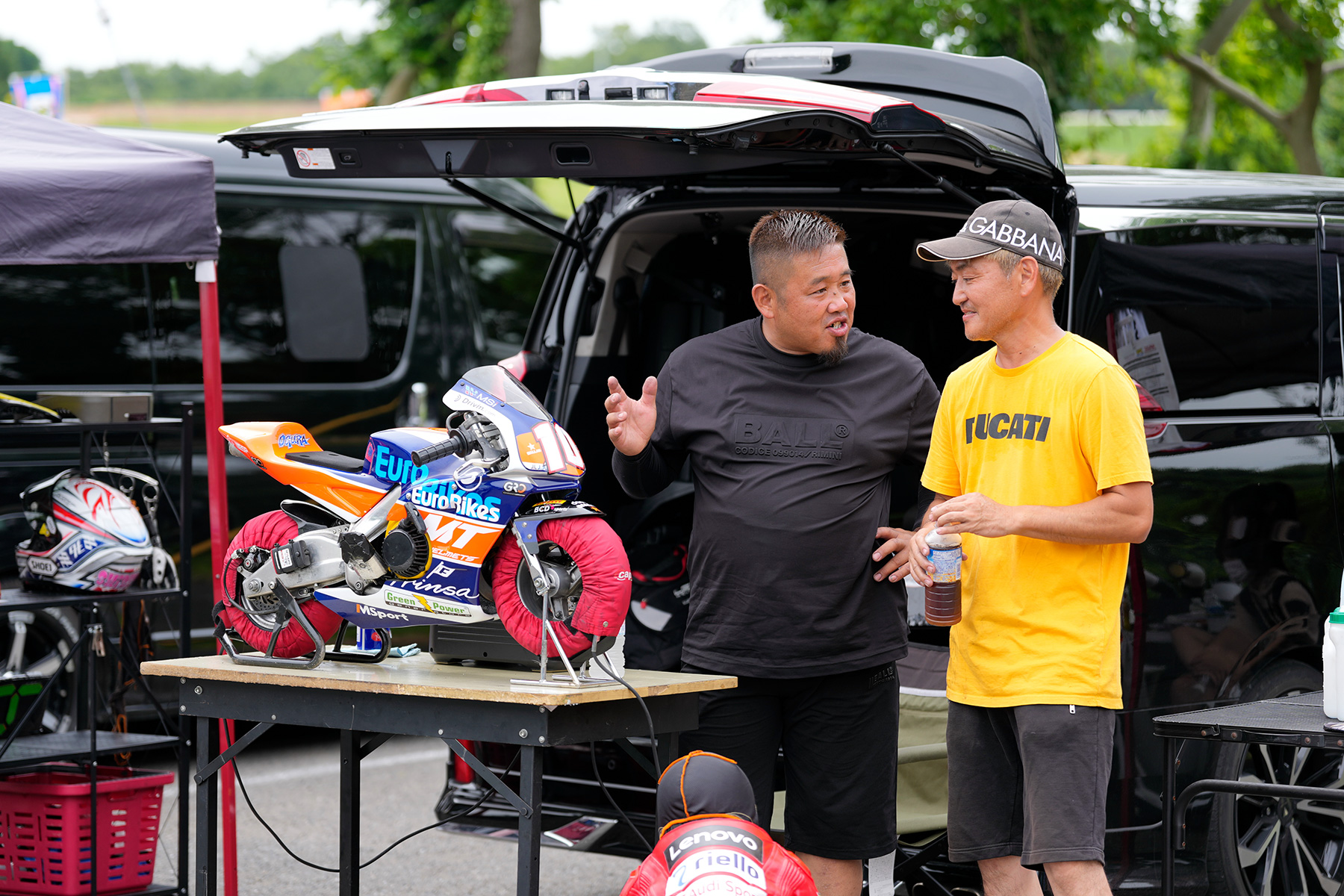
“The world of the 74Daijiro is a community for the parents as well as the children,” says Kazuki Ogawa’s father, Yoshihiro. “Experienced parents reach out to families who have just started racing. They teach each other about everything from what you need for racing to machine maintenance and how to practice. Everyone wants the whole family to enjoy it and to keep racing for a long time.”
Honda power products fully support the children’s future
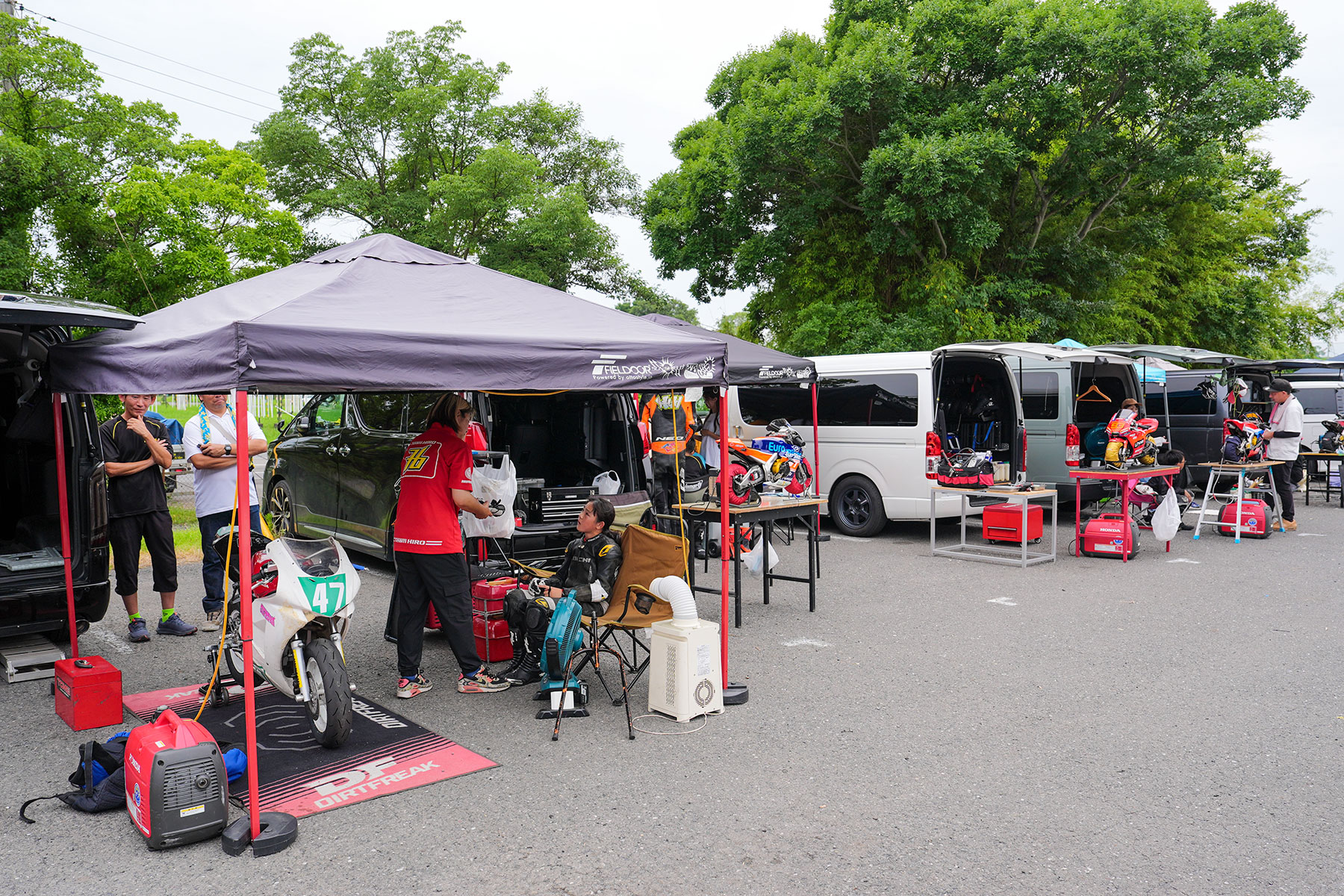
On race and practice days, the team tents and transporters that serve as pits are surrounded by equipment to keep riders and parents comfortable. In summer, there are spot coolers and fans; in winter, electric heaters and fan heaters. Even in pocket bike racing, tire warmers are used to bring the tires up to temperature before a race.
Pocket bike racing combines the enjoyment and intensity that keep children and their parents deeply engaged in the sport. At the same time, a comfortable environment and friendly atmosphere are important in helping families continue racing. Electrical appliances and tire warmers help provide that environment, but supplying them with electricity from team tents and transporters can be difficult.
This is where Honda EU9i and EU18i generators come in. Used by many teams, these portable Honda generators provide electricity for a wide range of equipment at pocket bike and minibike circuits, supporting the young riders who may one day become the MotoGP stars of the future.