*This article was created based on an interview with Mugen Denko Co., Ltd.
To enjoy riding a motorcycle safely, it is important to obey traffic rules, anticipate hazards, and maintain your motorcycle properly. On the other hand, no matter how careful you ride, you cannot completely eliminate the risk of an accident.
Therefore, safety gear designed to
protect riders themselves is also one of the key elements that supports safe
riding.
Currently, a wide variety of safety gear is available, including helmets and
protectors.
In this article, we will explore rider safety based on accident data and an interview with a safety gear developer.
Index
1.The Necessity of Safety Gear as Seen Through Accident Data
While the types and circumstances of traffic accidents vary, unlike drivers in four-wheeled vehicles, riders on motorcycles may be directly exposed to the impact when an accident occurs.
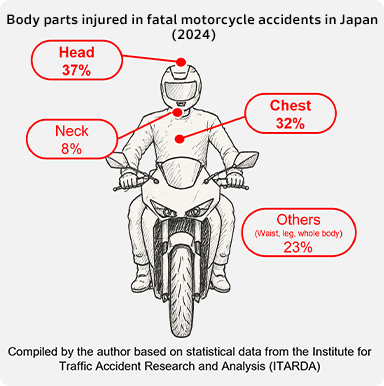
Fatal injury sites in motorcycle fatality statistics
In fatal motorcycle accidents, the head is the most common site of fatal injury. Therefore, for riders, wearing a helmet correctly to protect the head is an essential safety measure.
On the other hand, the data shows that the chest accounts for about 30 percent, making it the second-highest proportion after the head. In other words, to prepare for the unlikely event of an accident, it is important to mitigate impacts not only to the head but also to the chest and torso.
When choosing safety gear, it’s important to consider not only “what to wear” but also “which part of the body the gear is designed to protect.”
Of course, the most important thing is to prevent accidents before they happen.
However, it is also important to understand the role that safety gear plays in mitigating injuries in the event of an accident.
2.Options for Rider Safety Gear
There are various types of safety gear available for riders.
In addition to helmets, gloves,
and riding gear, a range of protective gear is available for different body parts and purposes,
including the chest, spine, elbows, and knees.
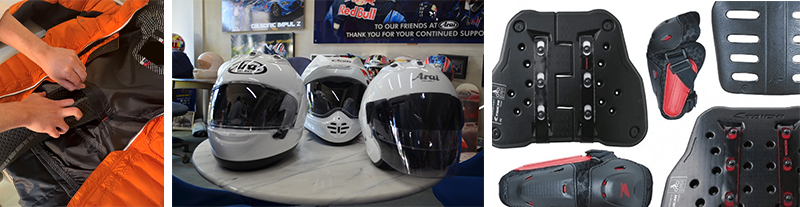
Let Me Know About Helmet! | Plus One | Motorcycle Aftersales | Honda Global
What riders look for in safety gear varies from person to person. The most suitable gear also depends on the riding environment, such as commuting to work or school, touring, or sports riding. The key is to choose safety gear appropriately based on your specific riding environment and purpose.
So, what is the philosophy behind the development of motorcycle safety
gear?
In the next section, we will introduce the key considerations emphasized in the field
of safety gear development, as revealed through an interview with a company involved in the
development of wearable airbags.
3.Key Considerations in Safety Gear Development
In preparing this article, we received cooperation from Mugen Denko Co., Ltd., a company that develops and sells wearable airbags.
According to the development team, the development of safety gear takes into account many factors, including not only protective performance but also freedom of movement, weight, comfort, and durability.
No matter how high the level of protection, if the gear is too heavy or restricts movement, it will be difficult for riders to use it consistently. Therefore, striking a balance between safety and ease of use is a key development priority.
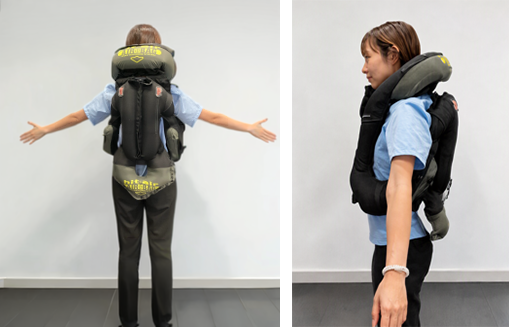
As accident patterns and injury trends vary by country and usage environment, it is important in the development of safety gear to identity the areas of the body that need protection and ensure ease of use through continuous data gathering and evaluation of real-world accident conditions.
As such, the development of safety gear is supported by the analysis of accident data, an understanding of user behavior, and a continuous process of verification.
4.Evaluation Tests Supporting Safety Gear Development
A wide range of evaluation tests and verification processes are conducted in the development of safety gear.
For example, tests using crash test dummies and measuring instruments are conducted to verify factors such as the amount of force transmitted to the body upon impact and whether the safety gear operates as intended.
These tests are not a one-time process. Safety and reliability are improved through a repetitive process of making improvements based on test results and then conducting further evaluations.
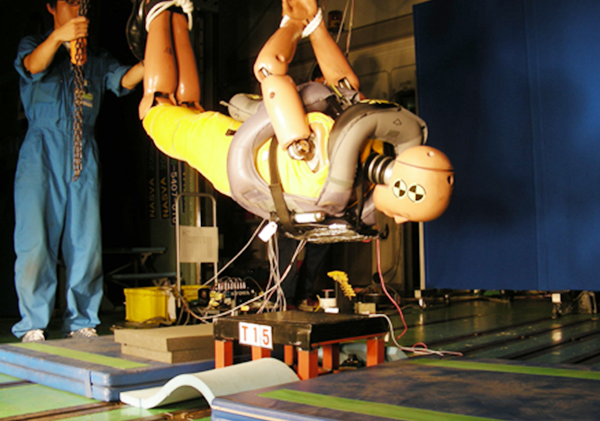
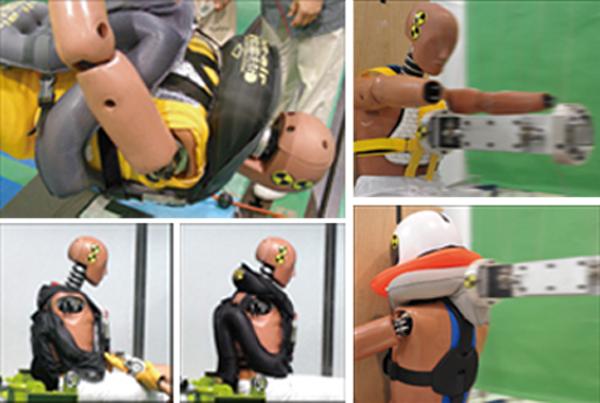
*Scenes from evaluation tests using crash test dummies during product development
*The test examples presented here are based on materials provided by the company featured in this article.
As test conditions and evaluation methods vary by product, these examples are presented as illustrations of evaluation activities in safety gear development.
5.For Long-Term Use of Safety Gear
No safety gear can fully perform its intended functions unless it is properly maintained.
Safety gear performs as intended when inspected and maintained
properly.
Depending on it is used, periodic inspections or replacement of parts may be
required.
In addition, after a fall or impact, there may be internal damage even if no
visible damage is apparent.
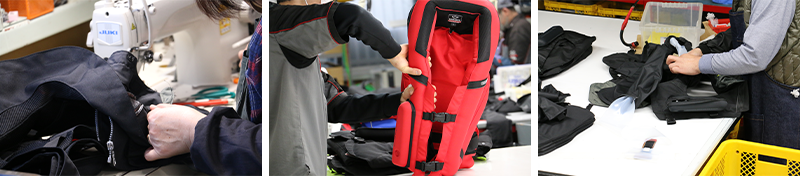
Simply buying safety gear does not guarantee safety. It is important to maintain it in proper condition over time.
6.Summary
The basics of safe riding are obeying traffic rules, anticipating hazards, and maintaining your motorcycle properly. On top of that, safety gear is one of the key elements in being prepared for an accident.
Through this interview, we learned that behind safety gear lies a wide range of efforts, including accident data analysis, technology development, evaluation testing, and maintenance services.
It is important to select safety gear based on your specific riding
environment and purpose and to use it correctly.
Why not take this opportunity to reconsider
the importance of safety gear?
*This article was created for the purpose of promoting traffic safety and is not intended to endorse any specific product, brand, or manufacturer. When selecting safety gear, please make your decision based on your specific riding environment and purpose.