Setting New Records, Reaching the True Pinnacle
 © HRC
© HRCIn response to Honda’s decision to end its F1 activities after securing its title in the 2021 season, Red Bull established Red Bull Powertrains (RBPT) to build a structure for the development and manufacturing of its own power units (PUs). Red Bull and Honda agreed to utilize Honda’s PU technology in RBPT’s development and manufacturing, with Honda supporting Red Bull’s F1 activities through a technical partnership with RBPT until the end of 2025, the final year of the current PU regulations.
In 2022, there were significant changes to the F1 car regulations. The new regulations, which had been postponed due to the COVID-19 pandemic, introduced ground effect cars that generate downforce through the car’s floor, aiming to increase overtaking by controlling rear turbulence. For the PUs, the use of environmentally friendly E10 fuel (gasoline containing 10% renewable energy fuel) was mandated, and PU development was frozen based on specifications approved through pre-season homologation. These specifications would remain in place until the end of the 2025 season. However, the freeze applied only to performance-enhancing developments and part replacements, with limited changes permitted for safety and reliability improvements. Honda rushed to modify the championship-winning RA621H to comply with the E10 fuel specifications, but the task of maintaining performance while making the necessary changes proved more challenging than anticipated.
 © Red Bull Contents Pool
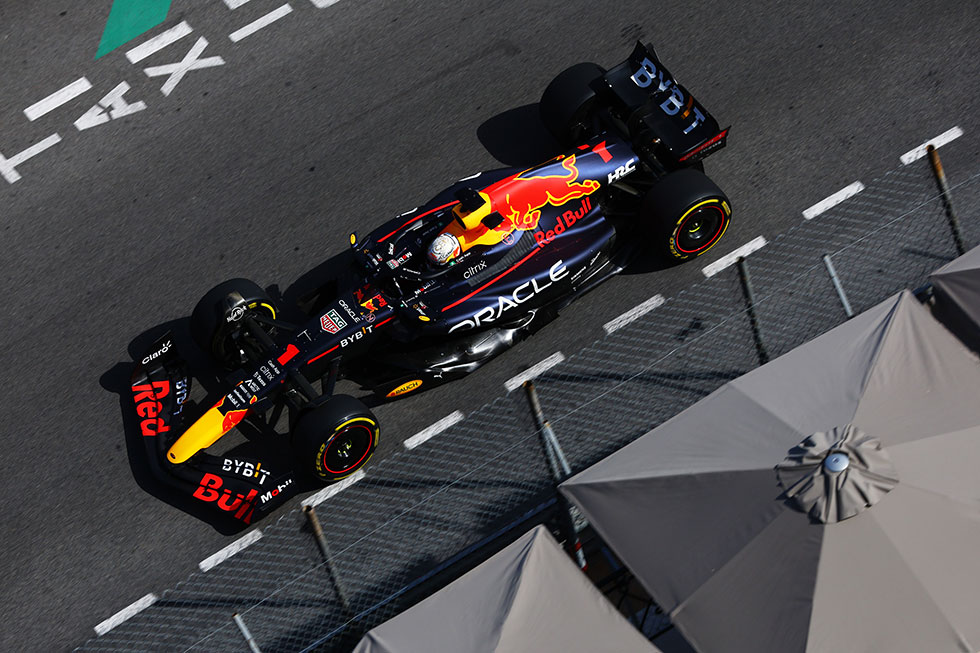
This season was dominated by Red Bull, which successfully adapted to the new chassis regulations. Although rivals had the upper hand at the start of the season, the team’s ability to apply appropriate updates to the high-potential chassis as the season progressed enabled the Red Bull car to become the fastest by the second half of the season. The new specification power unit RBPTH001, which utilized Honda’s technology, played a significant role.
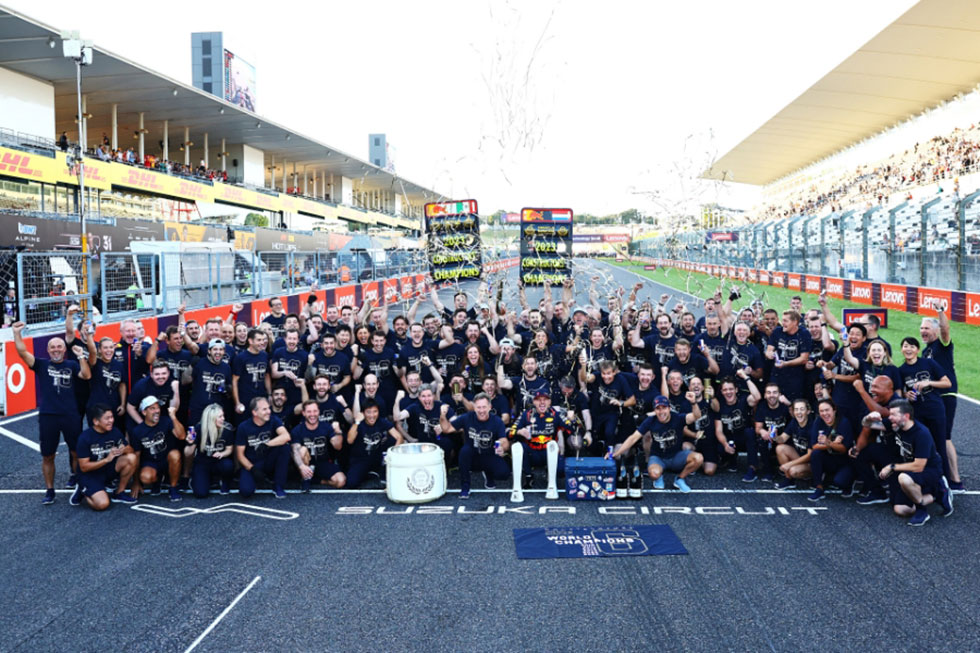
Max Verstappen, the previous year’s champion, continued to showcase his outstanding driving skills, leading to an dominating performance with 15 wins out of 22 races, breaking the record for most wins in a season. He had secured the title in Round 18, the Japanese Grand Prix, undoubtedly a memorable moment for Japanese fans. Red Bull also claimed the Constructors’ Championship there. Honda, despite its withdrawal, made a significant contribution to claiming both titles in the same season.
F1 had returned to nearly its pre-pandemic state, with new technical regulations implemented, ushering in a new era. The symbol of this new era was Max Verstappen, who won back-to-back championships, and his speed and strength will likely be remembered in F1 history as defining the new era.
21 wins out of 22 races, both historic and unforgettable
In the 2023 season, while Honda’s technical support of RBPT remained unchanged, the power unit was renamed Honda RBPTH001, reflecting Honda’s involvement. Building on the momentum from the previous year, Red Bull dominated from the start, establishing a solid lead. In the season-opening Bahrain GP, Verstappen claimed victory with Sergio Perez finishing second. Since then, Red Bull charged ahead almost unchallenged.
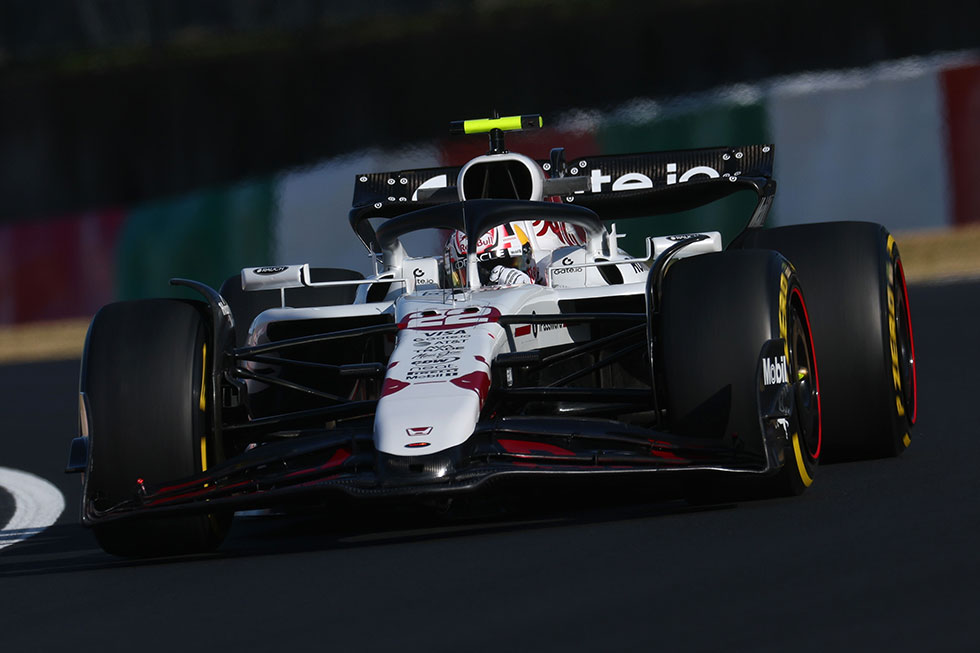
AlphaTauri changed its team name to Racing Bulls, and Yuki Tsunoda entered his third season with the team, demonstrating his speed throughout the season.
Red Bull's seemingly unending winning streak finally came to an end in Round 16, the Singapore Grand Prix. Yet in the following round in Japan, Red Bull secured the Constructors’ Championship title, and in Round 18 in Qatar, Verstappen clinched his third consecutive drivers’ title in the sprint race. Red Bull and Verstappen continued to accumulate victories, with the team securing 21 wins out of 22 races and Verstappen alone claiming 19 wins, setting new F1 records for consecutive wins, most wins, and points scored, for a truly historic season.
 © HRC
© HRCOn May 24, 2023, Honda announced its return to F1 starting in 2026, through a joint venture with Aston Martin. The reasoning was that Aston Martin’s alignment with Honda’s direction toward carbon neutrality given the new power unit regulations set to take effect in 2026, and as a necessity to refine Honda’s technology and cultivate talent through the challenge of competing at the pinnacle of motorsport. Honda also revealed that it had already begun research and development on technologies to comply with the new regulations. HRC, which oversees Honda’s F1 activities, integrated Honda Performance Development (HPD), which conducted Honda’s motorsports activities in the United States, in September, expanding its scale and scope of operations. Honda had established HRC as an organization to enhance the value of the Honda brand and consistently pursue victory.
Lost advantage
The 2024 season began with Red Bull seemingly unstoppable after its historic victory the previous year. Although Verstappen won several races early on, his lead began to crumble by the summer break, and despite close battles, he only managed six wins by Round 10 in Spain. The next victory came at Round 21 in Brazil. While rival teams significantly improved their car performance, Red Bull’s updates failed to deliver the desired results, and the advantage they had built up in previous years had vanished. Honda made every effort to respond to the unexpected developments, but under development freeze restrictions, there was little it could do to help. The new Red Bull car adopted a lowered ride height at the absolute minimum to improve aerodynamic performance, but this often resulted in the power unit sustaining significant damage when the car bottomed out when going off track, leaving the team scrambling to address the issue.
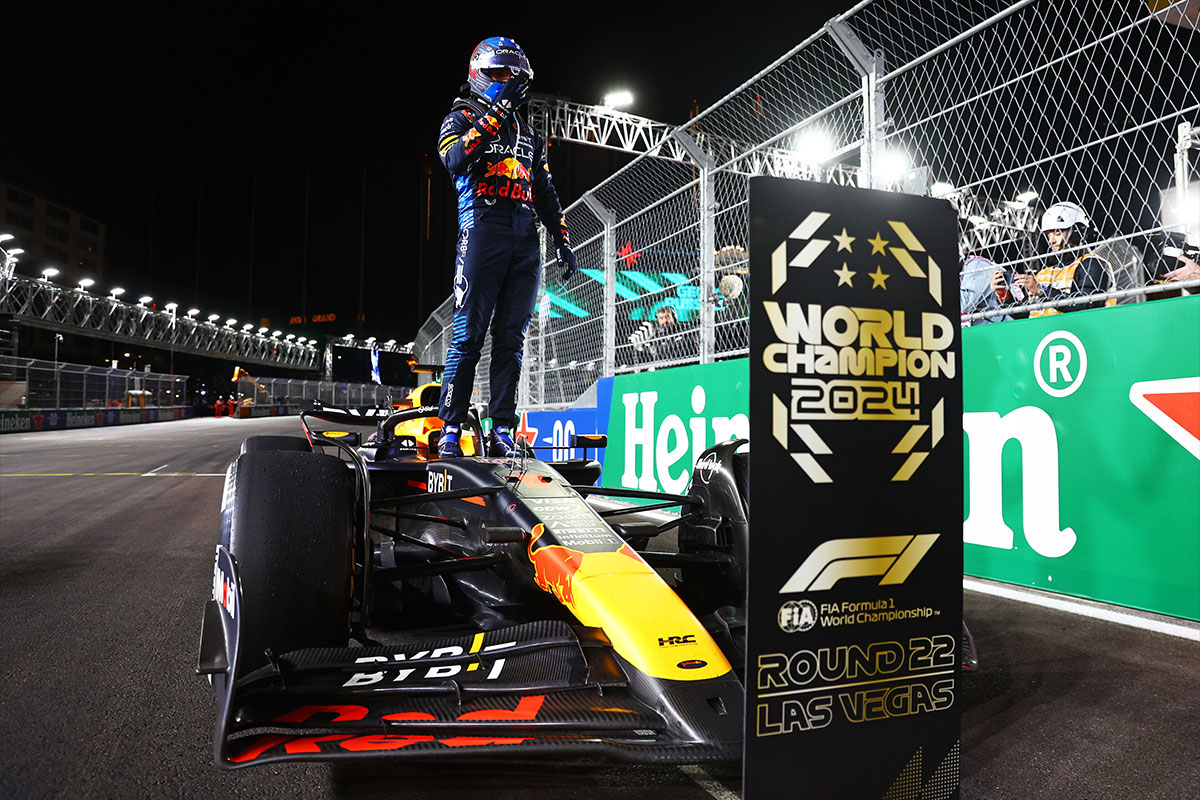
In the latter half of the season, Verstappen’s fourth consecutive title seemed all but lost, but thanks to the points accumulated in the first half of the season and Verstappen’s skillful race management, he managed to claim title victory in Round 22, the Las Vegas GP. However, Red Bull, which had struggled throughout the season, finished third in the Constructors’ Championship, ending their consecutive championship winning streak.
 © HRC
© HRCIn the 2025 season—the final year under the current regulations—Red Bull faced difficulties from the opening rounds. At the third race, the Japanese Grand Prix, Verstappen delivered an exceptional performance, dominating from pole to finish to claim his long-awaited first victory of the season.
At the same event, Yuki Tsunoda, a graduate of Honda’s driver development program, was promoted to the top team, Red Bull Racing, securing a seat alongside the reigning World Champion. His promotion drew global attention and thrilled Japanese fans anticipating his Red Bull debut at Suzuka.
Verstappen went on to secure his second win with another masterful performance in Round 6, the Emilia Romagna Grand Prix. Despite a challenging stretch without further victories, he continued to collect points, demonstrating his determination to stay in contention for a fifth consecutive championship as the first half of the season came to a close.
After the summer break, the season entered its second half. In Round 15, the Dutch Grand Prix, Verstappen finished second, narrowly missing out on consecutive home victories. However, Red Bull’s performance clearly showed signs of renewed competitiveness.
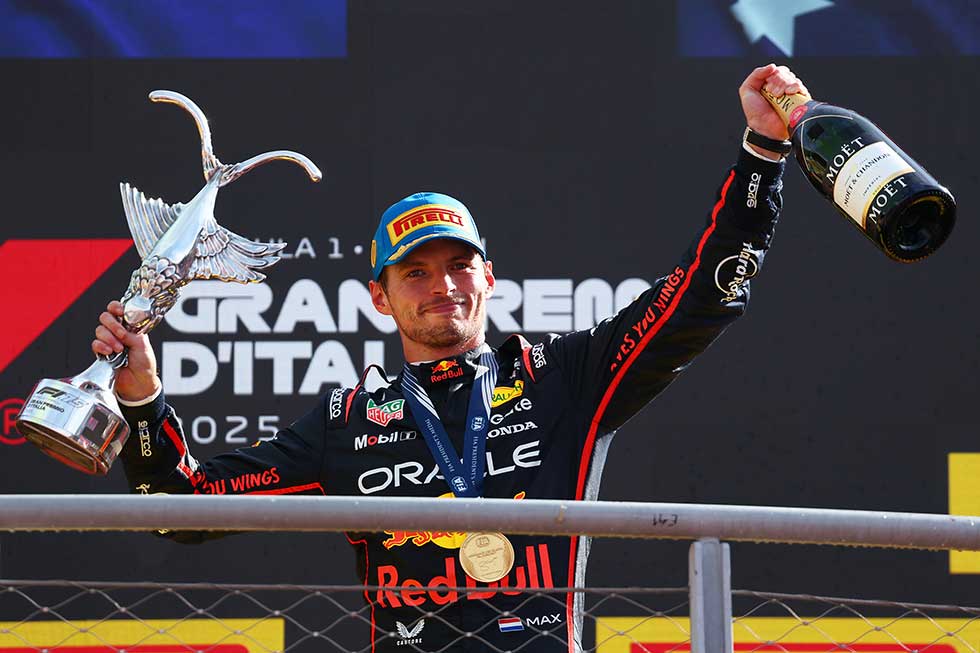
While rival teams shifted their focus toward developing cars for the upcoming 2026 regulations, Red Bull continued to push forward with updates, refusing to concede the current season. Their persistence paid off as Verstappen delivered back-to-back victories in Round 16, the Italian Grand Prix and Round 17, the Azerbaijan Grand Prix. His performance was flawless in both qualifying and the race, securing commanding wins.
Triumphing at two circuits with completely different characteristics—the ultra-fast Monza and the technical street course in Baku—proved that the Red Bull machine had regained its former speed. Even in Round 18, the Singapore Grand Prix, traditionally considered Red Bull’s Achilles’ heel, Verstappen finished second in both qualifying and the race.
In Round 19, the United States Grand Prix, Verstappen’s winning streak resumed as he claimed his fifth victory of the season in dominant fashion. The second half of the season saw him earn three victories and two second-place finishes in five races—a formidable comeback that firmly placed him back in championship contention. With five races remaining, Verstappen now sits third in the standings, just 40 points behind the leader.
As the season entered its closing stages, race-craft master Max Verstappen rapidly closed the gap to the points leader. After clinching third-places at Round 20, Mexico and Round 21, São Paulo, Verstappen took back-to-back victories in Las Vegas and Qatar. From the summer break onward he had finished on the podium in all nine races, with an extraordinary five wins.
The championship battle, once one-sided in the first half of the season, swung dramatically in Red Bull’s favor. By the season finale, Verstappen had reduced the points deficit to just twelve. Riding strong momentum, he delivered blistering pace again in Abu Dhabi, securing pole position and dominating the race to take his eighth win of the season. Yet in the title fight, he fell short by a mere two points—narrowly missing what would have been his fifth consecutive crown.
Ahead of the finale, Yuki Tsunoda was announced as Red Bull’s reserve driver for the 2026 season. In Abu Dhabi, Tsunoda dedicated himself to supporting Verstappen’s late-charge title bid, contributing to the team’s efforts through to the final lap.
The partnership between Red Bull and Honda concluded at the 2025 season finale with a splendid victory—a befitting outcome symbolic of the partnership’s record-breaking achievements.
 © HRC
© HRC