Honda Ends Factory F1 Activities with Success
 © HRC
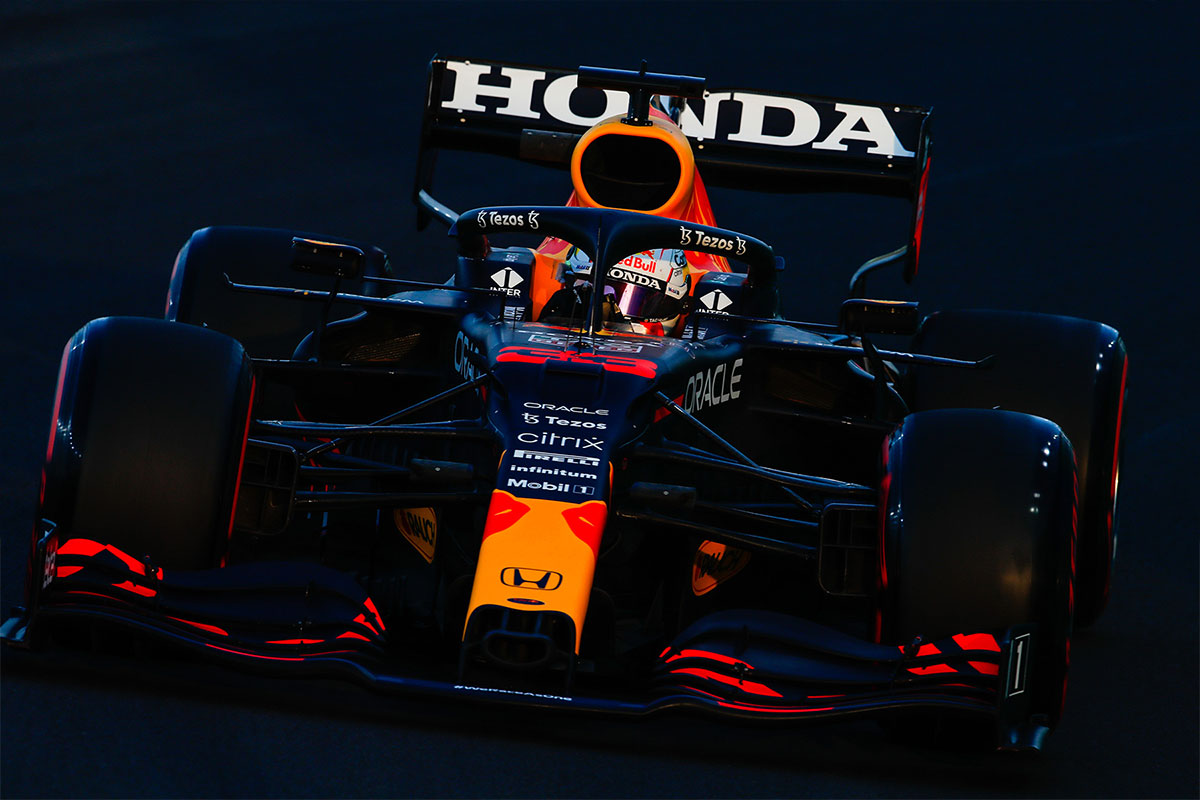
© HRCIn 2019, Honda welcomed Red Bull as a partner and claimed its first victory, and won three races during the season. With the title within sight in 2020, Honda accelerated its preparations, but COIVD-19 began to spread rapidly at the beginning of the year, plunging the world into chaos. Although pre-season testing was held in February as scheduled in Barcelona, the impact of the pandemic remained uncertain, and the season-opener was postponed to March in Australia. Despite thorough preparation, the Australian Grand Prix was abruptly canceled when team staff members tested positive for COVID during Grand Prix week. The virus spread rapidly around the world, and the entire season was plunged into uncertainty.
In a desperate effort to save F1, officials made strenuous efforts, and on June 2, F1’s governing body, the Federation Internationale de l'Automobile (FIA) officially announced that the season would resume on July 3-5 at the Red Bull Ring in Austria. A schedule of eight confirmed races was announced, with additional Grands Prix to be added as they became available, bringing the total to 17. In addition, emergency regulations were put in place to restrict development and employment due to the impact of the pandemic. Honda, unable to predict the effects of the pandemic on its core business, froze development of the new power unit (PU) for the next season, which had already been underway. Honda also began considering the possibility of ending its F1 activities, not due to the pandemic, but the need to concentrate resources such as funds and personnel on responding to the global challenge of achieving carbon neutrality, which was demanded of all automakers.
The newly revised schedule was unconventional, with the opening race taking place in Austria, followed by the second round a week later at the Red Bull Ring once again. Amidst numerous race cancellations, including the Japanese Grand Prix, the F1 community worked tirelessly to ensure the series could continue, implementing measures such as back-to-back races at the same circuit (three times), adding new Grand Prix events in regions where races could be held, and requiring repeated PCR tests for all involved during the races to prevent the spread of COVID-19.
During this season, Red Bull Honda faced unexpected challenges. Mercedes, the reigning champion, was extremely fast, leaving Red Bull Honda unable to compete even on circuits where it traditionally excelled. The team’s first victory of the season came at the 70th Anniversary Grand Prix in Silverstone, UK, in August, with Max Verstappen taking the win. However, the team struggled to secure another victory, which had to wait until the season-ending Abu Dhabi GP.
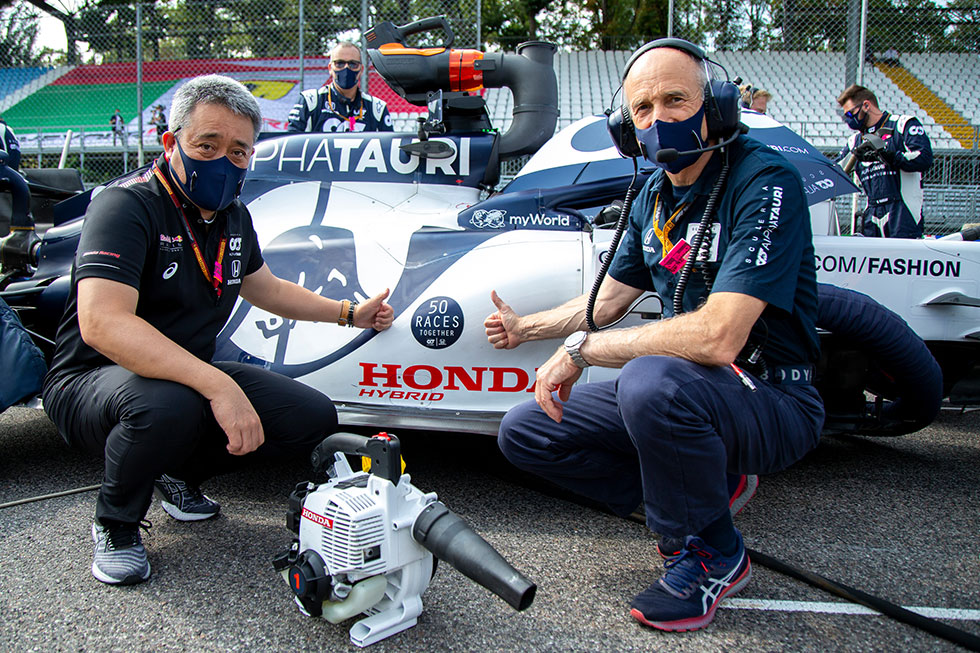
This year, Toro Rosso adopted the name AlphaTauri for Red Bull’s new apparel brand. The team’s highlight came Round 8, the Italian Grand Prix. Starting from 10th on the grid, Pierre Gasly capitalized on a chaotic race with a successful tire strategy to cross the checkered flag first. Gasly had finally won, and the team secured its first podium finish, with a win, in its debut season as AlphaTauri, marking a historic milestone in the 50th race since partnering with Honda in 2018.
 © Red Bull Contents Pool
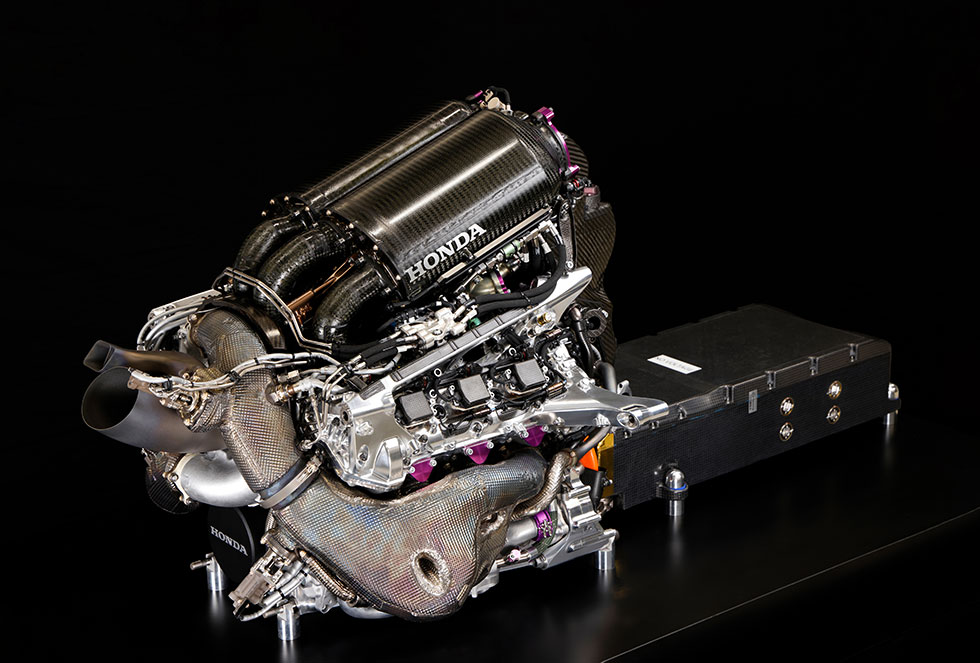
On October 2, Honda announced that it would end its F1 activities at the end of the 2021 season. The decision to continue activities until the following year was made out of consideration for the teams that would continue to use Honda’s PUs, but Honda's engineers decided to spare no effort their final year. Honda introduced a new PU, despite having halted development, and pushed forward with the completion of the new unit despite the obvious time constraints. The RA621H, the “new-generation power unit,” was a completely redesigned PU aimed at achieving a performance breakthrough based on accumulated knowledge.
 © Honda
Dramatic finale, first crown
The COVID-19 pandemic continued to impact the season in 2021, with pre-season tests shortened from six to three days and moved to the Bahrain International Circuit, where the season-opening Bahrain GP would be held. For Honda, which had worked tirelessly through the year-end to New Year holidays to complete the new PU, the shortened test schedule was a major setback. However, the RA621H performed smoothly without major issues, dispelling the development team’s concerns.
In the season-opener, Red Bull Honda’s Max Verstappen took pole position, demonstrating the RA621H’s potential. Although he ended the race ended in second place after a closely contested battle, the result reflected Honda’s determination in its final year, and was a testament to its efforts. In addition, Yuki Tsunoda, who had been competing in the FIA Formula 2 Championship as a Honda driver development program graduate, made his F1 debut with AlphaTauri and finished ninth, a respectable result.
 © HRC
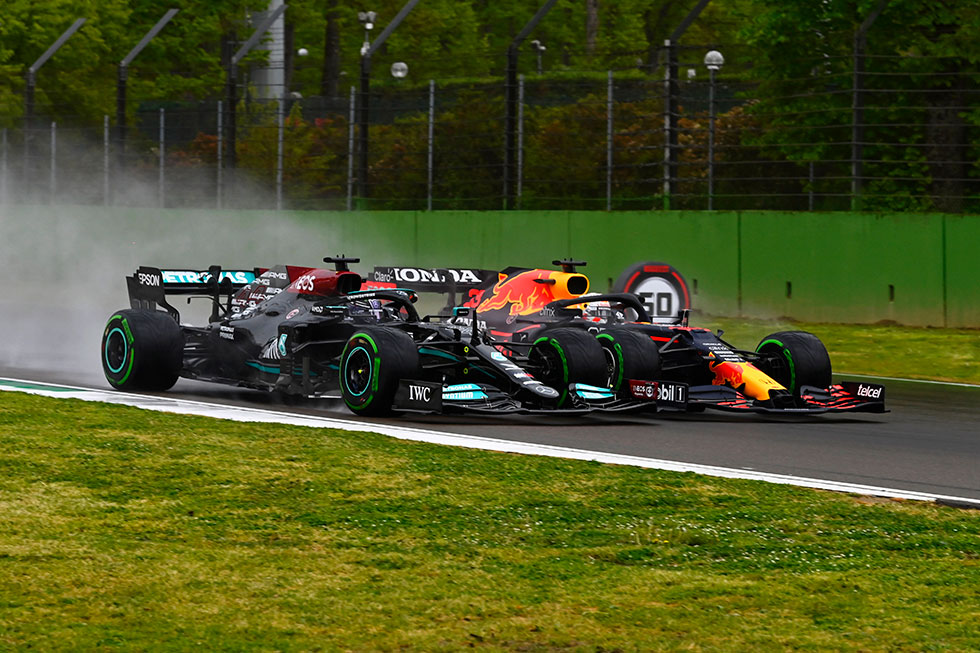
© HRCThe 2021 season was a head-to-head battle between Mercedes’ Lewis Hamilton, aiming for his fifth consecutive and eighth overall title, and Red Bull Honda’s Verstappen, chasing his first championship title. Verstappen claimed his first win of the season at the Emilia Romagna Grand Prix in Imola, Italy, demonstrating that he could compete on equal terms with Mercedes, and the early stages of the season were closely fought. Then, at the Monaco Grand Prix, Verstappen finally won the iconic race, and momentum shifted. By Round 9 Red Bull Honda won five consecutive races, with Verstappen winning four to take the lead in the standings, well ahead of Hamilton in second place.
Red Bull Honda enjoyed a strong first half of the season, but their dominance began to fade in Round 10, the British Grand Prix. Verstappen, who was in the lead, collided with Hamilton in second, ending Verstappen’s race and giving Hamilton the win. In the Hungarian Grand Prix that followed, Verstappen finished ninth due to an accident just after the start, and Hamilton won. As a result, Verstappen lost rankings lead to Hamilton.
 © HRC
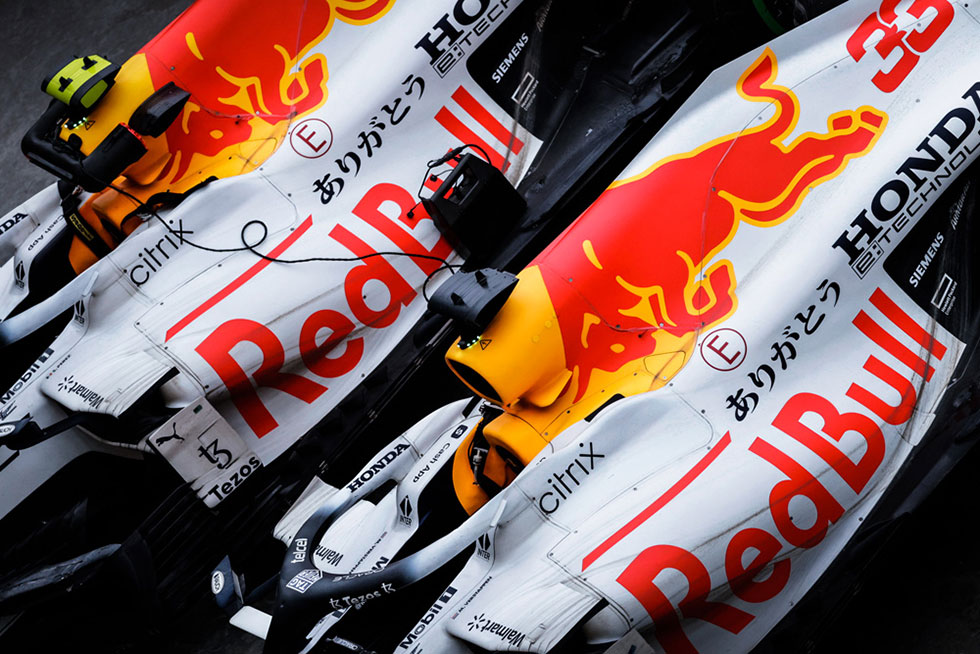
© HRCAfter the summer break, Round 12, the Belgian Grand Prix, was mostly impossible to race due to heavy rain, and although Verstappen started from pole position and won the race, he only earned half-points. In the Dutch Grand Prix that followed, Verstappen celebrated a jubilant victory in his home race and regained the top spot, but in Round 14, Italiy, another accident involving Verstappen and Hamilton occurred. With both drivers out of the race, the championship was even more chaotic as the season entered its final stages. The back-and-forth battle continued until the very end. For the first time in F1 history, two drivers had entered the final race, the Abu Dhabi Grand Prix, tied on points.
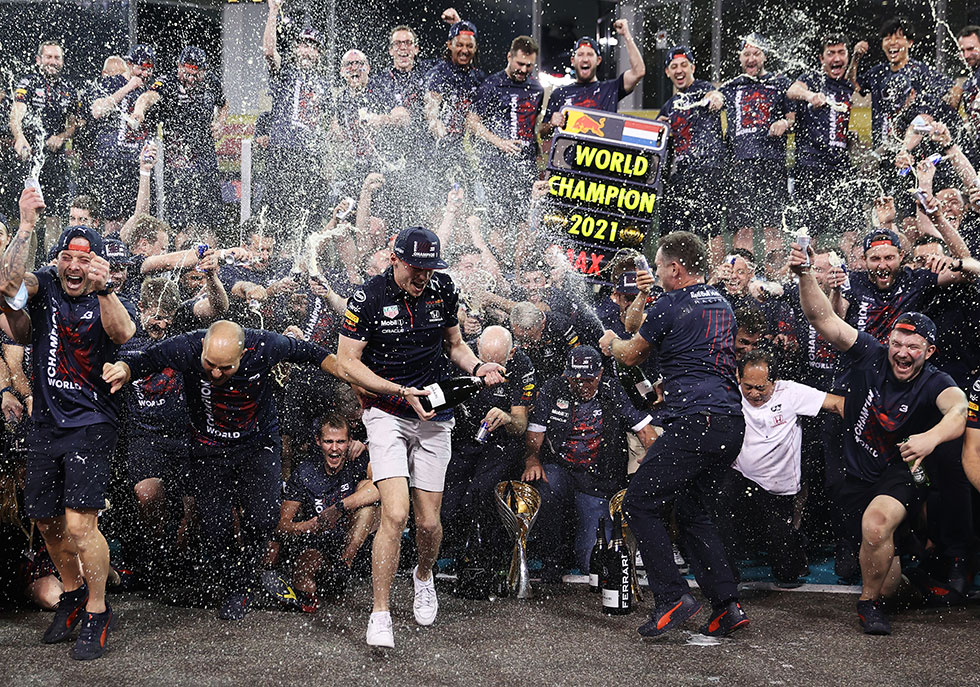
In this decisive race, Verstappen took pole position, but Hamilton led the race. Perez delayed his pit stop to desperately block Hamilton to assist his teammate, demonstrating Red Bull Honda’s determination to win the title. After a fierce battle that raised concerns of contact, Hamilton passed Perez and was once again in the lead. It seemed that Hamilton would win his second consecutive championship. However, in the final stages of the race, the safety car was deployed due to a stopped car on the track, completely changing the situation. Verstappen, who was on fresh tires and had a clear advantage, overtook Hamilton on the final lap to take the checkered flag. The dramatic ending left people breathless. Verstappen had won his first champion, and Honda had achieved its long-awaited title.
Honda’s fourth F1 era, which had lasted seven years from 2015, came to a dramatic end with a title win after a fierce battle that would go down in F1 history. It was a moment when the efforts of Honda’s engineers and staff, who spared no effort under difficult circumstances, were rewarded, and the 2021 season was a perfect ending for Honda.
 © Red Bull Contents Pool