Light at the end of the tunnel: Toro Rosso, then the beginning of the Red Bull partnership
 © HRC
© HRCHonda had returned to Formula 1 in 2015 as a power unit supplier for McLaren. The new hybrid system, featuring an MGU-H generator that utilized the rotation of the turbocharger, was highly complex, and Honda struggled with preparation issues and reliability problems, failing to achieve its desired results. In 2017, In an attempt to turn its fortunes around, Honda introduced the RA617H, a completely redesigned PU layout, but it was plagued by issues and failed to deliver results. Faced with this situation, McLaren decided to terminate its contract with Honda, which was finalized at the Italian Grand Prix, seemingly ending Honda’s F1 activities.
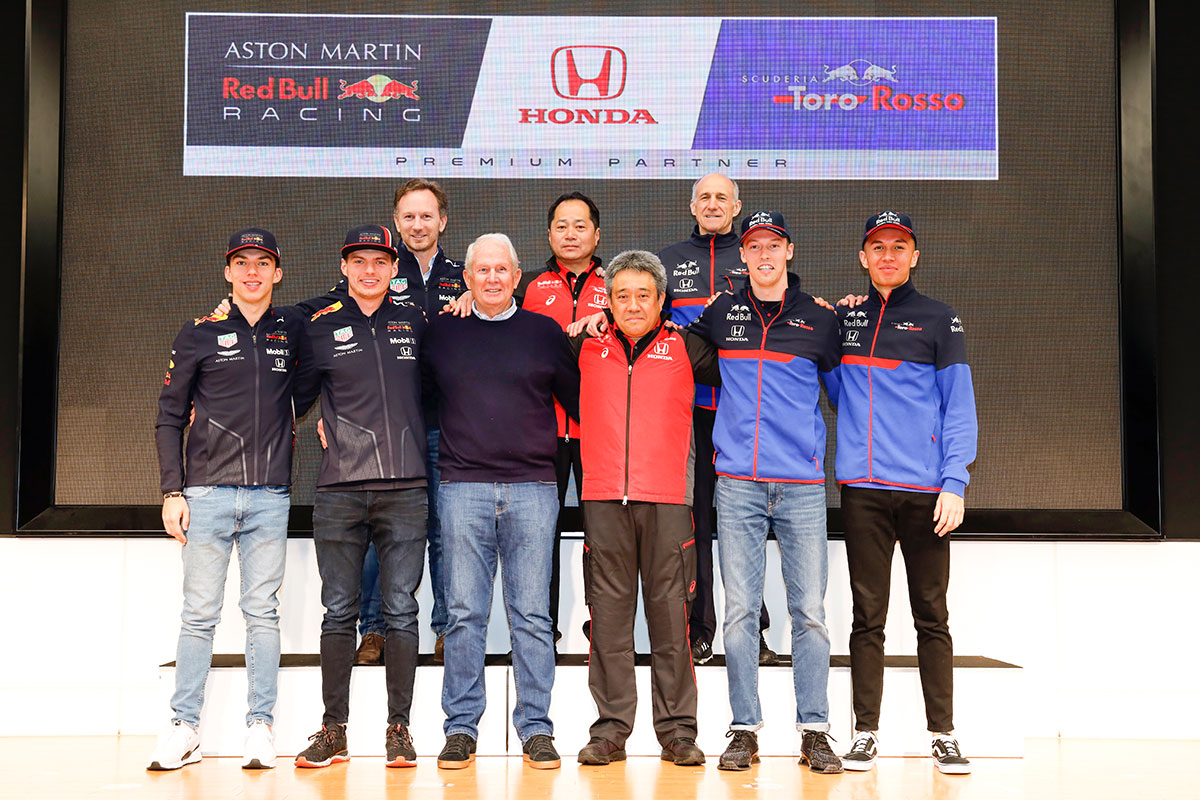
Honda continued to explore options for continuing its F1 activities and resumed negotiations with Franz Tost, team principal of Toro Rosso, who had previously expressed interest. The decision was made: Honda would supply PUs to Toro Rosso by transferring the Toro Rosso’s Renault-made PUs to McLaren. Tost’s long-held desire for a joint venture with Honda was realized, also providing a ray of hope to Honda in its quest for F1 supremacy.
In September 2017, on the first day of the Singapore Grand Prix week, Toro Rosso and Honda announced their partnership for 2018. Honda thanked Tost for facilitating this new partnership and strongly believed that the collaboration with Toro Rosso, a member of the Red Bull Group, was a significant opportunity to achieve future success in Formula 1.
 © HRC
© HRCCatching up under new structure
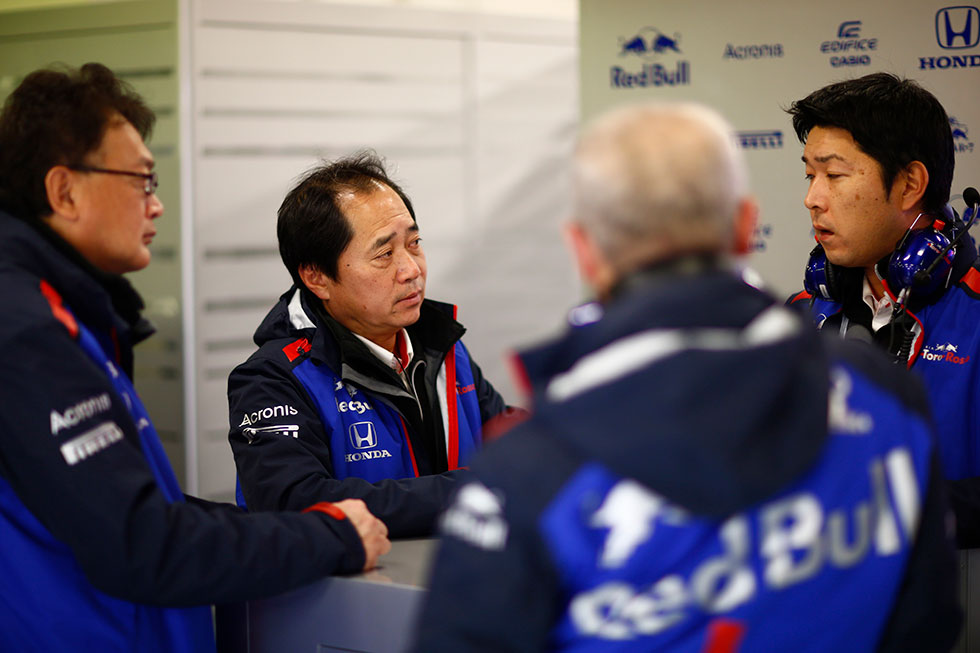
Honda reorganized its structure for 2018. Responsibilities were divided into development, track-side operations, and team negotiations and management, each assigned to different managers. A troika system of management with clearly defined roles replaced the previous system of overall responsibility, with Yasuaki Asaki, Executive Director of Honda Performance Development (HRD) Sakura (now HRC Sakura), as Development Director, Toyoharu Tanabe, previously in charge of IndyCar engine development, as Technical Director, and Masashi Yamamoto, Honda’s motorsports general manager, as Managing Director of trackside management.
The first task for Honda’s new development team was to ensure the PU’s reliability. Asaki sought assistance from the HondaJet development team and leveraged Honda’s collective expertise to significantly improve the durability and reliability of the HGU-H, which had been plagued by problems. In addition, based on previous experience, the team thoroughly revamped the troubleshooting process to ensure overall reliability and stability. This allowed Tanabe to focus on development and operations aimed at further improving performance. Yamamoto began negotiations with Red Bull at an early stage, laying the groundwork for the top-tier Red Bull team to adopt Honda’s PUs.
In the 2018 preseason tests, which attracted much attention, Toro Rosso Honda completed laps smoothly without any major problems. This raised expectations for the season opener, but issues arose during the Australian Grand Prix, casting a dark cloud over the team once again. However, such doubts were quashed in the following race in Bahrain. Pierre Gasly qualified in sixth place, and delivered a bold performance to finish fourth in the race. This was crucial result for both the team and Honda, instilling a new sense of confidence.
At the time, Red Bull was using Renault PUs, and felt that its partnership with Renault had reached its limit and needed to take urgent action. Considering switching to Honda PUs used by Toro Rosso, which was in the same group, Red Bull set Round 7, Canada as its deadline to decide whether to adopt Honda PUs for the 2019 season. Round 7 was just prior to the start of development for their 2019 car, and it was the final test for Honda.
Although Toro Rosso’s results in Canada were uninspiring, Red Bull analyzed the data and recognized the promising potential of the Honda PU, leading to the decision to use Honda PUs in the 2019 season. The partnership was officially announced on June 19, just before Round 8, the French Grand Prix.
 © HRC
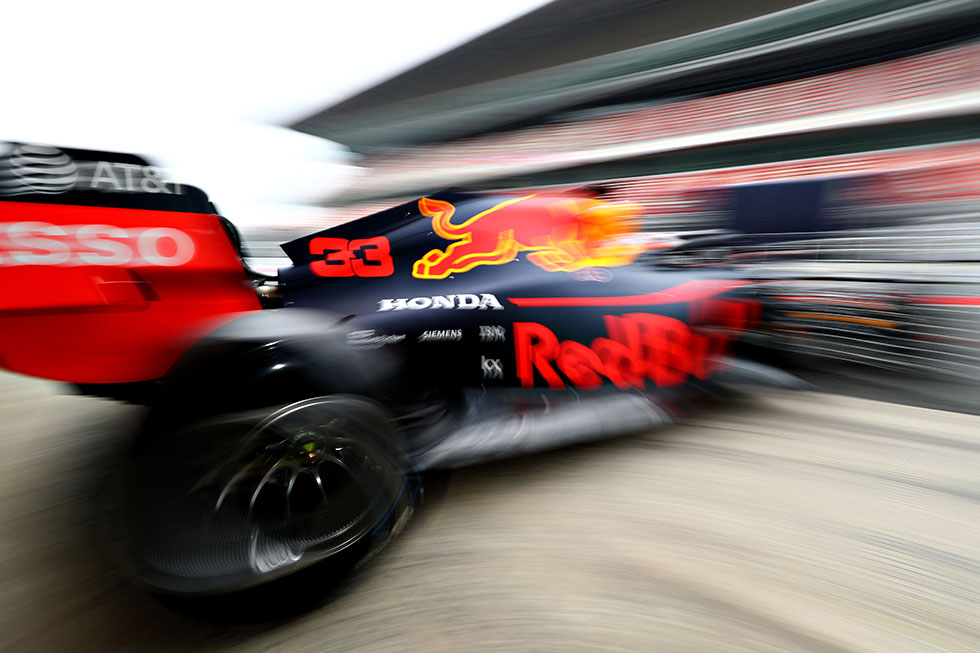
© HRCHonda’s PU improved dramatically during the 2018 season. Reliability was greatly enhanced, and the RA618H Spec 3 introduced after the summer break incorporated a new high-speed combustion system, achieving a breakthrough in output. But, it also encountered some problems during its maturation process and was unable to contribute to results. Toro Rosso started the season with hopes and expectations in Bahrain, but subsequent races saw a lack of synergy between drivers, the team, and the cars, resulting in the team finishing ninth in the Constructors’ Championship.
Partnership with Red Bull brings title victory within reach
2019 saw the birth of Red Bull Honda, attracting much attention during preseason testing. Honda confirmed that the car was in good shape during two three-day test sessions, but Red Bull had some concerns going into the season opener, as Pierre Gasly, who had been promoted to the team, suffered a major crash, disrupting the test program. However, once the season kicked off, Max Verstappen started from third on the grid and, despite dropping back temporarily, made a strong comeback to finish third in Australia. Honda claimed its first podium finish in its fourth F1 era, demonstrating its ability to compete at the top level.
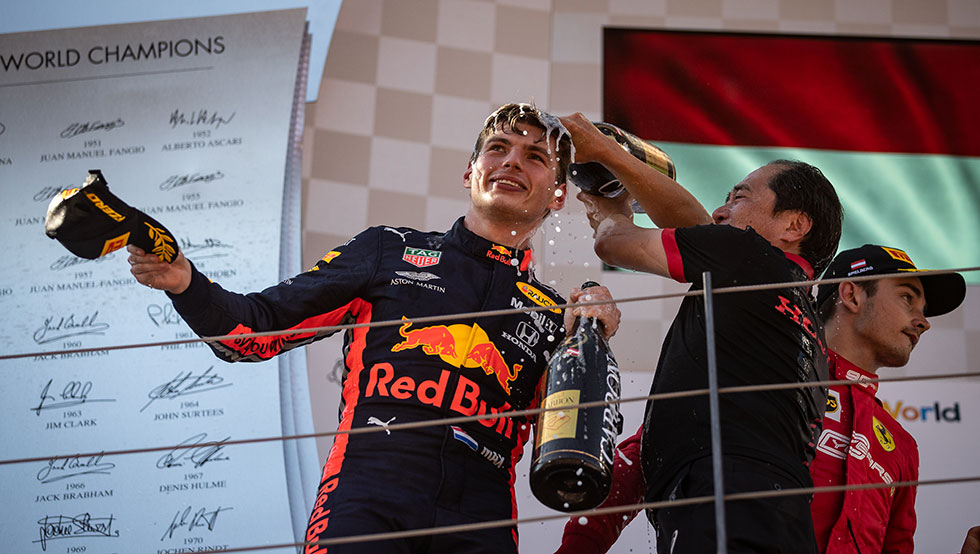
Honda had set a target of five wins for the 2019 season, following Red Bull’s four victories the previous year. However, despite Verstappen consistently finishing in top positions during the early stages of the season, Red Bull was unable to break Mercedes’ stronghold and struggled to claim a win. In Round 9, the Austrian Grand Prix, Red Bull Honda’s first victory finally came. Starting from third on the grid, Verstappen fell back to seventh, but following a remarkable comeback took the lead in the final stages of the race, and went on to victory. Verstappen on the podium pointed to the Honda logo on his chest, while Technical Director Tanabe joined him for the podium ceremony.
 © HRC
© HRC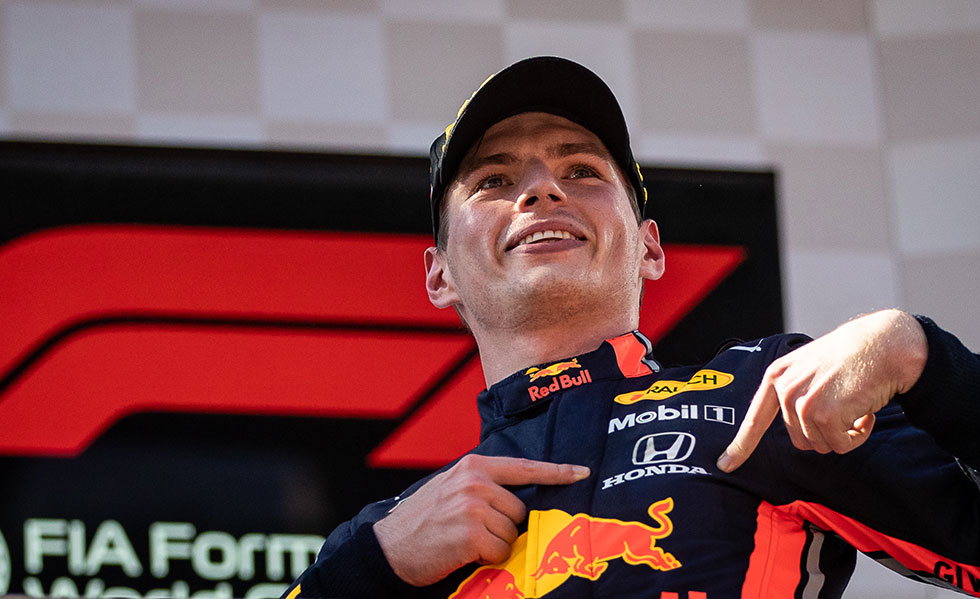 © HRC
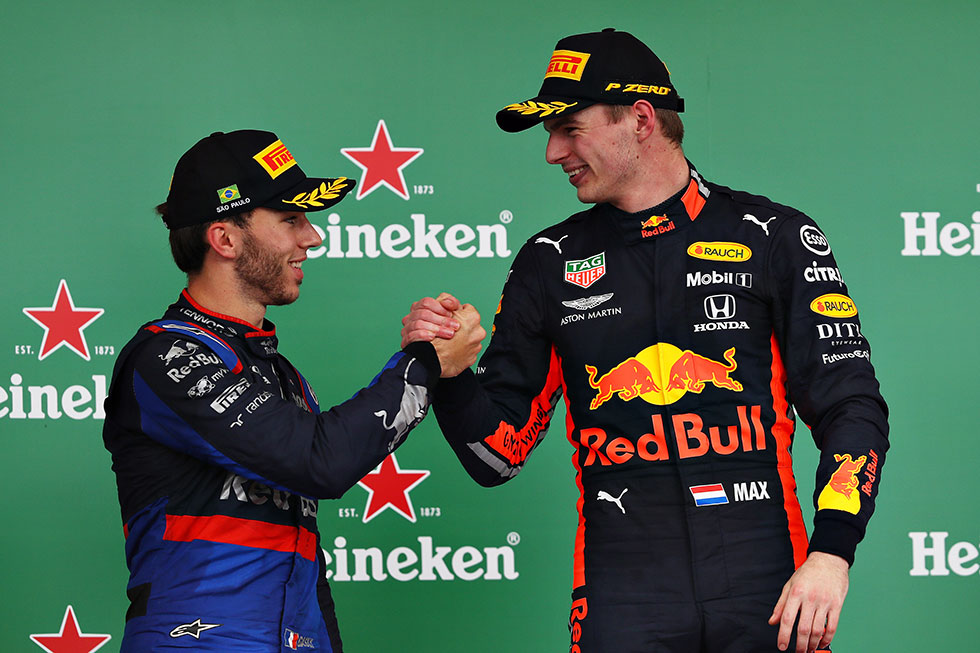
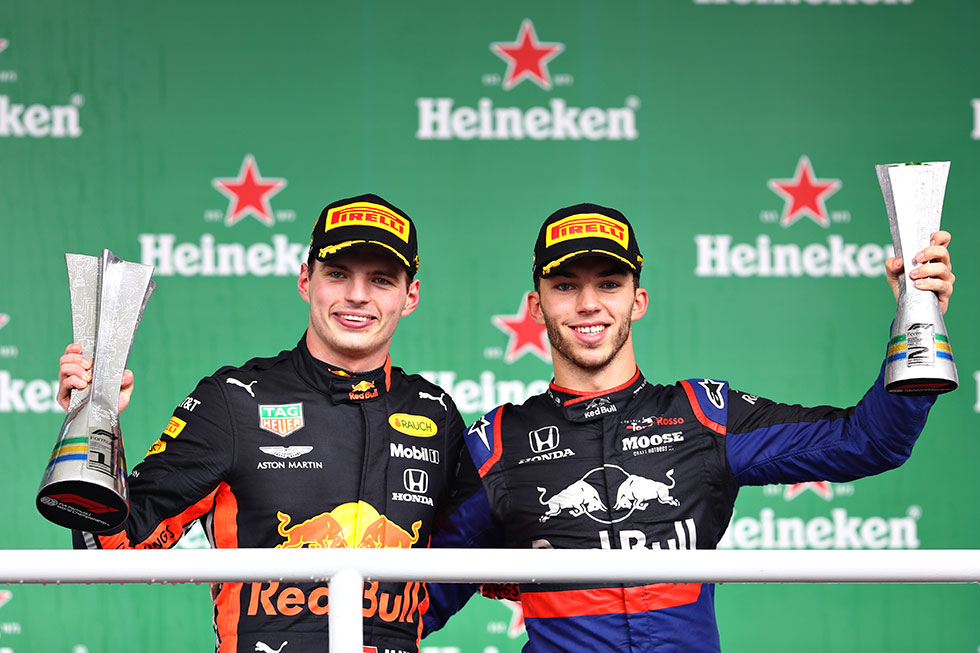
© HRCRed Bull Honda continued to gain momentum. Verstappen won the rain-soaked Round 11, German Grand Prix while Toro Rosso’s Daniil Kvyat finished third, giving Honda-powered cars two podiums. In the following round, the Hungarian Grand Prix, Verstappen claimed Honda’s first pole position in its fourth F1 era. Mercedes, however, remained a formidable rival, and Ferrari, which had significantly improved its performance after the summer break, was also a threat, preventing Honda from claiming its third victory of the season. This victory came in Round 20, the Brazilian Grand Prix, where Verstappen took pole and went on to win. Pierre Gasly, who had returned to Toro Rosso mid-season, was second, giving Honda a 1-2 victory.
Red Bull Honda’s debut season resulted in three wins. Although this fell short of the 5-win target, Verstappen claimed more victories than the previous year’s two, giving the team a strong sense of confidence in their ability to challenge the championship. As the season came to a close, Red Bull Honda camp began to strongly feel that the long-awaited and ultimate goal of winning the title had become a real possibility.
 © Red Bull Contents Pool
 © HRC
© HRC