CRF Stories
Aiming for Both High-Performance and Easy Handling, for Top Riders and Beginners Alike
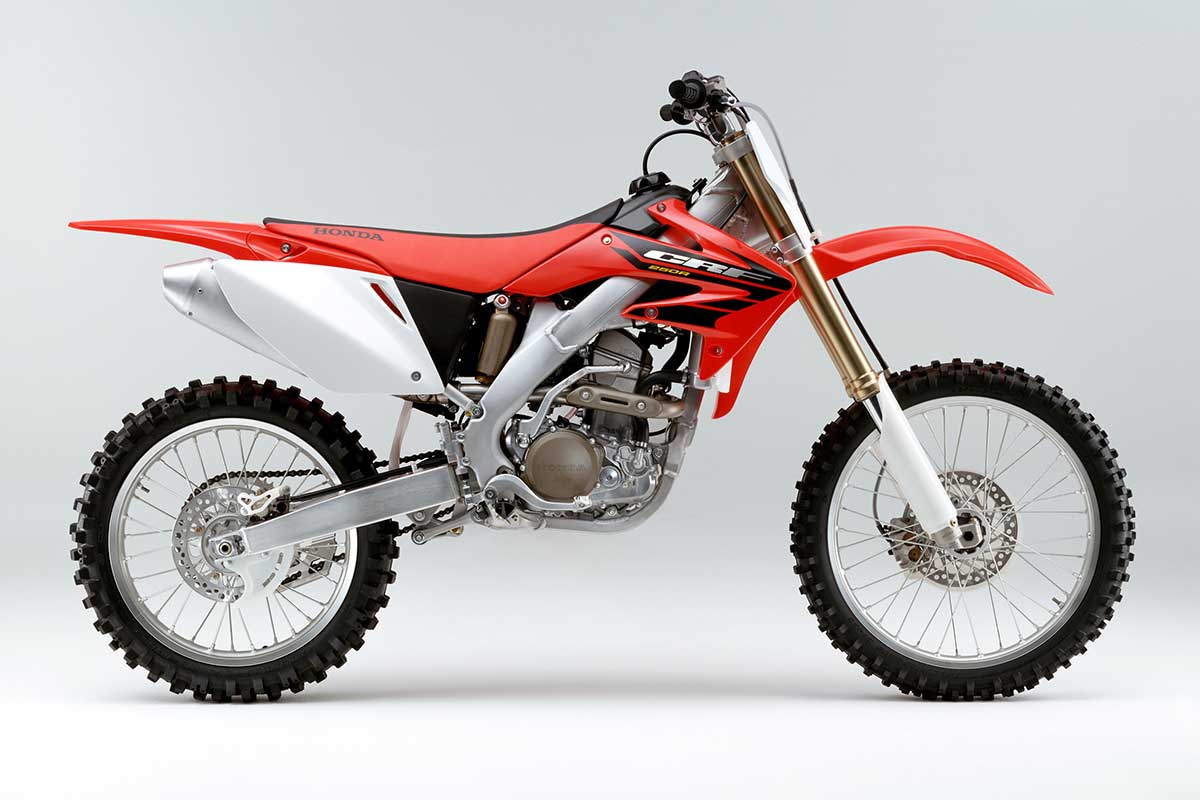
In 2003, Honda introduced the CRF250R as a 2004 model.
The development concept was “FAST & EASY.” The aim was to combine a high level of competitiveness that would enable top riders to fight at the front with characteristics that made the machine easy for beginners to handle.
To achieve these two seemingly conflicting goals, the engine and frame technologies developed for the CRF450R were thoroughly reviewed, resulting in the highly capable CRF250R.
As with the CRF450R, motocross racing was chosen as the proving ground for its performance.
At the time, 250cc four-stroke machines competed in the same class as 125cc two-stroke machines, attracting a wide range of riders from top-level competitors to beginners.
To meet the performance expectations of such diverse users, the development team refined the machine’s potential through actual racing.
Prototype debut in the All Japan Motocross Championship
The prototype made its debut at the final round of the 2002 MFJ All Japan Motocross Championship, the Japanese Grand Prix, held in October at Sportsland SUGO in Miyagi Prefecture.
Competing in the International A-Class 125cc category—where both 125cc two-stroke and up to 250cc four-stroke machines were eligible—the bike was ridden by Ernest Fonseca, who was competing in the United States at the time.
Against a highly competitive field that included international riders, the CRF250R prototype delivered an impressive performance. Fonseca won Heat 1 in the model’s debut race and followed with a second-place finish in Heat 2, demonstrating its strong potential from the outset.
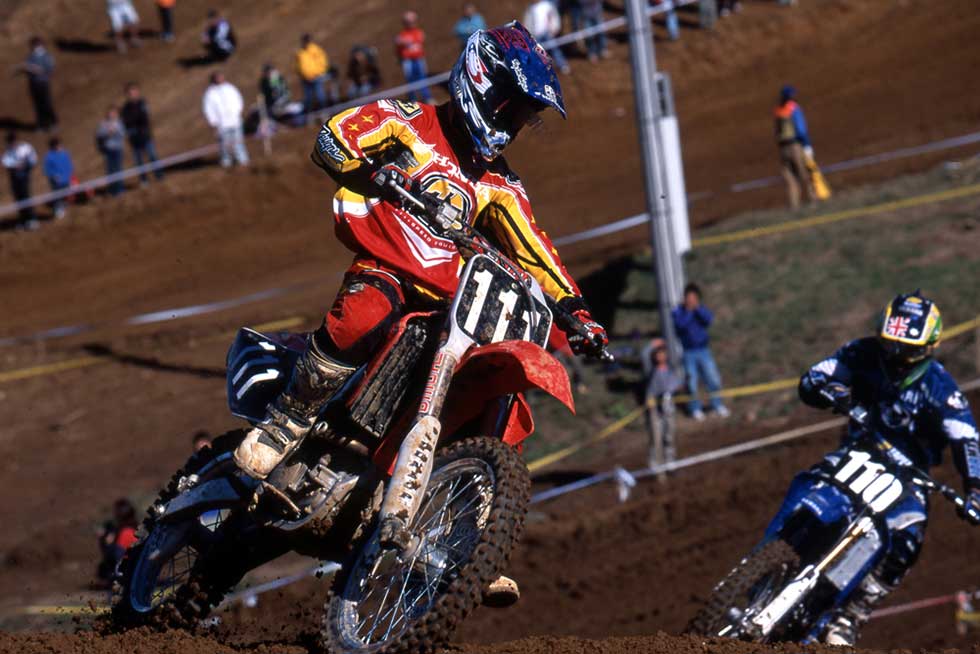
CRF250R prototype and Ernest Fonseca
To further refine the machine through real-world racing, Honda collaborated with HRC to compete in the 2003 MFJ All Japan Motocross Championship.
TEAM HRC fielded machines based on the CRF250R prototype with riders Kenjiro Tsuji and Naoki Serizawa. Tsuji claimed an overall victory as early as Round 2, while Serizawa secured two wins mid-season before injury sidelined him. Tsuji went on to win the final round, finishing second overall in the championship standings.
Through its debut season, the prototype proved its competitiveness at the highest level, providing valuable feedback for production development.
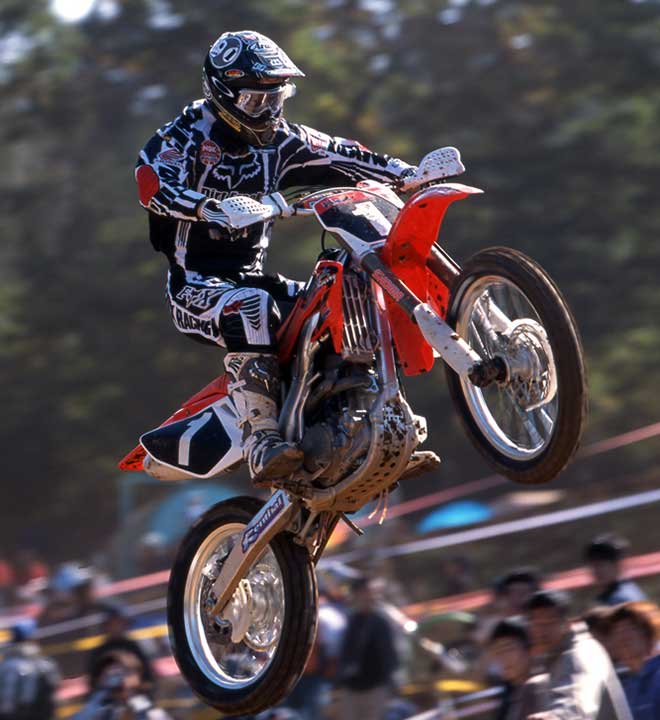
CRF250R and Serizawa
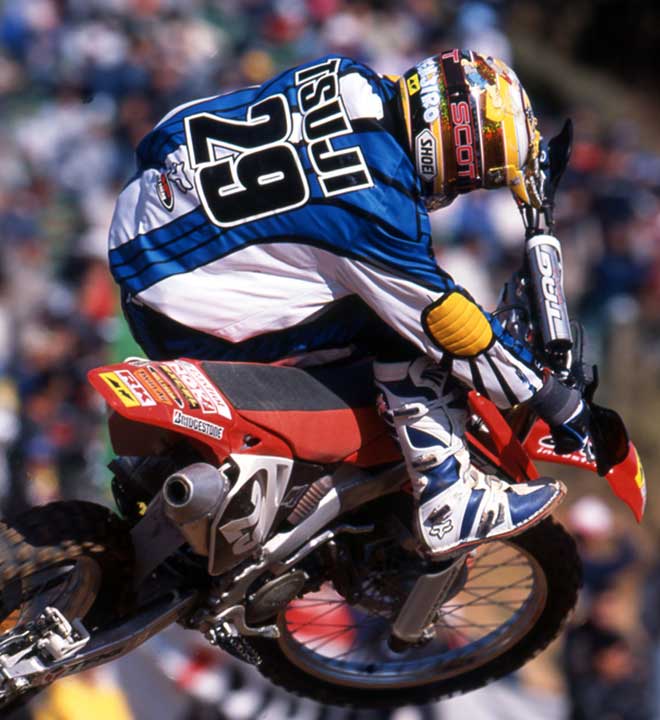
CRF250R and Tsuji
About the CRF250R
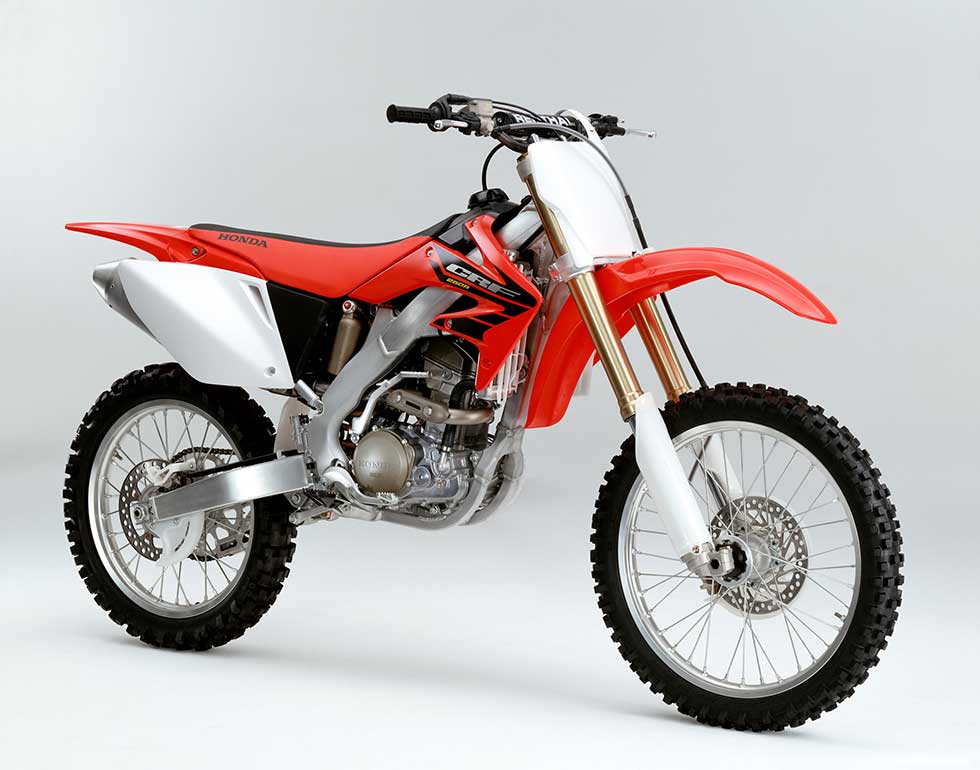
2004 CRF250R
Engine
The CRF250R features a newly developed liquid-cooled, four-stroke, OHC, four-valve single-cylinder engine with a displacement of 249.4 cm³. It delivers a maximum output of 31.0 kW (42.4 PS) at 11,000 rpm, surpassing the 30.5 kW (41.5 PS) at 11,500 rpm of its two-stroke rival, the CR125R.
Extensive weight reduction was achieved through the use of newly developed heat-resistant magnesium components for the ACG cover, clutch cover, and cylinder head cover, resulting in an engine dry weight of just 23.9 kg.
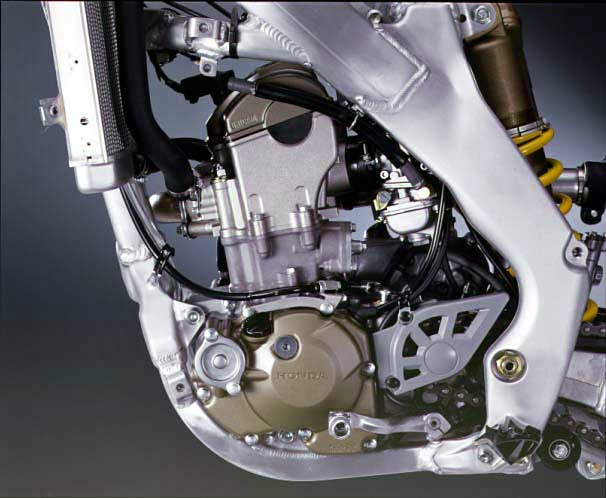
Magnesium ACG cover
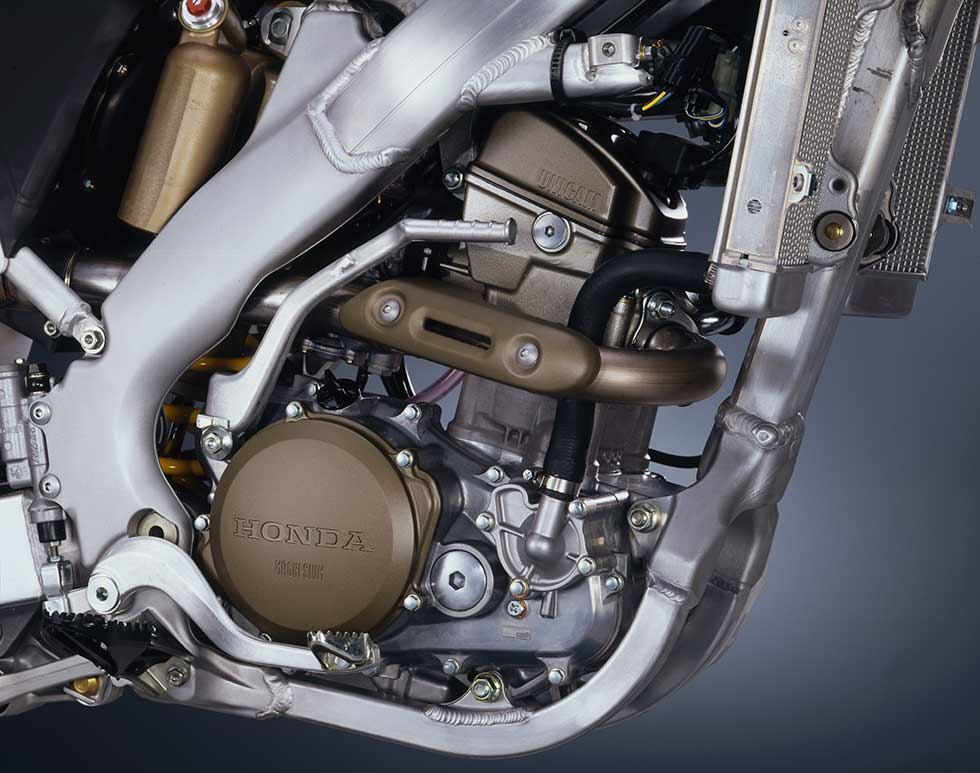
Magnesium clutch cover and cylinder head cover
The engine also adopts Honda’s proprietary Unicam valve train, as used in the CRF450R. This system operates the intake valves directly via a single camshaft while actuating the exhaust valves through rocker arms, enabling high-revving performance while maintaining a compact cylinder head design.
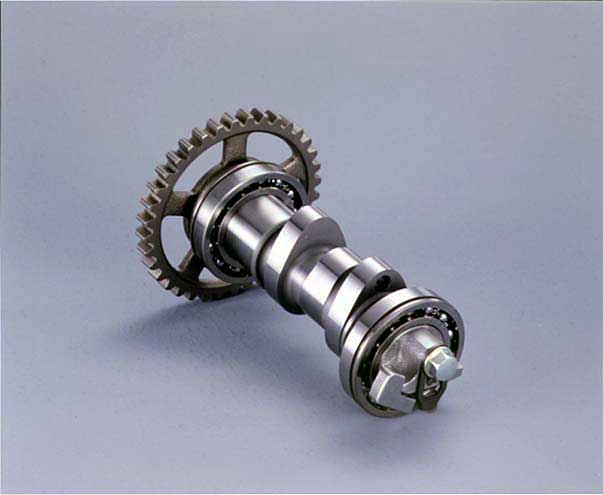
Cam shaft
A mini-skirt piston was adopted, with a height of just 31 mm for a 78 mm bore. Weighing only 137 g, it supports high engine speeds and a high compression ratio.
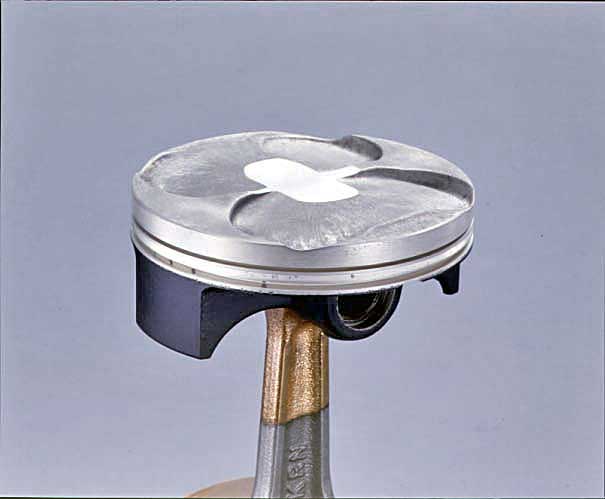
Mini-skirt piston
The connecting rod features the same dual carburizing treatment as the CRF450R and adopts a needle roller bearing at the big end, maximizing high-rpm performance and durability.
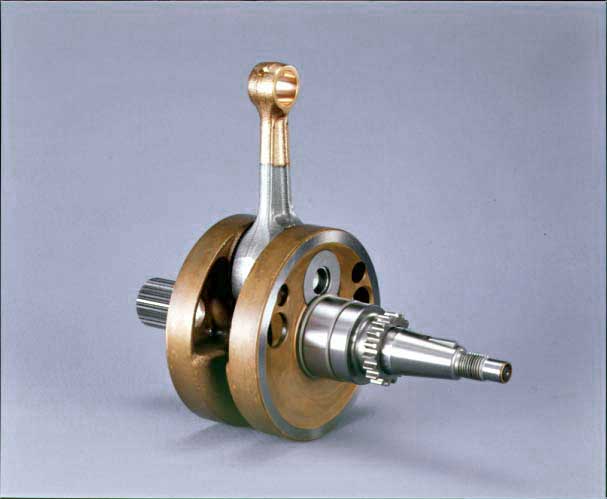
Connecting rod
Chassis
The frame is a newly developed aluminum semi-double cradle twin-tube design, aimed at delivering the lightweight, agile handling characteristics of a 125cc-class machine.
With dimensions equivalent to the two-stroke CR125R, the chassis was optimized to accommodate the four-stroke engine, including adjustments to caster angle, trail, wheelbase, and frame rigidity.
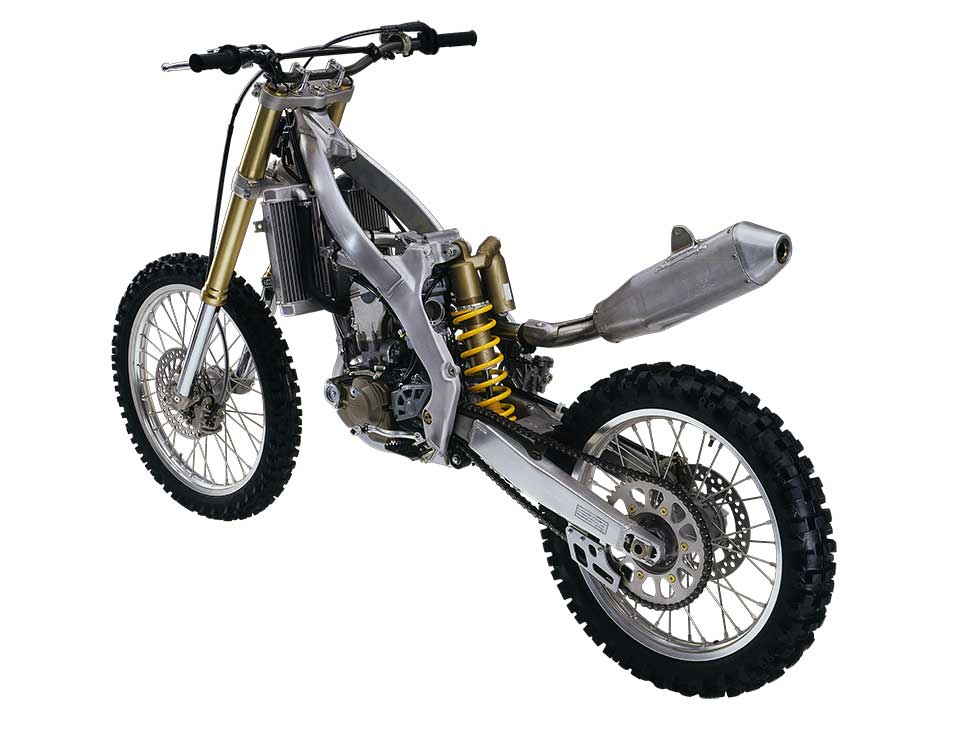
CRF250R chassis (with rear frame removed)
Motocross racing achievements
In the 2004 Motocross World Championship MX2 class, Jussi Vehvilainen of CAS Honda Racing competed on the CRF250R, securing a third-place finish in Heat 2 at the Belgian round and finishing 25th in the overall standings.
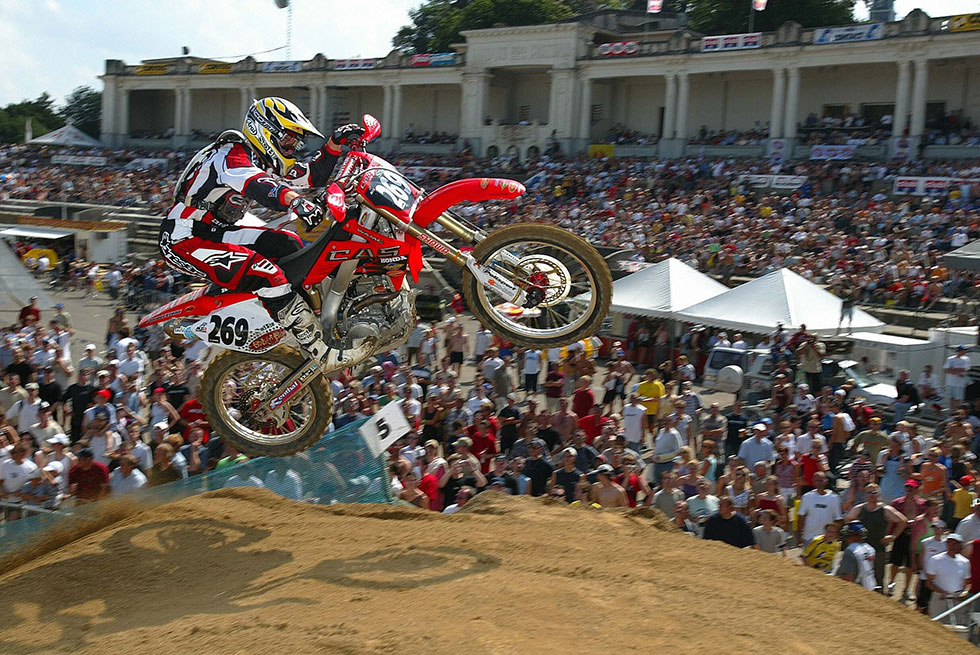
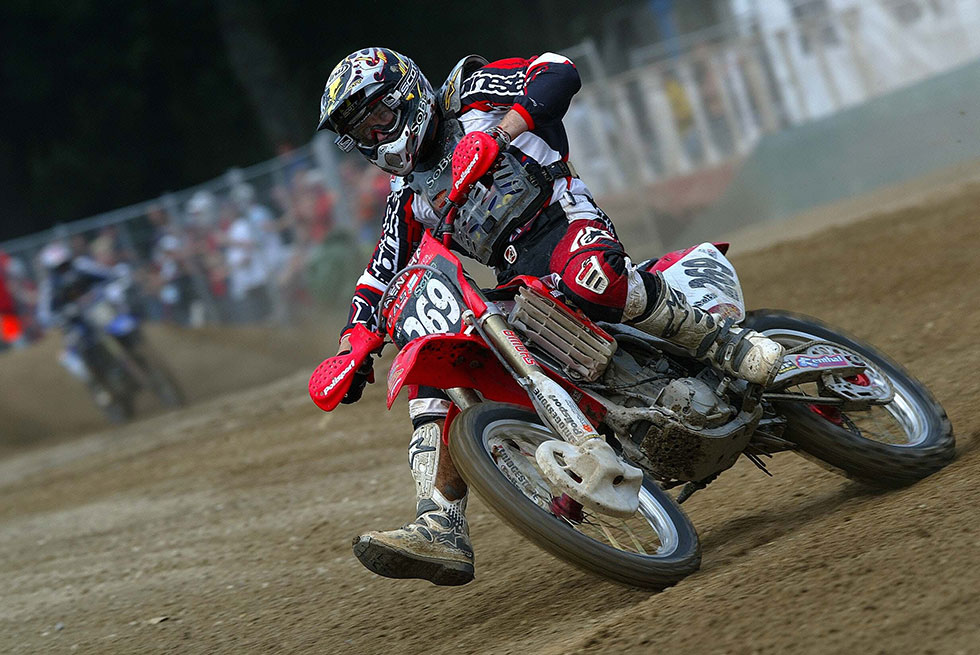
CRF250R and Jussi Vehvilainen
In the 2004 AMA Supercross 125cc class, Nathan Ramsey of American Honda competed on the CRF250R, finishing second in the 125cc West series standings.
In the 2005 season, the CRF250R claimed its first major title. In the MFJ All Japan Motocross Championship IA2 class (for International A license holders, with machines up to 125cc for two-stroke and up to 250cc for four-stroke), Yoshihide Fukudome of TEAM HRC secured the series championship aboard the CRF250R.
Continuously refined through competition, the CRF250R has evolved by incorporating insights gained from racing at the highest level.
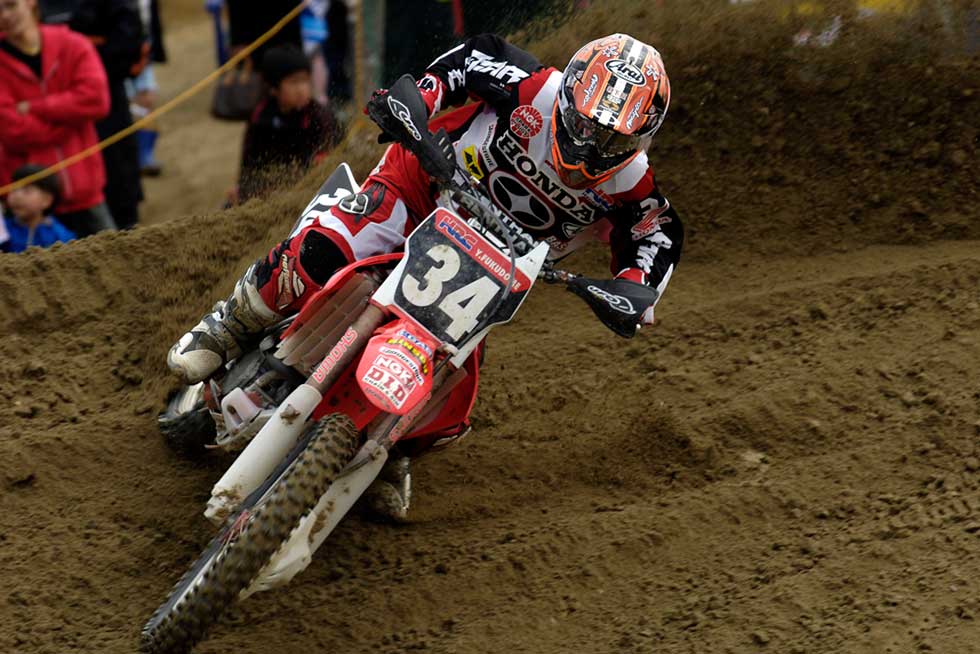
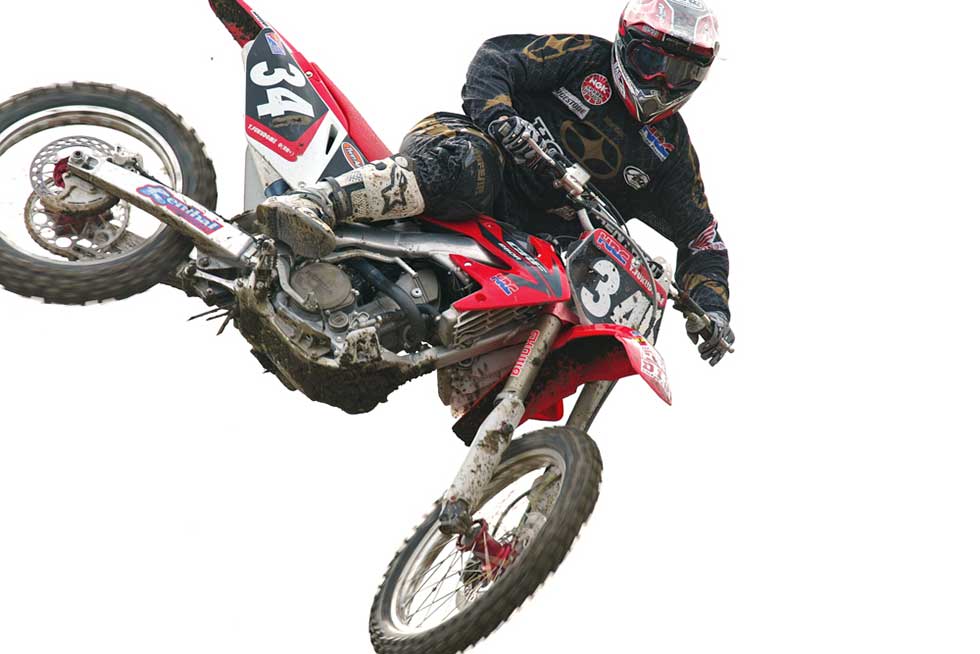
CRF250R and Fukudome