Honda Takasu Proving Ground Obtains Certification as a
“Nationally Certified Sustainably Managed Natural Site” in Japan
- Certification as a natural site is based on Japan’s Act on Promoting Activities to Enhance Regional Biodiversity
- Honda is pursuing both R&D activities and biodiversity conservation while protecting the vast, rich natural environment
TOKYO, Japan, October 30, 2026 – Honda Motor Co., Ltd. (Honda) today announced that, as of October 30, 2026, a majority of its Takasu Proving Ground site located in Hokkaido, Japan has been certified as a Nationally Certified Sustainably Managed Natural Site (“Shizen Kyosei Site” = translated as “Nature Symbiosis Site”) based on Japan’s Act on Promoting Activities to Enhance Regional Biodiversity*1.
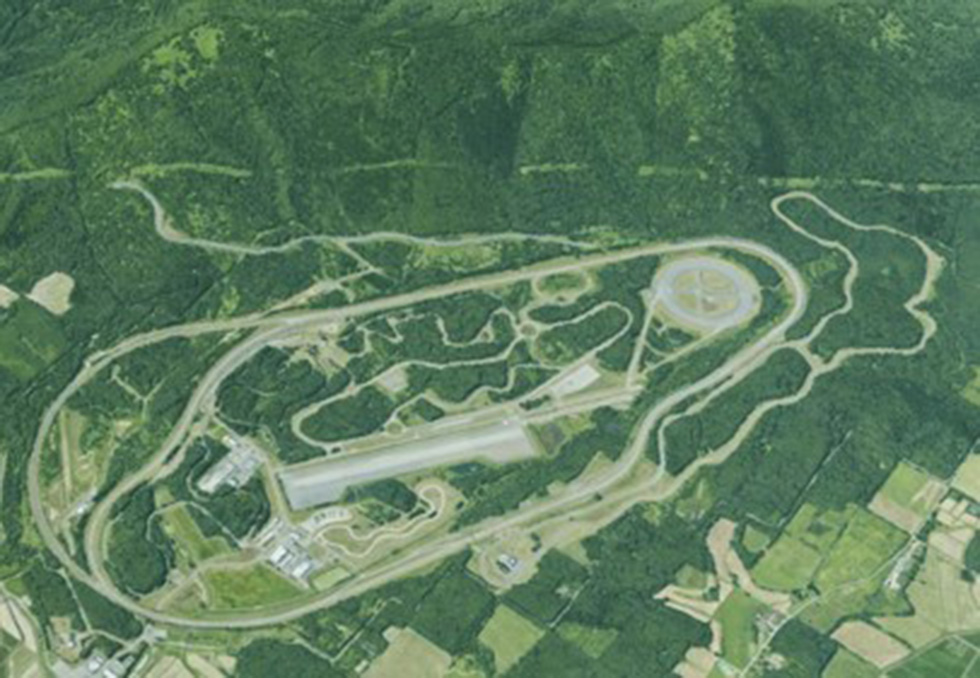
Located in Takasu-town, Kamikawa-district, Hokkaido-prefecture, Japan, Takasu Proving Ground is a comprehensive testing facility of Honda R&D Co., Ltd., the R&D subsidiary of Honda. The areas within the Takasu Proving Ground site where Honda has set and been implementing plans to contribute to the maintenance and enhancement of biodiversity was certified as a Shizen Kyosei Site, based on the Act on Promoting Activities to Enhance Regional Biodiversity.
Honda has been participating in the “30 by 30 Alliance for Biodiversity” led by the Japanese Ministry of the Environment (MOE) since April 2022, and this is the third Honda-related site to be certified as a Shizen Kyosei Site, following the certification of Mobility Resort Motegi (located in Tochigi, Japan) in October 2023, and the Honda Saitama Factory Automobile Plant (located in Saitama, Japan) in September 2024. The Takasu Proving Ground is the first Honda R&D facility to get the certification.
The 30 by 30 are international targets to effectively conserve at least 30% of the Earth’s land, freshwater and oceans as a healthy ecosystem globally by 2030. This is one of the targets of the Kunming–Montreal Global Biodiversity Framework (KMGBF)*2 adopted at the 15th meeting of the Conference of the Parties to the Convention on Biological Diversity (COP15) in December 2022. The 30 by 30 Alliance for Biodiversity was established in Japan under the leadership of the MOE to establish structures and systems which will contribute to the attainment of the 30 by 30 targets in Japan, and it has been working on the certification of OECMs in Japan.
Based on the Act on Promoting Activities to Enhance Regional Biodiversity, the responsible ministers (the Minister of the Environment, the Minister of Agriculture, Forestry and Fisheries, and the Minister of Land, Infrastructure, Transport and Tourism) certify areas where the plans for biodiversity enhancement activities (aimed at maintaining, restoring, or creating biodiversity) are set and being implemented. Areas certified for activities to maintain existing biodiversity-rich environments are registered in the World Database on OECMs*3.
Takasu Proving Ground became operational in 1996 as a comprehensive test facility of Honda R&D. The 789-hectare site features test courses that reproduce a variety of road conditions from around the world, as well as courses that take advantage of the region’s cold climate to enable vehicle testing under a wide range of winter conditions.
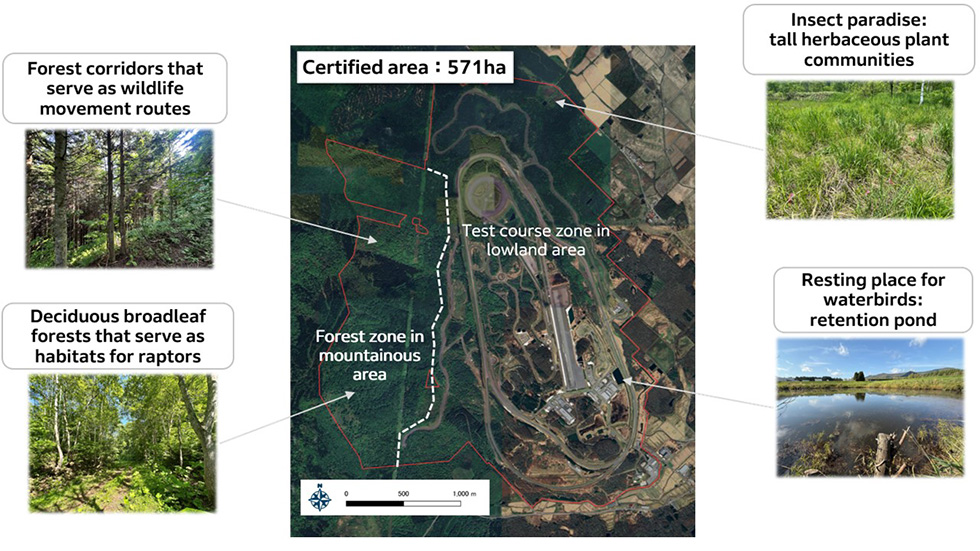
Based on the recognition of the track record of Honda environmental conservation initiatives, including 1) the site management practices unique to a proving ground that minimize external disturbances, 2) establishment of designated conservation areas, and 3) preservation of the existing ecosystems through activities carried out in collaboration with the local community, a total of 571 hectares, representing approximately 70% of the entire site of Takasu Proving Ground, excluding areas with facilities such as test courses, has been certified as a Shizen Kyosei Site. This is the largest area ever certified for a Shizen Kyosei Site at a single Honda operation. Honda will continue to pursue both R&D activities and coexistence with nature, working with the local community to conserve a rich natural environment for future generations.
*1 A Japanese law that took effect in April 2025 to promote biodiversity conservation activities by private sector companies and organizations. The law formalized the “Nationally Certified Sustainably Managed Natural Sites (Shizen Kyosei Sites)” program, a certification system for conserved areas of private sector companies and organization, that the Ministry of the Environment had been promoting since Japanese fiscal year ended March 31, 2024.
*2 An international target aimed at achieving “Nature Positive”—halting and reversing biodiversity loss by 2030, that set 23 specific targets, including conservation and sustainable use of eco systems.
*3 OECM: Other Effective Area-based Conservation Measures. Areas where conservation is achieved by the efforts of the private sector and areas where management for a purpose other than conservation is resulting in the contribution to the protection of the natural environment.
Biodiversity conservation initiatives at Takasu Proving Ground
At Takasu Proving Ground, Honda has been successfully pursuing both R&D activities and biodiversity conservation, while protecting the vast, rich natural environment.
Ongoing environmental conservation and the maintenance of a diverse ecosystem
To conserve the rich natural environment of Hokkaido, Japan, Honda has placed importance on maintaining “harmony with nature” from the outset of construction of the proving ground, taking various measures such as preserving forest areas equivalent to 60% of the entire site and planting 35,000 trees.
Even after the proving ground became operational, Honda has continued to be engaged in ongoing environmental conservation efforts, formulating a green space management plan that takes biodiversity conservation into account and implementing tree planting and water quality management. As a result of these long-standing initiatives, a total of 1,245 species of flora and fauna, including 58 rare species, had been confirmed on the site at the time of the 2025 survey.
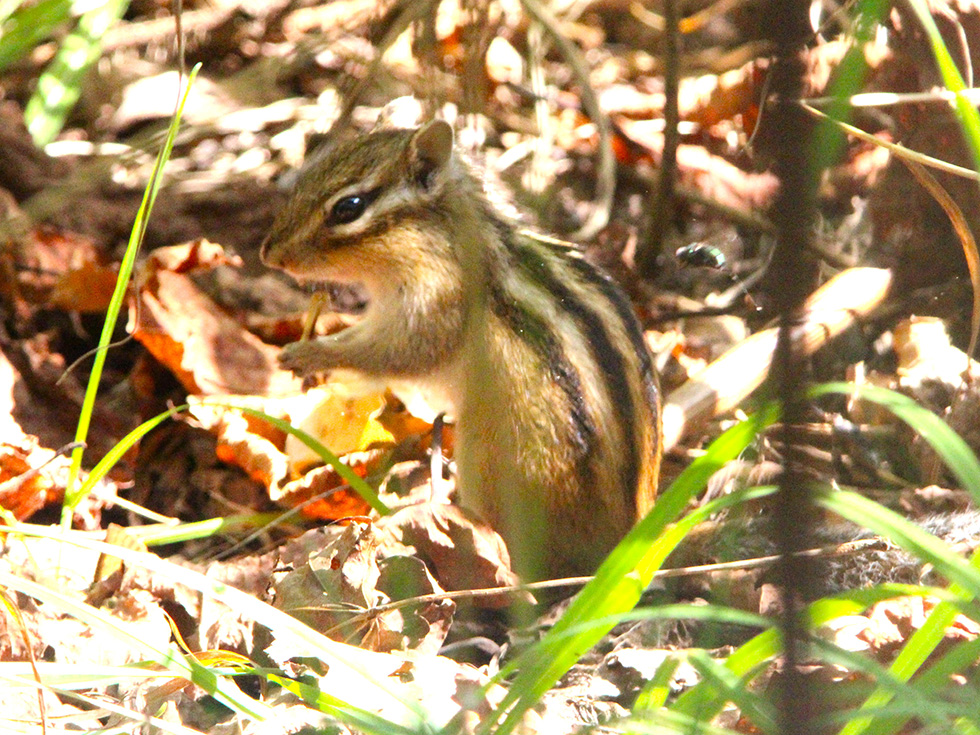
Creating a safe habitat by leveraging the unique environment of the proving ground:
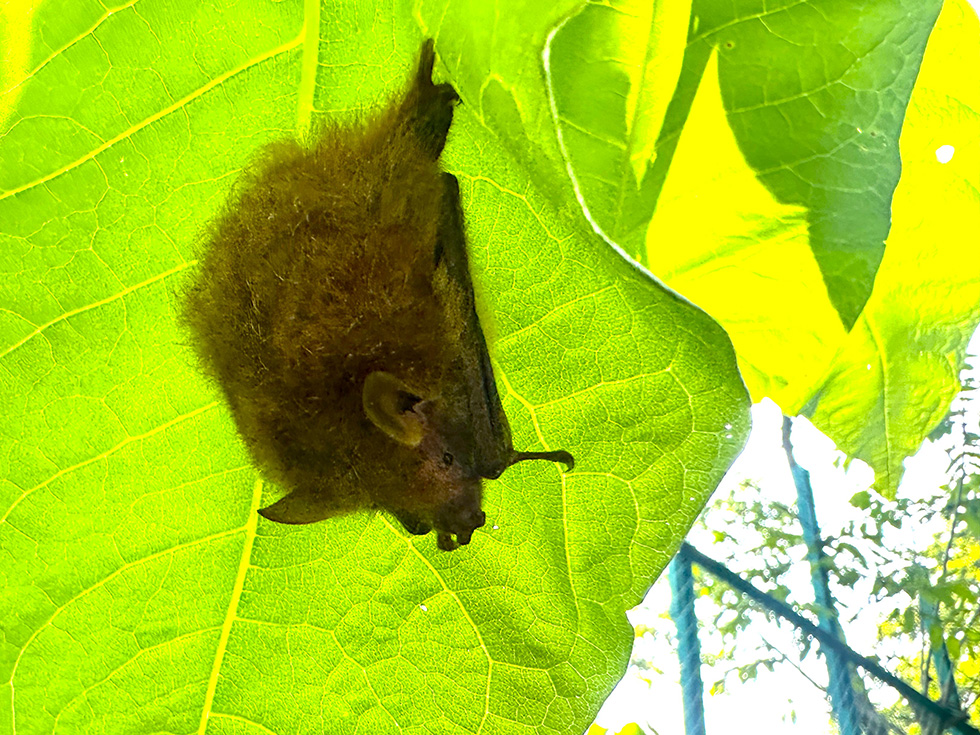
Given the nature of Takasu Proving Ground as a testing facility for vehicles under development, access is restricted to authorized personnel, and a fence approximately 3 meters high surrounds the site to prevent large mammals from entering for safety reasons. These site management practices, unique to a proving ground which is less susceptible to external disturbances, help maintain a safe habitat for wild plants and animals, contributing to the formation of a rich ecological network.
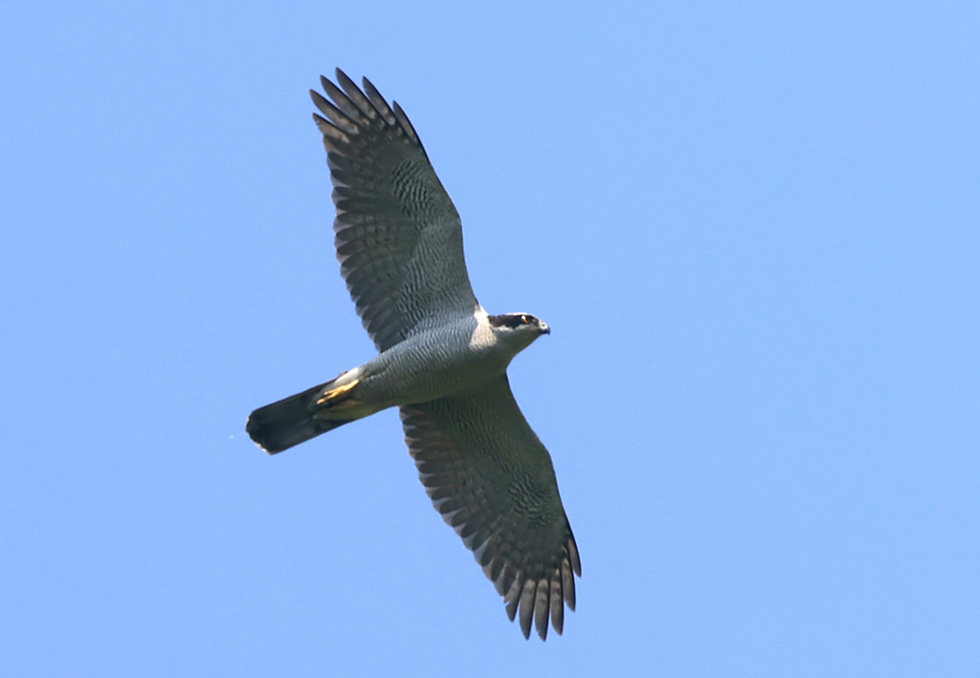
Honda has been conducting surveys of rare species, including the mountain hawk-eagle, as an indicator of the effectiveness of its initiatives. The list of species being surveyed is in line with the guidance recently published by the Nature Positive Initiative (NPI)*4 on how to narrow down the species to be prioritized for survey and measurement. Incorporating such international frameworks, Honda is objectively assessing the health of the ecosystem on the Shizen Kyosei Site within the Takasu Proving Ground.
Protecting rare species through the establishment of designated conservation areas
and a “conservation through minimal-intervention” approach:
Within the site, a relatively undisturbed Japanese elm–Manchurian ash woodland has been designated as a conservation area, where the conservation is pursued with minimal human intervention. Taking measures such as protecting rare species, including the mountain hawk-eagle and the black woodpecker, removing invasive, non-native species, and preserving water quality, Honda strives to maintain the overall health of the ecosystem on the site. Regular patrols and ongoing ecosystem monitoring are also being conducted.
Fostering environmental awareness among Honda associates and strengthening ties with the local community:
In addition to fostering environmental awareness among its associates through internal initiatives, Honda values its ties with the local community. Through events such as facility tours, Honda introduces local residents to the plants and animals that inhabit the site of Takasu Proving Ground.
Biodiversity initiatives by Honda
Recognizing the possibility that its corporate activities could affect biodiversity, as early as the 1960s, Honda began putting significant efforts into activities that lead to the conservation of biodiversity, including afforestation activities and the recycling and reuse of industrial water at its factories. In 1976, Honda began a program to create a “hometown forest*5” composed of native tree species that preserve the ecosystem and biodiversity unique to each location, at each of its operations in Japan.
In 2011, Honda established the “Honda Biodiversity Guidelines” which set forth the basic approach to work toward the harmonization of biodiversity initiatives and corporate activities. Based on this approach, Honda has been engaged in various environmental conservation activities around the world.
Striving to create a dream-inspiring future society where people can enjoy a rich natural environment, clean oceans, safety for everyone, a future where our children realize their dreams with no restrictions and greater comfort in life for everyone,
With this certification of Takasu Proving Ground, the total area certified as a Shizen Kyosei Site now accounts for approximately 40%*6 of the combined site area of all Honda production and R&D facilities in Japan. This is one of the achievements of the ongoing efforts of Honda to pursue harmony between its business activities and the natural environment. Honda will continue to work on initiatives that help future generations to have enjoyable daily lives.
Based on the LEAP approach*7, an international framework developed by the Taskforce on Nature-related Financial Disclosures (TNFD)*8, Honda assesses its dependencies and impacts on nature and progressively promotes biodiversity conservation activities, starting with high-priority areas and operation sites, tailoring them to local characteristics and natural environments.
Honda will continue to pursue Shizen Kyosei Site certification for more of its operation sites in Japan, with an eye toward leveraging the knowledge gained in Japan to further enhance its biodiversity conservation initiatives at Honda operations outside Japan.
*4 Nature Positive Initiative (NPI) is a coalition to drive alignment around use of the term ‘nature positive’ and support broader, longer-term efforts to deliver nature-positive outcomes.
*5 Activities to plant and nurture trees native to the local area on the site of Honda operations, including production and R&D facilities, in Japan.
*6 The total area certified as a Shizen Kyosei Site accounts for approximately 40% of the combined site area of all Honda production and R&D facilities in Japan and Mobility Resort Motegi owned by Honda.
*7 The LEAP (Locate, Evaluate, Assess, Prepare) approach is an integrated approach developed by the TNFD to assess nature-related issues, including an organization’s interface with nature, dependencies and impacts on nature, and nature-related risks and opportunities.
*8 The Taskforce on Nature-related Financial Disclosures (TNFD) is an international framework that helps companies and financial institutions evaluate impact, risks and opportunities their business activities would have on natural environment and biodiversity.
Overview of the certified Shizen Kyosei Site within Takasu Proving Ground
Site name | HondaWoods Takasu Taisei no Mori |
Site address | 21-10 Takasu-cho, Kamikawa-gun, Hokkaido, Japan |
Site area | 571ha |
Organization responsible for the governance of the site | Honda Motor Co., Ltd. |
Organization responsible for the management of the site | Honda R&D Co., Ltd. |
Collaborating organizations | Regional Environmental Planning, Inc.(CHIIKAN) Takasu town, Hokkaido Takasu Forest Owners’ Co-operative Association |
Lengths of the management period per year | Year round |
Start of management role | 1996 |
List of Honda-related Shizen Kyosei Sites:
Operation name | Site name | Certification year | Certified area | Number of rare species |
Mobility Resort Motegi | Mobility Resort Motegi | 2023 | 415ha | 48 |
Saitama Factory Automobile Plant | HondaWoods Minamiyorii Tsudoi no Sato | 2024 | 27ha | 41 |
Takasu Proving Ground | HondaWoods Takasu Taisei no Mori | 2026 | 571ha | 58 |