A Dedication to Superior Performance and Elegant Design
Effortless launching into motion. Sustained, agile acceleration. Superior straight-line stability. Honda has fine-tuned the desired features of a racing wheelchair while emphasizing the joys of riding one through an ongoing dedication to design elegance.
In 1993, the Racing Wheelchair Study Group was established at Honda Sun. The Honda Athlete Club was formed in 1999. Racing wheelchair development officially got underway at Honda R&D the following year. The design evolved for over a decade, leading to the development of racing wheelchair KIWAMI in 2014 through a three-way collaboration between Honda R&D Sun, Honda R&D, and Yachiyo Industry (now Motherson Yachiyo Automotive Systems Co., Ltd.). KAKERU was launched in 2019, 20 years on from the Honda Athlete Club’s formation. It was the culmination of the finest technology to date, a racing model on course for ambitious new heights.
KAKERU: Empowering Athletes While Being Rider-Friendly
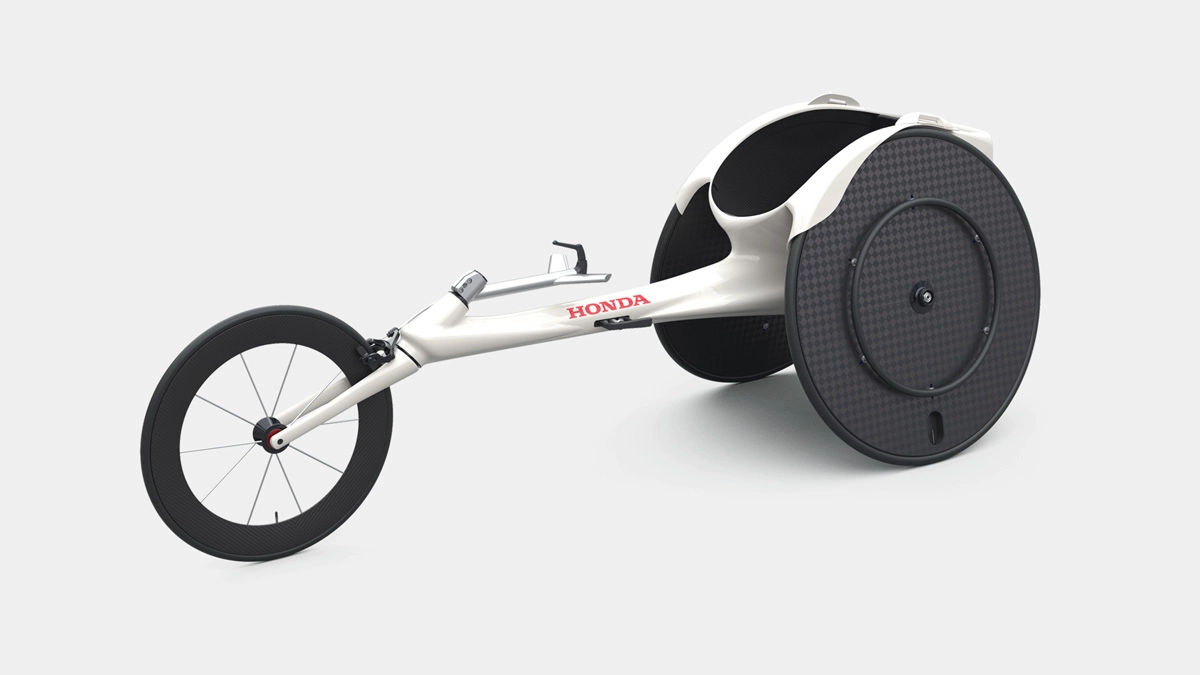
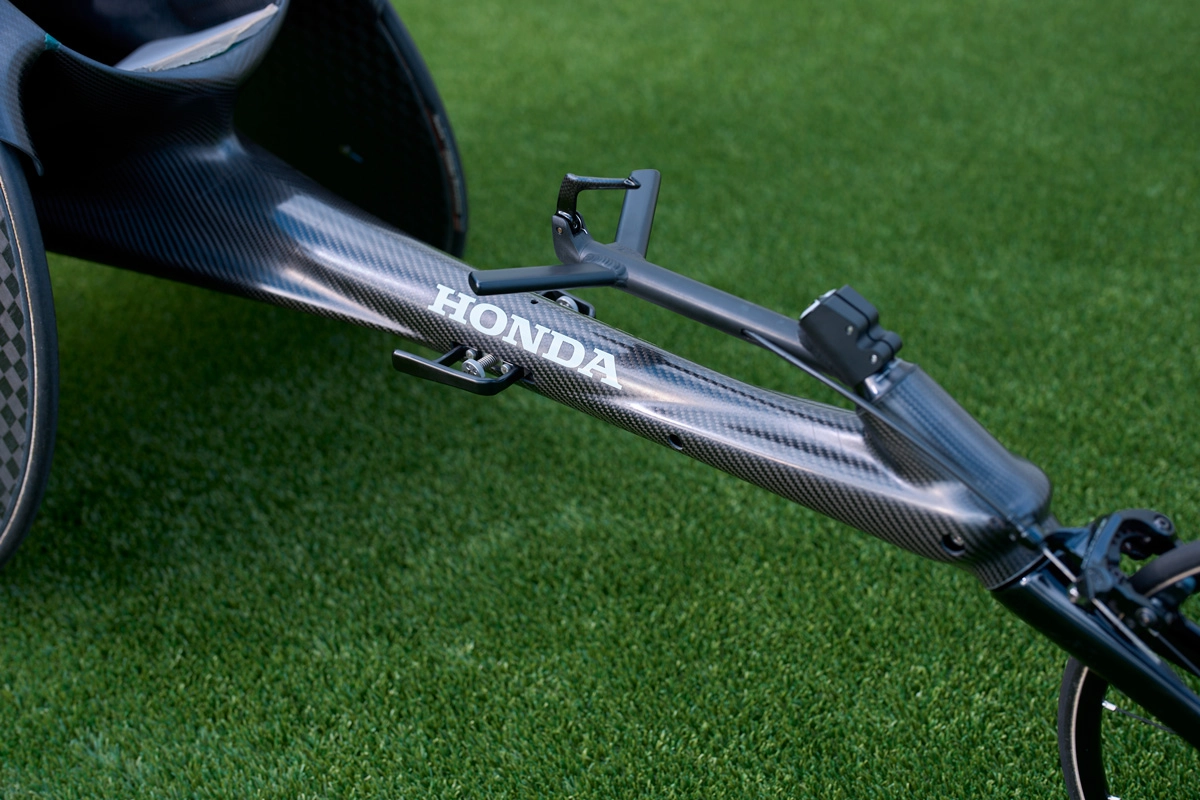
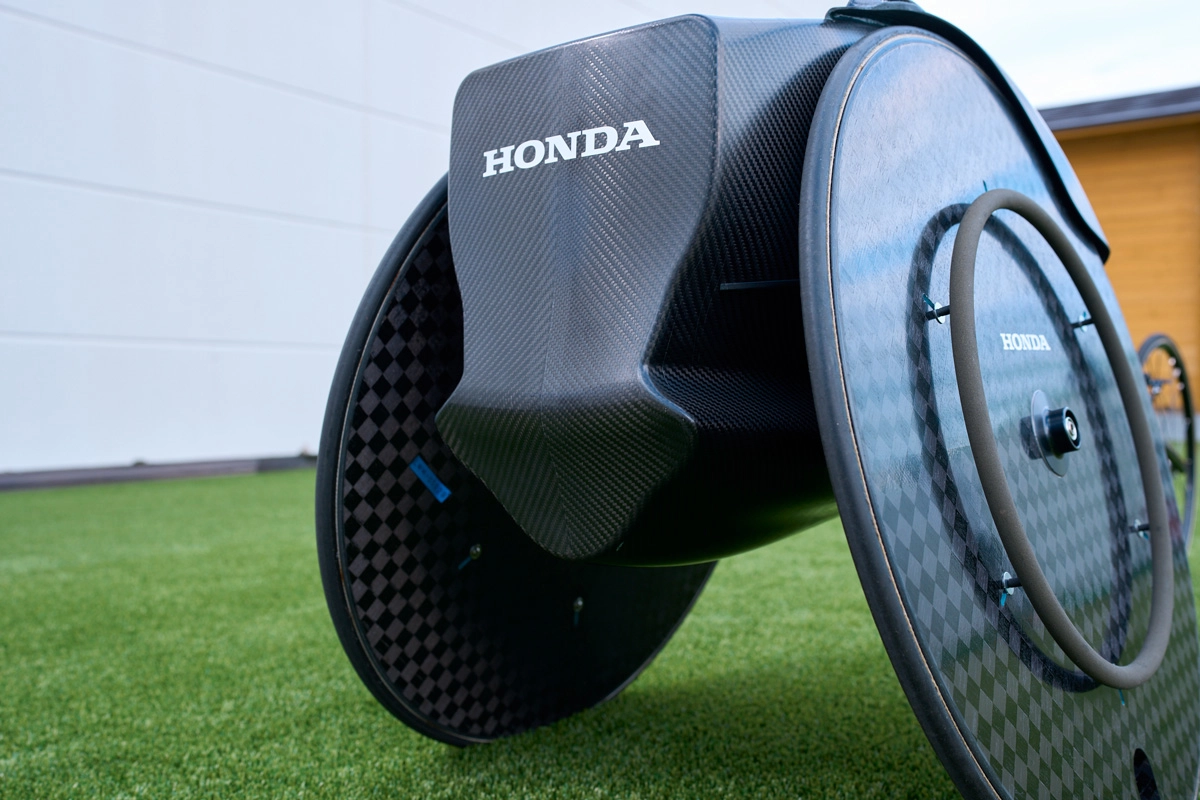
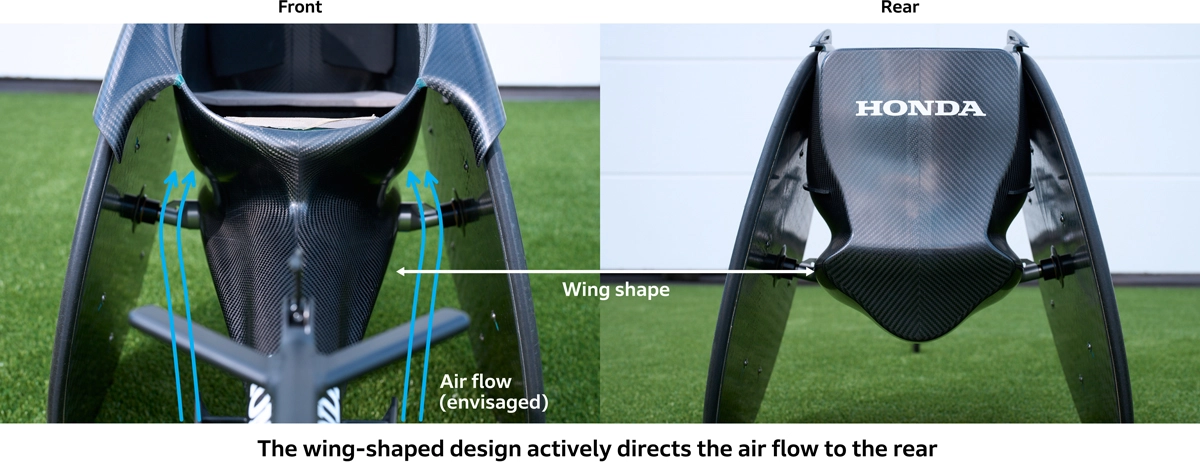
The KAKERU wheelchair features a lightweight, highly rigid design enabled by the carbon-made monocoque frame, front fork, and disc wheels, as well as a built-in damper steering system that integrates the steering damper within the frame rather than leaving it externally exposed as in the past. The flowing style of the wing-shaped frame provides excellent aerodynamics by directing oncoming air toward the rear, ensuring superior performance as a racing wheelchair.
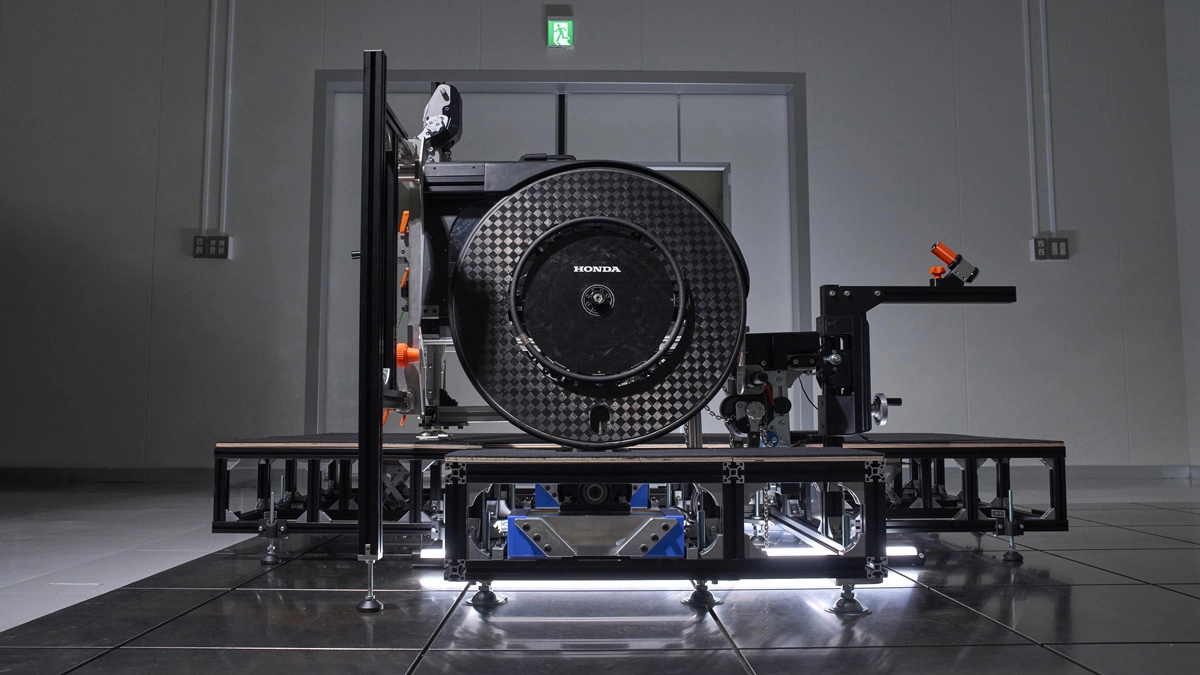
Combined use of Honda’s original push power measurement system and test bench enable a racer design that elicits the best performance from an athlete since the racing position is individually determined for each athlete based on the relevant facts and figures. The aim is to help athletes improve their performance.
Carbon Monocoque Frame Refined by Detailed Measurements and Seasoned Skill
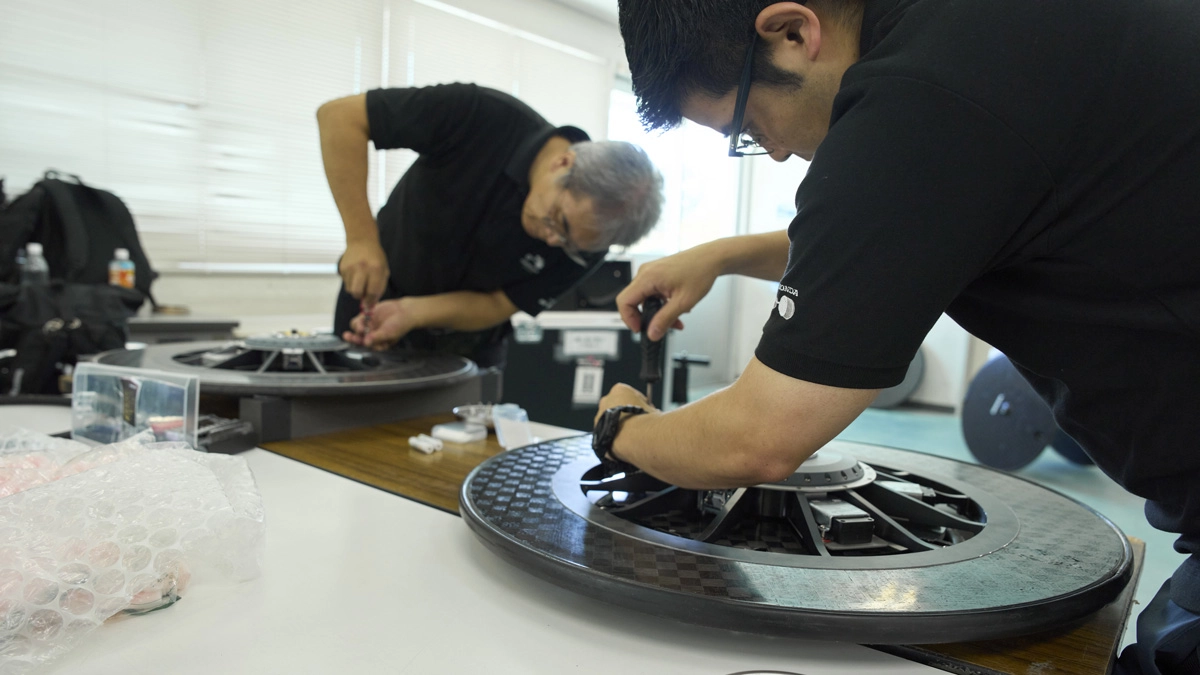
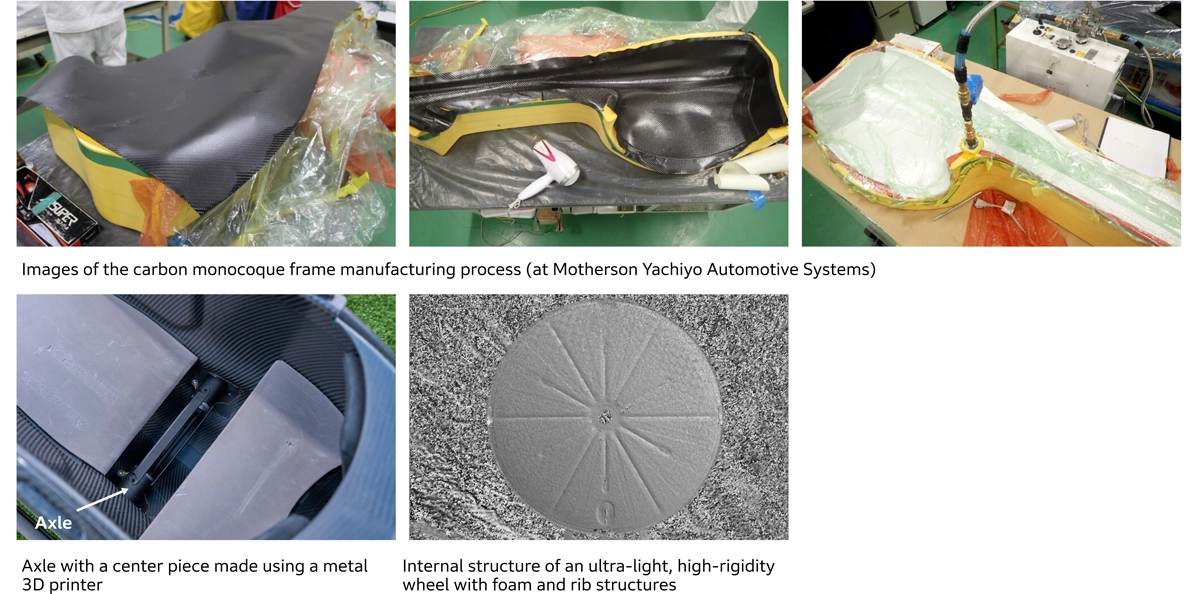
To design a racing wheelchair for an athlete, a 360° surround view of them seated in a racer is captured to create 3D data. Modeling uses this data to make fine adjustments to parameters such as the positions of the seat, knee plate, and body straps. The rigidity of the various parts is optimized for each wheelchair and incorporated into the design data.
Seasoned expertise is applied to install carbon sheets with precision, and to elegant effect, to reproduce a level of rigidity faithful to the design data and to achieve a lightweight, highly rigid frame. Light weight and high rigidity were further achieved by manufacturing the axle—traditionally a steel pipe—using additive manufacturing technology, with a metal 3D printer. The ultra-lightweight and high-rigidity wheels were realized by developing a structure comprising two layers of thin material stuck together, with foam and rib structures inside.
Built-in Steering Damper Contributes to Both Elegance and Aerodynamics
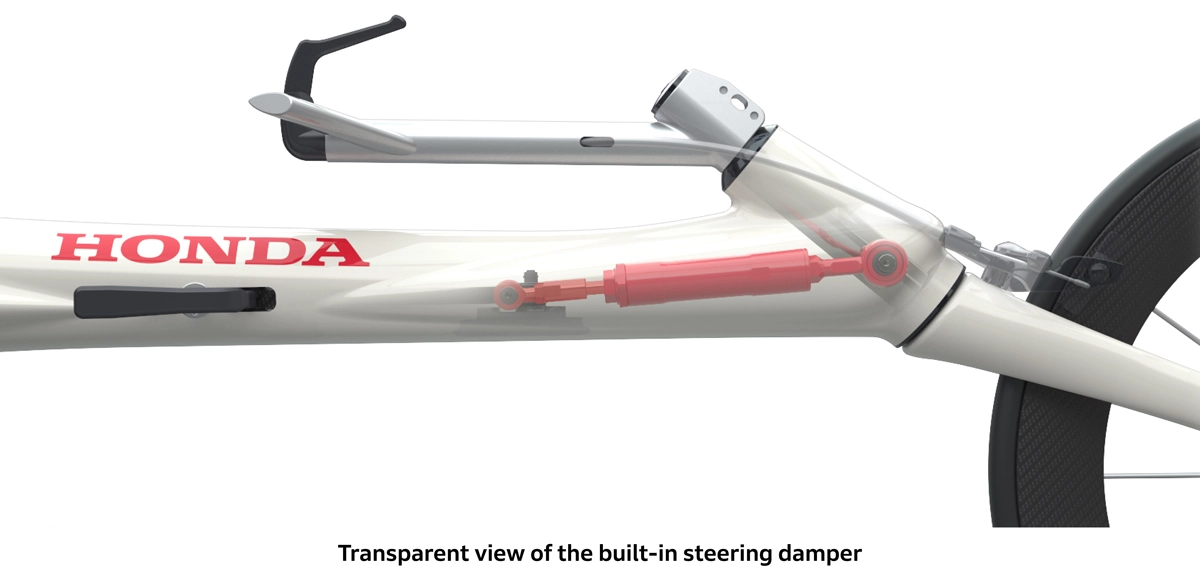
Racing wheelchairs are fitted with a steering damper with an internal spring that returns the front wheel so it is facing straight ahead again after a steering operation. Though typically located in an exposed position on the outside of the frame, Honda created a compact damper and built it into the inside of the frame.
To make the damper compact, the arms supporting it needed to be shortened, making it harder to achieve a design eliciting the spring force to keep the front wheel in place. At one point, the wheelchair weighed more than before the modifications. Through persistent efforts, a lightweight, compact design was achieved. Switching to a steering system with a built-in damper enabled an elegant frame design with a reduced frontal projected area contributing to outstanding aerodynamic performance.
Wing-Shaped Frame Reduces Air Resistance and Actively Directs Air to the Rear
On advice from a former F1 designer, the frame was given a gently contoured wing-shaped design, like the character line of an automobile, stretching from the crown of the front fork to the rear of the wheelchair. The design sought to create an elegance that athletes could take pride in, as well as outstanding aerodynamic performance.
The elegant wing-shaped design, with steering damper no longer exposed, allowed air to flow smoothly around the frame, reducing air resistance. This helped to increase the top speed. Another intended effect of having air flow toward the rear was to reduce the drafting advantage when following another wheelchair.
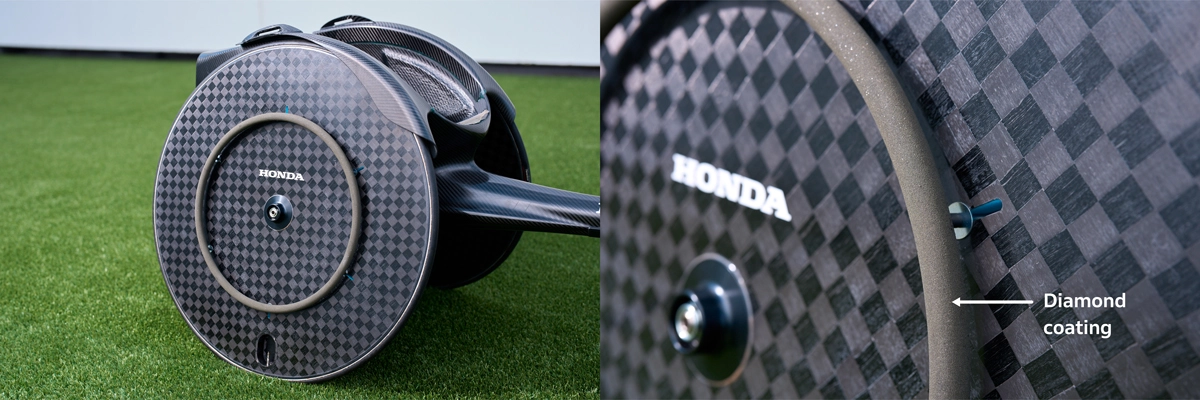
Diamond-Coated Handrims
Handrims attached to the carbon disc wheels are also carbon, with a thin uniform diamond powder coating. As all-weather handrims, slipping is unlikely, making them easy to push even in wet conditions. Usually, handrims are made of aluminum and processed in some way, such as wrapping them in rubber. However, athletes pointed out that they were still slippery in wet weather. Honda heeded this advice and developed original technology. Two diamond particle sizes are available to accommodate athletes’ different preferences and the type of glove they use. These handrims can also be purchased on their own.
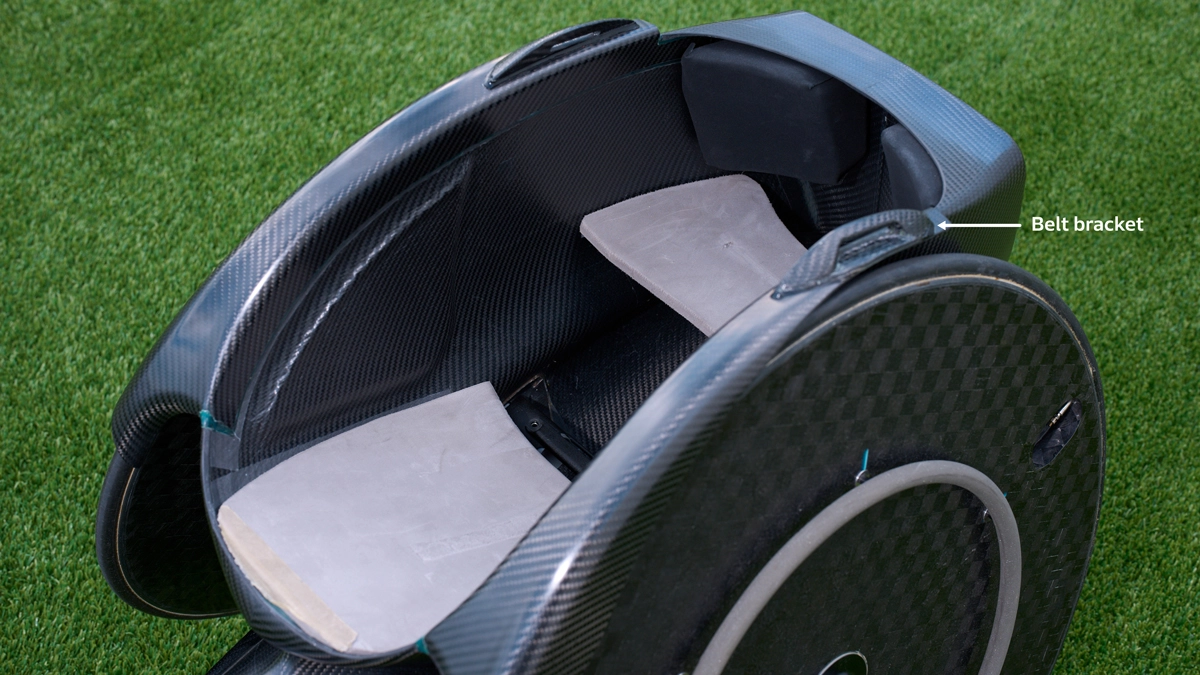
Belt Bracket Designed for Easy Transfer
Racing wheelchairs are equipped with a belt for strapping the athlete to the seat. The belt is held in place with brackets, previously L-shaped metal fittings. After learning that athletes bumped these brackets as they transferred into the wheelchair, a new rounded style of belt bracket was developed to enable a smoother transfer. In this way, even the finer details were designed with athlete in mind.
Persevering for the Benefit of All Athletes
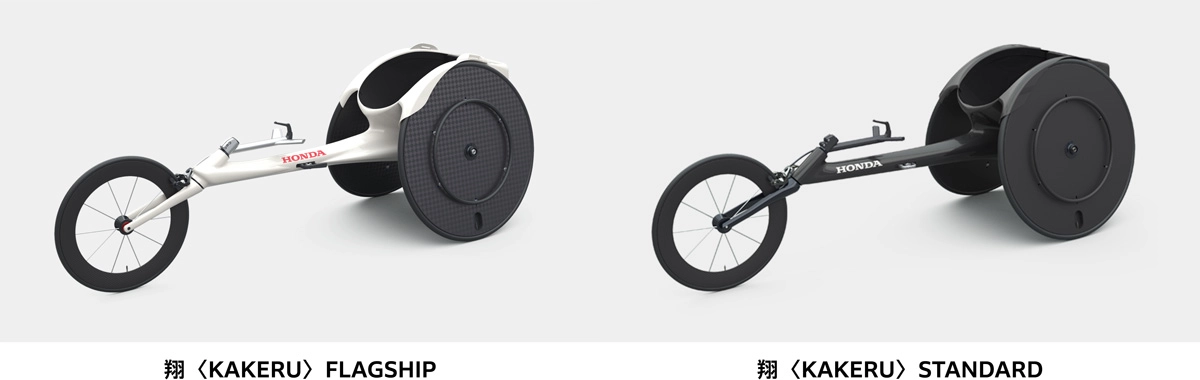
Racing wheelchair KAKERU, the push power measurement system, and the test bench were developed with the goal of putting a “smile of victory” on athletes’ faces. The aim is to assist all athletes, not just athletes supported by Honda.
Honda does that by providing a service allowing athletes to buy frames, wheels, and handrims separately. Up ahead, Honda will be taking its support for wheelchair athletics further as it looks to rent out push power measurement systems and test benches and offer science-based training.