![Harmony with the Environment and with Society — Honda Accord — 50 Years of Innovation [Chapter 1]](/en/tech/serial/ACCORD_50th_part01/images/main.jpg)
INDEX
First-Generation Accord (1976): Product of a Philosophy of Harmony—A Low-Pollution Engine Achieves Harmony with the Environment
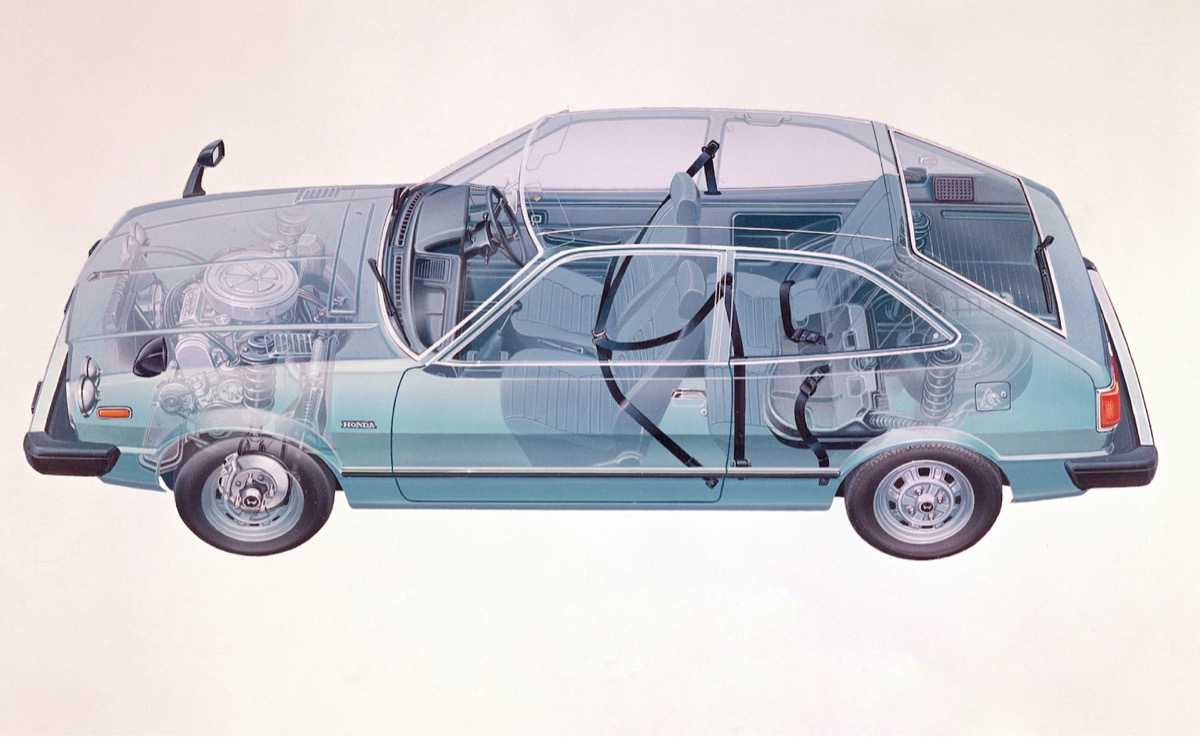
The first-generation Accord launched in May 1976 was fitted with an EF 1.6-liter inline 4-cylinder SOHC CVCC engine
The Accord, its name meaning “harmony,” was created in 1976. In 1972, Honda had launched the Civic. Primarily developed as a user-friendly everyday car, the Civic was designed to be a standard car that was competitive in the world market. The following year, 1973, Honda added to the Civic lineup a model with a CVCC*1 engine, the first engine in the world to satisfy requirements mandated for 1975 by the Muskie Act (or U.S. Clean Air Act of 1970), considered the toughest exhaust gas controls at the time.
*1 Compound Vortex Controlled Combustion, an original combustion technology developed by Honda. A rich air-fuel mixture is supplied to an auxiliary combustion chamber to ensure ignitability and a jet flame is directed into the main combustion chamber to achieve efficient combustion of a lean air-fuel mixture. This dramatically reduces emissions of harmful substances—carbon monoxide (CO), hydrocarbons (HC), and nitrogen oxide (NOx)—contained in the exhaust gas.
With the Accord, Honda sought to achieve harmony between the car and the environment and society, fitting it with a low-pollution CVCC engine and creating the sense of comfortable abundance that society sought after the oil shocks. The car would not only fulfill the functions required of an automobile, but also complement functionality and performance with emotional breathing room, creating new value. Honda press information at the time explained the aims of the original Accord’s development as follows.
“ACCORD is harmony.
Honda introduces the ACCORD, a new ‘hatchback sedan’ developed for the people of today and their youthful spirit.
It is an ‘adult car with new appeal’ based on a theme of providing comfortable abundance to those inside and achieving harmony with the surrounding environment.
While retaining the philosophy applied to the CIVIC, the ACCORD takes on new value in its richness as a human-centric car.”
The Civic’s CVCC engine had a displacement of 1,500 cc. This was increased to 1,600 cc for the Accord. Besides retaining low emissions, the Accord offered superior dynamic performance with smooth, sustained torque, and high fuel economy. Another feature was the newly designed engine mount, which reduced the amount of vibration and noise carried through to the cabin to a minimum. This was to help create a sense of abundance that enabled comfort over long distances.
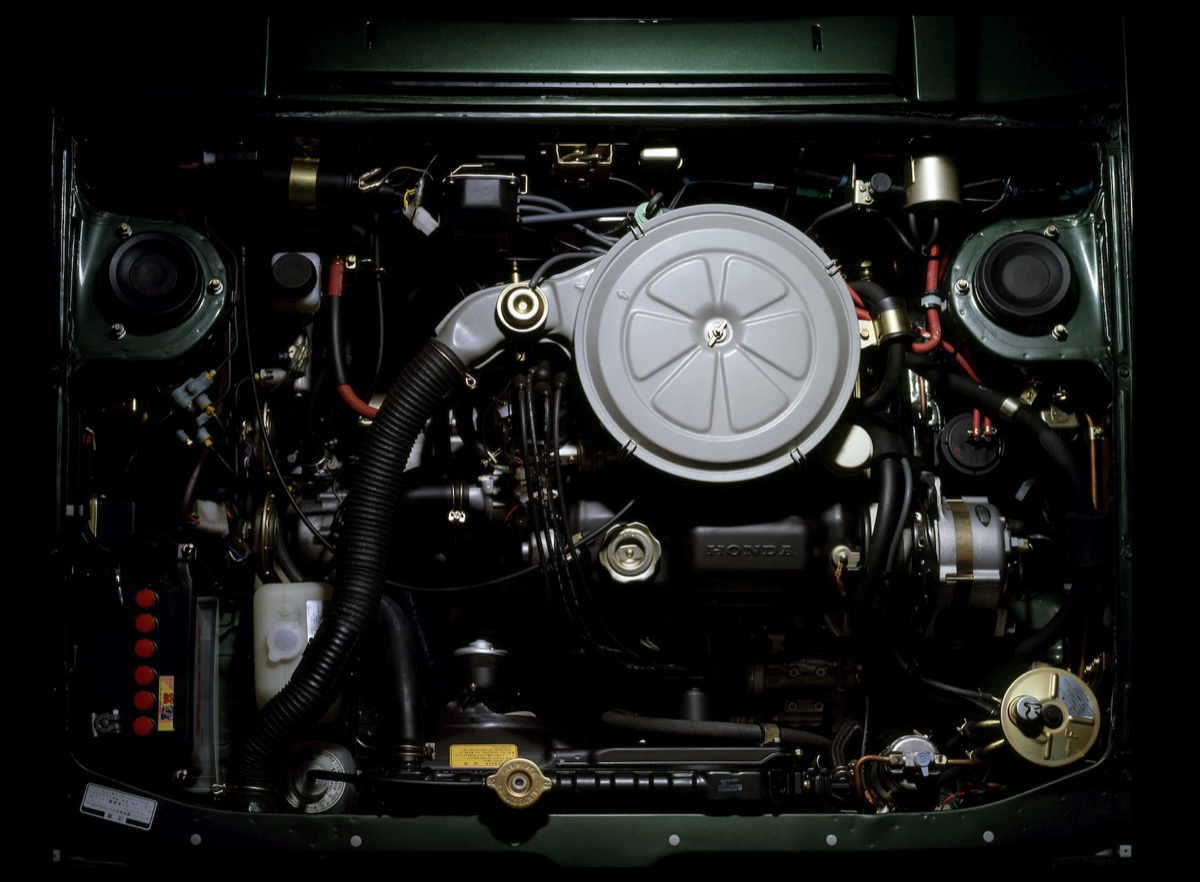
The 1.8-liter EK engine was adopted in 1978, meeting regulations introduced that year
An improved 1.8-liter version was introduced in September 1978, lifting displacement of the CVCC engine to 1,750 cc. Modifications to the auxiliary combustion chamber structure improved flame propagation, enabling smooth, reliable combustion even with a leaner air-fuel mixture. This resulted in stable, user-friendly torque across the entire engine speed range from low to high revs, especially during acceleration.
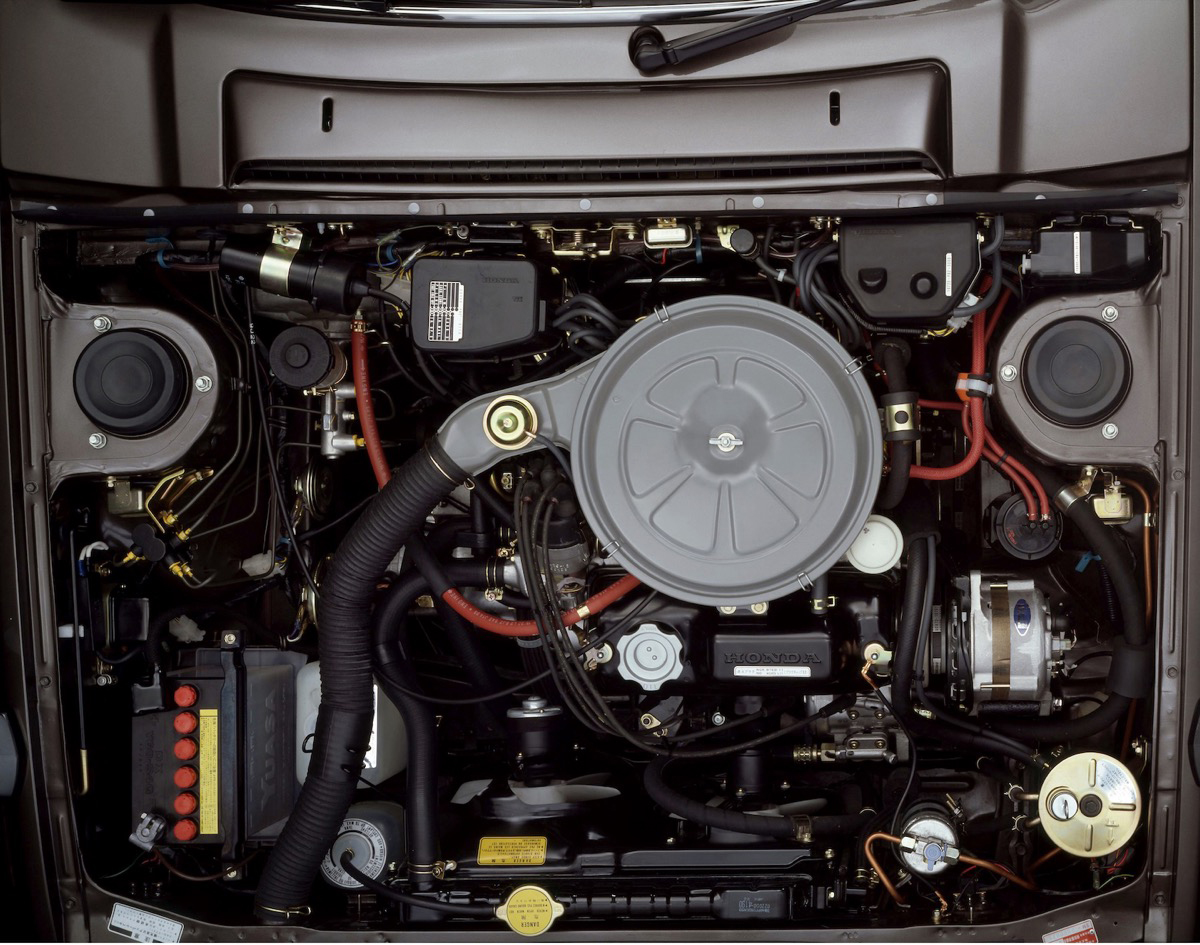
The CVCC-II engine was used from May 1980
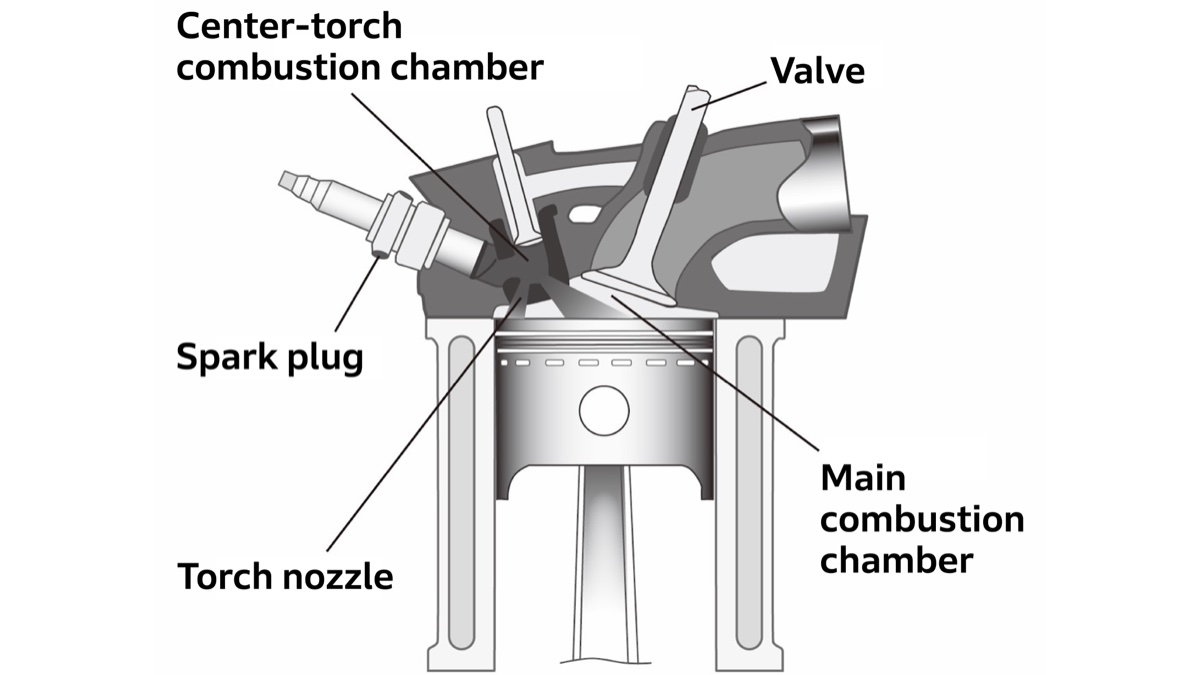
The CVCC-II engine allowed for even leaner combustion by positioning the auxiliary combustion chamber almost at the center of the main chamber
In May 1980, the engine evolved into the CVCC-II. Lean combustion was taken a step further with a central torch design, positioning the auxiliary combustion chamber, which had been at the edge of the combustion chamber, roughly at the center of the main chamber. There were also multiple torch nozzles. This design resulted in higher combustion efficiency. Together with a rapid-response control system that optimized the lean fuel mixture and exhaust gas recirculation (EGR) ratios depending on the driving conditions, this achieved both higher fuel economy and better response.
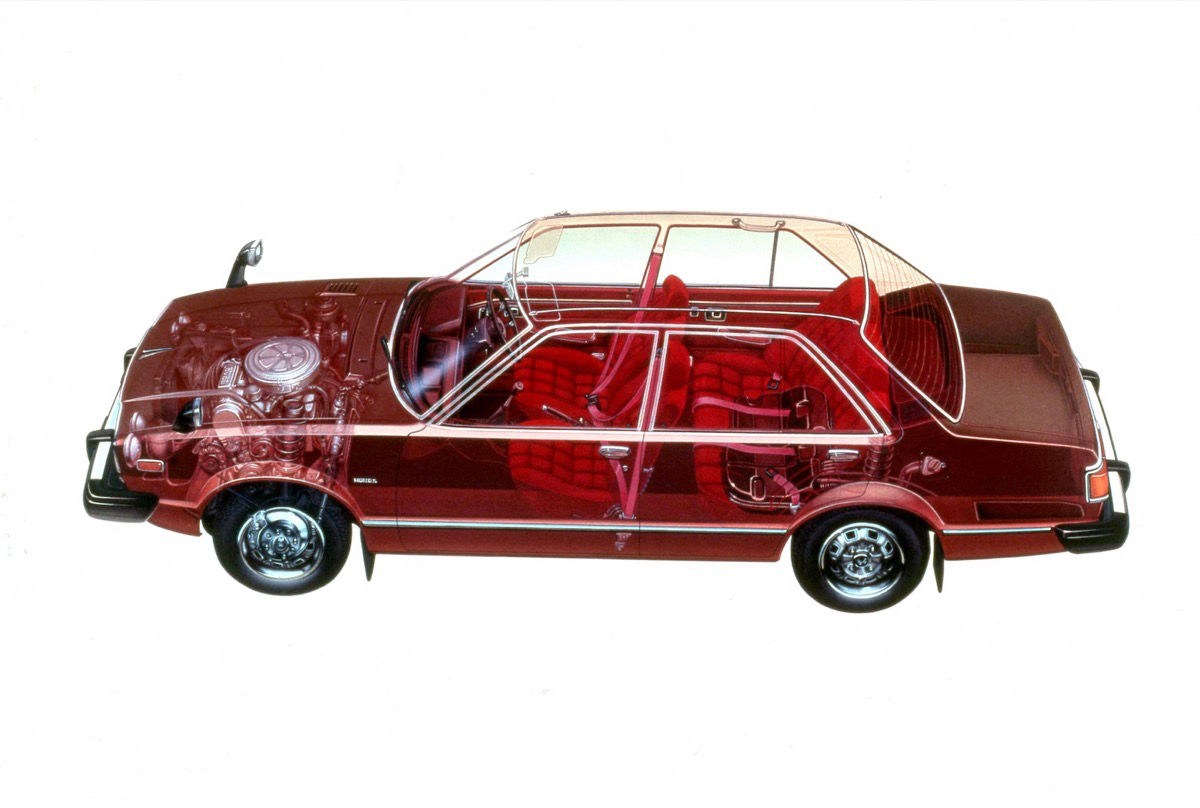
A four-door notchback sedan was added to the lineup in 1977
The goal for the Civic, which was purposely developed as a basic car, had been to create enough cabin space for four adults to be comfortably seated while keeping vehicle length and width to a minimum. To achieve this goal, Honda opted for a two-box body with a front-engine, front-wheel-drive (FF) powertrain.
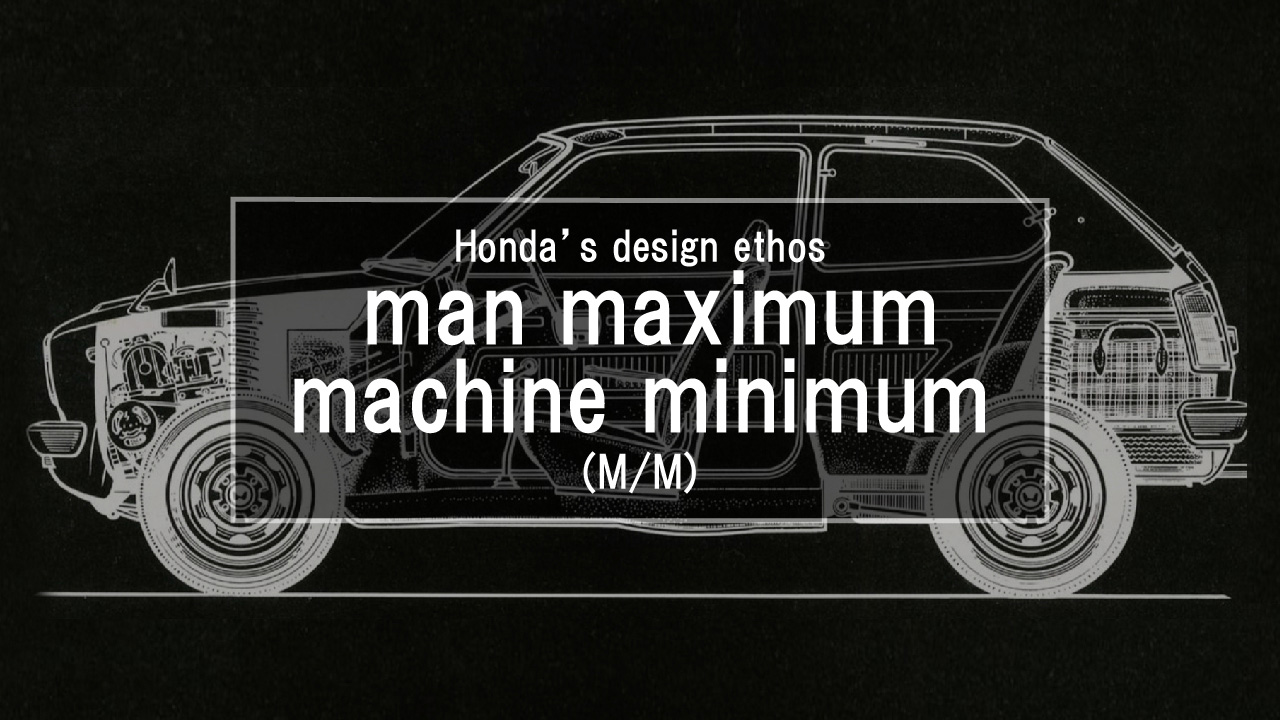
Human-centric thinking is fundamental to Honda car design, as embodied by the M/M (Man Maximum, Machine Minimum) concept of maximizing space for people and minimizing space required for mechanical components.
Selecting an FF layout removed the need for a propeller shaft under the car, like one in a front-engine, rear-wheel-drive (FR) configuration. It allowed the cabin space to be that much bigger.
For the Accord, Honda stuck with the M/M concept and added comfort. The Accord’s wheelbase was set at 2,380 mm, 180 mm longer than the Civic. The result was an abundance of room for occupants in the rear seat.
Second-Generation Accord (1981): Electronics Carves out New Value
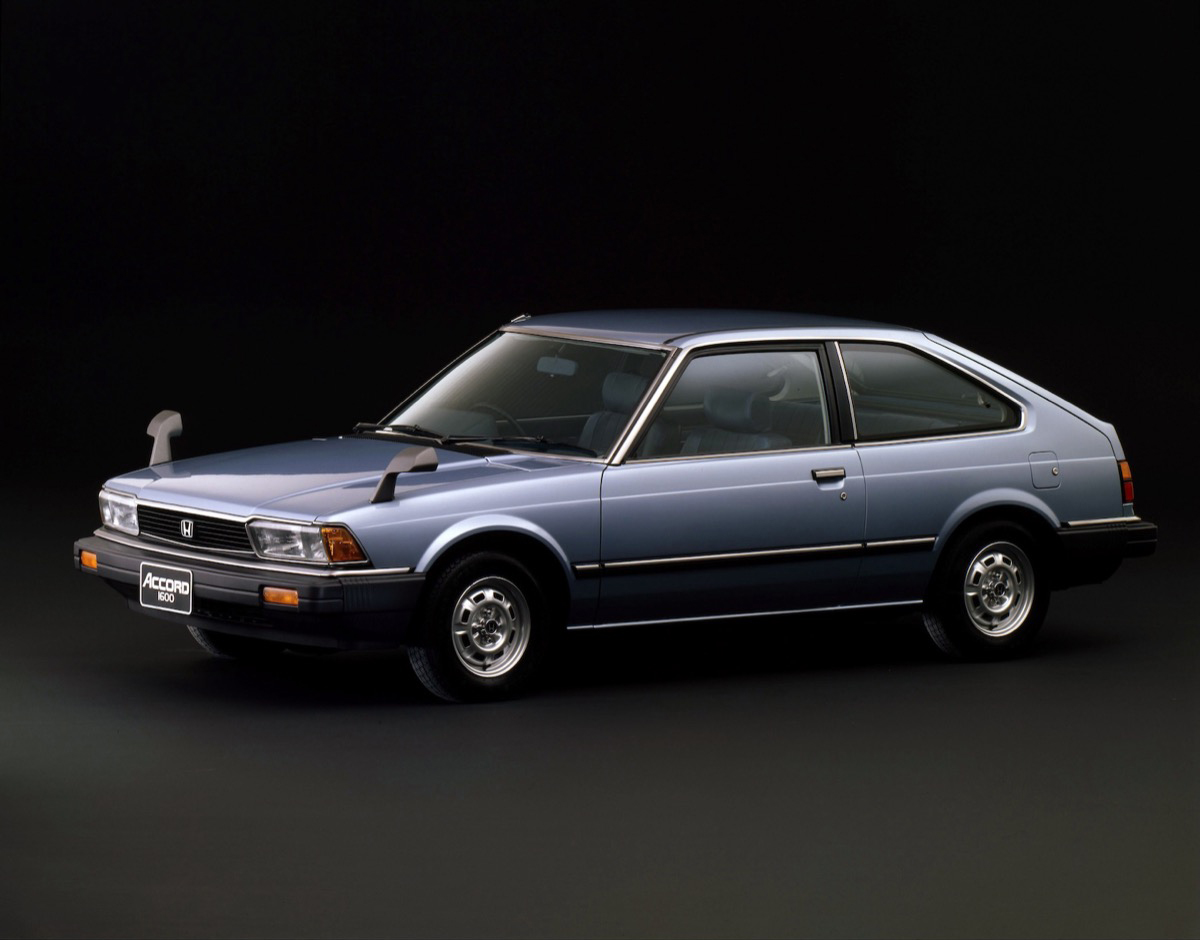
The Accord underwent a full redesign in 1981, evolving into the second generation. It had two body styles—a three-door hatchback and a four-door sedan
Ever since the time of its founding, Honda has energetically engaged in the development of safety technologies under a proactive safety philosophy*2. The Accord was equipped with safety indicators for one-glance recognition of improperly shut doors, brake lamp failure, and other safety issues, and a maintenance indicator that reminded the driver about the time of the next inspection. It also employed non-intrusive three-point Emergency Locking Retractor (ELR) seatbelts, which under normal conditions do not tighten around the body, allowing free movement, and two-way energy-absorbing steering. With the first-generation Accord, Honda’s safety philosophy became further ingrained and that legacy continues.
*2 A safety philosophy that places top priority on preventing accidents, as opposed to action taken after an accident has occurred. It is based on Honda’s philosophy, espoused since the company’s founding, of respect for human life, as derived from one of its Fundamental Beliefs, “Respect for the Individual.”
Following its launch in May 1976, the first-generation Accord became a world-leading compact FF car, loved by people in around 90 countries, including in Japan, North America, and Europe. Some 1.5 million units were produced. The second-generation Accord, launched in September 1981, was developed to make great strides as a “world car.” As well as meeting the needs of the day in terms of resource and energy efficiency, it would achieve elevated levels of comfort and driving performance.
Press information from the time describes the development concept for the second-generation Accord as follows.
“To develop the new ACCORD, Honda took its comfort philosophy one step further, designing a ‘world-quality car’ with standardized high-value features to allow people of all walks of life to experience comfort at a whole new level.”
Maintaining the highest standards of basic car functions (driving, turning, and stopping), the new Accord also achieved elevated levels of comfort that all occupants would naturally appreciate. It further enhanced user-friendliness and delivered outstanding, class-leading fuel economy, achieving higher quality throughout.
This all-round high quality clearly had the potential to be the new global standard for value for FF compact cars.
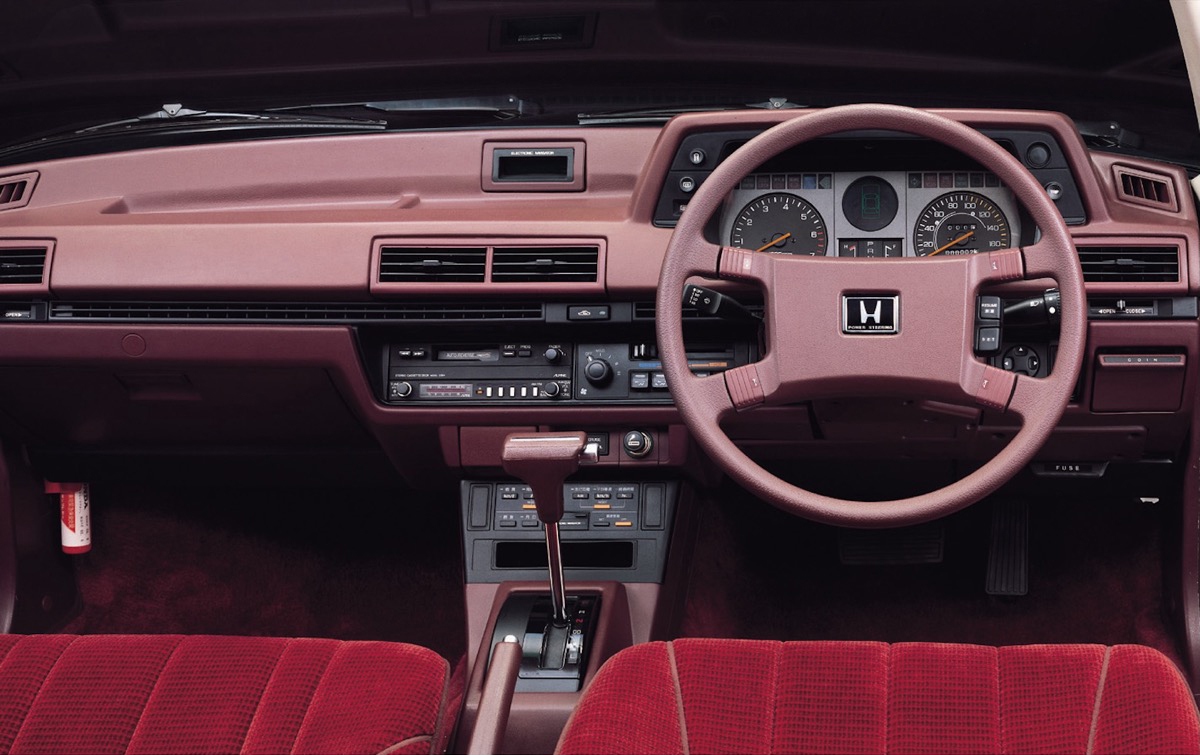
The second-generation Accord was given a range of advanced features suited to a high-end car
It was electronics that Honda turned to as a means to really enhance the Accord’s value. However, simply switching from mechanical to electronic for some of the car’s features would not please the customer. New features that conventional cars did not have were seen as vital to winning over customers. Here are some of the main new features introduced with the second-generation Accord, which came in two body styles—four-door sedan and hatchback.
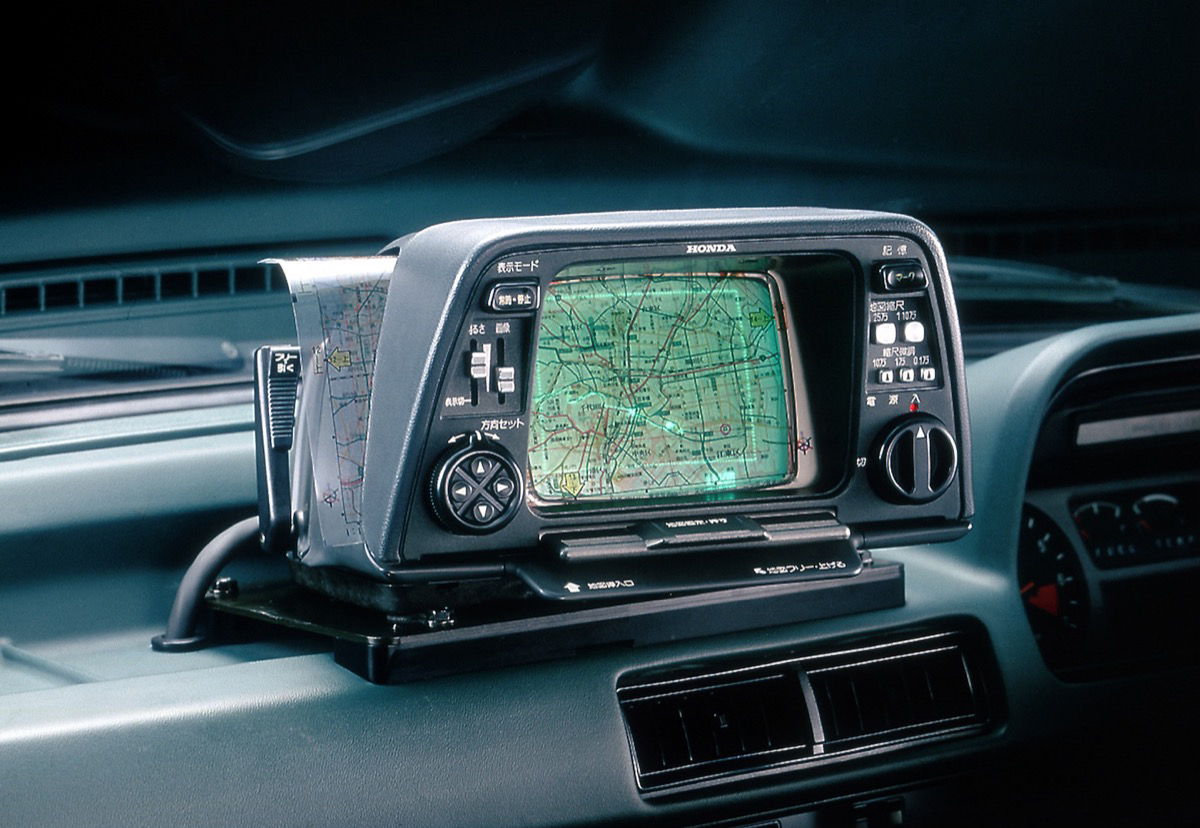
The Honda Electro Gyrocator, the world’s first car navigation system, was an option for the second-generation Accord
Cruise Control (Standard on All Models)
To activate cruise control, the driver had to first turn on a switch on the instrument panel then press the Set switch on the steering wheel at the desired speed. Stepping on the brake or clutch would temporarily deactivate cruise control, but if a speed of at least 45 km/h was maintained, pressing the Resume switch was all that was needed for the car return to and maintain the set speed. The feature’s standard inclusion on all models was a first for Japan.
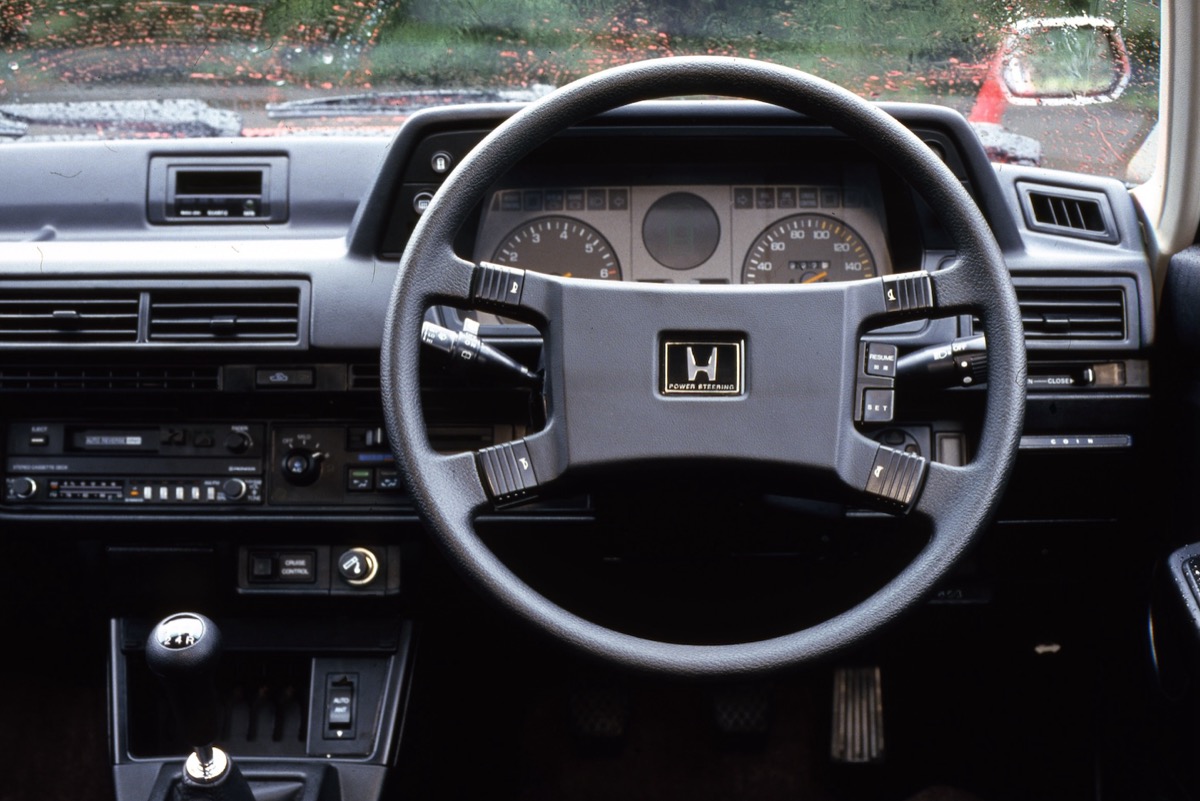
Resume and Set buttons were located on the right side of the steering wheel
Speed-Sensitive Variable-Assist Power Steering for Greater Drivability
The first-generation Accord was assigned a speed-sensitive power steering system and records show that around 87%*3 of owners chose the option. Honda responded by developing a speed-sensitive variable-assist power steering system to enhance drivability even further. The inclusion of a variable-assist mechanism incorporating a torsion bar into the steering shaft made steering wheel control light and quick at low speeds, while there was more resistance and turning was gradual at high speeds.
*3 According to Honda research (cumulative sales of E-SV and E-SM models between January and July 1976)
Japan-First Dual-Height, Four-Wheel Auto-Leveling Suspension
A dual-height, four-wheel auto-leveling suspension system uses a microcomputer to automatically maintain a constant ride height. It combines a traditional suspension system with air springs. Changes in load are detected by sensors in the front and rear wheels. Air pressure is then automatically adjusted to keep the vehicle at a constant height. The system also includes a height selection mechanism that raises the vehicle’s ride height by 30 mm at the push of a switch on the instrument panel. This assists vehicle handling on rough or snow-covered roads.
Honda Electro Gyrocator—the World’s First Car Navigation System
The Honda Electro Gyrocator is said to be the original prototype for today’s navigation systems. At a time when the Global Positioning System (GPS) and the Internet were not accessible to the public, the Electro Gyrocator detected changes in direction using a gas rate gyroscope*4. Combining that data with information from a distance sensor, the system recorded the travel path of the vehicle from its starting point on an on-board computer and displayed it on a CRT screen. By superimposing the travel path over a transparent map sheet, the driver could determine the car’s position. The technology presented new value in the ability to determine a vehicle’s position and orientation without the need for a regular road map.
In 2017, the Honda Electro Gyrocator was recognized as an IEEE Milestone for its role in establishing a global standard for navigation systems. Headquartered in the United States, the Institute of Electrical and Electronics Engineers (IEEE) is the world’s largest academic association in the electrical, electronics, information, and communications fields.
*4 A sensor that detects changes in direction using the inertial force of helium gas as it travels straight ahead after being discharged from a nozzle
In this way, the second-generation Accord incorporated a wealth of electronics and other cutting-edge technology that blended well with comfort elements. The car brought to the world new value that went beyond traditional views about high-end vehicles.
Third-Generation Accord (1985): Further Advancements in Driving Performance and Technology
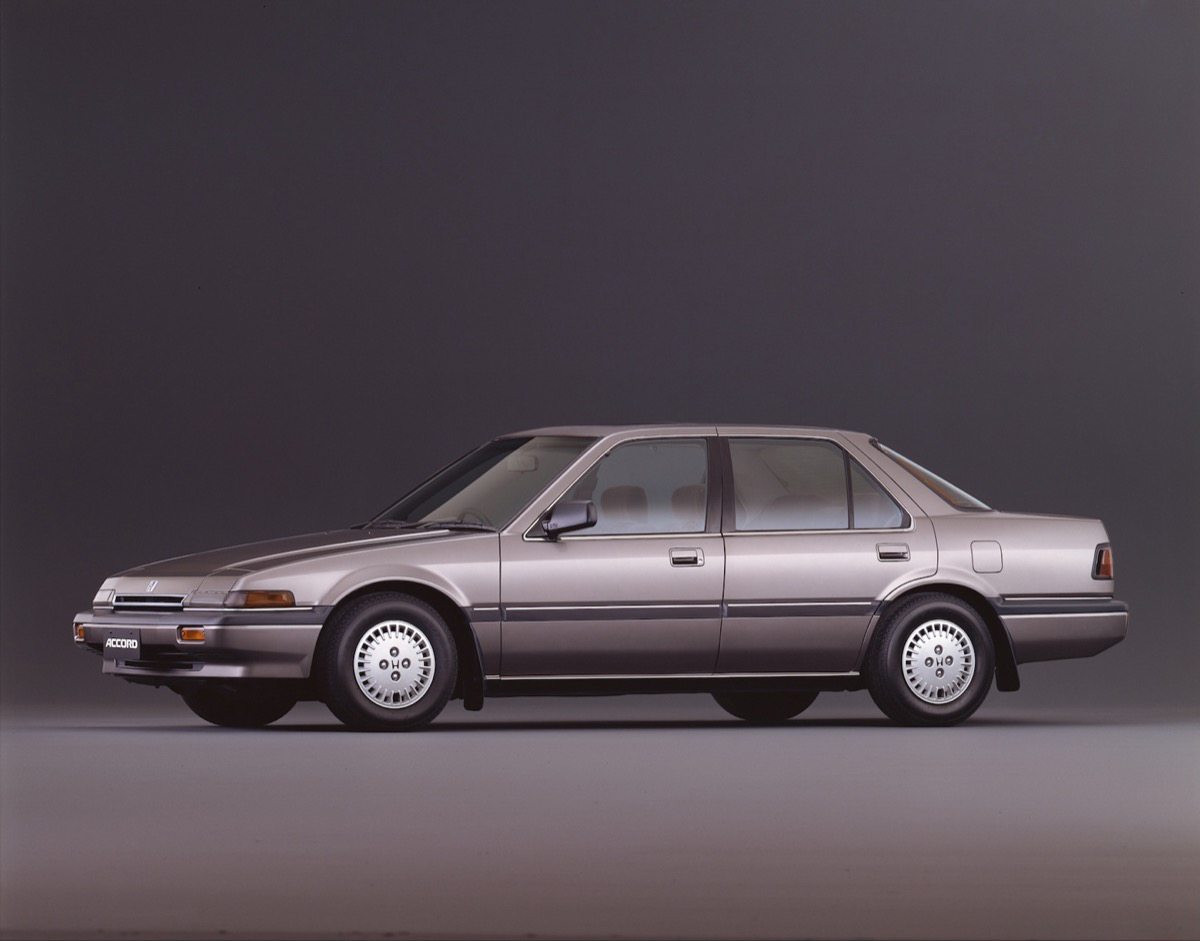
The third-generation Accord came about after a full redesign in 1985
The third-generation Accord, launched in June 1985, was the result of efforts to align Honda technology with human sensitivities and to incorporate a futuristic feel. As was the case with the second-generation Accord, Honda focused on refining driving performance—a car’s essence—and injecting an abundance of new technology to create groundbreaking new value.
Press information at the time described the development concept as follows.
“Honda’s third-generation ACCORD has three main concepts. The first is high potential in clear differentiation with rival cars. The second is to ensure that technology is not just technology, but human-oriented, incorporated at a level consistent with human sensibilities. The third concept is to be futuristic, looking ahead to the 21st century. Honda saw all three of these concepts as vital for a car to be considered the third-generation ACCORD.”
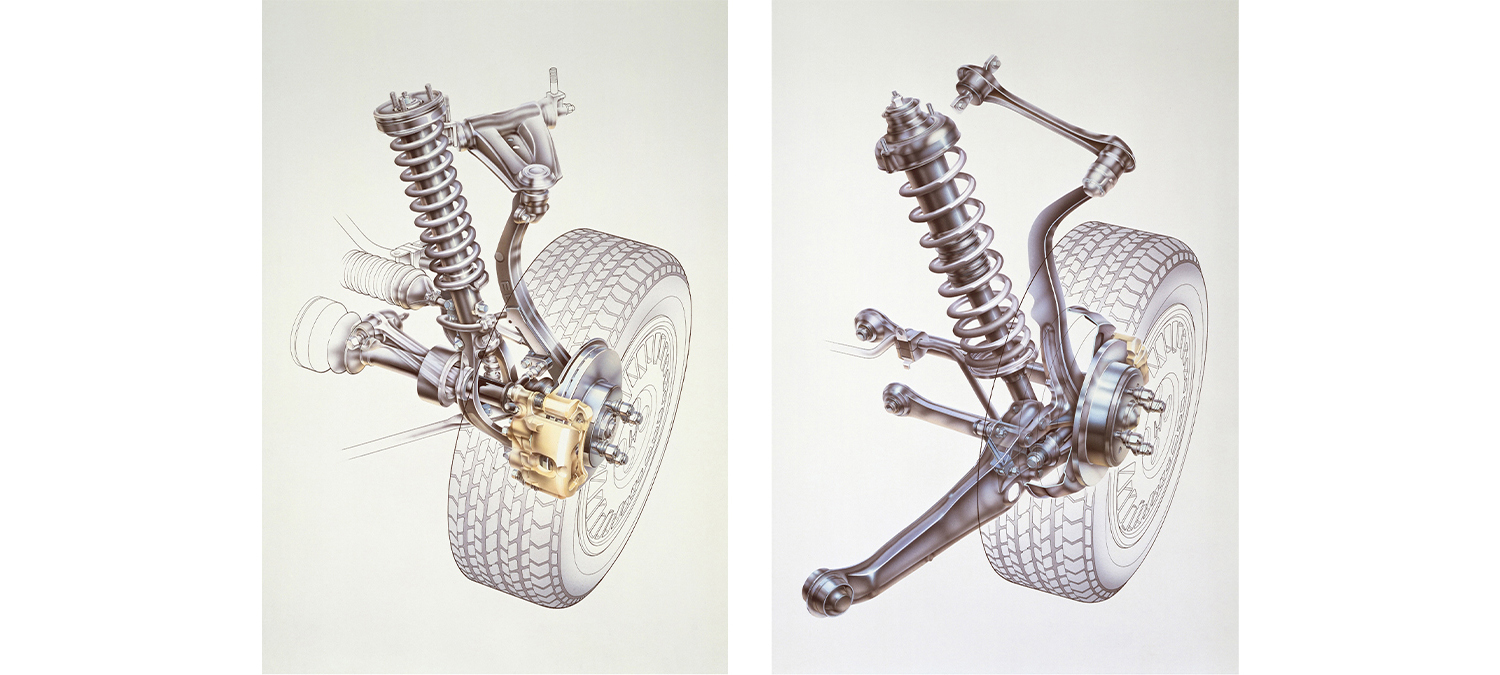
Left: The third-generation Accord’s four-wheel double wishbone suspension system was a world-first for an FF car / Right: Rear suspension of the Accord Aerodeck three-door hatchback
Four-Wheel Double Wishbone Suspension System—A World-First for an FF Car
Strut suspension systems were used at both the front and rear ends of the first- and second-generation Accords. For the third-generation Accord, Honda adopted four-wheel double wishbone suspension was used—a world first for an FF car. Because this system does not require the damper-and-spring units to support the wheels, as in a strut-style system, there is almost no loss from friction, allowing the suspension to focus solely on its primary role of absorbing shocks. The high degree of design freedom in being able to flexibly configure the links also made it possible to achieve the desired ride comfort and driving stability.
The ability to lower the height of the hood relative to a car with a strut suspension system was another big reason for adopting a double wishbone system. For the third-generation Accord, Honda was able to design front suspension that fit under a low hood while using a wide span between upper and lower arms. Only the minimum space was required for the rear suspension, too. The desired performance could be achieved without sacrificing cabin space.
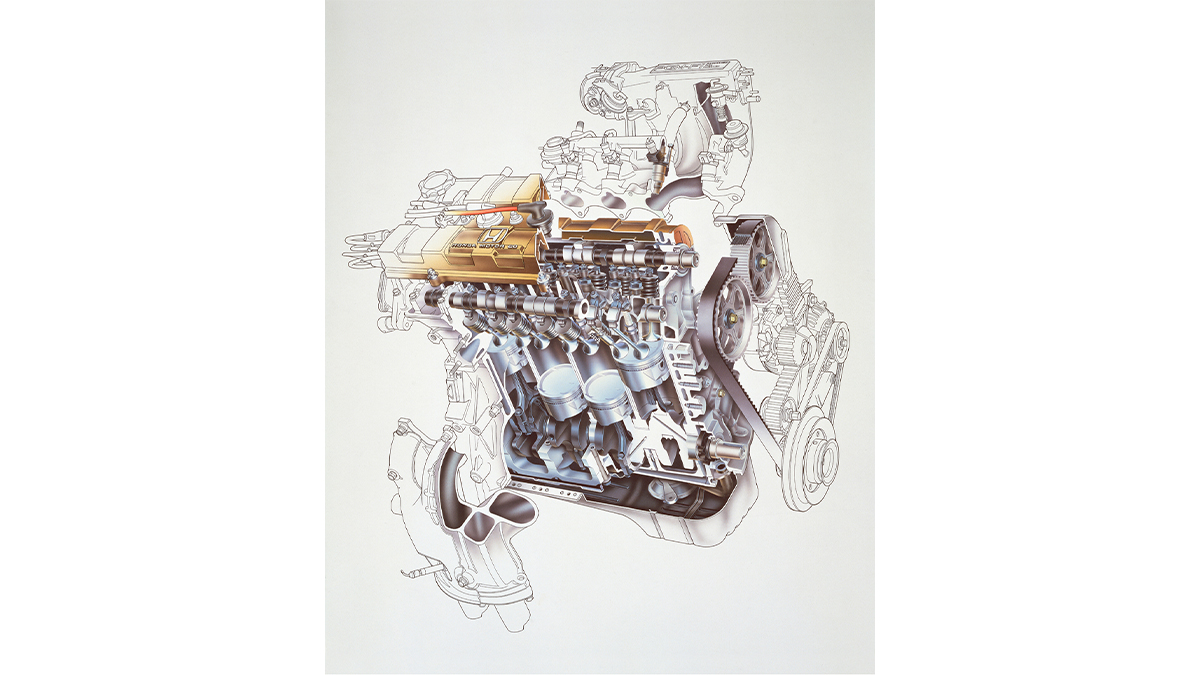
The engine of the third-generation Accord employed an electronically controlled fuel injection system, PGM-FI
16-Valve DOHC Engine Featuring Honda’s Original PGM-FI Electronically Controlled Fuel Injection System
In a first for Honda, a newly developed 2.0-liter inline-four 16-valve DOHC engine with Programmed Fuel Injection, or PGM-FI, was offered. PGM-FI is an electronically controlled fuel injection system independently developed by Honda. The system injects fuel into each cylinder with optimal timing after calculating the optimal air-fuel ratio according to various driving conditions. In 1984, a new type with PGM-FI had been added to the 1.8-liter lineup of 12-valve SOHC engines available for the second-generation Accord. Now the PGM-FI was being paired with a newly developed 2.0-liter inline-four 16-valve DOHC engine for the third-generation Accord.
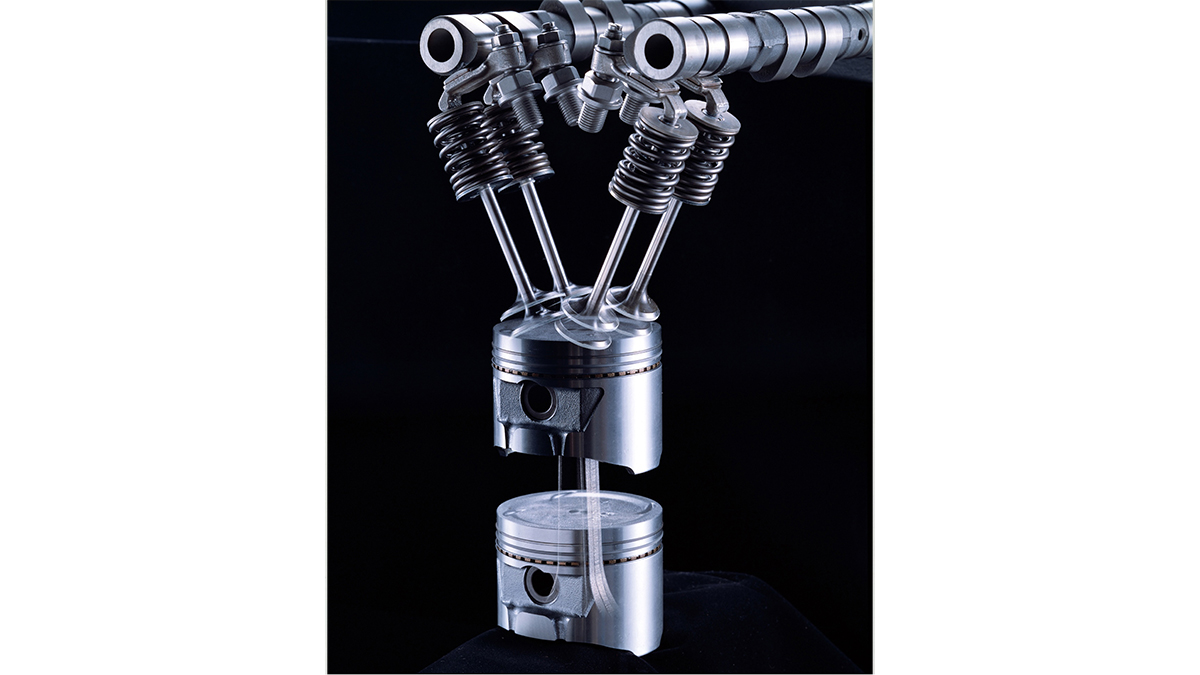
A pent-roof combustion chamber was used. The DOHC engine used four valves (two intake/two exhaust) for each cylinder
To improve combustion efficiency, this engine used a small bore and a pent-roof design, reducing the size of the combustion chamber. It also used central spark plugs for quick and uniform flame propagation across the entire combustion chamber. A four-valve system was used as a way to maximize valve area relative to the bore diameter and heighten intake and exhaust efficiency. Also, the use of an aluminum cylinder block achieved a dramatic weight reduction compared to a cast iron block. This aided optimization of front-rear weight distribution, contributing to improved vehicle driving performance.
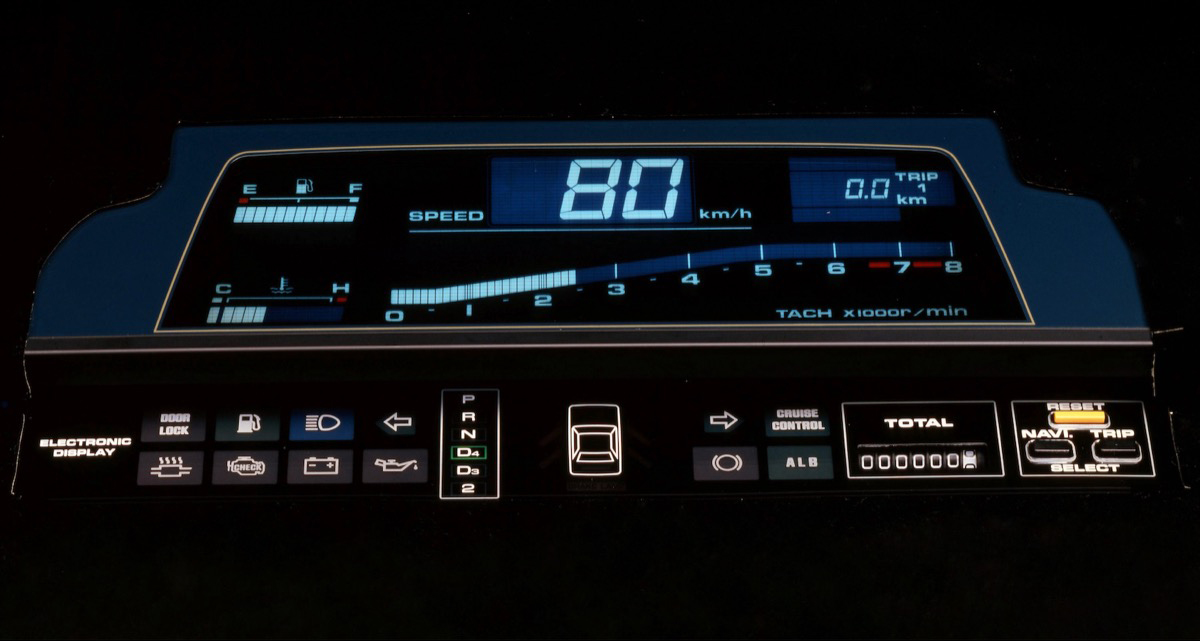
The car had digital gauges, a cutting-edge technology at the time
The Accord, which started out trying to achieve harmony with the environment and with society, established its place as a “world car,” winning people’s favor by adding new value on top of an elevated level of basic car performance. The second- and third-generation Accords did not merely switch conventional technologies with the most recent technologies of the day. They were aligned with human sensibilities and further enhanced the brand’s inherent comfort and driving performance.
Related Contents
Share this article



Was this article interesting?
- Yes
- Neutral
- No