![Accord Hybrid: Further Innovative Technology and Harmony — Honda Accord — 50 Years of Innovation [Chapter 3]](images/main.webp)
INDEX
Ninth-Generation Accord (2013): SPORT HYBRID i-MMD: Honda’s Unique Two-Motor Hybrid System
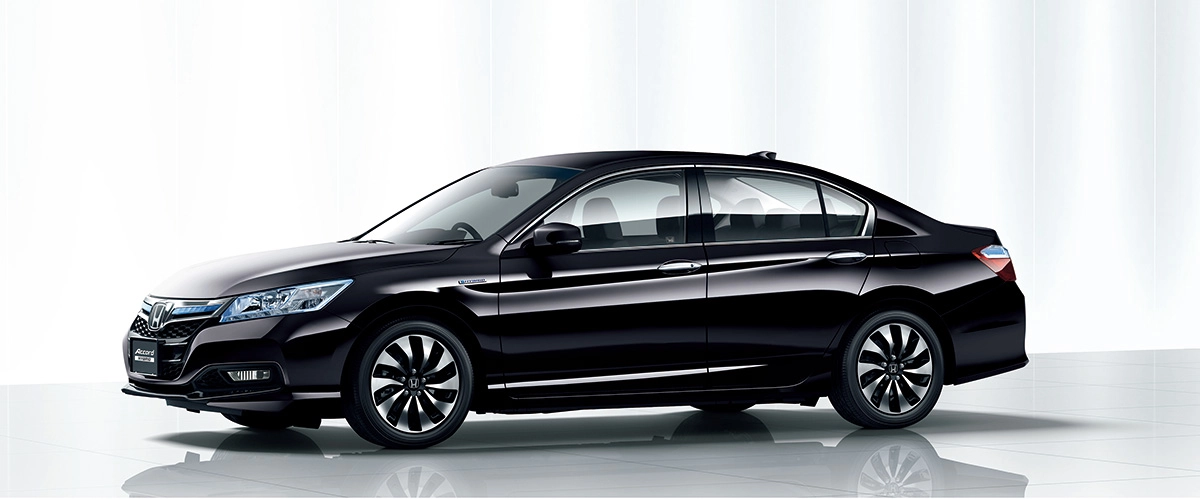
The ninth-generation Accord underwent a full model change in 2013 and featured the i-MMD, a new two-motor hybrid system that later evolved into the e:HEV
The ninth-generation Accord, which underwent a full model change in June 2013, combined the refined essence of a sedan with an innovative hybrid system, creating a new sense of harmony in the electrification era. The vision of the chief engineer for the Accord, gathered from press materials at the time of the launch, was as follows:
“Driving, turning, stopping—every fundamental aspect of the car responds linearly to driver inputs, offering superior driving comfort and quietness, and allowing you to fully enjoy every journey, from a daily commute to a long drive. We asked ourselves how we could take the appeal that the ACCORD has consistently embodied throughout its history to a whole new level. We thoroughly refined every component of this car and chose to pursue the ‘electrification’ of its powertrain to achieve this goal.”
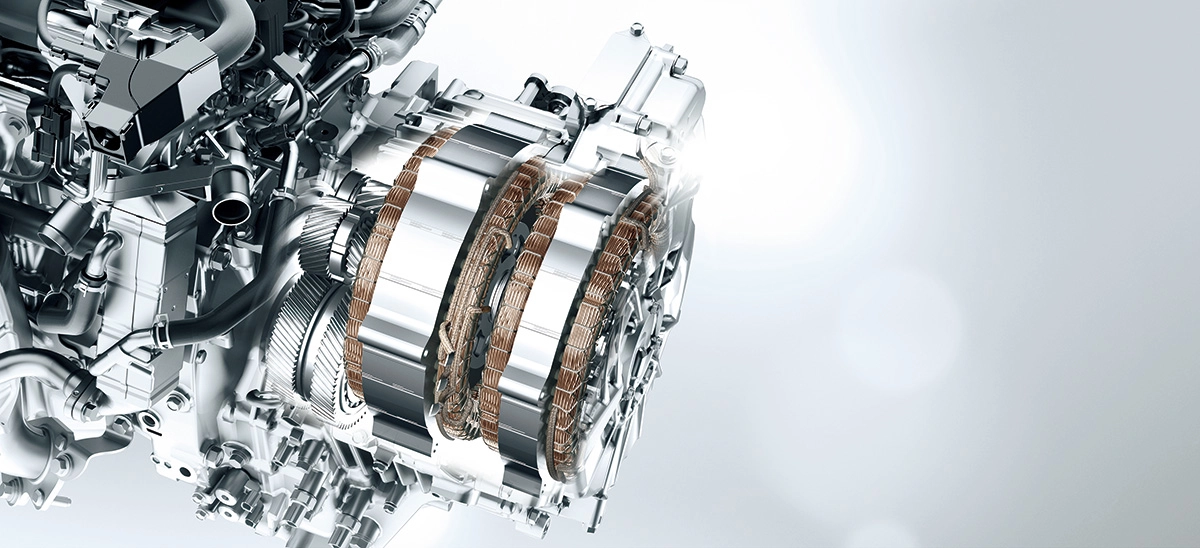
The i-MMD combined fuel efficiency with a smooth driving experience through electric motor propulsion using two motors. Of the two pictured motors, the generator motor is on the right and the traction motor is on the left
After exploring various options, Honda ultimately settled on the SPORT HYBRID i-MMD as the hybrid system best suited for the Accord, a midsize sedan. This system, in which the motor drove the wheels across the entire low-to-high speed range while engine power was reserved for high-speed cruising, delivered outstanding environmental performance. At the same time, it offered a driving experience that combined both smoothness and power, which would not have been possible with a conventional engine and transmission. Although developing this unprecedented system presented significant challenges, Honda achieved its goal by bringing together all the electrification technologies it had cultivated over the years.
The SPORT HYBRID i-MMD was a so-called two-motor hybrid system equipped with a generator motor and a traction motor, but its mechanism differed significantly from existing systems available at the time. The generator motor was directly connected to the engine, and the traction motor was directly connected to the drive shaft. In addition, a lock-up clutch—which transmitted power from the engine directly to the wheels during high-speed cruising—was compactly housed within the unit. There were no complex mechanisms for blending power, or any transmission or other gear mechanisms. Due to this simplicity, this unique Honda system minimized energy loss, thereby improving fuel efficiency and driving performance. With the SPORT HYBRID i-MMD, the Accord Hybrid achieved exceptional energy efficiency. Despite its spacious, midsize sedan dimensions, it delivered fuel economy of 30.0 km/L in the JC08 test cycle mode*1, a figure that rivaled the best in the mini-vehicle segment at the time. Furthermore, by leveraging the motor’s ability to deliver maximum torque the moment it began to rotate, the car offered powerful initial acceleration and smooth acceleration that could not be found in conventional sedans. Honda also paid close attention to quietness, further enhancing comfort.
In the ninth-generation Accord, an electric-servo braking system was adopted in place of the conventional hydraulic booster system to realize “fuel-efficient brakes.” Through separation of the pedal assembly from the brake actuator and electrification of the braking mechanism, the system was able to recover deceleration energy from the moment the brakes were first applied until just before the vehicle came to a stop. As a result, regenerative braking efficiency improved by approximately 8%. The switch to an electric system enabled precise brake control that was not possible with conventional systems, delivering a refined braking feel befitting a premium sedan. By coordinating with the Adaptive Cruise Control and Hill Start Assist, the electric-servo braking system reduced excess motor output, which also contributed to improved fuel efficiency.
*1 The JC08, which stands for “Japan Cycle ’08,” was the measurement standard for fuel economy used in Japan from approximately 2011 to 2018. It was adopted to replace the previous “10-15 mode.” Since 2018, Japan has used the “WLTC mode,” which is the international standard.
Friction Stir Welding of Steel and Aluminum Parts
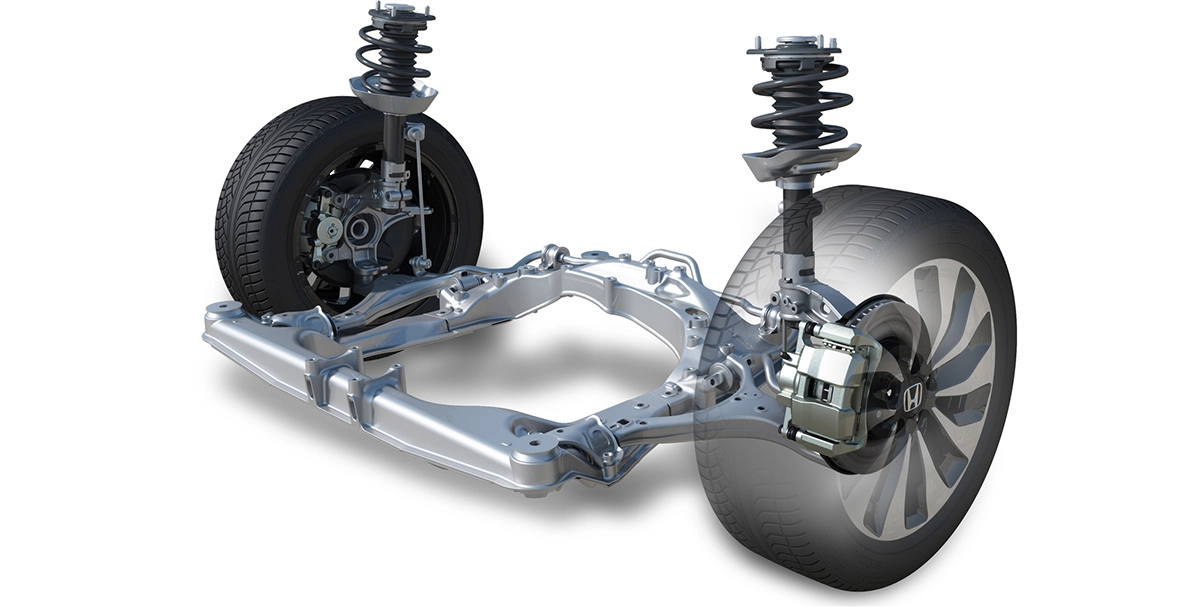
The aluminum subframe to mount the front suspension was manufactured using friction stir welding technology, which was applied to structural components for the first time in the world by Honda
Another feature of the ninth-generation Accord was the lightweight aluminum front subframe to mount the front suspension. This aluminum subframe was manufactured using friction stir welding (FSW), a process that Honda successfully applied to structural components for the first time. This method of joining metals by stirring them allowed for higher-precision welding compared to conventional welding, which melts the metal using heat generated by electrical resistance. This contributed to improved suspension performance and alignment accuracy. The front subframe of the North American-spec gasoline-engine model was manufactured using FSW to join the dissimilar materials of steel and aluminum.
Tenth-Generation Accord (2020): A Completely Redesigned Platform and Adoption of e:HEV Technology
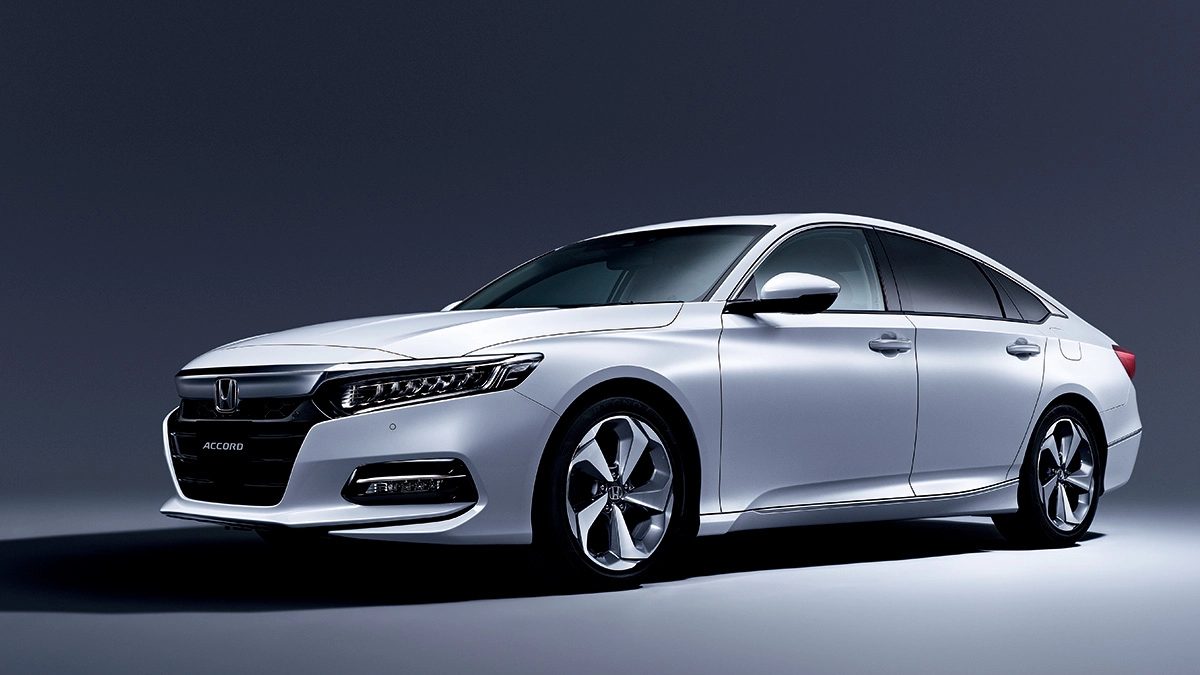
The tenth-generation Accord underwent aerodynamic development using computational fluid dynamics (CFD) and the wind tunnel at HRD Sakura, resulting in a design that combines elegant styling with superior aerodynamic performance
As of February 2020, at the release of the tenth-generation Accord, a cumulative total of 20 million units of the Accord had been sold in over 120 countries and regions worldwide since its launch. Carrying on the Accord’s tradition of striving for “harmony between people and society,” the tenth-generation model retained the two-motor hybrid system, introduced in the ninth-generation model, as its core technology. At the same time, the car’s underlying platform was completely redesigned from the ground up, achieving a high-level balance between linear, agile driving and fuel efficiency. Since its introduction in the ninth-generation model, the SPORT HYBRID i-MMD system had undergone continuous improvements in core technologies such as the engine and motor, but also in control technologies critical to drivability. The SPORT HYBRID i-MMD had evolved into a high-performance system that aligned with the driver’s intuition and was increasingly fun to drive. In press materials from the time of the launch, the chief engineer expressed his vision for the tenth-generation model as follows:
“As we set out to develop the tenth-generation ACCORD—a milestone model—we, the developers, solemnly pledged to do our utmost to satisfy customers around the world. We were pursuing the ‘ideal form of a car,’ which is why we went so far as to build the platform from scratch.”
While addressing the fundamental challenges facing automakers such as achieving superior safety performance and transitioning to electric powertrains to improve environmental performance, Honda fundamentally reexamined the car’s body, chassis, and other components of its basic structure—also known as the platform—to continue creating more appealing cars.
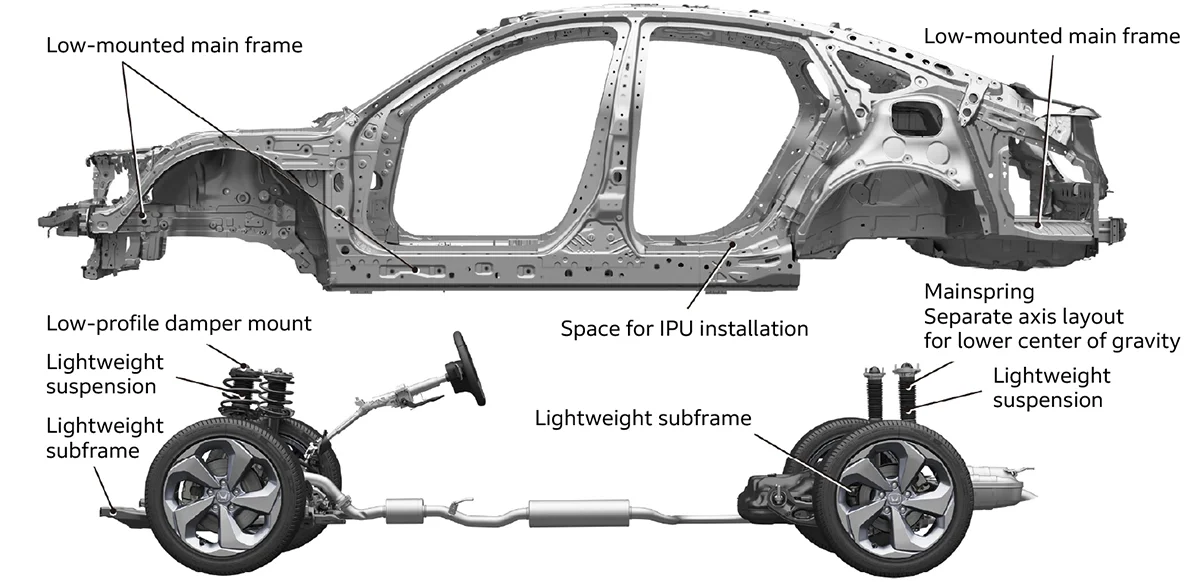
The new-generation platform was designed to achieve a low center of gravity, low inertia, and a lightweight, highly rigid frame.
As a result, the center of gravity was lowered by approximately 15 mm, the roll moment of inertia was reduced by 7.2%, the yaw moment of inertia was reduced by 1.7%, and the vehicle weight was reduced by 50 kg
Prior to developing the tenth-generation Accord, Honda launched a fundamental research project to explore platforms, pursuing the “ideal form of a vehicle” from the ground up. The company prioritized a low center of gravity—the key to stable handling—and a low moment of inertia, which minimized unwanted body movements, aiming to achieve these goals through a lightweight, high-rigidity structure. The low center of gravity was achieved by positioning key structural elements such as the side frames, side sills, and floor cross members lower than in previous models. In addition, by redesigning the mounting structure of the front and rear suspensions, the center of gravity was lowered by approximately 15 mm compared to the predecessor model. By lowering the center of gravity to bring it closer to the roll axis, the roll moment of inertia*2 was reduced by 7.2% compared to the previous platform. In addition, by mounting the heavy battery pack under the rear seats and lightening the subframe and suspension significantly, the yaw moment of inertia*3 was reduced by 1.7% compared to the predecessor model. As a result, unwanted body movements were minimized during maneuvers such as accelerating out of a turn or performing a double lane change, delivering a unifying driving experience.
*2 Magnitude of rotational movement around the roll axis. Generally, the smaller the value, the more quickly the vehicle responds to the driver’s steering inputs.
*3 Magnitude of rotational movement around the yaw axis. Generally, the smaller the value, the more quickly the vehicle responds to the driver’s steering inputs in the direction of the turn.
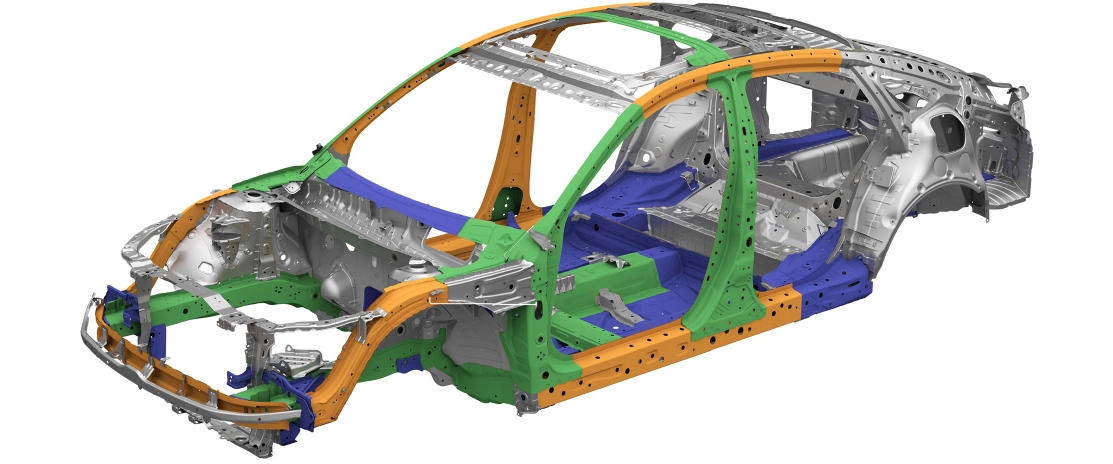
Lightweight yet highly durable high-tensile steel sheets were used for 49% of the body frame (in yellow, green, and blue)
In addition to rethinking the body structure from the ground up, Honda expanded the use of ultra-high-tensile steel. By reducing the weight of the front and rear subframes, as well as the suspension, the vehicle’s curb weight was reduced by 50 kg compared to the predecessor model, while significantly increasing rigidity. This contributed greatly to improved dynamic performance.
Eleventh-Generation Accord (2024): Equipped with the Honda SENSING 360+ Omnidirectional Safety and Driver-assistive System
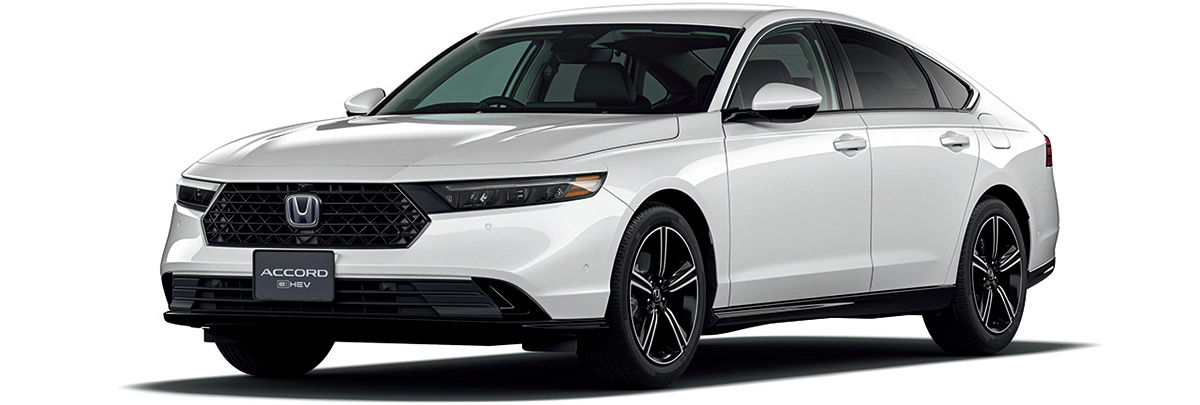
The exterior design of the eleventh-generation Accord was crafted to create a sleek and refined silhouette
Launched in March 2024, the eleventh-generation Accord was built on the philosophy of “harmony between people and society,” a principle that has remained consistent since the very first model, while incorporating Honda’s latest safety technologies and advanced features. It was developed to be more than simply a means of transportation, but rather a companion that helps customers lead more fulfilling lives and achieve their aspirations.
The innovative technology introduced in the eleventh-generation ACCORD was the “Honda SENSING 360” omnidirectional safety and driver-assistive system. Since it began selling passenger cars, Honda has been committed to expanding preventive safety technologies with the goal of expanding the joy and freedom of mobility through zero traffic accidents. In 1982, Honda became the first Japanese automaker to introduce automobile ABS, and in 1987, it became the first to introduce a driver-side SRS airbag in a Japanese vehicle.
Furthermore, Honda became the first in the world to introduce the Collision Mitigation Braking System (CMBS) for commercial use in 2003. In 2014, in addition to CMBS, Honda integrated various driver assistance systems—including the Road Departure Mitigation System (RDM), Adaptive Cruise Control (ACC) with Low Speed Follow, Traffic Sign Recognition, and Collision Mitigation Throttle Control—under the name “Honda SENSING.” Since then, the company has continued to add features such as Rear Collision Mitigation Throttle Control, nighttime pedestrian protection, and the Low Speed Brake Function.
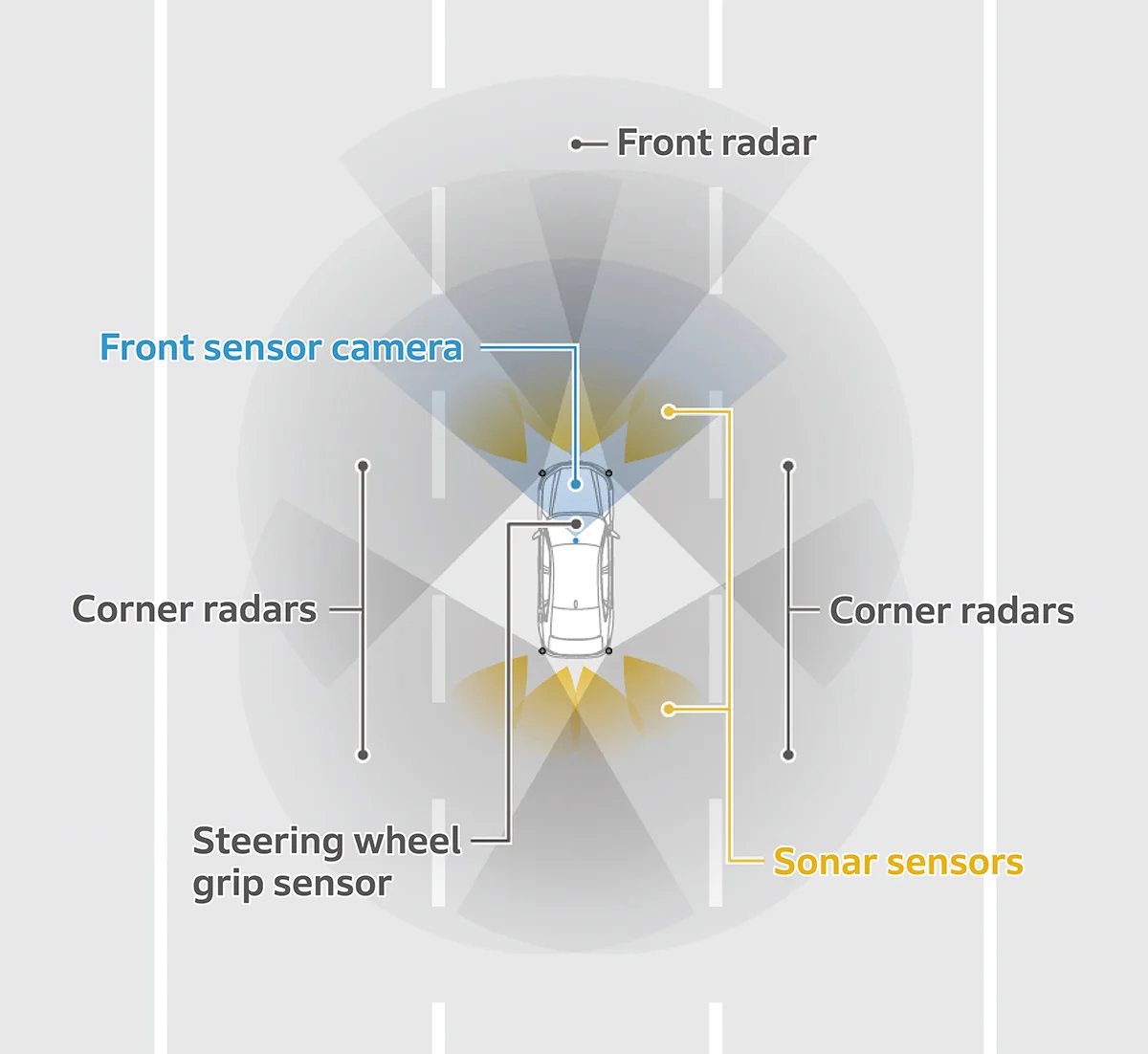
Honda SENSING 360, featured in the eleventh-generation Accord, expanded the sensing range to all directions compared to the previous Honda SENSING system
The eleventh-generation Accord was the first domestic model to feature “Honda SENSING 360,” which expanded the sensing range of Honda SENSING to cover all directions. In addition to a front sensor camera with a horizontal field of view of approximately 100 degrees, the car was equipped with a total of five millimeter-wave radars—one in the front center and one at each of the four corners—enabling 360-degree sensing. In addition to significantly enhancing the existing Honda SENSING features, three new functions were added: Front Cross Traffic Warning, Lane Change Collision Mitigation, and Active Lane Change Assist. These new features helped drivers detect and avoid collisions with vehicles crossing from the front, pedestrians, and vehicles approaching from the rear or side—situations that are difficult to spot with the naked eye—thereby providing safer and more secure driving.
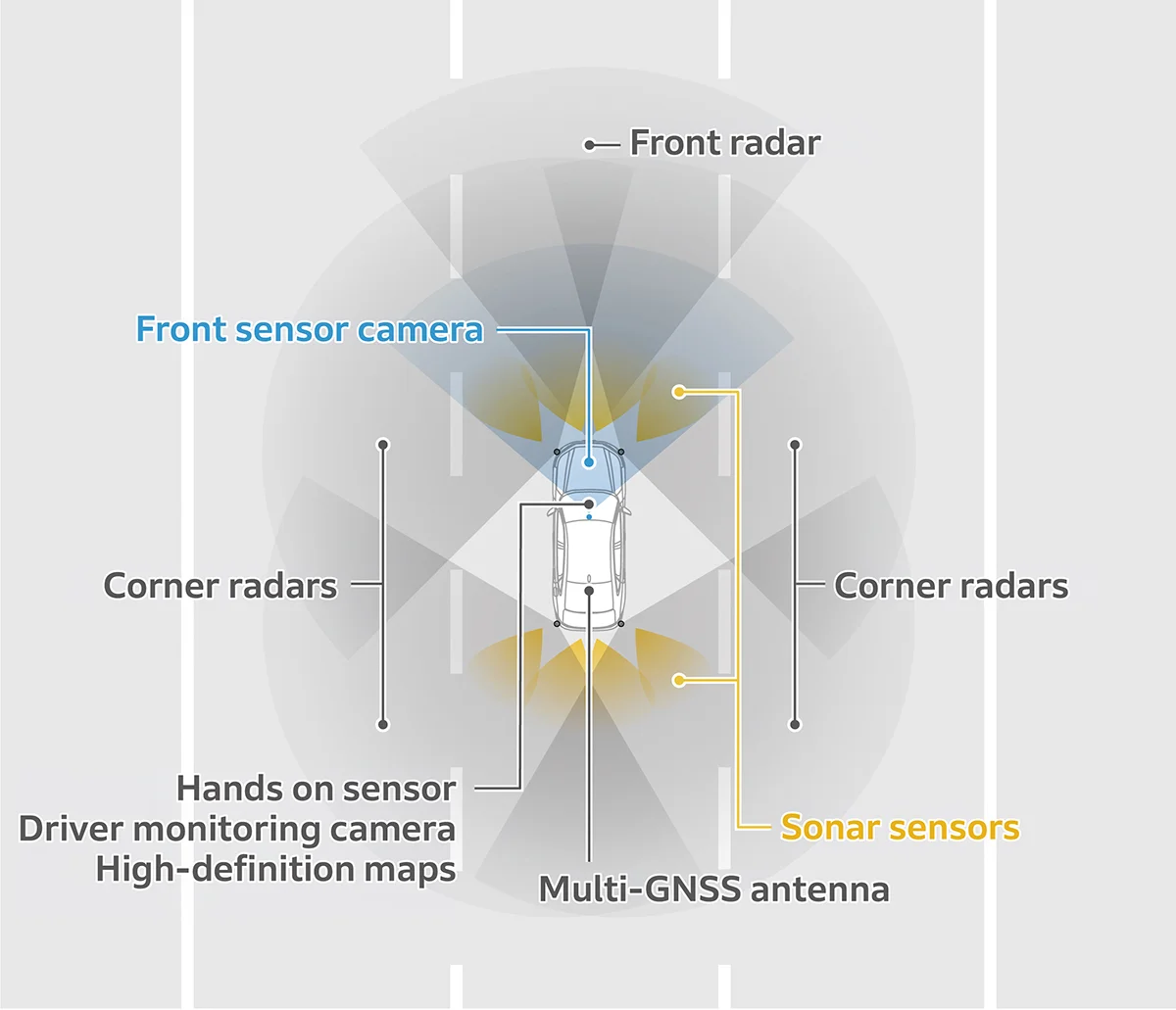
The detection range of Honda SENSING 360+ featured more sensor types and a wider detection range than Honda SENSING 360
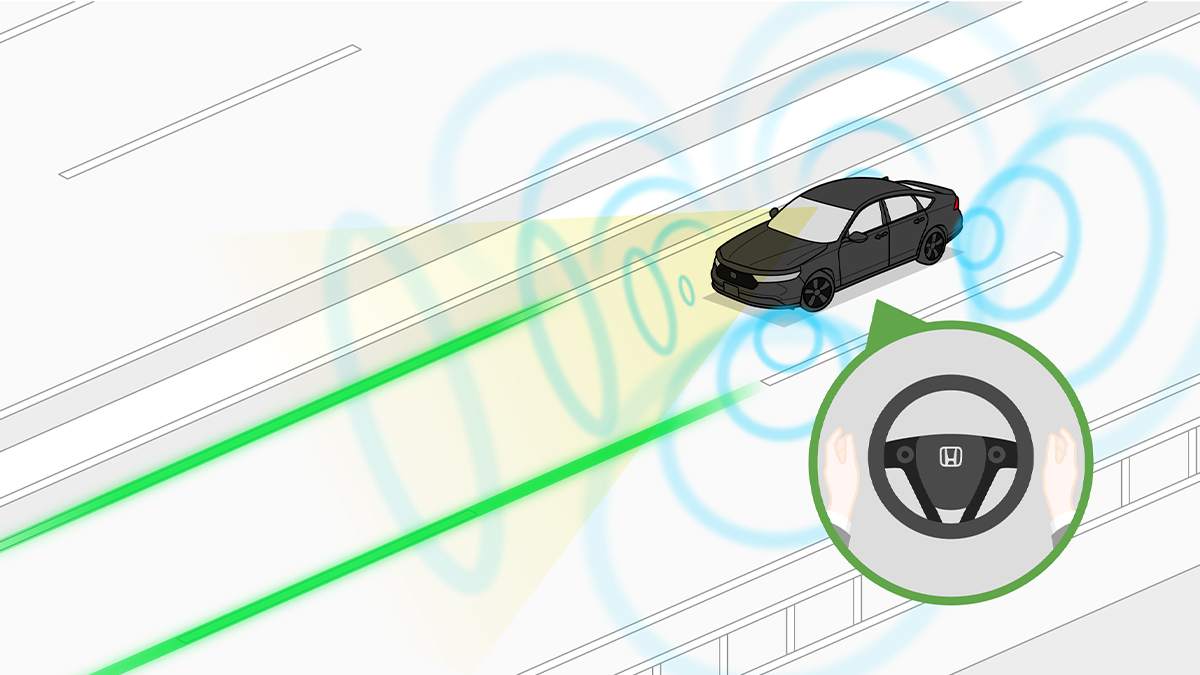
In May 2025, the company introduced “Honda SENSING 360+” for the first time in its domestic models, adding features such as Advanced In Lane Driving with Hands-off Capability to Honda SENSING 360. This feature was designed to reduce the driver’s workload by automatically controlling the accelerator, brakes, and steering while driving on highways and expressways, helping the vehicle maintain its speed and stay within its lane even when the driver takes their hands off the steering wheel. High-definition maps and the Global Navigation Satellite System (GNSS) are used to determine the vehicle’s position and obtain road information, thereby assisting with hands-off driving under certain conditions. When there were no vehicles ahead, the system drives the vehicle along the middle of the lane while maintaining the pre-set vehicle speed, and when there is, it follows the vehicle at a safe distance. In addition, Honda SENSING 360+ is equipped with Active Lane Change Recommendation, Predictive Curve Departure Warning, and Exit Warning features, as well as a Driver Emergency Support System. Together, these systems further reduce the driver’s workload.
The Accord has continued to evolve with the times, striving for “harmony between people and society.” By adapting its approach to achieving this harmony, whether through environmental initiatives and safety, comfort and driving performance, fuel economy and electrification, or driver-assistance systems to meet the demands of each era, it has taken on the challenge of creating new value as a global sedan. Global cumulative sales of over 25 million units are a testament to the Accord’s popularity around the world. Regardless of how society changes in the years ahead, the Accord will continue to evolve by anticipating those changes, remaining committed to creating harmony between people, society, and cars, and bringing together Honda’s latest technologies.
Related Contents

Share this article



Was this article interesting?
- Yes
- Neutral
- No