What sort of enjoyment do these two switches bring to riding?
The Africa Twin DCT (Dual Clutch Transmission) is equipped with two unique functions: the G Switch and Selectable Torque Control. What do these switches do, and what effect do they have? First, we'll hear the story from the development team, and then we'll see how the switches work. What new world of enjoyment can the ‘True Adventure’ Africa Twin DCT bring in an off-road environment it was designed for?
What effect do these two switches have?
In what way are they effective?
Discovering answers through experimentation.
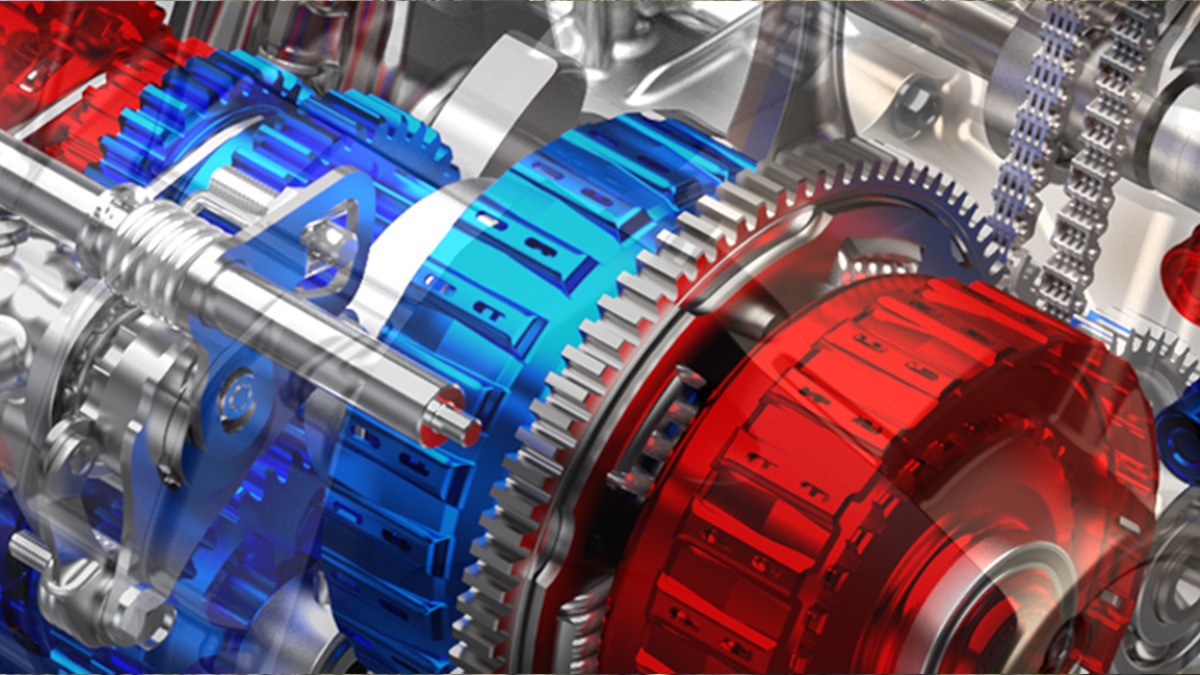
Honda’s motorcycle Dual Clutch Transmission (DCT) has the same fundamental construction as the multi-gear transmissions featured on many of its sports bikes. However, clutch operations, including those performed when starting, stopping or changing gears, have been automated with the computerized control of the system’s two separate clutches.
DCT is not merely an automatic device designed to simplify riding, although it is a mechanism that performs all gear changing operations. Instead, DCT is a mechanism developed to provide a deeper enjoyment of riding.
Many people think that DCT is simply an automatic device designed to make riding easier. They know that by simply moving a switch from ‘N’ (Neutral) to ‘D’ (Drive) and twisting the throttle they can start riding, powering off from stop with no need to shift gears or operate the clutch. This may be a big part of the reason for people’s misconceptions about Honda’s DCT. What they may not know is that with this DCT, riders can also freely perform upshifts and downshifts at any time, and if they select the ‘M’ (Manual) mode, they can shift the gears for themselves whenever they like while riding.

The Africa Twin features the latest version of DCT, and settings have been updated for various operations such as start and speed changes. Even when riding in D mode, which is programed to perform all gear shifts automatically, it feels as if the gears were shifting in direct response to your very thoughts. Moreover, to enhance the feeling of the two-cylinder engine’s power pulses and torque, the Africa Twin’s full character is expressed with an early upshift program at its base.
Further, when the S (Sport) mode is selected, the DCT transforms itself with another shifting program that not only allows more aggressive riding, it also tracks the rider’s intent more closely by monitoring throttle position angle. This lets riders enjoy whatever type of performance they prefer to such a degree that they no longer feel the need to shift manually. Because of this, when you ride a DCT-equipped motorcycle, you’ll soon feel the delight of being able to do more and do it more satisfyingly than you’ve ever been able to on existing manual transmission (MT) models.
Riders are not only relieved of the bother of constant clutch operations, any concerns about occasional missed shifts or engine stalls when starting or stopping have also been virtually eliminated, giving the rider an incredible sense of security and confidence. Another feature of Honda’s DCT that surprises riders is the degree to which feelings of fatigue, both physical and mental, are alleviated. Above all, riders soon notice how much the physical operations of riding standard manual transmission bikes, which involve manipulating a clutch lever and changing gears, tend to consume more of their personal ‘CPU’ than expected. By leaving all operations related to the clutch and gear shifting to the DCT, the sense of relaxation riders get greatly increases the sense of enjoyment while enabling them to better concentrate on the other aspects of riding, or simply taking in the view. In other words, riders come to feel all the sensory delights of motorcycling more deeply and derive more satisfaction from their time on the road. This is truly the DCT’s most significant feature. And yes, the longer one’s experience riding motorcycles, the more one feels that the DCT injects a new kind of magic into the ride.
Among the various motorcycle models Honda has equipped with DCT, the CRF1000L Africa Twin has attracted by far the greatest attention. This on-road/off-road riding machine is a revival of one of Honda’s legendary models, which was a pioneer of a new Adventure Touring category that has grown over the ensuing years to enjoy worldwide popularity. As the name suggests, motorcycles in this category are equipped with performance features that make riders feel that they can travel to the far corners of the world. That is to say, these machines have been built to offer both the easy enjoyment of riding on paved roads as well as allowing one to confidently venture off road whenever the urge arises — a design feature that soon became one of its major points of appeal.
I’ve ridden the new Africa Twin several times now, and experienced its excellent attributes in various environments. I was especially impressed by my experience riding its DCT version off road, and was so surprised by its performance that I had to say, “Simply getting rid of the clutch lever remarkably expands your range of riding possibilities!”
When starting out on the MT (Manual Transmission) version, like with any normal motorcycle, you pull in the clutch, put it into first gear, then ease out the clutch while slowly rolling on the throttle to get moving. However, when riding off-road, depending on road surface conditions, this is a procedure that requires a lot of concentration to avoid spinning the rear tire or stalling the engine.
Whenever riders feel stressed by riding an MT model off-road, they tend to overrev the engine or slip the clutch a little too long, thus causing one’s feelings to come out in the operation of the bike. Conversely, the DCT version of the Africa Twin starts out with astonishing ease, and then goes on to perform the usual upshift operations automatically.
On that point, of all the various DCT-equipped bikes I’ve ridden since 2010, the Africa Twin’s DCT has evolved to offer more advanced control and smarter shifting, as well as clutch settings that best match the needs of off-road riding, thus giving riders a fantastic assist.

Since the DCT changes gears without missing shifts, and provides excellent clutch operation even when accelerating, I found I could better focus my attention on the road conditions in front of me and my braking before turns, allowing me to concentrate more on the riding, including my timing in making turns and my cornering. For example, when faced with a lot of tight bends in a dirt road where I’ve got to reduce my speed to pass, on MT models it’s not unusual for some deft clutch operation to be required. In these cases, it’s also necessary to simultaneously stabilize the bike by lightly holding the grips without applying force to the wrists, while constantly being careful about what the left hand is doing with the clutch.
However, with the DCT model, since the rider is completely relieved of clutch operation, I found I could hold the grips lightly in hand while relaxing my elbows and shoulders, making it possible to more naturally bring out the machine’s full cornering capability. Especially in clearing tight left corners. Now this was an unexpected delight!
Such advantages are also true in the standing position one frequently uses when riding off-road. Since, as noted above, clutch and left foot shift operations are no longer required, I found I was relieved of having to adjust my riding position to allow me to perform these operations, and could instead concentrate on the basics of controlling the bike from a position that best suits both the road surface and the machine. This proved to be a great help on gravel roads, the sandy roads seen on off-road courses, climbing and descending steep hills, and continuous stretches of deep ruts.
This also applies when stopping. I found I didn’t need to be quite so conscious of gear changes, and could easily stop after checking to be sure there was a solid place to put my foot down. Even in places with large ruts, where it’s difficult to get a good foothold, I felt I could stop without getting overly stressed. This was like making a totally new discovery. Enough so that the image of DCT being something to make off-road riding even more enjoyable was firmly established in my mind by the end of my ride.
And how effective is this new function?
The Africa Twin was equipped with a G Switch to make DCT more suitable for off-road conditions.
So why was the G Switch added?
One reason is that this latest DCT system features “adaptive clutch control.” When the DCT changes gears, its two clutches operate in harmony for such smooth shifts that the bike accelerates through the gears without any perceptible interruptions in its driving force.
Further, with the DCT system, when the throttle is opened and closed, the clutch momentarily slips into a semi-clutch state that reduces driveline shock and helps realize exceptional riding comfort. Bike pitching due to variations in driving force is also efficiently and effectively suppressed.
The effect of such DCT control yields many advantages: For example, when riding two-up, rider and passenger helmets tend to bump against each other less during upshifts and downshifts. Also, even when the throttle is used somewhat roughly in low-speed maneuvers, jerky front and back movement is suppressed for more comfortable handling.
On the other hand, according to the DCT’s development engineers, this smooth control can give the rider the impression that there’s a delay in the drive’s response to throttle inputs, especially when wanting to perform quick maneuvers while off-road riding.
I was told that this delay is in the range of units of hundredths or thousandths of a second, but in order to create more of a feeling of uniformity there was a request for modifications to the DCT’s settings as well, particularly as they relate to the engagement and release of the clutch. In short, the G Switch was designed to improve the feeling of uniformity between the throttle and the rear wheel when riding off-road.
The effects of the G Switch can be easily felt when making low-speed turns on woodland paths or when taking advantage of slippery road surfaces, such as on gravel roads, by quickly blipping the throttle to slide the rear wheel. In these and other situations, I could clearly feel the difference.
After the road test, I remembered these favorable impressions and tried to explain the Africa Twin’s DCT to a riding friend of mine. But then he asked me a question: “So how effective is the G Switch?” Although I’d given him my subjective impression, he said he’d like me to explain it again more objectively. I found that I couldn’t communicate it very well to him, since he rides road bikes and lacks off-road riding experience. I had to think about it all again...
Then he asked me another question: “How do those 4 levels of Selectable Torque Control change its operation?”
My explanation that “there’s absolutely nothing to be afraid of when cracking open the throttle on a dirt road,” only reflected the perspective of someone like me who has some experience riding big bikes like the Africa Twin on dirt roads. If the rider is reluctant to open the throttle, this is often because of little or no off-road riding experience or a fear of sliding, even with a bit of off-road experience. Since this was his situation, it soon became obvious that we were just not on the same wavelength.
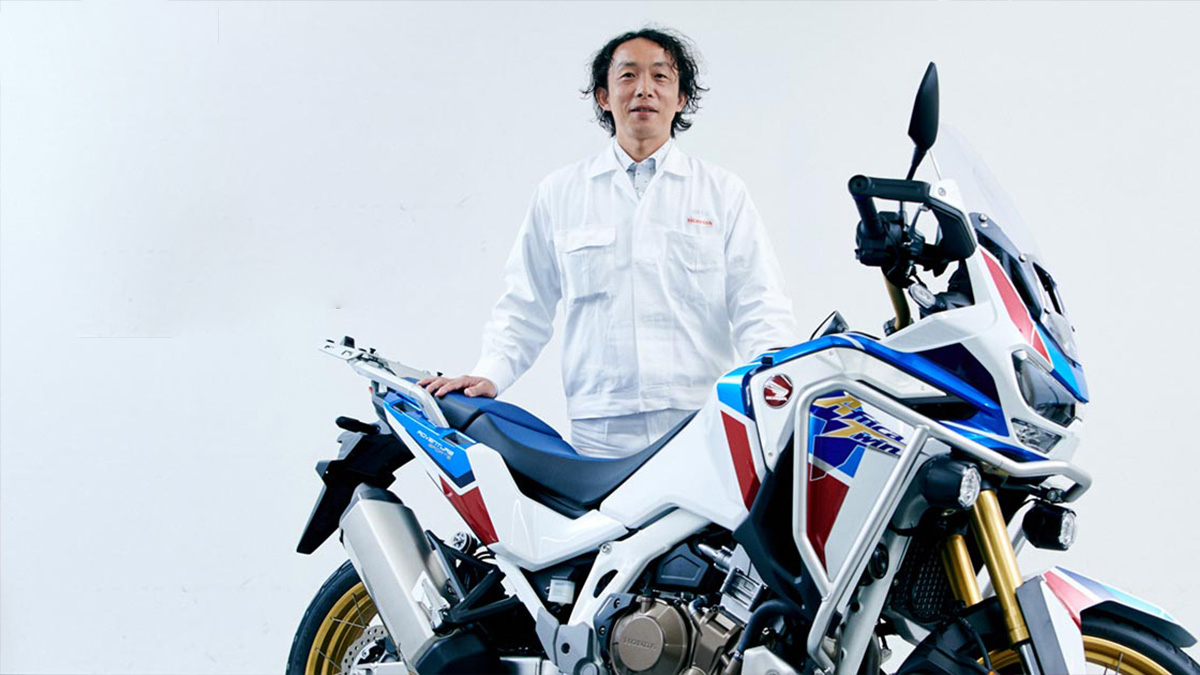
So, I decided to first contact the engineers who were involved in the development of the G Switch and Selectable Torque Control, and directly confirm operation with them, including questions about how best to grasp the difference in easy-to-understand terms. Answering my questions were team members Satoshi Seo, Masanori Nakamura and Asuka Ito.
Q. Could you tell us about the G Switch? Why did you think a G Switch would be required on DCT models?
Ito: For the on-road version we introduced a delay of only a fraction of a second so that clutch operation would hardy be noticeable in the bike’s actual movement, even if the throttle were operated in a somewhat rough manner. The idea was to smooth out the first peak of drive force produced by the engine as the clutch hooks up in order to reduce its impact. However, for the Africa Twin we figured that more experienced off-road riders would prefer quicker throttle response, so the clutch control was reset to more instantly respond to rider inputs.
Q. How did you manage to apply on-road riding comfort to off-road riding?

Ito: After we decided to create a DCT version of the African Twin, we did some off-road testing with a conventional DCT-equipped bike in the initial development stages to confirm its compatibility. Later, when we used the DCT version of the Africa Twin in actual off-road riding, we could feel a slight delay in response when turning the throttle quickly to raise the front end or slide the rear wheel. This we found was because the DCT till then had been designed primarily for more comfortable on-road riding. Therefore, the G Switch was added to provide clutch operations more in tune with off-road riding.
Q. How were the setups created?
Seo: Since riding skills differ greatly, even among the individual members of the development team, we proceeded with a plan of asking as many members as possible to offer up their opinions. We also sought feedback from people both inside and outside of the development team, and created setups to better match each level of off-road riding ability.
Q. What sorts of roads did you base the settings on?
Seo: We confirmed operation over a wide range of off-road surfaces, but what we felt were particularly important were gravel roads like those often found on woodland trails.
Q. Why did you focus so singularly on off-road riding?

Asuka Ito
Ito: We assumed that most Africa Twin users would already be actively engaged in off-road riding. So, we decided that it was crucial to offer operation that provides a sense of ‘uniformity’ while riding off-road, and essential that the G Switch provide the most appropriate clutch operation for off-road riding. Further, if the G Switch were turned on while riding in D (Drive) mode, users might be confused by the very wide range of choices, including the S (Sport) mode, since the machine determines on its own that it is riding off-road, and the DCT’s shift schedule would change accordingly. One way of coping with this problem was to include an off-road mode. However, on the Africa Twin, to enable riders to enjoy tuning part of the electronic control themselves, we made the DCT’s S mode operate in 3 steps, and the effective degree of Selectable Torque Control also operate in 3 steps, a setup that better satisfies rider sensibilities.
Q. How does the D mode change when the G Switch is turned on?
Ito: Normally, when riding on paved roads in D mode, the speed selection schedule is set so that gear shifts up to 6th are done at speeds of 56 – 58km/h. When the G Switch is turned on, the bike determines that it’s riding off-road, and even when in D mode, the transmission only shifts up from 4th to 5th at higher speeds of around 59 – 61km/h.. Moreover, to facilitate handling in tight corners, it’s been set so downshifts from 3rd to 2nd or 2nd to 1st are delayed to remain in the same gear for as long as possible.
Q. How can the G Switch’s greatest differences and benefits be best experienced?
Ito: What we regarded as most important is creating a package that enables riders to enjoy riding without feeling uneasy, like the MT (Manual) models, rather than feeling the effects of the DCT while riding. We wanted riders to enjoy the realization that “I’m riding well today.” We then proceeded with the development of the system based on these desires.
The difference between the G Switch’s ON and OFF positions is that if the throttle is repeatedly opened and closed over a short period of time while riding in 1st gear at speeds of around 15km/h, the engine’s response at the instant of opening or closing is noticeably different. Also, I think the effect of the G Switch can be more easily felt during acceleration, deceleration or executing figure eights.
Q. What is Selectable Torque Control?

Satoshi Seo
Seo: What we call the torque control system detects slippage between the driven rear wheel and the road surface during acceleration to control the amount of engine torque reaching the rear wheel. The force produced when the rear wheel kicks the road surface to power the machine forward is expressed as traction, and this traction varies even on the same road surface depending on bank angle, rider weight transfer or suspension settings. One of the features of the Africa Twin’s Selectable Torque Control is its ability to be selected in 3 steps to match rider skill and user preference.
Q. What are its ‘Control’ characteristics?
Nakamura: Control is introduced whenever rear wheel slip is detected. Our goal was to allow optimal acceleration with complete peace of mind within that range of control. Based on the VFR800X program, we adjusted the control to best match the Africa Twin’s performance and operating characteristics.
Q. How does it work?
Seo: When the ignition switch is turned on, the torque control setting always resets to the default value (Level 3). This mode assures safe riding by suppressing rear wheel slip during acceleration, even on wet cobblestone streets or other slippery road surfaces. The settings then proceed from Level 3.
Q. How did you determine the settings for Levels 2 and 1?
Seo: We first had expert riders run off-road courses with the torque control turned completely off, and carried out data measurements to see how they used the rear wheel slip. Based on that data, we determined the degree of intervention for the other two levels.
Q. Which parts did you regard as important when performing settings?
Seo: Even when control is enabled, the machine needed to remain rideable. That is to say, would it still be possible to carry out the functions of riding as intended? We attached great importance to this. If torque is overly suppressed by the control, torque output would be reduced to virtually nil even though the throttle is wide open, making it really difficult to ride the bike off-road. So, we carefully set the torque to find a suitable skid rate and managed to realize controllable performance without spoiling the rider’s overall sense of security.
Q. In developing the new Africa Twin, did you attempt or encounter anything new?

Masanori Nakamura
Nakamura: If anything, that would have to be achieving the smooth control of the parallel twin’s fuel injection cut system. Honda already had torque control systems for throttle-by-wire models like the VFR1200X, and since they control the throttle electronically, smooth torque control was also possible. However the Africa Twin uses a conventional cable-type throttle for more direct throttle control, so the torque control had to operate by way of a fuel cut system. Although a system like that was already being used on the VFR800X, this was an entirely new application, especially since the number of cylinders was reduced by half.
We began development using the VFR800X’s system as a base. In the case of the Africa Twin, with its engine’s 270° offset dual-pin (or ‘phased’) crankshaft, unless the fuel injection is precisely controlled, more jerkiness in its operation would be noticeable than in the case of a 4-cylinder engine like the VFR’s, and smooth traction would be difficult to achieve. Because of this, in developing the Africa Twin’s unique fuel injection system it was even more important to ensure precise timing of the fuel cut and mapping of the fuel injection patterns so riders could feel the traction building smoothly.
With other existing systems we experienced difficulties in conditions where the characteristics of the bike and engine change. For instance, when wanting to reduce torque, at which interval should the output be cut? The Africa Twin’s settings started out with making that issue clear.
Seo: Even when leaning out fuel delivery by 50 percent, two different patterns had to be considered: one was ‘Injection ON-OFF-ON-OFF’ and the other ‘Injection ON-ON-OFF-OFF.’ Both conditions reduce the volume of fuel injected by 50%. To determine the correct pattern, we carried out testing to find out which was smoother.
Nakamura: When the torque control is activated and the fuel cut intervenes, sometimes it can’t infer a correlation from the throttle opening or engine speed alone, so the DCT’s clutch control was designed separately.
Ito: For example, when starting from a dead stop on a slippery road surface, the torque control intervenes by leaning the volume of fuel injected. Based on engine speed and throttle angle signals, the DCT calculates when it must connect the clutch from the amount of torque output present.
On the other hand, the torque control monitors and controls rear wheel slippage by momentarily intervening to cut the fuel supply to the engine, making its calculations separate from the engine speed and throttle angle and, taking into consideration the fact that the engine could stall, engaging the clutch more gently than usual.
Seo: The DCT is designed to enable riders to more easily and confidently ride over slippery road surfaces and rough terrains, even using its default settings. It is also possible for more aggressive riders to ride with it switched completely OFF. Since the Africa Twin’s basic off-road riding performance is already quite good, I’m sure it would still be fun to ride with its automatic gear selection left OFF. As an electronically-controlled system, the DCT’s mechanicals are quite simple. But since it was carefully designed to the most minute detail, I believe a wide range of riders can fully enjoy everything it has to offer. Through every stage of development we compared it against other models, and we’re confident that the Africa Twin is the best of them all by far.
Q. In what sorts of conditions should the torque control be tested in order to better understand its characteristics?
Seo: Since the torque control is rarely activated on paved roads, I’d suggest trying different maneuvers on gravel roads or fire trails, and modulating the way you open the throttle.
Armed with this advice, I headed for an off-road course to test the effects of both the G Switch and the Selectable Torque Control system.
What I tried on the test course and what became clear
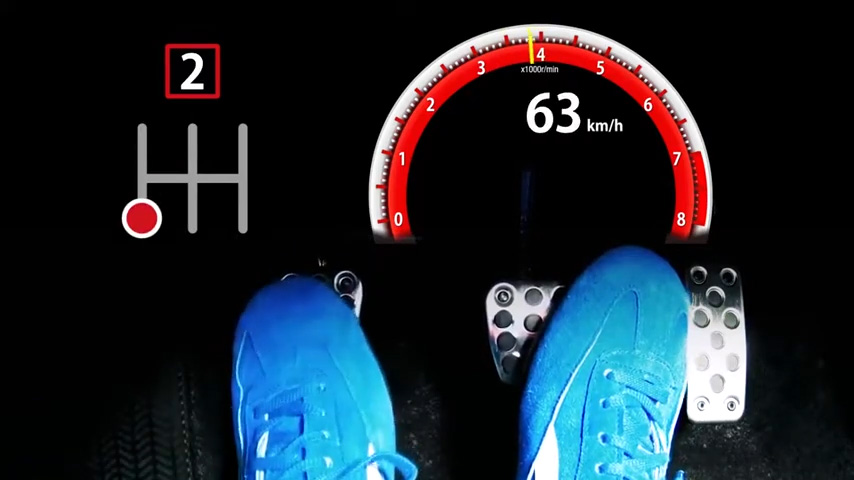
As advised by the development team, I first attempted to check the various G Switch settings on a paved road surface. As for whether the objective differences were clearly evident or not…. please watch the following video:
With the G Switch in Its Default Position (OFF):
For this test, I set the DCT to MT (Manual) mode and selected first gear, which is where any differences would be easiest to detect. The test was conducted by keeping my speed at a constant 20km/h and repeatedly opening and closing the throttle from that speed to check its feel during acceleration and deceleration.
First I checked how it felt with the G Switch OFF. Opening the throttle, the bike accelerated smoothly without any particularly abrupt movements. Similarly, when I closed the throttle, the bike slowed smoothly. As speed increased a bit, the feeling of ‘directness’ in the bike’s response to my throttle inputs seemed to increase, and as engine revs increased, the sensation of speed increased accordingly. When I closed the throttle, the effect of engine braking got stronger. Only moderate changes in attitude were detectable at the instant the throttle was opened to accelerate or closed for engine braking.
With the G Switch ON:
Next, I conducted a similar test with the G Switch switched ON. The feeling of drive impact that could be felt when the throttle was opened or closed was clearly different. It gave the impression that the rear wheel’s drive was instantly responding to throttle operation, making it feel as if the throttle and the rear wheel were directly connected to each other. It was more like a standard MT (Manual Transmission) model, although that might be a bit of an exaggeration. I was thus able to confirm the development team’s objectives in developing the G Switch.
Testing the G Switch in Figure 8 Turns on an Off-Road Course
Next, I conducted some tests on the flat part of an off-road course to check the difference felt with the G Switch ON and OFF. In this test I rode the bike in a figure eight pattern, which the development engineers told me was the best way to understand the bike’s movement when the throttle is opened and closed, and to more easily get a feel for the G Switch’s effectiveness.
My figure eights were run around two road cones set down at an appropriate distance from each other. Here various operations and maneuvers, such as acceleration, deceleration and turning, followed by acceleration again, could take place in a short period of time. The development team suggested that I check the G Switch’s characteristics based on these changes. Moreover, I’d be doing four tests, comparing the feel with the G Switch OFF and ON and the Selectable Torque Control set to its default value (Level 3), and then again with the Selectable Torque Control switched OFF. I did three laps in each test, which took me less than a minute. Since my body would gradually adapt as I got used to the test, I tried to focus my efforts on simply comparing the differences I felt based on my first impressions of the G Switch being switched ON and OFF.
Testing was conducted under the following conditions:
DCT operating mode: D (Drive)
Front and rear tires: OEM
Tire air pressure: standard
Figure-Eight Turns — Test 1
Selectable Torque Control: Default (Level 3)
G Switch: Default (OFF)

Lap 1: Starting from the straight line portion of my ‘course’ and turning counterclockwise around the first cone, I closed the throttle and used engine braking to begin my lean into the turn. At that instant, it felt like the Africa Twin was floating a bit. I wanted to lean the bike enough for a front wheel turn angle that would be just inside the limits of front tire grip on the dirt road surface. I was a bit concerned, however, because this maneuver had to be done cold, without practice. I started the bike out by opening the throttle and increasing my speed toward the other cone. The instant the throttle opened, the bike slowly launched into motion as the Selectable Torque Control began its intervention.
Lap 2: As my speed increased linearly, I closed the throttle to slow down. Like on Lap 1, at that instant I felt a small interval where the drive seemed to be intermittent due to the DCT’s operation, which seemed to soften the shock of sudden deceleration, and it felt like the bike was making a larger turn as I leaned. This impression remained through Lap 3.
Figure-Eight Turns — Test 2
Selectable Torque Control: Default (Level 3)
G Switch: ON
As with Test 1, I entered my figure eight course from the straight line, closing the throttle to decelerate as I approached the first pylon. At that moment, it felt like the G Switch must be on, as the feeling that the rear wheel was more firmly gripping the road surface with the engine braking was clearly being transmitted to me. I felt as if I was able to lean the bike more and enter the turn with more confidence than in Test 1.
Next, I increased straight line speed, closed the throttle, reduced speed and leaned the bike. Here, too, this series of operations seemed to be more smoothly connected. There wasn’t quite the feeling of gently floating that I’d experienced in Test 1, and since the Africa Twin could be leaned quickly and more deeply, the lean angle balanced well with the front wheel’s steering angle and the front suspension seemed to be doing its job well. I didn’t have the feeling that I was meekly trying to lean the bike that I’d experienced in Test 1. When accelerating after the turn, the Selectable Torque Control intervened the instant the throttle opened, at the start of acceleration. In other words, the feeling of kick at the rear wheel was stronger with the G Switch ON.
This really helped me understand the effect of the G Switch. I had the same impression on my third lap as well. Was it because I’d grown more accustomed to the test, or was it because it was actually easier to run the course than in Test 1? I was still unsure of my feelings.
What I was really feeling in Test 2 was, if anything, more of a sensation of grip between the rear wheel and the road surface when I closed the throttle.
Figure-Eight Turns — Test 3
Selectable Torque Control: OFF
G Switch: Default (OFF)
This test confirmed that what I’d experienced so far was not a figment of my imagination.
Entering the course from the straight line, I closed the throttle to slow down for the first turn. While it felt about as easy to lean as in Test 1, it clearly couldn’t be leaned as far as I’d experienced in Test 2. It felt like there was a slight lag, causing a subsequent slight delay in the leaning of the bike. As a result, the front wheel made a bit of a roundabout turn outside my ideal line. Next, I shifted to straight line acceleration, standing up the bike after opening the throttle. However, this time too, because my turn line was wide, the bike seemed to gobble up the straight, making it feel as if my acceleration distance had suddenly gotten shorter. If I compensated for this deficiency by opening the throttle more, the force of acceleration would cause the rear wheel to slide and the bike’s rear end to fishtail out.
Also, during the process of closing the throttle and slowing down, a phenomenon similar to that of my first turn in Lap 1 occurred, making me feel like I was running wide:
Bike lean entering the turn delayed. →
Acceleration out of turn also slightly delayed. →
More throttle on straight to recover. →
Rear end starts to slide sideways →
Deceleration delayed.
— The more laps I rode, the more irritated I became with my riding.
Figure-Eight Turns — Test 4
Selectable Torque Control: OFF
G Switch: ON
One result of turning OFF the Selectable Torque Control in Test 3 was that I started experiencing power slides. Thinking back, in the process of closing the throttle to decelerate from the straight line and leaning the bike to set up for the turn, the momentary delay in throttle response also delayed the turn. I thought through this phenomenon and concentrated on staying on my ideal line.
Approaching the cone from the straight line, I closed the throttle to reduce speed. As expected from my experience in Test 2, the effects of turning ON the G Switch could be felt the instant I closed the throttle. The feeling of deceleration as engine braking was applied directly to the rear wheel was greatly increased in addition to my actual braking. Also, this may easily center on the moment of leaning the bike into my turning line and the subsequent series of actions related to leaning and turning was again smoothly connected.
Since the Africa Twin turns easily in small circles, the impression was that while I could open the throttle to raise the bike — and the bike did stand upright as desired — it also increased straight line speed, suppressing tailslides even while accelerating in the straight line area. The force of acceleration was not wasted veering off in the horizontal direction. This change in the Africa Twin’s behavior occurred as a result of having turned on the G Switch rather than as a benefit of the G Switch. When the throttle opened, control during acceleration was, of course, easier to manage.
I experienced the same favorable results on my second and third laps, and my immediate reaction was “Well done!” as I managed to ride skillfully and successfully, and not feel, “Oops, I was too slow making that maneuver and got off my line…” I was feeling pretty good at this point.
In conclusion, turning ON the G Switch on a slippery road surface, regardless of whether the throttle is open or closed, really helps to make the bike more controllable, even as I continued to do some really extreme figure eight riding. The irritation I felt in Test 3 because my turns were late had virtually disappeared, and the G Switch seemed to perfectly tune my riding, figure eight riding and the Africa Twin’s operation.
After completing the test, I checked my results with Mr. Ito, one of the development engineers. He thought that I might be feeling the benefits of the change in clutch control as the G Switch was turned ON and OFF for throttle operation. One could say that my speed was usually low during the figure eight turns, and the clutch control time didn’t really differ very much whether the G Switch is ON or OFF, so it must have truly been a benefit of the G Switch. Indeed, the G Switch proved to be really effective when riding off-road.
How Helpful Is Selectable Torque Control?
How effective is the Africa Twin’s Selectable Torque Control? I made a comparison by conducting a series of start and acceleration tests while riding off-road on a gravel road surface where its effectiveness could most easily be felt. According to the engineer in charge of testing, in the development of the Africa Twin, “If the Selectable Torque Control is set to the default position (Level 3), the machine doesn’t swing very much to the left or right during acceleration, and straight line speed increases. At Level 2, where the degree of intervention is lessened by one step, the bike increases its speed by digging into the road surface a little more, but still maintains good stability. And at Level 1, where the degree of intervention is weakest, experienced off-road riders can slide the tail a little during turns with some deft throttle work, but this level still prevents any overreaction to rider inputs.”
He also said that the torque control was programmed for electronic control on the assumption that it would mostly be used on basic gravel forest trails. From that perspective, it can also be assumed that the default was intended for beginners, Level 2 for mid-level off-road riders and the least effective condition (Level 1) for more advanced riders. Naturally, however, the level of effect also differs depending on road surface conditions. Also there is a chemistry depending on rider preferences. My next test brought all these factors together.
This test was conducted by starting and accelerating from a dead stop. The main purpose was to check to see how the Selectable Torque Control intervenes in the control of acceleration immediately after a start. As with the G Switch’s dirt figure eight tests, I used two different styles of acceleration at the start to better feel the difference: one was to accelerate slowly by gradually opening the throttle to about 10 percent of full acceleration, and the other was executing a sudden leap of acceleration by quickly cranking open the throttle to about 50 percent.
I tested the difference in degree of Selectable Torque Control intervention by first setting it to the default level (Level 3), then to the weakest level (Level 1) and thirdly to OFF. This test was conducted with the running mode set to D (Drive) and the G Switch to its default position (OFF — the mode usually used when starting on paved roads), as shown in the following video.
Gravel Road Acceleration — Test 1
Selectable Torque Control: Default (Level 3)
G Switch: Default (OFF)
Throttle under acceleration: Gradual to 10%
My first test was run at the default level. Almost the instant I rolled on the throttle to about 10 percent and began to accelerate, the Selectable Torque Control intervened and the sound accompanying this acceleration changed to an intermittent engine sound. It felt like the power was being slightly interrupted, although there was a strong feeling of forward acceleration. It gave me the impression that the bike was stable and the rear wheel was pushing the bike smoothly and straightly. I sensed no unsteadiness and instead felt a strong feeling of confident security. In fact, it was such smooth acceleration that I almost forgot about the slippery road surface.
Gravel Road Acceleration — Test 2
Selectable Torque Control: Weakest degree of intervention (Level 1)
G Switch: Default (OFF)
Throttle under acceleration: Gradual to 10%
For the next test, I set the Selectable Torque Control to Level 1, its weakest degree of intervention. On the Africa Twin, this level can be easily changed using a switch on the left handlebar. Gradually rolling on the throttle to 10 percent from a standing stop, I started to move and increase speed. This time, it seemed that the degree of intervention that was causing the interruption of acceleration I experienced earlier was greatly reduced, and that speed picked up a little quicker than in the previous test. The degree of intervention became more prominent as I shifted up to 2nd. Compared to the default level, the number of times that the torque control itself repeatedly intervened also seemed to have decreased in this weaker setting.
Even at its weakest level of intervention, I felt like the Selectable Torque Control was accurately suppressing wheel slip from the start. And though riding on normal tires, I never had any feeling of conditions ever becoming dangerous. The only things the rider need do are open the throttle and concentrate on standing the bike upright so that it can increase its speed in a straight line. My feeling was that there was nothing unsettling at all about its handling, even with the day’s conditions, just as long as it was ridden straight.
Gravel Road Acceleration — Test 3
Selectable Torque Control: OFF
G Switch: Default (OFF)
Throttle under acceleration: Gradual to 10%
Next, I made an attempt with the Selectable Torque Control turned completely OFF. I figured that the acceleration would not be much different from what I’d experienced with Level 1 if the throttle were slowly opened to only about 10 percent, and sure enough the acceleration on flat ground was exactly what I imagined. I executed my starts without a hint of anxiety. No slips, either. However, if the road surface had been wet ground instead of gravel, I think the rear wheel might have easily spun. At the same time, it’s true that I was feeling a bit uneasy, and it seemed that the Selectable Torque Control’s reliable wheel slip control could be a great support to less experienced riders in terms of relieving stress.
Gravel Road Acceleration — Test 4
Selectable Torque Control: Default (Level 3)
G Switch: Default (OFF)
Throttle under acceleration: Rapid to 50%
In this next test, I compared operation with the throttle being quickly yanked open to about 50 percent. This could be referred to as rapid acceleration, and it usually never needs to be performed anywhere other than a test course. I used this technique with the idea of showing more clearly how the Selectable Torque Control works.
With the Selectable Torque Control in its default position, the degree of intervention increased the instant the throttle was opened. Gradually opening the throttle to 10 percent, as in Test 1, its control seemed to fully intervene almost the instant the throttle opened to prevent the rear wheel from slipping. I could feel it rapidly repeating the cycle of acceleration – control intervention – acceleration as I held the throttle open. Since I was holding the throttle open to 50 percent this time, if, after control intervention, I sensed some tire slip during acceleration, the torque control would intervene again briefly to attenuate the acceleration. This cycle was continuously repeated. Even so, the rear wheel didn’t slip to such a degree that I felt it was dangerous, in spite of using normal tires filled to normal air pressure.
Gravel Road Acceleration — Test 5
Selectable Torque Control: Weakest intervention degree (Level 1)
G Switch: Default (OFF)
Throttle under acceleration: Rapid to 50%
Next, I started with the Selectable Torque Control switched to its weakest setting (Level 1). Since the intervention was mild, when I first opened the throttle I could feel the rear wheel slipping more as it dug into the road surface. However, the Selectable Torque Control was also detecting this slippage and intervened to prevent it. In this case, the difference between acceleration and deceleration at start and intervention was larger than the intervention experienced in the default mode (Level 3). The bike chattered noticeably as speed increased. Perhaps this could be best described as, “As speed increases, the difference in interruption of acceleration as traction control is enabled was larger because the feeling of the rear wheel gripping the road surface was stronger.” However, in spite of this, I felt that the acceleration was quicker. These were the sort of results one would normally get on a gravel road surface.
Gravel Road Acceleration — Test 6
Selectable Torque Control: OFF
G Switch: Default (OFF)
Throttle under acceleration: Rapid to 50%

Turning OFF the Selectable Torque Control, I quickly whipped the throttle open to 50% from a standing stop. I felt like acceleration had so far proceeded without a hitch despite the torque control intervention. But was it only my own experience that was suppressing the rear wheel slip? This sort of made me nervous.
This time, the rear wheel started spinning the instant I opened the throttle, and I could hear the sound of gravel being thrown backward. As a result of a slight loss of balance, the bike began a tail slide. My impression was that, rather than sliding in the direction of acceleration, the applied drive force was escaping horizontally with resultant violent behavior.
I thought this was better than if normal tires were used or it was a level based on the assumption that off-road tires were mounted. Or a level of control one would select for riding on sandy beaches. I broke out a bit in a cold sweat.
The impression I had so far was that I might have been overly optimistic in thinking I could manage to control my riding without the assistance of this electronic Selectable Torque Control. However, as I opened the throttle wider, or as changes in road surface conditions became more pronounced, the amount of work I had to do riding with the torque control disabled increased dramatically. Obviously, this would also depend on rider skill. However, it was all I could do to keep the throttle cranked opened to 50 percent. My honest feeling was that the bike was skidding out of control.
This time, since the purpose of the test was to make comparisons based on identical conditions, I tried to keep the amount of throttle constant. But the fact that the Selectable Torque Control was intervening meant that the rear wheel would otherwise spin on slippery road surfaces. In other words, it follows that acceleration could be made easier by rolling back the throttle to reduce rear tire slip. In the future, it’ll be a real pleasure to pursue more advanced riding techniques while making the best use of this new control.
Above all, my anxiety about sliding was putting a heavy strain on my body. As speed rapidly increased, the rear wheel would slip whenever my center of gravity shifted the slightest degree off the bike’s center. Even travelling straight forward seemed to require more advanced skill than expected. I began to understand what a powerful effect the Selectable Torque Control was having on handling.
I conducted one more series of tests. This time starting out on an uphill grade. In this test, I used only two of the Selectable Torque Control modes, default (Level 3) and OFF, and compared the response with the throttle gradually opened to 10 percent and again when rapidly opened to 50 percent. Planting my left foot on the ground and stopping with my right foot on the rear brake, I open the throttle to take off — the usual procedure for slope starts.
Dirt Slope Start — Test 1
Selectable Torque Control: Default (Level 3)
G Switch: Default (OFF)
Throttle under acceleration: Gradual to 10%
Leaving the Selectable Torque Control in its default position (Level 3), I gradually opened the throttle to 10 percent from dead stop on the wet dirt slope. The Selectable Torque Control intervened immediately as I started to move. Its intervention was similar to that experienced on the Gravel Road Acceleration test; the torque control continuing to work as speed increased. The Africa Twin took off as if nothing unusual was happening. I felt it smoothly start to move and power up the slope without any hint of rear wheel slip or skidding sideways.
Dirt Slope Start — Test 2
Selectable Torque Control: OFF
G Switch: Default (OFF)
Throttle under acceleration: Gradual to 10%

It was only when I attempted the slope start with the Selectable Torque Control switched OFF that I came to realize how truly effective it is. Throttle opening was almost identical to my first Dirt Slope Start test. However, contrary to my experience accelerating on the flat road, as the rear wheel tried to push the bike up the slope it began slipping almost from the instant power was applied. Unless the bike was perfectly vertical, it instantly wanted to slip sideways. When starting from a standing stop, the loss of drive force to sideways motion was causing climbing power and speed to drop off considerably.
I started slipping into a downward spiral as the bike’s instability made it difficult to open the throttle, and when opened the rear tire slid more. To prevent this, the rider needs to adjust by accurately shifting body weight. This may be part of the fun of off-road control, but when attempting a slope start in these conditions, it would be preferable to move the bike to a safer location that offers less risk. I thought the difference was a result of a less than expected throttle opening. The incline of the slope was similar to what one might encounter on a typical forest trail.
Dirt Slope Start — Test 3
Selectable Torque Control: Default (Level 3)
G Switch: Default (OFF)
Throttle under acceleration: Rapid to 50%
The answers I was looking for seemed to have been revealed by the differences I’d already experienced in Dirt Slope Start Tests 1 and 2, but I still carried out a similar set of tests based on a 50% throttle opening.
Starting out on the slope with the Selectable Torque Control switched to its default setting (Level 3), I cranked open the throttle and began my run. As I experienced at the start of my gravel road acceleration test, the torque control accurately suppressed any rear wheel slippage and instantly attenuated acceleration after the start. However, since the acceleration was quick, I needed to be sensitive lest my body should be slow in raising my left foot to the step from its place on the ground and in reacting to this short burst of strong acceleration. I wondered if the rear wheel would start slipping if the bike started to lean and got a bit anxious. Although I might have been somewhat overanxious when the wheel slipped slightly, it didn’t get worse than that. I finished climbing the hill with the rear wheel swinging out a bit. Though it was just a test, it might have been a bit rash to crank open the Africa Twin’s throttle to 50% in this situation.
Dirt Slope Start — Test 4
Selectable Torque Control: OFF
G Switch: Default (OFF)
Throttle under acceleration: Rapid to 50%
In this last run, I executed my slope start with the Selectable Torque Control switched OFF and quickly opened the throttle to 50 percent. To see what happened, it might be best to watch the video. Before I could raise my foot to the step, the rear wheel suddenly skidded off to the right and I quickly had to counter both the bike’s lean and its trajectory. Then, the bike slid over to the other side in reaction, and quickly back again. Obviously, the bike didn’t climb the slope very smoothly or straight this time.
Though at a glance it might appear that I was using some special off-road technique to keep it all under control, this extreme sort of riding is seldom ever required off the test course. It was pretty obvious that the engine’s power was way too much for these conditions. What if the bike had fallen, out of control and flipping over as a result of having yanked open the throttle in such a way? Merely standing the bike back up on its wheels required considerable physical strength, and if I got injured, well, that would have been too bad. There always lurks the possibility that even an easy and enjoyable ride can turn quickly into a bitter memory of total exhaustion.
Completing the Test
In conclusion, riders who really push their bikes can watch the video and clearly understand the visible differences in performance, and the effectiveness of the Selectable Torque Control. The tests this time were repetitive, and each time I ran one more was learned and my body began to subconsciously anticipate the bike’s movements. Therefore, I can look back on these tests as the experience of a phenomena that was based on a certain degree of predictability.
In the case of a touring rider encountering a road surface for the first time that doesn’t appear to be slippery but in fact is, or other cases where a rider can’t cope quickly enough, these situations must also be considered. It is not uncommon for even familiar well-traveled roads to change drastically as surface conditions are affected by the season or the weather.
While performing the dirt slope start test, I found myself focusing on thoughts like, “That’s fine. Now let’s think of a seating position that positions the body upright for a better application of rear wheel driving force.” This, I thought, was a new form of riding enjoyment that the Selectable Torque Control made possible. I also found it enjoyable to ride aggressively while spectacularly sliding the rear wheel and correcting it. However, the thinking above gets to the very essence of riding as much as any wild riding stunts. Above all else, riding is an exercise in survival, and those who manage not to fall are the real winners.
Another thing I want to emphasize again here is that these devices go a long way toward further expanding one’s riding pleasure relative to one’s riding abilities. When I tried using my right hand to open the throttle in various ways in an attempt to extract more drive force, I found a new range of depth there.
The joys of riding, in which depth and flavor change depending on one’s level of skill, also exists today when dependable and objective rider supports like the G Switch and Selectable Torque Control are combined. Receiving this combination of assistance is truly a great benefit.
What I found most impressive in my testing was that if both the G Switch and the Selectable Torque Control are used efficiently, and my own bike and skills are tuned to road conditions, the overall pleasure of riding is greatly enhanced. This, of course, should be based on the high performance of the Africa Twin’s basic package, and also on the fact that the DCT succeeds in expanding the pleasure of off-road riding. However, the existence of Selectable Torque Control, which fits in as an additional device, gives great advantages in equal measure to both those who love off-road riding and those who’ve never had any interest in riding off-road before.
Additionally, I really felt that the G Switch is a pleasant piece of equipment for those who want to further deepen their off-road riding enjoyment. It makes anyone feel like they can really go wherever they want. Yes, this bike will always have a “reliable companion” onboard.
“Well, let’s start our new journey,” the Africa Twin seems to beckon.
Tsutomu 'Ben' Matsui (b. 1963, Tokyo)motorcycle journalist
Since 1986, motorcycle journalist Tsutomu Matsui has contributed interviews, riding impressions and first-hand race reports to a host of magazines and specialty motorcycle publications. He has also ridden in the Paris-Dakar and Baja 1000 rallies.