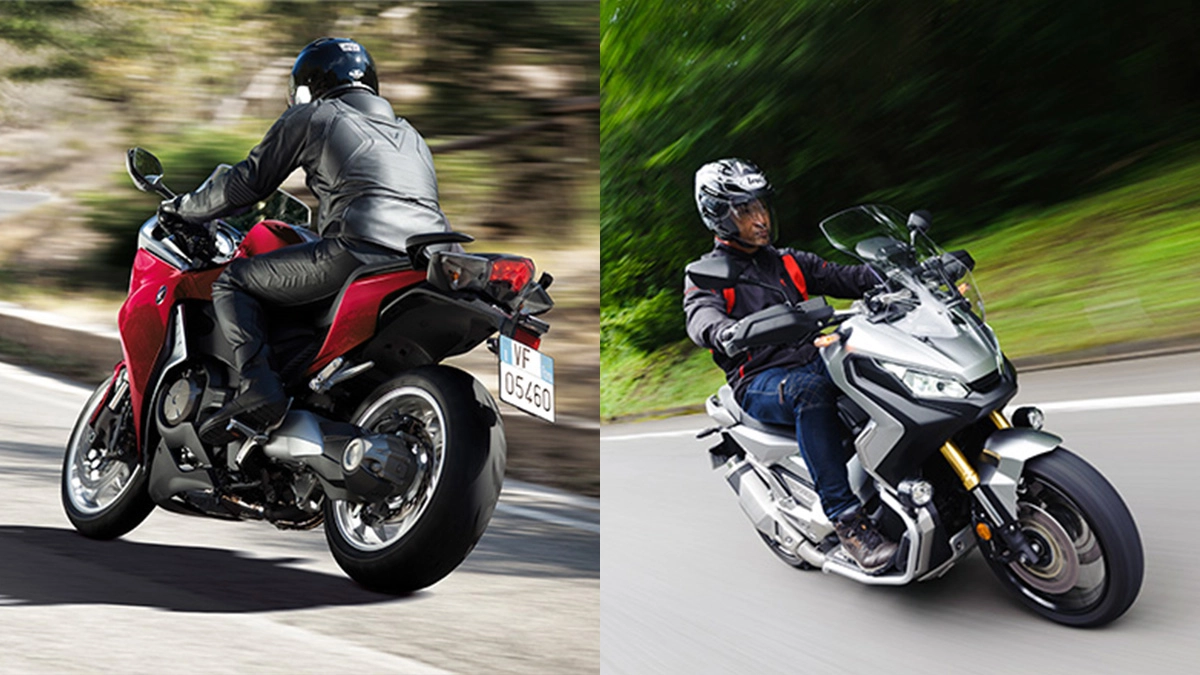
The World at Your Fingertips
Imagine being able to ride a motorcycle with all your attention focused on the joy of a gently curving road and the riding experience that surrounds you. With no distractions nor pauses in acceleration as you flick smoothly and effortlessly through the gears, shifting quicker than you've ever thought possible.
Now imagine being able to work through the gears with instantaneous response to your every input, like the paddle shifters on an F1 racing machine, without the slightest lapse in its seamless acceleration and control. Maximizing your enjoyment as it minimizes the time and effort of the shifting routine.
Honda's innovative Dual Clutch Transmission does all this and more, placing the precision control of world-leading technology right at your fingertips.
How does one describe the Dual Clutch Transmission? Japanese motorcycle journalist Tsutomu Matsui rode four models equipped with this revolutionary system and gives his impressions. Read here to learn more about this remarkable new way of more fully enjoying the riding experience.
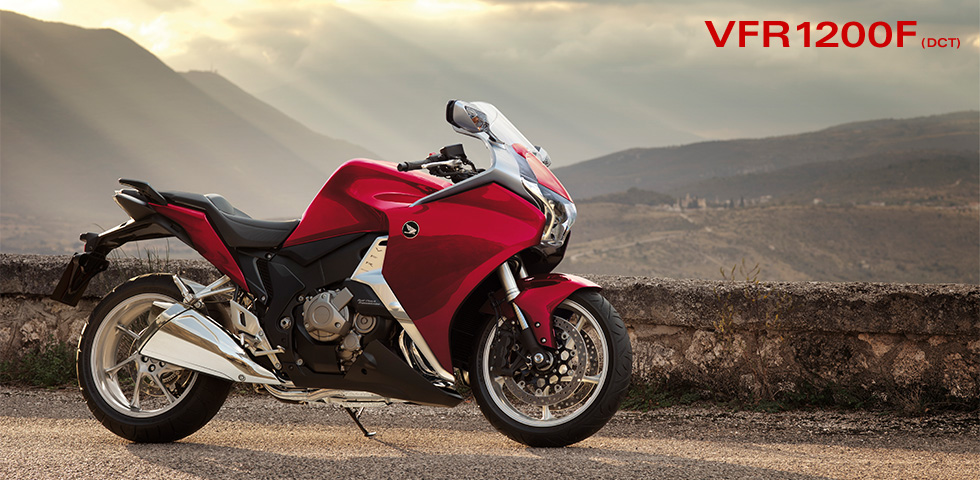
VFR1200F (Dual Clutch Transmission)
Experience the Best That Motorcycling Has to Offer.
As Honda's flagship sports-tourer, the VFR1200F offer world-leading technology, sleek aero styling and peerless quality in every detail. With the addition of its second generation Dual Clutch Transmission, the big VFR brings a new dimension to the riding experience that magnifies its aura of technological excellence.
Giving Greater Depth to Honda's Flagship Sports Tourer.
With its elegantly layered bodywork design integrating an impressive-looking front headlight and sharply swept tail section, the iconic VFR1200F commands attention from any angle. Its muscular single-sided swingarm accentuates the elegant beauty of its rear wheel design. And although the VFR's highly acclaimed V4 engine is completely hidden from view, its impression of technological advancement and superb quality, refined through many generations, can be seen and felt everywhere.
As Honda's flagship sports-touring machine, the VFR1200F was the first motorcycle Honda chose to equip with a Dual Clutch Transmission like that used by the world's most advanced F1 racers, and featured on many premium sports cars.
The Dual Clutch Transmission installed in the VFR1200F since 2012 is the second generation of this system, and features a much more highly evolved control logic, refined for smoother and easier operation, and a more natural feel. Attached directly to the engine's six-speed transmission, it features two distinct clutch mechanisms actuated by electronic control to automatically perform the gear change operations normally done using a manual clutch lever and gear shift pedal. This advanced system enables riders to better focus on the road and the pleasures of riding.
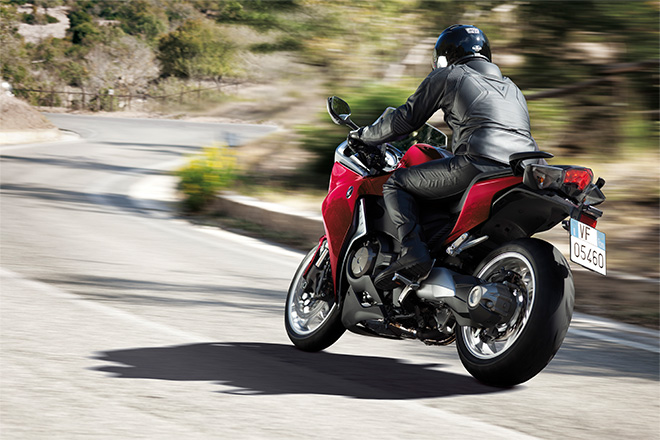
High technology and innovation are just two of the advantages the big VFR offers, and its Dual Clutch Transmission further expands its capabilities. When I rode the VFR with the first generation of the Dual Clutch Transmission, I found that the VFR and its revolutionary shifting system had such an affinity to each other that I thought the VFR must have been specially developed to carry the Dual Clutch Transmission.
Starting the VFR's engine, I toggled the transmission selector switch from N (Neutral) to D (Drive) mode. From that moment on, the only action required to start riding was rolling on the throttle. My first reaction was that a sports bike with an automatic transmission were a poorly matched combination. However, in only a couple of seconds my mind completely changed.
What an incredibly smooth start! I was totally surprised by its precise clutch control, and then the gearbox slipped into second. I heard a clunk as the gear shifted, but hardly felt any pitching that might disrupt the engine's drive to the rear wheel.
Keeping up a comfortable pace, the Dual Clutch Transmission smoothly completed its run up to sixth. Normally, a rider shows his skill in the smoothness of his shifts. If the bike jerks about at start or the rear wheel squeals when letting out the clutch on a downshift, we think the rider still has some learning to do. Smoothness is one of the most important techniques in motorcycle riding.
That impression of overall smoothness was still strong when I tried out the next generation of Honda's Dual Clutch Transmission this time. Not only does the Dual Clutch Transmission shift up and down through the gears with perfection, its two clutches also shift through the gears without any lapses in the power of its acceleration. Its excellent response left me with the impression that even the engine was of better quality. Intuitively, I could feel that the production of the VFR1200F had definitely come to assume the inclusion of the Dual Clutch Transmission.
I once rode the VFR1200F on a racing circuit in the hopes of testing the limits of its performance. Perhaps, I cynically imagined, I could unearth some fault with its Dual Clutch Transmission. However, in spite of my best efforts and expectations, I instead discovered the Dual Clutch Transmission's superiority during a lively sports ride. I discovered, for instance, that I could comfortably and confidently shift up a gear while exiting a corner with my left knee out grazing the tarmac at a steep lean angle. Moreover, when casually on the brakes while slowing into a corner and gripping the fuel tank with the knees, the gears could be easily downshifted with just a tap of the left thumb. The transmission's response was much faster than I expected, and downshifts were completed smoothly and quickly. Also, I never experienced any rear wheel hop, no matter what I tried.
While it might be a slight exaggeration to say that an onboard camera view from a MotoGP racer kept flashing through my mind, it reflects the degree to which I felt totally in tune with this machine. Of course, I could also enjoy that feeling riding through the corners of a winding road, but I'm not one to test the limits of a bike on regular road, as I would on a racing circuit. And since road conditions just around the corner are always a big unknown, I ride carefully. Under these conditions, leaving the Dual Clutch Transmission to confidently handle gear shifting operations was a big advantage.
Riding with eyes fixed on the road ahead and using the brakes to maintain an appropriate speed, I was able to relax and enjoy an excellent ride by simply leaving one job to a superb mechanism, thus greatly reducing any sense of anxiety. The Dual Clutch Transmission really demonstrates a deep commitment to sports riding, and a close relationship with the very soul of the ride, giving riders a positive response and, by extension, a positive feeling. Also, when riding two-up, passengers will never feel a jarring shock when the gears are shifted up or down, and you may even find people commenting that your riding skills have gotten really good.
Of course, the VFR1200F's value as a premium sportsbike model cannot be determined by the addition of its Dual Clutch Transmission, especially since regular motorcycle transmissions still offer a high level of riding satisfaction. However, it is true that the Dual Clutch Transmission has given the VFR a new range of depth as both a long-distance tourer and a track day partner. It also lets one enjoy a brisk run through winding mountain roads when traveling alone, and gives plenty or room to simply take in the scenery when somebody else is along for the ride. Offering a little something extra is one of the Dual Clutch Transmission's greatest points of appeal, and a sure sign of its true worth.
This time, when I rode the Dual Clutch Transmission version of the VFR1200F, its more highly refined control of the gear shifting allowed me to enjoy a ride that was much closer to my sense of riding a manual transmission sports bike, and I found myself charmed by the Dual Clutch Transmission's remarkable potential.
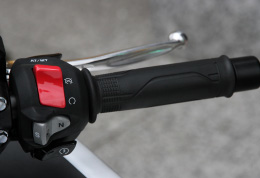
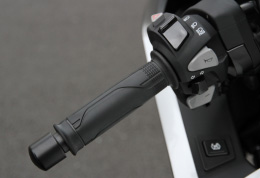
On the right handlebar switch module, the grey thumb switch offers selection of Neutral (N), Drive (D) or Sport (S) modes. The AT/MT switch located above the red kill switch allows easy index finger switching between Automatic and Manual transmission modes.
On the left handlebar switch pod, the grey thumb switch (-) positioned under the indicator switch provides instant downshifts with easy operation, whether in Manual (MT), Drive or Sport modes.
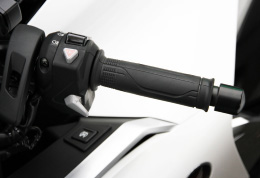
Protruding from the front of the left-side switch module, the upshift switch (+) is easily reached with the index finger. The large black lever next to the switch module is the parking brake.
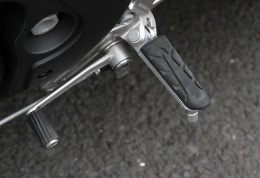
Some Dual Clutch Transmission models are available with an optional shift pedal for foot shifting like a regular motorcycle manual transmission. (NOTE: Not available in all regions. Contact your Honda dealer for details.)
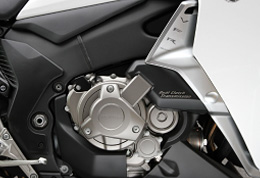
The Dual Clutch Transmission version of the VFR1200F has a different right-side engine cover design compared to the manual transmission model.
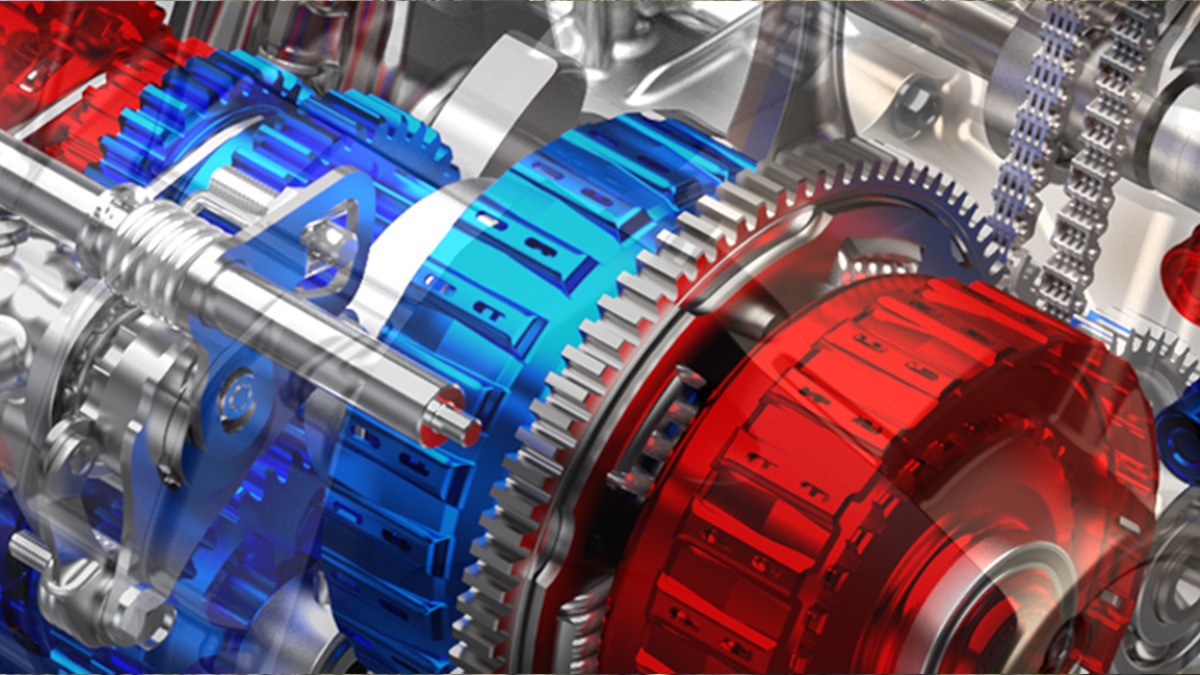
TRANSMISSION TECHNOLOGIES - DUAL CLUTCH TRANSMISSION -
Honda has developed a motorcycle transmission with automated clutch and shift operation that delivers the same riding enjoyment as a manual transmission.
VFR1200X (Dual Clutch Transmission)
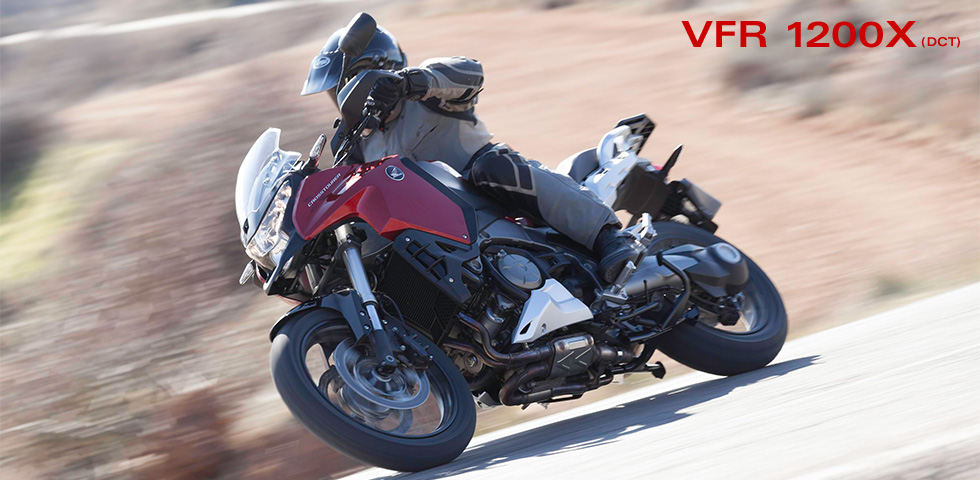
The Only Adventure-Tourer Offering Advanced Transmission Control.
The VFR1200X Crosstourer is a sleekly styled adventure-touring machine powered by the same high-tech V4 engine as Honda’s flagship sports-tourer, the VFR1200F. With the optional addition of its Dual Clutch Transmission, the Crosstourer delivers up a unique blend of breathtaking power and control that makes your time on the road really come alive.
Far Exceeding My Expectations, My Experience With the Dual Clutch Transmission Changed Me.
The VFR name has, over the years, deeply permeated Honda as a high-tech icon featuring leading technology inherited directly from the company's racing machines. The VFR1200X Crosstourer is an Adventure Touring bike powered by the latest VFR V4 engine. Like the VFR1200F, the Crosstourer comes in both manual 6-speed and Dual Clutch Transmission versions. For this test I rode the Dual Clutch Transmission version of the VFR1200X.
As with most Adventure Tourers, the Crosstourer is not only equipped with a large fuel tank and fairing, but also with hardware for mounting a rear carrier and pannier bags. The Crosstourer's standard equipment also includes both traction control and Combined-ABS, which compare admirably to all other riding machines in its class.
Hidden away within its bodywork, the bike's powerful V4 engine definitely has an edge over its rivals. And weighing in at all of 285kg, it is by no means a lightweight. However, since its mass is well centralized, I was surprised at how light it felt.
Setting the Dual Clutch Transmission selector switch to D for Drive and rolling on the throttle, any feelings of tension I may have had about handling such a big motorcycle were relieved by not having to finesse a clutch into motion. With the smooth power output of its four-cylinder engine, I left all clutch operation to the Dual Clutch Transmission and simply enjoyed the sound of changing speed and changing gears.
Riding in the range of 2,500 to 3,000 rpms to take full advantage of the V4 engine's powerful torque, I was able to fully enjoy the engine's revs and acceleration even without directly operating the clutch and gear shifts. This is indeed one of the main merits of the Dual Clutch Transmission, and can only be achieved by a system that utilizes essentially the same gear system as a manual transmission model. Moreover, since there were so few power lapses or surges when starting out or changing gears, I felt that I could also enjoy a relaxing ride carrying a passenger without bumping helmets at every shift.
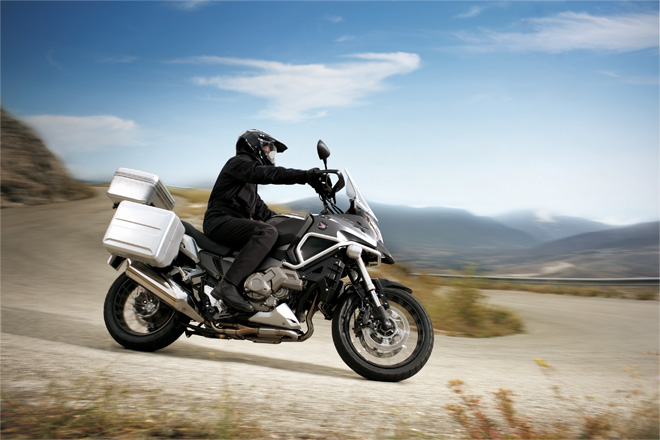
Long-distance rides were also exceedingly comfortable. Even on the highway, the V4 engine responds quickly to all throttle inputs. Turning the throttle up full resulted in the Dual Clutch Transmission automatically downshifting as needed for overtaking and passing slower cars and trucks, although the acceleration available in 6th gear seemed to be more than enough for the most part. After overtaking was completed, the gearbox simply slipped back into its more relaxed top gear again.
Exploring country roads and charging up mountain passes, the Dual Clutch Transmission offered easy selection of Drive and Sport modes, the latter shifting at higher rpms, and a Manual mode that allows the rider to instantly select gears at press of a button—two, actually, the left index finger shifting up and the thumb down. However, the VFR has more than enough power to accelerate strongly, whether running in Drive mode or manually downshifting when stronger acceleration or engine braking are desired in more aggressively sporty riding. And, since the transmission's operation effectively smoothes out any shocks related to gear changes, it was a pleasant surprise to find that I could even change gears whilst in the middle of a deeply banked turn with little or no effect on handling.
Some people may dismiss automatic, or clutch-free motorcycles as being intended for beginning motorcyclists, and certainly that is one appeal of the Dual Clutch Transmission. However, I'd rather that expert riders like myself, who have ridden continuously for as long as over 30 years, to experience a motorcycle such as this.
Like the auto-focus function of cameras that first appeared in the 1980s, there is no denying that there's a certain pleasure to be derived from bringing an object into focus by turning the ring on a lens with one's fingertips. However, if the camera quickly focuses by simply half-pressing the shutter button, the time saved can be used for consideration of composition or expression in the photos being taken. This is also true of the Dual Clutch Transmission, and its use enables us to focus on the important parts of riding and how we enjoy it. So, Honda's engineers created the Dual Clutch Transmission so that riders can better concentrate on those aspects of riding.
I also rode the VFR1200X on dirt roads, where it proved to be smooth and gentle with its traction control switched ON. If one were to keep pouring on the power of that big V4 engine with the traction control OFF, the rear tire would tear up the road and wag the bike's tail from side to side. Even in this case, there was a feeling of direction connection between the throttle and the rear wheel, as can be felt with ordinary manual transmission models. And when standing on the pegs over rough terrain covered with holes and gaps, I felt no need to worry about the clutch lever's angle of operation, thus relieving me of any stress. I could focus better on anything I needed to do, including line selection and drifting the tail out of corners.
To sum it up, the Dual Clutch Transmission really helps one enjoy riding more, regardless of the rider's skill level going in.
Smooth gear changes and clutch operation also help reduce fatigue, especially when riding two-up.
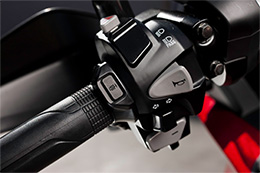
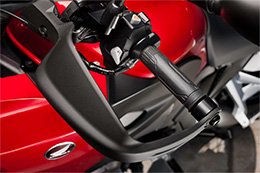
The downshift thumb switch (-) and upshift switch (+) on the front of the left-side switch module offer effortless gear shifting control within easy reach from the hand grip.
NC700S (Dual Clutch Transmission)
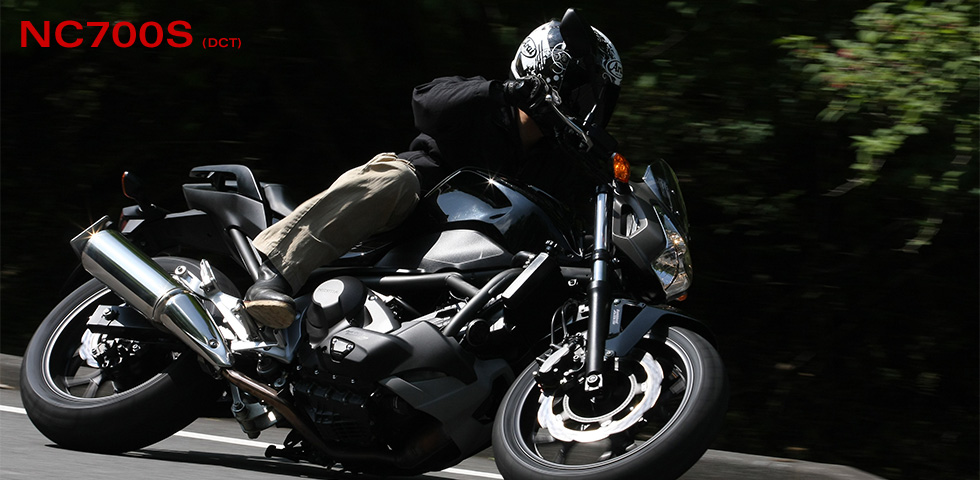
Dual Clutch Transmission Control Comes to the Midrange Naked Class.
Sleek, modern Naked-class styling designed for both comfort and convenience combines with a compact yet powerful 700cc parallel-twin engine and the advanced gear selection control of an optional Dual Clutch Transmission to deliver a unique experience in riding enjoyment and an exciting step into the future of motorcycling.
The High-Tech Naked Model.
The NC700S is a unique sports bike having its fuel tank positioned under its seat and a 21-liter luggage space conveniently located directly in front of the seat, which is normally occupied by the fuel tank. Its outward design concept, equipped with the parallel-twin engine that has gained lots of low- and high-speed torque, is in fact a new concept.
The NC700S comes in several versions in addition to its basic manual transmission model. One of these includes the Dual Clutch Transmission, which electronically controls clutch and gear shifting operations. Totally distinct from the automatic transmission systems found in scooters, the Dual Clutch Transmission features a fairly standard six-speed transmission, but with two compact, independently actuated packs of clutch plates, one for gears 1, 3 and 5, and one for gears 2, 4 and 6. Owing to limited space, there are few examples of this sort of clutch in the world of motorcycles, and such a unique approach indeed seems to be typical of Honda.
Dual Clutch Transmissions are not uncommon to cars, especially premium class sports models. They can smoothly precisely change gears more quickly than can be accomplished by manipulating a shift lever. Further, as with the paddle shifting that originated with the F1 racers, another advantage of the Dual Clutch Transmission is that it enables riders to better concentrate on the riding by automating or using convenient switches to enable clutch or gear shifting operations.
One immediately noticeable feature of a Dual Clutch Transmission model's appearance is the has no clutch lever or shift pedal. Also, no particular rules apply to engine starting, etc., with Dual Clutch Transmission models. Since the transmission always shifts back to the neutral position when the ignition key is turned OFF, only a touch of the starter button is required. Preparation for getting on the move is completed by shifting the right-side selector switch from N (Neutral) to D (Drive). After this, the motorcycle begins to roll as soon as the throttle grip is turned.
What impressed me most was its exquisite clutch operation. Although I've ridden bikes with clutches for over 30 years, the Dual Clutch Transmission effortlessly provides the ideal start that I have always tried to achieve, and does so first time, every time. Upshifts are usually done at 2,500 rpms in town, though this depends on how much throttle is used. At the instant the gears change, there isn't so much as the slightest interruption in drive power felt. Even when compared to the manual version of the NC700S, shifting speed is equal to or faster than can be accomplished by hand and foot. Of course, hasty shifting of a manual transmission can result in missed shifts and grinding gears, but this never occurs with the Dual Clutch Transmission. This is really superb.
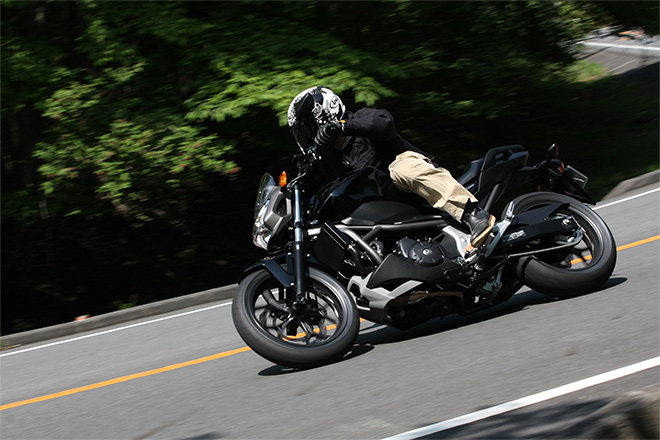
Turning across traffic at a signal, after waiting and letting oncoming vehicles pass, I start by simply turning the throttle. This frees up room in my mind and, by extension, frees me of any stress.
Even when riding in automatic mode, the NC's 17-inch tires front and rear and its riding position are all very much like a sports bike. The sorts of sensations I normally get from riding a scooter simply do not come to my mind. The Dual Clutch Transmission automatically shifts down a gear when I crank open the throttle for a stronger burst of acceleration in automatic mode, and shifts up naturally when rolling off the throttle and beginning to cruise.
My feeling was that the throttle and shifting operations I felt during this period was excellent, even from the perspective of my own many years of riding experience. This seemed to be sure proof that the ECU is well programmed. If this control resulted in any sort of frustrations, then the Dual Clutch Transmission for motorcycles would likely not have been born into this world. Freed from clutch operations around town, my left hand no longer gets fatigued. On the contrary, since I can direct my attention toward the front brake lever at my right hand, the touch of the brake's master cylinder and operating feel feed back to me through my fingertips, sharpening my focus.
When exploring the Dual Clutch Transmission's potential on a winding mountain road, I find I'm better able to enjoy the structure of the ride, from setting up my lines to checking the timing of my braking and corner entry, judging where to bank deepest and how far to open the throttle to pull up and out of the turn. Total concentration.
Moreover, there seems to be no need to switch between MT (Manual) and AT (Automatic) modes, since the gears can be shifted at any time using the "+" and "−" switches on the left switch module while leaving it in AT mode. Whether changing my own gears to ride more aggressively or using the engine brake, I feel I can enjoy the style of riding I like with a sense of complete unity with the machine. Shifting operation is almost telepathic, and completed the instant the switch is pressed.
The Dual Clutch Transmission has given me an entirely new experience and big advantage that could only be made possible with Honda. In the end, I finally came to understand that this combination of the NC700S and its Dual Clutch Transmission is a reliable and powerful weapon.
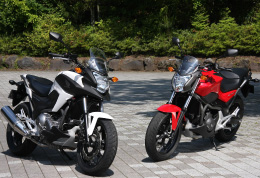
Both the NC700X (L) and the NC700S (R) are available in Dual Clutch Transmission versions, and differ only slightly in appearance from their manual transmission counterparts.
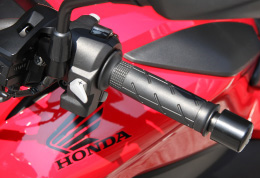
Instead of a clutch lever, the Dual Clutch Transmission models feature a pair of shifting switches and a parking brake lever mounted on the left handlebar.
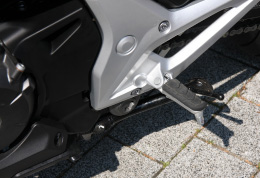
The Dual Clutch Transmission does not have a shift pedal. Users note that no longer having a shift pedal scuffing up their shoes is also an advantage of the system.
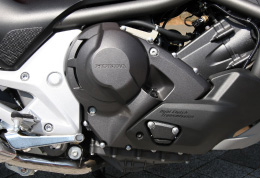
For mechanical reasons, the right-side engine cover design is slightly more bulky than the MT models.
NC700X (Dual Clutch Transmission)
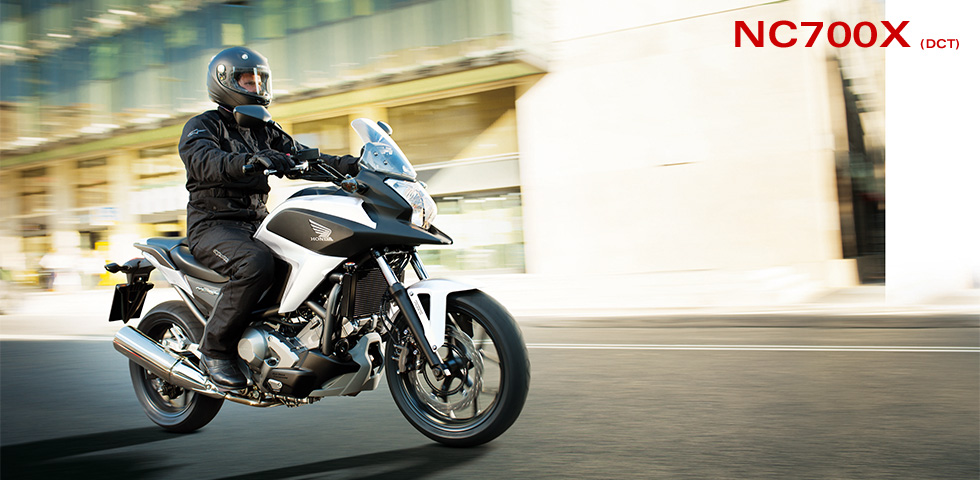
Discover a Wide New World of Seamless Riding Enjoyment.
Featuring eye-catching Crossover styling, the exciting NC700X expands your range of riding enjoyment with a smooth-shifting Dual Clutch Transmission version that changes gears with the touch of a button—or lets you ride all day with assured control that fills every trip with a deep sense of enjoyment and satisfaction.
It's Better Than I Am!
When the NC700 series was released in 2012, Honda eschewed the usual litany of spec numbers, such as displacement and horsepower, acceleration and top speed, and instead focused on the new series' biggest advantages-the captivating power pulses generated by the engine, a riding package that houses a large carrying space where normally the fuel tank resides, and the ability to experience a high level of riding enjoyment at a relatively low price—an entirely new concept that broke with conventional common sense.
What happens when you ride this model, which was released with an emphasis on the joy of riding rather than the usual dry claims about power, technology, or low fuel consumption? The engine produces pulses like a V-twin, delivering strong power and torque in the low-to-midrange revs above idle for a smooth and singularly pleasant ride. Fuel consumption for a 900 kilometer round trip from Tokyo to Suzuka Circuit also recorded remarkably good figures normally not possible with a 700cc motorcycle. This was the debut of a new Honda model that has a completely different appeal from its more established CB, CBR or VFR lineups. And as I rode this model, equipped with its revolutionary transmission, it occurred to me that the combination of the NC700X and Honda's new-generation Dual Clutch Transmission was turning out to be far more than I ever expected.
I first started with the Dual Clutch Transmission set to its fully automatic D (Drive) mode. Slightly opening the throttle resulted in astoundingly smooth and precise clutch work at around 1,500 rpms. Of course, it wasn't me, but the Dual Clutch Transmission that was responsible for this (a Dual Clutch Transmission motorcycle has neither clutch lever nor shift pedal!), and the bike made a perfect start every time. The NC's engine produces ample low-end torque, and shifts up at about 2,000 rpms, steadily picking up speed. Like a manual shift motorcycle, the NC700X's acceleration has a feeling of direct operation, and the smooth ride continues with its Dual Clutch Transmission, providing a pleasant engine pulsation.
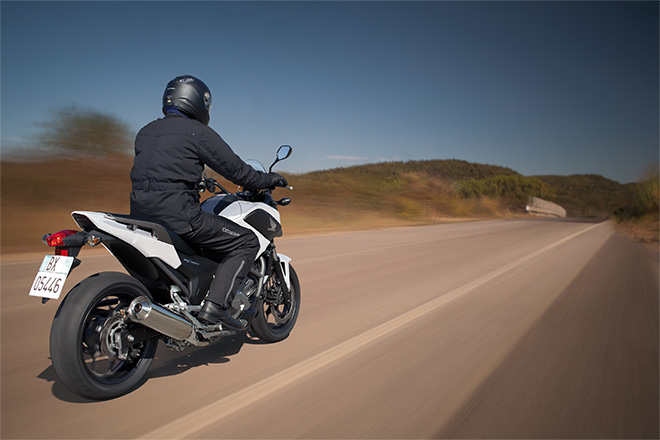
At first I thought that I could ride more briskly through town with the manual transmission version rather than the Dual Clutch model, but it turned out that there was virtually no difference between the two. Instead, I found that by leaving all shifting operation to the Dual Clutch Transmission by setting it in D mode, I could just relax and concentrate on riding through town, with all its assorted obstacles. I also tried some small-radius U-turns, thinking that a rider could better control the clutch in this maneuver. However, no matter how hard I tried, the feeling of the Dual Clutch Transmission's overall control stability was Pro class all the way.
This day I set out for the mountains and the many wonderful winding roads in that area. I also wanted to test the NC700X's capability as an adventure bike, so I planned to ride off into the dirt as well.
With the Dual Clutch Transmission, the gears can also be shifted manually using the left index finger to shift up and the thumb to shift down. This can even be done to use engine braking to set up for a corner. Here downshifting is just as important as hard braking, and in such cases the Dual Clutch Transmission downshifts beautifully. Because of its two clutches, as its name suggests, power is delivered to the rear wheel without a break, so downshifts are quick and smooth, with virtually no slipping of the tire, even without loudly revving the throttle.
By the time I was finished, I was pretty taken by the Dual Clutch Transmission's charms. I could ride with total concentration on braking and lines, and looking out for any small stones in the road ahead.
As I turned onto a dirt road lined with a beautiful stand of trees, I opened the throttle and the rear wheel slipped slightly as I accelerated, rapidly increasing speed as the wheel spun a bit. Then, uh-oh, a big gap in the road-time to get up on the pegs. The downshift button is really easy to use from this position. Good. Since my left foot was free of the gear shifter, I no longer had to worry about accidentally shifting gears when suddenly hitting a bump in this position. The Dual Clutch Transmission suddenly became a sort of secret weapon for the dirt.
Since that day, I've come to look forward to riding a bike with the Dual Clutch Transmission. It always seems to perform its clutch work and gear shifting perfectly, which is a great advantage, even when wanting to get into some brisk riding. Motorcycles are freedom machines, and the Dual Clutch Transmission lets you enjoy that freedom all the more. I must confess that I was really surprised to finally come to understand how much riding styles can differ without clutch operation. This newfound understanding was especially significant for me.
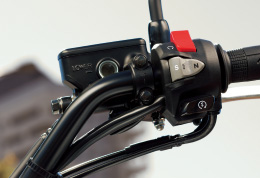
The S–D-N thumb switch on the right lets you switch instantly into Drive or Sport automatic models from Neutral.
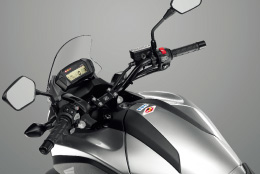
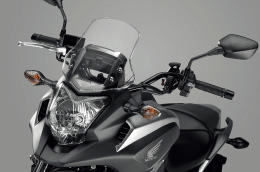
On Dual Clutch Transmission models, the left-side switch module has a large thumb switch (-) for downshifts and a protruding index finger switch (+) at the front for shifting up. Next to the switch module is a large parking brake lever.
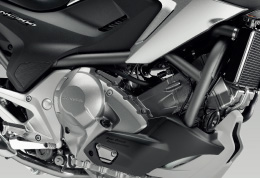
The right-side engine cover of the NC700X's Dual Clutch Transmission version is shaped differently from its manual transmission counterpart.
CTX (Dual Clutch Transmission)
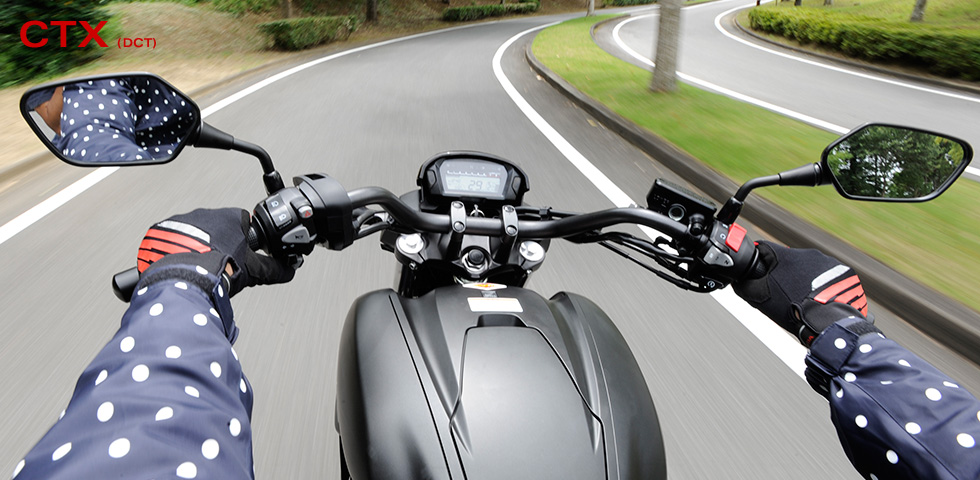
Honda's Dual Clutch Transmission Reveals New Depths of Riding Enjoyment.
CTX700N Honda's latest performance cruiser, the CTX, offers a host of appealing features, chief among them being the remarkable precision and responsiveness of its optional Dual Clutch Transmission.
Providing exhilarating surges of power with incomparable ease, cruising has never been more relaxing and satisfying than aboard the new CTX.
Riding the New CTX, I Discovered For the First Time the True Depth and Breadth of the Dual Clutch Transmission
Recently I had a chance to ride Honda's new performance cruiser, the CTX700N, which features Honda's innovative Dual Clutch Transmission. The CTX's styling incorporates bold lines that parallel the road, much like the design featured on the latest Gold Wing, giving the impression that linear surfaces represent a new wave in cruiser design. Embodied in this new look are all the features one might associate with a cruiser, including a low stepped seat height, highway pegs positioned for a more extended reach, and pull-back handlebars. I discovered that much of the CTX's appeal lies in its use of unconventional methods to achieve a familiar look, such as its combination of linear lines and rounded surfaces, its teardrop-shaped fuel tank, and the sense of massiveness imparted by its discreet use of chrome.
Settling onto the Dual Clutch Transmission CTX700N, one of the first things you notice is that the bike has no traditional shift lever positioned in front of its left-side foot peg. The reason, of course, is that the Dual Clutch Transmission performs all shifting duties automatically, and starting out is certainly made easy because of it. Once the engine is started and the parking brake is released, simply toggling the right-side thumb switch from N (Neutral) to D (Drive) puts the bike in traveling mode. At this point, all it takes to get the CTX moving is a twist of the throttle.
I soon found that being able to ride the CTX in urban traffic using only the throttle and brakes was a great advantage. You might think that this is because of its automatic transmission, but you'd be mistaken. Mechanically, the Dual Clutch Transmission is still fundamentally a manual transmission, but with oil pressure smoothly performing all the actual gear shifting operations in place of the rider by way of two separate clutch packs secreted under the same cover. Because of this, even relative novices can achieve shifting operation on par with a highly experienced pro.
However, if you prefer more personal control over the transmission's 'manual' operation, an easy press of the left-side Up (+) and Down (-) switches instantly enables clutch and shifting operations. The true performance potential of Honda's unique Dual Clutch Transmission can really be felt here in its automated manual operation.
The sensation I got riding the CTX was that the strong cruiser power delivery I fully expected was further enhanced and in a way made fresher and more cruiser-like than what I had earlier experienced riding Honda's other Dual Clutch Transmission-equipped models, like the two midrange NC700 sports bikes and the top-of-the-line VFR1200F and VFR1200X Crosstourer. The CTX's engineers seemed to have improved the engine's connection with the clutch, especially at that critical instant when starting out from a stop. The result is a more visceral feel of the engine's torquey power pulses accompanied by its stirring rumble of acceleration, which give it more of the impression of an 'old school' cruiser.
Gear change operation, particularly up from low to second, was accompanied by a truly satisfying sense of powering up through the gears. You can tell that Honda's engineers really strove to achieve this feel, and the sensation is truly tasty. I'm sure I'm not alone in this, but when riding a cruiser I tend to shift quickly from first to second without really raising the revs much, then I open up the throttle for a bit to get a feel of the engine's power pulses through the frame before clicking up to third. The CTX's Dual Clutch Transmission manages to mimic this uniquely cruiser-like acceleration in way that's truly impressive.
Another thing I noted when cruising slowly in Drive mode, was that cracking open the throttle in fifth gear didn't result in a quick automatic downshift accompanied by an abrupt burst of higher revs. Instead, it let me enjoy the rumbling torque-filled acceleration of low revs powering up to speed, and further allowed me to enjoy the ride around town while minding the speed limits. This pleasure I thought was reserved for larger cruisers pulling their heavier loads with bigger-displacement engines. However, the CTX, with its Dual Clutch Transmission, really allowed me to enjoy this exhilarating aspect of cruiser riding..
"This is it!," I thought, and continued my ride in a happy state of mind.
Basically, this is a significant part of what differentiates the Dual Clutch Transmission from conventional automatic transmissions. The Dual Clutch Transmission automatically performs a normal manual transmission's clutch and shifting operation.
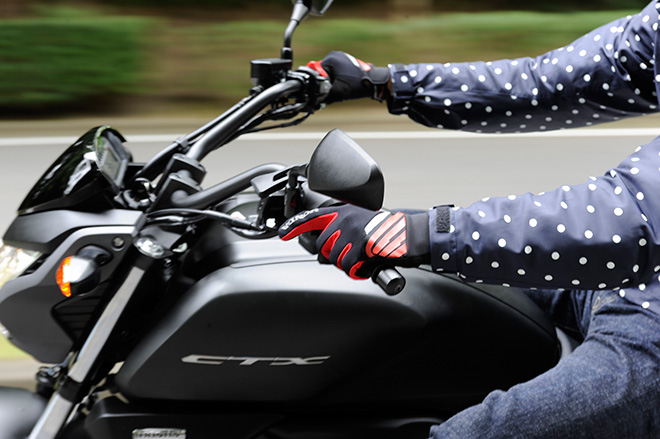
It also freed me from any sense of uneasiness about making mistakes in clutch operation, or misjudging engine speed. This enabled me to thoroughly enjoy pleasant starts and smooth, seamless shifts-both up and down-that rival the best gear-changing operation I'm capable of. I was also astonished to note how much wider a rider's breadth of awareness can be expanded when simply relieved of the distractions of matching clutch and throttle operation while jiggling a lever with one's foot.
Out of town, the CTX traces winding roads with a lightness of handling that accentuates the calm, stable corning control you'd expect of the best cruisers. A twist of the throttle easily brings out its full performance potential, and you can be sure it won't be left behind when traveling with the sports bike crowd. Without the minor distractions of changing gears, I found I could also concentrate more on the more important basics of acceleration, braking and following my chosen line, giving me a greater feeling of freedom and riding capability. In fact, it would be no exaggeration to say that the CTX's engine performance and handling combine with the smooth, seamless operation of its Dual Clutch Transmission to fill any rider' heart with a satisfying feeling of freedom and enhanced riding ability.
Unlike a car, riding a motorcycle generally involves the rider's entire body. One of the CTX's great advantages is that by eliminating the need to operate the clutch with the left hand and gear shifter with the left foot, it leaves the mind free to concentrate more on the ride, with manual operation limited to the right hand's control of the throttle and front brake, and the right foot's operation of the rear brake.
What's really new is the ability to enjoy the distinctive character of a large cruiser while at the same time having at one's fingertips the high functional capabilities of a sports bike. I felt that the Dual Clutch Transmission really added to the CTX's overall riding appeal by emphasizing the strong points of the engine's robust torque. This was especially evident in the 3,500 to 5,000rpm range, and to such an impressive extent then I caught myself wondering if this was really a 700cc bike, or if the displacement had somehow been increased. The combination of the CTX and its Dual Clutch Transmission really makes this a prominent feature.
When Honda's first Dual Clutch Transmission models appeared, some folks complained that "automatic clutch operation will have a degenerative effect on rider capabilities." At first I wondered if that might be true, but now, after some experience, I really have to strongly disagree. Rather, I believe this system will help riders evolve, since all the attention normally required for correct gear shift operation can now be better focused on the overall riding experience; the beauty of the scenery, the sounds and smells carried by the wind, the sense of discovery in the lands being traveled, and even chatting with a passenger. My feeling is that the Dual Clutch Transmission offers a sense of release that adds vast depth to one's motorcycle riding life.
No, the Dual Clutch Transmission is not merely a device for making operation easier, it is also a tool for helping one more fully enjoy the riding life.
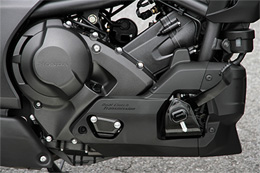
In keeping with the CTX's custom cruiser character, the cover of the Dual Clutch Transmission also features a distinctively cool design.
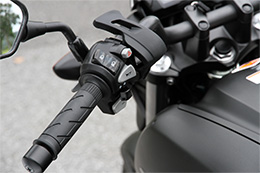
No clutch lever on the left-side handlebar. Instead, a large thumb shift switch located under the indicator switch provides instant downshifts. The CTX also comes equipped with a handy parking brake.
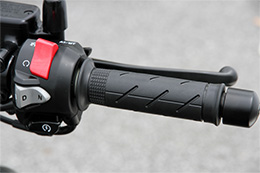
The A (Automatic)/M (Manual) mode selector switch is located on the right-side handlebar switch module, and the gray shift selector thumb switch toggles between N (Neutral), D (Drive) and S (Sport) shift modes.
NC750S / NC750X (Dual Clutch Transmission)
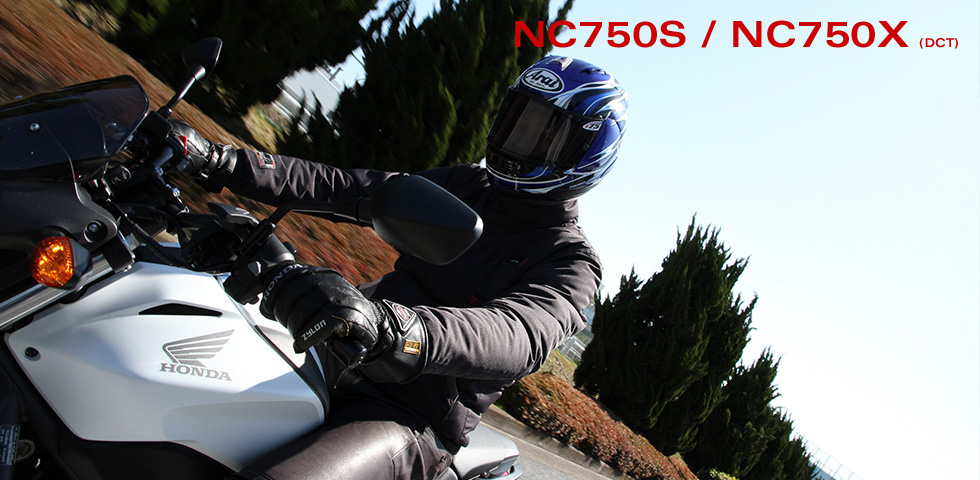
Here's Hoping You'll Enjoy the Dual Clutch Transmission Even More.
I recently rode the new mid-concept NC750X and NC750S, and came to realize that the Dual Clutch Transmission isn't just an automatic transmission designed to make riding easy like a scooter.
It also plays a vital role as a device that greatly increases the joy of riding.
Honda's Dual Clutch Transmission is lots of fun, and here are the reasons why.
That refreshing feeling of the wind in your face and a sense of oneness with the world - these are the elements that stimulate our senses and give us the most joy when riding sports bikes. Although my job requires me to ride a lot of different bikes, one of my personal points of evaluation of a good bike is whether its peak level of enjoyment can be felt soon after the ride begins. There are, of course, many intertwined factors involved, and all ultimately depends more on how deeply one can enjoy the riding experience than on how high or low the bike's absolute performance is.
The Dual Clutch Transmission installed in Honda's New Mid Concept series NC750X and NC750S models is a prime example of what I'm talking about.
First debuted in Honda's VFR1200F flagship sports tourer, the Dual Clutch Transmission eliminates the need to operate the clutch, and in its 'AT' mode it automatically selects the most appropriate gear for riding conditions. In 'MT' mode, its electronically-controlled transmission allows the rider to select gears by 'shifting' with a pair of thumb and finger-operated switches.
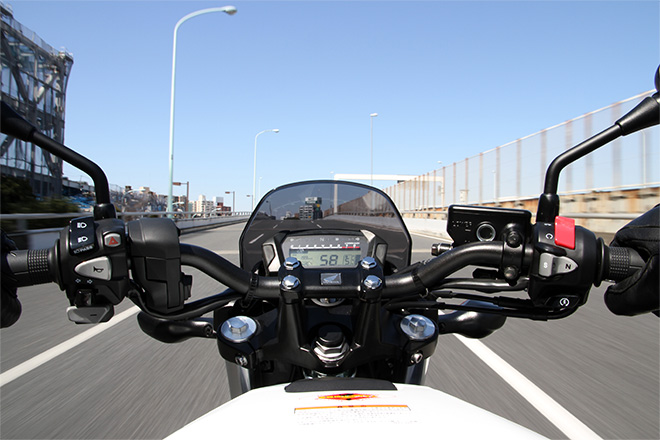
Completely different from the belt-type (or CVT) transmissions used by most scooters, the Dual Clutch Transmission used in the NC Series machines is structurally based on a conventional 6-speed gear ratio transmission, yet electronically controls clutch and shift operations when changing speeds.
Until I experienced Honda's Dual Clutch Transmission, I believed that having a clutch lever and a gear change pedal made a motorcycle a true sports bike. My guess is that you feel the same. Because of this, except for the occasional scooter, my riding history had never included any bike that didn't have a clutch lever. However, once I actually rode a Dual Clutch Transmission machine, I was surprised by how quickly my thinking changed.
I thought, "Maybe clutch and shift pedal operation are not necessarily central to sports bike riding enjoyment." But what made my thinking change? Perhaps my years of experience riding sports bikes till then allowed me to discover a wider world.
First, just imagine the scene when starting out. Compared to normal manual clutch and transmission models, a bike equipped with the Dual Clutch Transmission completely eliminates the nervous tension of possible engine stalls. I'd always thought such tension, and the ability to achieve consistently smooth starts, was one of the pleasures of sports bike riding. So, when riding a Dual Clutch Transmission bike, I never think to myself, "That start was great!"
If asked if this has a negative impact, I'd have to say the answer is no. Conversely, being freed from the operation of the clutch lever enabled me to concentrate more on my right hand's throttle operation, letting me more closely feel the engine's generation of torque, its changes in sound and the instant movement begins.
Riding the NC750S, when I come to a busy intersection, stop, and check for oncoming traffic before taking off again, I don't have that momentary twinge of worry about getting into trouble (and the big embarrassment that follows!) by stalling the engine. Rolling on the throttle simply rolls on the NC's engine torque and lets me take off with quick and smooth confidence. As motorcyclists, we've got to be mindful of oncoming cars, pedestrians, route changes, left mirror, right mirror and many other factors calculated from all angles while simultaneously operating the clutch, throttle and gear shift lever. With the elimination of these last three operations, I found I could ride with a surprising degree of concentration and ease.
In AT mode, simply toggling the transmission selector switch to 'D' and turning the throttle enables the Dual Clutch Transmission to automatically perform all 6-speed gearbox operations referenced to speed. Closing the throttle to slow down also results in automatic downshifts. While riding through town, I noticed that I had more room to think of other things besides basic operation and safety, such as the enjoyment to be found in the discovery of a new café.
Then I got on the expressway and cranked open the acceleration, eventually settling into a high-speed cruise. Here even regular manual transmission bikes stay in top gear without shifting, so no difference was felt at all. Even when speeding up to pass another vehicle, the Dual Clutch Transmission performed all necessary operations with just a twist of the throttle. Gear changes were smooth and beautifully done, like hiring a professional rider to control the gearbox. Of course, since downshifts can also be performed with the manual touch of a button, I felt I could ride the way I like, leaving no feelings of dissatisfaction anywhere.
Coming to a road leading up and over a mountain pass, I wondered if any drawbacks would show up in the Dual Clutch Transmission's operation compared to a manual transmission. The short answer is no. I was able to enjoy a level of riding control on par with, if not actually exceeding that of a normal manual transmission. Winding roads have all sorts of curves to them, from sweepers to sharp hairpins. One of the highlights of riding a winding road is the feeling of one's senses sharpening as one scene unfolds after the next. What gives corning a special satisfaction is holding a line while concentrating on the acceleration and deceleration of throttle operation. Riding with the Dual Clutch Transmission, gear shifts were completely automatic, or I could make those changes like a pro using just the finger and thumb of my left hand. This clearly seemed to provide a heightened level of concentration that allowed me to focus ahead around the curve or when slowing down.
At first I couldn't believe that eliminating gear shift operation could possibly make riding easier, but then I discovered the deeper sense of enjoyment the Dual Clutch Transmission has to offer, and I was surprised to find I'd become a firm believer after riding over that first pass. Much like in town, I could feel the same deep sense of the engine's power in the turns in response to a simple twist of the throttle.
In other words, the Dual Clutch Transmission isn't just an automatic transmission designed to make riding easy like a scooter. It instead plays a vital role as a device that greatly increases the purity of the riding experience.
Honestly speaking, in the over 30 years I've been riding motorcycles, I think I've managed to sharpen my riding skills from many angles, including clutch and shifting operations and throttle control. I've also had some experience in off-road riding as a hobby, and for my work have ridden on circuits used for MotoGP races. The capabilities of the Dual Clutch Transmission's clutch work and gear shift operations now closely approximate my own riding techniques developed in these different arenas. Actually, I'm not really being completely honest. The Dual Clutch Transmission totally surpasses my own skills in that it makes no miss shifts at all.
What can't be forgotten is not only the fact that it never makes an error in shifting. Another important feature of the Dual Clutch Transmission is that when shifting up under acceleration, its two clutches are interlocked through an otherwise conventional manual transmission, and it completes the shift operation in a remarkably short time frame. Therefore, up or down, it smoothly completes the shift with virtually no intermittent pauses, and thus reduces the load to the bike. So, although I've worked long and hard over the years to perfect my throttle control, my clutch work and my shifting, the Dual Clutch Transmission provides an exceptional riding solution that makes me an even better rider, and helps me more fully enjoy my riding experience.
In particular, as I'm sure riders who have a lot of experience riding double know all too well, gear shifts can often result in rider and passenger helmets bumping together. Another of the great side benefits of the Dual Clutch Transmission is that it frees riders from having to take special care to shift smoothly in order to avoid such frequent impacts. Shifting can be done at will with fully automated clutch operation.
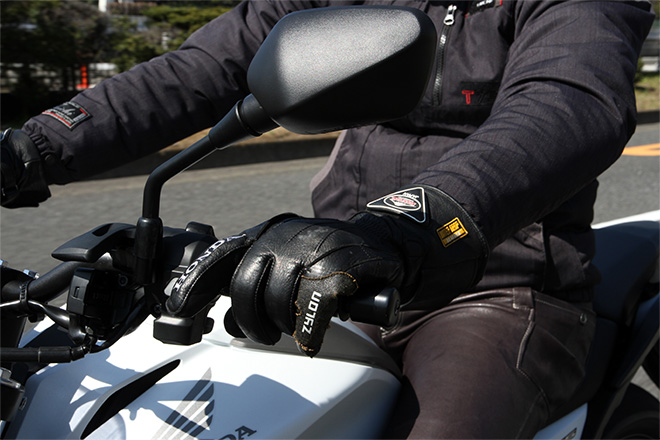
Motorcycles have continued to evolve since I first began to ride, and I think this trend will continue further. Within such a time frame, I think the Dual Clutch Transmission is a mechanism that has great possibilities.
While the NC750X offers the feeling of an adventure tourer, the NC750S represents a new genre in naked sports bikes. Both have large luggage boxes that make it possible to pack quickly when going out for a long ride. Both are designed with an emphasis on space utility and feature the Dual Clutch Transmission. Automating both the clutch and gear shifting operations increases the pleasure of riding and causes a new bike world to unfold in town, while enjoying winding roads, or even when riding double with a friend or someone closer. Personally, I'd like as many people as possible to experience what these bikes have to offer.
If I were asked to tell how big a shock discovering the capabilities of the Dual Clutch Transmission was for me, I can express it as something like "before and after my first mobile phone." You might well wonder if this is true, so by all means discover this remarkable system for yourself. Do a search for online blogs and Facebook pages put up for and by Dual Clutch Transmission riders, and check out the Dual Clutch Transmission at your nearest Honda dealer until you can obtain a satisfactory answer.
Prejudice will be your own loss, and the waste of a new world filled with exciting possibilities.
The Dual Clutch Transmission logo appearing on this cover gives a subtle hint of the superb riding enjoyment offered by this device.
The gray switches on the left-side switch module allow the rider to perform manual shift operation. Press the [-] switch for downshifts and the [+] button to shift up, as shown here.
The Dual Clutch Transmission automatically switches into neutral when the ignition key is turned on. After the engine is started, simply toggle the S-D-N thumb switch from N to D, then roll on the throttle to start riding. The AT/MT selector switch lets the rider choose either AT (Automatic) or MT (Manual) modes. That's all the knowledge required for operation.The Dual Clutch Transmission's capabilities are equal to 10 years of riding experience.
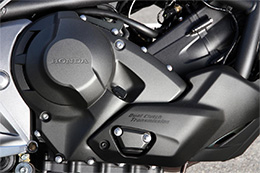
The Dual Clutch Transmission logo appearing on this cover gives a subtle hint of the superb riding enjoyment offered by this device.
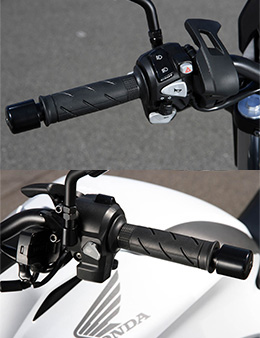
The gray switches on the left-side switch module allow the rider to perform manual shift operation. Press the [-] switch for downshifts and the [+] button to shift up, as shown here.
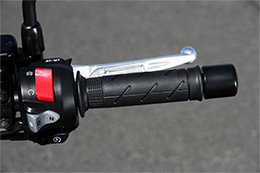
The Dual Clutch Transmission automatically switches into neutral when the ignition key is turned on. After the engine is started, simply toggle the S-D-N thumb switch from N to D, then roll on the throttle to start riding. The AT/MT selector switch lets the rider choose either AT (Automatic) or MT (Manual) modes. That's all the knowledge required for operation.The Dual Clutch Transmission's capabilities are equal to 10 years of riding experience.
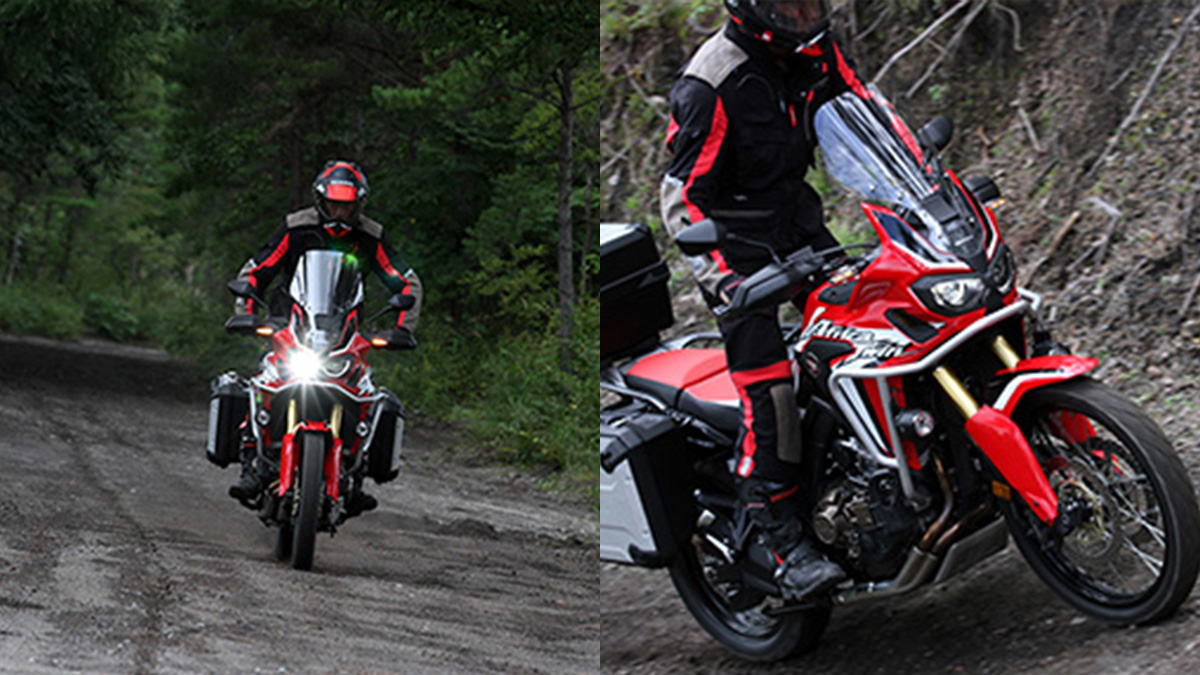
Africa Twin (Dual Clutch Transmission)
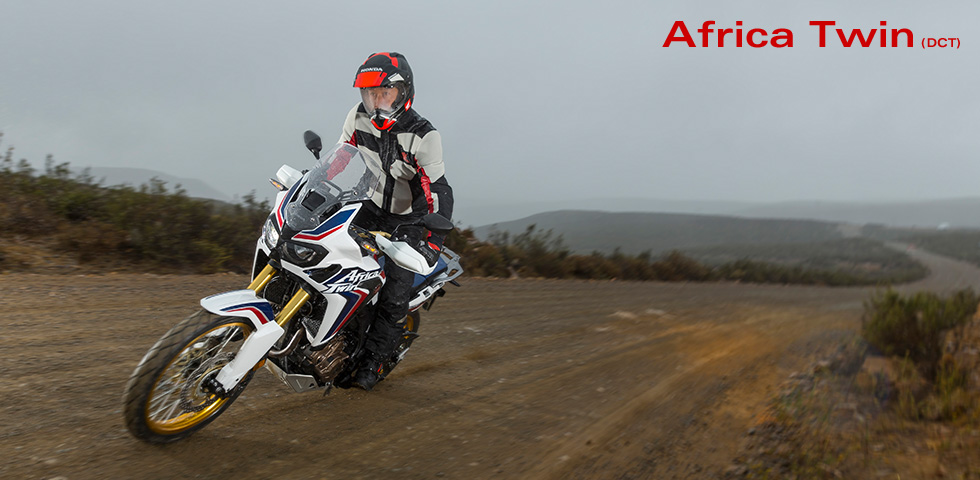
The true value of DCT becomes especially clear off-road.
Just how well does Honda's advanced Dual Clutch Transmission (DCT) meet the Africa Twin's objectives of being an Adventure Tourer that provides complete on-road and off-road riding enjoyment?
DCT — A New Solution for Adventurous Rides…
At long last, my chance to ride the new Africa Twin had come. Moreover, I’d be riding both the manual (MT) and Dual Clutch Transmission (DCT) versions. Judging from my earlier experience riding Honda’s other DCT-equipped models, I was particularly interested in finding out if an Adventure Tourer like the Africa Twin, designed as it is to enable riders to enjoy both on-road and off-road riding, might successfully utilize the unique features that DCT offers. The development engineer with whom I shared this concern confidently told me, “You’ll understand completely once you actually ride it, since we built it to perfection.”
The international test ride was held in South Africa, and most of the riding on the first day was done over paved roads. I started out on the manual shift MT version of the Africa Twin, which exhibited remarkably easy handling as its parallel-twin engine, which was developed exclusively for this model, conveyed a noticeable yet comfortable thrumming of power pulses. Its power delivery came on strong, propelling the machine forward with loads of torque the instant I cracked open the throttle. Shifting through its 6-speed transmission, the engine combined both remarkable flexibility and a highly satisfying sense of power and control as it smoothly responded to my throttle inputs.
The Africa Twin’s long-stroke suspension and body layout provide ample ground clearance, while tire sizes front and rear were selected in consideration of the requirements of off-road excursions. Despite this, its handling on paved roads was exceptionally stable, and actually better than I initially expected. The feeling of contact with the road surface was also excellent, eliciting no fearful hesitation when powering through the corners. Confident handling on paved roads is particularly important in the Adventure Tourer segment — where the Africa Twin belongs and where the competition is some of the keenest in the world.
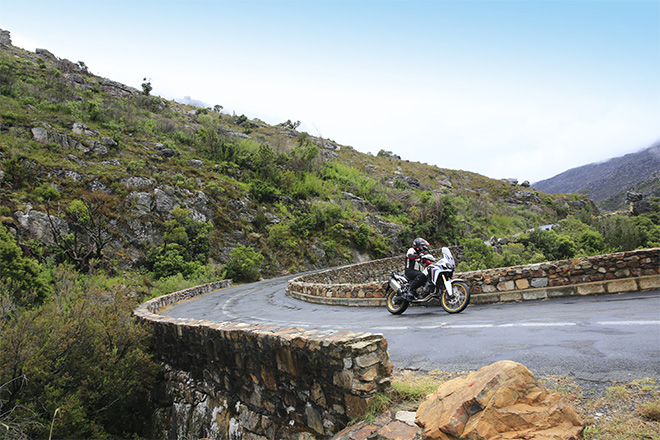
Even travelling across continents, the vast majority of the world’s roads are paved, and on such trips, long-term pleasure and comfort are definite requirements. The Africa Twin turned out to be altogether top class in terms of performance.
I found its handling to be really enjoyable when turning corners and powering away from intersections, as one would on a daily commute. Even venturing onto zigzagging mountain trails, I found I could ride comfortably any way I liked. It soon dawned on me that the Africa Twin not only delivers top performance as a road bike, it also allowed me to ride on unfamiliar roads with relaxing peace-of-mind in terms of both handling control and braking performance.
After lunch, I switched over to the DCT-equipped Africa Twin. The outstanding impression I had of the MT version’s handling, suspension and braking remained the same. However, one interesting difference was that the DCT model made the big Africa Twin feel like it was smaller and more compact than I had imagined. One reason was that once I’d started the engine and selected the drive mode, riding thereafter became as easy as simply turning the throttle.
Once I began riding the DCT version, I found I no longer needed to concern myself about possible engine stalls or missed shifts, and I soon realized that I’d been more nervous about gear-shift operation than I’d imagined. After being relieved of that concern, I began to notice that I could see the scenery better than before, and could concentrate my attention more on my riding line and acceleration, leaving me more room in both heart and mind for simply enjoying the ride. This was a reprise of one of those startling surprises I always feel whenever I ride a DCT-equipped model.
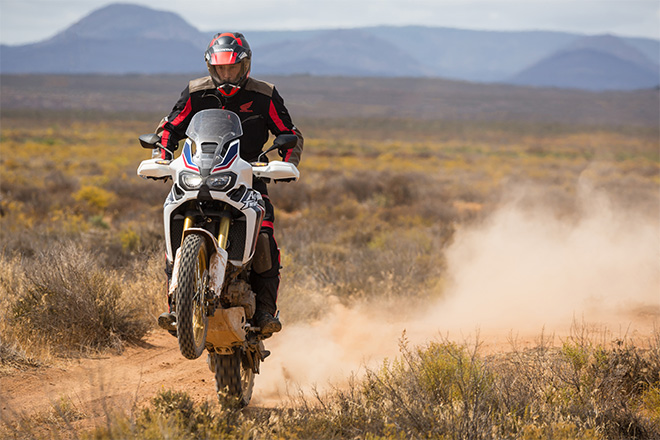
On the second day of the test ride we took the Africa Twin off road. This test course was located in the middle of the African wilderness, and seemed more like a special stage set up for a rally competition. Since this was just after having experienced an entire day enjoying the pleasures of this new machine on paved roads, I found myself subconsciously flinching at the vast differences in both scenery and road conditions.
As before, I started out on the MT version, riding down a straight, flat dirt road punctuated by occasional rises and gentle curves. As the Africa Twin zipped along that road, it gave me the feeling that I was travelling on a paved highway with complete peace-of-mind. What a pleasant feeling this was! Everything seemed to be exactly the same on the dirt road, including suspension that grips the road surface to almost the same degree I felt on the paved roads, and the feeling of oneness with the bike, free of any uneasiness during acceleration or deceleration.
As for engine characteristics, it exhibited no sudden unexpected lurches, and its feeling of power was remarkably easy to control, making it very easy to ride. This new Africa Twin is truly exceptional!
The road gradually got rougher as I proceeded. The bike frequently pitched over the undulating terrain, but these fluctuations in road conditions were perfectly absorbed by the suspension, and it never behaved strangely. This excellent chassis performance further revealed the pleasure to be found in the Africa Twin’s handling.

The MT version’s engine differs in appearance in such areas as the design of its clutch cover and the arrangement of its hydraulic lines. With its basic design shared by both MT and DCT versions, it has the potential to be installed in a number of models.
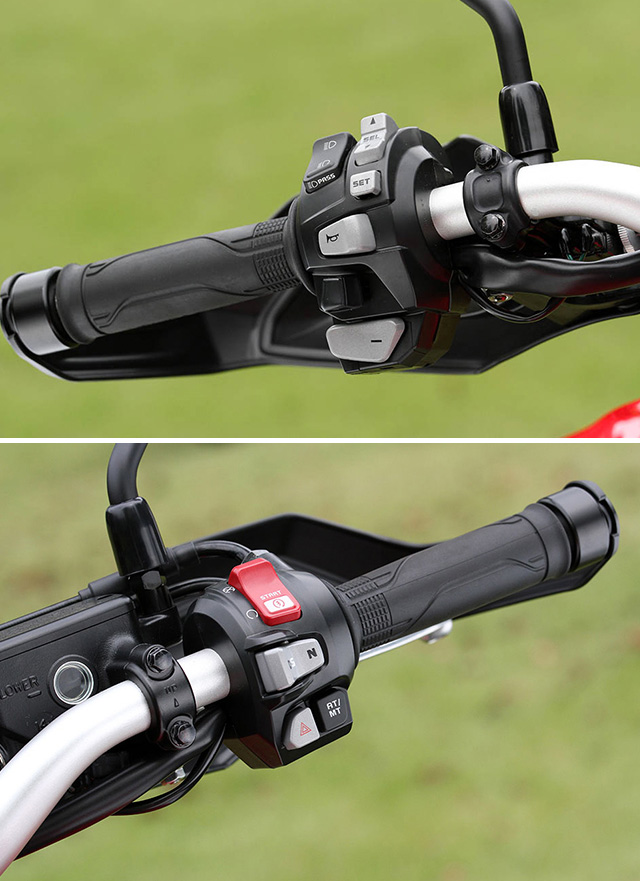
The right-side controls provide thumb switch selection of 'N’ (Neutral), ‘D’ (Drive) or ‘S’ (Sport) riding modes.
Manual shift selector switches are located on the left-side controls, allowing one to shift up (+) or down (–) through the gears with ease. A convenient parking brake lever is also provided.
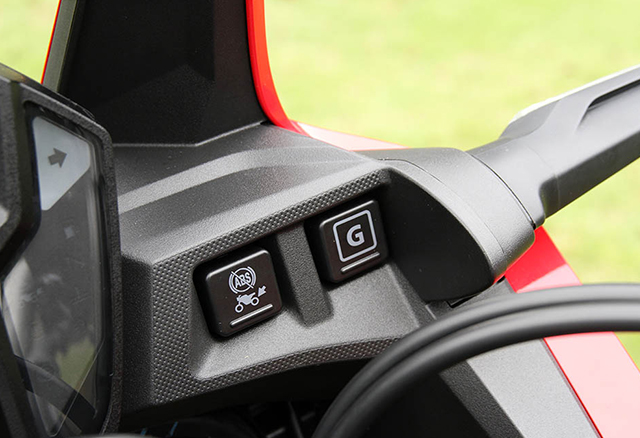
The DCT version of the African Twin is also equipped with a G Switch, which responds to the unique needs of off-road riding by providing half-clutch control that responds directly to throttle operation. This feature really comes into its own when negotiating big rifts in the road surface.
As the road narrowed and became more rocky, I really began to feel the strain of handling such a big bike. Unless I kept the throttle open to some extent, I felt that I’d lose too much speed, making the going unsteady, and I surely didn’t want to be unsteady on this road surface. I selected an appropriate gear and concentrated on my throttle control in the corners so as not to break my momentum. On top of that, I also constantly needed to operate the clutch, making the going even busier.
I tried to choose a line that kept the front tire from being deflected by big stones, and built up quite a sweat in the hard going. This was because I had to control the bike in a somewhat tense state of comfort while trying to maintain my balance by moving my body around.
Undaunted by these adverse conditions, the Africa Twin powered its way through the difficult stretches. The anxiety I usually experience when riding over such terrain turned to relief, and a feeling of pleasure and satisfaction soon overtook me.
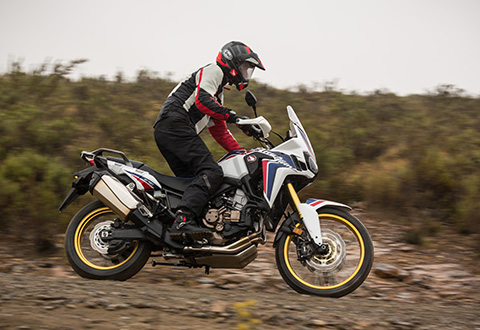
After a rest, I retraced the same route on the DCT-equipped Africa Twin. While I enjoyed riding the MT version I had just been on, as on the road course the day before, it ran without a hint of trouble. On the other hand, based on my earlier travels on the DCT-equipped VFR1200 or NC series models, I felt that the MT version would probably be better than the DCT-equipped Africa Twin when it came to riding ease on dirt roads. With this in mind, I started my ride.
To test out the DCT's operation, I tried climbing up a wet and slippery slope. I opened the throttle, and smoothly powered up the steep grade without losing any driving force as a result of unwelcome rear wheel slippage. This feeling of secure grip over such a slippery road surface caused any initial anxiety I might have had to completely disappear, and I felt a real sense of accomplishment when I got to the top of that 10-meter high slope.
Over my thirty years of accumulated riding experience, through trial and error I've been tossed about by many rough roads around the world. Even expert riders like me run into occasional difficulties maintaining precise control and keeping clutch and throttle operations in perfect sync, as Honda's DCT models do automatically. For example, rear wheel slippage caused by letting out the clutch too quickly or losing out to gravity on a steep grade can cause the engine to stall, possibly stranding the bike. As a result, the bike could topple over on its side, possibly breaking the clutch or brake lever in the fall and making it impossible to ride.
If the engine stalls on a slope, it becomes very difficult to support the bike by touching down one's feet, especially since the rear brake needs to be applied when stopped on an uphill grade. It follows then that the bike must be supported on one foot alone. Then, how do you get the bike back down to the bottom of the slope in that situation? My heart almost exploded with anxiety.
Small mistakes in off-road riding can quickly lead to accidents resulting in serious damage. Based on long years of experience, I try my best not to repeat the same mistakes once I've successfully extricated myself from a difficult situation. The old saying that 'a wise man steers clear of danger' has become ingrained in my psyche. And this is particularly true when on a big bike like the Africa Twin. That said, I went so far as to make three attempts on the DCT-version Africa Twin in short order.
Riders with extensive off-road riding experience might be surprised at the performance possibilities that DCT offers when situations that they thought were difficult suddenly become a lot easier. Even seemingly treacherous obstacles seem to shrink down to pleasantly manageable challenges.
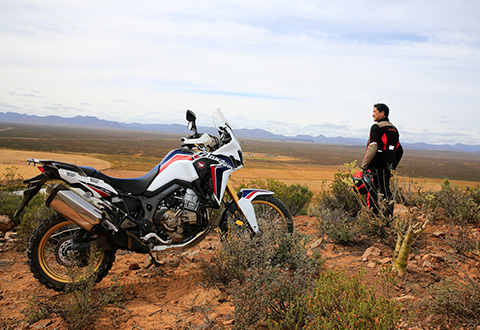
Following this, I took another spin on the dirt course. As the road had gradually dried, I noticed I was kicking up quite a cloud of dust on the rough uphill trail. By this time its tight turns were chopped up by deep rifts. When I rode this course on the MT model, I got all tense and nervous, making it quite an ordeal to get through. On the rough uphill section, the bike became hard to control if my speed was too fast, or I'd lose my balance if I took it too slow. This section required correctly remembering where to increase or decrease speed, and where to turn the bike while contorting my body just to overcome those deep rifts.
In contrast, the DCT model totally liberated me from clutch operation, so I could do what I needed to do without applying unnecessary force to the handlebars. Since my upper body was relieved of a lot of that earlier stress, I found I could concentrate more on choosing my lines with greater freedom, which is one of the basics of good cornering.
The rough uphill section was just wide enough for one small passenger car at most, and I went up the left side of the rutted road. When I took this path on the MT model, there were times in the corners when I got distracted by clutch operation and strayed off my chosen line. On the DCT model, I could better focus my attention on reading the road ahead, and was able to more securely direct my eyes forward. As a result, I was able to follow my line more clearly, which is also one of the basics of motorcycle operation. Being relieved of troublesome clutch operation made it much easier to keep my composure.
Later, I rode a trail that extended deep into the vast desert, thinking that being able to travel blissfully through a place like this was another sign of the Africa Twin's considerable potential. When Honda's rivals hear that off-road riding can be enjoyed in such a relaxed manner and at such a fast pace thanks to the DCT, they'll be more than little bit shocked.
Dirt roads are often slippery, and any sudden maneuvers like panic stops or sudden starts must be strictly avoided, making the smoothest possible operation of throttle and brakes even more important. The DCT-equipped Africa Twin's ability to allow a rider to concentrate on these operations is rare among motorcycles.
Further, since DCT takes over control of the clutch from the rider, it prevents human error caused by slipping the clutch, as can often occur when feeling rushed. It also holds up well in long touring, and probably makes maintenance costs low as well. Besides all that, simply being able to sit back and enjoy the ride definitely had the greatest appeal. This really was fantastic...
I finally understood just what that engineer meant when he told me: "You'll understand completely when you actually ride it." It seemed to me that the new Africa Twin might be a sort of message addressed to a wide cross-section of riders, telling them that 'there's now even more to enjoy in off-road riding.'
Many Africa Twin riders may not have much experience actually riding off-road. However, this machine really gives a boost to one's spirit of adventure, and makes anyone feel that they can venture off onto any dirt road that catches their eye. Now they can actually travel those roads with comfort and confidence.
When you're able to take the Africa Twin out on a test ride of your own, I recommend that you imagine riding in some place where it's difficult to touch the ground or that requires a perfect sense of balance when negotiating U turns or maneuvering at slow speeds. In those moments, you'll experience the same sense of ease that I've tried to describe here, and will likely exclaim, "That's what he was talking about!"
The manual shift Africa Twin was fantastic. However, I also discovered that its DCT version was even more amazing. In the racing world, assumptions based on the word "If" are never allowed. Still, "if" the DCT-equipped Africa Twin had existed some twenty-odd years ago, I'm sure I could have tackled the sand dune sections of the Paris-Dakar Rally with greater composure, and I wouldn't have had my confidence nearly crushed by pointless anxiety.
However, that was then and this is now. From this day forward, the new Africa Twin stands as one of the best choices to be found in motorcycling. How wonderful is that?! The very thought of it excites me even now, long after my test ride was finished.
X-ADV (Dual Clutch Transmission)
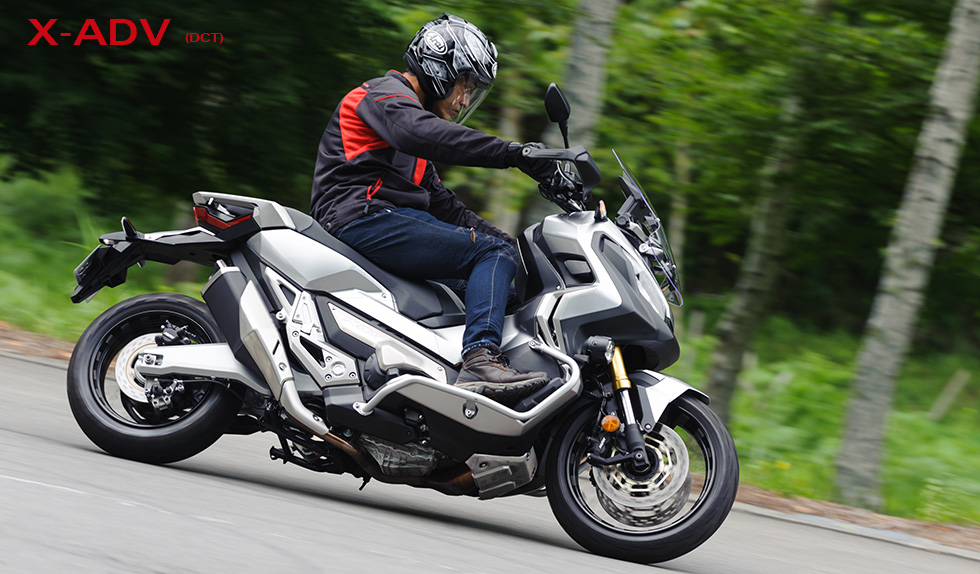
Made Possible by DCT
If someone were to ask me what new motorcycles really stood out in 2017, I'd have to say the X-ADV was one of them. The refinement of its DCT system superbly matches the unique character of this machine. In fact, I'd go so far as to say that its main concept would not be possible without its advanced DCT system.
The existence of DCT made the X-ADV concept possible.
The X-ADV looks a lot like a heavy-duty scooter, so my first reaction to this totally new vehicle was "What on earth is this new X-ADV?" I simply couldn' work it out. It brought to mind the early four-wheel drive cars that came out long before the term 'SUV', which were ruggedly built to conquer a host of terrains. Those cars were well liked by active drivers who enjoyed weekends outdoors, and the X-ADV reminded me of their strength, fun and dependability, which opened up a whole new world of driving enjoyment.
What makes the X-ADV especially exciting are its wire-spoked wheels and long-travel suspension travel, which give the impression that it's been built to tear up the dirt. In true off-road style, its exhaust system has an upward pointing silencer, a functional multi-position windscreen, a rectangular instrument panel and more...
As soon as I could, I jumped right on to check out this nicely designed 'wild one' and to find answers to my initial question, "What on earth is this new X-ADV?"
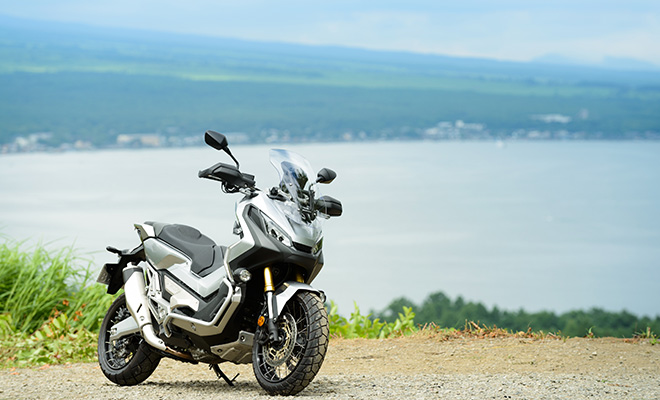
Before getting into the review, let's take another look at the DCT system. The letters DCT stand for Dual Clutch Transmission, which is a system that combines an almost conventional gearbox with an electronically controlled automatic gear-change system that further broadens the appeal of riding by not requiring manual clutch operation. Although DCT systems have already become well-known devices on cars, to install a DCT system on a motorcycle, with its limited available space, and to devise a shifting program that can appeal to riders who are used to manual transmissions, could only be made possible by Honda's highly advanced technology.
With the DCT system physically performing all the clutch work and shifting, you're relieved of any worries about stalling the engine when letting out the clutch, or possibly missing a shift. Starting on slopes is also problem-free, and when riding two-up, normal up and down shifts are often smoother than the manual shifts of many expert riders. The first time I rode a DCT model I was shocked to realize how distracted I'd been by the constant operation of the clutch and gears when using a manual gearbox. I've been riding for more than 30 years now, and have always strived to be a better rider, but the DCT seriously hurt my pride.
By surrendering control to the DCT and freeing myself from the tasks of clutch work and gear-shifting, I experienced a peculiar feeling. I suddenly found I was better able to focus on throttle control and precise braking, which resulted in a more relaxed state of mind that allowed me to be more aware of other traffic and pedestrians. Also, when riding beyond the crush of city traffic I was able to enjoy the scenery a lot more than I could on a manual transmission bike. The DCT filled my ride with a richness and pleasure that I'd never appreciated before.
Although the DCT system offers a stress-free ride, it's still a 6-speed gearbox, and I was delighted to find that shifting up and down resulted in the same exhaust note and feel of engine vibration that you get with a manual transmission. Another thing I noticed was that because I didn' have to constantly position myself to operate the clutch or gear shift pedal, cornering became a lot easier.
Some journalist once described the DCT as an 'aggressive' system, and now I understand what he meant. I would further describe it as a mechanism that makes riding a motorcycle more enjoyable.
Incorporating the latest update of this DCT system, the X-ADV is now standing right in front of me. What is this new riding machine going to be like? Throwing a leg over feels effortless, a sensation that has a lot in common with conventional scooters. But when sitting down on the seat and reaching forward to grab the handlebars, that scooter sensation quickly disappears, instead giving the impression of a totally new type of motorcycle.
Equipped with a smart key, starting the X-ADV requires only turning the ignition switch and pushing the starter button while gripping the front brake lever. This up-to-date starting procedure and the strong pulse of the engine that followed filled me with a feeling that I was about to experience something totally new and powerful.
After choosing 'D' (Drive) mode via the selector switch on the right-side handlebar and then kicking up the sidestand, just a twist of the throttle got things moving. As the engine poured out its pulsating exhaust note, the clutch hooked up smoothly and the take-off was impressive. Much like the NC750 series, there's plenty of low-rev torque, propelling the X-ADV to a quick start off the line with only the slightest twist of the throttle, and feeling a lot more like a motorcycle than a scooter.
With the CVT (Continuously Variable Transmission) systems commonly used on scooters, engine revs tend rise to a certain point and stay there while the scooter accelerates. The feeling that the clutch is slipping for a long period gives the impression that machine's actual speed is continually trying to catch up.
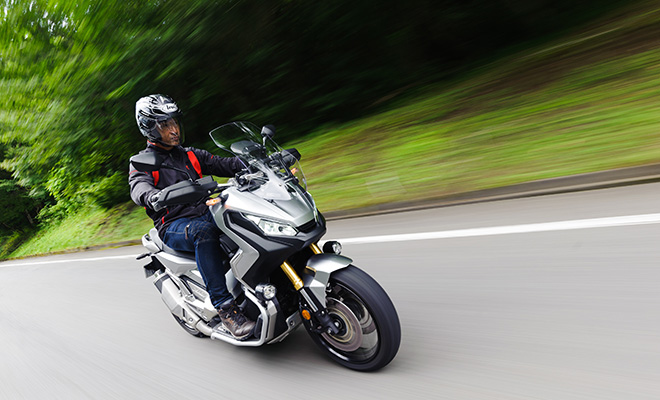
In contrast, around town the X-ADV's DCT system automatically changes gears to keep engine revs within its strongest range of around 2500rpm, as if the rider is shifting in response to riding conditions. And while simply set to its automatic 'D' mode, the DCT responds like it totally understands what the rider is doing, feeling all the world like a manual transmission.
Although some riders with long years of experience riding motorcycles with manual transmissions may have issues with an automatic, they should really have a go on a DCT bike like the X-ADV. Although it changes gears automatically, the DCT's acceleration is very much like that of a manual gearbox, so it doesn' feel the least bit strange or uncomfortable—once you get used to not having a clutch lever to grab or shift lever to push up and down.
Besides its user-friendly 'D' mode, the X-ADV's DCT also has an 'S' mode which can be set to any of three different shift timing patterns. Out of this total of four automatic shift modes, you're sure to find a shift timing to your liking. Personally, I preferred the standard 'D' mode, which shifts at lower rpms, making the most of the engine's low-rev torque characteristics.
Another pleasant discovery was finding that the X-ADV's rear brake lever was located on the left-side handlebar, in place of its missing clutch lever. Although this makes it more like a scooter, when considering ride characteristics this seemed to be a good idea.
After an hour's ride around town, I ventured up onto the motorway. Accelerating from an on-ramp into the flow of cars at speed can require some care at times, but the X-ADV lets you concentrate on its powerful acceleration while monitoring the interval between the cars reflected in its rearview mirror. The DCT allows you to use the full power of the 750cc engine with comfort and precise control, letting the X-ADV show its power and grace when slipping into the fast flow of motorway traffic. Suspension settings were also well matched to the character of the DCT, and provided a quality ride both in town and out on the open road.
An hour's ride west on the motorway took me into the hills, where touring friendly twisty roads await. Operating both the front and rear brakes with my hands, I pressed on the 'down' shift button to keep the revs high for good acceleration out of the corners. To keep the revs up in such situations, the 'S' mode is the one to choose. This mode has three shift schedules, which you can chose according to your liking or the type of road you're planning to ride. If that's not enough and you'd like to be even more in control of the gears, the 'M' (Manual) mode lets you operate the Up (+) and Down (–) shift buttons on the left-side handlebar. This provides a feel remarkably close to that of a manual gear box—just without the manually operated clutch lever—and all gears are literally at your fingertips.
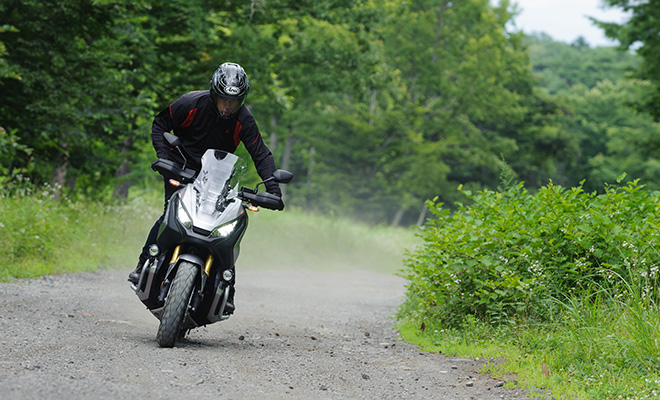
After trying out the various modes, I settled for 'D' and used the down shift switch whenever I wanted some engine braking. This way of using the DCT matched the type of riding I wanted to do, and gave me even more confidence in my control of the X-ADV. All proving how good the DCT shift program is.
So, what do you think? Starting to get interesting, no?
The reason I was able to become so 'close' with the X-ADV is that its riding feel is so positive, making it easy to bring out the bike's full character and performance, and making time spent on it exciting and richly rewarding. Feeling adventurous, I took an unpaved route with beautiful scenery to further explore the X-ADV's capabilities.
Turning off onto a dirt road, things soon got really fun. The X-ADV's low center of gravity provided a reassuring sense of stability and a ride that turned out to be exactly what I was looking for. Even in normally tenuous situations like starting out on loose dirt, I felt totally in control and was able to stay calm thanks to the machine's predictable throttle response and how the engine's pulsating low-rpm torque was transmitted to the ground via the rear wheel. Feedback to the rider was also excellent, making it easy to tell if I was kicking up gravel, if the rear wheel was slipping or if it was slowly and gently gripping the road surface.
Response to the opening and closing of the throttle is amazingly precise, instantly transmitting the engine's output as you'd imagine, directly to the rear wheel, much like a manual transmission, which is a big advantage of the DCT. And with no feeling of time-lag in its operation, you're able to concentrate more on the ride.
That is to say, the X-ADV allowed me to more thoroughly enjoy the experience of riding. Whether accelerating, decelerating or cornering, I had a feeling of almost direct connection between my right hand and the rear wheel, which could be instantly controlled with a simple twist of the throttle. On top of this, on the dirt it made it easier to bring out the essential qualities of both the bike and its engine.
Decelerating is another thing the DCT handles well. Just touch the Down (–) shift switch and engine braking is applied to the rear wheel. The smooth and gentle way the clutch engages as it does this is absolutely superb. And with no need to operate a manual clutch, it frees the rider's left hand, arm and shoulder of any related tension. Similar to CVT bikes, clutch operation is unnecessary, but the direct feel of the DCT is superb, offering the benefits of enhanced handling as it smoothly delivers a more natural ride.
I found that one of the biggest benefits of the DCT is how it allows you to get the most out of the bike's handling due to its more relaxed riding position. I realize now that when riding a motorcycle, the constant operation of the clutch lever occupies the rider's mind and physical movement in innumerable ways.
Also, I found that in spite of the X-ADV's sizeable build, I was better able to relaxeven riding on dirt roads—and enjoy the scenery more, and felt sure that this was due to the capabilities of the DCT system.
After spending an entire day on the X-ADV, my conclusion is that this vehicle conveys the image of an adventure bike, letting you ride almost anywhere or any way you want. In other words, the DCT system plays an important role in relieving riders of the small 'pressures' of clutch operation, giving you the full confidence that you can go anywhere on virtually any road.
This X-ADV obviously would not have been possible without its DCT. The DCT system has also continued to evolve, and is now a new feature that determines the riding character of every motorcycle that has the good fortune to be equipped with it.
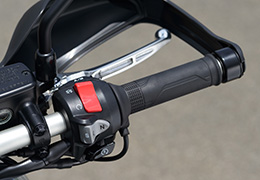
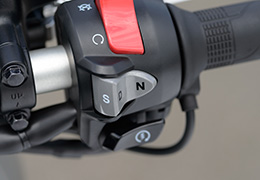
The DCT shift/mode select switch is located on the right-side handlebar. The gray switch marked 'S/D/N' is used to change shift modes. The Auto/Manual selector switch is positioned on the other side, in front of the red kill switch. Normally, after starting the engine, the rider shifts the gray button to 'D', putting the transmission into Auto shift mode. The rider can then choose Auto or Manual modes by tapping the forward-positioned switch with the right index finger.
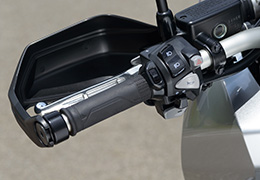
When choosing Manual shift mode, the Up (+) and Down (–) shift buttons located on the left-side handlebar can be used to select the desired gear. These two buttons can also be used to change gears in 'D' or 'S' modes.
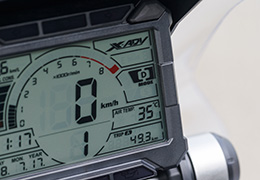
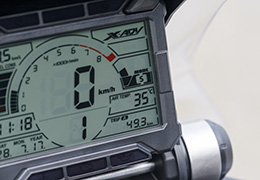
The 'D' on the right side of the instrument panel indicates that the DCT is in 'Drive' mode and ready to go. The large '0' in the center shows vehicle speed and the '1' beneath it is the gear position.
The mode can be shifted to 'S' by pressing the gray shift/mode selector switch again. The 'S' mode allows the engine to rev higher in each gear. Any of three modes within the 'S' mode can also be selected by holding down the shift switch. The dark blocks to the left of the 'S' display show that the DCT is in the second 'S' mode.
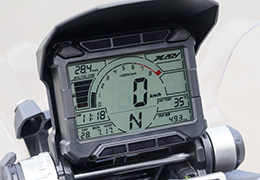
The 'N' at the bottom of the instrument panel indicates that the transmission is in Neutral. The DCT always automatically shifts back to Neutral when the engine is stopped or the ignition switch is turned on.
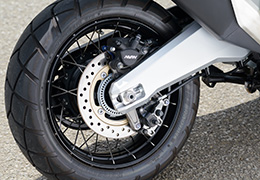
Because all DCT models stay in Neutral when the engine is stopped, the rear brake is equipped with an additional parking brake.
Q&A
Q1.What is a Dual Clutch Transmission?
A.The Dual Clutch Transmission is Honda's most advanced automatic transmission system for motorcycles. Its layout and manual-like feel are strikingly similar to conventional sports bike engines and their transmissions.
Q2.Is the Dual Clutch Transmission an automatic transmission?
A.Yes, but with a difference. Honda's Dual Clutch Transmission utilizes a computerized electro-hydraulic control system to switch between the gears of a conventional six-speed transmission. It is equipped with two clutch packs, and gear selection can be manually controlled by a pair of switches located on the handlebar. The system also has an AT (Automatic Transmission) mode that offers virtually fully automatic gear change control.
Q3.Is manual gear operation possible?
A.Yes, individual gears can be selected using a pair of switches built into the left handlebar switch pod. The thumb switch is used to downshift, and the index finger switch is used to change up a gear.
Q4.Is there a clutch lever?
A.Since the system's two clutches are operated entirely by way of electronic control, the handlebar has no clutch lever.
Q5.Is operation possible using a shift pedal?
A.As the transmission cannot be mechanically shifted by foot, no shift pedal is provided.
Note: A foot shifter kit is also optionally available for some models in some countries.
Q6.What is new about this Dual Clutch Transmission?
A.Today, most of the automatic systems designed for motorcycles are continuously variable transmissions (CVT) similar to those used by scooters, etc. In a radically new approach, Honda's Dual Clutch Transmission features advanced electronic control technologies to achieve smooth and precise acceleration, including a learning function that finds the most suitable start, gear change and running operations for a motorcycle.
Q7.What is the history of the automatic in Honda's motorcycle?
A.Yes, Honda has long been a leader in tackling the many technological issues involved in developing motorcycles that offer smoother and easier operation. Since its founding, Honda has strived to realize a more enjoyable riding experience by reducing the difficulties often associated with motorcycles.
In 1958, Honda developed an automatic centrifugal clutch, introduced on the C100 Super Cub (50cc), which allowed riders to start and change gears without requiring manual clutch operation. In 1963, the Juno M (125cc) scooter was the first ever equipped with a continuously variable hydraulic transmission. In 1977, the large-displacement (750cc) Honda EARA sports bike featured a Hondamatic automatic transmission with a torque-converter like that used for cars.
The Honda TACT (50cc) released in 1980 was Honda's first scooter equipped with the V-Matic belt drive system, which integrated drive and gear change operations, and later became the standard for simple, continuously variable transmissions (CVT). In 2008, the DN-01 Sports Cruiser debuted equipped with its own Human Friendly Transmission (HFT). And now Honda's specially developed Dual Clutch Transmission system for sports motorcycles offers the same feeling of direct operation as a manual transmission.
Q8.What are the main merits of the Dual Clutch Transmission.
A.First, the Dual Clutch Transmission offers smooth, precise operation that provides confident, undistracted control and a more enjoyable riding experience. Its ECU has been specially programmed to automatically control the hydraulic clutch system to intermittently engage the clutch in place of the rider's left hand, while a motor instantly changes gears in place of the rider's left foot.
As its Dual Clutch name implies, this compact system incorporates two side-by-side alternating clutch packs, one for odd numbered gears 1, 3 & 5, and one for even numbered gears 2, 4 & 6. In the minute interval before actual gear shifting operation begins, the system automatically prepares itself for the transfer of drive power between gears by starting up the rotation of the gear to be changed to. Its two independently actuated clutches then smoothly transfer rotation speed from one gear to the next without zeroing out the drive force transmitted to the rear wheel. This greatly minimizes the shock of gear engagement, even when changing gears during hard acceleration or deceleration, thus realizing highly precise gear shift operation and smooth, seamless riding enjoyment.
Also contributing to a smoother ride, the Dual Clutch Transmission system's ECU is programmed to minimize unnecessary gear changes by monitoring riding conditions on curvy roads like mountain passes. This allows the rider to better concentrate on the road ahead, and more fully enjoy the sensations of acceleration and braking, as well as the surrounding scenery. As a result, since the basic mechanism is virtually the same as a manual six-speed transmission, its smooth, highly advanced control delivers precise gear shifts that even expert riders will marvel at, and a higher level of smooth and skillful riding capability that anybody can fully enjoy.
Q9.What sort of mileage does a motorcycle equipped with a Dual Clutch Transmission get?
A.Generally, fuel consumption can vary widely depending on such factors as vehicle speed, engine speed, acceleration method, loaded weight, and such weather conditions as wind direction. In comparison tests of the NC700X, the NC700X ABS and the NC700X with Dual Clutch Transmission, it was found that all three averaged about 41km per liter based on a constant speed of 60km per hour. In other words, motorcycles equipped with Dual Clutch Transmissions proved to be virtually identical to manual transmission models in terms of fuel efficiency.
Q10.Is the Dual Clutch Transmission difficult to operate?
A.Operation is not much different from conventional motorcycles, although it does allow one to ride without operating a clutch lever and gear shift pedal. Normally, when starting out on a regular motorcycle, one would first squeeze the clutch lever and select 1st gear with the shift pedal. However, on a motorcycle equipped with the Dual Clutch Transmission, after starting the engine, one simply switches from Neutral (N) to Drive (D) using the S–D-N thumb switch located on the right-side handlebar, and then turns the throttle to start and accelerate.
Q11.Doesn't it feel strange not having a clutch lever and a shift pedal?
A.When first trying out a Dual Clutch-equipped motorcycle, many riders who are used to operating a manual transmission unconsciously grab for the non-existent clutch lever with their fingers, or attempt to operate the shift pedal with their left foot. However, anyone can grow accustomed to the user-friendly Dual Clutch Transmission in about an hour's riding time.
Q12.Aren't manual transmission models more fun to ride than those fitted with the Dual Clutch Transmission?
A.For sports bike riders, all the operations and techniques associated with riding, including clutch and throttle control, and clicking swiftly through the gears, make up the fundamentals of riding enjoyment. If we look at the Dual Clutch Transmission systems used in professional race cars and some high-end sports cars, we can see that gear changes are performed much more quickly than possible with a standard shift lever. Also, since their paddle shifters are integrated into the cars' steering wheels, drivers never have to take their hand off the steering wheel, and can thus better concentrate on the intricacies of driving.
In professional motorsports, where races are won with quick acceleration and minimized accumulated time loss, the Dual Clutch Transmission also has the advantage of allowing gear changes to be performed virtually instantaneously. Honda's latest Dual Clutch Transmission is a compact and lightweight system developed exclusively for motorcycles. We hope you will take it for a test ride and experience for yourself the delight of riding with such precision control at your fingertips.
Q13.Do Dual Clutch bikes have engine braking capability? If so, how does it work?
A.Engine braking on models equipped with the Dual Clutch Transmission is generally initiated by closing the throttle. For stronger engine braking response, the electronic system can be downshifted much like a standard motorcycle. This is done with a press of its downshift thumb switch located on the left handlebar. If the system detects that a lower gear could result in sudden engine over-revving, it will ignore the operation of the downshift switch. Usually, though, manual downshifting can be initiated at any time by simply tapping the downshift switch, even when operating in Drive mode.
Q14.Can a bike with a Dual Clutch Transmission be parked on a slope?
A.All Dual Clutch models are also equipped with a manual parking brake, which should be used whenever stopped.
Q15.Since Dual Clutch Transmission models are operated by merely opening the throttle, do they have front and rear brake levers mounted on the handlebars like scooters?
A.No, to minimize confusion, Dual Clutch Transmission models are equipped with the same right hand front brake and right foot rear brake operation used on general sports bikes.
User Reviews
-
VFR1200F (Dual Clutch Transmission)
Male, 52, Netherlands
Since I'd long before developed an ingrained habit of operating the clutch with my left hand and changing gears with my left foot, everything felt strange at first. However, my body got used to the lack of a manual clutch after riding about five minutes or so. Now, the AT mode accounts for about 90 percent of my riding, and I use the MT mode infrequently. When I started riding the Dual Clutch Transmission VFR on winding roads for the first time, I used the MT mode almost exclusively, but I soon discovered that I could focus more of my attention on riding and handling by using a combination of both the AT mode and the shift switches.
Male, 45, Germany
The thing I most like about the Dual Clutch Transmission is how little shock it produces when changing speeds, because in many cases I'm riding tandem. Totally distinct from scooter-style CVT systems, its feeling of acceleration changing up through its six-speed gearbox is exactly like that of a manual bike. Currently, I only use the AT mode. One thing that's especially noticeable is how smooth the gear shifts are during acceleration, with no feeling of being carried around. My wife, who usually rides pillion, especially appreciates this, and the opportunities for touring together have dramatically increased.
Male, 52, Japan
When riding in MT mode, my body just could not get used to changing gears using my left hand, and so I bought and installed the pedal changer kit. It's really convenient to shift from D mode to neutral using the pedal when stopped. Since gears can be changed without using a clutch, this adds to comfort, especially on winding roads, and the MT mode of the pedal-equipped model lets me concentrate on the riding, since clutch operation is no longer required.
Male, 40, France
This is my third VFR. I like Hondas, in that they always use cutting-edge technologies such as liquid-cooled V4 engines and ABS, as compared to the VFR's rivals. I think that in Europe the VFR stands for high technology and it is now Honda's premier model. Can I ride 1,000 kilometers a day without getting tired? I look forward to riding with my friends through the alpine passes that open in the middle of June. My VFR always fills me with satisfaction and joy.
-
VFR1200X Crosstourer (Dual Clutch Transmission)
Male, 49, Spain
I bought the Crosstourer because its standard equipment included the traction control, the front and rear Combined-ABS and the Dual Clutch Transmission. Although I seldom ride off road, I can now more smoothly and comfortably ride on road. If I can change gears smoothly, I think I'll hardly ever get tired.
Male, 50, Switzerland
When I ride through the mountains to go to Italy, there are many rough roads in mountain areas, so I must ride as slow as 10 km/h. The things I like best about the Crosstourer are that the gears are easy to select, and also that even such operations as changing down gears while operating the front and rear brakes can be done with just a press of my thumb. I switch to AT mode as soon as I get on the autostrada.
-
NC700S (Dual Clutch Transmission)
Female, 28, Japan
The NC700S is my first big motorcycle. Although comparisons with other models in terms of freedom from judders and shocks are impossible, I'm just glad that I can start and shift gears smoothly, which I used to have trouble with. In particular, starts on uphill slopes and low-speed maneuvers are much smoother and safer. When I rode a mid-sized bike, I failed several times in starts and stalled the engine, forcing me to stand there without being able to move. This never happens with the NC700S.
Male, 31, Japan
I wanted to buy a bike equipped with Combined-ABS, however since the difference in price was only about 50,000 yen (about €400), I bought the Dual Clutch Transmission model. At first, the mechanical noise of the gears changing was annoying, but I got used to it after riding about 10 minutes or so. And although I used to have a negative attitude about the AT, I now like it quite a lot, and only use the shift buttons when needed.
Female, 33, Italy
Since the aftereffects of an injury prevent my left ankle from moving freely, I have so far only ever ridden scooters. But I traded my scooter in for a new NC700S immediately after it was released. It's like a dream being able to ride without using my left foot. Although I use the MT mode in most cases, even the AT mode allows a ride similar to MT mode if used in conjunction with the shift switch, which I've found to be really satisfying.
-
NC700X (Dual Clutch Transmission)
Male, 38, Japan
Since I was able to have a test ride on both the Dual Clutch Transmission model and the standard clutch version at the Honda Dream Shop, I carefully studied all the features and ended up buying the Dual Clutch Transmission version of the NC700X. Although this is my first experience with an automatic transmission, including scooters, I soon grew to like it because I was able to enjoy the movement I expected of a motorcycle, but with smoother and more comfortable acceleration and deceleration. I now use only the AT mode whenever I ride.
Female, 45, Spain
I only use the MT mode shift switches. What I like is that I can always enjoy a smooth ride because there is no time lag when the clutch operates, and this prevents missed shifts through failure to properly engage the clutch. I only use AT mode when riding in the towns where the roads are rough and congested. The NC's long-stroke suspension helps ensure stable riding even over rough roads. Another attraction is that I feel like I can enjoy riding both a scooter and a sports bikes at the same time.
Male, 44, Italy
I ride on secondary roads more frequently than on the autostrada, and ride tandem in most cases. My wife, who rides on the back, especially likes that there is no shift shock. I also feel that my riding enjoyment has increased, since I can concentrate on the riding without worrying that our helmets might bump when accelerating or reducing speed.