
Motorsports・Sports
Racing Is in Honda’s DNA: Why Employee Teams Keep Taking on the Suzuka 8 Hours
POINTWhat you can learn from this article
- Honda has developed people and technology through racing since its founding. Carrying on that DNA, Honda employee teams continue to take on the Suzuka 8 Hours, one of the world’s premier endurance races, while balancing their racing activities with their regular jobs.
- One of these employee teams, Honda Blue Helmets MSC, brings together expertise from across motorcycle development to compete in EWC, the premier class that allows extensive machine modifications. Working within limited time and budgets, the team puts its ideas into the endurance bike and uses the extreme conditions of racing to sharpen both its teamwork and technical capabilities.
- Employees bring the hands-on experience gained through racing back to their everyday work. In doing so, they help sustain Honda’s culture of taking on challenges and its commitment to craftsmanship.
At Suzuka Circuit in the height of summer, Honda employees take on one of the world’s premier endurance races, in this year’s case, in heavy rain. In their regular jobs, they work in areas such as development and production. Alongside those responsibilities, they devote themselves to racing and continue to challenge themselves on the world stage.
Why do they keep coming back to this demanding race? The answer reveals a part of Honda’s DNA that has endured since the company’s founding: developing people and technology through racing.
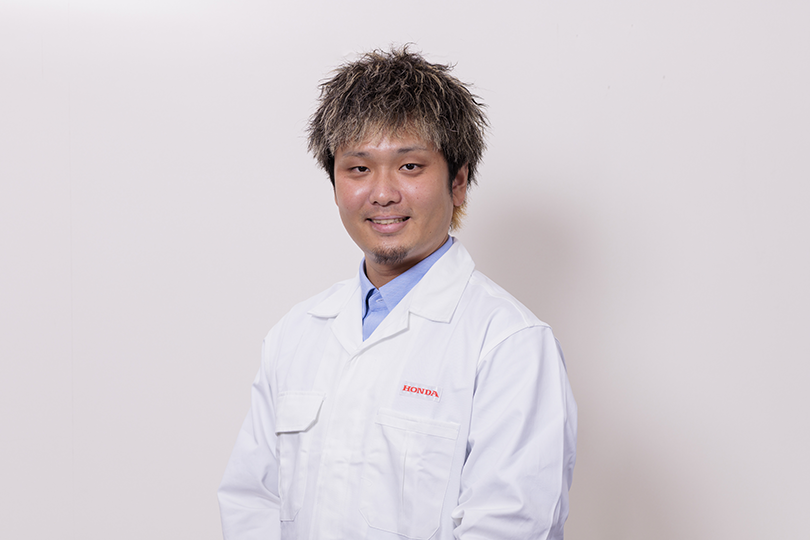
Staff Engineer, E-Drive Development Department, Electrification Development Division, Development and Production Unit, Motorcycle and Power Products Operations
Team Manager
View More
Close
Seiya Fujii
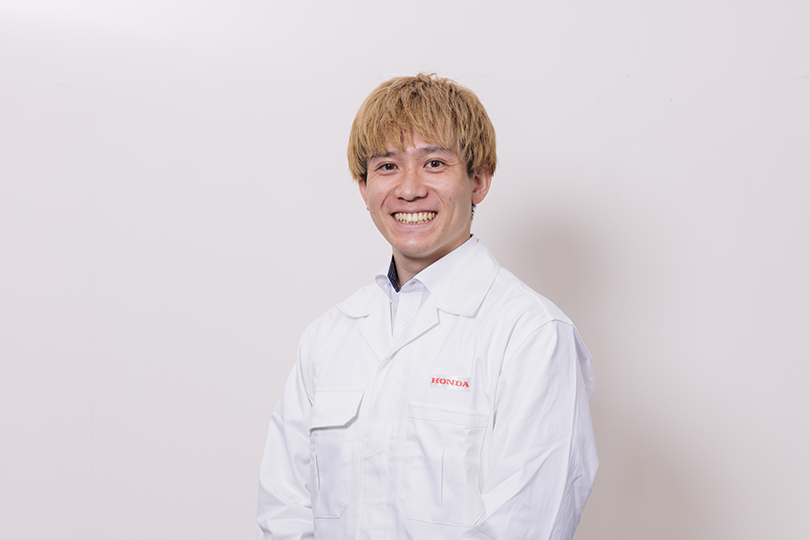
Development Office, Motorcycle Racing Department, HRC
Rider, Yellow
View More
Close
Kei Tomie
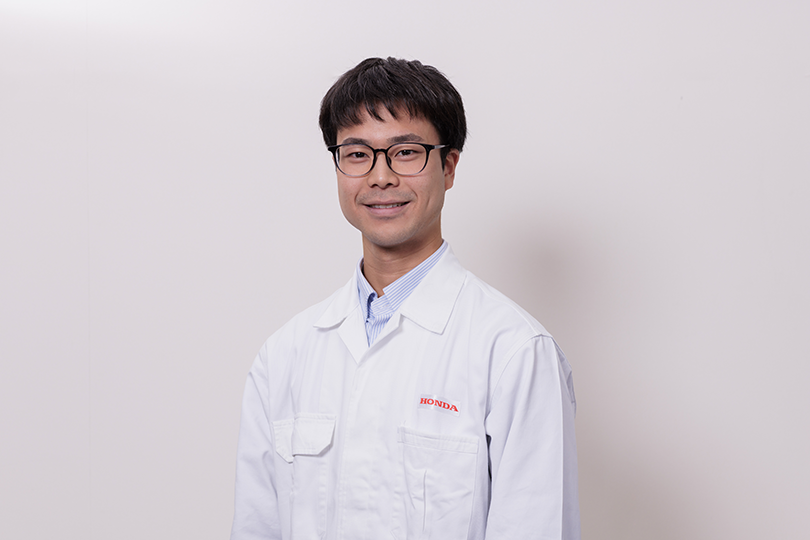
Production Engineering and Prototyping Department, Monozukuri Planning & Development Division, Development and Production Unit
Chief Mechanic
View More
Close
Fuma Yamazaki
The Suzuka 8 Hours, one of the world’s premier endurance races
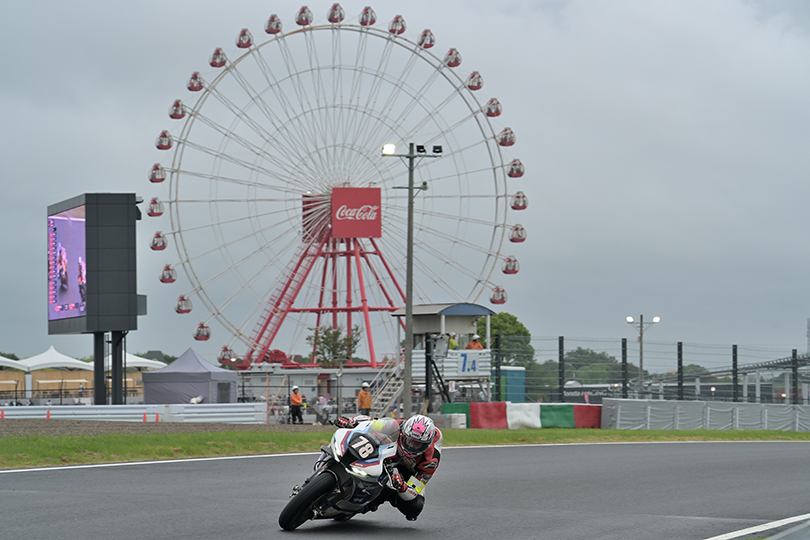 Honda employee team racing at Suzuka Circuit
The FIM*1 Endurance World Championship “Coca-Cola” Suzuka 8 Hours Endurance Road Race, commonly known as the Suzuka 8 Hours, is an endurance road race in which two or three riders take turns riding a single racing bike, competing to complete the greatest number of laps over eight hours. Victory depends not only on the riders’ performance, but also on the combined strength of the entire team, including machine development, pit work and race strategy. This has earned the event a reputation as one of the world’s premier endurance races. First held in 1978, it is now a round of the FIM Endurance World Championship.
*1 FIM: Fédération Internationale de Motocyclisme
Suzuka Circuit is regarded as one of the world’s most challenging circuits. It has a rare figure-eight layout with a crossover, along with a highly technical sequence of both high- and low-speed corners. Combined with the intense heat of midsummer, these characteristics give the Suzuka 8 Hours a unique level of difficulty—and a unique appeal. The event has also been described as the equivalent of racing eight one-hour sprint races back-to-back. Another distinctive feature is that regional and corporate teams that meet the entry requirements can compete on the same stage as factory teams.
In 2026, a total of 20 teams competed on Honda machines, including the factory Honda HRC team. Five employee teams representing six Honda operations also entered the race. Honda HRC claimed its fifth consecutive victory, giving Honda its 32nd Suzuka 8 Hours win.
Blue Helmets’ teamwork behind achieving the team’s goal
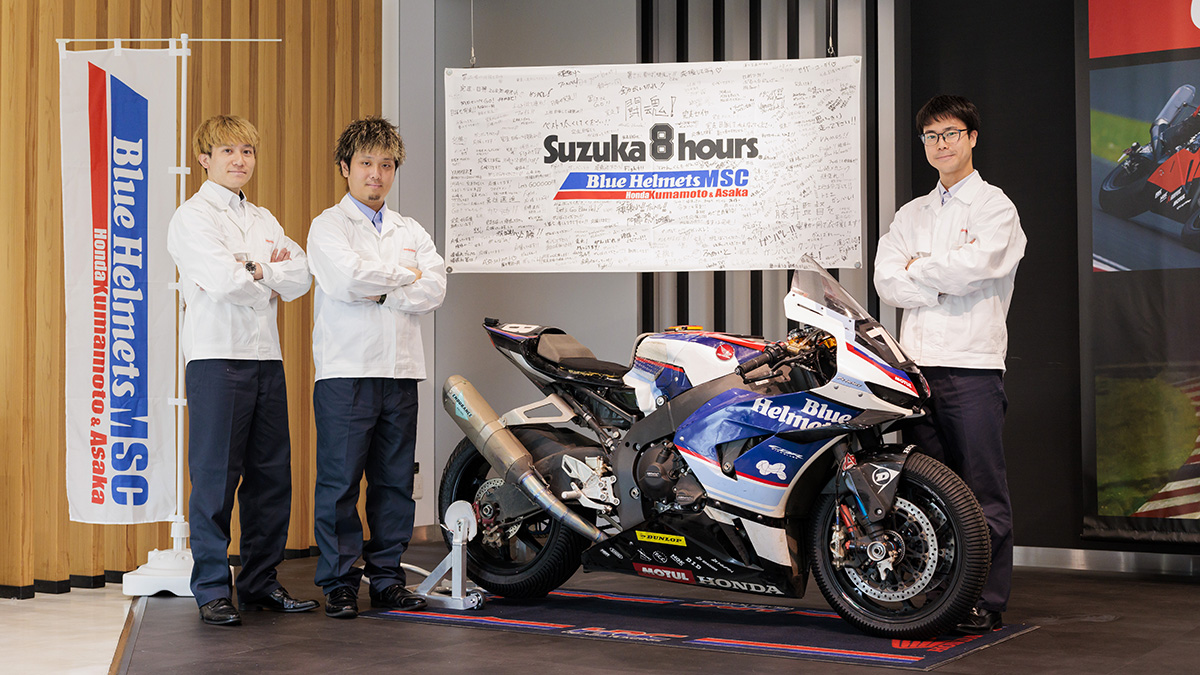
One Honda employee team that has continued to take on this challenge for more than 60 years is Honda Blue Helmets MSC, known as “Blue Helmets.” Its members work in different areas of Honda, including development, production and quality, and compete in the premier EWC*2 class while balancing racing with their regular jobs.
At the 1982 Suzuka 8 Hours, which was shortened to six hours due to torrential rain caused by a typhoon, the Blue Helmets pairing of Shigeo Iijima and Shinji Hagiwara took the overall victory. They became the first all-Japanese rider pairing to win the Suzuka 8 Hours.
*2 Machines are divided into three classes: EWC, the premier category offering a high degree of freedom for modifications; SST, which is closer to production motorcycles and has more restricted modifications; and EXP, an experimental category for testing new technologies.
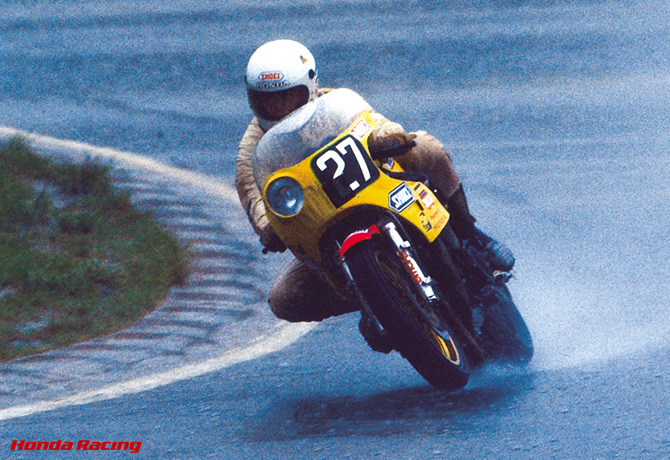 Blue Helmets claimed the first Suzuka 8 Hours victory by an all-Japanese rider pairing in 1982
Today, Blue Helmets operates from Honda facilities in Asaka, Saitama Prefecture, and Kikuchi District, Kumamoto Prefecture. Its members are primarily younger employees, ranging from new hires to those with around eight years at Honda.
With the goal of securing in 2028 seeded status for the 2029 event, Blue Helmets began a three-year plan. For the first year, the 2026 event, the team set a target of 28th overall and 208 laps, assuming dry conditions. Race day, however, brought torrential rain. Despite struggling with conditions that changed from moment to moment, the team kept going to the finish, completing 171 laps to place 35th.
Team Manager Fujii believes the biggest factor behind reaching the finish was the team’s unity. With members based at two distant locations, Asaka and Kumamoto, the team held repeated online meetings before the race, using data and figures as the basis for detailed discussions.
As one Suzuka 8 Hours ends, the next begins
Blue Helmets’ commitment to competing in EWC, the premier category, is about more than finishing position. The greater freedom to modify the machine allows team members to put their own technologies and ideas into practice—and then experience the results, both successes and shortcomings, for themselves on the track.
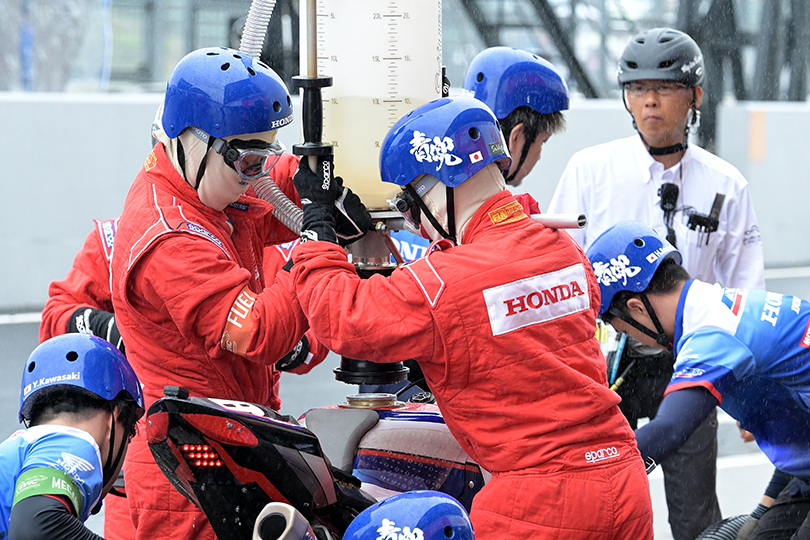 Pit crew refueling the racing bike
In a sprint race, once the bike has been sent out onto the track, a great deal depends on the rider. But endurance racing requires the strength of the entire team. That’s exactly where we believe there is an opportunity to take the fight to the professionals.
I’ve been with the team for all three years since joining Honda, and this year I served as chief mechanic. It gave me the opportunity to objectively observe other teams, including the factory teams. I could look at how they were solving the same kinds of problems we were struggling with and learn from them. I feel the experience significantly broadened my perspective as an engineer—experience that I can apply both to future races and to my regular work.
Once the race is over, there might seem to be time to simply enjoy the sense of accomplishment.
For Blue Helmets, there is hardly any.
Tomie, one of the team’s riders, says that by the time he crossed the finish line, he was already thinking about the following year.
Even while I’m racing, all sorts of things come to mind that I know we need to improve. And the moment I cross the finish line, I start thinking about next year. I think that’s exactly why we keep coming back to take on the Suzuka 8 Hours.
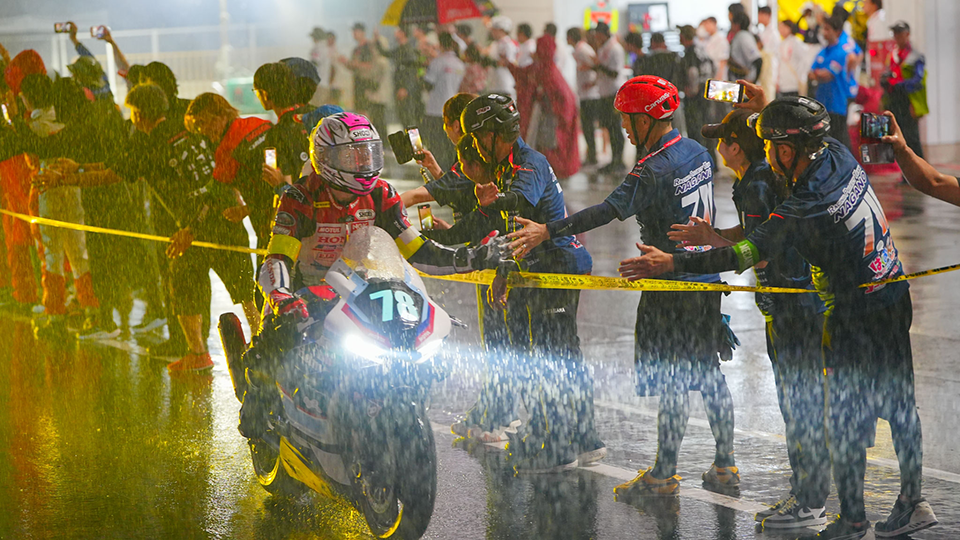 The moment the team completed 171 laps in the rain
Bringing ideas from racing back to everyday work
The experience gained in one of the world’s premier races does not end at the finish line. Team members take what they have learned back to their respective workplaces in development, production and quality, where those lessons become part of their everyday work.
Managing a team of around 30 people taught me how difficult it is to bring people together and how important it is to communicate in a way that gets everyone moving in the same direction. In my regular development work, schedule management is extremely strict because a delay in development can affect a product’s launch. Racing is a world where every fraction of a second matters. The experience I’ve gained in that environment has carried over into my everyday development work, particularly in managing deadlines and maintaining the speed needed to meet them.
Because we take a product that we developed ourselves, develop it further for racing, and then ride and control the bike ourselves, we can actually experience some of the things customers describe in their feedback. Another major benefit is that we can take what we’ve experienced straight back to the workplace and share it with our teams.
My regular work is in the quality field. Racing gives me a physical understanding of how components are actually used under extreme conditions—how they fail and which areas are prone to deformation. Those are things that can be difficult to see through my regular work alone. That experience has improved the accuracy of the dimensional measurements and root-cause analysis I carry out on components that have developed problems in the market.
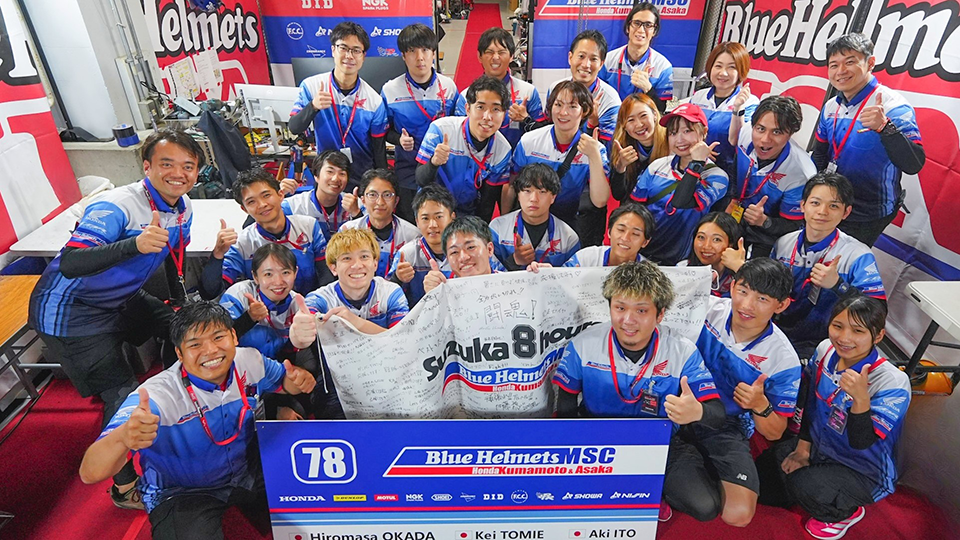 Team members brought together from Honda’s Asaka and Kumamoto operations
Honda has voluntary employee racing teams like Blue Helmets at operations across the company. Their purpose in taking on the Suzuka 8 Hours goes beyond race results. They challenge themselves on one of the world’s premier stages, developing both people and technology in the process. They then bring that experience back to their everyday work, before passing it on to the next generation.
Racing continues to provide an important proving ground integral to Honda’s distinctive approach to developing people and making products.






In our regular meetings linking Asaka and Kumamoto, we did more than simply share development progress in each area. We discussed the numbers in detail and exchanged ideas about how to deal with crashes and various other problems. That process steadily strengthened the unity of the team.