
Management
2026 Honda Business Briefing: Three Pillars for Initiatives Toward Rebuilding of Automobile Business
* The information in this article is current as of May 2026.
POINTWhat you can learn from this article
- Honda will work to improve its cost structure, increase development efficiency and enhance the lineup of compelling products by concentrating corporate resources in its priority regions as part of the rebuilding of its automobile business.
- Starting in 2027, Honda will begin launching next-generation hybrid models and plans to launch 15 models globally by the end of the fiscal year ending March 31, 2030. Honda will deliver a high-quality and exhilarating driving experience unique only to Honda, which resonates with all of the driver’s senses.
- Toward achieving carbon neutrality by 2050, Honda will accelerate a multi-faceted approach combining EVs, hybrid vehicles, carbon-neutral fuels and carbon-offset technologies.
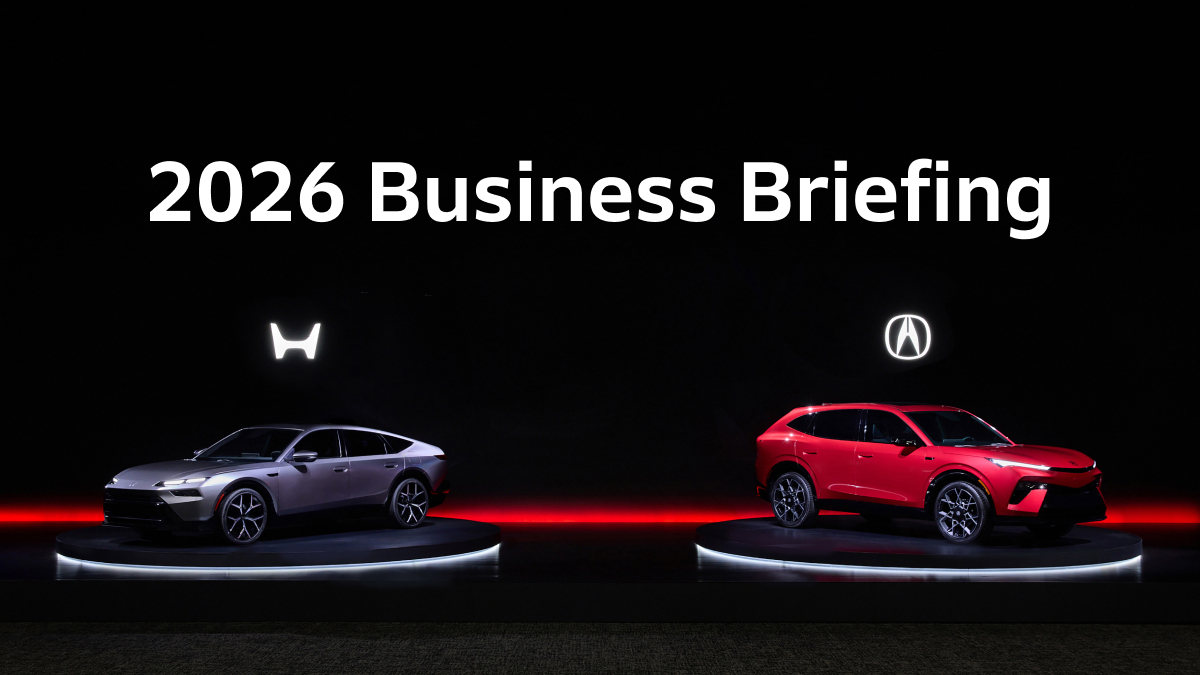
On May 14, 2026, Honda held a briefing in Tokyo on initiatives toward rebuilding of its automobile business and the future direction of Honda business.
President Mibe explained Honda’s direction for transforming its automobile business in light of changes in the market environment. Through improving its cost structure, increasing development efficiency and enhancing the lineup of compelling products by concentrating corporate resources in priority regions, Honda aims to strengthen its competitiveness. Honda also unveiled prototypes of next-generation Honda and Acura hybrid models.
Three pillars for initiatives toward rebuilding of automobile business
President Mibe identified improving the cost structure, increasing development efficiency and enhancing the lineup of compelling products through concentration of corporate resources in priority regions as the keys to rebuilding the automobile business. Through these initiatives, Honda aims to strengthen the profitability of its automobile business.
To achieve this, Honda will focus on three strategic pillars: “strategic reallocation of corporate resources,” “thorough strengthening of our manufacturing structure” and “strategic utilization of external resources.”
Strategic reallocation of corporate resources
Honda will pursue two initiatives: “reassessment of the powertrain portfolio with an eye on future demand trends” and “enhancement of the product lineup in each of our priority regions.”
Under our reassessment of the powertrain portfolio with an eye on future demand trends, Honda will reallocate development and production resources into hybrid models, which are currently in high demand, accelerating the rollout of compelling hybrid products beyond the original plan.
Starting in 2027, Honda will begin launching next-generation hybrid models featuring both an all-new hybrid system and platform, as originally planned. Primarily in North America, Honda plans to launch 15 next-generation hybrid models globally by the end of the fiscal year ending March 31, 2030, expanding its lineup. In addition, Honda will reallocate all excess capacity at its auto plants in Ohio to production of ICE (Internal Combustion Engine) and hybrid vehicles and make all of its auto plants in North America capable of producing hybrid models.
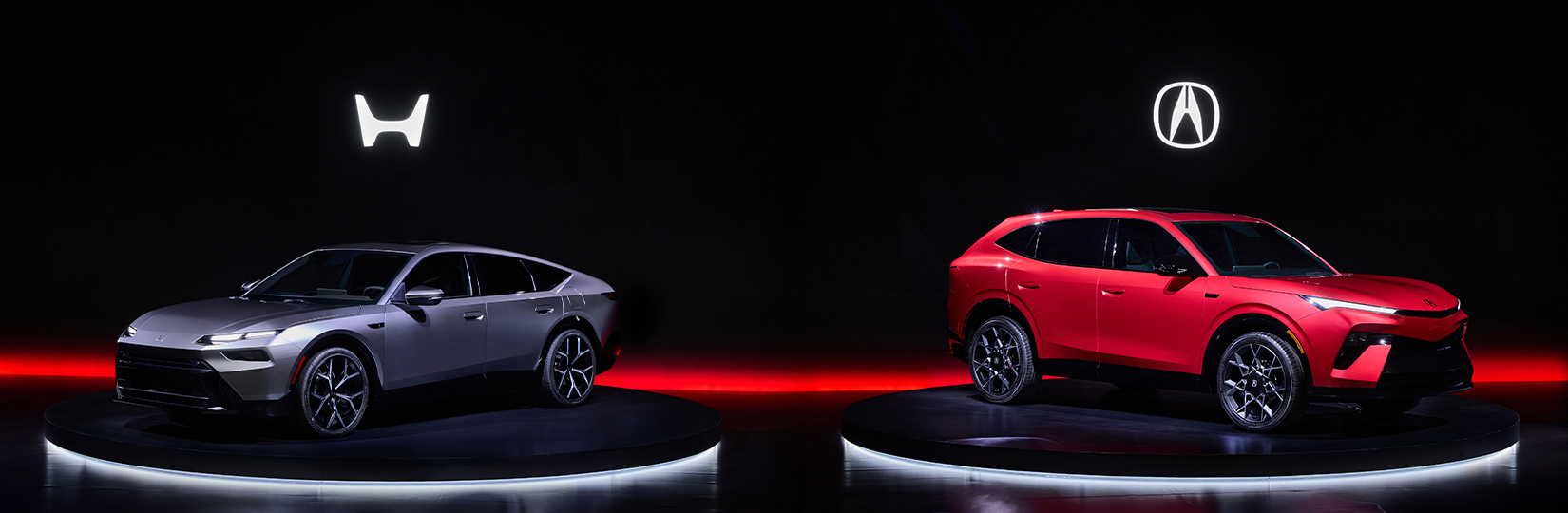 The “Honda Hybrid Sedan Prototype” (left) and “Acura Hybrid SUV Prototype” (right), prototypes of next-generation hybrid models scheduled for launch within the next two years
The next-generation hybrid system will achieve world-leading efficiency through expansion of the engine’s high-efficiency operating range and improved drive efficiency of the hybrid unit.
By combining all-directional improvements in dynamic performance, a lighter next-generation platform and a newly-developed electric AWD unit, Honda aims to improve fuel economy by more than 10% while further advancing a high-quality and exhilarating driving experience unique only to Honda, which resonates with all of the driver’s senses.
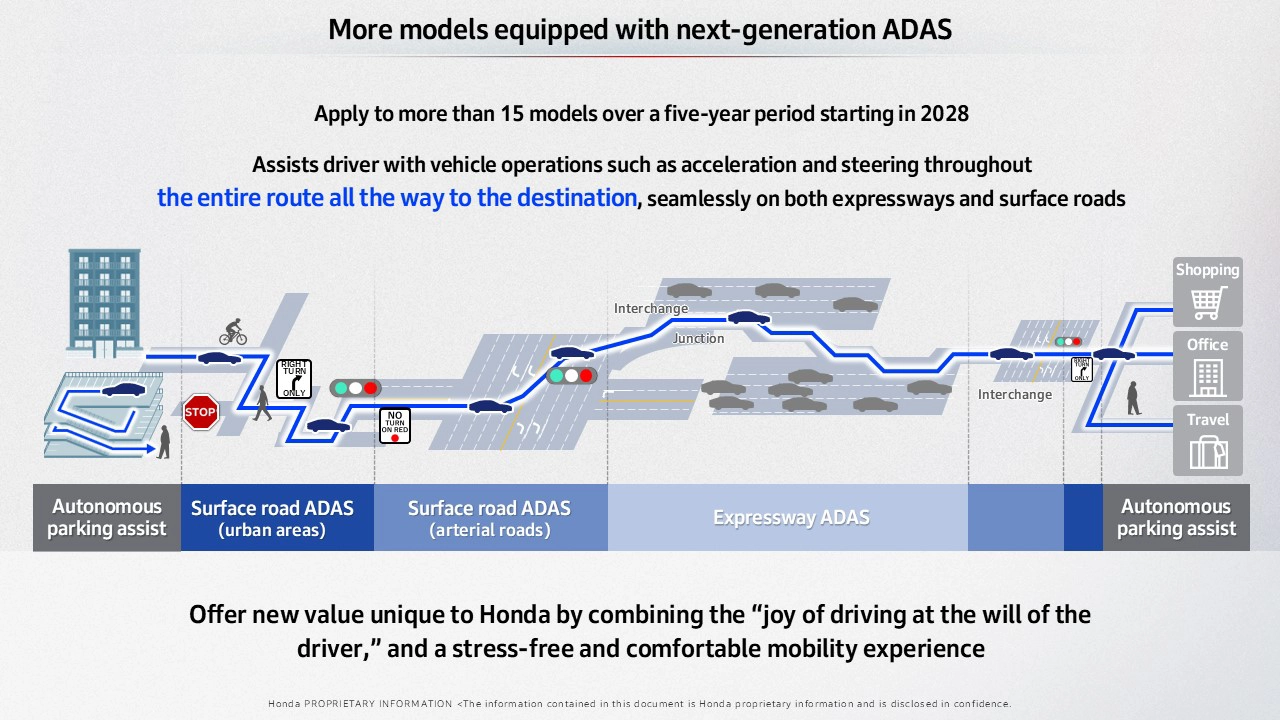
Honda also is making progress as planned in the development of next-generation ADAS, with plans for market launch in 2028. Honda plans to apply its next-generation ADAS to more than 15 hybrid models globally over a five-year period.
By applying next-generation ADAS to hybrid models, Honda would like more customers to experience Honda’s unique value proposition — combining the joy of driving as intended by the driver with a stress-free and comfortable mobility experience.
Regarding “enhancement of the product lineup in each of our priority regions,” Honda will engage in the following initiatives for North America, Japan and India, which are positioned as key markets for future growth, as well as China, where Honda aims to fundamentally strengthen its competitiveness.
North America
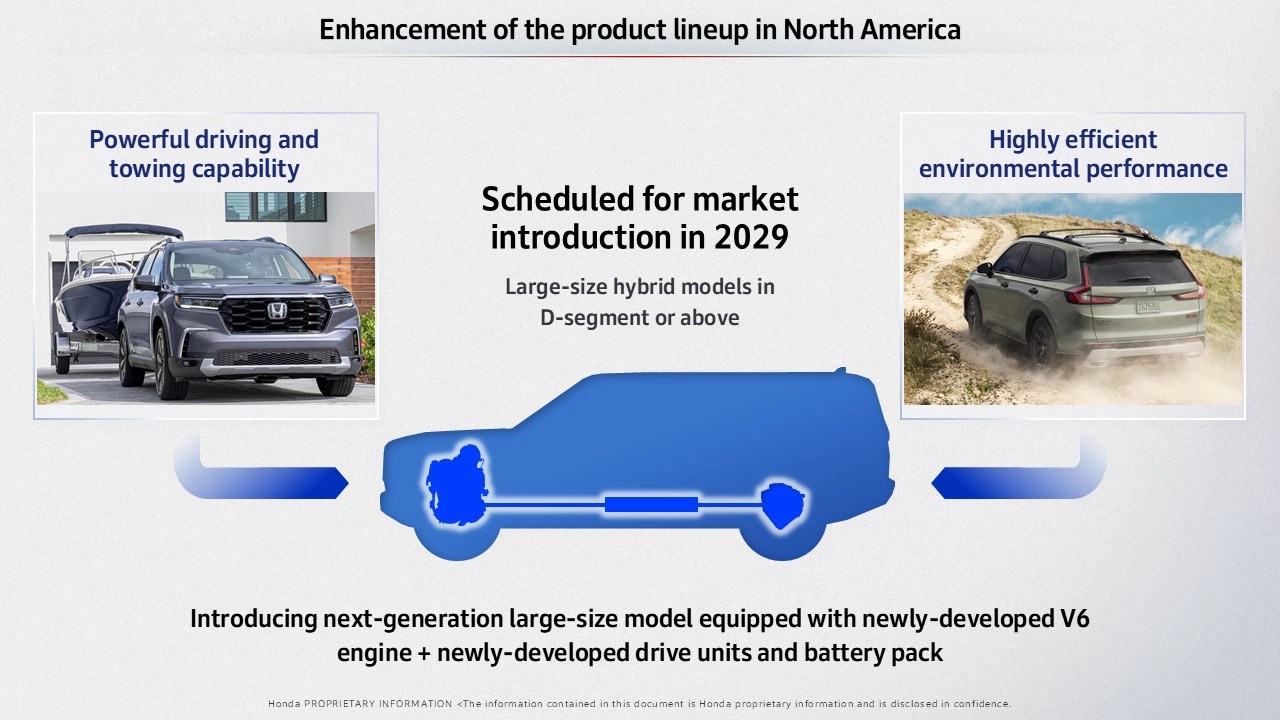
For large-size vehicles, where demand remains strong, Honda will launch D-segment and above hybrid models in 2029 that combine powerful driving and towing performance with environmental performance. Honda and Acura will both expand their lineups with next-generation hybrid models.
Japan
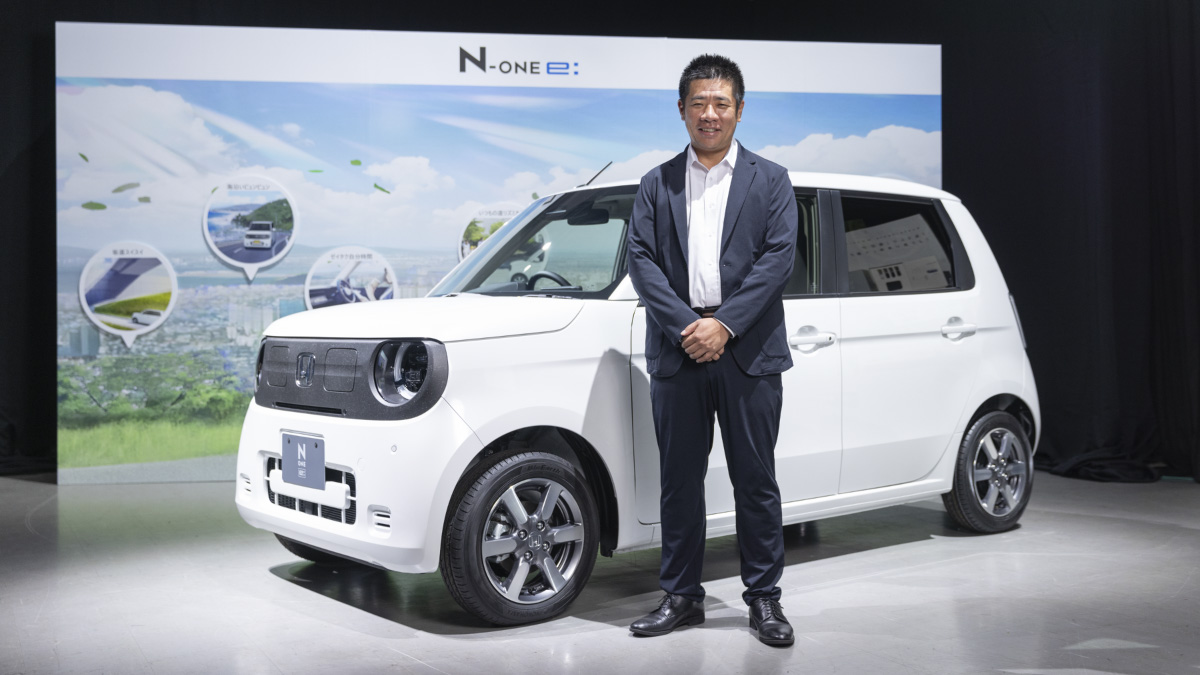
Honda will expand its EV lineup mainly in the mini-vehicle category, including the introduction of the N-BOX EV scheduled for 2028.
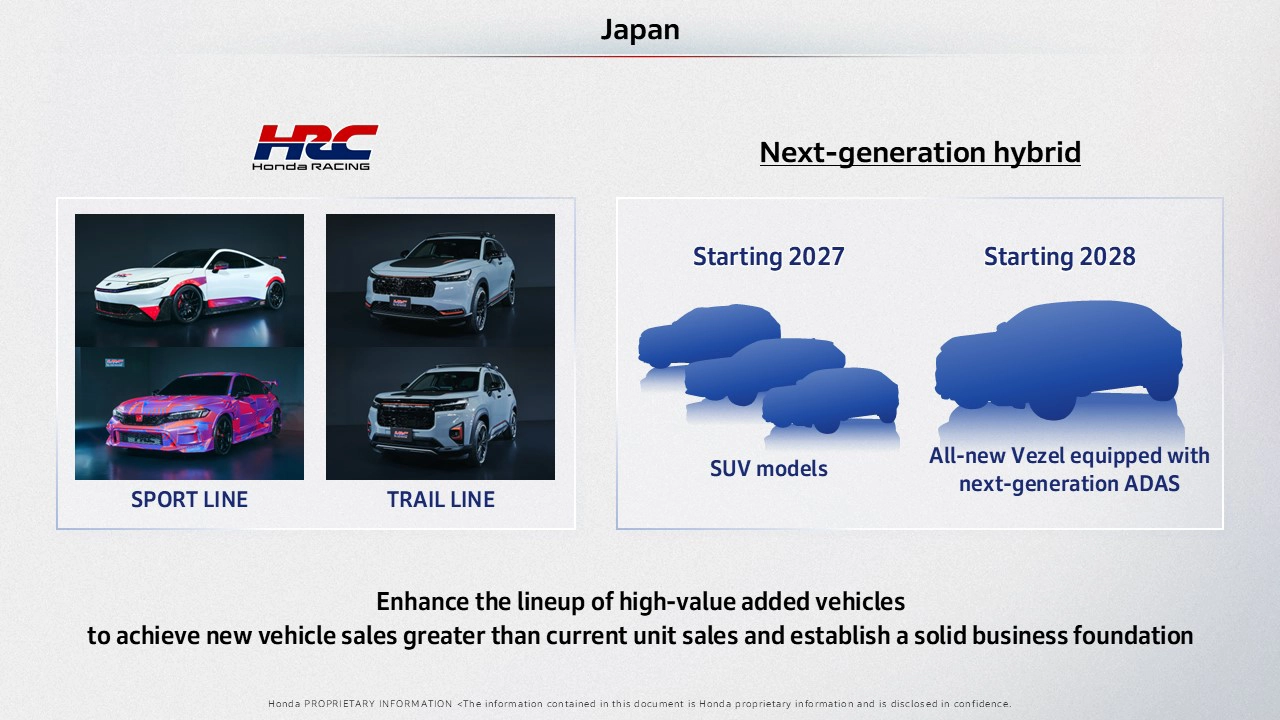
In addition to expanding the lineup with the SPORT LINE and TRAIL LINE announced at the Tokyo Auto Salon in January 2026, Honda will begin launching next-generation hybrid models, primarily SUVs, starting in 2027. From 2028 onward, beginning with the all-new Vezel, Honda will roll out models equipped with next-generation hybrid systems and next-generation ADAS.
India
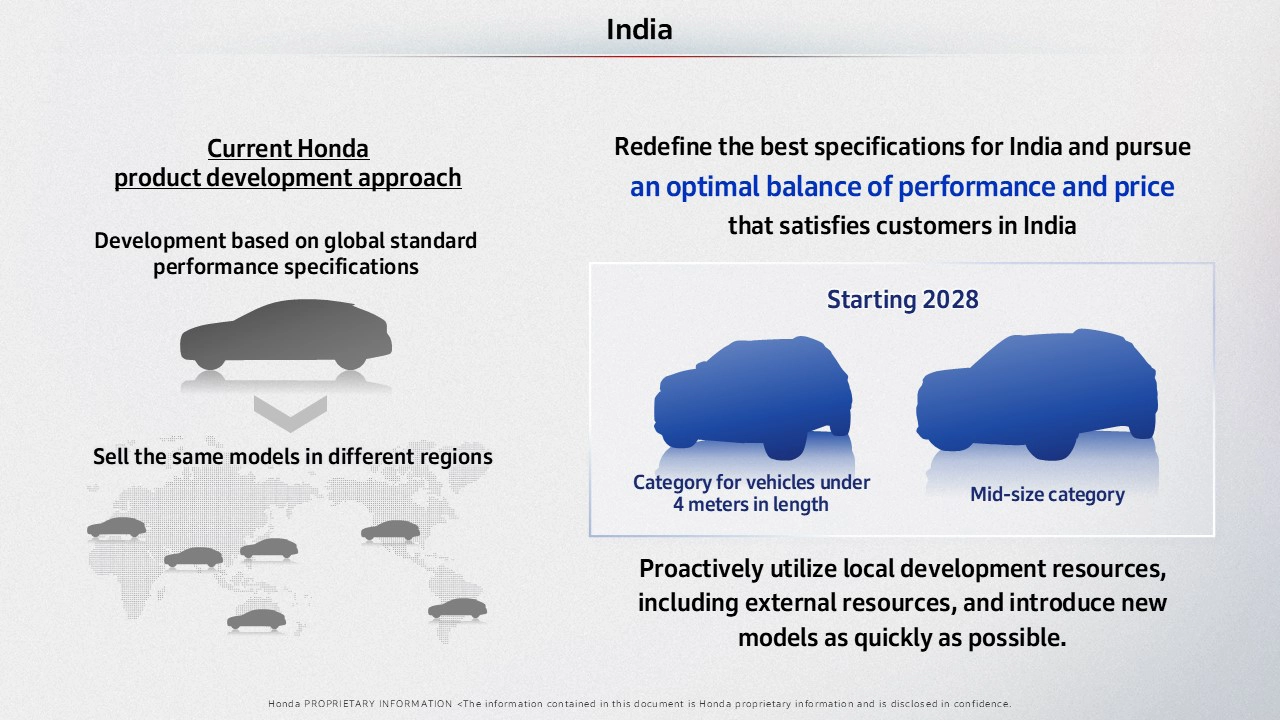
To deliver products aligned with the characteristics and preferences of customers in India, Honda will redefine the best specifications for the Indian market and begin introducing strategic India-focused models from 2028 in the under-4-meter and mid-size categories.
China
By utilizing locally sourced standard components, local next-generation technologies such as ADAS and new energy vehicles (NEVs) built on platforms provided by local partners, Honda will incorporate the overwhelming speed of technological advancement in China and respond to customer needs.
Thorough strengthening of manufacturing structure and strategic utilization of external resources
To deliver highly competitive products to its priority regions, Honda will pursue three initiatives — “fundamental cost reduction,” “thorough improvement of development efficiency” and “establishment of a manufacturing structure which is resilient to changes in its business environment” — as part of the thorough strengthening of its manufacturing structure.
Under “fundamental cost reduction,” Honda will improve its cost structure globally through reassessment of Honda-specific standards, proactive utilization of standardized components and incorporation of the competitiveness of local businesses in China and India.
For ‘thorough improvement of development efficiency,’ Honda will pursue its ‘Triple Half’ approach, reducing development cost, development timeframe and development workload by half compared to 2025 levels. In addition to improving efficiency in design, testing and production preparation through the use of digital environments and AI technology, Honda will undertake transformation of the development process itself by reassessing development requirements, product planning and development management. Through these initiatives, Honda will continue introducing highly competitive products more quickly and with greater freshness.
Under “establishment of a manufacturing structure which is resilient to changes in its business environment,” Honda will improve efficiency in investment allocation for new models and equipment while increasing operational efficiency and speed through digital technologies, aiming to improve production efficiency by approximately 20% over the next five years.
Honda also will utilize external resources more flexibly and strategically, including the cost competitiveness of local businesses in China and India and industry-standard components.
For batteries, while preparing for future growth in EV demand, Honda will focus for the time being on improving operational efficiency through battery production for hybrid vehicles and other applications, while pursuing a battery procurement strategy focused on competitiveness in North America.
By combining Honda-developed core technologies with external resources, Honda aims to strengthen competitiveness in an increasingly uncertain business environment.
Mid- to Long-term direction of Honda automobile business
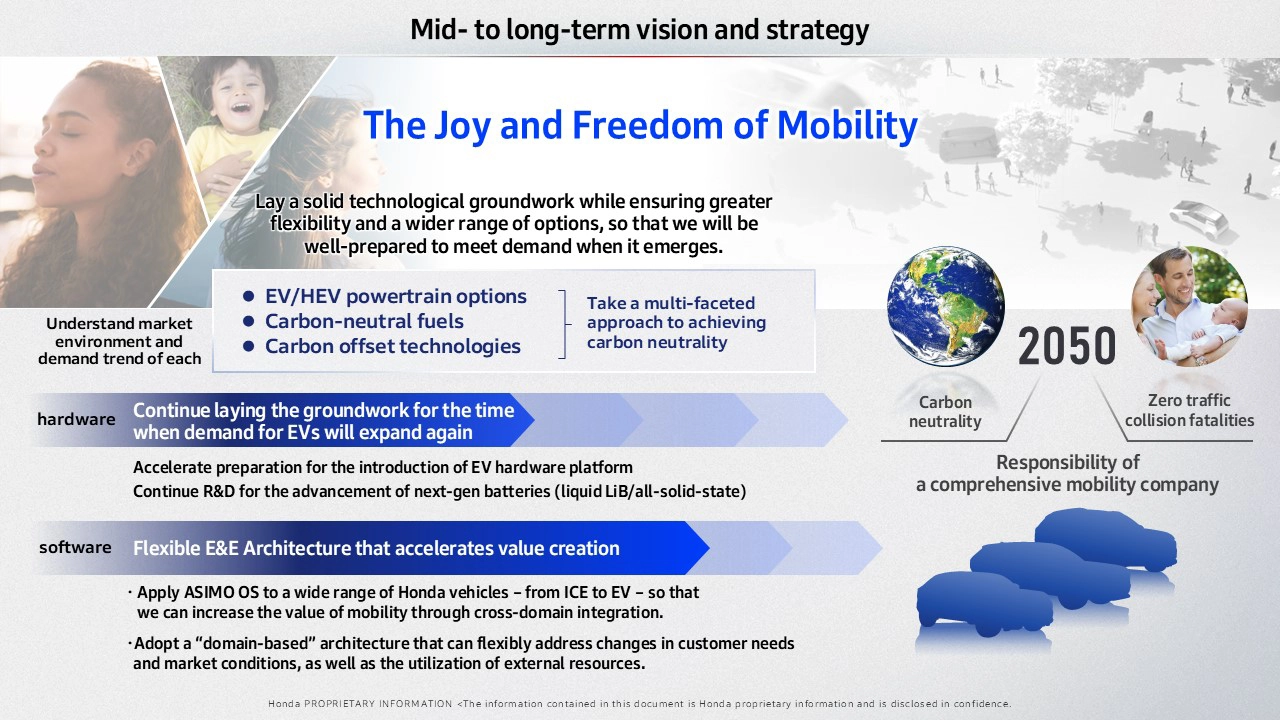
As a comprehensive mobility company, Honda will continue striving to achieve carbon neutrality by 2050. Toward that goal, Honda will accelerate a multi-faceted approach combining EVs, hybrid vehicles, carbon-neutral fuels and carbon-offset technologies, while carefully assessing market environments and demand trends in each region.
As for EVs, Honda will continue laying the groundwork for introducing a highly competitive EV hardware platform so that Honda will be well prepared to meet demand when it emerges, while also continuing research and development of all-solid-state batteries.
In addition, Honda aims to offer new mobility and in-cabin experiences made possible through intelligent technologies by applying ASIMO OS not only to EVs but also to ICE (Internal Combustion Engine) and hybrid models, thereby increasing the value of mobility.
Honda will flexibly respond to differences among countries, changing customer needs and market environments, and utilization of external resources, while rebuilding its automobile business structure to achieve both flexibility and competitiveness and continue delivering new value to customers in a timely manner.






Over the next three years, Honda will focus intensively on rebuilding its automobile business structure. Combined with the continued growth of our motorcycle and financial services businesses, which maintain solid profitability, Honda aims to achieve consolidated operating profit at an all-time high level in the fiscal year ending March 31, 2029. Starting in 2027, Honda will begin launching next-generation hybrid models. In priority regions such as North America, Japan and India, Honda will introduce new products in categories where the lineup is currently insufficient, while carefully assessing customer needs.