
Management
A FUN EV, True to Honda. The development story of Super-ONE, boosting everyday life
POINTWhat you can learn from this article
- Super-ONE is Honda’s compact EV, developed with a clear focus on creating a FUN EV.
- A key focus in development was delivering intuitive, “Meikai” (clear and instinctive) feedback—represented by features such as BOOST mode, which allows drivers to feel the car’s state while driving.
- Following the positive response at the Goodwood Festival of Speed in the UK, Honda is exploring global expansion to share the enjoyment of EV driving with a wider audience.
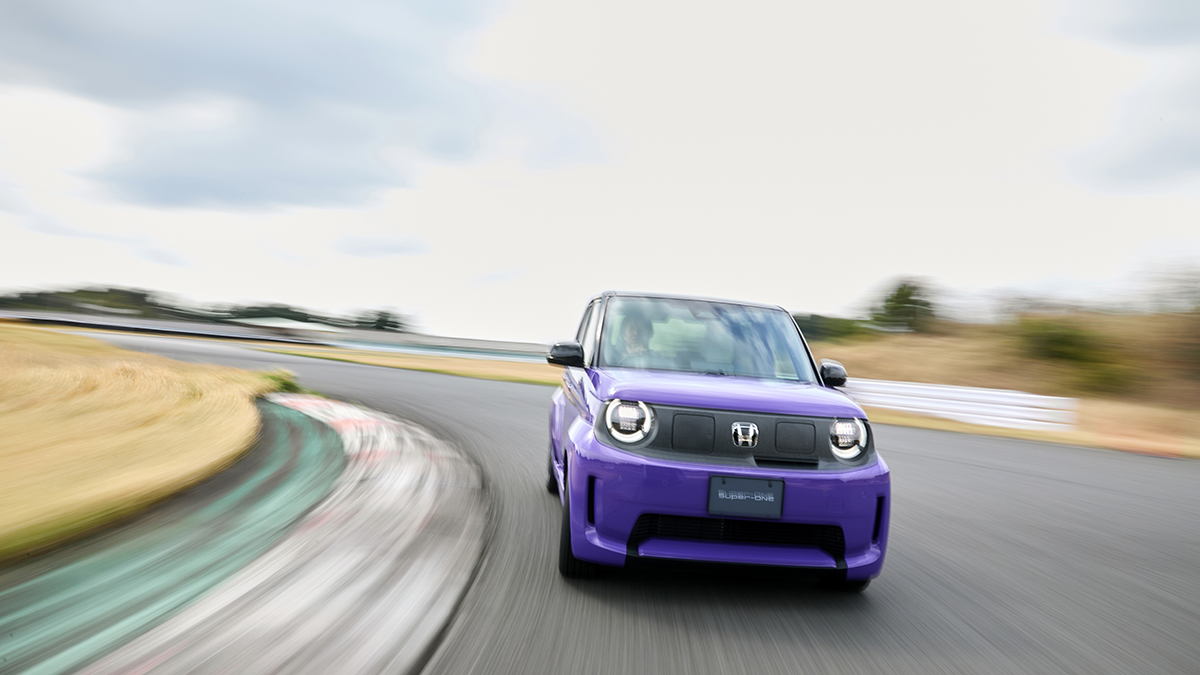
Honda will launch its compact EV, the Super-ONE, in Japan in May 2026. Building on the experience gained through the development of previous light EVs and the practicality refined along the way, this model takes a deliberate step forward by embracing FUN — the joy of driving. It represents a new challenge: to deliver a sense of excitement behind the wheel in an EV.
This issue of Honda Stories features interviews with development leader Hidetomo Horita, along with Kohei Akamine, responsible for body development, and Shinichiro Watanabe, who led power unit development, about the origins of the Super-ONE, the value behind its grand concept “e: Dash BOOSTER,” and the trial-and-error process that shaped its uniquely Honda character.
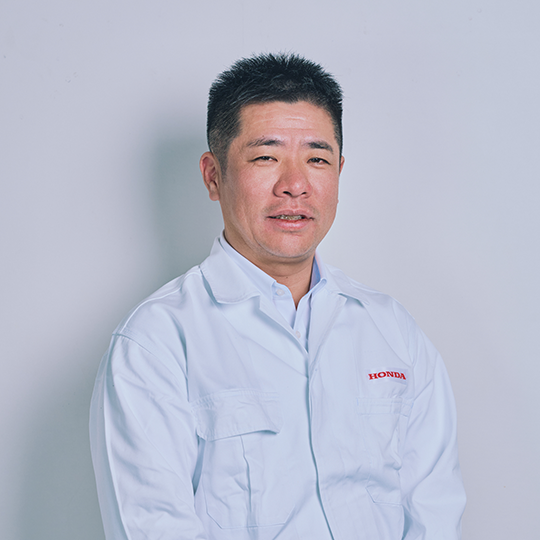
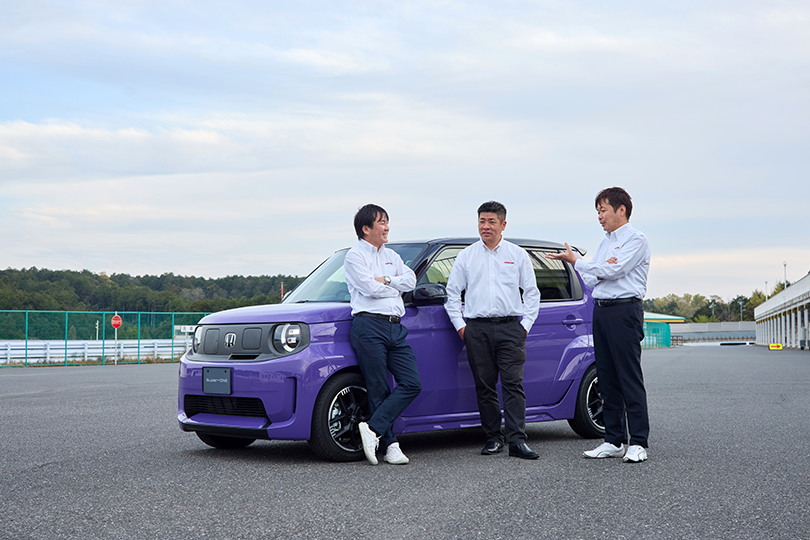
Super-ONE Large Project Leader (LPL) View More Close Hidetomo Horita
Read More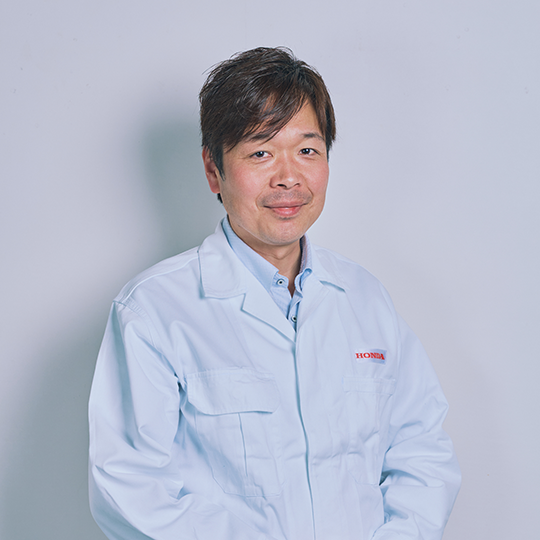
Super-ONE Body R&D Leader View More Close Kohei Akamine
Read More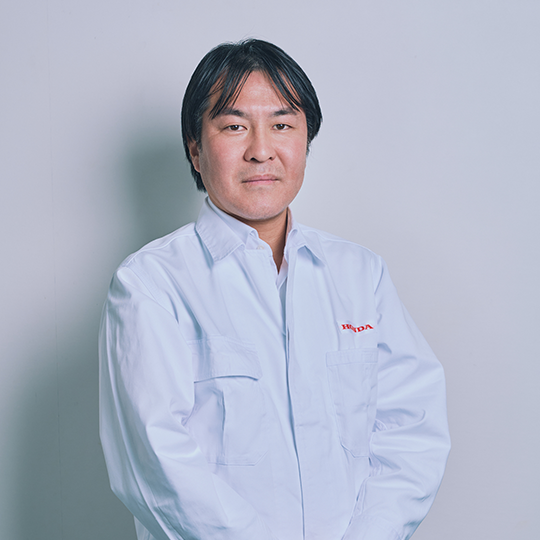
Super-ONE Power Unit R&D Leader View More Close Shinichiro Watanabe
Read MoreSuper-ONE: Boosting everyday life through an uplifting driving experience
Honda’s light EV lineup began with the commercial N-VAN e:, followed by the passenger-focused N-ONE e:. Why has this new model evolved into a FUN EV that goes beyond the constraints of kei cars? And was its development linked to the N-ONE e:?
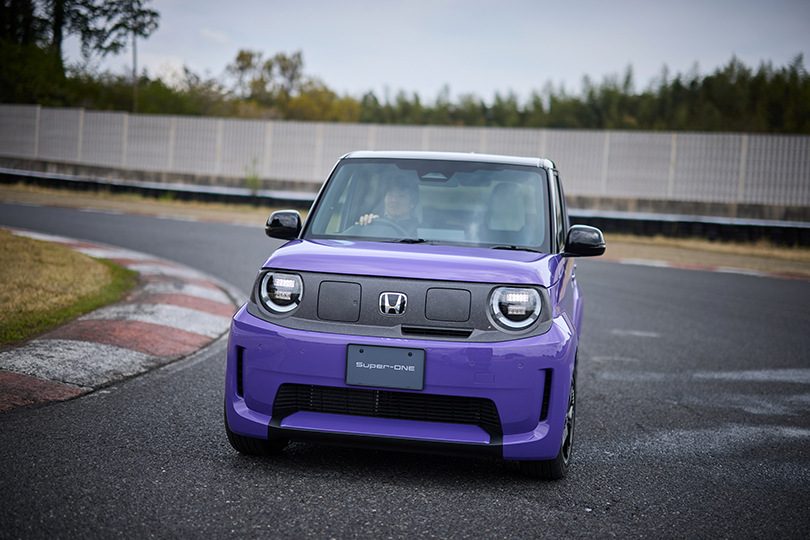 Super-ONE, scheduled for launch in May 2026
What is the origin of the name Super-ONE?
Honda’s N Series is built on the M/M (Man Maximum, Machine Minimum) concept* which underpins its packaging excellence. The N-ONE e: carried that forward into the EV era.
With Super-ONE, we aimed to go further—leveraging the strengths of the N-ONE e: and characteristics of EVs while creating a truly unique, FUN Honda EV. The name reflects both surpassing the N-ONE and becoming a one-of-a-kind model that exceeds expectations.
* Honda’s fundamental approach to engineering: “Man Maximum, Machine Minimum”—maximizing space for people while minimizing the space required for mechanical components.
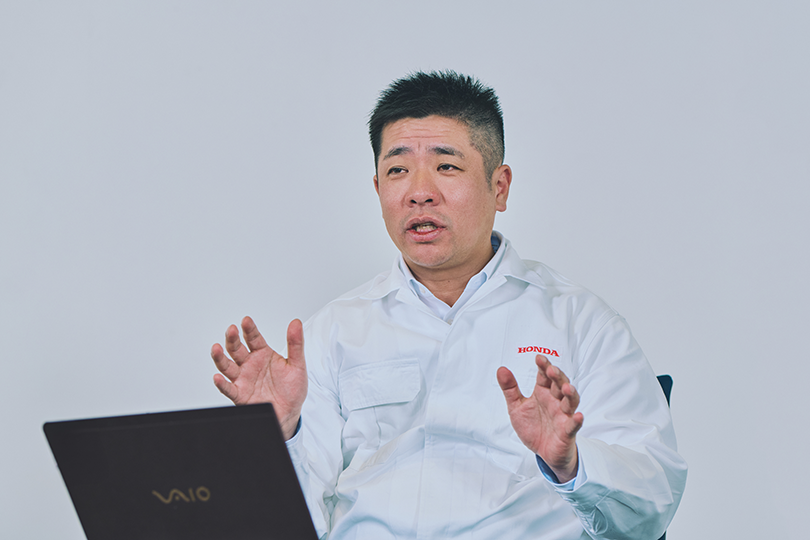 Hidetomo Horita, Super-ONE Large Project Leader
How did the grand concept “e: Dash BOOSTER” come about, and what was the thinking behind it?
Super-ONE was developed as a car that emphasizes sporty driving and performance, aiming to resonate with both parents who enjoyed driving in their younger years and their children’s generation.
The former are those whose child-rearing years are behind them and who are beginning to consider more environmentally responsible vehicles—those with an innovator mindset who are drawn to new products such as EVs. The latter seek a sense of acceleration, gadget-like appeal, and a touch of the extraordinary—as if stepping out of a game world and into real-world driving.
For both generations, we wanted to deliver a sense of achievement and stimulation within everyday life. That led us to define key themes such as “Yukai, Tsukai, Meikai” (joyful, exhilarating, intuitive) and “boosting everyday life through an uplifting driving experience,” which ultimately shaped the grand concept, “e: Dash BOOSTER.”
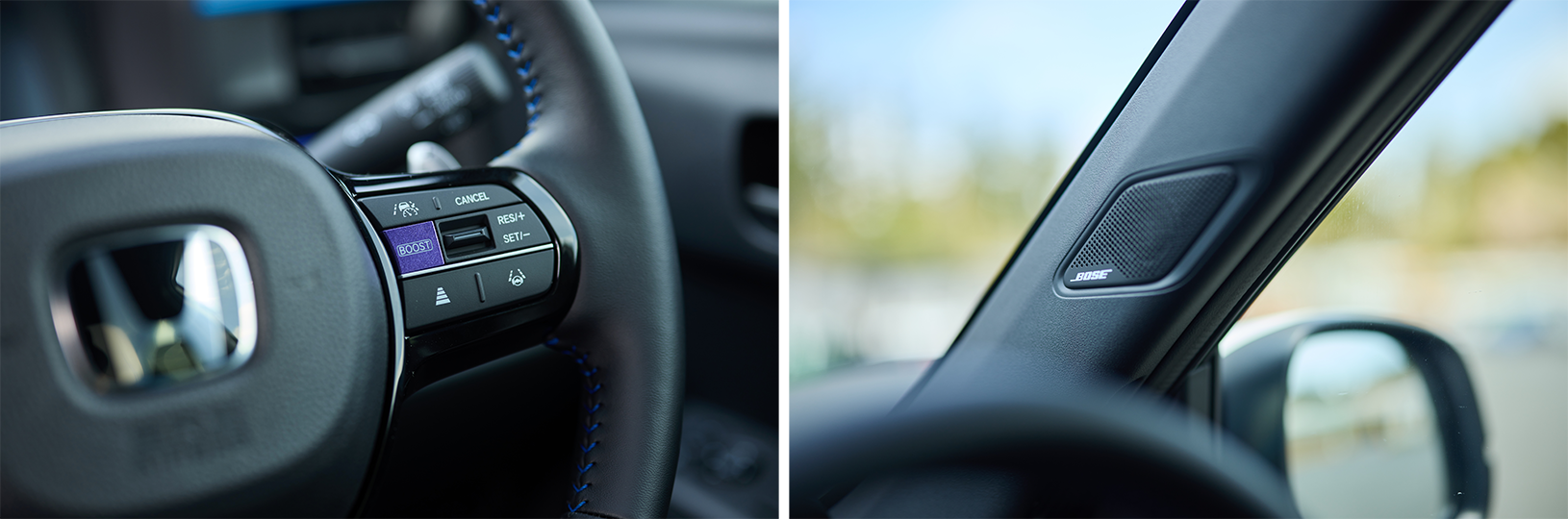
While Super-ONE serves as a practical EV with a spacious and user-friendly cabin in everyday use, its BOOST mode increases output and delivers a more direct response to accelerator inputs. Features such as simulated gear shifts—recreating the feel of a gasoline vehicle—and an Active Sound Control system that produces an exhaust-like sound enhance the sense of FUN in driving.
Its wide and low stance, along with sporty seats and other emotionally engaging interior and exterior elements, are all designed to elevate the driving experience—freeing drivers from the routines of everyday life, in other words, to BOOST everyday life.
A Honda-like FUN EV focused on “dialogue with the car”
Younger engineers were also involved in development. The car even evokes the spirit of the “Bulldog,” the City Turbo II. How did you align values across generations?
Our team ranged from well-experienced to younger members, so we progressed through continuous discussion. Differences in background naturally led to differing perspectives, and sometimes clashes.
A good example is the exterior design. There were debates—should it be more rounded, or more aggressive? Ultimately, guided by the keyword “Meikai” (clarity), we chose bold over-fenders that clearly express a grounded, purposeful stance.
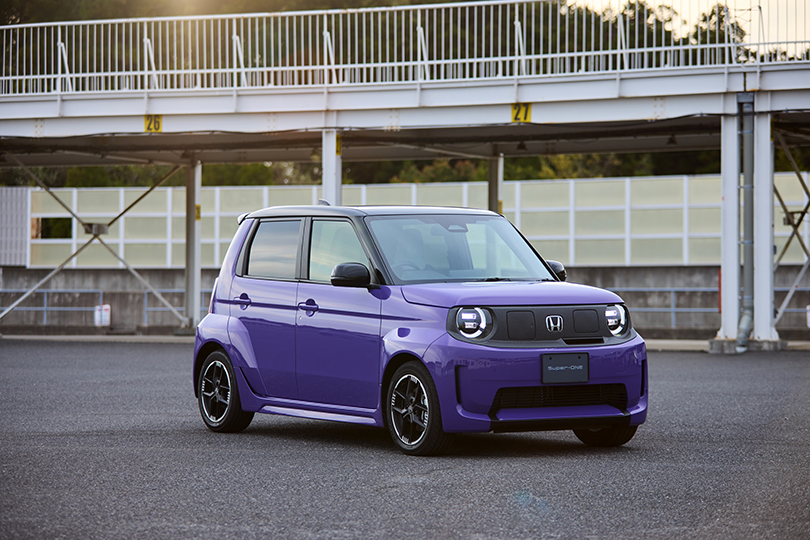 Exterior design emphasizes a low and wide stance, expressing a powerful presence
The initial sketches from younger designers were digital, iconic, and full of unexpected ideas. To translate that into something users could feel through performance, we studied racing cars together—understanding why fast cars take the shapes they do—and refined the design while preserving their creativity.
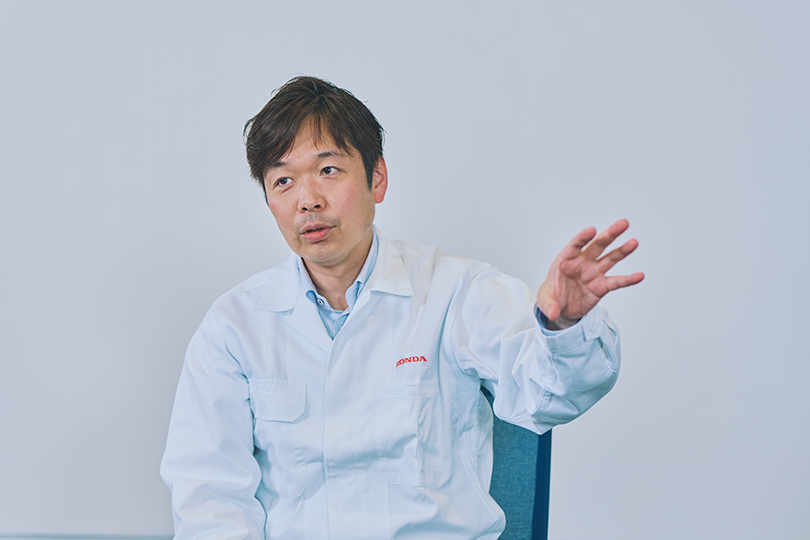 Kohei Akamine, Super-ONE Body R&D Leader
The same applies to driving performance. There are universal principles customers expect from a fast car. We shared our accumulated knowledge with younger members as we developed the vehicle together.
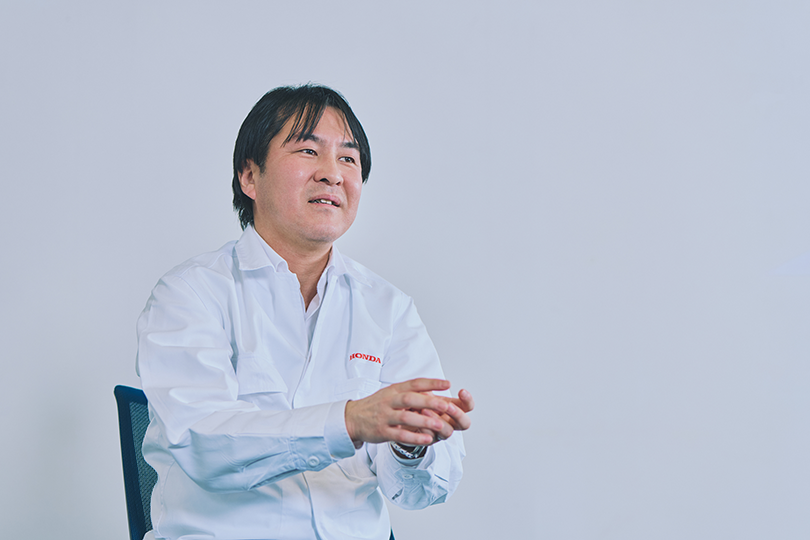 Shinichiro Watanabe, Super-ONE Power Unit R&D Leader
What is BOOST mode, a key element of “e: Dash BOOSTER,” and what makes it unique?
BOOST mode enhances both power and the feedback drivers feel while driving. Many people say EVs are not engaging, often because they lack a sense of connection with the car. With Super-ONE, we focused on enabling intuitive feedback—so drivers can feel what the car is doing in real time.
Light weight is also critical. The vehicle is exceptionally light for its class, with a low center of gravity thanks to the battery placement, and a widened stance that delivers excellent handling.
So for experienced drivers, it delivers a driving feel similar to a gasoline vehicle, while for younger generations, it offers a game-like sense of fun. How did you approach discussions around enhancing that sense of the extraordinary?
Initially, we aimed simply to unlock more output. But as development progressed, ideas kept emerging—things we could add and enhance. So we decided to embrace it all and create something truly fun.
The development team is made up of experts from a wide range of fields, so we explored features like simulated gears and shift shock to recreate the feel of a gasoline vehicle. While these aren’t strictly necessary— bringing them to life is very Honda. The team enjoyed pushing these ideas to completion.
The new value Super-ONE brings to global markets
While kei cars are not typically sold overseas, Super-ONE is now being explored for global markets. Was this planned from the beginning?
Once we decided to go beyond kei car dimensions, global expansion was part of the discussion from an early stage. We first looked at Asia, then Europe. Eventually, Honda Motor Europe Ltd., Honda’s subsidiary in the U.K., expressed strong interest, leading to plans for markets with right-hand drive.
Did you conduct local testing, especially given Europe’s high expectations for handling and driving performance?
Yes. Selling a kei-based car overseas is a challenge for Honda, so we shipped vehicles locally and conducted repeated testing on site. The response from our UK colleagues was extremely positive.
In the UK, there is a strong appreciation for stylish cars with character, like the Super-ONE. When it was exhibited as the Super EV Concept at the Goodwood Festival of Speed in July 2025, many visitors stopped to take a closer look and take photos.
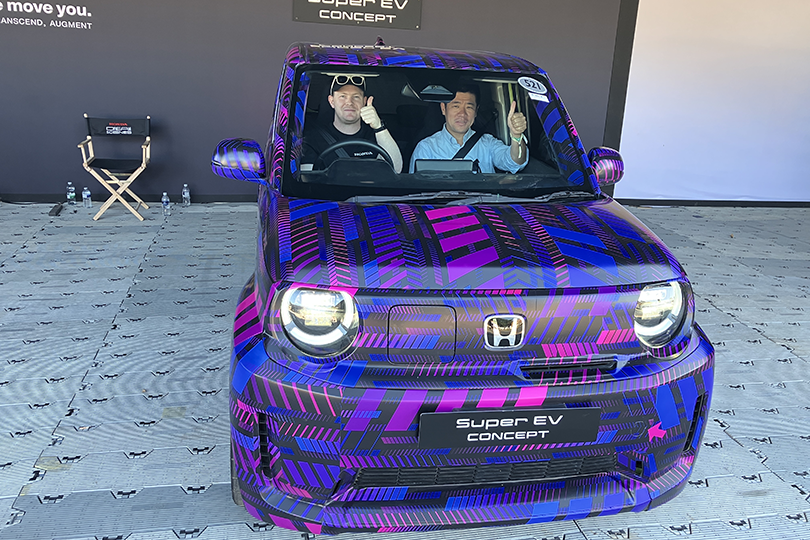 The small, eccentric car was met with a positive response in the UK
We also took part in the event as presenters. Surrounded by historic racing and sports cars, this small, eccentric vehicle stood out, drawing smiles and curiosity—people would stop and say, “What is this?”, smile, and take photos.
Compact, sporty hatchbacks of this size are becoming increasingly rare worldwide, which is why it was received so positively.
By fully pursuing the idea of a FUN car, could Super-ONE also reach new customers—including those in global markets—who have not previously shown much interest in EVs?
Those who have spent many years driving may come to realize that EVs can, in fact, be engaging and enjoyable. That’s why we hope more people will experience them firsthand.
As that awareness gradually spreads, more people will begin to appreciate the appeal of EVs. If Super-ONE can serve as that catalyst—even in a small way—it has the potential to help change the world.
By applying Honda’s extensive expertise, built up over many years, to the inherently capable EV power unit, we added a FUN character that goes beyond the conventional image of both kei cars and traditional EVs in terms of dynamic performance.
Even from my own perspective—having a deep familiarity with gasoline vehicles—the Super-ONE is genuinely enjoyable to drive.
Rather than positioning it as “an EV,” we would like people to see the Super-ONE first and foremost as a fun car—one that just happens to be electric. That was also the message we emphasized at the Japan Mobility Show 2025, where we focused not on “EV,” but on FUN.
By continuing to create engaging products like the Super-ONE, we believe more people will come to see just how exciting the world of EVs can be.





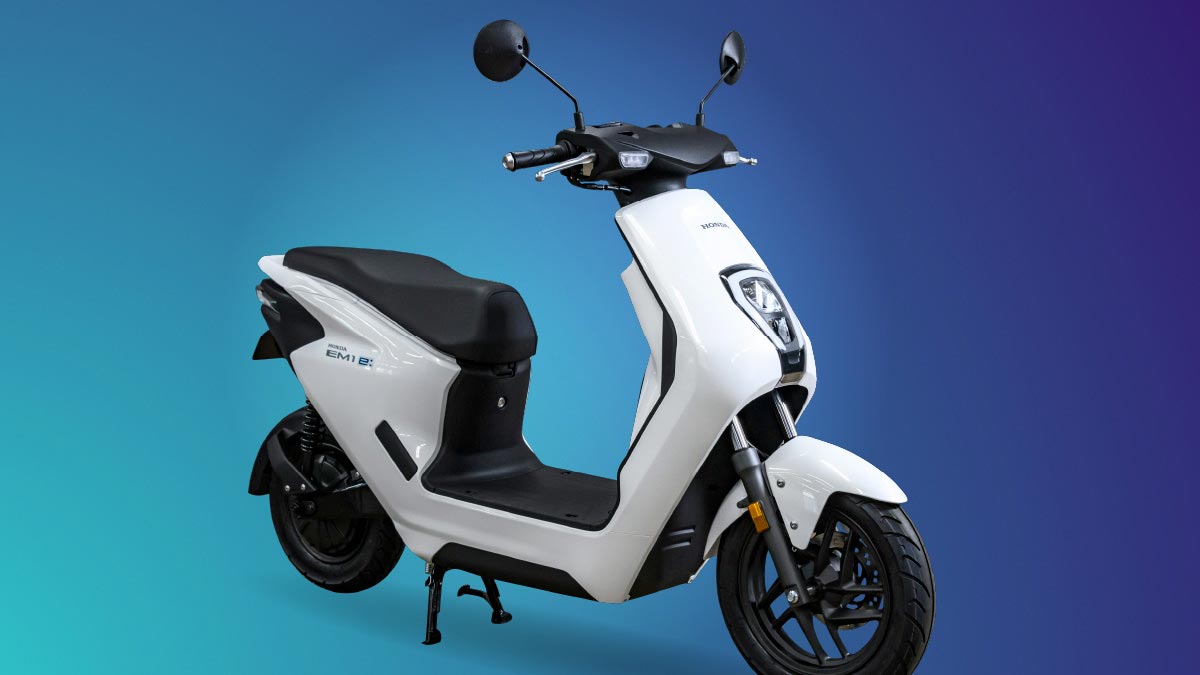
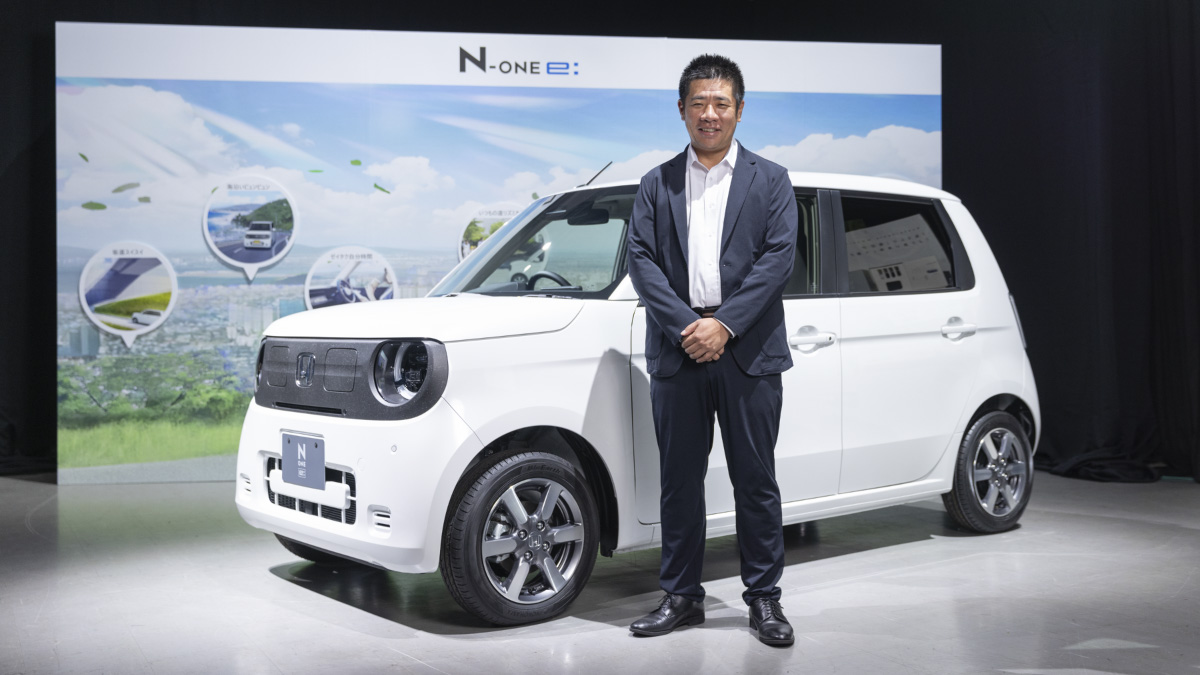
The N-VAN e: was conceived as an eco-friendly working vehicle, while the N-ONE e: was designed as an accessible EV for everyday use. Through developing these two models, we began to see the untapped potential of the power unit. We felt that by fully unlocking it, we could create something uniquely Honda—something that truly resonates with people.
The N-ONE e: already has excellent fundamentals and stable driving performance. During its development, we discussed the idea that it could serve as a base for something even more exciting.
However, within kei car regulations—such as self-limitation on output and regulated body width—there are clear constraints. So early on, we made the decision to go beyond those boundaries and create a car we genuinely wanted to drive: something truly exciting and fun.