
Management
Honda’s New Chapter in F1: Taking on the Challenge of Transformation as a Factory Team in 2026
POINTWhat you can learn from this article
- From 2026, Honda will compete in F1 as a factory power unit supplier. By taking on F1 in the electrification era, Honda aims to further develop both its people and its technologies on the world’s highest stage of motorsport.
- Under new regulations that significantly increase the role of electrification, the knowledge gained through F1 development will be expanded across land, sea, air, and space—and toward the future of mobility itself.
- Honda aims to deliver the joy of driving and racing excitement—powered by F1-derived technologies—to more customers, reflecting its enduring spirit of challenge.
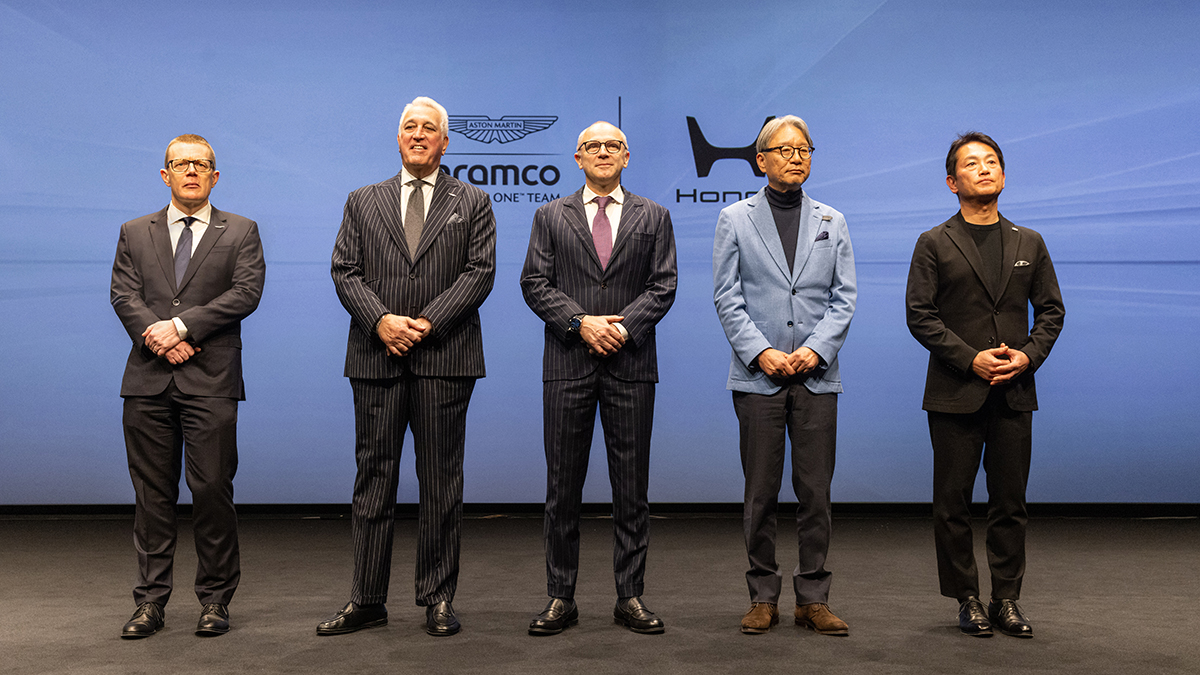
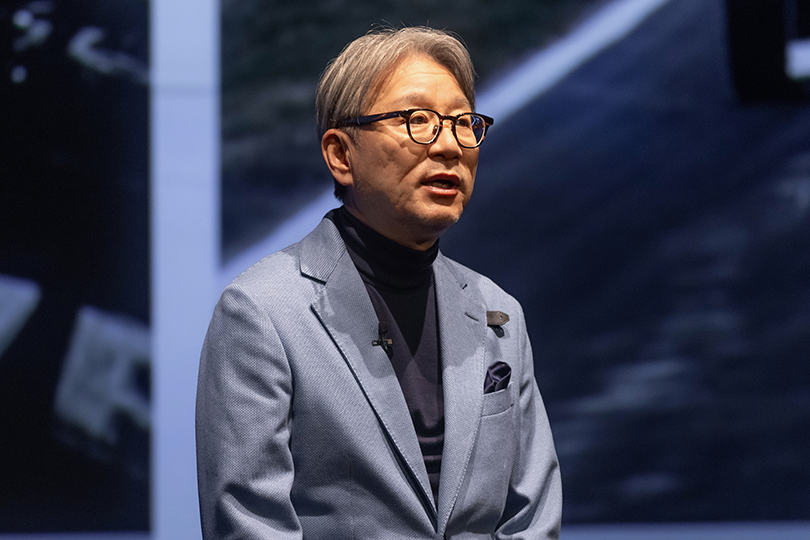
In 2026, Honda will compete in F1 together with the Aston Martin Aramco Formula OneTM Team by supplying the power unit as a factory works partner. This decision represents Honda’s choice to refine its technologies and nurture its people on the world’s most demanding motorsport stage—connecting today’s challenges to the next era. On January 20, 2026, Honda held a press conference in Tokyo, where President Toshihiro Mibe spoke about the company’s determination and the true intent behind taking on F1 at a time when the sport is accelerating toward electrification and decarbonization.
Honda and F1: a legacy of the “Challenging Spirit”
Why competing in F1 matters

From the 2026 season, F1 regulations will undergo a major transformation, encompassing both the chassis and the power unit.
In the new power unit regulations, the electrical power output produced by the motor and battery will be increased to roughly three times its current output—representing a dramatic increase in electrification compared to previous eras. Battery capacity, energy recovery efficiency, and precise energy management—when to deploy electrical power and when to recover it—will directly influence race results.
The use of advanced sustainable fuel will be required for the engine. As a result, F1 will evolve into a next-generation motorsport that simultaneously challenges electrification and decarbonization.
In addition, there is the F1 cost cap system*. Within constrained resources, teams must deliver maximum performance. This is not merely a competition—it is a contest of ideas and ingenuity refined to the extreme.
Engineers are required to break conventions, innovate relentlessly, and push beyond perceived limits. This is the stage where Honda’s engineers can truly demonstrate their capabilities.
* A cost cap set by FIA(Fédération Internationale de lʼAutomobile) on annual spending associated with the PU supply. A similar system exists to set a cap for annual spending by each team.
Under complex regulations, the world’s top competitors will start anew on equal footing. There is no easy path—this is both the severity and the allure of F1. Driven by the desire to create the world’s strongest power unit even in the electrification era, Honda developed the new power unit RA626H, as it takes on the pinnacle of motorsport.
Shaping the future through refined technologies
Under the new regulations, F1 is no longer solely about competing for speed. It has become a global stage for addressing shared challenges such as electrification and carbon neutrality. Beyond high-speed combustion, thermal management, high-output motors, and large turbochargers operating at extreme rotational speeds, F1 demands a wide range of technologies—lightweight structures, high-output and high-efficiency batteries, and sustainable fuels. These technologies align closely with Honda’s diverse mobility businesses and encourage cross-functional collaboration among engineers, strengthening Honda’s overall technological foundation.
The technologies refined through this challenge extend beyond next-generation hybrids and EVs to aerial mobility. For example, knowledge gained from sustainable fuels is being applied to sustainable aviation fuel (SAF) and fuels for eVTOL aircraft. High-efficiency battery technologies are already being adapted for eVTOL use. Moreover, as to technologies for high-speed rotating components, such as turbos and motors, we have been leveraging our expertise amassed through aircraft engine development for F1, then the advancements we make in F1 racing are being fed back to aircraft engine development. This circular synergy is ongoing within Honda.
Through F1, Honda will pursue the expansion of human potential across land, sea, air, space, and the future of mobility.
A new H Mark that signals the challenge of transformation
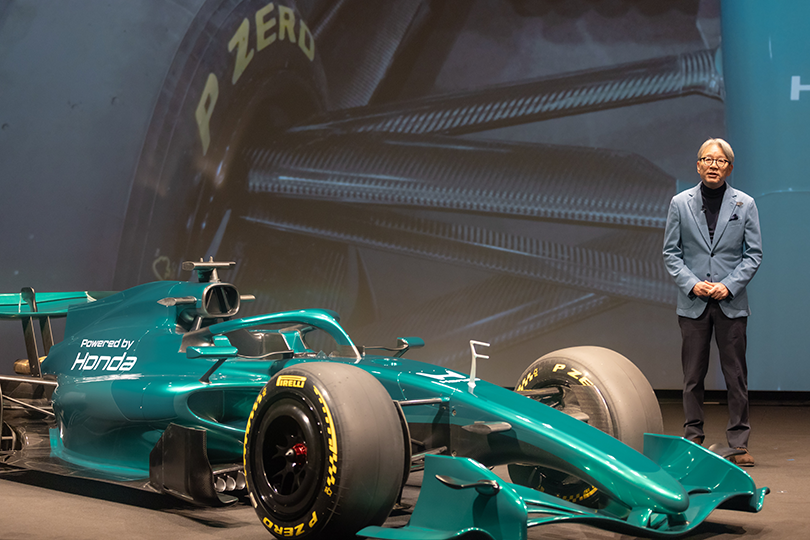
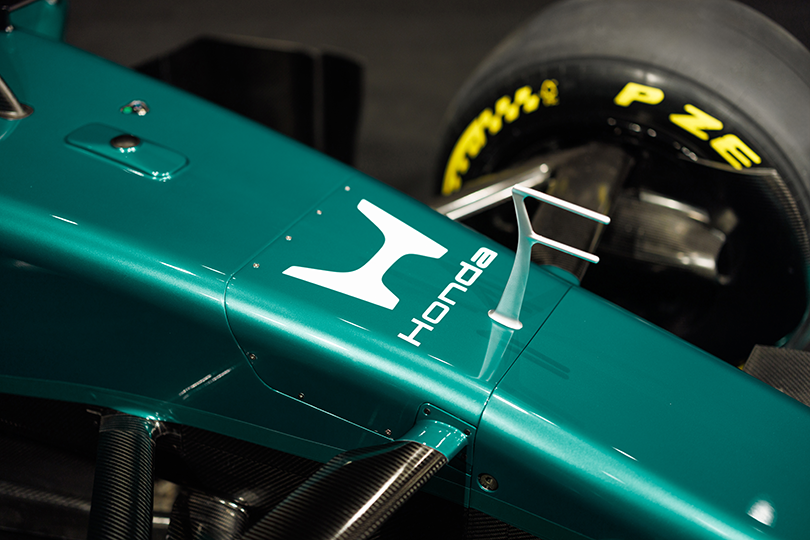
The new H Mark displayed on F1 machines powered by Honda’s new power unit symbolizes the transformation of Honda’s automobile business and will be used for F1 machines as well as Honda machines in various other motorsports.
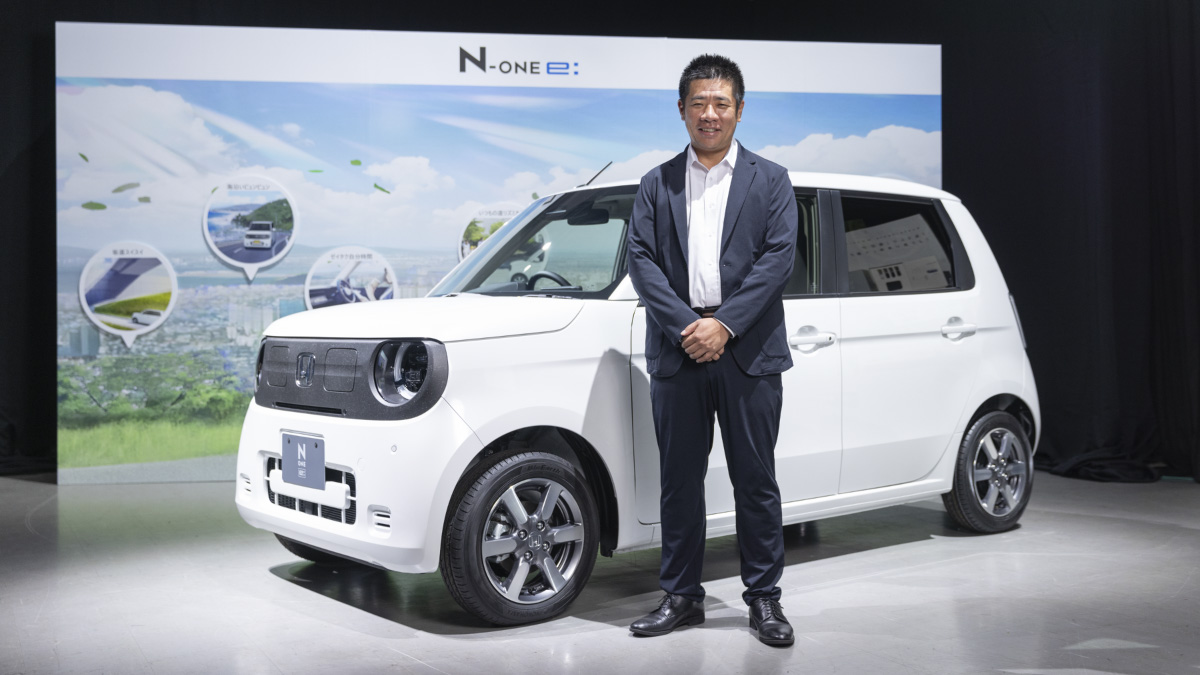
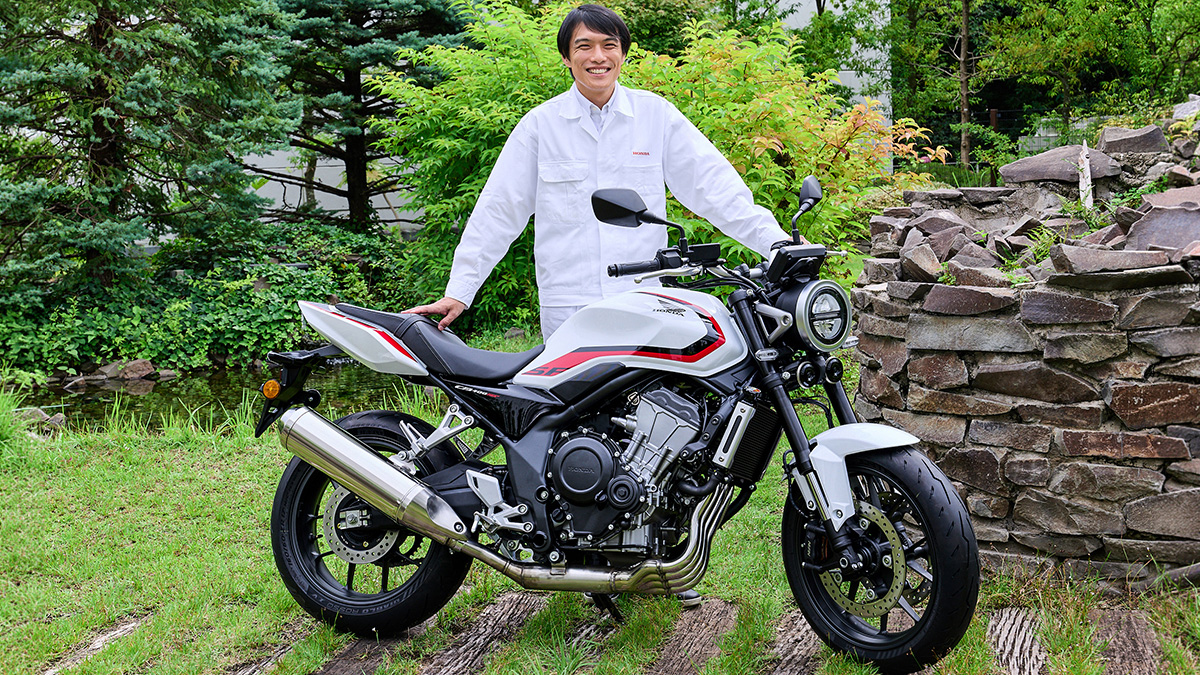
In addition, by leveraging the technologies and expertise of Honda Racing Corporation, Honda will introduce HRC-spec models refined through racing, contributing further to its automobile business by translating motorsport-derived value into production vehicles.
Honda will offer a broader range of customers with opportunities to feel the “joy of driving” and Honda passion and commitment to take on challenges.
F1 is not only the pinnacle of technology but also a proving ground for human development. In its intense development environment, engineers are tested on their ability to adapt to change and overcome challenges. When these individuals return to product development, they help create products that deliver even greater joy and inspiration to customers.
As global streaming platforms and films have fueled a rapid increase in F1 fans—particularly among younger generations—Honda aims to share the joy of victory with long-time supporters and new fans alike. Together with Aston Martin Aramco Formula OneTM Team, Honda will compete on the world stage, striving for the top and conveying the power and value of challenge to audiences worldwide.






In 1964, only a short time after Honda began selling automobiles, Honda made its first entry into F1—the pinnacle of global motorsport. At the time, Honda was still widely regarded as a motorcycle manufacturer, making the challenge appear almost like an impossible dream.
The road was extraordinarily difficult, marked by repeated setbacks. Yet Honda’s engineers persevered, and in 1965, at the final round—the Mexican Grand Prix—Honda achieved its first F1 victory. That triumph has since become a symbol of Honda’s enduring Challenging Spirit.
From the mid-1980s through the early 1990s, Honda built a golden era together with Williams and McLaren. More recently, in 2021, Honda secured the Drivers’ Championship alongside Red Bull Racing.
At the core of all these challenges lies the philosophy of founder Soichiro Honda: “Commit to become No. 1 in the world.” and “Take on the most difficult challenges.” By deliberately choosing the harder path, learning, and growing stronger, Honda has continued to develop technologies it can proudly offer to the world. This “DNA of challenge” remains alive within Honda today.