
Management
CR-V 30th Anniversary: Behind the Scenes Developing the SUV Loved All Over the World

POINTWhat you can learn from this article
- The CR-V debuted in 1995 as an SUV that fused comfort and freedom.
- The CR-V introduced a new value proposition, an SUV for both outdoor leisure and urban driving, to the SUV market traditionally dominated by off-road vehicles.
- The CR-V surpassed cumulative global sales of 4 million units in 2024, and celebrates its 30th anniversary in 2025.
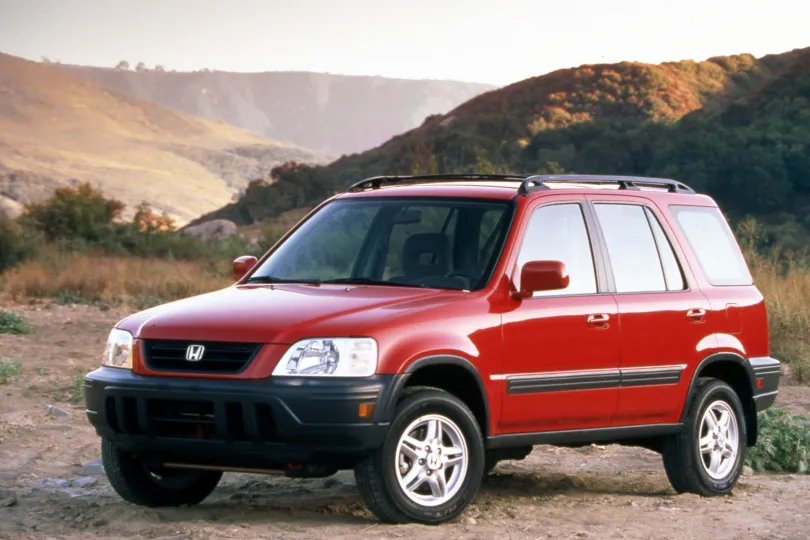
The CR-V is a new-value SUV (Sport Utility Vehicle) that Honda launched in 1995. Since then, it has been a best-selling model loved worldwide. As the CR-V reaches its 30th anniversary in 2025, this issue of Honda Stories takes a behind-the-scenes look at the CR-V's development, and introduces the innovations it brought to the industry.
The Creative Mover, a car that puts people first
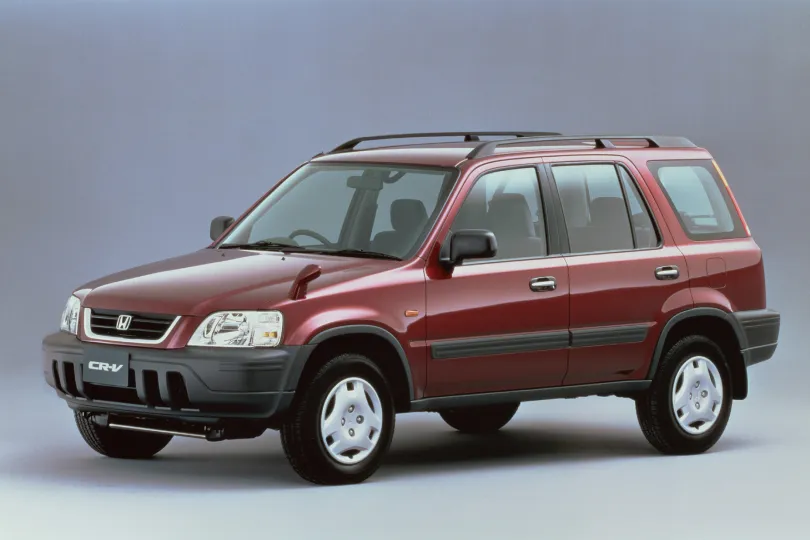 First-generation CR-V
In the 1990s, Honda entered the RV (recreational vehicle) market, distinct from the passenger car market it had previously focused on. At this time, Honda pursued a new approach to car development, giving birth to the concept of the "Creative Mover" or "Lifestyle Creation Vehicle." Rather than merely a means of transportation, Honda believed that cars are tools for its users to create and enhance their own lives, placing people first. Product development aimed to create a "Lifestyle-Enhancing Vehicle" that would make life more enjoyable, expansive, and fulfilling.
Honda's first Creative Mover was the first-generation Odyssey, launched in October 1994. Combining the convenience of a minivan with the characteristics of a passenger car, the Odyssey instantly became a flagship model for Honda, bringing new joy to daily life. The second model, the CR-V, was launched in 1995. Honda subsequently launched in Japan the STEP WGN and S-MX as Creative Movers. Each was embraced by customers as cars that were unconstrained by existing categories, and embodied Honda's unique free-thinking approach.
The value CR-V aimed to deliver as an Active Mover, both for outdoor leisure and urban driving
The CR-V introduced in 1995 was developed with an active personality, one that could be used comfortably and freely, from daily life to the great outdoors. It was positioned as the Active Mover within the Creative Mover series. The name CR-V was an abbreviation of "Comfortable, Runabout Vehicle."
The CR-V's development team embraced the principles of "Think Right" and "Make Light." Thinking right involved the constant self-questioning of whether they were truly looking at the trends and the future world. Thinking light' meant the relentless examination of the car's performance: Whether it was enjoyable effortlessly and casually without burden. Guided by these principles, the team thoroughly examined and identified what was necessary. They rigorously evaluated both hardware and software aspects—performance, functional benefits, and appropriate sizing. Their goal was to embody a new active lifestyle—a car that could be driven comfortably and effortlessly to any destination, whenever desired.
At the time, SUVs were predominantly rugged off-road, cross-country 4WD vehicles. The CR-V was:
- Designed to comfortably seat five adults and carry ample cargo
- Focused on comfortable, everyday usability, from business to recreational activities, regardless of season, time, or road conditions, and was
- A new vehicle anyone could use comfortably and without compromise
To achieve this, Honda pursued sedan-like comfort, wagon-like utility space, cross-country functionality, and a new functional, reassuring design. Adopting a monocoque body*1 enabled a low center of gravity, wide tread*2, and long wheelbase*3. This achieves both the excellent visibility expected of an SUV and the supple handling characteristic of a sedan.
Furthermore, to create a spacious, relaxed, living-room-like interior and a cargo space brimming with convenience, Honda introduced numerous ingenious features, including a flat floor, center walk-through, versatile seat arrangements that could fold completely flat, and a takeout table. This earned the CR-V recognition as an SUV equally ideal to outdoor leisure and urban use.
*1 Monocoque body: A structure where the frame and body are integrated, eliminating the need for a separate supporting frame. This achieves both high rigidity and weight reduction. This structure became mainstream around the 1990s and is now used in many vehicles.
*2 Wide tread: A structure featuring wider distance between tires on each side, offering superior handling and stability along with an imposing appearance.
*3 Long wheelbase: A structure where the distance between the front and rear wheels is long, enhancing straight-line stability and allows for a more spacious interior.
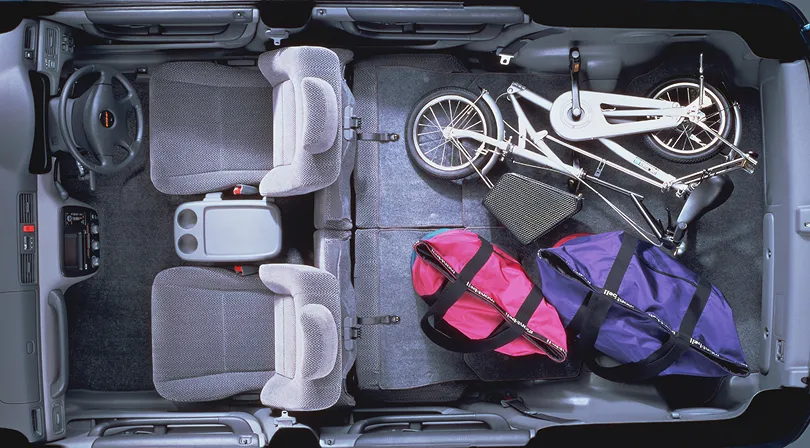 Versatile seat arrangements create a convenient cargo area
The CR-V, launched in 1995, celebrates its 30th anniversary in 2025. Sold in more than 160 countries worldwide, the CR-V has grown into a global best-selling model. It also ranked as Honda’s top-selling model globally in 2024, and continues to be loved around the world — including in North America, where its cumulative sales have exceeded 400,000 units.
In an era when SUVs were synonymous with rugged off-road vehicles, the CR-V created a new value: an SUV usable for both outdoor adventures and daily life. The CR-V embodies Honda's philosophy of designing cars centered on people, and its enduring role as the backbone of the lineup truly symbolizes Honda's challenging spirit.