

Management
Research on Multi-Agent Generative AI Systems, Inspired by Honda’s Unique Waigaya Culture, Impresses at Global AI Conference

POINTWhat you can learn from this article
- Research paper on a multi-agent AI system developed based on Honda’s unique Waigaya culture has been accepted at a global AI conference.
- As sophistication and complexity of automotive development technologies continue to advance, the importance of leveraging generative AI across all stages of the process is growing.
- Honda has established a system to identify and empower talented employees with skills to advance generative AI adoption, aiming to further integrate generative AI into business operations.
In April 2025, a research paper on a "multi-agent AI system" developed using large language models (LLMs*) inspired by Honda’s unique Waigaya culture, was accepted at the international AI conference, ICLR 2025 Workshop Agentic AI. As generative AI technology advances at an unprecedented pace and its potential applications in the automotive industry expand, how was this research, which received recognition at a global conference, conducted? In this issue of Honda Stories, the four lead authors of the paper discuss their development process, and the unique culture and systems at Honda that supported the research.
* LLM: Foundational model for generative AI that learn from large volumes of text data to understand and generate natural language.
About Multi-Agent AI Systems
- A multi-agent AI system is a method in which multiple AI agents, each with different roles and knowledge, cooperate to complete tasks. Similar to a team of experts gathering to talk, AI agents discuss and debate with each other to move a task forward. The greatest strength of this system is its ability to approach problems through teamwork by dividing roles, including areas that cannot be handled by a single AI.

Chief Engineer, Advanced AI Strategy Planning Department, Digital Supervisory Unit, Honda Motor Co., Ltd. View More Close Osamu Ito
Read More
Staff Engineer, Advanced AI Strategy Planning Department, Digital Supervisory Unit, Honda Motor Co., Ltd. View More Close Atsushi Yamamoto
Read More
Assistant Chief Engineer, Advanced AI Strategy Planning Department, Digital Supervisory Unit, Honda Motor Co., Ltd. View More Close Akihiko Katagiri
Read More
Advanced AI Strategy Planning Department, Digital Supervisory Unit, Honda Motor Co., Ltd. View More Close Yudai Koike
Read MoreIn 2025, or the “Dawn of AI Agents,” the use of generative AI in automobile development is expanding. At Honda, the introduction and promotion of generative AI are one of the pillars of its work reform. Generative AI such as ChatGPT is beginning to be used on a daily basis in various business operations at Honda, not limited to development.
“With the advent of generative AI, it has become possible to streamline internal operations and support creativity. As automobile development becomes increasingly sophisticated and complex, I believe that generative AI will become an indispensable tool for the development of next-generation vehicles,” explains Osamu Ito, Chief Engineer of the Advanced AI Strategy Planning Department, Digital Supervisory Unit, who proposed the research on multi-agent AI systems and serves as its coordinator.
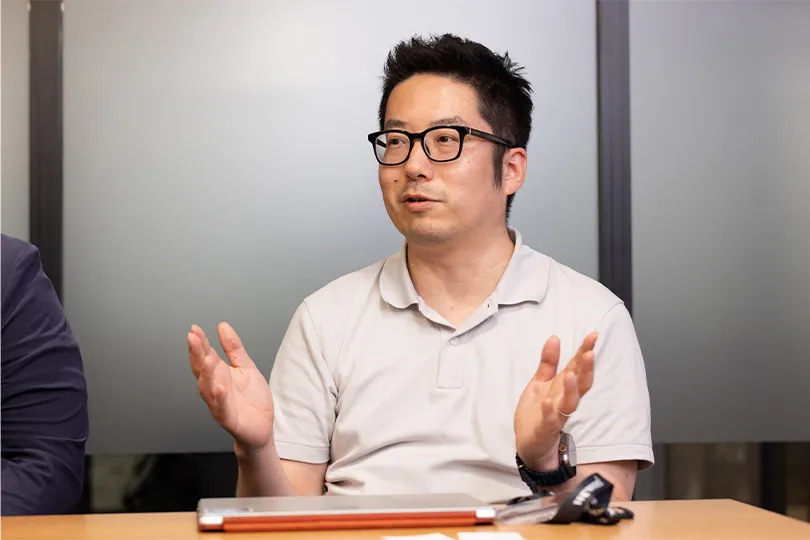 Chief Engineer Ito conceived and oversaw this research
About Waigaya culture, the inspiration behind multi-AI discussions
What is Waigaya?
- Waigaya is a unique Honda corporate culture that facilitates the generation of original ideas and innovative solutions through open, vigorous and freewheeling discussions.
Waigaya is a culture where participants can exchange opinions openly and this spirit has permeated the company. Katagiri also feels the effects of this culture.
Through frank discussions, we gain new insights and different perspectives by listening to the opinions and ideas of others. To develop new models that meet various conditions such as performance and regulations while being accepted by customers, it is essential to exchange frank opinions. In this process, Waigaya is an indispensable tool.
In general, discussions are supposed to broaden perspectives, generate new ideas, and pursue the essence of an issue. However, in corporate settings, discussions often fail to expand due to factors such as the influence of job titles or relationships. Waigaya, a vitally important Honda culture, eliminates such backgrounds and aims to maximize the value of all participants and the discussion itself. At Honda, a culture has been fostered where people can speak frankly based on their own experiences in Waigaya sessions.
This culture of open discussion inspired the concept behind the multi-agent AI system.
Research on multi-agent AI systems began with Ito’s proposal, who believed that simply utilizing generative AI as an agent would not suffice to solve complex problems.
Data accumulated in each department, such as engines, chassis, and NV (noise and vibration), is unique and distinctive, akin to departmental wisdom. By inputting this data into an independent generative AI for each department, we began developing a system where multiple AI agents could replace experts with the wisdom of their departments.
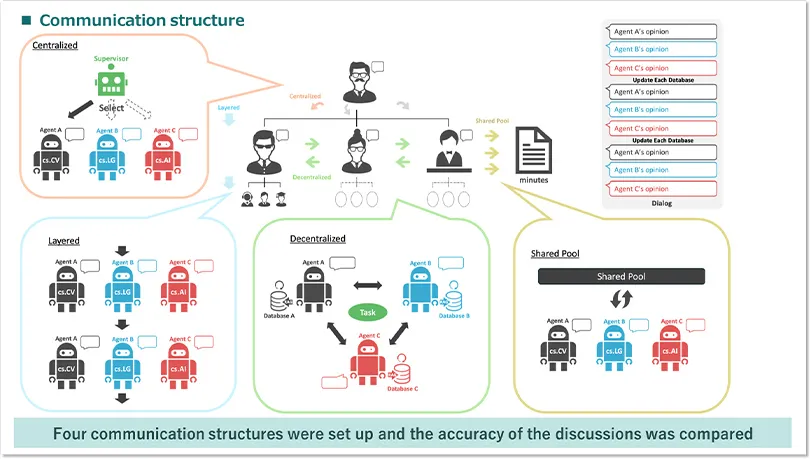
In this system, multiple AI agents with expertise in various fields discuss and solve problems. Four discussion styles between AI agents were established: distributed, centralized, layered, and shared pool. The paper highly evaluated Honda’s unique Waigaya- style discussion, which was applied to the distributed method.
 Katagiri worked on system implementation and effectiveness verification
Research on multi-agent AI systems confirmed that in a distributed system, diverse opinions are first exchanged and spread, and then naturally integrated. On the other hand, Yamamoto recalls that there were many challenges in setting up AI agents to engage in effective Waigaya discussions.
In a distributed Waigaya, each AI agent presents diverse information related to a single topic, making it difficult for discussions to converge. There were challenges in setting parameters such as how much data the AI agents would access for discussions. Additionally, similar to human meetings, differences in assumptions among AI agents significantly influence the path to conclusions. This is where the technical depth of the system becomes evident.
Honda’s passion for advanced technology and unique system supporting generative AI research
Following the launch of ChatGPT in November 2022, Honda began actively exploring the use of generative AI. In 2024, the Advanced AI Strategy Planning Department, which aims to promote the use of generative AI, was established with members of the research team for this paper. This swift response reflects Honda’s strong commitment to leveraging advanced technology as a manufacturing company. Atsushi Yamamoto, a staff engineer from the same department who played a key role in establishing and advancing the specific processes for the research paper, reflects on the origins of Honda’s generative AI research:
Honda has always been a company with a high level of motivation to engage with advanced technologies. Not only the engineers in the field but also the president, Mibe, showed early enthusiasm for the use of generative AI. At the time ChatGPT debuted, I was working in the lithium-ion battery research department, conducting research on the design optimization of lithium-ion batteries using machine learning and statistics. I was exploring ways to utilize generative AI as a user on a daily basis, but I felt that generative AI was fundamentally different from traditional machine learning. I sought an environment where I could systematically learn and apply generative AI. When I heard about the establishment of the department, I decided that if this was an opportunity to ride the generative AI wave, I had to take the challenge.
Akihiko Katagiri, Assistant Chief Engineer in the same department, responsible for system implementation and effectiveness verification, revealed that they focused on generative AI as a means to break through the barriers in the field.
At Honda, development technologies and expertise across all fields have been accumulated over decades. However, as an engineer engaged in development, I felt there was a barrier to creating new technologies that go beyond legacy expertise. Then, the technology of LLM, which responds as if it has its own will, was announced. I felt that combining this technology with automotive development could enable engineers to overcome the barrier and create new development technologies.
The passion of employees toward new technologies was supported by multiple systems established by Honda. Honda has an internal recruitment system called Challenge Recruitment, where employees can apply for positions in the recruiting departments. All members of the research team were selected through this system. Additionally, a new system called the Gen-AI Expert System was established to identify and utilize research and development talent in generative AI within the company.
Koike Yudai, who worked alongside Katagiri on system implementation and effectiveness verification in this research, was one of the contributors to the establishment of the Gen-AI Expert System. Koike shares his insights on the process and significance of the system:
I have been conducting AI research since I was in the engine department and participated in AI projects. After the emergence of ChatGPT, I joined a task force to promote proof of concept (PoC) for the utilization of generative AI, which allowed me to demonstrate the value of such skills within the company. This was recognized as the model case for establishing the Gen-AI Expert System.
Currently, the value of personnel who can improve business operations using generative AI is increasing. This certification program recognizes employees with such skills as experts and provides them with allowances. Once certified as experts, they can participate in generative AI development projects requested from various departments as part of their regular duties. Through their work on these projects, they receive allowances according to their skill level in addition to their regular wages.
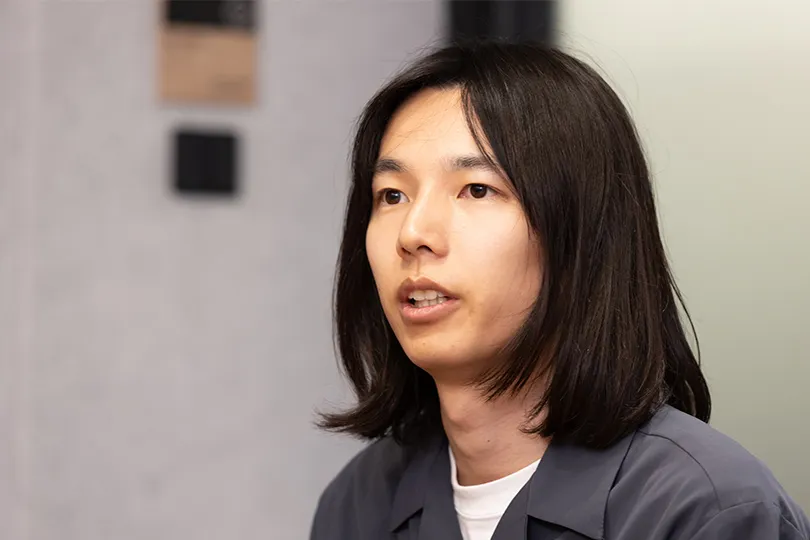 Koike was involved in verifying the effectiveness of the system developed and adapting it to the internal environment
Aiming to create new technologies and development methods through the use of generative AI
Following the acceptance of their paper at ICLR 2025 Workshop Agentic AI, what future applications of generative AI are the research members considering? Koike commented:
Currently, within Honda, applications utilizing generative AI are scattered across various departments. If we could connect these through a multi-agent AI system, we could, for example, receive proposals that consider design aspects when consulting on design. We are exploring such potential applications.
Katagiri emphasized that he envisions the technology as an extension of human capabilities.
By combining humans with distributed multi-agent AI systems, we are exploring use cases where users can participate in discussions between AI agents. This could enable users to surpass the limits of their own imagination. We aim to focus on enhancing individual capabilities and create a mechanism that can lead to the development of something innovative.
Yamamoto is also enthusiastic for applying this system to research on communication forms.
For example, it would be interesting to conduct research on what the most effective communication form is for an AI agent like the ones we developed, which have accumulated knowledge in a single field. Should AI agents discuss among themselves, or should humans be included? In addition, I would like to expand research on what the most effective output form is for distributed systems.
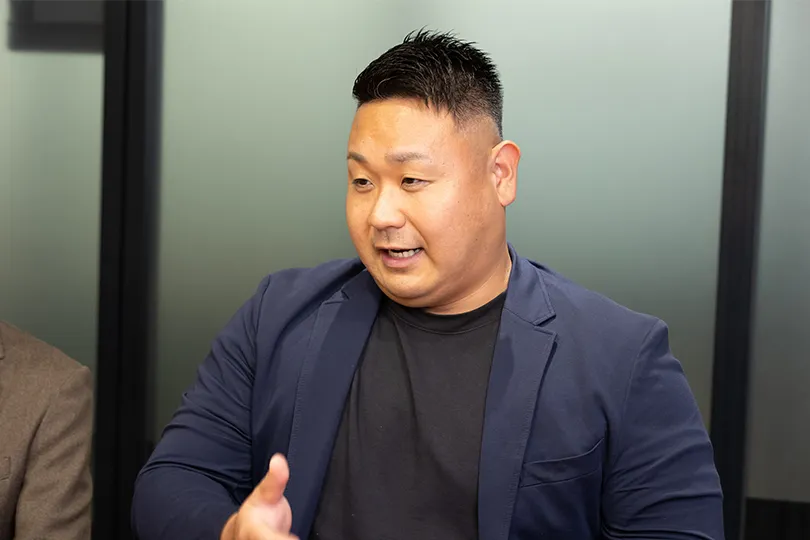 Yamamoto established and promoted the specific processes for research and paper publication
“It is not enough for a paper to be accepted; it needs to be applied to Honda’s product development," says Ito, who also agrees that the goal is to expand individual capabilities and support better product development.
Currently, AI is mainly used to automate and streamline tasks. However, I believe that AI can bring new perspectives and methods to the automotive development process that engineers have built up over many years. I want to continue challenging myself to create new development methods and products that have never been seen before.
Following the paper’s selection, Ito has high expectations for the activities of Honda’s generative AI engineers.
The major platform providers have overwhelming research achievements in the field of AI, and I think there was a feeling within the company that we could not do it ourselves. However, I believe that the selection proves that Honda can also produce AI technology that can compete on the world stage. I hope that a culture of voluntary AI development and challenge will take root among all engineers at Honda. I would be delighted if this selection serves as the first step toward creating such a trend.
(Photographed at WeWork Metropolitan Plaza Building)





Automobiles are required to meet diverse performance criteria such as fuel efficiency, drivability, environmental performance, comfort, and design. Optimizing these criteria often involves trade-offs. In the development process, experts present their insights and evidence to find the right balance, but recently, the use of generative AI has been expanding. AI, which has learned relevant data and insights, is being adopted across the company to explain technologies. Ultimately, we aim to realize a development method where multiple AI agents conduct discussions on behalf of experts, presenting their arguments and counterarguments.